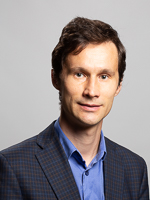
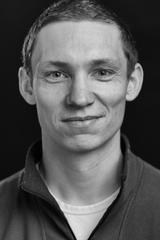
David Del Rey Fernández is Assistant Professor and Pratt & Whitney Canada Chair in Industrial Artificial Intelligence in the Department of Applied Mathematics at University of Waterloo. His research develops efficient numerical algorithms for solving partial differential equations on high-performance systems. He holds a PhD from University of Toronto and previously worked at NASA Langley Research Center. Research focuses on robust numerical methods, mesh adaptation, and machine learning acceleration. His work includes entropy-stable schemes, summation-by-parts methods, and discretizations for compressible flows. Recent publications address Lyapunov-consistent discretizations and scalable reduced-order modeling.
Naratip Santitissadeekorn is a Senior Lecturer in Data Assimilation at the School of Mathematics and Physics, University of Surrey, where he is affiliated with the Mathematics at the Interface Group. His work bridges mathematics, data science, and real-world applications in urban planning, crime analysis, and geophysical fluid dynamics. Dr. Santitissadeekorn received his PhD from Clarkson University in 2008, with a dissertation titled "Transport Analysis and Motion Estimation of Dynamical Systems of Time-Series data." His doctoral research was supervised by Professor Erik Bollt. Following his PhD, he completed two significant postdoctoral positions: from 2008-2011 at the University of New South Wales, Sydney, Australia, working with Professor Gary Froyland on numerical techniques for finite-time Lagrangian coherent set identification, with applications to delimiting the polar vortex and Agulhas rings; and from 2011-2014 at the University of North Carolina-Chapel Hill, working with Professor Chris Jones on data assimilation projects. Dr. Santitissadeekorn's research focuses on inverse problems and data assimilation in geophysical fluid dynamics, the applications of Lagrangian Coherent Structures (LCS), and computational ergodic theory. His work combines theoretical mathematics with practical applications, particularly in urban growth modeling and crime analysis. He has developed innovative methods for identifying coherent structures in fluid flows, estimating transition probabilities from spatiotemporal data, and creating data-driven frameworks for urban expansion scenarios. His research demonstrates how mathematical techniques can be applied to solve real-world problems in environmental science, urban planning, and public safety. An analysis of Dr. Santitissadeekorn's recent publications (2020-2023) reveals a strong focus on urban expansion modeling and network analysis. His work on urban growth has evolved from basic cellular automata models to sophisticated frameworks that manage uncertainty through parameter clustering and growth mode identification. His research on Hawkes processes has advanced ensemble-based filtering techniques for analyzing count data in large networks. These publications demonstrate a consistent pattern of applying mathematical rigor to complex spatiotemporal phenomena, with increasing emphasis on data-driven approaches and practical applications. Dr. Santitissadeekorn has made significant contributions to data assimilation methods, particularly through the development of the extended Poisson-Kalman filter (ExPKF) for urban crime modeling. His teaching includes courses in Algebra and Bayesian Statistics, reflecting his expertise in both theoretical and applied mathematics. While specific awards are not mentioned in the available information, his extensive publication record in high-impact journals demonstrates recognition within his field. Dr. Santitissadeekorn's research has practical implications for urban planning and law enforcement. His work on urban expansion models helps planners understand different growth trajectories, while his crime modeling research contributes to improved police patrolling strategies. His interdisciplinary approach, combining mathematics, computer science, and domain-specific knowledge, positions him at the forefront of applying data science to societal challenges.
Dr. Werner Bauer is a Lecturer in Mathematics at the University of Surrey, affiliated with the Mathematics at the Interface Group within the School of Mathematics and Physics. His research focuses on numerical analysis and scientific computing, particularly in the Mathematics of Planet Earth. Key areas include parallel-in-time methods for oscillatory PDEs, structure-preserving discretizations for fluid dynamics, stochastic flow models for ensemble prediction, and geometric formulations of fluid and magnetohydrodynamic systems. He also explores finite difference and finite element methods, with prior work on grid adaptation in weather and climate models. His research interests span numerical methods for geophysical flows, stochastic modeling of oceanic and atmospheric dynamics, and energy-conserving computational frameworks. Bauer’s recent work emphasizes uncertainty quantification, ensemble forecasting, and the development of compatible finite element schemes to ensure physical conservation laws in simulations. Bauer’s publications highlight advancements in structure-preserving discretizations, stochastic parameterization of mesoscale eddies, and variational integrators for geophysical equations. His work bridges applied mathematics and computational science with applications in climate modeling and environmental fluid dynamics.
Edwin Langmann is a Professor of Physics at KTH Royal Institute of Technology in Stockholm, Sweden. He holds a PhD in Theoretical Physics from the University of Vienna (1990) and has held academic positions including Assistant Professor at KTH (1994–1998), Postdoc at the University of British Columbia (1991–1994), and various roles at Swedish institutions since 2000. His research focuses on mathematical physics, integrable systems, and superconductivity theory, with contributions to quantum many-body systems and exactly solvable models. Affiliations: Department of Condensed Matter Theory, KTH Royal Institute of Technology Educations: PhD (Theoretical Physics, University of Vienna, 1990), M.Sc. (Technical Physics, TU Graz, 1986) Langmann teaches courses in physics and mathematical methods, advising numerous master’s theses. His work bridges theoretical physics and mathematics, addressing topics like Calogero-Sutherland models, fractional quantum Hall effects, and Hubbard model phase diagrams. Recent research includes antiferromagnetic order in 3D systems and BCS superconductivity with finite-range potentials. He has supervised students including Frode Boman (2021), Max Oliveberg (2021), and Charles Gilljam (2020). His publications span journals such as Communications in Mathematical Physics and Physical Review B , emphasizing integrable systems and quantum field theory.
Alexandros Kontogiannis is a research fellow at the University of Cambridge, Department of Engineering, specializing in fluid dynamics and applied mathematics. His work combines Bayesian inference, machine learning, and physics-informed algorithms to solve inverse problems in magnetic resonance velocimetry (MRV) and fluid-structure interaction. EPSRC National Fellow in Fluid Dynamics Member of Energy, Fluids and Turbomachinery Division Research Focus: Development of digital twin frameworks that integrate MRV data with Navier-Stokes equations to reconstruct flowfields, infer rheological parameters in non-Newtonian fluids, and estimate hidden quantities like pressure and wall shear stress. Key innovations include: Physics-informed compressed sensing for sparse MRV data Simultaneous boundary shape and flowfield estimation Bayesian turbulence model parameter learning Scientific Awards: ASME Fluids Engineering Division Graduate Student Scholar (2021) Technical Chamber of Greece (TEE) Award (2018) Limmat Foundation Academic Excellence (2017) Mentzelopoulos Scholarship for international studies (2017) Greek State Scholarships Foundation Award (2012) Key Contributions: Algorithms for 3D flow reconstruction with adaptive discretization, viscous signed distance field regularization, and multi-objective aerodynamic shape optimization. His methodologies enable 27x reductions in MRI scanning time while maintaining diagnostic accuracy.
David F. Anderson is the Vilas Distinguished Achievement Professor of Mathematics at the Department of Mathematics, University of Wisconsin-Madison. He has maintained an active research and teaching career spanning over two decades with significant contributions to mathematical biology and stochastic modeling. Dr. Anderson's research focuses on the interface of mathematics and biology, specifically in mathematical systems biology and algorithm design for stochastic models in biological systems. His work has fundamentally advanced chemical reaction network theory, stochastic processes in biochemical systems, and computational methods for analyzing complex biological phenomena. He has developed numerous numerical techniques for simulating and analyzing reaction networks with applications across systems biology. An analysis of his recent publications reveals a sustained focus on mathematical properties of stochastic reaction networks, with increasing emphasis on connections between chemical systems and computational frameworks. His later work explores reaction networks as computing devices, implementing arithmetic operations and neural network functionalities through biochemical processes, while maintaining rigorous mathematical analysis of network properties like ergodicity, mixing times, and solution structures. Simons Fellow (2022) Vilas Associates Award (2016) IMA Prize in Mathematics (2014) Dr. Anderson has successfully guided nine PhD students to completion, with recent graduates including Aidan Howells (2024), Tung Nguyen (2021), Chaojie Yuan (2020), Kurt Ehlert (2019), and Jinsu Kim (2018). His current graduate student is Jingyi Ma. His research has been supported by prestigious fellowships including the Simons Fellowship, indicating substantial research funding, though specific grant details aren't provided in the source material. While specific laboratory facilities aren't described in the text, Dr. Anderson maintains an active research group evidenced by continuous publications, regular PhD student completions, and collaborations with numerous researchers including Daniele Cappelletti, Jinsu Kim, and Tung Nguyen. His research program demonstrates sustained productivity with publications spanning from 2005 to the present.
Egor Kostylev serves as an Associate Professor in the Department of Informatics within the Faculty of Mathematics and Natural Sciences at the University of Oslo. His research focuses on the theoretical foundations connecting symbolic and sub-symbolic artificial intelligence, particularly examining relationships between formal logic systems and machine learning approaches. His educational background includes an MSc (Specialist, 2005) and PhD (Candidate, 2009) from Lomonosov Moscow State University under Prof. Vladimir A. Zakharov. He subsequently held research positions at the University of Edinburgh (2010-2013) and the University of Oxford (2013-2020) before joining the University of Oslo in 2020. Kostylev's research interests center on bridging symbolic AI formalisms with sub-symbolic approaches. He investigates connections between various logics (Description Logics, Temporal Logics, Datalog), query languages (SPARQL, Regular Path Queries, OTTR), and machine learning formalisms (Graph Neural Networks, Markov Logic Networks). His work addresses critical challenges in Explainable, Trustworthy, and Green AI through theoretical foundations that connect different AI paradigms. His publication record demonstrates consistent high-impact contributions in theoretical computer science and AI, with numerous publications in top venues including AAAI, LICS, Journal of the ACM, and ICLR. His recent work shows a clear trajectory toward unifying logical reasoning with neural network approaches, particularly through graph neural networks and their connections to logical formalisms. The research spans theoretical foundations of knowledge representation, temporal reasoning in knowledge bases, and the logical expressiveness of modern neural architectures. As a research leader, Kostylev supervises multiple PhD students including Shuwen (Aurora) Liu, Maximilian Pflüger, Roxana Pop, Dongzhuoran Zhou, and Erik Snilsberg. He serves as a Research Theme Leader for the Integreat SFF: Norwegian Centre for Knowledge-driven Machine Learning. His teaching responsibilities include IN3020/4020 Database Systems courses. He leads the Data and Knowledge Management (DKM) research group at the University of Oslo, which focuses on foundational aspects of knowledge representation, database theory, and the intersection with modern machine learning techniques. The group actively collaborates with international researchers and contributes to advancing theoretical understanding of how symbolic and neural approaches to AI can complement each other.
Prof. Dr. Jochen Garcke is a faculty member at the Institute for Numerical Simulation, University of Bonn, with a dual affiliation at Fraunhofer SCAI's Department of Numerical Data-Based Prediction. His work bridges numerical simulation and machine learning, focusing on high-dimensional problems, sparse grids, and optimal control. Key research themes: Sparse grids, machine learning for simulations, reinforcement learning, uncertainty quantification Teaching includes courses on Numerical Methods in Science and Technology and Scientific Computing , emphasizing practical machine learning applications. Recent publications explore hybrid models combining data-driven and physics-based approaches in automotive engineering, wind turbines, and geoscientific modeling. His group employs adaptive sparse grids, graph algorithms, and spectral methods to tackle challenges in crash simulations, fluctuating renewable energy systems, and turbulent flow analysis. Collaborations span Fraunhofer SCAI and industry 4.0 initiatives.
Anne Talkington, PhD, is an Assistant Professor at the University at Buffalo School of Pharmacy & Pharmaceutical Sciences , where she develops multiscale mathematical models at the intersection of immunology, oncology, and pharmacology to optimize cancer therapies. Education: PhD in Computational Biology (UNC Chapel Hill), MS in Applied Mathematics (UNC Chapel Hill), BS in Mathematics (Duke), BA in Biology (Duke) Her research focuses on tumor-immune interactions , spatiotemporal immune activity , and immune checkpoint inhibition optimization , with expertise in in silico drug testing and pharmacokinetic modeling. Recent publications demonstrate trends in PEG immunogenicity mitigation, PBPK modeling, and computational immunotherapy optimization. Scientific Awards: National Research Council Fellowship (2023), P.E.O. Scholar Award (2020), NSF Graduate Fellowship (2016), MCM Meritorious Recognition (2013) The Talkington Lab integrates mathematical modeling with experimental data to predict optimal treatment strategies for cancer immunotherapy, emphasizing spatial-temporal dynamics in the tumor microenvironment.
Jop Briët is a Researcher at the Department of Algorithms and Complexity at Centrum Wiskunde & Informatica (CWI) in the Netherlands. His work focuses on theoretical computer science, quantum information theory, combinatorics, and tensor analysis. He has held grants including the Veni Innovational Research Grant from NWO and a Rubicon fellowship. He has authored over 50 publications in leading venues, exploring topics such as Grothendieck inequalities, quantum computing, and additive combinatorics. His research interests span the interplay between combinatorics and computational complexity, with particular emphasis on tensor analysis, probabilistic methods, and algorithm design. Recent work includes studies on Szemerédi’s theorem with random differences and the application of quantum query algorithms to entanglement-based problems. Awards: Outstanding paper award TQC (2020), Andreas Bonn medal (2013), Stieltjesprijs (2011). Professional Activities: Editor for ERCIM News, Board Member of Koninklijk Wiskundig Genootschap, and frequent invited speaker at workshops on quantum computing and combinatorics. Grants: Veni Grant (2014), Rubicon Fellowship (2012). Current teaching includes courses on Additive Combinatorics and Quantum Information Processing, reflecting his commitment to bridging foundational theory with advanced applications in computing and mathematics.
Professor Abdy Kermani serves as Professor and Director of the Centre for Timber Engineering within the School of Engineering and The Built Environment at Edinburgh Napier University. With over 80 research outputs spanning nearly two decades, his work focuses on advancing timber engineering practices and sustainable construction methodologies. His research portfolio includes significant contributions to timber frame construction, structural analysis, and innovative timber applications in building systems. Professor Kermani's research interests center on timber engineering with particular emphasis on structural performance, racking behavior in timber framed walls, vibration analysis of timber floors, and innovative applications of timber in bridge construction. His work bridges theoretical analysis with practical applications, addressing critical challenges in sustainable construction and building performance. Through his leadership at the Centre for Timber Engineering, he has developed methodologies for assessing timber structural elements and implemented innovative design approaches for timber construction systems. Analysis of Professor Kermani's 15 most recent publications reveals a consistent focus on timber structural performance, with particular attention to racking resistance in timber framed walls, vibration characteristics of timber floors, and innovative applications of timber in structural systems. His research demonstrates a progression from fundamental structural analysis toward practical implementation of timber engineering solutions, with increasing emphasis on computational modeling and optimization techniques in recent years. KTP Simpson Strong Tie (2007-2012): £191,048 - Developed structural elements for timber frame market providing racking resistance KTP Diageo Plc (2007-2011): £213,688 - Optimized whisky cask design POC: Composite Insulated Beams (2004-2009): £179,881 James Jones & Sons Ltd (2004-2006): £70,429 - Secured European Product Approval for timber products Oregan Timber Frame Ltd (2004-2006): £69,596 - Developed integrated manufacturing strategy Professor Kermani has supervised numerous doctoral students including Roshan Dhonju (Racking performance of platform timber framed walls), Ahmed Mohamed (Photogrammetric techniques for evaluating timber properties), Eleni Tsechelidou (Investigating gaps in civil engineering education), Zaihan Jalaludin (Water vapour sorption behaviour of wood), and Kenneth Leitch (Development of a hybrid racking panel). His leadership extends to the Centre for Timber Engineering, where he directs research initiatives focused on advancing timber construction technologies and promoting sustainable building practices through innovative engineering solutions.
Ivan Vladimirovich Arzhantsev serves as Dean of the Faculty of Computer Science and Professor at the Department of Big Data and Information Retrieval at the National Research University Higher School of Economics (HSE University). He also heads the Research Laboratory of Algebraic Transformation Groups and is a member of the Academic Council of HSE University. Having joined HSE in 2011, he has over 20 years of scientific and teaching experience in mathematics and computer science. Dean: Faculty of Computer Science Professor: Faculty of Computer Science / Department of Big Data and Information Retrieval Leading Researcher, Head of Laboratory: Faculty of Computer Science / Research Laboratory of Algebraic Transformation Groups Member of the Academic Council of the National Research University Higher School of Economics Arzhantsev's educational background includes a Specialist degree in Mathematics and Applied Mathematics from Moscow State University (1995), a Candidate of Physical and Mathematical Sciences degree (1998), and a Doctor of Physical and Mathematical Sciences degree (2011), all from Moscow State University. He was awarded the academic title of Associate Professor in 2009 and Professor in 2020. His research focuses on Algebraic Geometry, Transformation Groups, Algebraic Groups, and Geometric Invariant Theory. Arzhantsev's work explores homogeneous spaces, flexible varieties, infinite transitivity, locally nilpotent derivations, and algebraic monoids. His research has significant implications for understanding the structure and classification of algebraic varieties and their automorphism groups. He has developed important connections between algebraic geometry and combinatorial methods, particularly in the context of toric varieties and group actions. His work on the pigeonhole principle demonstrates applications to geometric problems, bridging discrete mathematics with algebraic geometry. Arzhantsev's recent publications demonstrate a consistent focus on affine varieties, transformation groups, and geometric structures. His work shows a progression from foundational studies of homogeneous spaces to more complex structures involving flexible varieties and infinite transitivity. The research spans both theoretical developments and practical applications in algebraic geometry, with several papers exploring connections between different mathematical structures through group actions. Medal 'Recognition - 10 years of successful work' of HSE University (July 2025) Honorary Certificate of the Ministry of Science and Higher Education of the Russian Federation (December 2024) Honorary Certificate of HSE University (March 2024) Letter of Gratitude from the Rector of HSE University (February 2023) Best Teacher - 2019, 2015 Laureate of the All-Russian Prize 'Dean of the Year' in Physical and Mathematical Sciences (2024) Arzhantsev has supervised numerous PhD students, including Y. I. Zaitseva, I. S. Beldiev, and K. V. Shakhmatov, among others. He leads multiple research grants, including the Russian Science Foundation grant 'Demazure Roots and Root Subgroups' (2025-2027) and the Russian-Indian grant 'Study of Affine Spaces and Related Objects Using Algebraic Transformation Groups and Locally Nilpotent Derivations' (2022-2024). His research has been supported by various prestigious funding sources including the Russian Foundation for Basic Research and the 'Basis' Foundation. He directs the Research Laboratory of Algebraic Transformation Groups at HSE University, which organizes the annual 'Algebraic Groups: White Nights Season' conference in St. Petersburg. The laboratory focuses on advanced research in algebraic transformation groups, homogeneous spaces, and related geometric structures, fostering international collaboration and training the next generation of mathematicians.
Lina von Sydow is a Professor in Computational Science at Uppsala University's Department of Information Technology. She serves as Section Dean for the Mathematical-Computer Science Section since July 2023. Her academic journey includes becoming an Associate Professor in 2000, Senior Lecturer since 1997, and leading the Department of Information Technology from 2018 to 2023. PhD in Domain Decomposition Methods (1995, Uppsala University) Postdoctoral Fellow at Oxford University (1996-1997) Her research spans computational science with dual focuses on Computational Finance and Ice Sheet Modeling . In finance, she develops numerical methods for option pricing using PDEs, radial basis functions, and stochastic volatility models. In climate science, she contributes to ice sheet dynamics through full Stokes models and adaptive time-stepping approaches, particularly in simulating grounding line migration. Recent publications (2025) address gender disparities in IT education, including comparative analysis of admission trends and intervention studies to boost female enrollment. Earlier works (2020-2015) focus on high-order finite difference methods for financial derivatives, BENCHOP benchmarking projects, and preconditioning techniques for PDEs. Scientific awards include Excellent Teacher (2013) She actively collaborates on educational reforms, co-authoring studies like Gender-aware course reform in Scientific Computing (2013). Her leadership roles include Head of Department (2018-2023) and Section Dean (2023-present), influencing academic governance and interdisciplinary research. Labs and teams: Works with Uppsala University's Computational Science group, Elmer/ICE project collaborators (e.g., Per Lötstedt, Gong Cheng), and international partners in numerical finance and climate modeling.
Dr. Shabnam Sadeghi Esfahlani is an Associate Professor in Robotics at the School of Engineering and the Built Environment, Anglia Ruskin University , where she serves as Deputy Leader of the BORI research group and leads the Automation & Robotics MSc program. Her interdisciplinary expertise spans mechatronics, artificial intelligence, virtual reality, and serious games , with a focus on applications for rehabilitation, medical training, and autonomous systems . As a Chartered Engineer and Senior Fellow of the Higher Education Academy , she has secured significant funding from Innovate UK, Horizon 2020, and GCRF , with grants exceeding £3 million. Education PhD in Mechanical Engineering, Anglia Ruskin University BSc (First Class) in Statistics & Mathematical Science, Shahid Beheshty University Her research integrates AI with robotics for societal impact, exemplified by the open-source SROBO ground robot and projects like Rehabgame and the Assistive Feeding Robot . She has published over 45 peer-reviewed articles and contributes to academic communities as a journal guest editor and conference organizer . Key collaborations include IET, IMechE, and the Nuffield Foundation as a mentor for young students. Scientific Awards & Recognitions: Chartered Engineer (CEng), Engineering Council UK Senior Fellow (SFHEA), Higher Education Academy Student-Voted 'Made a Difference Award' (2018) Post-Graduate Certificate in Higher Education
Cameron Taylor is an Assistant Professor in the Lampe Joint Department of Biomedical Engineering at UNC Chapel Hill and NC State University . His research focuses on neuromuscular sensing and stimulation , electromagnetics , and computational science . He teaches BMME 385 - Bioinstrumentation and leads the Hi-PHI Lab , which develops transformative human interfacing technologies to restore ability in persons with movement disorders. His work integrates magnetoquasistatics , neural interfacing , and muscle physiology . Ph.D. in Media Arts and Sciences (Biomechatronics) MIT, 2020 M.S. in Media Arts and Sciences (Biomechatronics) MIT, 2016 B.S. in Electrical Engineering Brigham Young University, 2014 A.S. Mesa Community College, 2012 His research interests include novel electromagnetic strategies for sensing and imaging the human body, with applications in wearable technologies and clinical interventions. His lab’s innovations include magnetomicrometry —a first-of-its-kind technology for real-time muscle tissue tracking in humans. Awards : - 2023 Promising Investigator Award from the Rocky Mountain Muscle Symposium Lab and Team : The Hi-PHI Lab, launching Fall 2025, seeks graduate students and postdocs with expertise in electromagnetics , algorithm development , or signal processing . Current advisees include Mahavir Prasad (PhD candidate focused on affordable human interfacing technologies) and John Goebel (PhD candidate working on bioelectronic equipment for tissue measurements). His work has been featured in Physics World , MIT Technology Review , and Electronic Design .