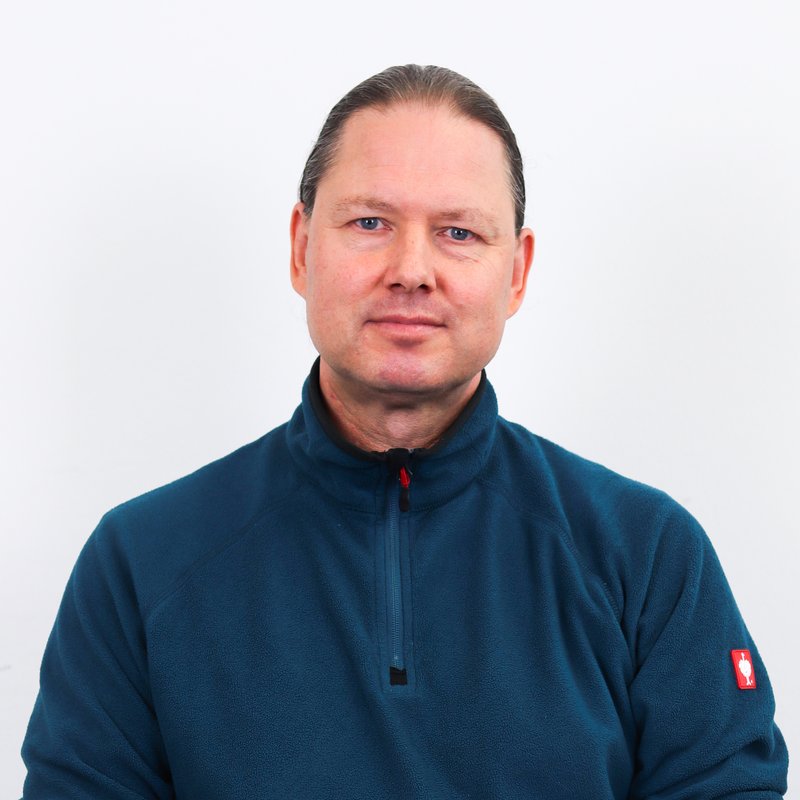
fabio alberti is a fixed-term assistant professor at the department of mechanical and aerospace engineering (dimeas) of politecnico di torino. he is affiliated with the college of mechanical, aerospace, and automotive engineering. his work spans mechanical engineering, automotive systems, and applied mechanics. fabio's research integrates machine learning with mechanical engineering, focusing on vehicle dynamics, smart design algorithms, and biomedical applications like hip and dental prosthetics. his studies address fatigue analysis, vibration modeling, and tire dynamics. his recent articles highlight trends in electric powertrain control with neural networks smart design for automotive and biomedical components multi-physical modeling of tires and urban vehicles tribological and biomechanical analysis vibration and fatigue life evaluation
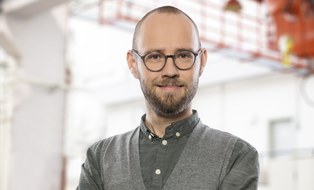
Alessandro Paolo Daga is a Fixed-term Tenure-Track Assistant Professor at the Department of Mechanical and Aerospace Engineering (DIMEAS) , Politecnico di Torino. His research focuses on machine diagnostics, vibration monitoring, bearings, digital signal processing, and machine learning applications in industrial systems. Keywords: Bearings, Digital Signal Processing, Machine Diagnostics, Machine Learning, Rotordynamics Awards: Best Poster Award at COMSOL Conference Munich 2023 3rd Place Best Paper at IEEE MetroInd4.0&IoT 2020 1st Place at Surveillance 9 (2017) 2nd Place at Surveillance 8 (2015) Teaching: He teaches courses in Gearbox Failure Analysis and Monitoring, and collaborates in Vibration Mechanics and Vehicle Noise & Vibration at both bachelor’s and master’s levels. He also supervises PhD research in Mechanical Engineering. Recent Research Trends: His work spans aerospace pyroshock testing, wind turbine condition monitoring, and vibration diagnostics for rotating machinery. He applies statistical learning and signal processing to energy systems and industrial equipment maintenance.
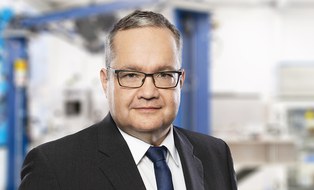
Prof. Dr. Hardy Weisweiler is a full-time faculty member at the Technical University of Central Hesse, specializing in the Department of Mechanical Engineering, Mechatronics and Materials Technology. His expertise spans fluid mechanics, computational fluid dynamics (CFD), lightweight construction, finite element method (FEM), and hydrogen technology, with a focus on practical research and educational infrastructure development. Academic Affiliation: Technical University of Central Hesse (THM) Roles: Professor, Dean of the Faculty of Mechanical Engineering, Co-founder of the Computational Engineering Laboratory Research initiatives include the establishment of a state-of-the-art fluid mechanics laboratory with wind tunnel facilities, collaborations with Helmholtz Centre for Heavy Ion Research (GSI) and DLR-Göttingen, and numerous industrial partnerships (ABB, BMW, Siemens). His work emphasizes reducing errors in fluid dynamic design, improving energy efficiency, and advancing hydrogen storage systems. Key scientific awards include the VDI Prize (2006). Expert activities include reviewing funding lines (2013-2017), developing hydrogen refueling test benches, and providing technical consultancy on valve systems, turbine blade solidification, and vacuum coating technologies. Supervision of diploma theses with companies like Honeywell and Metzeler is highlighted.
Eckhard Hennig is a Professor in the Department of Electronics & Drives at Reutlingen University, specializing in digital circuit design, low-power systems, and power electronics. His work bridges academic research and industrial application, with a focus on robust multisensor systems and technical origami for engineering. Education: Dipl.-Ing. in Electrical Engineering (1994, TU Braunschweig), Dr.-Ing. (2000, TU Kaiserslautern) Professional History: Researcher at University of Kaiserslautern (1995), Fraunhofer ITWM (1996–2000), Infineon Technologies AG (2000–2008), IMMS Institute (2008–2015) His research interests include low-power CMOS technology , delta-sigma modulation , and heterogeneous system modeling , with applications in energy-efficient systems and sensor networks. Recent publications emphasize adaptive modulation techniques , GaN-based power devices , and temporal decoupling for circuit stability. He leads projects like RoMulus (robust multisensor systems) and ZEBRA (technical origami) and contributes to interdisciplinary initiatives in hearing diagnostics and energy systems. His teaching includes courses on digital electronics, mixed-signal circuit design , and system modeling , with hands-on labs in FPGA/ASIC design and GaN device optimization. He works in the Digital Circuit Technology Lab, focusing on verification, heterogeneous simulation, and industry 4.0 sensor systems.
Lars Penter is a Senior Engineer Research and Education at the Chair of Machine Tool Development and Adaptive Controls , Dresden University of Technology, and a Research Associate at the Fraunhofer Institute for Machine Tools and Control Technology (Department of IIoT Controls and Technical Cybernetics). His career spans roles since 2018 in machine tool development, adaptive control systems, and industrial IoT applications. Current affiliations: Dresden University of Technology, Fraunhofer Institute Research focus: Digital twin technology, friction modeling, damping analysis, sheet metal forming, process-machine interaction Scientific contributions include 15 recent articles (2025–2022) covering AI-driven deep drawing process prediction, digital twin applications in forming, multifractal surface analysis, and composite material damping. Publications appear in journals like At-Automatisierungstechnik and Robotics and Computer-Integrated Manufacturing . He contributes to industrial simulation and thermo-elastic analysis , addressing challenges in forming press behavior, elastic tool deformations, and chatter detection. His work bridges mechanical engineering with industrial IoT and AI-driven optimization .
André Hardtmann is a Research Associate and Senior Engineer at the Institute of Forming Technology within Dresden University of Technology . His work focuses on advanced forming process modeling, machine-process interactions, and hybrid composite development.
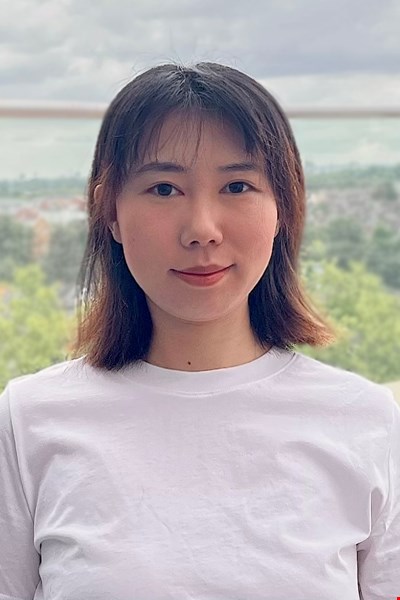
Dr. Bin Zhang serves as a Lecturer in Additive Manufacturing within the Department of Mechanical and Aerospace Engineering at Brunel University London's College of Engineering, Design and Physical Sciences. Her primary research focuses on developing advanced biomaterials and biofabrication techniques for tissue regeneration, drug delivery systems, and medical device innovation through 3D printing technologies. Education: PhD in Bioengineering, University College London, UK MSc in Mechanical Engineering, University College London, UK Her research integrates additive manufacturing with pharmaceutical sciences to create functional engineered tissues for wound healing, bone regeneration, and disease modeling. Key areas include 3D bioprinting of drug-loaded scaffolds, microneedle sensor fabrication, and computational modeling of tissue environments. She maintains active collaborations with institutions including UNC-Chapel Hill and NC State University. Analysis of her 15 most recent publications (2020-2024) reveals strong emphasis on pharmaceutical additive manufacturing (70% of works), with significant contributions to tissue engineering scaffolds (20%) and computational modeling (10%). Her work consistently bridges material science, drug delivery kinetics, and clinical applications, with increasing focus on AI integration in bioprinting processes since 2023. Professional Affiliations: Member, Academy of Pharmaceutical Sciences Member, Institute of Mechanical Engineers (IMechE) Member, IEEE Engineering in Medicine and Biology Society Dr. Zhang actively supervises PhD students in additive manufacturing of medical devices and microrobots, while securing research funding including a Royal Society grant (2024-2026) for 3D printing gradient scaffolds for osteoarthritic joint repair. Her lab develops in vitro 3D joint models and collaborates with clinicians through projects like Xcell for microgravity tissue studies.
Kristóf Gábor Bándy serves as a Lecturer at the Budapest University of Technology and Economics (BME), specifically within the Faculty of Electrical Engineering and Informatics and the Department of Automation and Applied Informatics . His work focuses on advanced control strategies for electrical drives and power conversion systems. Research Interests : Dr. Bándy's research centers on Model Predictive Control (MPC) in electrical engineering contexts, including optimization of permanent magnet synchronous motors (PMSM), grid-side converters, and power electronic topologies. He explores dynamic weighting factor assignment, LC/LCL filter compensation, and real-time implementation challenges. Publication Trends : His recent work emphasizes predictive control algorithms for renewable energy systems, electric vehicles, and industrial drives. Key themes include sorting networks for computational efficiency , quadratic regression models , and overmodulation techniques in multiphase drives.
Dr.-Ing. Abdul Razzaq Farooqi is a researcher at the University of Rostock , Faculty of Computer Science and Electrical Engineering, Institute of General Electrical Engineering. His work integrates computational electromagnetics with biomedical engineering to advance cartilage tissue engineering through electroactive hydrogels and electrical stimulation. Research Interests: Numerical simulation of electromagnetic fields Modeling and simulation of electroactive hydrogels for cartilage tissue engineering Computational bio-electromagnetics Across his recent publications (2019–2025), Farooqi has concentrated on electroactive hydrogels , electrical stimulation strategies , and computational biomechanics to enhance cartilage regeneration. Complementing this biomedical thrust, he has also contributed to electromagnetic focusing and chiral metamaterials in earlier works (2012). Scientific Awards: No awards explicitly mentioned in the provided text. Advising & Funding: No student names or specific grants are listed in the supplied material. Laboratories & Teams: Farooqi is affiliated with the Institute of General Electrical Engineering at the University of Rostock, where he conducts his computational and experimental investigations.
Jérôme Cros serves as Full Professor in the Department of Electrical Engineering and Computer Engineering at Laval University's Faculty of Science and Engineering. His internationally recognized work bridges theoretical innovation with industrial applications in power systems, evidenced by continuous publication output and active graduate supervision. His research concentrates on power electronics, electrical machine design, and energy systems optimization. Key focus areas include fault diagnosis in permanent magnet machines, digital twin development for induction systems, and AI-driven microgrid resilience. Recent work integrates deep learning with MILP formulations for active distribution networks and advances Halbach array motor design through FEA optimization. Publication trends since 2018 reveal consistent contributions to machine modeling (eccentricity analysis, coupled-circuit identification), microgrid optimization (resilience planning, linear power flow), and high-power-density motor design. His work demonstrates strong industry relevance through aircraft powertrain development and transformer diagnostics applications. Scientific recognition includes: Teaching Star, Faculty of Science and Engineering (2014, 2007, 1998) Professor Cros actively mentors graduate researchers across electrical engineering disciplines, with 14 supervisees including current PhD candidates in AI-based transformer diagnostics. His funded research includes the MITACS-sponsored project "Diagnostic and life estimation methods for power transformers using artificial intelligence techniques" (2021-2023), advancing predictive maintenance through machine learning. His research chair activities focus on applying artificial intelligence to power infrastructure diagnostics, particularly for extending transformer operational lifespans through real-time condition monitoring and failure prediction systems.
Chiara Micheli is an Adjunct Professor at the Department of Mechanical, Energy, Management and Transport Engineering (DIME) and a Research Fellow at the Department of Naval, Electrical, Electronic and Telecommunications Engineering (DITEN) within the University of Genoa. She teaches Electronics (course code 72350) for Mechanical Engineering undergraduates in the 2024-2025 academic year. Her research integrates interdisciplinary expertise in: Electronic skin development , focusing on piezoelectric polymers and viscoelastic properties for tactile sensing Robotics and control systems , including haptic feedback mechanisms and precision motion algorithms Mechatronic integration for applications in prosthetics and human-machine interfaces Recent publications demonstrate a consistent focus on material behavior modeling, sensor validation, and real-time control systems. Her work bridges experimental mechanics with applied robotics, emphasizing human-centric applications like adaptive grasping and slippage prevention.
Angel Quiros Olozabal is an Associate Professor at the University of Cadiz, affiliated with the Department of Automatic, Electronic, Computer Architecture and Networks Engineering. His research focuses on hardware development, FPGA optimization, and circuit design, with applications in Boundary Scan (JTAG) test automation, power quality monitoring, neuromorphic systems, and biomedical devices like TMS coils. His work spans diverse subfields including digital signal processing, electromagnetic modeling, and educational technologies. Key methodologies involve VHDL synthesis, boundary element analysis, and real-time system implementation. Current research trends emphasize privacy-preserving data collection protocols, thermal modeling for medical devices, and low-cost embedded platforms for circuit emulation. Scientific awards are not explicitly mentioned in the provided data. No student advisement records were found. For collaboration or inquiries, his email is angel.quiros@uca.es .
Prof. Dr. Amr Rizk is a Full Professor at Leibniz University Hannover since 2024, affiliated with the College of Electrical Engineering and Computer Science and the Institute of Communications Technology . Previously, he served as Tenured Professor at University of Duisburg-Essen (2021-2024) and Assistant Professor at Ulm University (2019-2021). His academic journey includes a Habilitation at TU Darmstadt (2019) and a doctorate with distinction (2013) from Leibniz University Hannover. Education: Doctorate (Leibniz University Hannover, 2013); Habilitation (TU Darmstadt, 2019) Prof. Rizk's research focuses on Statistical Performance Evaluation of Communication Systems , Design and Hardware-acceleration of Real-time Distributed Systems , and Coding and Transport of Immersive Multimedia . His work bridges theoretical analysis with practical implementations in network performance and real-time systems. His recent publications analyze stochastic scheduling, network calculus, and queuing models, with applications in 5G networks and distributed computing. Notable awards include multiple best paper recognitions (IEEE QCNC 2024, ACM MMSys 2023, ACM/USENIX Middleware 2017) and the Athene Young Investigator Award (2017). Scientific Awards: IEEE QCNC Best Paper (2024), ACM MMSys Best Paper (2023), ACM/USENIX Middleware Best Paper (2017), Athene Young Investigator Award (2017), ACM MMSys Excellence in DASH Paper Award (2016) Prof. Rizk has served as Associate Editor for Elsevier Computer Communications (Q1) since 2021 and organized key conferences including IEEE MIPR (2023), Workshop on Network Calculus (2020), and ACM MMSys (2019). His leadership extends to projects like ENVELOPE (Horizon Europe, 2023), FlexShield (BSI, 2023), and SPINE (DFG, 2018). He currently resides at Appelstr. 11/11A, 5th floor, building 3403, room A528 (Hanover, Germany) due to construction work at his primary address (Appelstraße 9a, 30167 Hanover; building 3408, room 1421).
Kindracki Jan is a full-time Professor at the Division of Aircraft Engines , Faculty of Power and Aeronautical Engineering , Warsaw University of Technology . His office is located in room 306b, and he can be contacted at Jan.Kindracki@pw.edu.pl . Research Leadership: Chair of Educational Team for Space Technology Projects at PAN, Editor for "Journal of Power Technologies" Teaching: Courses on Aerospace Propulsion, Celestial Mechanics, and Experimental Techniques Research activities focus on Aerospace Propulsion and Combustion Physics , particularly: Rotating Detonation Engines (RDE) Cold Gas/Resistojet Propulsion Hybrid Propellant Combustion Spacecraft Robotics Microgravity Simulation Computational Modeling of Detonation Scientific Achievements include: Multiple Rector's Awards (2007-2019) PECS ESA Project Participation NCN Sonata Grant Leadership NCBiR Project Leadership (2016-2019) Awards span team and individual recognitions, including the Professor Zygmunt Szlachta Award and Best Paper Award at ISHPMIE 2012. Academic Leadership involves organizing international conferences like the Development Trends in Space Propulsion Systems series and mentoring over 138 engineering students and 77 interim projects as of 2020.
Prof. Dr. İbrahim ÇAYIROĞLU currently holds a full-time Professor position at Karabük University's Faculty of Engineering and Natural Sciences, Department of Mechatronics Engineering. He has served as Department Chair since 2024 and previously held administrative roles including Dean Assistant and Department Chair between 2003-2021. Education: PhD in Mechanical Engineering (2002), Kırıkkale University MSc in Mechanical Engineering (1996), Kırıkkale University BSc in Mechanical Engineering (1991), Istanbul Technical University Research Focus: Specializes in Computer-Aided Design/Manufacturing, Finite Element Analysis, and Machine Dynamics. His work spans robotics, 3D printing optimization, welding technology, and mechanical system simulation. Recent Trends: 2024 publications highlight autonomous robotics, AI-integrated quality control in manufacturing, and advanced finite element analysis. Earlier works focused on SIFT-based object tracking, 3D printing reinforcement, and welding process evaluation. Advising Record: Supervised 11 graduate theses across diverse topics including autonomous robots, composite materials, and 3D printer design. Technical Projects: Led 12 projects between 2007-2023, including TÜBİTAK-funded excavator simulators, composite 3D printers, and automated glass mosaic tiling systems.