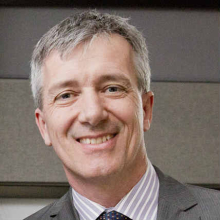
Søren Gustenhoff Hansen is an External Lecturer in the Department of Technology and Innovation at the University of Southern Denmark (SDU), affiliated with SDU Civil and Architectural Engineering. His work bridges academic research and practical engineering applications in structural systems, particularly focusing on concrete technology and precast construction. Institution: University of Southern Denmark (SDU) School: SDU Civil and Architectural Engineering Department: Department of Technology and Innovation Role: External Lecturer (part-time) His research centers on structural integrity, with emphasis on failure mechanisms in concrete, shear behavior, and the effects of alkali-silica reaction (ASR) on structural performance. He employs experimental investigations and finite element modeling to analyze precast concrete connections and damaged concrete elements. The recent publications (2023–2024) highlight a strong focus on anchorage systems in precast walls, shear capacity under various conditions, and modeling of anisotropic joints. These works fall under the broader disciplines of civil engineering, materials science, and structural mechanics, with specific attention to real-world infrastructure challenges such as ASR-damaged bridges. His research has been featured in press and media, including coverage on new findings and guidance for ASR-damaged bridges, indicating societal and industry relevance. He has collaborated with researchers like T. Veyhe, H.B. Jørgensen, and J.K. Hansen. Determining Concrete Tensile Strength in ASR-Damaged Slabs and Shells Without Transverse Reinforcement (2024) A Fracture mechanical and anisotropic FEM model of the “ReconWood Joint” and experimental verification (2023) While no formal scientific awards are listed, his publications appear in peer-reviewed venues such as Structural Concrete and RILEM Bookseries, and he has contributed to the fib Symposium and WCTE. He is involved in supervising at least one academic work, suggesting advisory activity. His research is supported by active collaboration networks and experimental validation of structural models.