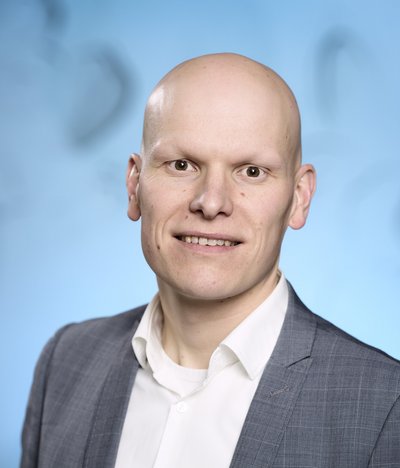
Konstantinos Karapiperis is a Tenure Track Assistant Professor at EPFL's Laboratory of Multiscale Modeling of Materials (LMD), within the School of Architecture, Civil and Environmental Engineering (ENAC). His research integrates mechanics , multiscale modeling , and data science to study geomaterials and structural materials. PhD in Applied Mechanics (minor in Applied Mathematics), Caltech Postdoctoral Researcher & Lecturer, ETH Zürich (Marie Skłodowska-Curie Fellowship) Research focuses on granular materials , architected materials , and nonlocal modeling using techniques like Level-Set Discrete Element Method (LS-DEM) and machine learning . Recent work explores fracture control via graph neural networks and thermodynamics-informed models. Selected scientific award: Marie Skłodowska-Curie Fellowship Teaches courses in Soil Mechanics and Multiscale Modeling . PhD students include Thomas Henzel and Hrishikesh Gopakumar Menon. His Data-Driven Mechanics Laboratory (LMD) develops predictive tools for granular and structured material behavior.
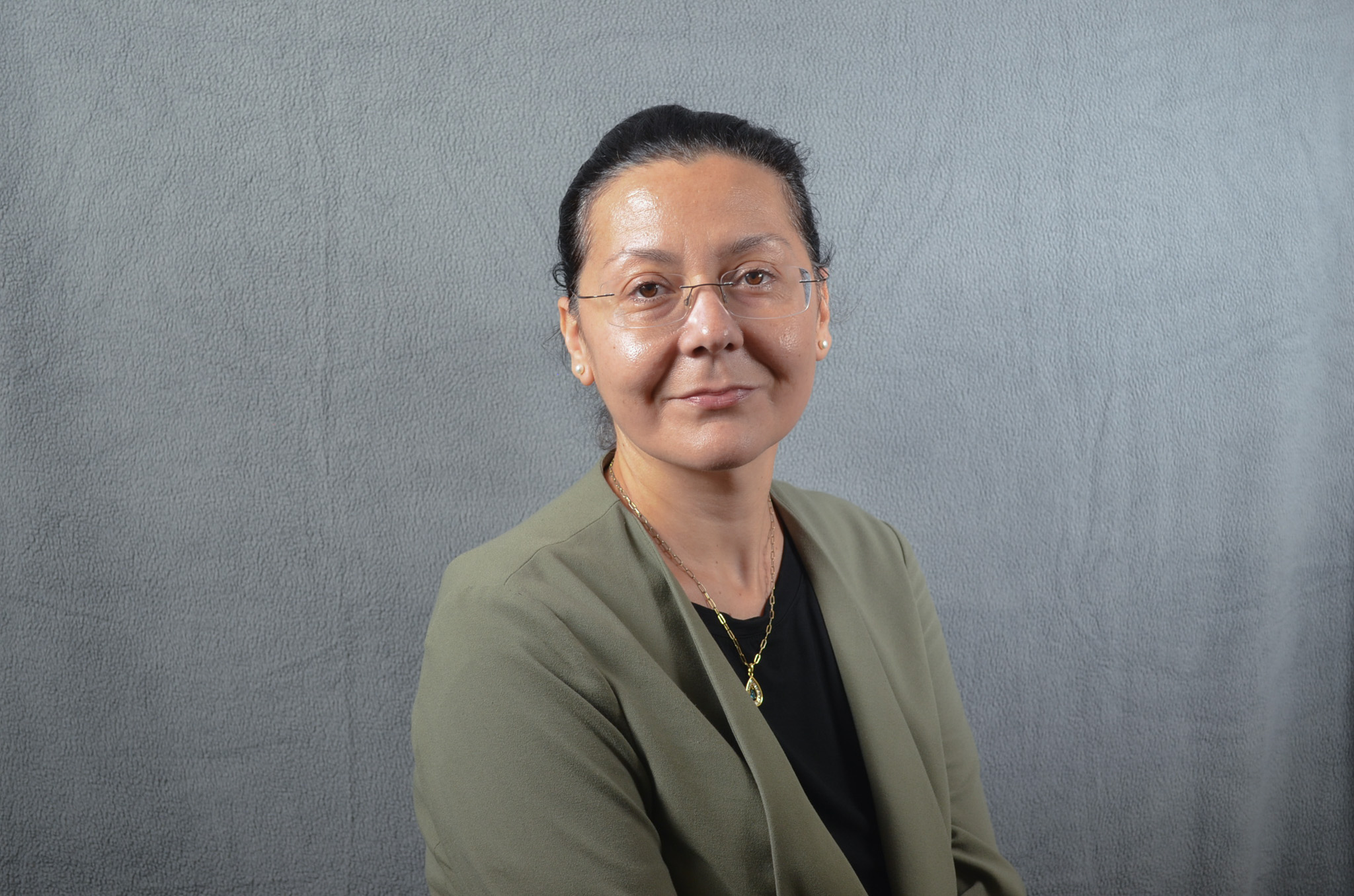
Maarten Hornikx is a Full Professor in Building Acoustics at the Department of the Built Environment , Eindhoven University of Technology. He serves as Vice-Dean of the department, leads the Building Acoustics Chair of Unit Building Physics and Services (BPS), and coordinates the Science of Sound and Music course series since 2013. His research focuses on computational modeling of sound propagation in built environments, with applications in mixed reality platforms and numerical analysis of outdoor/indoor propagation effects like vegetation and meteorological influences. Education : PhD in Applied Acoustics (Chalmers University of Technology, 2009); MSc in Architecture, Building and Planning (2004) Hornikx promotes open research software in acoustics and has received multiple grants, including Marie Curie Individual and Career Integration Grants. His recent publications explore AI-driven diffusion equation modeling, acoustic absorber optimization, and advanced numerical methods like the discontinuous Galerkin technique. He has held international leadership roles, including chairing the Computational Acoustics Technical Committee of the European Acoustics Association and serving as Associate Editor for Acta Acustica . Scientific Awards : Marie Curie Fellowship (2009-2011); Marie Curie Career Integration Grant (2012); 4TU.Built Environment Center Scientific Director (2020-2021); eScience Center Fellow (2022) As a research leader, Hornikx guided the H2020-ITN Acoutect project and conducted sabbaticals at Aalto University, Stockholm University (2018), and Politecnico Torino (2022). His group emphasizes computational acoustics and open-source tools to enhance reproducibility and collaboration.
Dr. Arghya Das is an Associate Professor in the Department of Civil Engineering at the Indian Institute of Technology Kanpur (IIT Kanpur), where he has been serving since 2014. He previously held the position of Assistant Professor at IIT Kanpur from July 2014 to November 2020 before being promoted to Associate Professor in December 2020. Prior to joining IIT Kanpur, he completed his Post-Doctoral Research Fellowship at Northwestern University, USA, and served as a Research Associate at the University of Sydney, Australia. Dr. Das earned his educational qualifications from prestigious institutions: PhD in Geotechnical Engineering from the University of Sydney, Australia (2013), M.Tech from IIT Bombay, India (2009), and B.E. from Jadavpur University, India (2006). His research focuses on advanced aspects of soil mechanics and geotechnical engineering, with particular emphasis on constitutive modeling of geomaterials, micromechanics of granular materials, and flow through porous media. His work integrates numerical and physical modeling approaches to address complex geotechnical challenges including bifurcation and instability analysis in geomaterials. Dr. Das teaches several advanced courses including Constitutive Modeling of Frictional Materials, Advanced Geotechnical Engineering, Rock Mechanics, Computational Methods in Engineering, and Soil Mechanics. Dr. Das's publication record demonstrates a consistent focus on discrete element modeling (DEM) applications in geomechanics, particle crushing behavior, and constitutive modeling of soils. His recent work (2020-2022) has particularly emphasized unsaturated soil mechanics, chemomechanical effects on granular materials, and advanced computational approaches to soil behavior. These publications appear in high-impact journals such as Acta Geotechnica, Geomechanics for Energy and the Environment, and International Journal of Geomechanics. PK Kelkar Fellowship - IIT Kanpur (2022-2025) FEIT University of Melbourne Visiting Researcher Fellowship (2022-2023) YGE Award for Best Paper on Computational Geomechanics, Indian Geotechnical Society (2018) SERB - Early Career Research Award (2016-2019) Dr. Das has successfully secured multiple research grants including projects funded by ONGC, CSIR, and SERB focusing on micro-poro-mechanical modeling, experimental assessment of Indian crushable sands, and permeability evolution in deep-reservoir rocks. He serves as a corresponding member of the International Technical Committee TC-105 on 'Geo-Mechanics from Micro to Macro' of the International Society for Soil Mechanics and Geotechnical Engineering (ISSMGE) and is a member of the Indian Geotechnical Society.
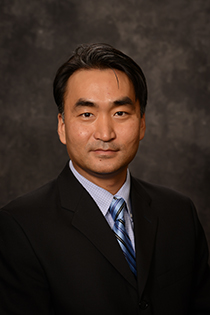
Pelin Berik Giwa is a Lecturer in the Department of Mechanical and Aerospace Engineering at the University of Central Florida (UCF). She holds a doctorate in mechatronics engineering from Johannes Kepler University and a Diplom degree in mechanical engineering from Vienna University of Technology. Her postdoctoral research spanned California State University, North Carolina State University, and Virginia Tech, with visiting roles at UCLA and Loyola Marymount University. Education : Ph.D., Mechatronics Engineering, Johannes Kepler University Diplom, Mechanical Engineering, Vienna University of Technology Research Interests : Focuses on piezoelectric actuators, nanotechnology applications in aerospace, and vibration control in aerospace structures. Her work integrates experimental benchmarking, finite element simulations, and material characterization to advance smart materials and actuator designs. Article Trends : Her publications emphasize piezoelectric crystal actuation, shear-mode sensors, and lead-free materials. Key themes include torsional actuation, nonlinear response analysis, and material optimization for aerospace applications. Awards : Erwin Schrödinger Fellowship, Austrian Academy of Sciences Max Kade Fellowship Teaching & Advising : Instructs courses like Engineering Analysis – Dynamics and Modeling Methods in MAE. While no formal advisees are listed, her roles reflect mentorship in academic and postdoctoral settings.
H. Jerry Qi is a Professor in the Department of Mechanical Engineering at the Georgia Institute of Technology. He specializes in finite deformation multiphysics modeling of soft active materials, with a focus on shape memory polymers, 4D printing, and material recycling. His research integrates experimental and computational approaches to advance additive manufacturing technologies. Education: Sc.D., Massachusetts Institute of Technology, 2003 Ph.D., Tsinghua University, China, 1999 B.S., Tsinghua University, China, 1994 Research Interests: Dr. Qi's work spans 4D printing of active materials, mechanics in 3D printing, and sustainable polymer processing. His group develops hybrid printing methods and recyclable thermosetting polymers, collaborating with institutions like SUTD and AFRL. Key areas include smart material design, photomechanical experiments, and finite element modeling. Scientific Awards: ASME Fellow (2015) Woodruff Faculty Fellow (2015) J. T. Oden Faculty Fellowship (2012) NSF Career Award (2007) Advising & Grants: Dr. Qi actively seeks undergraduate, PhD, and postdoc researchers. His projects are funded by NSF, AFOSR, and industry partnerships. He leads a research group focused on advancing active materials and sustainable manufacturing. Labs & Teams: His lab integrates computational modeling, experimental mechanics, and additive manufacturing to create innovative materials and structures for applications in aerospace, biomedical, and environmental engineering.
Dr. Kim Yong-Joe is an Associate Professor in the J. Mike Walker ’66 Department of Mechanical Engineering at Texas A&M University. He serves as the Director of the Acoustics and Signal Processing Laboratory (ASPL), founded in 2009. His research focuses on acoustics, applied signal processing, nonlinear acoustics, biomedical acoustics, noise and vibration control, and structural dynamics. He has received notable awards including the 2014 Department of Mechanical Engineering Graduate Teaching Award and the 2014 Pioneer Natural Resources Faculty Fellow II. His lab specializes in wave propagation analysis, ultrasonic structural health monitoring, and acoustophoresis in microfluidic systems. He has collaborated with sponsors like the National Science Foundation, Qatar National Research Fund, and Samsung Techwin. His research has led to advancements in noise reduction technologies, biomedical diagnostics, and nondestructive evaluation methods.
Dond Asha Kisan is an Assistant Professor at the School of Mathematics , Indian Institute of Science Education and Research Thiruvananthapuram (IISER TVM). His research focuses on numerical analysis and computational mathematics , particularly in finite element methods for partial differential equations. He can be contacted at ashadond@iisertvm.ac.in or via phone at +91 (0)471-2778247. PhD : Mathematics, Indian Institute of Technology Bombay M.Sc. : Mathematics, K.T.H.M. College, Nashik Kisan's research spans adaptive finite element methods , stabilized formulations for convection-diffusion problems , and optimal control governed by Stokes equations . His work includes convergence analysis, nonconforming discretizations, and hybrid numerical schemes. Recent publications (2023-2025) address stochastic modeling in liquid crystal physics, advanced WENO schemes, and adaptive algorithms for control problems. Scientific Awards : No explicit awards mentioned in the data, though he held prestigious postdoctoral fellowships including National Post-Doctoral Fellowship and NBHM Post-Doctoral Fellowship. Kisan has extensive teaching experience , including MATLAB workshops and undergraduate course assistantships. He has presented at major international conferences like ICIAM and Hyperbolic Problems, demonstrating global engagement in computational mathematics.
Graeme J. Kennedy is an associate professor in the Daniel Guggenheim School of Aerospace Engineering at the Georgia Institute of Technology where he leads the Simulation-based Multidisciplinary Design Optimization (SMDO) research group. His research focuses on developing numerical optimization techniques for structural and multidisciplinary design problems, particularly for fixed-wing aircraft analysis and design. Dr. Kennedy received his PhD from the University of Toronto Institute for Aerospace Studies (UTIAS) in 2012, followed by a postdoctoral research fellowship at the University of Michigan in the Department of Aerospace Engineering. His research spans several critical areas in aerospace design optimization: Development of advanced numerical optimization techniques for structural design Large-scale topology optimization for aerospace structures Aeroelastic and aerothermoelastic optimization of flexible aircraft Optimization of composite structures with manufacturing constraints Electric motor optimization for electric vertical take-off and landing (eVTOL) vehicles He has developed multiple open-source research codes including TACS (parallel finite-element solver), ParOpt (optimization toolkit), TMR (mesh generation tool), and FUNtoFEM (aeroelastic coupling framework). Dr. Kennedy is particularly interested in designing structures that manage heat from battery packs in air taxis while achieving optimal aeroelastic performance. His publications reveal a strong focus on computational methods for solving large-scale optimization problems in aerospace design. The research shows progressive development from fundamental optimization algorithms toward increasingly complex multidisciplinary applications, with particular emphasis on making high-fidelity simulation-based optimization practical for industrial design cycles through high-performance computing approaches. Dr. Kennedy actively mentors numerous graduate students, including six current PhD candidates and multiple former PhD and MS students who have completed their degrees under his supervision. His research group maintains strong connections with industry through various grants supporting the development of computational tools for aerospace design. The SMDO group also engages in educational outreach through 'Optimization through Intuition,' providing accessible learning modules about optimization concepts for middle and high school students, demonstrating Dr. Kennedy's commitment to broadening participation in engineering education.
Xu Jinchao is a Professor of Applied Mathematics and Computational Sciences at King Abdullah University of Science and Technology (KAUST) and the Verne M. Willaman Professor of Mathematics at Penn State University. He has held distinguished roles, including Director of the Center for Computational Mathematics and Applications at Penn State since 1997 and is an Affiliated Faculty member of the College of Information Sciences and Technology at Penn State. His research focuses on numerical partial differential equations (PDEs), multigrid methods, machine learning, finite element methods, and domain decomposition methods. He is renowned for pioneering contributions such as the Bramble-Pasciak-Xu (BPX) preconditioner, Hiptmair-Xu (HX) preconditioner, Xu-Zikatanov (XZ) identity, and Morley-Wang-Xu (MWX) element. His work bridges computational mathematics and machine learning, including the development of MgNet, which unifies multigrid methods with convolutional neural networks. Xu has been recognized with numerous awards, including Fellowships from SIAM, AMS, AAAS, and the European Academy of Sciences. Notable accolades include the 2008 DOE Top 10 Breakthroughs for his HX preconditioner and the 1995 Feng Kang Prize for Scientific Computing. He has organized over 100 conferences and serves on editorial boards of top journals such as Mathematics of Computations and Numerische Mathematik . His leadership includes directing research centers and advancing computational science through collaborative efforts.
Dr Jordan Pitt is an academic affiliated with the University of Sydney's Faculty of Science. He holds the role of Associate Dean (Indigenous Strategy and Services) while also actively contributing as an applied mathematician. His work emphasizes interdisciplinary research and Indigenous inclusion in academia. Dr Pitt completed his PhD at the Australian National University in 2019, focusing on tsunami and storm surge modeling. He pursued post-doctoral research at the University of Adelaide, where his studies expanded into ocean wave-sea ice interactions. Current research investigates how wave dynamics influence sea ice growth/melt cycles, a critical factor in Earth's climate systems. Research Interests: Mathematical modeling of environmental systems Ocean wave mechanics Climate change impacts on sea ice Computational fluid dynamics While no specific scientific awards are explicitly listed, Jordan has been involved in initiatives like co-convening the Academy of Science’s 'Looking Back, Moving Forward' Public Lecture Series (2023) and organizing the ANZIAM 2024 Early Career Workshop. His efforts bridge Indigenous communities with STEM fields through programs like Science Pathways. As an educator and researcher, Jordan has not listed formal advisees or grants in the provided texts. His professional networks include roles in Indigenous strategy and academic service. Jordan’s work is associated with laboratories and teams focused on environmental fluid dynamics and climate modeling, though specific lab names are not mentioned.
Ana Maria Alonso Rodriguez is a Full Professor of Numerical Analysis at the Department of Mathematics, University of Trento. She holds a PhD in Applied Mathematics from Universidad Complutense de Madrid (1993) and has held academic positions across Italy and Spain since 1990. Her research focuses on numerical methods for partial differential equations, computational electromagnetism, finite element methods, and domain decomposition techniques. She has organized international workshops and minisymposia, including the 2022 Oberwolfach workshop on Hilbert Complexes and the 2018 ICOSAHOM conference session on high-order methods. Her work bridges numerical analysis, topology, and applied electromagnetism, with recent contributions to Whitney finite elements and discrete potential theory. Education: PhD in Applied Mathematics, Universidad Complutense de Madrid (1988-1993) Licenciatura en Ciencias Matematicas, same institution (1982-1987) Research emphasizes high-order discretizations for electromagnetic problems, leveraging finite element exterior calculus and graph-based decomposition techniques. Recent work (2024) advances tree-cotree methods for curl operator spectra and Whitney form interpolation. She actively collaborates with international institutions like the CI2MA in Chile and the Laboratoire J. A. Dieudonné in France. Teaching includes courses on numerical PDEs, finite elements, computational electromagnetism, and MATLAB-based numerical analysis at both undergraduate and PhD levels. She has supervised numerous courses in Italy and Spain since 2000, integrating practical software tools like FreeFem and MODULEF into instruction.
David L. Henann serves as the James R. Rice Associate Professor of Solid Mechanics in the Department of Engineering at Brown University's School of Engineering. His research focuses on continuum-level constitutive modeling of engineering materials, with particular expertise in granular materials, viscoelastic foams, and bubble dynamics in soft solids. Henann leads an active research group developing computational frameworks for material behavior prediction through numerical simulation. PhD, Massachusetts Institute of Technology (2011) SM, Massachusetts Institute of Technology (2008) BS, State University of New York at Binghamton (2006) Henann's research spans constitutive theory development and computational implementation for complex material systems. His group pioneers nonlocal continuum models for granular flows, large-deformation viscoelastic theories for elastomeric foams, and high-strain-rate characterization of microcavitation phenomena. Current projects include modeling size segregation in granular media, bubble dynamics in viscoelastic hydrogels, and electromechanical instabilities in dielectric elastomers. His publication record reveals consistent focus on material instability phenomena , constitutive model validation , and experimental-computational synergy . Henann frequently collaborates with experimental groups to validate theoretical frameworks, particularly in soft matter mechanics and cavitation dynamics. Eshelby Mechanics Award for Young Faculty (2020) NSF CAREER Award (2016) Pi Tau Sigma Gold Medal (ASME, 2016) Brown University Teaching Awards (2015-2016) Henann maintains an active teaching portfolio covering continuum mechanics, solid mechanics, and plasticity at both undergraduate and graduate levels. His research group operates a computational mechanics laboratory with extensive Fortran-based simulation capabilities, evidenced by multiple open-source repositories on GitHub for granular rheology, foam modeling, and dielectric elastomer analysis. Current work focuses on extending nonlocal granular models to industrial applications and developing predictive frameworks for soft material failure under extreme loading conditions.
Michael Barnes is a Tutorial Fellow in Physics and Professor of Physics at the University of Oxford. He contributes to the Department of Physics through teaching and research, with a focus on plasma behavior in magnetic fields. His work has critical applications in sustainable energy production via fusion and astrophysical systems. Professor Barnes teaches Mathematical Methods for Physicists to undergraduate students at University College and lectures on Complex Numbers and Ordinary Differential Equations . His pedagogical emphasis is on developing mathematical fluency for advanced physics topics. His research explores plasma turbulence suppression by sheared flows, particularly in magnetic confinement fusion. Key projects include the development of the TRINITY multiscale gyrokinetic transport code and studies on tokamak transport barriers. Recent publications highlight advancements in gyrokinetic simulations, collision operators, and beam diagnostics for fusion applications. Notable trends in his publications include multiscale modeling of plasma turbulence, zonal flow dynamics, and experimental comparisons for fusion devices like JET, MAST, and ITER. Subfields span from fundamental kinetic theory to applied fusion engineering.
Buyung Kosasih is a Professor in the School of Mechanical, Materials, Mechatronic and Biomedical Engineering at the University of Wollongong. He has held this position since 2000 and focuses on teaching and research in mechanical engineering, including Machine Dynamics, Finite Element Methods, and Renewable Energy Technology. His research spans fluid dynamics in industrial processes, renewable energy systems, and aqueous lubrication. Key projects include 3D-printed surfboard fin optimization and steel coating dynamics. Research interests emphasize experimental and computational fluid dynamics, particularly in renewable energy turbines and tribological systems. Notable awards include the 2013 Outstanding Contribution to Teaching and Learning Award. He has supervised numerous students and led over 20 funded projects, including ARC grants for steel innovation and renewable energy. Collaborative work includes the Steel Research Hub and HVAC/cool roof efficiency studies.
Makhlouf M. Makhlouf is a Professor of Mechanical & Materials Engineering at Worcester Polytechnic Institute (WPI). He served as Director of the Advanced Casting Research Center (ACRC) from 1992 to 2015, leading it to become the world's leading foundry-industry consortium. His expertise spans physical metallurgy, materials processing, and nanocomposite development. He holds 5 US/European patents and has authored over 150 papers. Education : BS (High Honors), American University in Cairo, 1978 MS, Mechanical Engineering, New Mexico State University, 1980 PhD, Materials Science & Engineering, WPI, 1990 Research Interests : Makhlouf focuses on developing high-performance alloys (e.g., aluminum alloys for high-temperature applications), solidification processes, and metal-matrix nanocomposites via methods like RIGLI. His work integrates thermodynamics, kinetics, and heat/mass transfer modeling for materials engineering challenges. Articles Overview : His recent publications address topics like aluminum alloy precipitation strengthening (2017), gas-liquid synthesis of nanocomposites (2017), and casting process optimization (2017). These contributions emphasize practical applications in foundry and aerospace sectors. Grants & Advising : He has directed federally/non-federally funded projects, mentored 10 PhD students, 20 MS students, and 8 postdoctoral fellows. His work bridges academic research and industrial collaboration. Labs/Teams : He leads research through WPI's ACRC and collaborates with industry partners to advance foundry technologies and nanocomposite manufacturing.