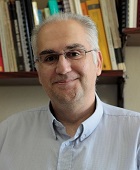
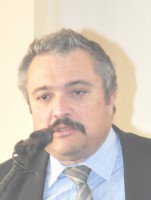
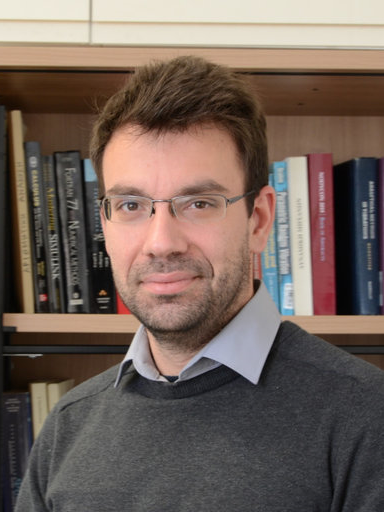
Michalis Xenos is a Professor in the Department of Mathematics at the University of Ioannina, Greece. He holds a PhD in Applied Mathematics (2003) from the University of Patras and has held postdoctoral positions at the University of Illinois at Chicago (2003-2007) and Stony Brook University (2007-2011). His research spans Applied Mathematics, Fluid Mechanics, and Biomechanics, with a focus on Magnetohydrodynamics (MHD), Computational Fluid Dynamics (CFD), and Fluid-Structure Interaction (FSI) in cardiovascular systems. Education : BSc (1996), MSc (1998), PhD (2003) in Applied Mathematics, University of Patras. Affiliations : University of Ioannina (2011-present), Stony Brook University (postdoctoral, 2007-2011), University of Illinois at Chicago (postdoctoral, 2003-2007). His work involves modeling blood flow in aneurysms, optimizing mechanical heart valves, and analyzing hemodynamic factors in vascular diseases. Collaborators include Prof. A.A. Linninger (UIC), Prof. D. Bluestein (SUNY), and Prof. U. Morbiducci (Politecnico di Torino). His publications address MHD flows, AAA rupture risk prediction, thrombogenicity in devices, and nonlinear differential equations.
Efthymios N. Karatzas serves as an Assistant Professor in the Department of Mathematics at Aristotle University of Thessaloniki, Faculty of Sciences, within the Computer Science and Numerical Analysis Section. He maintains an active research profile in computational mathematics with strong institutional affiliations including collaborations with SISSA mathLab and FORTH Institute of Applied and Computational Mathematics. His academic credentials include: PhD in Mathematics, National Technical University of Athens (2015) Master's in Applied Mathematical Sciences – Computational Mathematics, NTUA (2009) Master's in Applied Mathematics, University of Patras (2001) Bachelor's in Mathematics (Computational Mathematics), University of Patras (1999) Dr. Karatzas' research program centers on advanced numerical techniques for partial differential equations , with pioneering work in reduced order modeling , embedded boundary methods , and optimal control systems . His expertise spans computational fluid dynamics, uncertainty quantification, and biomechanical applications, characterized by methodological innovation in handling geometrically complex domains through cut finite element approaches and shifted boundary formulations. Analysis of his 15 most recent publications reveals a cohesive research trajectory focused on developing efficient numerical frameworks for parametrized PDE systems. His work consistently bridges theoretical rigor with practical implementation, particularly in advancing reduced basis methods for fluid-structure interaction and biological modeling, demonstrating significant contributions to computational mathematics through high-impact journal publications. No major scientific awards are documented in the available sources. Dr. Karatzas demonstrates research leadership through project management roles including Scientific Manager for the ELIDEK project at NTUA (2019-2021) and Project Manager for the European Social Fund HEaD initiative at SISSA (2017-2019). His grant administration experience encompasses coordinating interdisciplinary teams and securing external funding for computational mathematics research. He maintains active collaborations with the SISSA mathLab in Trieste (particularly with Prof. Gianluigi Rozza's group) and the FORTH Institute in Crete, participating in international workshops including the Reduced Order Methods in CFD Summer School (2019) and SIAM UQ conferences. His research network spans computational mathematics groups across Europe with emphasis on advancing numerical methodologies for real-world engineering and biological applications.
Georgios Zouraris is a Professor at the University of Crete, where he has maintained an active research profile since earning his Ph.D. from the same institution in 1995. His work is centered in the School of Science and Engineering, focusing on advanced computational mathematics with applications in physics and engineering. Education: Ph.D. in Mathematics, University of Crete, 1995 Professor Zouraris specializes in the development and rigorous analysis of numerical methods for partial differential equations. His research spans finite element and finite difference techniques for nonlinear Schrödinger equations, logarithmic heat equations, and stochastic PDEs with space-time white noise. Key contributions include error estimation frameworks for relaxation schemes, convergence analysis of Crank-Nicolson methods, and efficiency improvements for multilevel Monte Carlo simulations. His theoretical work consistently addresses singular nonlinearities and complex domain geometries, bridging mathematical rigor with computational practicality. Analysis of his 2020-2025 publications reveals a sustained focus on high-accuracy numerical schemes for challenging PDEs, particularly those involving logarithmic singularities and stochastic forcing. Recent work demonstrates increasing sophistication in handling noncylindrical domains and coupling strategies, with applications ranging from quantum systems to material science. The publications show consistent emphasis on provable convergence rates and computational efficiency. Information regarding student advising, research grants, and laboratory facilities is not documented in the available sources. His active publication record through 2025 indicates ongoing research leadership in computational mathematics.
Vamvatsikos Dimitrios serves as an Associate Professor in the Department of Structural Engineering at the School of Civil Engineering, National Technical University of Athens (NTUA), maintaining active research and teaching roles in seismic engineering and structural dynamics. His work centers on risk assessment methodologies, fragility analysis, and innovative seismic protection systems for buildings and critical industrial infrastructure. His research spans seismic risk assessment of oil refineries and industrial facilities, development of advanced protection systems (including inerter devices and fiber-reinforced elastomeric isolators), and experimental validation of non-structural component performance. Key methodological contributions include probabilistic fragility curve estimation via Bayesian updating, analysis of vertical ground motion effects, and hazard-consistent risk frameworks. His work extends to cultural heritage protection and infrastructure resilience decision-support systems. Recent publications (2024-2025) demonstrate intense focus on practical industrial risk assessment, particularly for oil refineries and steel racking systems, integrating experimental shaking table tests with computational modeling to validate seismic protection strategies like nonlinear steel fuses. A growing trend incorporates sustainability-driven design principles and climate change impacts into risk assessment frameworks. Scientific Awards: No scientific awards were documented in the provided source material. Advising and Grants: No information regarding student advising, research grants, or funding sources was available in the scraped content.
Christos Manopoulos is an Assistant Professor at the School of Mechanical Engineering, National Technical University of Athens (NTUA), Greece, within the Fluids Section. His roles include Director of the Biofluid Mechanics & Biomedical Technology Laboratory and Health and Safety Officer for the Fluid Mechanics Section. He holds a PhD in Biomedical Engineering (2009) and M.Sc.E. in Biomedical Engineering (1999) from NTUA and University of Patras, alongside a Mechanical Engineering Diploma (1995). Professional Experience: Includes senior researcher roles, postdoctoral fellowships, and teaching positions at multiple institutions since 1998. Research Focus: Biofluid mechanics, biomedical device design, and cardiovascular hemodynamics. Specializes in computational modeling of valveless pumping, arterial wall mechanics, and endovascular repair systems. His work integrates experimental, theoretical, and computational methods. Key Research Trends: Recent articles emphasize patient-specific computational studies of aortic aneurysms, novel biomedical device designs, and fluid dynamics in medical systems. Topics include finite element analysis, peristaltic pumps, and pulsatile flow modifications. Awards: Doctoral Excellence (2009), Thomaideio awards (2012, 2005–2010), and a patent for a mechanical ventilator component (2021). Labs/Teams: Leads the Biofluid Mechanics Lab at NTUA, focusing on translational biomedical engineering and computational modeling.
Nikolaos Efkolidis is an Assistant Professor at the University of Western Macedonia in the Department of Product and Systems Design Engineering . He is a member of the Computational Design and Digital Fabrication Research Lab ( codeplus.uowm.gr ) and co-founder of the design studio heptahedron.studio . Research Focus : Computational design, digital fabrication, AI-driven optimization, and sustainable product development. Key Techniques : Response Surface Methodology (RSM), Genetic Algorithms, Finite Element Analysis (FEA), and Additive Manufacturing. His recent publications highlight trends in multi-material 3D printing , machine learning for machining processes , and user-driven customization . Applications span footwear, marine robotics, and industrial design.
Christos Manopoulos is an Associate Professor at the National Technical University of Athens (NTUA), School of Mechanical Engineering, Section of Fluids. His research focuses on biofluid mechanics and biomedical engineering, particularly in valveless pumping, peristaltic pumps, and computational modeling of cardiovascular systems. PhD in Biomedical Engineering (2009), NTUA and University of Patras M.Sc.E. in Biomedical Engineering (1999), NTUA and University of Patras Diploma in Mechanical Engineering (1995), University of Patras His work bridges theoretical, computational, and experimental methods to analyze unsteady oscillating flows, develop biomedical devices, and model arterial wall mechanics. Recent research trends emphasize patient-specific simulations for aortic aneurysms, optimization of medical pumps, and understanding pulse wave velocity in pathological conditions. His publications highlight advancements in computational fluid dynamics and biomedical device design. Scientific Committee, 10th & 11th IC-SCCE (2022, 2024) Patent #1009983 (2021) for mechanical ventilator bifurcator Multiple awards from Thomaideio foundation (2005-2010) Scholarships from Loulis (1999-2009) and Tzetzou (1999-2001) foundations Manopoulos leads the Biofluid Mechanics & Biomedical Technology Laboratory (2022-present) and contributes to health and safety protocols at NTUA. He teaches undergraduate and postgraduate courses in biofluid mechanics, computational modeling, and biomedical engineering.
Panagiotis Chatzipantelidis is an Associate Professor and Associate Chair at the University of Crete. He earned his Ph.D. from the same institution in 1998. His office is located in E-318 and he can be contacted via email at p.chatzipa@uoc.gr or by phone at 39-3871. His primary research focuses on numerical analysis and numerical methods for differential equations , with specialized expertise in finite element and finite volume techniques. Key areas include error analysis, positivity-preserving schemes, and adaptive methods for solving parabolic, elliptic, and hyperbolic partial differential equations. Analysis of his 15 most recent publications (2012-2022) reveals consistent work on theoretical foundations of numerical PDE solvers, with particular emphasis on stability analysis and error estimation for finite element/volume methods. Recurrent themes include heat equations, transport phenomena, and chemotaxis systems. No scientific awards or honors are mentioned in the available records. There is no available information regarding student mentorship, research grants, laboratory affiliations, or collaborative teams in the provided materials.
Panagiotis Hadjidoukas is an Associate Professor and Head of the Laboratory for Computing at the Computer Engineering and Informatics Department, University of Patras, within the School of Engineering. His work focuses on high-performance computing systems and parallel programming models. His research spans parallel and distributed computing , runtime support for parallel programming models , and automation of AI/ML workloads . Key contributions include developing the torc runtime system for task parallelism and pioneering work in extreme-scale scientific simulations. His interests bridge theoretical computer science with practical applications in scientific computing and AI acceleration. Notable achievements include the ACM Gordon Bell Prize Winner (2013) for 11 PFLOP/s cloud cavitation simulations and Finalist (2015) for in-silico lab-on-a-chip microfluidics. His software tools ( torc_lite , torcpy ) enable efficient parallelism across diverse architectures. Doctor of Philosophy (2003), University of Patras Master of Science (2001), University of Patras Diploma in Computer Engineering (1998), University of Patras As Head of the Laboratory for Computing, he leads infrastructure development while maintaining active research collaborations with IBM Research and ETH Zurich. His teaching portfolio includes graduate courses on high-performance computing for data sciences and parallel processing principles.
Stavroulakis Georgios is a Professor at the School of Production Engineering and Management, Technical University of Crete. His research focuses on smart structures, vibration control, finite element methods, and advanced materials. He leads interdisciplinary projects in structural mechanics, acoustics, and computational mechanics with applications in engineering systems and heritage preservation. Key areas include: (1) Development of robust control systems for smart structures, (2) Numerical modeling of masonry and composite materials, (3) Applications of artificial intelligence in structural analysis and material science. Office: Δ5.109, DPEM Building. Research activities emphasize: Active vibration suppression using piezoelectric systems and auxetic materials Advanced finite element analysis for biomedical and historical structures Data-driven computational methods for material characterization Acoustic comfort optimization in urban environments Structural health monitoring through physics-informed neural networks His work bridges traditional engineering disciplines with modern AI tools, addressing challenges in infrastructure resilience and sustainable design. Publications span smart materials innovation, nonlinear mechanics, and heritage building restoration.
Konstantinos Beltsios is a Professor at the Department of Materials Science and Engineering, School of Chemical Engineering, National Technical University of Athens (NTUA). His work spans interdisciplinary research in materials science, environmental engineering, and cultural heritage science. He leads projects on advanced polymer membrane technologies, sustainable materials recycling, and analytical studies of historical artifacts. Key research interests include: Development of novel polymer membranes for gas separation and water treatment Recycling of polymeric materials like PVB from laminated glass Analysis of pigments and materials in Byzantine and post-Byzantine art CO2 capture using ionic liquid-based adsorbents Nanostructured carbon materials for catalytic and adsorption applications His recent publications (2022–2025) highlight advancements in membrane fabrication techniques, material characterization via X-ray and optical methods, and interdisciplinary studies bridging engineering and art conservation. He actively participates in institutional governance roles such as secretariat work for international student exchange programs (IKY Program) and academic assembly elections. Beltsios collaborates extensively with international institutions on EU-funded projects involving material innovation and cultural heritage preservation. His lab focuses on translating fundamental material science into practical solutions for environmental challenges and historical artifact conservation.
Andreas Boudouvis is a Professor at the National Technical University of Athens (NTUA), School of Chemical Engineering, in the Department of Analysis, Design and Development of Processes and Systems. He served as Rector of NTUA from October 2019 until November 2023 and previously as Dean of the Chemical Engineering School from March 2013. His research focuses on computational transport phenomena and fluid mechanics with applications in chemical vapor deposition, multiscale modeling, and reduced-order modeling techniques. His research aims at investigating causes and illuminating mechanisms of engineering systems based on first principles. His work emphasizes computational analysis of transport phenomena, particularly examining viscous, gravitational, interfacial, and electromagnetic forces in flow and transport systems. Boudouvis employs advanced computational methods including Galerkin/finite element methods and numerical linear algebra techniques for large-scale scientific computing. His recent publications demonstrate a strong focus on hybrid equation-based and data-driven computational workflows for industrial deposition processes, population balance modeling for pharmaceutical applications, and multiscale analysis of chemical vapor deposition systems. His research group has produced numerous PhD and graduate theses spanning computational mechanics, fluid dynamics, and materials processing. Scientific Awards: 2024 Award for Excellence in Academic Teaching from the Foundation for Research and Technology-Hellas Professor honoris causa of the University of West Attica (2023) Boudouvis has supervised over 40 doctoral and graduate students whose work has received numerous awards including the Léopold Escande Prize for best PhD theses. His research group maintains strong international collaborations with institutions including Johns Hopkins University, University of Luxembourg, and Institut National Polytechnique de Toulouse. His work bridges fundamental computational methods with practical industrial applications, particularly in materials processing and chemical engineering systems.
Sotirios Xydis is an Assistant Professor in the Division of Computer Science at the School of Electrical and Computer Engineering, National Technical University of Athens (NTUA), with prior faculty appointment at Harokopion University of Athens (2020-2023). He maintains ongoing collaboration with the Institute of Communication and Computer Systems (ICCS) since 2014 and previously served as an engineer at HEDNO (2015-2018) and postdoctoral researcher at Politecnico di Milano (2011-2013). His academic credentials include: BSc in Electrical and Computer Engineering, NTUA (2005) MSc in Techno-Economic Systems, NTUA (2011) PhD in Electrical and Computer Engineering, NTUA (2011) Dr. Xydis specializes in hardware/software co-design , energy-efficient hardware acceleration , and memory management for embedded and cloud-edge systems. His research bridges low-power circuit design , heterogeneous architecture optimization , and resource management frameworks , with particular emphasis on AI workloads and serverless infrastructures. Current projects target Edge AI accelerators (CONVOLVE), disaggregated memory systems, and LLM inference optimization through hardware-aware algorithms. Analysis of his 2023-2025 publications reveals three dominant trends: (1) Energy-efficient hardware accelerators for Edge AI using approximate computing techniques, (2) Memory/resource management innovations for disaggregated serverless environments, and (3) GPU/FPGA optimization for LLM inference through dynamic frequency scaling and predictive throttling. These works consistently address the power-performance tradeoffs in heterogeneous computing systems. His scientific recognition includes: Best Paper Award, IEEE/NASA/ESA AHS (2007) Best Paper Award, ACM PARMA (2013) Best Paper Award, ACM Computing Frontiers (2020) Hipeac Award at DAC (2019, 2020) Dr. Xydis has secured over 15 European/national research grants as Principal Investigator and Technical Coordinator, focusing on hardware acceleration frameworks and energy-efficient computing. His advising encompasses graduate research in hardware design and optimization, though specific student names aren't publicly listed. Current projects include CONVOLVE for Edge AI and CollectiveHLS for collaborative hardware synthesis. He is a core member of NTUA's Microelectronics Laboratory (Microlab) and collaborates with ICCS on hardware acceleration projects. His team develops frameworks like CollectiveHLS and throttLL'eM, with active participation in DATE, DAC, and ISCA conference communities.
Panagiotis Alevras is an Assistant Professor at the Department of Mechanical Engineering, Technical University of Crete, affiliated with the School of Production Engineering and Management. He holds a Diploma in Mechanical Engineering from NTUA (2011) and a PhD from Heriot-Watt University (2015), focusing on stochastic response of offshore renewable systems. His research spans nonlinear dynamics, vibration energy harvesting, and manufacturing technology. Dr. Alevras has contributed to EPSRC-funded projects on self-powered sensors for automotive applications and vibration absorbers for powertrains. He spent time as a Visiting Researcher at the University of Illinois and later joined the University of Birmingham as a Lecturer. His work includes over 20 journal papers and 30 conference proceedings, with an h-index of 14. Research interests include random ambient vibrations, vibration attenuation, and novel manufacturing techniques. He leads the Micromachining and Manufacturing Modeling Laboratory, focusing on advanced gear manufacturing simulations and modular energy systems. His recent articles emphasize nonlinear energy harvesting concepts, wind turbine dynamics, and torsional oscillation control in automotive systems. Dr. Alevras has served as an evaluator for funding agencies like ERC and contributed to European research projects as a Co-Investigator. His expertise bridges theoretical dynamics with practical engineering applications in renewable energy and automotive systems.
Georgios Kossioris is a Professor at the Department of Mathematics and Applied Mathematics of the University of Crete . He holds a Ph.D. in Applied Mathematics from Brown University (1991) and a Diploma in Naval Architecture from the National Technical University of Athens (1986). His research focuses on Partial Differential Equations and Applications , with significant contributions to stochastic equations, Hamilton-Jacobi modeling, and interdisciplinary work in environmental and biomedical domains. His publications span Numerical Analysis , Stochastic Modeling , and Environmental Economics , including key works on the Shallow Lake Problem , Wind Energy Assessment , and Abdominal Aortic Aneurysm Segmentation . He has secured major grants for projects like Extreme Weather Phenomena Prediction (SYNERGASIA, 2011-2014) and Optimal Control of Dynamic Systems (THALIS, 2012-2014). He has organized workshops such as the 2019 SDEs/SPDEs: Theory, Numerics, and Data Science and taught courses like Weak Theory of PDEs , Differential Equations , and Dynamic Meteorology . His computational methodologies bridge mathematics, economics, and biomedical engineering.