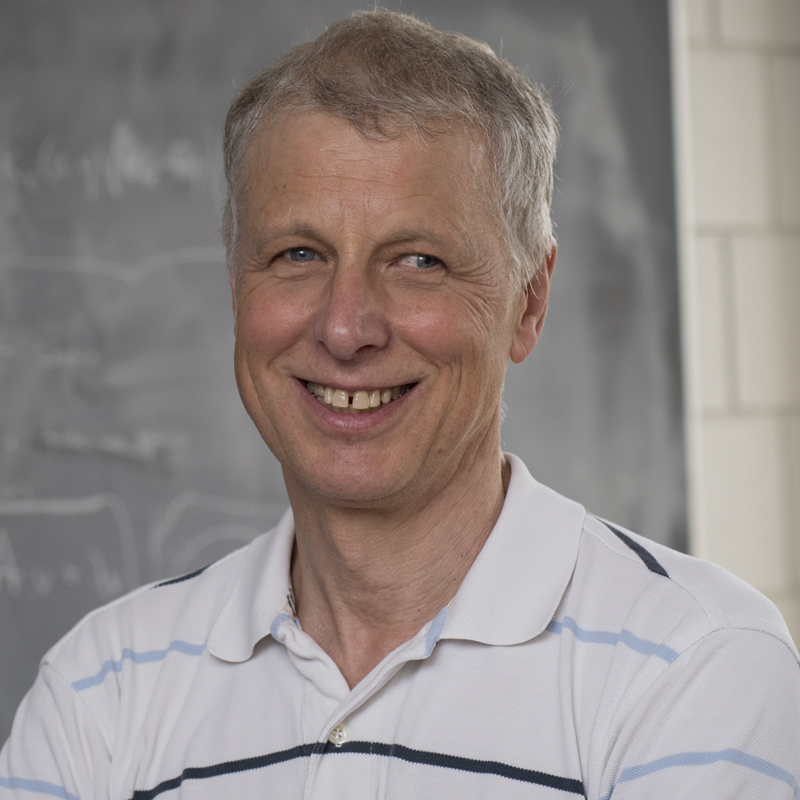
Prof. Stanislav Hencl is a faculty member at the Department of Mathematical Analysis , Faculty of Mathematics and Physics , Charles University in Prague. His research focuses on mathematical analysis, particularly on Sobolev mappings, finite distortion theory, and their applications to nonlinear elasticity and geometric function theory. Research Interests : Sobolev spaces, geometric function theory, nonlinear elasticity, measure theory, and partial differential equations. Students : Supervised 18 PhD, master's, and bachelor's theses, including Jaromír Mielec (Sobolev mappings extensions), Ondřej Bouchala (noncompactness of Sobolev embeddings), and Anna Doležalová (nonlinear mapping classes). Key Publications : Monograph Lectures on mappings of finite distortion (Springer, 2014) and 15+ recent works on Sobolev homeomorphism properties, injectivity, and energy functionals. Contact : Office K255, Karlín campus, email Stanislav.Hencl@mff.cuni.cz and hencl@karlin.mff.cuni.cz .
Minah Oh is a Professor and Chair of the Department of Mathematics & Statistics at James Madison University (JMU), where she has served since 2010. Her research focuses on numerical analysis, scientific computing, finite element methods, and optimal control, with a particular emphasis on axisymmetric problems and multigrid techniques. She holds a Ph.D. in Mathematics/Numerical Analysis from the University of Florida (2010) and degrees from Yonsei University (B.S., 2005). Her work bridges theoretical mathematics and computational applications, addressing challenges in PDE discretization, optimal control problems, and geometric numerical methods. Recent publications explore finite element approaches for state-constrained control problems and the analysis of axisymmetric domains using de Rham complexes and Fourier-based methods. No scientific awards are explicitly listed in the provided materials. Her advising and grants sections remain unspecified in the text. Dr. Oh maintains an academic website at educ.jmu.edu/~ohmx for further details.
Dr. Masoumeh Dashti is an Associate Professor in Mathematics at the University of Sussex, UK, affiliated with the School of Mathematical and Physical Sciences. She holds a PhD in Mathematics from the University of Warwick (2008) and prior degrees in Mechanical Engineering from Sharif University of Technology and Tehran Polytechnic. Her research focuses on Partial Differential Equations, Inverse Problems, Bayesian Inference, and their applications in fluid dynamics and epidemiology. Key research interests include: Bayesian approaches to inverse problems, sparsity-promoting estimators, uncertainty quantification, and mathematical modeling of epidemics on networks. She has contributed to foundational work on Besov priors and MAP estimator consistency in nonparametric Bayesian frameworks. Her publications span topics like network inference from epidemic data, contraction rates of posterior distributions, and fluid-structure interaction problems. She has secured grants including 'Two-dimensional stochastically perturbed shallow water equations' (2019-2023) and 'Confronting High Dimensional Network Models With Data' (2018-2022). Currently, she serves as an Associate Editor for SIAM-ASA Journal on Uncertainty Quantification and AIMS Foundations of Data Science . Teaching expertise includes Functional Analysis, Partial Differential Equations, and Calculus of Several Variables at both undergraduate and postgraduate levels.
Goulnara Arzhantseva is a full Professor at the Department of Mathematics within the Faculty of Mathematics at the University of Vienna. With an active research career spanning over a decade, she has established herself as a prominent figure in geometric group theory and related fields. Her work demonstrates continuous scholarly output with publications appearing consistently from 2011 through 2024. Professor Arzhantseva's research focuses primarily on geometric group theory, with particular emphasis on discrete groups, metric geometry, approximation properties of groups, small cancellation theory, expanders, and sofic groups. Her work bridges pure mathematics with applications in metric geometry and functional analysis. The breadth of her research is evident in her collaborations with numerous mathematicians across different institutions and countries. Her publication record shows a clear trajectory of increasingly sophisticated work in geometric group theory. The most recent publications (2022-2024) focus on metric approximations of discrete groups, spectral gap properties, origami expanders, and acylindrical hyperbolicity in cubical small cancellation groups. These works represent cutting-edge research at the intersection of group theory, geometry, and combinatorics. Scientific Awards: Prize mentioned in search results (4 total, specific names not provided) Prize mentioned in search results (4 total, specific names not provided) Prize mentioned in search results (4 total, specific names not provided) Prize mentioned in search results (4 total, specific names not provided) Professor Arzhantseva has been actively involved in numerous research projects, with records showing 7 projects between 2011-2024. Her collaborative approach is evident in her extensive publication record, which includes significant contributions to prestigious mathematics journals. While specific details about her advising activities are not provided in the available information, her substantial research output suggests active mentorship of graduate students in geometric group theory.
Bernardo Cockburn is a Distinguished McKnight University Professor in the School of Mathematics at the University of Minnesota. He has been a faculty member since 1987, progressing from Assistant Professor to Associate Professor in 1992, and achieving full Professor status in 1997. He also held positions as an Affiliate Professor at the University of Delaware (2019-2020) and Chair Professor of Mathematics at King Fahd University of Petroleum and Minerals in Saudi Arabia (2012-2014). Education: Ph.D. from University of Chicago (1986), Doctorat de 3eme Cycle from University of Paris VI/INRIA (1983), Masters and Licenciatura from Universidad Nacional de Ingenieria in Lima, Peru Research Focus: Numerical methods for partial differential equations, particularly discontinuous Galerkin methods Cockburn's research primarily centers on the devising and analysis of efficient methods for numerically solving linear and nonlinear partial differential equations . His most significant contribution has been in the development and analysis of discontinuous Galerkin methods , particularly the hybridizable discontinuous Galerkin (HDG) methods which he pioneered. His work spans error estimation for hyperbolic problems, continuous dependence for Hamilton-Jacobi equations, and numerous applications across fluid dynamics, structural mechanics, and electromagnetics. He has developed theoretical frameworks for superconvergence properties and created practical algorithms for a wide range of engineering applications. Analysis of his recent publications reveals a strong focus on hybridizable discontinuous Galerkin methods , with significant contributions to superconvergence theory, error estimation, and applications to diverse physical problems including Stokes flow, linear elasticity, Timoshenko beams, and convection-diffusion problems. His work demonstrates a clear trajectory from theoretical foundations to practical implementation, with increasing emphasis on curved domains, adaptive methods, and coupling techniques between different numerical approaches. Doctor Honoris Causa from Universidad Nacional de Ingenieria, Lima, Peru (2013) Invited Speaker at the International Congress of Mathematicians, Numerical Analysis Section (2010) Distinguished McKnight University Professor, University of Minnesota (2007) Cockburn has supervised an impressive 23 PhD students throughout his career, many of whom have gone on to become professors at major universities worldwide including the University of Puerto Rico, Purdue University, and University of Concepcion in Chile. His advisees have produced significant research in discontinuous Galerkin methods, particularly in applications to structural mechanics, fluid dynamics, and Hamilton-Jacobi equations. His research has been supported by numerous grants from the National Science Foundation and other funding agencies, enabling extensive collaboration with researchers across the United States and internationally. Cockburn leads a vibrant research group focused on computational mathematics, with particular emphasis on developing and analyzing discontinuous Galerkin methods. His work has fostered significant collaboration between mathematicians and engineers, with applications spanning aerospace, civil engineering, and materials science. The research group maintains strong connections with institutions worldwide, including regular collaborations with researchers in Peru, Chile, and Europe, reflecting Cockburn's international background and influence.
Ilaria Perugia is a University Professor (Univ.-Prof.) and Chair of Numerics of PDEs at the Department of Mathematics, Faculty of Mathematics, University of Vienna. She also serves as Deputy Head of the Research Platform Erwin Schrödinger International Institute for Mathematics and Physics. Her research focuses on numerical methods for partial differential equations with applications in computational physics and engineering. Professor Perugia's primary research interests include: Numerical methods for PDEs Finite element methods Discontinuous Galerkin methods Trefftz methods Virtual element methods Space-time methods Computational electromagnetics Wave propagation problems Nonlinear reaction-diffusion problems Her work spans theoretical analysis, algorithm development, and practical implementation of numerical methods for solving complex physical phenomena. Her recent publications demonstrate a strong focus on space-time methods, virtual element methods, and structure-preserving discretizations for wave equations, heat equations, and other PDEs. She has made significant contributions to the development of stable and efficient numerical schemes that preserve important physical properties of the underlying continuous problems, particularly in the context of wave propagation and computational electromagnetics. Professor Perugia leads a research group comprising several researchers and students including Mattia Corti, Matteo Ferrari, Monica Nonino, Andrea Scaglioni, Paul Stocker, Enrico Zampa, and Marco Zank. Her group actively collaborates on projects related to numerical analysis and scientific computing, with particular emphasis on developing novel discretization techniques for challenging PDE problems.
Endre Süli is a Professor of Numerical Analysis at the University of Oxford, affiliated with Worcester College and Linacre College. He has held various academic roles since 1985, including Fellowships and Tutorships in Mathematics. University Education: B.Sc. in Mathematics, University of Belgrade (1974-1978) M.Sc. in Mathematics, University of Belgrade (1978-1980) Ph.D. in Mathematics, University of Belgrade (1985) M.A., University of Oxford (1985) British Council Visiting Student, Reading University and University of Oxford (1983/84) Süli's research focuses on numerical methods for partial differential equations (PDEs), with expertise in finite element methods, adaptive algorithms, error control, and computational modeling of fractures and non-Newtonian fluids. His work bridges mathematical theory and practical applications in fluid dynamics and material science. His recent publications emphasize finite element approximations, nonlinear PDEs, and stochastic models for polymer dynamics. Themes include multiscale methods, tensor-sparsity for high-dimensional problems, and compressible flow simulations. Scientific Awards: Fellow of the Royal Society (2021) London Mathematical Society Naylor Prize and Lectureship (2021) Pro Urbe Prize, City of Subotica (2021) SIAM Fellow (2016) Member, Academia Europaea (2020) Foreign Member, Serbian National Academy of Sciences and Arts (2009) IMA Service Award (2011) Fellow, European Academy of Sciences (EurASc) (2010) Fellow, Institute of Mathematics and its Applications (2007) London Mathematical Society/New Zealand Mathematical Society Forder Lecturer (2015) Professor Hospitus, Charles University, Prague (2012) Distinguished Visiting Chair Professor, Shanghai Jiao Tong University (2013) Invited Speaker, International Congress of Mathematicians, Madrid (2006) Süli has supervised numerous research projects and held visiting appointments globally. His contributions to numerical analysis span foundational work on error estimation, nonlinear stability, and advanced computational frameworks for complex physical systems.
Arthur Bousquet is an Associate Professor of Mathematics at Lake Forest College, affiliated with the Math and Computer Science department. He holds a PhD in Applied Mathematics from Indiana University (Bloomington, IN) and a MS in Engineering in applied mathematics and scientific computing from SuP Galilee Engineering School (Paris, France). His research focuses on numerical methods for partial differential equations, including finite volume and finite element techniques, with applications to geophysical fluid dynamics, climate modeling, and biomedical problems like viral shell mechanics. Notable areas include shallow water equations, phase field modeling, and computational methods for atmospheric dynamics. Bousquet has published extensively on topics such as numerical weather prediction, electrokinetic equations, and virus nanoindentation modeling. His work often combines theoretical analysis with computational simulations to address complex systems in fluid dynamics and materials science. He has received the Rothrock Award for teaching excellence (2014) and held research fellowships including an NSF Graduate Fellowship (2009-2013). His teaching includes courses like Computational Mathematics, Multivariable Calculus, and Real Analysis.
Martin Berggren is a Professor at the Department of Computing Science , Umeå University , Sweden. His work focuses on Computational Design Optimization , combining computer simulations and numerical optimization to enhance engineering designs for devices like antennas, microwave components, and loudspeakers. Berggren is also active in mathematical modeling of physical phenomena, particularly wave propagation and fluid mechanics, with a strong emphasis on finite-element methods . His research addresses large-scale conceptual design problems using thousands to millions of design variables, relying on gradient-based algorithms and adjoint-based computations of design sensitivities—similar to back-propagation in deep learning. Key application areas include acoustic and electromagnetic devices, where he investigates damping mechanisms, boundary conditions, and material distribution. Other interests, though less active, involve flow control and unsteady fluid–structure interaction . Berggren collaborates extensively on projects such as Structured Regularization , Topology Optimization of Acoustic Black Holes , and Design of Microstrip-to-Waveguide Transitions . His publications span journals like Journal of Computational Physics , Pattern Analysis and Applications , and IEEE Transactions on Antennas and Propagation , often co-authored with researchers like Linus Hägg , Eddie Wadbro , and Disi Lin .
Matthias Schlottbom is an Associate Professor specializing in Mathematics of Computational Science, with a focus on numerical methods and their applications in physics, biology, and engineering. His research integrates advanced computational techniques with interdisciplinary problems, including radiative transfer, photonic crystals, and chemotaxis modeling. Research Interests: Schlottbom’s work spans numerical analysis, finite element methods, and machine learning. He develops high-order discretization schemes, iterative solvers for anisotropic transport, and mathematical frameworks for biological network formation. Publications: Recent articles highlight his contributions to accelerating radiative transfer simulations, extending component mode synthesis for Helmholtz equations, and analyzing diffusion limits in kinetic models. His work often bridges computational mathematics with practical applications in photonics and multiscale systems. Collaborations: He actively collaborates on datasets for optical simulations, radiative transfer algorithms, and photonic crystal modeling, contributing to open-access repositories like 4TU.Centre and Zenodo. Activities: Schlottbom has organized workshops such as the Kinetic Theory Workshop in the Netherlands and delivered keynotes on residual minimization and data-driven methods for transport equations. Scientific Awards: No specific awards or fellowships are mentioned in the provided materials. Advising & Grants: Details about students, advising roles, or grant funding are not included in the available data.
Noel J. Walkington is a Professor in the Department of Mathematical Sciences at Carnegie Mellon University, affiliated with the Mellon College of Science. His research focuses on developing numerical algorithms for partial differential equations, bridging mechanical engineering and mathematics. Education: M.S. and Ph.D. in Mechanical Engineering from the University of Missouri-Rolla, and a Ph.D. in Mathematics from the University of Texas at Austin. Postdoctoral appointments at both institutions. Research interests include numerical methods for multiphase flows, viscoelastic fluids, and complex fluid dynamics. His work emphasizes computational techniques for engineering and mathematical challenges. Publications span topics like porous media flow, control volume approximations, and liquid crystal dynamics, reflecting a strong focus on computational and applied mathematics.
Juan Manuel Pérez Pardo is an Associate Professor in the Department of Mathematics at Universidad Carlos III de Madrid, where he has been a faculty member since 2019, progressing from Assistant Professor to his current position as Associate Professor since December 2022. His academic journey includes postdoctoral research at prestigious institutions including the Istituto Nazionale di Fisica Nucleare in Naples, Italy, and the Instituto de Ciencias Matemáticas in Madrid. Dr. Pérez Pardo earned his PhD in Mathematics from Universidad Carlos III de Madrid in 2013, following a Master's degree in Mathematical Engineering from the same institution and a Master's degree in Theoretical Physics from Universidad Complutense de Madrid. His undergraduate studies were in Physics at Universidad Complutense de Madrid. His research focuses on the intersection of functional analysis and quantum physics, particularly in three main areas: Functional Analysis : Applying functional analytical tools to quantum systems, with emphasis on quadratic forms associated with differential operators and evolution equations in Hilbert spaces. Quantum Systems with Boundary : Studying quantum dynamics when boundaries are present, combining operator theory, spectral theory, and differential geometry. Quantum Control on Infinite Dimensional Systems : Developing mathematical theory for controlling quantum systems that are infinite dimensional in nature, relevant to quantum computation technologies. His publication record shows a strong focus on quantum control theory, self-adjoint extensions of differential operators, and the mathematical foundations of quantum mechanics. Recent work (2022-2025) has concentrated on stability of non-autonomous Schrödinger equations, quantum controllability, and relativistic quantum systems. Dr. Pérez Pardo has received several prestigious awards including the Juan de la Cierva Fellowship and the QUITEMAD+ Postdoctoral Fellowship. His work on boundary dynamics driven entanglement was highlighted in Europhysics News and tagged as IOPselect by the Institute of Physics. He actively mentors students at all levels, currently supervising PhD candidate Ángel Aitor Balmaseda Martín on "Quantum Control at the Boundary." He has also supervised numerous Master's and Bachelor's students on topics ranging from numerical solutions of quantum control problems to modeling Josephson junctions. Dr. Pérez Pardo is a key member of the Q-Math Research Group at UC3M and has organized multiple international workshops on Information Geometry, Quantum Mechanics, and Applications. He also serves on the editorial board of the International Journal of Geometric Methods in Modern Physics.
Endre Süli is Professor of Numerical Analysis at the University of Oxford, where he has maintained a distinguished academic career since 1985. He currently serves as Fellow and Tutor in Mathematics at Worcester College and Supernumerary Fellow at Linacre College. His progression at Oxford includes University Lecturer in Numerical Analysis (1985-1996), Reader in Numerical Analysis (1996-1999), and Professor of Numerical Analysis (1999-present). Süli completed his B.Sc. in Mathematics at the University of Belgrade (1974-1978), followed by an M.Sc. in Mathematics (1978-1980). As a British Council Visiting Student, he studied at Reading University and Oxford University in 1983/84, earned his Ph.D. from the University of Belgrade in 1985, and received his M.A. from Oxford University in the same year. Professor Süli's research centers on numerical analysis of nonlinear partial differential equations with applications across multiple scientific domains. His work spans free-discontinuity problems and computational modeling of fracture; finite element methods; Navier-Stokes-Fokker-Planck systems; adaptive algorithms with a-posteriori error control; implicitly constituted material models; and discontinuous finite element methods. His research bridges theoretical mathematics with practical computational approaches for complex physical phenomena. Recent publications (2024-2025) demonstrate Süli's continued leadership in numerical analysis, with focus areas including fractional calculus, stochastic PDEs, and advanced finite element techniques. His work shows strong interdisciplinary connections between mathematical analysis, fluid dynamics, and materials science, addressing challenging problems in polymeric fluids, porous media, and capillary flow modeling. Professor Süli's distinguished career has been recognized with numerous prestigious honors: Invited Speaker at the International Congress of Mathematicians, Madrid (2006) Fellow of the Institute of Mathematics and its Applications (2007) Foreign Member of the Serbian National Academy of Sciences and Arts (2009) Fellow of the European Academy of Sciences (2010) IMA Service Award (2011) SIAM Fellow (2016) Member of the Academia Europaea (2020) London Mathematical Society Naylor Prize and Lectureship (2021) Fellow of the Royal Society (2021) As an educator, Süli has received the Oxford University Teaching Excellence Award (2009) and the Mathematical Institute Teaching Award (2013). He has supervised numerous PhD students and postdoctoral researchers throughout his career, though specific names aren't documented in the available materials. His research has been supported by various grants enabling work on computational methods for partial differential equations. Süli maintains active service to the mathematical community through editorial boards and professional organizations. Professor Süli is affiliated with the Numerical Analysis research group and the Oxford Centre for Nonlinear PDE at the Mathematical Institute. These research centers provide a collaborative environment for theoretical and applied work on partial differential equations. His research often involves interdisciplinary collaborations with physicists, engineers, and computational scientists to develop and analyze numerical methods for complex physical phenomena.
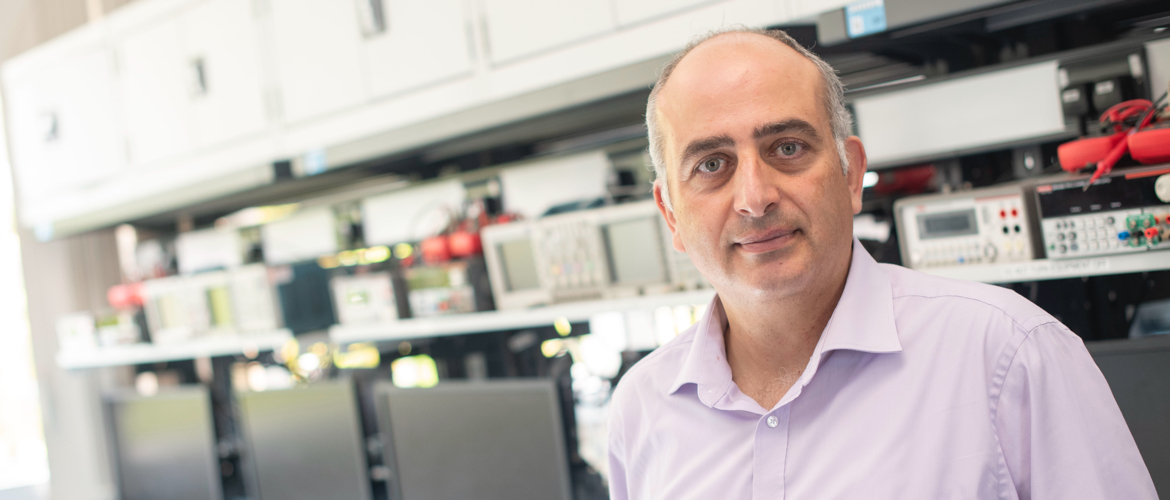
Dr Christos Mias is a Reader in Electrical and Electronic Engineering at the School of Engineering, University of Warwick, UK. He serves as Director of Studies for the Electrical and Electronic Engineering stream and has held roles such as UK URSI Commission B (Fields and Waves) representative from 2009-2014. His research focuses on electromagnetic shielding, computational electromagnetics, microwave engineering, antennas, periodic structures, and radiowave propagation. Dr Mias' work bridges theoretical advancements with practical applications in antenna design, frequency selective surfaces, and electromagnetic modeling. His research interests emphasize innovative solutions in antenna array analysis, periodic structure optimization, and advanced simulation techniques such as finite element time-domain (FETD) modeling. He has contributed to understanding scattering phenomena, non-reflecting boundary conditions, and molecular vs electromagnetic wave propagation comparisons. Recent studies include railway infrastructure monitoring and critiques of superlensing concepts in plasmonics. Publications highlight advancements in MoM formulations, FSS analysis, and sparse matrix methodologies for boundary condition simulations. His work often integrates computational methods with real-world engineering challenges, such as optimizing antenna performance and improving electromagnetic compatibility in complex environments. Dr Mias advises through his role as Director of Studies, fostering academic excellence in electrical engineering education. His office is located in A325, with advice hours on Fridays 10 AM-12 PM during term time.
Dr. Fengyan Li is a Professor in the Department of Mathematical Sciences at Rensselaer Polytechnic Institute (RPI). She holds a PhD in Applied Mathematics from Brown University (2004) and previously held a postdoc at the University of South Carolina. Her research focuses on numerical analysis and scientific computing, particularly discontinuous Galerkin methods for applications in wave propagation, fluid dynamics, plasma physics, and nonlinear optics. She has received prestigious awards including the NSF-CAREER Award (2009) and Alfred P. Sloan Fellowship (2008). Dr. Li serves on editorial boards of journals like SIAM Journal of Numerical Analysis and IMA Journal of Numerical Analysis. Education: PhD in Applied Mathematics (Brown University, 2004); MS & BS in Computational Mathematics (Peking University, 2000 & 1997). Research interests emphasize multi-scale simulations, reduced-order modeling, and high-order methods. Her work addresses challenges in kinetic transport, nonlinear optics, and plasma dynamics. She has delivered plenary talks at major conferences, including ICOSAHOM (2018) and NAHOMCon (2022). Professional service includes leadership roles in the Association for Women in Mathematics (AWM), co-organizing symposiums, and mentoring. She is a 2025 AWM Fellow and advises RPI's AWM Student Chapter.