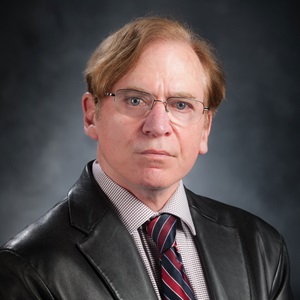
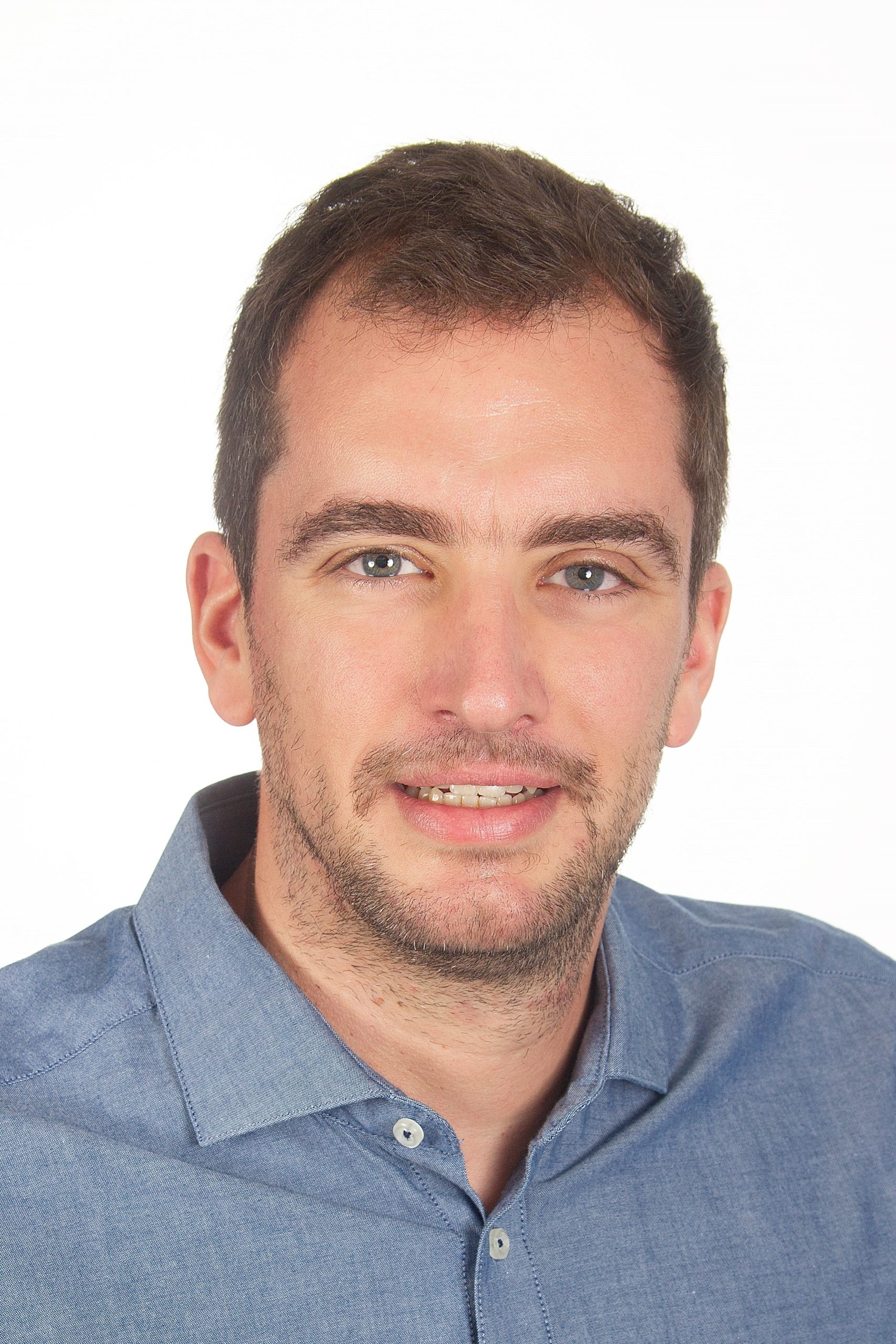
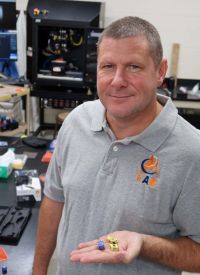
Dr. Dennis Sullivan is Professor of Electrical and Computer Engineering at the University of Idaho, specializing in computational electromagnetics and quantum device simulation. His research advances finite-difference time-domain (FDTD) methods for electromagnetic and quantum applications. Research areas: Advanced FDTD algorithms for electromagnetic simulation Quantum device modeling in nanostructures Hyperthermia treatment planning for cancer therapy Optical computing systems He has developed computational techniques applicable to medical physics, nanotechnology, and optical engineering.
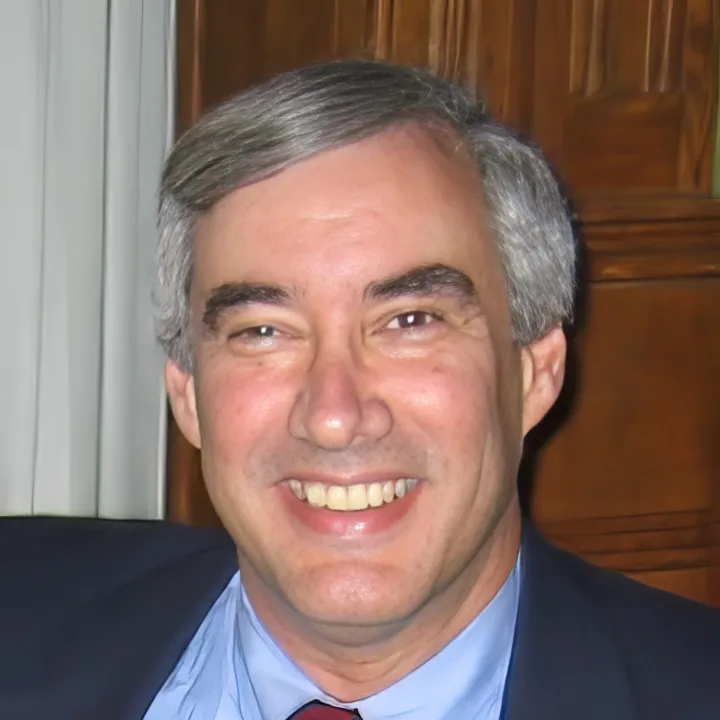
Summary Dr. Dariush Motazedian is a Full Professor of Engineering Seismology at Carleton University's Department of Earth Sciences within the Faculty of Science. He has held academic roles since 2003, including Department Chair (2016-2019). His research focuses on stochastic and hybrid earthquake fault modeling, seismic microzonation, and seismic soil dynamics. He leads collaborative projects with institutions like the Geological Survey of Canada (GSC), Hydro Quebec, and international partners. Key contributions include the EXSIM earthquake modeling technique, Ottawa's first seismic microzonation maps, and dynamic studies of Champlain Sea clays. Education Ph.D. in Engineering Seismology, Carleton University (2002) M.Sc. in Geophysics/Seismology, Tehran University (1995) B.Sc. in Applied Physics, Shiraz University (1988) Research Interests His work addresses earthquake ground motion prediction, crustal velocity modeling, and seismic hazard mitigation. He developed the EXSIM method, validated globally by institutions like the Southern California Earthquake Center. His team's Ottawa microzonation studies influenced updates to the National Building Code of Canada (NBCC). Current projects include seismic risk screening tools for existing buildings and dynamic properties of postglacial sediments. Grants & Collaborations Recipient of NSERC Strategic Research Network funding for Canadian Seismic Research. Led the POLARIS geophysical consortium deploying observatories across Canada. Collaborates with GSC, Laval University, and industry partners like Hydro Quebec. Labs & Teams Leads Carleton's Earthquake Modeling and Microzonation group. Data from the POLARIS project supports student research and international studies. Active in developing seismic tools for emergency preparedness and infrastructure resilience.
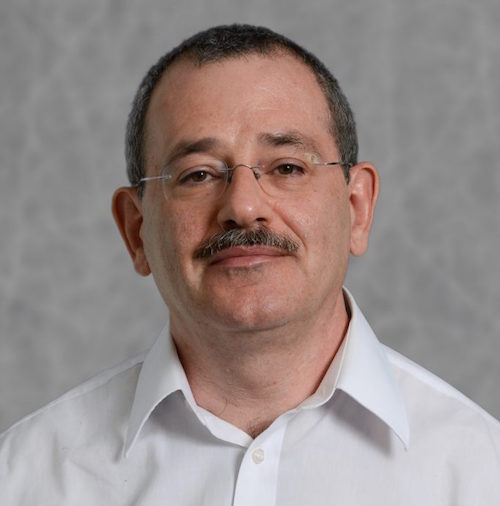
Maneesh Singh is a Research Fellow in the Department of Mathematics at Imperial College London, part of the Faculty of Natural Sciences. His research focuses on computational mathematics, scientific computing, and data assimilation, with a particular emphasis on developing computational methodologies for solving partial differential equations (PDEs) and advancing numerical weather prediction models. He has held postdoctoral positions at the Indian Institute of Science Bangalore (2019–2021) and the University of Konstanz (2021–2022). Education includes a PhD in Mathematics from the Indian Institute of Technology Guwahati, an MSc in Applied Mathematics from the University of Hyderabad, and a BA(Hons) in Mathematics from Banaras Hindu University. His research interests span numerical analysis, computational methods for stochastic systems, and optimization algorithms applied to complex systems. Recent work includes advancements in particle filtering frameworks for stochastic PDEs and robust computational techniques for singularly perturbed systems. His publications reflect a strong focus on PDEs, data assimilation, and numerical methods, with contributions to operator-splitting techniques, finite element methods, and hybrid finite difference schemes.
Mitchell Smooke is the Strathcona Professor of Mechanical Engineering and Materials Science at Yale University, where he has held this position since 1995. He previously served as Dean of Engineering (2000, 2018–2019) and Chair of the Mechanical Engineering Department (1994–2000, 2006–2012). His research focuses on computational combustion, chemical vapor deposition, and numerical methods for solving differential equations. Smooke has authored over 18,500 citations with an h-index of 70, and his work is supported by grants totaling over $25M. He is a Fellow of the Combustion Institute, SIAM, AIAA, and IOP, and has received prestigious awards like the Zeldovich Gold Medal (2012) and the Oppenheim Prize (2004). Smooke earned his M.B.A. from UC Berkeley and PhD/M.S. from Harvard University, followed by a B.S. from Rensselaer Polytechnic Institute. His research team collaborates on projects like oxygen-enhanced combustion and high-pressure nitromethane studies. He co-developed the CHEMKIN software package and contributed to algorithms for premixed flame codes (PREMIX), counterflow flames (OPPDIF), and sensitivity analysis. His recent work includes microgravity soot formation studies and constrained-temperature flame solutions. Smooke has led over 250 invited lectures globally and serves on editorial boards for Combustion Theory and Modelling and Theoretical and Computational Fluid Dynamics . He has advised numerous graduate students and chairs committees on computational infrastructure and combustion research. His lab focuses on advancing numerical methods to model complex reacting flows and validate experimental data through high-fidelity simulations.
Semyon V. Tsynkov is a Professor and Associate Director for CRSC at the Department of Mathematics, North Carolina State University. His research focuses on numerical methods for partial differential equations with applications to wave propagation, fluid dynamics, and inverse problems. He has made significant contributions to the development of artificial boundary conditions and difference potentials methods. MSc in Engineering Physics, Moscow Institute of Physics and Technology, 1989 PhD in Computational Mathematics, Russian Academy of Sciences, 1992 DSc in Computational Mathematics, Russian Academy of Sciences, 2004 Tsynkov's research spans multiple areas of computational mathematics and physics. His work on numerical methods for problems on unbounded domains, particularly artificial boundary conditions using difference potentials, has been influential in computational fluid dynamics and wave propagation problems. He has extensively studied non-deteriorating methods for long-time numerical simulation of large-scale 3D unsteady problems, with applications to acoustics, electromagnetism, optics, and plasma physics. His more recent work focuses on radar imaging, inverse problems in remote sensing, and active control of sound. His publication record shows a strong focus on computational methods for wave propagation problems, particularly in the areas of SAR imaging through the Earth's ionosphere, nonlinear Helmholtz equation, and computational electromagnetics. His work often bridges theoretical numerical analysis with practical applications in physics and engineering, demonstrating both mathematical rigor and practical relevance. Sackler Visiting Chair, Tel Aviv University, 2006 Invited Project Director, Russian Academy of Sciences, 2008-2010 Professor Tsynkov has supervised numerous PhD students and postdoctoral researchers, though specific names aren't provided in the available information. He has been involved in multiple research grants, particularly in computational mathematics and its applications to physical problems. His work on the difference potentials method has led to practical implementations in various computational fluid dynamics and wave propagation codes. He maintains an active research group at North Carolina State University focused on numerical analysis and scientific computing, with particular emphasis on partial differential equations and analysis. His group collaborates with researchers at the Keldysh Institute of Applied Mathematics and other international institutions, continuing the legacy of his mentor, V.S. Ryaben'kii.
Cécile Piret is an Associate Professor in the Department of Mathematical Sciences at Michigan Technological University (MTU). Her research focuses on developing and analyzing high-order numerical methods for solving partial differential equations (PDEs) and fractional PDEs, with a particular emphasis on the Radial Basis Functions (RBF) method. Applications span computational fluid dynamics, atmospheric, and oceanic sciences. She holds a PhD and has been affiliated with MTU since at least 2010. Her work bridges applied mathematics and computational science, addressing challenges in numerical approximation and stability. Research interests include numerical analysis, scientific computing, and the RBF method’s application to complex systems. Recent articles highlight advancements in meshfree methods for PDEs on surfaces, least squares approximations, and GPU-accelerated modeling. She has also contributed to interdisciplinary studies in sociology and political theory, though these appear less central to her primary mathematical focus. No awards or grants are explicitly mentioned, and no advisees are listed. Her work often involves collaborations in computational geosciences and engineering, reflecting her department’s interdisciplinary strengths. The articles suggest a sustained focus on improving numerical techniques for heterogeneous systems and fractional calculus applications.
Anna Szumska is an Academic Visitor in the Department of Physics at Imperial College London, affiliated with the Faculty of Natural Sciences. She is part of the Experimental Solid State Physics Group and the Nelson Group. Her research focuses on optical physics , electrical and electronic engineering , and materials science , with a particular emphasis on conjugated polymers, electrochemical energy storage, and photovoltaic materials. Her work spans theoretical studies of excited state dynamics, singlet fission, and the design of novel materials for optoelectronic applications. Her publications explore advanced topics like ionic charging mechanisms in conjugated polymers, structure-property relationships in non-fullerene acceptors for solar cells, and the electrochemical stability of polymer electrodes in aqueous environments. Her earlier work includes studies on photonic crystal fibers and charge dynamics in dye-sensitized solar cells. No scientific awards are explicitly listed in the provided materials. Her research groups focus on interdisciplinary projects at the intersection of physics, chemistry, and materials engineering. While specific grants or advising roles are not detailed, her affiliations suggest involvement in collaborative experimental and computational studies. Anna is based in the Huxley Building at Imperial’s South Kensington Campus and can be reached at anna.szumska15@imperial.ac.uk. Her work contributes to both fundamental understanding and applied development in energy storage and optoelectronic materials.
Professor Keijo Nikoskinen is affiliated with the Department of Electronics and Nanoengineering at Aalto University. His work spans two major domains: Electromagnetics and Antenna Engineering , focusing on advanced techniques like MIMO Over-the-Air (OTA) testing, computational electromagnetic modeling (FDTD), and antenna optimization; and University Pedagogy , with contributions to interdisciplinary education and teaching methodologies. He has pioneered plane-wave field synthesis for wireless testing and explored pedagogical innovations such as 360° teaching evaluation and clicker-based assessment tools. Scientific Awards: Teaching award by the ETA faculty of Aalto University (2010) Maxwell Award, England (1998) Research Trends in his publications highlight advancements in Wireless Communication Systems (MIMO testing, synthetic propagation environments), Computational Electromagnetics (FDTD techniques, nonlinear circuit modeling), and Educational Technology (interactive learning tools, pedagogical frameworks). Key subfields include antenna testing, field synthesis, interdisciplinary curriculum design, and hybrid simulation methods.
Cyril Desjouy is a lecturer at Le Mans University , specializing in nonlinear acoustics and fluid mechanics. He is affiliated with the Institute of Acoustics and contributes to computational acoustics software development. Research Interests : Fluid mechanics, nonlinear acoustics, shock wave propagation, numerical methods, cavitation control, and thermoacoustic systems. Academic Output : 15-year focus on acoustic solitons, shock wave dynamics, MEMS calibration, and biomedical applications of cavitation. Software Contributions : Primary developer of the nsfds2 finite-difference time-domain simulation package for acoustic wave modeling.
Luis Enrique Díez Blanco is an Assistant Professor at the University of Deusto's Faculty of Engineering, Department of Mechanics, Design and Industrial Management. He holds a PhD in Engineering for the Information Society and Sustainable Development (2019), a Master's in Communications Technologies from Polytechnic University of Madrid (2012), and a Telecommunications Engineering degree from Deusto (2005). His research focuses on signal processing and data fusion for intelligent transport systems, ambient assisted living, and wearable-based navigation. His work advances localization technologies through inertial sensors, UWB systems, and machine learning, with applications in healthcare, mobility, and resource-constrained environments. Research trends show consistent focus on hybrid positioning systems, error mitigation in wearable sensors, and practical implementations of IoT solutions. Awards: Best PhD Thesis Award (2020) First Prize in Pedestrian Dead Reckoning Competition (2016) Research recognition (Sexenio 2015-2020) He currently supervises two doctoral theses in localization systems and has led over 10 research projects including EU-funded initiatives (e.g., REACH, Modelling Emerging Transport Solutions) and industry collaborations with Mercedes-Benz and E PROCESS MED. As principal investigator of Deusto Smart Mobility research group, he coordinates work on intelligent transport and wearable technologies.
Leonidas Mindrinos has been an Assistant Professor at the National Technical University of Athens (NTUA) since February 2023, specializing in Partial Differential Equations. His academic career includes postdoctoral research at NTUA's School of Applied Mathematics and Physical Sciences (2022), the University of Vienna's Mathematics Department (2019-2022), and the Johann Radon Institute (RICAM) (2018-2019). He served as an assistant professor at the University of Vienna (2013-2018). Education: PhD in Mathematics (University of Vienna, 2018) Doctorate in Applied Mathematics (National and Kapodistrian University of Athens, 2011) MSc in Applied Mathematics (National and Kapodistrian University of Athens, 2007) BSc in Mathematics (National and Kapodistrian University of Athens, 2006) His research focuses on inverse problems, scattering theory, and mathematical modeling of physical systems. Key areas include soil physics , optical coherence tomography , and elastodynamics , with applications in environmental engineering, biomedical imaging, and computational physics. He has developed numerical methods for infiltration parameter estimation, inverse scattering in OCT, and coupled parabolic-hyperbolic transmission problems. Recent publications highlight his work on soil infiltration modeling , electromagnetic wave scattering , and quantitative imaging techniques . These span mathematical formulations, numerical simulations, and experimental validation in agricultural engineering and biomedical contexts.
Dr. Bartosz Reichel is an Assistant Professor at the Institute of Physics and Applied Informatics, Gdańsk University of Technology, Poland. His research focuses on computational electromagnetics, particularly the Finite-Difference Time-Domain (FDTD) method and its discrete Green's function formulation. He has developed advanced numerical techniques for electromagnetic pulse propagation, antenna simulations, and hybrid FDTD implementations. Research Interests: Computational Electromagnetics Nonlinear Optics Wave Propagation Modeling Parallel Computing for FDTD Hybrid Numerical Methods Electromagnetic Pulse Dynamics Dr. Reichel's publications highlight his work on perfect hybridization of FDTD methods, time-domain Green's functions, and nonlinear systems in isotropic media. His research has been published in journals like IEEE Transactions on Antennas and Propagation and Theoretical and Mathematical Physics . Contact: Email: bartosz.reichel@pg.edu.pl Workplace: Institute of Physics and Applied Informatics, Gdańsk Tech
Prof. Thomas Bohlen is a Professor at the Karlsruhe Institute of Technology (KIT), affiliated with the Geophysical Institute (GPI). He leads the GPI research group and is based at Campus West 06.36. His work focuses on advanced seismic imaging techniques, including Full-Waveform Inversion (FWI) and its applications in environmental geophysics, CO₂ sequestration, and glacial sediment characterization. He has contributed to developing numerical methods for seismic wave modeling and boundary conditions like perfectly matched layers (PML). Research Interests: His primary areas include seismic inversion methodologies, viscoelastic and poroelastic modeling, crosshole and surface seismic imaging, and integrating multi-source geophysical data (e.g., GPR and seismic) for subsurface characterization. Applications span CO₂ storage monitoring, glacial geology, and infrastructure safety assessments. Key Achievements: Over 100 peer-reviewed articles since 2013, focusing on FWI advancements, anisotropy detection in glacial sediments, and innovative numerical techniques. He collaborates on projects like the ICDP DOVE site and the Sleipner CO₂ reservoir. His work bridges computational geophysics with field applications, emphasizing high-resolution subsurface imaging. Labs/Teams: Active in the GPI, leading research on FWI and seismic tomography. Involved in the Toolbox for Applied Seismic Tomography (TOAST) and underground lab experiments at Freiberg Reiche Zeche.
Professor Raymond C. Rumpf is a faculty member in the Electrical and Computer Engineering department at the University of Texas at El Paso (UTEP), where he pioneered research in electromagnetics, photonics, and 3D printing since founding the EMLab in 2010. His work has produced groundbreaking technologies such as the world’s first 3D volumetric circuit, tightest optical beam bend, and thinnest all-dielectric antenna. Research Interests Electromagnetics and photonics 3D printing and additive manufacturing Metamaterials and photonic crystals Computational electromagnetic modeling Hybrid 3D printing for RF and optical devices Dynamic material response Awards Senior Member of the National Academy of Inventors (2024) Fellow of the International Society for Optics and Photonics (SPIE) $5M Department of Energy grant for nuclear security workforce training $100K NSF grant for electromagnetic simulation algorithms His lab focuses on hybrid 3D printing, computational methods (e.g., finite-difference frequency-domain), and developing disruptive technologies like invisibility cloaks and ultra-broadband filters. The EMLab has been recognized globally, with publications in top journals and book authorship.
Tao E. Li is an Assistant Professor in the Department of Physics and Astronomy at the University of Delaware (UD), part of the College of Arts & Sciences. He leads the T.E.L. Group, focusing on light-matter interactions using advanced theoretical and computational tools. Previously, he held postdoctoral positions at Yale University (2021–2023) and completed his Ph.D. in Chemistry at the University of Pennsylvania (2021) under Prof. Joseph E. Subotnik. His undergraduate studies in Chemistry at Nanjing University included an Erasmus exchange at Uppsala University in Sweden. Education includes a B.S. from Nanjing University's Kuang Yaming Honors School (2012–2016), a Ph.D. in Chemistry from the University of Pennsylvania (2016–2021), and postdoctoral research at Yale University (2021–2023). Awards include the AWS Cloud Credits for Research (2023), John G. Miller Fellowship (2020), and Erasmus Mundus Scholarship (2015). Research interests span computational polaritonics, nuclear quantum effects in complex environments, and integrating emerging technologies like AI and quantum computing into chemical physics. The T.E.L. Group develops tools such as nonadiabatic dynamics simulations and electronic structure theory to study molecular polaritons and energy transfer mechanisms. Grants & Funding: AWS Cloud Credits for Research (2023) Labs/Teams: Principal Investigator of the T.E.L. Group at UD Physics & Astronomy Current advisees include Ph.D. students Xinwei Ji (2024) and Andres Felipe Bocanegra Vargas (2025), and undergraduate researcher Sofia Londoño Toro (2025). The group actively recruits graduate students and postdocs interested in theoretical chemical physics and polariton dynamics.