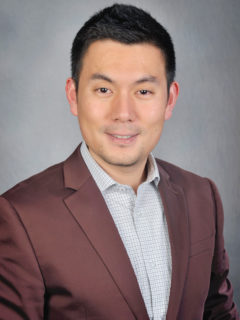
B. V. Rathish Kumar is a Professor at the Department of Mathematics and Statistics , Indian Institute of Technology Kanpur, with a PhD from SSSIHL, Prasanthinilayam. His research spans Numerical Analysis , Computational Fluid Dynamics , Finite Element Methods , and Biomedical Image Processing . Education: PhD in Applied Mathematics (SSSIHL, Prasanthinilayam) His research interests include Wavelet Methods for PDEs , Cardiac Electrophysiology Modeling , Convection in Porous Media , and AI/ML for Differential Equations . He has pioneered courses like Finite Element Error Estimation and AI/ML Methods for PDEs . His recent publications focus on convection dynamics , image processing , and singularly perturbed equations , contributing to fields like Biomedical Engineering and Thermal Systems . Scientific Awards: Fellow of Indian Association of Mathematical Modelling and Simulation (2018) Fellow of National Academy of Sciences (2009) Erasmus Mundus Fellowship (2004) University Gold Medal (1987)
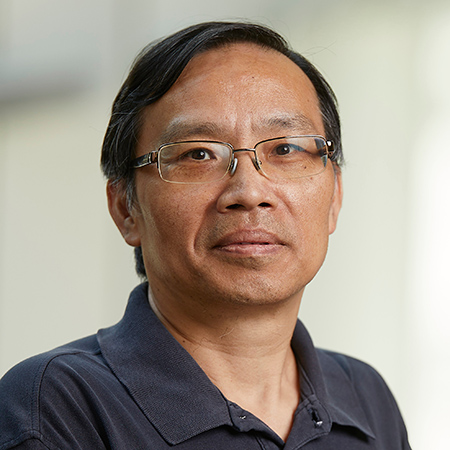
Pan Pan is a Professor in the Department of Biomedical Engineering at Huazhong University of Science and Technology, with extensive research contributions spanning medical image analysis, computer vision, and underwater wireless communications. Their work demonstrates strong interdisciplinary collaboration between biomedical engineering and computer science, with significant industry partnerships including Alibaba. Research interests focus on medical image analysis (particularly automatic breast ultrasound systems), deep learning applications in healthcare diagnostics, and secure underwater communications . Their work bridges theoretical advances with practical clinical applications, developing innovative segmentation algorithms, tumor detection systems, and secure communication protocols for specialized environments. Analysis of recent publications reveals a strong trend toward integrating multi-modal data fusion techniques with uncertainty-aware deep learning models for medical diagnostics. The research spans both fundamental algorithm development (novel segmentation networks, feature matching optimization) and domain-specific applications (ABUS tumor detection, ICU mortality prediction, underwater sensor networks). Pan Pan maintains active collaborations with major Chinese technology companies and academic institutions, evidenced by the consistent publication record in top-tier conferences including CVPR, ICCV, and NeurIPS. While specific awards aren't documented in the provided materials, the research impact is demonstrated through numerous high-impact publications across computer vision and biomedical engineering venues. The research program shows particular strength in translating computer vision techniques to medical applications, with significant contributions to semi-supervised learning approaches for medical image segmentation where labeled data is scarce. Recent work also demonstrates growing interest in secure communications for specialized environments like underwater sensor networks.
Zong Liu serves as an Assistant Professor and Extension Specialist at Texas A&M University within the College of Agriculture and Life Sciences, affiliated with the WMHS Program. His research addresses critical agricultural waste management challenges, particularly in dairy operations and water resource protection. His primary research domains include: Agricultural Engineering Manure Management Systems Water Quality Monitoring Dairy Production Technology Environmental Pathogen Control Machine Learning Applications Dr. Liu develops engineering solutions for pathogen reduction, nutrient recovery, and sustainable disposal methods, with recent work expanding into virtual reality educational tools and emergency response protocols for dairy crises. His publications demonstrate consistent integration of computational methods with practical agricultural engineering. Analysis of his 2015-2025 publications reveals dominant focus areas: dairy manure treatment (60% of works), pathogen reduction technologies (40%), and emerging applications of machine learning (15%). The research trajectory shows progression from fundamental laboratory studies (2015-2017) toward integrated field solutions and crisis management systems (2020-2025), with increasing interdisciplinary collaboration across environmental science, data analytics, and extension education domains.
Christina C. Christara is a Professor in the Department of Computer Science at the University of Toronto, specializing in scientific computing and numerical methods. Her research focuses on numerical solutions of partial differential equations, high performance computing, parallel computation, and financial mathematics applications. She holds a Ph.D. in Computer Science from Purdue University (1988), an M.Sc. from Purdue (1986), and a B.Sc. in Mathematics from Aristotle University (1982). She has taught courses such as Numerical Methods for Optimization Problems (CSC466/2305), High-Performance Scientific Computing (CSC456-2306), and Numerical Algorithms (CSC436), emphasizing both theoretical and computational aspects. Her research interests span numerical weather prediction, computational finance, and advanced numerical techniques like spline collocation and penalty methods. She has supervised over 20 graduate students in topics ranging from GPU-accelerated PDE solvers to XVA pricing models. Her work often addresses challenges in computational efficiency and accuracy, with applications in engineering, finance, and environmental science. She is affiliated with the Numerical Analysis and Scientific Computing Group and actively contributes to high-performance computing methodologies.
Andreas C Cangellaris is a Professor at the University of Illinois at Urbana-Champaign, affiliated with the College of Engineering and the Department of Electrical and Computer Engineering. He leads research in the Coordinated Science Lab, focusing on electromagnetic modeling, signal integrity, and high-speed interconnects. His work spans nanotechnology, stochastic analysis, and machine learning applications in electromagnetics. Education details are not explicitly provided in the text, but his academic career includes significant contributions to computational electromagnetics, including the development of PEEC methods and neural network-based models for high-speed systems. Research interests emphasize modeling uncertainties in electromagnetic systems, metamaterials, and power delivery networks. He has pioneered techniques like the Stochastic Latency Insertion Method (LIM) and FFT-based macromodeling for stochastic systems. Key awards include the Humboldt Research Award (2004) and IEEE Fellow designation (2000). His grants and advising activities are not detailed here, but his lab focuses on advancing electromagnetic compatibility and high-speed link design. Notable collaborations involve stochastic modeling of fiber-weave effects in PCBs and inverse design methodologies using tandem neural networks.
Jichun Li is a Professor in the Department of Mathematical Sciences at the University of Nevada, Las Vegas. His research focuses on mathematical modeling, scientific computing, and numerical analysis with applications to electromagnetism and metamaterials. He specializes in developing advanced numerical methods like Finite Element Methods (FEM), Discontinuous Galerkin (DG), and Finite-Difference Time-Domain (FDTD) schemes for simulating wave propagation in complex media such as metamaterials and photonic crystals. Key research areas include metamaterials (e.g., hyperbolic metamaterials, cloaking devices), electromagnetic wave manipulation (e.g., surface plasmon polaritons on graphene), and computational techniques for solving Maxwell’s equations in dispersive and nonlinear media. His work addresses challenges like numerical stability, superconvergence analysis, and implementation of Perfectly Matched Layers (PML) for absorbing boundary conditions. Recent efforts involve integrating deep learning with numerical PDE methods for financial applications and advancing time-domain simulations for metamaterial cloaking and optical black holes. He has contributed to software tools like MATLAB-based edge element codes for metamaterial modeling. His research bridges theoretical analysis and practical simulation, with applications in photonics, quantum optics, and computational electromagnetics. Notable achievements include over 150 peer-reviewed articles, methodological innovations in numerical electromagnetics, and active participation in interdisciplinary collaborations at the Center for Applied Math & Statistics. His work emphasizes high-order methods and rigorous mathematical validation for engineering and scientific problems.
Patrick Le Tallec is a Professor of Mechanics at École Polytechnique in France, where he currently serves as Dean of the Bachelor Program and is a member of the M3DISIM project. His distinguished academic career spans multiple institutions including Université Paris Dauphine, INRIA (French National Institute for Research in Digital Science and Technology), and international universities such as Stanford University, University of Wisconsin, and Shanghai Jiao Tong University. He has held leadership positions including Vice President for Education and Head of the Laboratory of Solid Mechanics at École Polytechnique. His educational background includes: Graduate from École Polytechnique Ph.D. in Engineering Mechanics from The University of Texas at Austin (1980) Thèse d'Etat in Applied Mathematics from Université Pierre et Marie Curie in Paris (1981) Professor Le Tallec's research focuses on computational mechanics and applied mathematics with expertise in nonlinear mechanics, domain decomposition methods, and multiscale modeling. His work bridges theoretical mathematics with practical engineering applications, particularly in material science and fluid-structure interactions. He has developed advanced numerical methods for elasticity, viscoelasticity, and fluid dynamics with applications in industrial manufacturing and biomedical engineering. His recent publications demonstrate progression from foundational numerical methods to sophisticated multiscale approaches addressing complex engineering challenges in material science. The research shows particular emphasis on rubber mechanics, fatigue analysis, and computational methods for nonlinear structures, reflecting his ongoing commitment to solving real-world engineering problems through mathematical innovation. His scientific honors include: CISI award in Scientific Computing Prize Blaise Pascal of the French Academy of Sciences Chevalier des Palmes Académiques Chevalier de la Légion d'Honneur Officier de l'Ordre National du Mérite Professor Le Tallec has directed over 40 Ph.D. students from 10 different nationalities, demonstrating significant impact in academic mentoring. His research has been supported through extensive collaborations with industrial partners including Michelin, PSA Group, and Dassault Aviation, as well as scientific advisory roles at the French Alternative Energies and Atomic Energy Commission. He has served as president of the French Society of Applied and Industrial Mathematics and held editorial positions with leading journals in his field. His laboratory work centers around computational mechanics research, particularly through the M3DISIM project at École Polytechnique. His research team brings together mathematicians, engineers, and computer scientists to develop innovative solutions for complex problems in material science and structural mechanics, with applications ranging from industrial tire manufacturing to biomedical engineering.
Lionel Pichon is a leading researcher at the Laboratory of Electrical and Electronic Engineering of the University of Paris. His primary affiliations include the Department of Electrical and Electronic Engineering of Paris, where he specializes in advanced electromagnetic research. His work focuses on Electromagnetics , Electromagnetic Compatibility (EMC) , and Wireless Power Transfer , with particular emphasis on composite materials, biomedical applications, and automotive systems. Expertise in numerical methods (FDTD, FIT, DGTD) for electromagnetic simulations Pioneer in shielding effectiveness analysis for composite materials Developer of AI-driven approaches for dielectric property characterization Over 70 publications since 2017 highlight his contributions to fields like inductive power transfer systems, medical device EMC, and GPR imaging techniques. Collaborates extensively with institutions globally, including research on antenna design for implantable medical devices and electromagnetic compatibility in healthcare facilities. Current research trends emphasize machine learning integration with traditional electromagnetic analysis to optimize system performance and safety standards.
Dr. Charlotte Desvages is a Lecturer in the School of Mathematics at the University of Edinburgh, specializing in mathematical computing and technology-enhanced education. She holds a PhD in Musical Acoustics (2018) from the University of Edinburgh and a Physics undergraduate degree from France. Her work bridges acoustics, computational modeling, and pedagogical innovation. She is part of the Technology Enhanced Mathematical Sciences Education group, focusing on integrating learning technologies and improving teaching methodologies. Her research explores physical modeling of musical instruments (e.g., violins), sound synthesis, and numerical methods for simulating instrument behavior. She emphasizes practical applications, such as reconstructing sounds of historical instruments through computational models. Teaching-wise, she focuses on applied mathematics, computational physics, and engineering courses, leveraging her extensive tutoring experience during her PhD. Dr. Desvages advocates for stronger recognition of teaching in academia and believes in fostering student engagement through interactive and technology-driven learning environments. She contributes to the School’s efforts to enhance educational quality and accessibility.
Wim De Roeck is an Associate Professor in the Department of Mechanical Engineering at KU Leuven's Faculty of Engineering Technology. He serves as contact person for the Mecha(tro)nic System Dynamics (LMSD) research group at Group T Leuven Campus and heads Subdivision 20 within the same campus. Additionally, he holds multiple program director roles for Elektromechanica programs across different KU Leuven campuses. His research focuses on acoustics, vibration analysis, and fluid dynamics with particular emphasis on aeroacoustics and flow-structure interactions. De Roeck's work bridges theoretical and experimental approaches to address noise and vibration challenges in mechanical systems. His research spans multiple application domains including automotive systems, aerospace components, and HVAC technologies, with a strong focus on micro-perforations, flow ducts, and Helmholtz resonators. Analysis of his recent publications reveals a consistent focus on advanced measurement techniques (particularly two-port and three-port characterization methods), impedance modeling of micro-scale components, and the development of both experimental and numerical approaches to understand flow-acoustic interactions. His work increasingly incorporates data-driven methodologies while maintaining strong foundations in fundamental acoustics and fluid mechanics principles. As an educator, De Roeck contributes to multiple courses including Strength of Materials for Machine Design, Finite Element Based Design, and Vehicle Dynamics, demonstrating his interdisciplinary expertise across mechanical engineering domains. He actively participates in institutional governance as a member of the Board and Council of the Faculty of Engineering Technology and serves as secretary for the POC Elektromechanica committee, reflecting his significant administrative contributions alongside his research and teaching responsibilities.
Taavi Repän is an Associate Professor of Computational Photonics at the Institute of Physics, Faculty of Science and Technology, University of Tartu. He has held this position since December 2021, with his current appointment running until December 2025. Prior to this, he worked as a Post-Doc at Karlsruhe Institute of Technology from 2019 to 2021. Repän earned his Doctoral Degree in Physics from the Technical University of Denmark (DTU) in 2019, with his dissertation titled 'Dark-field hyperlens: High-contrast subwavelength imaging in optics and acoustics' supervised by Andrei Lavrinenko and Morten Willatzen. He received his Master's Degree in Physics from the University of Tartu in 2014, with a thesis on 'Sub-wavelength imaging with hyperbolic metamaterials' supervised by Siim Pikker and Sergei Zhukovsky. His educational background also includes a Bachelor's Degree in Physics from the University of Tartu (2009-2012). His research focuses on computational photonics, metamaterials, inverse design, and the application of neural networks to optical simulations. He leads the project 'Inverse design methods for integrating nanophotonic structures with gas sensors' (2022-2026) and participates in several other research initiatives related to wood valorization and structural optimization. His work bridges theoretical physics, computational methods, and practical applications in optical sensing and imaging. His publication record shows a consistent trajectory in computational photonics, with recent work heavily emphasizing the integration of machine learning techniques with electromagnetic simulations. The most recent publications demonstrate a strong focus on neural network applications for inverse design problems in nanophotonics, hyperbolic metamaterials, and plasmonic structures, indicating his leadership in applying AI to complex optical design challenges. Repän currently leads or participates in multiple research projects funded by the Estonian Research Council and other institutions, demonstrating his active role in the research community. His work spans fundamental theoretical investigations to applied research with potential industrial applications. His laboratory work appears to focus on computational modeling of photonic structures rather than experimental setups, with emphasis on numerical methods for designing and analyzing optical systems. His collaborations span multiple institutions across Europe, reflecting the international nature of his research.
Graham Riley is a Lecturer in the School of Computer Science at the University of Manchester and holds a part-time position in the Scientific Computing Department (SCD) at STFC, Daresbury. His research focuses on high performance computing (HPC), software engineering for scientific computing, and performance modeling for parallel machines. Key areas include techniques for developing HPC applications, software architectures for coupled modeling, and performance control in distributed systems. His work emphasizes collaboration with computational scientists in domains such as Earth System Modelling (e.g., UK Met Office), computational chemistry, and biology. He has contributed to projects like the EuroExa architecture for exascale computing and the LFRic weather/climate model porting to FPGAs. Riley's research also explores energy efficiency in HPC systems and FPGA acceleration strategies for scientific workloads. Notable contributions include studies on parallelization strategies, FPGA-based acceleration of climate models, and optimizing OpenCL for heterogeneous architectures. His work aligns with UN Sustainable Development Goals, particularly through contributions to climate modeling and sustainable computing practices. Riley collaborates with institutions like the Met Office and the ESM community in Europe/US. His academic profile reflects a balance between theoretical research and practical application, with a strong focus on bridging computational science and engineering challenges.
Professor Nam Mai-Duy is a faculty member at the University of Southern Queensland (USQ), holding the position of Professor in Computational Engineering within the School of Engineering. His research focuses on advanced numerical methods for fluid dynamics, including integrated radial basis functions (IRBF), finite volume schemes, and dissipative particle dynamics (DPD). He has expertise in computational fluid dynamics (CFD), viscoelastic fluids, and multiphase systems. Qualifications include a Master of Engineering from Ho Chi Minh University of Technology and a PhD from USQ. His work emphasizes high-order numerical techniques for solving partial differential equations in complex geometries and non-Newtonian fluid behavior. Research interests span computational engineering, numerical analysis, and engineering simulations. His publications address topics like boundary-fitted grids, embedded-boundary methods, and microstructure modeling in viscoelastic materials. He collaborates with the Institute for Advanced Engineering and Space Sciences. Advising involves doctoral research in computational methods for fluid flows, such as soliton propagation in waveguides and particulate suspensions. No scientific awards are explicitly listed, though his contributions to numerical methods are widely recognized.
Michael Baines is an Associate Lecturer in the Department of Mathematics and Statistics at the University of Reading, affiliated with the School of Mathematical, Physical and Computational Sciences. His research focuses on developing advanced numerical methods for solving complex physical problems, particularly in fluid dynamics and environmental modeling. His educational background and professional appointments include: Visiting Professor at University of Leeds Former Director of the Institute of Computational Fluid Dynamics (ICFD) Research interests span: Computational fluid dynamics with emphasis on moving mesh methods Numerical symmetry preservation techniques Finite element applications in nonlinear systems Environmental transport phenomena modeling His recent publications demonstrate a consistent focus on adaptive numerical methods for environmental and physical systems, with evolving applications in climate science and multiphase systems. The work shows increasing sophistication in handling coupled physical phenomena through innovative computational frameworks. Laboratory affiliations: Numerical Analysis and Computational Modelling research group
Steven Ruuth is a Professor in the Department of Mathematics at Simon Fraser University (SFU), within the Faculty of Science. He specializes in numerical methods for partial differential equations (PDEs), particularly those involving complex geometries and discontinuous solutions. His work bridges applied mathematics and computational science, focusing on interface dynamics, geometric numerical methods, and efficient algorithm development. Ph.D. in Applied Mathematics, University of British Columbia (1996) NSERC Postdoctoral Fellow and Visiting Assistant Professor at UCLA (1996–1999) His research emphasizes robust numerical techniques for evolving networks of interfaces, implicit-explicit time integration methods, and the closest point method for PDEs on manifolds. Applications span computational fluid dynamics, materials science, and computer vision. He has contributed to advancements in meshfree methods, RBF-FD discretizations, and parallel domain decomposition algorithms. Recipient of the Germund Dahlquist Prize (2011) and CAIMS Research Prize (2020) , he is also an editorial board member for SIAM Journal on Scientific Computing and Numerical Mathematics: Theory, Methods and Applications. Teaching responsibilities include courses such as MATH 260 (Introduction to Ordinary Differential Equations). His research group actively explores cutting-edge computational methods with applications to geometry processing and scientific computing challenges.