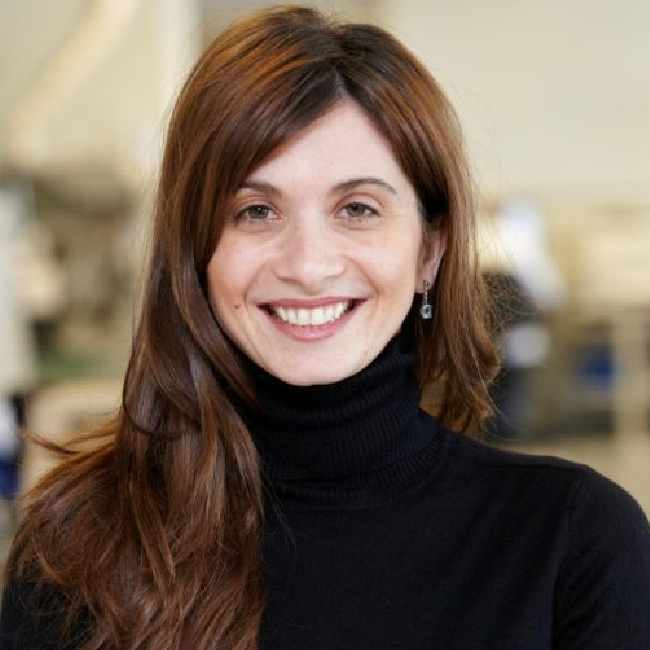
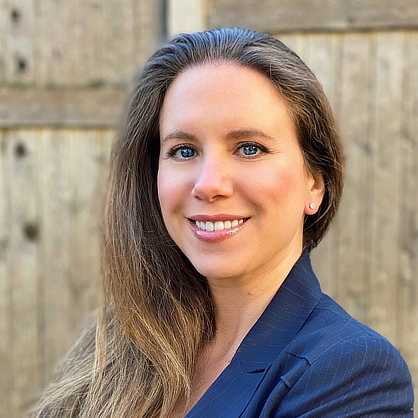
Professor Simona Francese is a globally recognized expert in Forensic and Bioanalytical Mass Spectrometry at Sheffield Hallam University. She leads the Sheffield Multi-Modal Imaging Centre and heads the Centre for Mass Spectrometry Imaging. Her work focuses on MALDI MS Imaging applications for forensic analysis of fingermarks, blood, and clinical diagnostics. Key roles include Chair of Bioanalytical Science in the Biomolecular Sciences Research Centre and collaboration with organizations like the Home Office, NHS, and DSTL. She holds a PhD and has over 100 publications, £1.8M in grants, and pioneered techniques adopted in police casework. Her research bridges forensic science and clinical applications, such as non-invasive breast cancer detection via fingertip smears. Awards include the 2015 'Inspirational Woman' title and Proteomass’s 2022 Career Award. Teaching spans BSc/MSc programs in Analytical Chemistry and Forensic Science, with modules like Separation Techniques and Advanced Analytical Science. She serves as Associate Editor for Analyst and external examiner for Kingston University. Media engagement includes BBC features and TED Talks on fingerprint science.
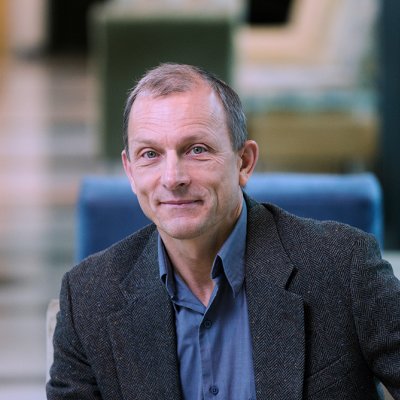
Malcolm Clench is Professor of Mass Spectrometry in the Department of Biosciences and Chemistry at Sheffield Hallam University, where he has been a key figure since 2007. His work bridges analytical chemistry, biomedical research, and forensic science through advanced mass spectrometry imaging techniques. BSc(Hons) Applied Chemistry, Sheffield City Polytechnic (1977–1981) PhD in Peptide and Protein Sequencing by Fast Atom Bombardment Mass Spectrometry, Manchester Polytechnic/UMIST (1982–1985) His research focuses on the development and application of mass spectrometry imaging (MSI), particularly MALDI-MSI, for spatially resolved molecular analysis in diverse contexts. Key areas include biomedical imaging (cancer, brain lipids, drug distribution), forensic science (fingermark analysis, condom detection, blood identification), and plant biochemistry (herbicide translocation, nitrogen cycling). He also investigates pharmacokinetics and toxicology , using MSI to study drug metabolism and tissue responses. The recent publications highlight a strong trend toward clinical translation of MSI, with applications in malignant mesothelioma, lung imaging, and skin models. Innovations in sample preparation , ionization methods , and multimodal imaging demonstrate technical leadership. His work frequently involves collaborative, interdisciplinary teams and addresses both fundamental biochemical questions and practical diagnostic or forensic challenges. While no formal awards are listed, his sustained high-impact output in journals like Analytical Chemistry and PNAS indicates significant recognition in the field. Malcolm Clench has mentored or collaborated extensively with researchers such as Laura M. Cole, Simona Francese, and Sarah L. Haywood-Small. He has contributed to major projects in drug development , cancer research , and forensic methodology . His peer review activities for journals like Analytical Chemistry and Journal of the American Society for Mass Spectrometry reflect his role as a scientific gatekeeper. He leads or contributes to a dynamic research environment focused on pushing the boundaries of mass spectrometry imaging in both clinical and non-clinical settings, with ongoing work in 3D imaging, quantitative analysis, and novel matrix applications.
Mackenzie de la Hunty is a Lecturer at the School of Mathematical and Physical Sciences , University of Technology Sydney (UTS), with a research focus on forensic fire investigation , fingermark detection techniques , and specialist search capabilities . She holds a PhD in Forensic Science from UTS and has held various academic roles since 2013, including Scholarly Teaching Fellow and Senior Teaching Associate . Her work bridges academic research with operational applications through collaborations with Australian Federal Police and fire emergency services . Research Interests : Pioneering forensic fire investigation methodologies for justice outcomes Advancing fingermark detection through surfactant chemistry and imaging technologies Validating specialist search capabilities for law enforcement Developing scientific photography and digital imaging for evidence recovery Research Trends : Her publications (2013-2025) demonstrate sustained focus on fingerprint enhancement on porous surfaces, fire debris analysis , and forensic educational frameworks , with recent works addressing implementation challenges in fire origin determination and professional behavior training for chemists. Scientific Awards & Memberships : ANZFSS NSW Branch Michael Dawson Award (2025) AFP National Managers Certificate (2022) UTS Teaching and Learning Award (2022) International Association of Arson Investigators (2022) ANZFSS Executive Scholarship (2018) NSW Association of Fire Investigators (2017) UTS Research Day 5MT Best Presentation (2015) Australian and New Zealand Forensic Science Society (2013) Supervision & Teaching : She supervises PhD candidates in fingermark chemistry and teaches Forensic Imaging , Advanced Imaging , and Specialist Recovery courses. Her educational innovations include professional behavior assessment in first-year chemistry laboratories .
Dr. Rosalind Wolstenholme is a Senior Lecturer in Analytical Science at Sheffield Hallam University, where she has taught forensic science at undergraduate and postgraduate levels since 2008. She obtained her PhD in analytical forensic science in 2005 and co-founded the BMRC Fingerprint Research Group in 2008. Her research specializes in the chemical analysis of fingermarks using advanced mass spectrometry techniques (e.g., MALDI). This work extracts donor intelligence—such as diet, drug exposure, and gender—from latent fingerprints, with recent studies demonstrating compatibility with police operational workflows. Key focuses include spectroscopic imaging, condom residue identification, and optimizing forensic methodologies. Dr. Wolstenholme's publications emphasize interdisciplinary forensic chemistry , spanning mass spectrometry, proteomics, lipidomics, and novel imaging protocols. Her work consistently bridges analytical innovation with practical crime-solving applications, particularly in sexual assault investigations and evidence differentiation. She holds memberships in the Forensic Science Society and Royal Society of Chemistry , contributing to accreditation efforts for forensic science programs.
Professor Melanie Bailey is a Reader in Chemistry at the University of Surrey, affiliated with the School of Chemistry and Chemical Engineering. She holds roles as Theme Leader for Health and Food Technologies and EPSRC Fellow. Her academic background includes a BSc in Physics (University of Manchester, 2001) and a PhD in Electrical Engineering (University of Surrey, 2005). She is a Fellow of the Higher Education Academy and has pioneered advancements in forensic science and analytical techniques. Her research focuses on ion beam analysis, forensic applications of mass spectrometry, and single-cell metabolomics. Key areas include drug adherence monitoring via fingerprints, metabolomics biomarkers for diseases like tuberculosis and cancer, and non-invasive biological sampling. She has developed methods for forensic intelligence extraction from fingermarks and contributed to global initiatives, such as the International Atomic Energy Agency’s coordinated research program on nuclear forensic techniques. Her work spans collaborations with law enforcement agencies, healthcare institutions, and international organizations. Notable achievements include innovations in correlative imaging of trace elements and molecular species, and advancements in spatially resolved drug measurement using nanocapillary sampling. She has also explored applications of secondary ion mass spectrometry (SIMS) and laser ablation techniques for forensic evidence analysis. Dr. Bailey’s research addresses challenges in reproducibility and scalability of analytical methods, with contributions to pandemic response through metabolomics studies of SARS-CoV-2 and other viral infections. Her labs employ cutting-edge technologies like ToF-SIMS and liquid chromatography-mass spectrometry (LC-MS) to advance biomedical and forensic science.
Dr. Cristina Russo is a Senior Lecturer in Pharmaceutical Chemistry at the College of Science and Technology, Middlesex University. Her research focuses on advanced analytical techniques in pharmaceutical and environmental contexts. School: College of Science and Technology Role: Senior Lecturer University: Middlesex University Her research interests span mass spectrometry imaging (MSI), bioremediation, drug metabolism in skin models, and forensic proteomics. She pioneers non-invasive diagnostic methods, such as breast cancer screening via fingertip smears, and explores xenobiotic enzyme localization in 3D tissue models. Recent publications highlight MALDI-TOF MS applications in environmental monitoring, clinical diagnostics, and pharmaceutical analysis. Key subfields include proteomic biomarkers, spatial drug quantitation, and forensic fingermark profiling. Dr. Russo collaborates with experts in mass spectrometry (e.g., Clench, Francese) and has contributed to high-impact journals like *Scientific Reports* and *Drug Metabolism and Disposition*. Her work bridges pharmaceutical chemistry, analytical innovation, and translational research.
Anouk de Ronde is a Lecturer and Researcher in Forensic Science at the Department of Forensic Science, Faculty of Technology, Amsterdam University of Applied Sciences. Her work focuses on advancing forensic methodologies, particularly in activity level evaluation, fingerprint analysis, DNA trace analysis, and crime scene investigation. She actively contributes to improving trace selection strategies, evidence preservation, and the application of Bayesian networks in forensic contexts. Her research interests emphasize the intersection of forensic science and criminal investigation, with a strong emphasis on practical applications. She has published extensively on topics such as optimizing sampling locations for crime scenes, mitigating trace loss during forensic exhibit transport, and developing frameworks for evaluating fingerprints and DNA evidence in relation to activity level propositions. De Ronde has presented her findings at numerous conferences and workshops, including talks on 'What fingermarks reveal about activities' and 'Recent Developments in Fingerprint Analysis.' She has also supervised student theses and organized academic events, demonstrating her commitment to both research and education. Her work has garnered media attention, highlighting innovations in forensic trace analysis and activity level evaluation. Though no scientific awards are explicitly listed, her contributions to forensic science are evident through her prolific output and engagement with interdisciplinary research.
John Goodpaster is a Professor in the Department of Chemistry and Chemical Biology at Indiana University, Indianapolis (IUPUI), where his research in forensic analytical chemistry addresses law enforcement, public health, and counter-terrorism through advanced chemical analysis. His educational background includes: B.A. in Chemistry from Gustavus Adolphus College (1995) M.S. in Criminal Justice from Michigan State University (2000) Ph.D. in Chemistry from Michigan State University (2000) National Research Council Post-Doctoral Associate at NIST (2001-2002) Goodpaster's research centers on "Chemistry in the Public Interest," with key projects in explosives analysis (e.g., pipe bomb residues, racing fuels), chemometrics for trace evidence (fibers, fingerprints), and lifestyle markers from biological samples. His group applies mass spectrometry and microbial degradation studies to solve real-world forensic problems like arson investigation and tobacco product characterization. His 15 most recent publications (2016-2019) reveal a strong trend toward ultra-sensitive detection methods (e.g., TV-SPME/GC-MS) for explosive residues and biological markers, with increasing emphasis on environmental effects like weathering and microbial degradation. Notable work includes blow fly lipid profiling for forensic entomology and nanosensors for fingerprint-based explosive detection at parts-per-quadrillion levels. Scientific recognition includes: Research Top Reviewer, Forensic Chemistry (2019) Teaching Trustee's Teaching Award, IUPUI (2018) Best Oral Presentation, ANZFSS (2014) Certificates from U.S. Treasury (2003) and Commerce (2002) He has actively mentored 14 graduate students (e.g., Turner, Bors, Kranz on explosives projects) and 6 undergraduates (e.g., Cummins, Carroll on analytical methods), with prior non-academic experience as an ATF Forensic Chemist (2002-2007) and Indianapolis Museum of Art Scholar (2016). Goodpaster leads a research group collaborating with law enforcement on practical applications, including the development of canine training aids and counter-terrorism tools through detailed chemical profiling of explosives and biological markers.
Sebastien Moret is a Senior Lecturer in Forensic Science at the College of Science and Engineering, Charles Darwin University. His work focuses on advancing fingerprint detection methodologies and forensic document analysis, with a particular emphasis on nanoparticle applications and evidence reliability. Key Research Areas: Latent fingermark detection, nanoparticle functionalization, forensic profiling of fraudulent documents, and biodegradable material impacts on evidence recovery. Recent Contributions: Innovations in powder suspension formulations, synthetic secretions for controlled studies, and novel applications of silicon oxide and upconverting nanoparticles for fingerprint visualization. Collaborative Networks: Regularly collaborates with Scott Chadwick, Xanthe Spindler, Chris Lennard, and Claude Roux on forensic chemistry projects. Scientific Output Trends: Over the past decade, Moret has published extensively in Forensic Science International and related journals, addressing challenges in evidence standardization, non-destructive detection techniques, and forensic intelligence applications.
William Gee is a Senior Lecturer at Griffith University's School of Environment and Science, specializing in Chemistry and Forensic Science. He holds positions as Program Director for the Graduate Certificates in Crime Scene Investigation and Forensic Fingerprint Investigation. His research focuses on improving forensic evidence collection methodologies, particularly in latent fingerprint visualization, gunshot residue analysis, and drug presumptive testing. Dr. Gee has collaborated with the Queensland Police Service and holds affiliations with organizations like the Royal Australian Chemical Institute and the Royal Society of Chemistry. Education: B.Sc. (1st Hons.) in Forensic Science from Deakin University (2000s), followed by a PhD in lanthanide cluster chemistry at Monash University. He completed postdoctoral training at Monash University, Georg-August-Universität Göttingen (Germany), and the University of Bath (UK). Before Griffith, he was a Lecturer in Chemistry & Forensic Science at the University of Kent (2017–2020). Research interests include developing novel forensic technologies, such as water-based hydrogel systems for fingerprint detection and low-cost phosphorescent powders. His work emphasizes sustainability and safety in forensic methods. Recent publications highlight advancements in green chemistry applications for forensic science, including solvent-free strategies and cost-effective materials. Awards include the Victoria Fellowship (2012) and the RACI O'Donnell Schools Lecture (2023). Teaching responsibilities include courses like Forensic Chemistry, Principles of Forensic Investigation, and Instrumental Chemistry Techniques. He supervises PhD and MSc students in areas like multispectral imaging and forensic evidence documentation.
Christopher Davies is a Senior Lecturer in Forensic Science at the School of Human and Social Sciences, University of West London. He holds a BSc (Hons), MSc, and PhD in forensic science, with expertise in forensic toxicology and analytical chemistry. His research focuses on drug detection in biological samples, the chemical composition of fingermarks, and forensic hair analysis methodologies. Education: BSc (Hons), MSc, PhD in Forensic Science Research Interests: Forensic toxicology, drug metabolism studies, GC-MS chemometrics, and forensic hair analysis interpretation frameworks. Teaching: Contributes to BSc (Hons) Forensic Science with Foundation Year, BSc (Hons) Forensic Science, and PhD Forensic Science programs. His 2020 publication on variability in forensic hair analysis demonstrates expertise in analytical chemistry workflows and chemometric data interpretation. The UWL Repository lists his research outputs.
Dr. Sebastien Moret is a Senior Lecturer in Forensic Science at the University of Technology Sydney (UTS), where he has been since 2017. He serves as Course Director for the Bachelor of Forensic Science program and coordinates subjects like Forensic Imaging and Document Examination. His academic journey began at the University of Lausanne, where he earned a PhD in Forensic Science (2013) after completing undergraduate studies in the same field. PhD, Forensic Science - University of Lausanne (2008–2013) MSc, Forensic Science - University of Lausanne (2006–2008) BSc, Forensic Science - University of Lausanne (2003–2006) Dr. Moret's research focuses on advanced fingermark detection methodologies, particularly leveraging nanoparticle technology and chemical optimization. His work addresses critical challenges in forensic science including solvent alternatives (e.g., Solstice® PF replacement for HFE7100), standardization of quality assessment protocols, and environmental impacts on detection techniques through studies of biodegradable plastics. He has pioneered synthetic secretion formulations for artificial fingermark production, enabling controlled research through modified inkjet printing systems. His recent publications examine diverse forensic challenges across 15 articles including: carrier solvent performance in amino acid techniques, dark web document fraud analysis, surfactant optimization in powder suspensions, and biodegradable plastic substrate interactions. These works demonstrate his expertise in detection chemistry, forensic material science, and digital criminal marketplace analysis. Swiss National Science Foundation Postdoctoral Fellowship (2014–2015) Swiss National Science Foundation Grant (2016) US National Institute of Justice Funding (2018–2019) As a leading forensic scientist at UTS's Centre for Forensic Science, Dr. Moret bridges academic research with operational forensic practice through his method development and validation studies. His work emphasizes practical implementation challenges while maintaining rigorous scientific standards.
Igor Lednev is a Distinguished Professor in the Department of Chemistry at the University at Albany, State University of New York, and an Adjunct Professor in the Department of Biological Sciences. He serves as co-director of the Center for Biophotonic Technology and Artificial Intelligence (CeBAI) and is affiliated with The RNA Institute. His work bridges chemistry, forensics, and medical diagnostics through innovative spectroscopic approaches. Dr. Lednev earned his PhD, MS, and BS from Moscow Institute of Physics and Technology, followed by postdoctoral training at the University of York (UK) and the University of Pittsburgh. His academic journey has led to numerous leadership roles and recognition within the scientific community. His research focuses on the application of spectroscopic technology, particularly Raman spectroscopy, for medical diagnostics and forensic science. Key areas include bloodstain analysis, body fluid identification, disease diagnostics, and crime scene investigation. His work has pioneered methods for determining time since deposition of bloodstains, identifying body fluids, and developing universal diagnostic techniques using vibrational spectroscopy coupled with machine learning algorithms. The Lednev Lab has made significant contributions to forensic science through the development of non-destructive, rapid confirmatory identification methods that can potentially be used at crime scenes. Dr. Lednev's research group has published extensively on the application of Raman spectroscopy in forensic contexts, with recent work expanding into medical diagnostics for conditions including Alzheimer's disease, Duchenne muscular dystrophy, and diabetes. His publications demonstrate a strong trend toward integrating machine learning with spectroscopic data analysis to create universal diagnostic platforms that could transform both forensic science and clinical medicine. Distinguished Professor (highest academic rank in SUNY system) NSF STTR grant for SupreMEtric LLC, a startup developing forensic technologies Numerous National Institute of Justice grants supporting forensic research Funding from The RNA Institute for interdisciplinary research Dr. Lednev has mentored numerous graduate and undergraduate students who have gone on to receive prestigious awards and fellowships. His lab has secured significant grant funding from agencies including the National Science Foundation, National Institute of Justice, and pharmaceutical companies. The Lednev Lab maintains strong collaborations with the New York State Police and other law enforcement agencies to translate research into practical forensic applications. The Lednev Lab operates within the Department of Chemistry at UAlbany and is part of the Center for Biophotonic Technology and Artificial Intelligence (CeBAI). The lab maintains state-of-the-art spectroscopic instrumentation including portable Raman spectrometers for field applications. Dr. Lednev co-founded SupreMEtric LLC, which is commercializing patented technologies for forensic body fluid identification.
Renee Jelly is a Senior Lecturer in Forensic Science at Murdoch University's School of Medical, Molecular and Forensic Sciences. Her research focuses on improving forensic evidence detection, collection, and preservation through operational applications. She holds a PhD in Applied Chemistry from Curtin University (2011) and a Bachelor of Forensic Science (Hons) from Deakin University (2006). Education: Bachelor of Forensic Science (Hons), Deakin University (2003–2006) Doctor of Philosophy (PhD) in Applied Chemistry, Curtin University (2007–2011) Thesis: 'Natural products as novel reagents for the detection of latent fingermarks on porous surfaces' (Supervisor: Prof. Simon Lewis) Research Interests: Forensic Investigation, Forensic Chemistry, Crime Scene Investigation methodologies, Bloodstain Pattern Analysis techniques, and advanced methods for Fingerprint Detection and Enhancement on challenging surfaces. Awards: 2009 Kagi-Alexander HDR Prize (Curtin University) Advising & Grants: No current advisees or grant details specified in available records. Research focuses on applied forensic science innovations.
Dr. Brooke Weinger Kammrath is a Professor in the Forensic Science Department at the Henry C. Lee College of Criminal Justice and Forensic Sciences, University of New Haven, where she also serves as Executive Director of the Henry C. Lee Institute of Forensic Science. An internationally recognized forensic science researcher and mentor, Dr. Kammrath holds multiple degrees in forensic science and criminal justice from CUNY institutions, along with advanced degrees in chemistry education. Dr. Kammrath's educational background includes: Ph.D., The Graduate Center/CUNY, 2012 M.Phil., The Graduate Center/CUNY, 2011 M.A., John Jay College of Criminal Justice/CUNY, 2010 M.S., John Jay College of Criminal Justice/CUNY, 2007 M.A., New York University, 2003 B.A., Northwestern University, 2000 Dr. Kammrath's research agenda centers on the integration of microscopy with spectroscopy, identification and characterization of microscopic forensic samples, statistical analysis of trace evidence, portable instrumentation development, and investigations into the significance of physical evidence. Her work bridges theoretical principles with practical applications in forensic laboratories and crime scenes. She has pioneered methods combining polarized light microscopy with spectroscopic techniques for enhanced forensic analysis. Her extensive publication record demonstrates a clear trajectory toward portable instrumentation for field applications, with recent work focusing on handheld Raman spectrometers, portable GC-MS systems, and their applications in drug analysis, explosives detection, and trace evidence identification. Her research increasingly emphasizes statistical validation of forensic methods and the practical implementation of advanced instrumentation in real-world forensic settings. Dr. Kammrath has received professional recognition as a certified criminalist by the American Board of Criminalistics (ABC) and has held significant leadership positions: Past-president of the New York Microscopical Society (NYMS) Governing Board member of NYMS, Society for Applied Spectroscopy (SAS), and Eastern Analytical Symposium (EAS) Associate Editor for Journal of Forensic Sciences and Applied Spectroscopy Practica As an educator, Dr. Kammrath teaches multiple forensic science courses including Introduction to Forensic Science for Majors, Criminalistics with Laboratory, and Advanced Criminalistics. She also serves as a consulting criminalist qualified as an expert witness in both state and federal courts. Her professional activities demonstrate a strong commitment to advancing forensic science through research, education, and practical application in the criminal justice system.