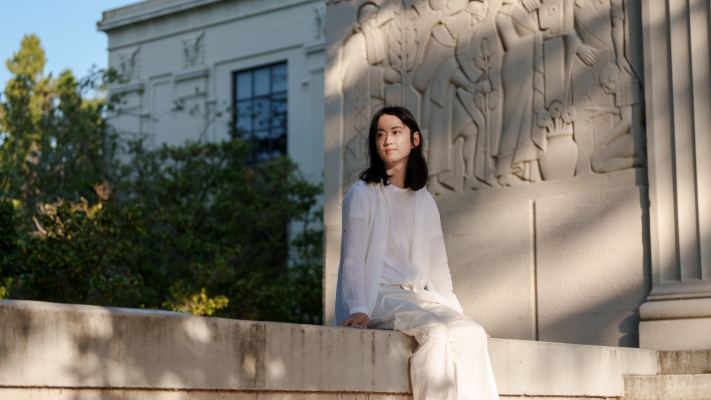
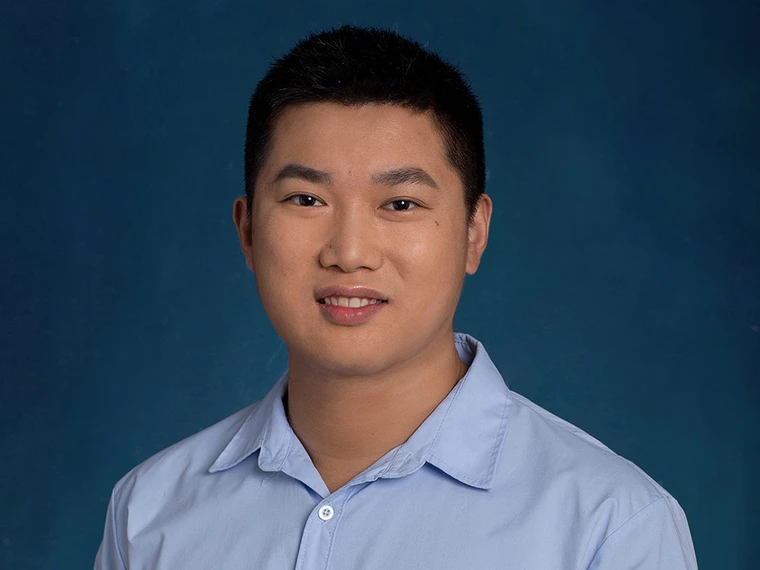
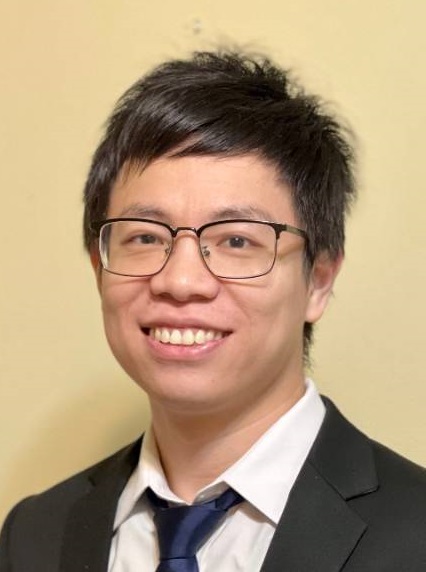
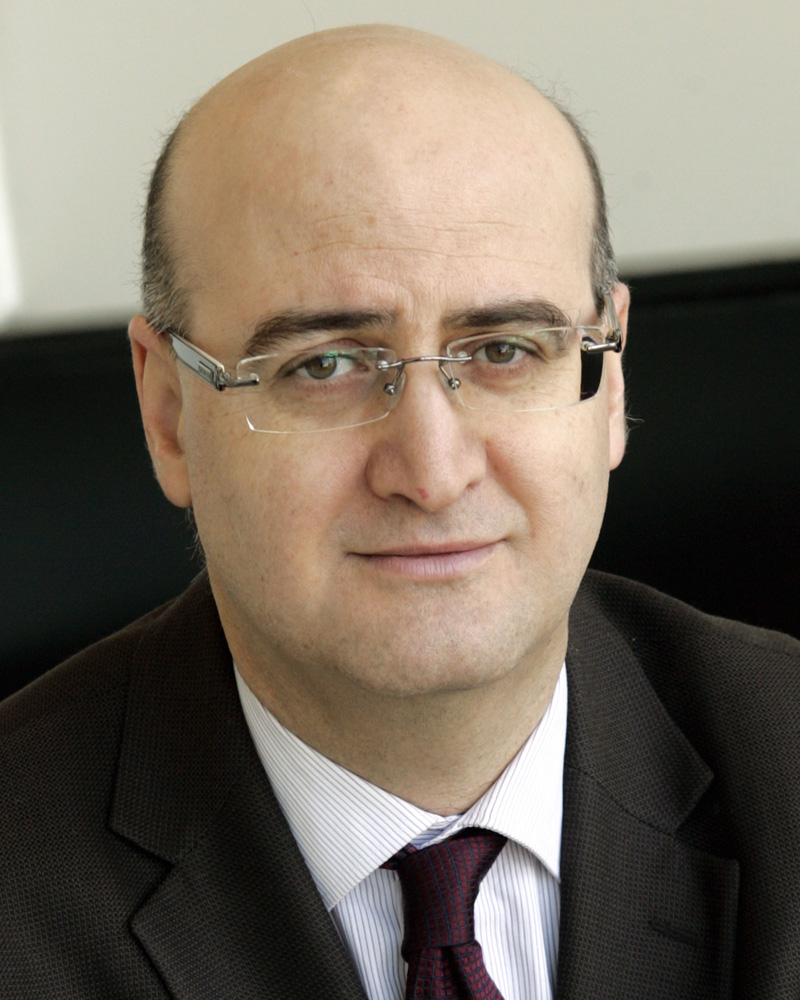
Lijie Chen is an Assistant Professor in the Department of Electrical Engineering and Computer Sciences at UC Berkeley, where he is part of the Berkeley Theory Group. Previously, he was a Miller Research Fellow at UC Berkeley, hosted by Avishay Tal and Umesh Vazirani, and earned his Ph.D. from MIT under Ryan Williams. His research focuses on theoretical computer science, particularly computational complexity theory, with applications to quantum physics and AI safety. Education: Ph.D. in Computer Science from MIT (2022), B.Sc. from Yao Class at Tsinghua University. Research Interests: Complexity theory, quantum complexity, derandomization, circuit lower bounds, and foundational aspects of AI safety. Chen has made significant contributions to understanding fundamental questions in complexity theory, including circuit lower bounds and the connections between randomness and computation efficiency. His work often bridges theoretical insights with practical implications in quantum computing and algorithm design. Awards and Honors: Machtey Award for Best Student Paper (2019). Danny Lewin Best Student Paper Award (2019). Invited to SICOMP Special Issues for FOCS and STOC papers. He has organized workshops on complexity theory and derandomization, and his research has been recognized in venues like STOC, FOCS, and the Journal of the ACM.
Yu-Ru Lin is an Associate Professor at the School of Computing and Information, University of Pittsburgh, and serves as Research & Academic Director at the Institute for Cyber Law, Policy and Security (Pitt Cyber). She leads the Pitt Computational Social Dynamics Lab (PICSO Lab) and holds secondary appointments in Political Science, Computer Science, and the Intelligent Systems Program. PhD in Computer Science from Arizona State University Postdoctoral research at Harvard University and Northeastern University Her research focuses on computational approaches for: Networked social dynamics High-dimensional social information summarization Trust and distrust propagation Misinformation detection Policy diffusion analysis Recent publications span 2014-2020, covering: Social media crisis response Graph visualization techniques Policy diffusion patterns Misinformation mitigation Temporal topic modeling Scientific support includes: National Science Foundation (NSF) awards Minerva/ONR funding AFOSR grant for distrust modeling DARPA Understanding Group Biases program As director of PICSO Lab, she leads interdisciplinary research teams on: Digital accountability Urban mobility patterns Health informatics via crowdsourcing Trust-influence dynamics
Professor Liyue Shen is a faculty member in the Department of Biomedical Engineering within the College of Engineering at the University of Michigan. Her research program focuses on cutting-edge applications of artificial intelligence in biomedical imaging and healthcare, with particular expertise in diffusion models and inverse problem solving for medical image reconstruction. Dr. Shen's research interests span biomedical AI, medical image analysis, biomedical imaging, machine learning, computer vision, signal and image processing, AI for precision health, and bioinformatics. Her work bridges theoretical advances in AI with practical clinical applications, developing novel methods for medical image reconstruction, segmentation, and analysis that can improve diagnostic accuracy and treatment planning. Analysis of her recent publications reveals a strong focus on diffusion models for solving complex inverse problems in medical imaging, with particular emphasis on patch-based approaches, latent space disentanglement, and efficient sampling techniques. Her research group has made significant contributions to 3D CT reconstruction, chest X-ray analysis, holographic phase retrieval, and patient-specific imaging studies, demonstrating both theoretical innovation and practical clinical relevance. While specific scientific awards aren't mentioned in the available materials, her extensive publication record in top venues demonstrates significant scholarly impact in the field of biomedical AI. Her research program appears well-funded through grants supporting her work in medical imaging and AI development.
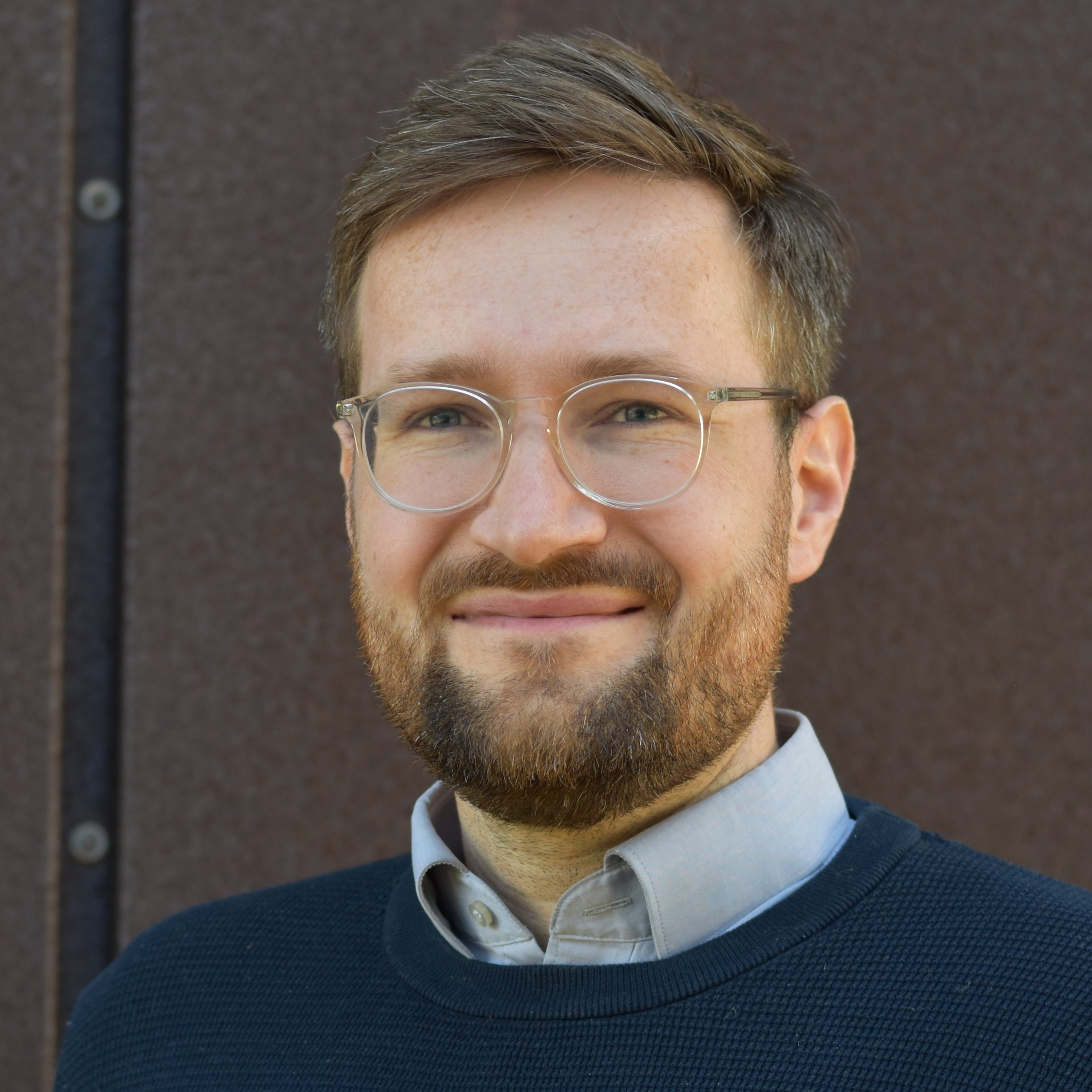
Lars Rohwedder is an Associate Professor in the Algorithms Group at the University of Southern Denmark (SDU) in Odense. He previously held positions as an Assistant Professor at Maastricht University (Netherlands) and postdoc researcher at EPFL, Lausanne (Switzerland). He earned his Ph.D. in Computer Science from CAU Kiel (Germany), advised by Klaus Jansen, and is a recipient of the 2019 PhD of the year award from Förderverein der TF of Kiel University. His research focuses on algorithms for combinatorial optimization, including approximation algorithms, online algorithms, parameterized algorithms, and integer programming. He has contributed to solving scheduling problems, resource allocation, and optimization under uncertainty. Rohwedder has served on program committees for conferences like MAPSP, SODA, STACS, and ICALP. He is funded by NWO's Open Competition M1 project on quasi-polynomial time algorithms. His teaching includes courses on advanced algorithms, operations management, and optimization at SDU and Maastricht University. Key achievements include a quasi-polynomial approximation for the restricted assignment problem, FPT algorithms for scheduling, and contributions to the Submodular Santa Claus problem. His work bridges theoretical foundations and practical applications, with a focus on algorithmic efficiency and robustness.
Tiancheng Zhao is a principal researcher at the Binjiang Institute of Zhejiang University and founder of the Om Artificial Intelligence Laboratory (Om AI Lab), dedicated to frontier open multimodal AGI research for building next-generation agents that transform work and life through advanced human-machine interaction. His academic credentials include: Ph.D. in Computer Science from Carnegie Mellon University (2016-2019) under Prof. Maxine Eskenazi, Prof. Louis-Philippe Morency, Prof. William W. Cohen, and Dr. Dilek Hakkani-Tur, with pioneering dissertation “Learning to Converse With Latent Actions” in end-to-end generative conversational models M.S. in Computer Science from Carnegie Mellon University (2014-2016) B.S. in Electrical Engineering from UCLA (2010-2014) with Summa Cum Laude, focusing on speech signal processing under Prof. Abeer Alwan Dr. Zhao’s research centers on multimodal foundation models and agents, tackling three core challenges: Multimodal Models for cross-modal representation learning in high-dimensional data, Learning to Learn for effective skill acquisition from diverse signals (supervised labels, rewards, meta-learning), and AI Agents for open-world understanding and complex decision-making. His work bridges computer vision, natural language processing, and real-world applications including healthcare analytics and remote sensing. Analysis of his 50+ publications reveals accelerating innovation in multimodal large language models (2024-2025), with emphasis on stable vision-language architectures (VLM-R1), agent orchestration frameworks, and domain-specific applications in geospatial analysis and healthcare. Key trends include solving long-tail distribution challenges in satellite imagery, developing human-like zooming capabilities for multimodal LLMs, and creating unified benchmarks for autonomous GUI testing. His scientific recognition includes: National Breakthrough Technology Award by Ministry of Science and Technology (2021) Microsoft Research Best & Brightest PhD (2018) BEST PAPER AWARD at SIGDIAL 2018 Best Paper Nomination at SIGDIAL 2016 Top 1 Outstanding Bachelor of Science Award at UCLA (2014) As Om AI Lab founder, Dr. Zhao leads research teams developing computational building blocks for human-AI collaboration. While specific student mentorship details aren’t public, his extensive publication record with junior co-authors indicates active research supervision. Current projects focus on practical system implementations for real-world multimodal agent deployment across diverse domains.
Nicole Wein is an Assistant Professor in the Computer Science and Engineering Division of the Department of Electrical Engineering and Computer Science (EECS) at the University of Michigan, College of Engineering. Her research lies in theoretical computer science, focusing on graph algorithms, dynamic algorithms, parameterized algorithms, distributed algorithms, online algorithms, and fine-grained complexity. She is part of the Theory of Computation Lab and advises both PhD and undergraduate researchers. PhD, Massachusetts Institute of Technology (MIT), advised by Virginia Vassilevska Williams Postdoctoral Fellow, DIMACS Research Fellow, Simons Institute, UC Berkeley MS, Stanford University BS, Computer Science/Math, Harvey Mudd College Her research explores fundamental algorithmic questions in combinatorial settings, particularly how algorithms handle dynamic data, extract information efficiently (e.g., in linear time), and understand shortest path structures in graphs—especially directed ones. She investigates problems in distance estimation, spanners, hopsets, dynamic graph algorithms, and hardness of approximation. Her work combines theoretical depth with practical implications for algorithm design. The recent publications reflect a strong trend in fine-grained complexity and graph algorithm design, with a focus on proving tight bounds, developing efficient approximations, and understanding structural limitations in directed and dynamic graphs. Her work frequently appears in top venues such as STOC, FOCS, SODA, and ICALP, often in collaboration with leading researchers in the field. Scientific Awards and Recognition: Invited to special issue of SIAM Journal on Computing (SICOMP) (FOCS 2022 paper) Invited to Highlights of Algorithms (HALG) (FOCS 2022 paper) Invited to minisymposium at CANADAM (ESA 2022 paper) Work featured in Quanta Magazine Nicole Wein actively mentors students, including current PhD student Jubayer Nirjhor and former undergraduate researchers like Sam Hiken (now pre-doc at MIT). She has served on program committees for major conferences including SODA, FOCS, ICALP, and ITCS, and co-organized the DIMACS workshop on Modern Techniques in Graph Algorithms (2023). She also contributes to the academic community through outreach, such as her article offering reassurance to early-stage PhD students in theoretical computer science. She leads and participates in collaborative research groups and workshops, emphasizing supercollaboration and interdisciplinary communication in algorithms. Her lab fosters a strong research environment in theoretical computer science at the University of Michigan.
Leslie Ann Goldberg is a Senior Research Fellow at St Edmund Hall and Professor of Computer Science at the University of Oxford. She currently serves as Head of the Department of Computer Science (on sabbatical 2025-26) and focuses on foundational problems in Algorithms and Complexity Theory , particularly randomised algorithms for network communication, machine learning, and statistical physics models. Her research includes solving Aldous' 1987 conjecture on backoff protocol instability (with John Lapinskas), developing rigorous mathematical analysis frameworks for algorithmic efficiency, and advancing approximate counting techniques via Markov Chain Monte Carlo methods (with Andreas Galanis and collaborators). Key projects involve graph homomorphisms , Moran process dynamics , and #BIS complexity class analysis. Recent publications (2023-2024) span topics like Sybil defense mechanisms, low-temperature sampling on random graphs, and parameterised subgraph counting modulo 2. Her work demonstrates cross-disciplinary impact in computational biology, statistical physics, and database theory. Scientific Awards include Best Paper Prizes at ICALP 2016, ICALP 2010, and IPEC 2017. She supervises PhD student Paulina Smolarova and collaborates extensively with researchers in Oxford and beyond.
Aura Istrate is a Lecturer/Assistant Professor in Urban Planning & Sustainable Urbanism at the School of Architecture, Planning and Environmental Policy at University College Dublin (UCD). With an international background spanning multiple continents, she conducts interdisciplinary research on sustainable urban development, focusing on active mobility, nature-based solutions, and climate-neutral cities. She teaches GIS and urban planning modules while coordinating several significant research projects across European and Asian contexts. University College Dublin, School of Architecture, Planning and Environmental Policy Primary Coordinator of C-NEWTRAL (Horizon MSCA-DN 2024-2028) Co-Leader of REALLOCATE (Horizon Europe project 2023-2027) Principal Investigator for BIODIVERSA+ projects (NatureScape and NBS4AQUAMISSION) Educated at the University of Architecture and Urban Planning 'Ion Mincu' in Bucharest (BA and MA) and the University of Liverpool (PhD), Dr. Istrate further enhanced her teaching credentials with a Professional Certificate in University Teaching & Learning from UCD. Her academic journey reflects a strong foundation in architectural and urban planning principles combined with specialized expertise in sustainable urbanism. Dr. Istrate's research focuses on smart and sustainable urbanism, particularly examining active mobility, livable streets, green public spaces, and nature-based solutions in urban planning. Her work employs participatory, geospatial, and mixed methods to inform smart communities and the transition to climate-neutral cities. She has practical international experience in urban design and planning, with ongoing collaborations spanning European and Asian countries, currently teaching and researching across cultures in UCD and UCD's International Colleges (CDIC). Her recent publications reveal a strong focus on street vitality, urban heat adaptation, and nature-based solutions. The research demonstrates methodological diversity combining quantitative spatial analysis with qualitative community engagement approaches. Her work spans multiple geographic contexts, with particular expertise in Chinese urban environments and European cities, showing how urban planning concepts need to be contextualized for different cultural settings. The articles consistently address climate adaptation challenges through innovative approaches like urban nature games and fine-grained street classification systems. Dr. Istrate serves as a PhD thesis supervisor and is actively involved in major research initiatives including C-NEWTRAL (as Primary Coordinator), REALLOCATE (as Co-Leader), and BIODIVERSA+ projects (as PI for NatureScape and NBS4AQUAMISSION). Her grant portfolio includes Horizon Europe projects and other significant funding that supports interdisciplinary research on climate-neutral urban development. She has coordinated multiple teaching modules including Planning Design & Development, GIS & Planning, Intro to Spatial Planning, and Local Planning Studio. She leads international research collaborations and maintains active partnerships across various European and Asian countries. Her work bridges academic research with practical urban planning applications, particularly through her focus on research-by-design approaches and participatory methods that engage communities in the planning process. She has served as a lecturer, tutor, or teaching assistant across departments of Architecture, Planning, Environmental Studies, Global Studies, and Human Geography in Ireland, the UK, Czechia, Sweden, China, and Romania since 2010.
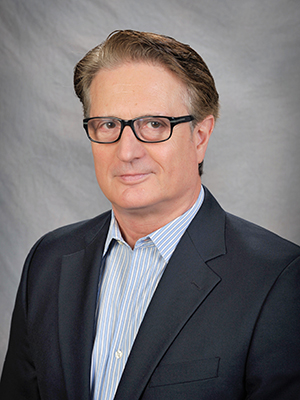
Juan Garay is a Professor in the Department of Computer Science & Engineering at Texas A&M University, affiliated with the College of Engineering. His research focuses on cryptography, information security, and distributed systems, with notable contributions to cryptographic protocols, blockchain technologies, and consensus mechanisms. He holds a leadership role in advancing theoretical and applied aspects of secure computation and network security. Research Interests: Cryptography and Information Security Secure Multiparty Computation Cryptocurrencies and Blockchain Protocols Consensus Algorithms Distributed Computing Game Theory in Cryptography Publications highlight his work on the Bitcoin Backbone Protocol, secure multiparty computation, and post-quantum cryptographic systems. He actively contributes to conferences and workshops in cryptography and distributed systems. He advises graduate students in computer science and engineering, though specific advisee names are not listed. His work is supported by grants from the National Science Foundation (NSF) and other institutions, focusing on secure protocols and distributed systems. Office: Peterson Building (PETR 429) Contact: garay@cse.tamu.edu
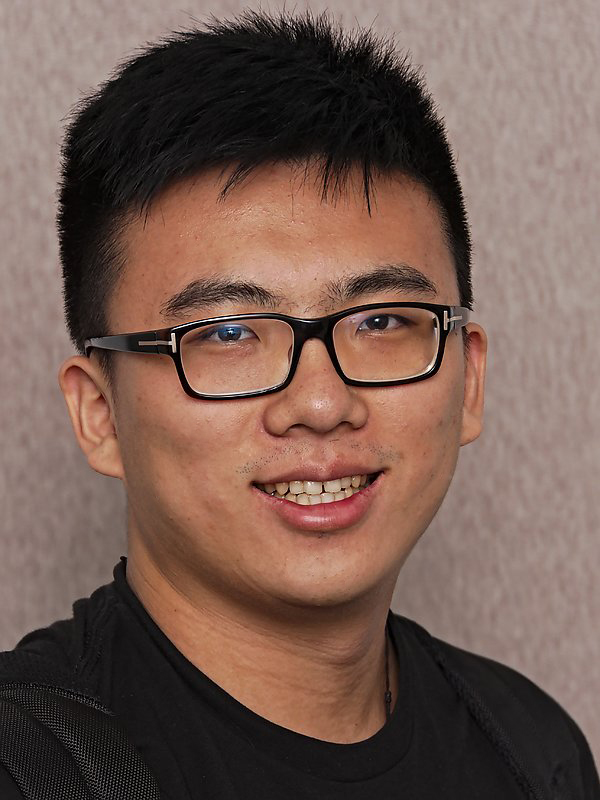
Liangming Pan is an Assistant Professor at the University of Arizona's College of Information Science. His research focuses on building trustworthy large language models (LLMs) with an emphasis on logical reasoning, truthfulness, and safety. He holds a PhD in Computer Science from the National University of Singapore (2022), a Master's from Tsinghua University, and a Bachelor's from Beihang University. Education : PhD in Computer Science, National University of Singapore (2022) Master of Engineering in Computer Science, Tsinghua University (2017) Bachelor of Engineering in Computer Science, Beihang University (2014) Research Interests : Dr. Pan's work centers on enhancing LLMs' reliability through: Logical reasoning mechanisms to ensure faithful deductions Truthfulness verification to combat misinformation Safety protocols to mitigate societal harm Key Contributions : Developed TART, an open-source framework for explainable table-based reasoning Created benchmarks like SCITAB and FactCheck-Bench for evaluating LLMs Advanced techniques for knowledge editing and causal reasoning Awards : Best Paper Runner-Up at NeurIPS Table Representation Workshop (2024) Area Chair Award for Question Answering (IJCNLP-AACL 2023) Service & Outreach : He serves as an Area Chair for EMNLP (2024), COLING (2025), and ACL (2024). He has delivered invited talks at Tsinghua University, Peking University, and other institutions.
Dr. Jia Zhang is the Inaugural Robert H. Dedman Jr. Endowed Department Chair and Professor of Computer Science at Southern Methodist University (SMU Lyle School of Engineering). She holds the Cruse C. and Marjorie F. Calahan Centennial Chair in Engineering and has a courtesy appointment in the Department of Operations Research and Engineering Management. Her research focuses on applying machine learning, natural language processing, and information retrieval to data science infrastructure, particularly scientific workflows, provenance mining, software discovery, knowledge graphs, cloud computing, immune AI, and applications in earth science and healthcare. Education: Ph.D. in Computer Science, University of Illinois at Chicago M.S. in Computer Science, Nanjing University B.S. in Computer Science, Nanjing University Dr. Zhang's work emphasizes data science infrastructure and machine learning for scientific workflows and knowledge graphs. Her recent publications highlight deep learning , graph neural networks , and optimization algorithms in cloud computing, cybersecurity, and environmental applications. Key trends include spatiotemporal modeling , hybrid neural architectures , and AI-driven service ecosystems . Scientific Awards: Best Paper Awards IEEE SCC (2011, 2017) Best Student Paper Awards IEEE ICWS (2014, 2018), IEEE ICCC (2018) Distinguished Paper Award ICSOC (2023) First Outstanding Service Award IEEE Technical Committee on Services Computing (2016) She has secured over $5 million in federal grants (as PI) and $11 million as PI/Co-PI from NSF, NASA, NIH, UTSW, Ericsson, SAP, and Google. Her lab (Caruth Hall 308) actively recruits research assistants. She previously served as a faculty member at Carnegie Mellon University, Northern Illinois University, and Nanjing University, and worked in industry as a software architect.
Shungeng Zhang serves as an Assistant Professor in the Department of Computer & Cyber Sciences at Augusta University's School of Computer and Cyber Sciences. He holds a Ph.D. in Computer Science from Louisiana State University (2021) and a B.E. in Computer Engineering from Huazhong University of Science and Technology (2014). His educational background includes: Ph.D. in Computer Science, Louisiana State University, 2021 B.E. in Computer Engineering, Huazhong University of Science and Technology, 2014 Dr. Zhang's research spans distributed systems, cloud computing, and cybersecurity with a focus on enhancing performance and scalability of web applications and IoT stream processing in cloud environments. He employs sophisticated timeline analysis and fine-grained monitoring to identify transient bottlenecks causing long-tail latency problems, addressing propagation effects in complex dependency chains among application components. His publication record (2017-2022) reveals consistent contributions to cloud systems performance, particularly in n-tier architectures, concurrency control, and latency optimization. Key themes include stream processing synchronization, fanout query performance, adaptive concurrency for SLO compliance, and mitigation of transient resource contention attacks across distributed systems. No scientific awards were mentioned in the provided information. Dr. Zhang actively seeks graduate students with strong computer systems backgrounds for research collaboration. His departmental service includes Faculty Assembly participation (2021-2022) and faculty interviewing duties. Professionally, he serves as a reviewer for ACM SoCC'23, ACM TOIT, SmartCom 2023, The Journal of Supercomputing, and ACM SoCC'22. Teaching responsibilities include AIST 4720 (Enterprise System Architectures), CSCI 1200 (Introduction to Computers and Programming), and graduate courses such as CSCI 8940 (Dissertation Research) and AIST 3310 (Advanced Networking). No dedicated research labs or teams were specified in the available documentation.
Rasmus Kyng is an Assistant Professor in the Department of Computer Science at ETH Zurich, where he has been since 2019. His research focuses on fast algorithms for graph problems, convex optimization, and their applications in machine learning. He has received grants from the Swiss National Science Foundation, including project grants and a starting grant. Education: B.A. in Computer Science from the University of Cambridge (2011), PhD in Computer Science from Yale University (2017), advised by Daniel A. Spielman. Postdoctoral positions included Harvard University (2018–2019) and a research fellowship at the Simons Institute, UC Berkeley (2017). Research Interests: Development of nearly linear-time algorithms for fundamental graph problems (e.g., maximum flow, minimum-cost flow), dynamic graph algorithms, discrepancy theory, and fine-grained complexity. His work bridges numerical linear algebra and combinatorial optimization, emphasizing practical implementations such as the Laplacians.jl package. Awards: FOCS Best Paper Award (2022), Inaugural ICBS Frontiers of Science Award (2022), Machtey Award (Best Student Paper, FOCS 2017). Teaching: Advanced Graph Algorithms and Optimization (ETH Zurich, 2020–2023), Algorithms, Probability, and Computing (ETH Zurich, 2020–2022). Supervised numerous PhD students and mentored postdocs in theoretical computer science. Labs/Teams: Co-leads a research group with Maximilian Probst Gutenberg, focusing on dynamic graph algorithms and optimization. Collaborations include work on sparsification, spectral graph theory, and machine learning applications.
Professor Moncef Gabbouj is a distinguished academic and researcher currently serving as Professor of Signal Processing at the Department of Computing Sciences, Faculty of Information Technology and Communication Sciences, Tampere University, Finland. Previously, he held the same position at Tampere University of Technology before the merger in 2019. He has also held visiting professorships at prestigious institutions including Hong Kong University of Technology and Science, University of Southern California, and Purdue University. Ph.D. and MSc. in Electrical Engineering from Purdue University, USA (1989 and 1986) B.Sc. in Electrical Engineering from Oklahoma State University, USA (1985) Prof. Gabbouj's research spans multiple domains within signal and image processing, with a strong focus on machine learning applications. His primary research interests include artificial intelligence, machine learning, Big Data analytics, multimedia content-based analysis, indexing and retrieval, nonlinear signal and image processing, voice conversion, and video processing and coding. His work bridges theoretical advancements with practical applications across various industries, particularly in multimedia communications and biomedical applications. His extensive publication record demonstrates a clear evolution from traditional signal processing techniques toward more sophisticated machine learning and deep learning approaches. Recent work shows increasing focus on convolutional neural networks for various applications including ECG classification, video processing, financial time-series analysis, and image recognition tasks, reflecting the broader trend in the field toward deep learning methodologies while maintaining strong foundations in signal processing theory. IEEE Fellow (2011) Member, Finnish Academy of Science and Letters (2014) Knight, First Class, of the Order of the White Rose of Finland (2006) Nokia Foundation Recognition Award (2005) Nokia Foundation Visiting Professor Award (2012) Finnish Cultural Foundation for Art and Science Award (2017) TUT Foundation Grand Award (2015) Prof. Gabbouj has supervised 64 doctoral and 72 Master's theses, demonstrating his significant contribution to academic mentoring. His research has been supported by substantial funding, including research grants totaling 8.5 million Euro (2001-2015). He has served as Academy of Finland Professor during 2011-2015 and has been involved in numerous EU research projects including Horizon, ESPRIT, HCM, IST, COST, Tempus and Erasmus programs. As Editor, Guest Editor or member of the Editorial Board of 6 international scientific journals, he has significantly influenced the academic discourse in his field. He leads the Signal Analysis and Machine Intelligence (SAMI) research group at Tampere University and serves as the Finland Site Director of the NSF IUCRC funded Center for Visual and Decision Informatics. His research unit focuses on applying advanced machine learning techniques to solve complex problems in signal processing, computer vision, and multimedia analytics, with applications ranging from healthcare to multimedia communications and financial analysis.
Thomas Pasquier is an Assistant Professor in the Department of Computer Science at the University of British Columbia, affiliated with the Systopia Lab and UBC Security & Privacy Group. His research focuses on digital provenance, system auditing, intrusion detection, and performance optimization. He investigates systems security through provenance graph analysis, developing practical frameworks for intrusion detection (including PROVNET and Kairos) and provenance summarization tools. His work combines machine learning with systems research to enhance cybersecurity transparency. Recent Publications (2022-2025) Provenance-based intrusion detection systems analysis Whole-system provenance for practical security eBPF kernel extension security enhancements LLM-driven provenance summarization Research code quality assessment Scientific Awards Incredible Instructor Awards Amazon Science Research Award He supervises graduate students in systems security research and teaches courses on security & privacy and operating systems. His lab welcomes diverse students for thesis-based research opportunities.