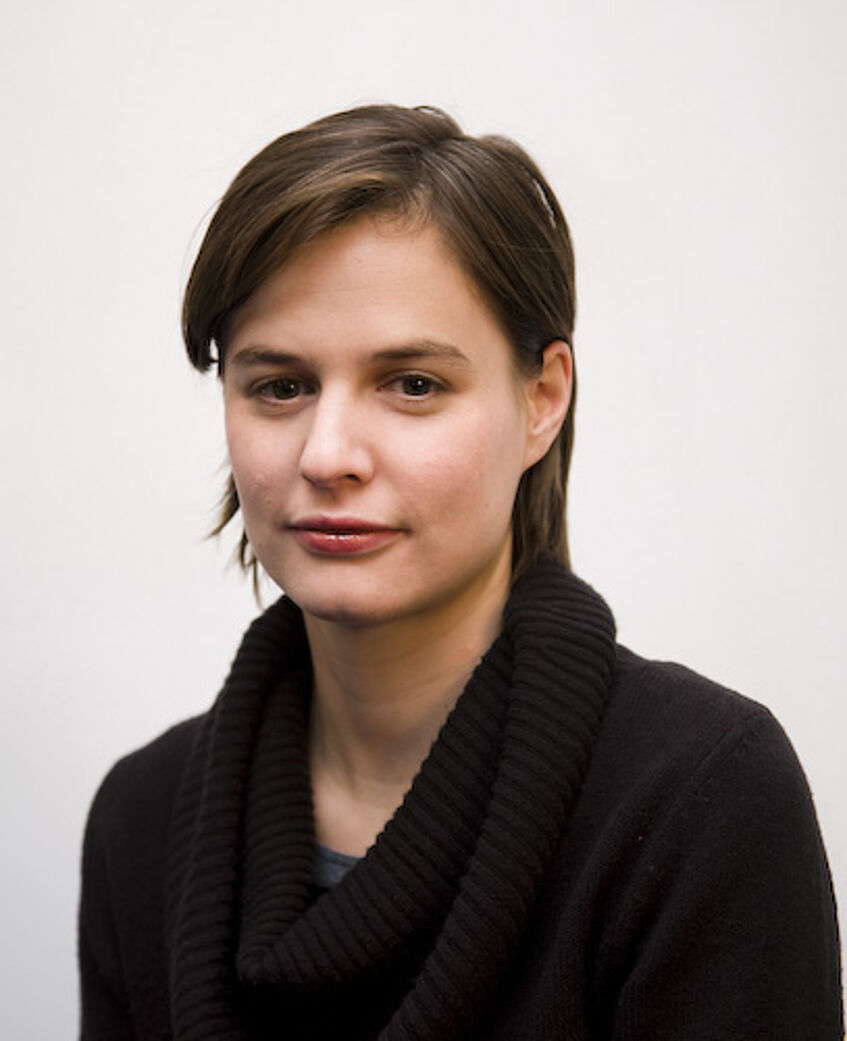
Dr Yu-Tung Wu serves as a Postdoctoral Research Associate at the School of Geography and Planning, University of Sheffield, specializing in housing financialisation and urbanisation with emphasis on war-displaced immigrants in Taiwan and 'Military Dependents’ Villages' (MDVs). His academic background includes: PhD in Urban Studies and Planning from the University of Sheffield (supervised by Professor Ryan Powell and Professor Stephen Hincks) MSc in Cities and Global Development from the University of Sheffield (2020) Bachelor's degree in Urban Planning from National Cheng Kung University, Taiwan (2018) Dr Wu's research critically examines neoliberalisation and housing financialisation in East Asian developmental states , analyzing impacts on daily life and long-term housing conditions through Qualitative GIS mapping . His work investigates community-space dynamics focusing on state simplification, de-militarisation, and housing verticalisation in urban Taiwan, revealing socio-spatial transformations through empirical fieldwork. No scientific awards were documented in the source material. No student advising or research grants were referenced in the provided information. He operates from the Geography and Planning Building at the University of Sheffield.
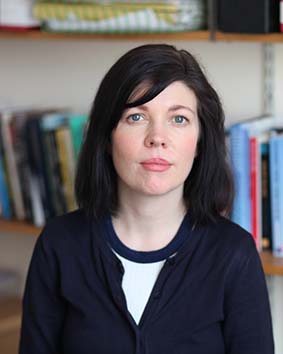
Diane Burns is a Senior Lecturer in Organisation Studies and Head of the Organisation Studies Research Cluster at the University of Sheffield Management School. She joined Sheffield University Management School in October 2012 as a Lecturer in Human Resource Management and Organisational Behaviour, having previously served as Research Fellow at the School of Allied Health Professions, University of East Anglia. Her academic career focuses on the organization and management of social care, particularly examining how structures, processes and dynamics produce and affect care provision and the lives of people who work within or need the support of social care systems across the UK and internationally. Diane Burns holds the following academic qualifications: PhD in Psychology from Manchester Metropolitan University MSc in Organisational Psychology from Birkbeck University of London BSc Hons. in Psychology from Manchester Metropolitan University PGCert. in Teaching & Learning in Higher Education from University of Sheffield Her research interests concentrate on power and relations of domination in the care space, with four key interconnected areas: workforce issues and job quality in care settings; AI, digitalisation and innovation in care delivery; financialisation and marketisation of social care; and intersubjective epistemologies and participatory approaches in research. She examines how organizational structures, processes and dynamics affect care provision, particularly in social care settings, investigating temporality, digitalisation, corporate colonisation and instability in social care organizing, with critical attention to how these factors impact both care workers and recipients of care services. Analysis of Dr. Burns' recent publications reveals a consistent evolution of her research focus toward the intersection of organizational dynamics and social care delivery under increasing financial and technological pressures. Her work demonstrates growing attention to temporal arrangements in homecare, the financialization of elder care, and innovative service models, while maintaining a critical perspective on power dynamics and corporate influence. A notable trajectory shows her expanding interest in AI-driven solutions for workforce shortages, as evidenced by her current ESRC-funded project examining AI-driven technology in homecare across the UK, Finland and Sweden, while continuing to investigate participatory research methods to understand care home culture and worker experiences. Her scholarly contributions have been recognized with awards including: Best Paper Award at the 8th International Organisational Behaviour in Healthcare Conference (2012) Diane Burns actively supervises PhD students including Kevin Burrows (Doctoral Associate in Accounting and Finance) and Amrithavally Thaivalappil Ramakrishnan (Doctoral Researcher in Organisation Studies), having previously guided Arbaz Kapadi, Juan Pablo Winter, and Rosie Westerveld to completion. She leads significant research initiatives including: ESRC (JPI MYBL) 2025-2028: "AI-driven platform care: Promoting equal and inclusive job quality in long-term care" (£377,000) ESRC 2021: "Centre for Care" (£4.5 million) ESRC 2017-2021: "Sustainable Care Research Programme" (£2 million) Wellcome Trust 2016-2017: "Doing Care Differently" (£49,793) Department of Health & Comic Relief 2012-2013: "Care Home Organisations Implementing Cultures of Excellence" (£550,000) As Head of the Organisation Studies Research Cluster at Sheffield University Management School, Dr. Burns leads collaborative research efforts examining organizational dynamics in healthcare and social care settings. Her work frequently involves international partnerships, particularly with researchers in Finland and Sweden for her current ESRC-funded project on AI-driven technology in homecare. She maintains strong connections with the Work, Employment and Organisations research group and has established research networks across European institutions focused on understanding comparative social care systems and innovative care delivery models under financial constraints.
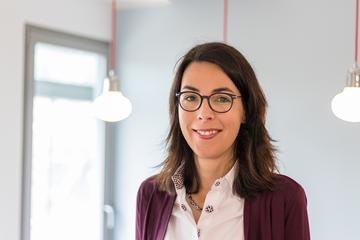
Cornelia Staritz is an Associate Professor at the University of Vienna's Faculty of Social Sciences, Department of International Development. Her research focuses on development economics, global value chains, labor rights in global production networks, and commodity-based development. She is a member of the Vienna Doctoral School of Social Sciences (ViDSS) Steering Committee and the Doctoral Advisory Board. Her work critically examines power asymmetries in globalized trade and financial systems, with a regional focus on Africa and Southeast Asia. Key research areas include: Global trade, production networks, and structural transformation Labour regimes and struggles in global production Financialisation and commodity markets Recent publications analyze the EU-Vietnam Free Trade Agreement's impact on labor, critical minerals (lithium, copper) in green transitions, and supply chain resilience post-pandemic. She leads projects funded by the Austrian Science Fund (FWF) and Danida Fellowship Center, exploring socio-ecological transformation and commodity governance. Her work emphasizes policy implications for socially responsible public procurement, industrial policy, and sustainable development in global production networks.
Pascal Koenig is an Assistant Professor of Public Administration at Vrije Universiteit Amsterdam's Faculty of Social Sciences and Humanities. His research focuses on the intersection of Artificial Intelligence (AI) and governance, examining how AI transforms decision-making in governments, shapes societal adoption, and influences citizen perceptions. He previously served as an advisor at the German Corporation for International Cooperation (GIZ), planning digital transformation projects in development cooperation. Before that, he held roles including John F. Kennedy Memorial Fellow at Harvard University, interim professor at TU Munich, and postdoctoral researcher at RPTU Kaiserslautern-Landau and Goethe University Frankfurt. His academic contributions span over 80 publications in journals such as AI & Society , Public Administration , and Comparative Political Studies . Key research themes include algorithmic governance, digital sovereignty, and AI ethics. He teaches courses on AI in government, public administration research methods, and societal implications of algorithmic systems. Notable awards include the John F. Kennedy Memorial Fellowship. His recent work highlights societal impacts of AI, such as citizen attitudes toward AI in governance and the ethical challenges of algorithmic decision-making in public sectors. He actively participates in interdisciplinary initiatives, including organizing workshops on data governance and digital ecosystems.
Nicholas Frank is a Laureate Research Fellow at the Australian National University (ANU), based in the School of Regulation & Global Governance. Previously, he served as an Associate Lecturer in the School of Politics and International Relations at ANU. His research focuses on the political economy of trade and investment governance, employing computational methods such as inferential network analysis and text-as-data techniques. Education: PhD in Regulation and Global Governance (ANU) MSc in International Political Economy (London School of Economics) Bachelor of Commerce (PPE, University of Cape Town) Research Interests: Global trade policy, multinational enterprises, computational social science (network analysis, NLP), and health equity. His work bridges formal theory, econometrics, and policy analysis to address systemic inequities in trade and climate governance. Collaborations and Affiliations: Consultant for the International Trade Centre (ITC) and Organisation for Economic Co-operation and Development (OECD) Previous roles at the World Trade Organization (WTO) and International Centre for Trade and Sustainable Development (ICTSD) Key Research Trends: Recent articles emphasize leveraging machine learning, text analysis, and network approaches to study bilateral investment treaties, health equity in climate policies, and the political economy of growth models. His work often intersects with global health and planetary health frameworks. Advising and Grants: Registered to supervise research students. His projects include the Planetary Health Equity Hothouse, focusing on interdisciplinary solutions to systemic inequities. Labs/Teams: Active member of the Planetary Health Equity Hothouse, a cross-disciplinary initiative addressing global governance challenges.
Mark Westcott is a Senior Lecturer at the University of Sydney Business School, specializing in industrial relations, corporate governance, and labor history. He holds a BEc(Hons) and PhD. His research explores financialisation's impact on labor markets, corporate governance structures, and historical institutional dynamics in Australia. Education: BEc(Hons) PhD Research Interests: Mark investigates how financial markets influence employment conditions, particularly through studies of alternative investment funds and corporate governance. He co-leads the Business and Labour History Group (BLHG) and contributes to interdisciplinary historical studies in Labour History and Accounting History Review. Teaching: Courses include BUSS4803 Work and Organisational Studies Honours B, WORK2201 Foundations of Management, and WORK5003 Management and Organisations. Teaching focuses on management theory, work sociology, and organizational theories. Professional Roles: Treasurer of the Association of Academic Historians in Australian and New Zealand Business Schools (AAHANZBS) Co-Director, Business and Labour History Group (BLHG) Associate Editor, Labour History journal
Graham Thrower is the Head of the Institute for Economic and Social Inclusion (IESI) at the University of Sunderland, leading interdisciplinary research on inclusive learning, living, work, and health outcomes for excluded communities. He holds a PhD in Economic Geography from Newcastle University and has over 30 years of experience in strategic leadership across public, private, and third sectors, including roles at Citigroup, ONE North East, and Urban Foresight. His research focuses on socio-economic challenges, inclusive growth, and the impact of spatial development, with a particular emphasis on co-designed solutions for marginalized groups. His academic work examines the financialization of infrastructure and its societal implications, while his policy advisory roles include projects for national governments, international bodies, and local councils. Notable contributions include strategies for just transitions, net-zero pathways, and climate-resilient urban planning. He has authored influential publications such as Financialising City Statecraft and Infrastructure (2019) and led initiatives like the Walsall Economic Strategy (2022) and West Kildare Just Transition Plan (2022). Thrower’s research bridges theory and practice, addressing systemic inequalities through participatory methods. His advisory work spans sectors including green construction, screen industries, and social housing, emphasizing community agency in socio-economic development.
Dr. Catherine Happer is a Senior Lecturer in Sociological & Cultural Studies at the University of Glasgow, serving as Director of the Glasgow University Media Group and Subject Group Lead for Media, Culture and Society. Her work focuses on media's role in shaping public opinion, particularly regarding climate change and environmentalism. She holds a Ph.D. from Lancaster University and has contributed to major research initiatives, including studies with Chatham House on sustainable behavior communication and an EPSRC-funded project on online content moderation. She has advised the Scottish Government, testified before the UK Parliament, and authored/co-authored books such as The Construction of Public Opinion in a Digital Age (2024) and Communicating Climate Change and Energy Security (2013). Teaches Honours courses in Sociological and Cultural Studies. Developed the MSc in Media, Communications and International Journalism. Currently leads a mixed-methods study on media and the cost-of-living crisis. Research Interests: Climate communication, audience reception theory, digital media's impact on public opinion, and AI-driven content moderation. Her work bridges sociology, media studies, and environmental science. Publications span 34+ articles, books, and reports across sociology, media studies, and environmental communication. Recent work explores TikTok's role in climate discourse and media framing of crises like the cost-of-living crisis. She regularly contributes to media评论 and appears on BBC and Al Jazeera. Awards and Recognition: While no specific named awards are listed, her work has been widely cited and she holds editorial roles at Sociology and HumaNetten . Grants: Lead or co-investigator on projects totaling over £250k, including EPSRC funding for content moderation research and international studies on climate communication.
Tanja Schneider is an Associate Professor and Head of the Human-Centred Innovation Section at the Technical University of Denmark (DTU) , with a research focus on the intersection of Science and Technology Studies (STS) and economic sociology. She also holds an affiliation as a Research Affiliate at the University of Oxford within the Department of Anthropology. PhD from the University of Sydney Her research explores transformations in agency, accountability, and autonomy in digital societies, spanning topics like neuromarketing, digital food activism, dietary monitoring technologies, and the financialisation of FoodTech innovations. She has led interdisciplinary projects such as FoodCoach (2020-2024) and currently develops her Venture Food book project. Tanja’s publications address digital health, governance, and the societal implications of FoodTech. She has co-edited special issues in journals like the Journal of Cultural Economy and BioSocieties , and her work appears in outlets including Science, Technology & Human Values and Journal of Consumer Culture . Her research methodologies emphasize ethnography and interdisciplinary collaboration across computer science, STS, and information studies. Principal Investigator, FoodCoach (Swiss National Science Foundation) Co-founder, Oxford Food Governance Group She collaborates with institutions in Switzerland (ETH Zürich, University of St. Gallen), Germany (University of Passau), and South Korea, examining how digital tools reshape food activism and dietary interventions.
Dr. Karsten Kohler is an Associate Professor in Economics at Leeds University Business School, University of Leeds. He holds a PhD from Kingston University and has taught at King’s College London and Leeds. His research focuses on open-economy macroeconomics, international finance, political economy, financialisation, and income distribution, with a particular interest in cyclical dynamics, financial instability, and inequality. He co-leads research projects on financial cycles and capital flows, including the Leverhulme Trust-funded The Political Economy of Growth Models in an Age of Stagnation . Kohler’s work bridges macroeconomics, finance, and political economy, addressing topics like exchange rate policies in emerging markets, energy price shocks, and housing cycles. He has co-developed the DIY Macroeconomic Model Simulation platform for teaching and research. Education: PhD Economics (Kingston University), MA International Economics (Berlin School of Economics and Law), MA Economics and International Finance (Université Paris-13), MA Political Economy (Kingston University). Professional memberships include the Post Keynesian Economics Society and the European Association for Evolutionary Political Economy. His research outputs span journals such as the Cambridge Journal of Economics , Journal of International Money and Finance , and Review of International Political Economy . He is currently teaching modules on growth theories and macroeconomics at undergraduate and postgraduate levels. Advising students include Dash Anderson and Nitin Nair. Recent projects include work on multilateral development banks’ local currency lending and Eurozone financial dynamics.
Yang Bai is an Associate Lecturer at Goldsmiths, University of London, where she teaches microeconomics and macroeconomics, alongside being a PhD student at King’s College London. Her primary affiliation as faculty is with Goldsmiths, while her doctoral research is conducted within the Department of International Development at King’s, part of the School of Global Affairs and Faculty of Social Science & Public Policy. Education: MSc in Emerging Economies and International Development, King’s College London (2021–2022) BA in Economics, Durham University (2017–2020) Research Interests: Yang’s work examines the interplay between financialisation and deindustrialisation in South Africa and China. Using quantitative econometric analysis alongside qualitative sectoral research, she investigates how financialisation influences industrial sectors like manufacturing and mining. Her research aims to inform policies balancing financial growth with industrial development in emerging economies. Key themes include development economics, socio-economic consequences of financialisation, and critical perspectives on global capitalism. Supervision & Research Groups: PhD Supervisors: Ewa Karwowski (primary) and Juan Grigera Research Groups: Global Production, Finance and Labour Research Group Global Capitalism, Power & Uneven Development Research Group Critical Global Capitalism Studies Collective Professional Background: Prior to academia, Yang worked in financial management and analysis in China, contributing to corporate strategies. Her interdisciplinary approach bridges academic research with practical policy solutions, particularly focusing on UN Sustainable Development Goals related to economic development and sustainability.
Dr. Hon Chung Hui is an Assistant Professor in the School of Social Sciences at Heriot-Watt University. His research focuses on real estate economics, applied economics, and geopolitical risk analysis. Key areas include housing policy, financialisation of housing markets, exchange rate studies, and development economics. He actively supervises PhD students in topics such as real estate economics and applied economics. His work contributes to UN Sustainable Development Goals related to economic growth and sustainable cities. Notable research includes analyses of Malaysian housing overhang, geopolitical impacts on foreign exchange markets, and FDI determinants in Malaysia. He has published extensively in journals like the International Journal of Housing Markets and Analysis and International Journal of Emerging Markets . Dr. Hui engages with public discourse through media contributions on economic issues such as fiscal policy and pandemic impacts. His expertise bridges academic research with practical policy recommendations, emphasizing interdisciplinary approaches to economic challenges.
Hridesh Gajurel is an ARC Laureate Research Fellow at the Planetary Health Equity Hothouse, School of Regulation and Global Governance (RegNet) at the Australian National University (ANU). Previously, he was a Lecturer in Political Science and International Relations at the University of Queensland, alongside roles as a Postdoctoral Researcher and Research Manager. His academic qualifications include a PhD in Political Economy from the University of Queensland, a Master of Research from Queensland University of Technology, a Master of Commerce from Griffith University, and a Bachelor of Arts from Knox College, USA. His research focuses on corporate governance, financialisation, and pathways to a wellbeing economy. Key interests include the role of ideas in shaping corporate governance, institutional drivers of the consumptogenic system, and the intersection of financialisation with planetary health equity. His work employs frameworks such as historical institutionalism and constructivist institutionalism. Recent publications address financialised food systems, planetary health equity for early-career researchers, and financialisation as a determinant of health inequity. He leads investigations into the institutional and political dynamics perpetuating systems driving climate change and health disparities. Awards include the prestigious ARC Laureate Fellowship. His contributions span transdisciplinary collaborations, policy innovation, and advocacy strategies. He is affiliated with the Planetary Health Equity Hothouse, fostering cross-sectoral approaches to global challenges.
Dr. Andrew Brooks is a Reader (equivalent to Professor) in Uneven Development and Deputy Head of the Geography Department at King’s College London. His research focuses on relational comparisons, uneven development in Africa, global fashion systems, and non-human urban natures. He has conducted extensive fieldwork in Southern Africa, Portugal, and the UK. Education: BA (First Class) in Development Geography (King's College London), MSc in Sustainable Development (Royal Holloway), PhD in Geography (Royal Holloway, 2012). Research interests include critical analyses of development narratives, global fashion trade, and the role of non-human agents (e.g., animals, materials) in urban processes. His books, such as Clothing Poverty and Bullsh*t Comparisons , challenge conventional frameworks in development studies and critical theory. Publications span political geography, urban studies, and development economics, with contributions to journals like Antipode , Political Geography , and Progress in Human Geography . His work has been featured in major media outlets (BBC, The New York Times, etc.). Awards: Progress in Development Studies Article of the Year, Bread and Roses Prize nomination. Grants: Led the Regional Studies Association-funded project on the Nacala Logistics Corridor. Teaching: Courses include Geographies of Financialisation and field research in Lisbon. Labs/Teams: Part of the Contested Development and Urban Futures research groups at King’s.
Paris Hadfield is a Research Fellow at Monash University’s MSDI Research, focusing on urban governance and financing pathways for just sustainability transitions. Her work spans municipal climate strategies, renewable energy procurement, waste management, and community-led home energy upgrades. She is actively involved in transdisciplinary research through living labs and collaborates with global stakeholders including the Global Covenant of Mayors and the RACE for 2030 CRC. PhD, University of Melbourne (2021) BA(Hons), University of Melbourne Her research explores the role of subnational actors, financial systems, and institutional logics in shaping equitable urban transformations. She investigates how contemporary financial capitalism structures sustainability outcomes and advocates for transformative financial innovation. Her work emphasizes energy and climate justice, place-based experimentation, and the governance of living labs in universities and peri-urban settings. The recent publications highlight a strong trend in sustainability transitions, particularly in circular economy models in the Global South, urban financial systems, and community-driven environmental revitalization. Her work bridges academic research with real-world impact through co-creation and stakeholder engagement. Scientific Awards: No awards listed in the provided text. Paris Hadfield is actively involved in research advising and grant-funded projects. She is a Chief Investigator on multiple collaborative grants, including the Indonesia-Australia Citarum Action Research Program (CARP) and the RACE 2030 ENERGY UPGRADES FOR AUSTRALIAN HOMES project. She previously led the Deep Dive #1 - University Living Labs project as Primary Chief Investigator. Her research is conducted within collaborative frameworks such as the Citarum Action Research Program and the RACE for 2030 CRC, which function as interdisciplinary research teams and living labs engaging government, NGOs, industry, and community stakeholders to co-design sustainable solutions in Indonesia and Australia.