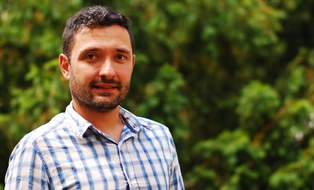
Franck Gabriel is an Associate Professor at University Claude Bernard Lyon 1 , affiliated with the Institut de Science Financière et d'Assurances (ISFA) . His research bridges Machine Learning , Economics/Blockchain , Mathematical Physics , and Random Matrices , with notable work on neural tangent kernels, DeFi protocols, and asymptotic matrix theory. Research Focus : Machine Learning: Theoretical analysis of neural networks, kernel methods, and generalization bounds. Blockchain Economics: Decentralized finance, staking mechanisms, and smart contract design. Mathematical Physics: Holonomy fields, Yang-Mills theory, and random matrix asymptotics. Recent Publications highlight trends in denoising diffusion models, free probability in matrix theory, and DeFi credit systems. His work often integrates cross-disciplinary approaches, merging deep learning with financial technology and quantum field theory. Scientific Awards : 2025 AI 2000 Most Influential Scholar Award in Theory 2024 AI 2000 Most Influential Scholar Award in Theory 2023 AI 2000 Most Influential Scholar Award in Theory As an organizer of the ISFA Seminar , he fosters interdisciplinary discussions in insurance, economics, and machine learning. His collaborations span institutions like Ecole Polytechnique Fédérale de Lausanne, Courant Institute, and EPFL.
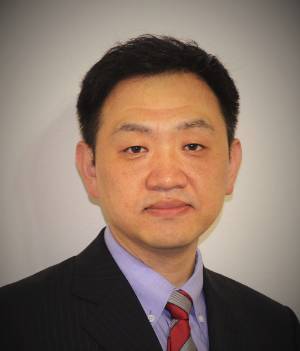
Sung-Hyuk Park is an Assistant Professor at KAIST College of Business, focusing on predictive analytics, recommender systems, and AI applications. His work spans marketing technology, healthcare informatics, and computer vision, with recent publications in journals like IEEE Transactions and Biomedical Signal Processing . Current research integrates deep learning, social network analysis, and optimization models across domains.
Prof. Dr. Bernd Kaltenhäuser has been Professor of Technical Fundamentals at the Baden-Württemberg Cooperative State University (DHBW) Villingen-Schwenningen since 2014. Affiliated with the Faculty of Economics, he teaches a spectrum of courses spanning project management, quality and process management, financial mathematics, technical mechanics, electrical engineering basics, and physical principles. Education 1994-2003: Studies in Physics at Heidelberg, Ulm and Stuttgart Universities 2003-2007: Doctorate in Natural Sciences (Dr. rer. nat.), University of Stuttgart 2009-2014: M.Sc. in Economics, Fernuniversität Hagen Research Focus Prof. Kaltenhäuser’s research integrates system dynamics, blockchain technology in transportation, predictive modelling for autonomous vehicles, and empirical methods from applied social research and marketing. His interdisciplinary approach leverages physics, economics, and data science to address mobility challenges. He is particularly active in developing algorithms for fleet routing, ride-hailing optimisation, and evaluating market readiness for autonomous driving in Germany. Scientific Awards Artur Fischer Inventor Prize 2009 Heinrich Düker Prize 2004, Robert Bosch Foundation for Education and the Promotion of Disabled People Patents & Impact He holds two patents in flat-structure bioreactor design, demonstrating his earlier engagement with biofuel production technologies. His 2020 and 2018 market studies on autonomous driving provide key data for German transport policy stakeholders.
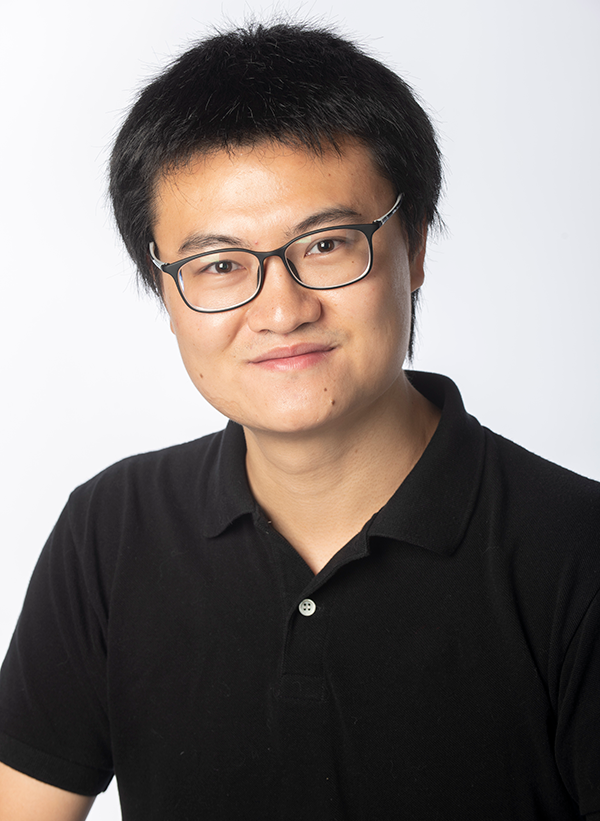
Shihao Yang serves as a Harold E. Smalley Early Career Professor and tenure-track Assistant Professor in the H. Milton Stewart School of Industrial and Systems Engineering at Georgia Institute of Technology. He maintains critical affiliations with the Institute for Data Engineering and Science (IDEaS), Center for Machine Learning at Georgia Tech (ML@GT), and Institute of People and Technology (IPaT). His academic credentials include: Ph.D. in Statistics (2019), Harvard University A.M. in Statistics (2016), Harvard University B.Sc. in Actuarial Science (2014), University of Hong Kong Professor Yang's research program centers on harnessing big data through methodological development, computational tools, and probabilistic modeling to solve real-world problems. His expertise spans statistics, machine learning, and data science with concentrated applications in infectious disease modeling, dynamic system inference (parameter estimation in differential equations), and electronic medical records mining. His work consistently bridges theoretical innovation with practical healthcare implementations. Analysis of his recent publications reveals dominant themes in time series forecasting, causal inference, and physics-informed machine learning. His research integrates deep learning with statistical methods to enhance dynamic system analysis and healthcare applications, particularly in electronic health records interpretation and infectious disease prediction using internet search data. This synthesis drives methodological advances in handling noisy, sparse real-world datasets. His notable recognition includes: Harold E. Smalley Early Career Professorship Professor Yang actively mentors undergraduate, master's, and PhD students, encouraging prospective candidates to contact him with CVs and transcripts. His research receives substantial institutional support through Georgia Tech's interdisciplinary centers. He leads methodological development for real-world data challenges while maintaining strong industry and healthcare partnerships. As a core member of IDEaS, ML@GT, and IPaT, he drives cross-disciplinary collaboration between engineering, computing, and social sciences to advance data-driven solutions for complex societal problems.
Salman Avestimehr is a Dean’s Professor at the University of Southern California (USC) in the Viterbi School of Engineering, jointly affiliated with the Electrical and Computer Engineering and Computer Science Departments. He is the co-founder and CEO of FedML, an open-source framework for federated learning, and serves as director of both the USC-Amazon Center on Secure & Trusted ML and the vITAL Research Lab. His research focuses on information theory, decentralized machine learning, and secure/privacy-preserving computing. His recent research explores federated learning for healthcare applications, uncertainty estimation in LLMs, multimodal distillation for heterogeneous systems, and secure aggregation techniques. The vITAL Lab under his leadership has produced numerous publications in 2024-2025 across top conferences like ICLR, CVPR, PETS, and NAACL. Notable achievements include the Andrea Goldsmith Young Scholars Award received by his lab member Batu. His work spans practical frameworks (FedML), theoretical advances (coded computing), and interdisciplinary applications (LANTERN for biomedical prediction, CryptoMamba for cryptocurrency modeling).
Alexandre Farzan Entezam serves as an Expert Professor in the Department of Economy and Social Sciences at Burgundy School of Business (BSB), contributing to academic programs in business management and information systems. His institutional affiliation spans BSB's campuses in Dijon, Lyon, and Paris. His research integrates Economics and Social Sciences with technological innovation, focusing on Artificial Intelligence applications in auditing and business decision-making. Key interests include Process Mining for dynamic auditing systems, deep learning in financial analysis, and behavioral aspects of information systems management within organizational contexts. His 2020 publications reveal a consistent research trajectory at the intersection of traditional auditing practices and AI-driven methodologies, particularly examining how process mining transforms auditor workflows and case-based business management education. Scientific Awards: No awards documented in source materials. Advising and Grants: No information available regarding graduate students supervised or research funding secured. Research Team: Active member of BSB's Decisions and Behaviors research group focusing on cognitive and organizational decision processes.
Frank Lentz is an Associate Professor at Burgundy School of Business, specializing in Organizational Behavior, Decision Making, and Technology Adoption within the Department of Economy and Social Sciences. He co-coordinates the MSc Data Science & Organizational Behavior program and contributes to research in Decisions and Behaviors and Organizational Transformation . Research Interests: His work bridges Organizational Behavior Technology Adoption Behavioral Economics Corporate Governance Digital Transformation with a focus on experimental methodologies and ethical considerations in AI. Notable Publications: Recent studies analyze latent technologies , gender diversity in board composition , and crowdfunding mechanisms . His articles span journals like Advances in Methods and Practices in Psychological Science and conferences addressing AI ethics. Collaborations: Lentz frequently partners with colleagues such as Gaëlle Biot-Paquerot, Michel Bidan, and Aurel Sutan on interdisciplinary projects involving digital platforms and organizational equity.
Antonio Falcó Montesinos is a Professor and Director of the ESI International Chair at Universidad CEU Cardenal Herrera (UCH-CEU). His research focuses on theoretical foundations of mathematical modeling for simulating complex physical and biological systems, particularly through the Proper Generalized Decomposition (PGD) and Model Order Reduction (MOR) . He leads two research teams applying Topological Data Analysis (TDA) , Machine Learning , and Quantum Computing to domains like cancer therapy classification, antibiotic resistance drug design, and overcoming the curse of dimensionality in computational algorithms. Research Contributions : Established a general framework for PGD dictionaries (minimal subspaces in tensor representations). Developed Progressive PGD for nonlinear convex variational problems and neural networks. Introduced geometric MOR for deep learning applications. Pioneered TDA in material science for drug-protein compatibility analysis. Collaborations include partnerships with distinguished researchers like Francisco Chinesta (ENSAM Paris), Anthony Nouy (Centrale Nantes), and Wolfgang Hackbusch (Max Planck Institute). His work spans computational mechanics, fluid dynamics, financial economics, and quantum computing frameworks. Scientific Awards : Ángel Herrera Award (1998, San Pablo CEU University Foundation). Risk Management Club of Spain Research Prize (2000-2001). Research Output : 68 WoS journal articles (59 as of 2023), 10 chapters/Proceedings, 70+ conference contributions, and 14 projects. He has supervised 6 theses in the last decade. Labs & Teams : Team 1: 9 members (4 senior, 3 junior researchers, 2 PhD students) at UCH-CEU. Team 2: 5 researchers (1 senior, 4 junior) and 2 PhD students across UCH-CEU, Universidad CEU San Pablo, CUNEF University, and Universidad Politécnica de Valencia.
Enrique Onieva Caracuel is a full Professor at the University of Deusto's School of Engineering , Department of Computing, Electronics and Communication Technologies . He leads the PhD program in Engineering for the Information Society and Sustainable Development, and serves as Researcher in Intelligent Transportation Systems at DeustoTech-Mobility. His work spans 30+ research projects including EU-funded H2020 initiatives TIMON and LOGISTAR . Research Interests : Artificial Intelligence applications in transportation Machine Learning & Deep Learning Fuzzy Logic & Evolutionary Optimization Smart City solutions RFID & IoT systems Scientific Impact : 100+ publications (50+ top-tier journals), H-index 23 (Scopus), with recognition at international conferences. Advising : Supervised 6 theses including work on vehicle routing optimization, PTML models for nanotechnology, and industrial anomaly detection. Current Projects : Developing smart mobility systems, real-time passenger profiling, and ethical AI frameworks, funded by European Commission, Basque Government, and Diputación Foral de Gipuzkoa.
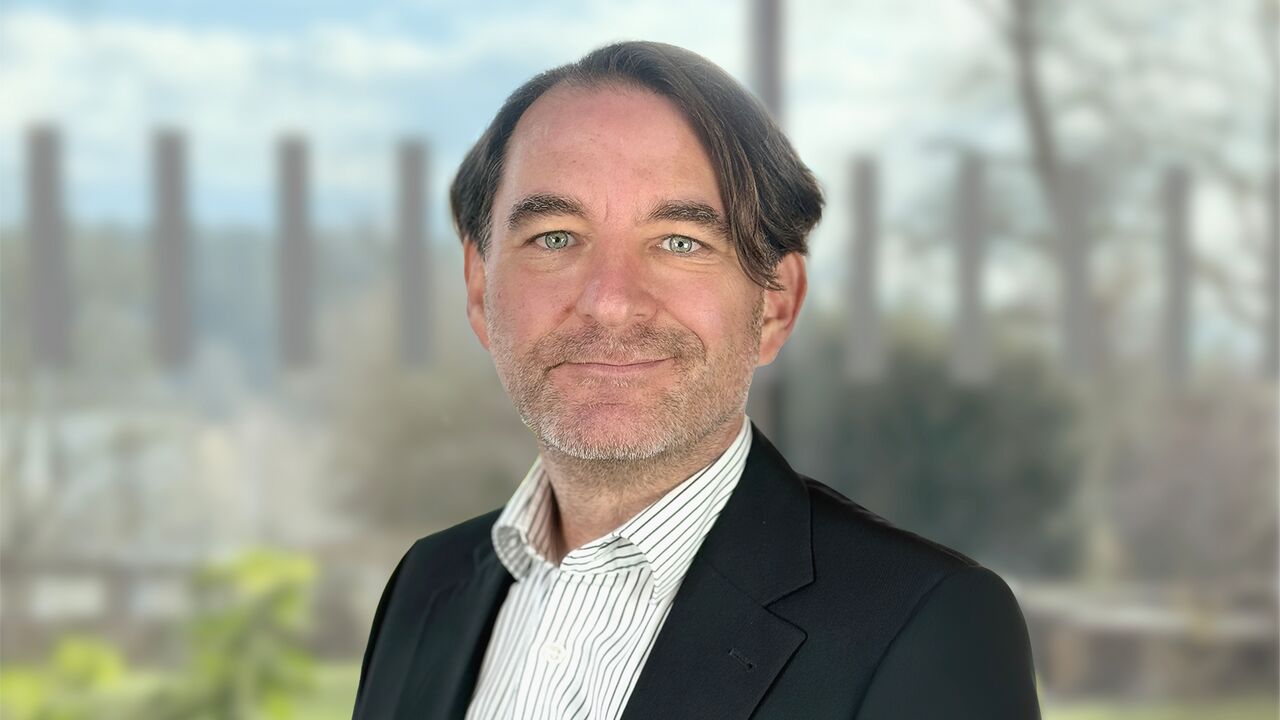
Aminu Bello Usman serves as an Associate Professor of Computer Science and leads the Cybersecurity Research Group at York St John University's York Business School. His academic career spans international institutions including the University of Sunderland where he was Head of the School of Computer Science, and prior positions at Auckland University of Technology, NorthTech, and Bayero University, Kano. As a Senior Fellow of the Higher Education Academy (D3), he mentors academics across the UK through Advance HE. Dr. Usman's research centers on critical cybersecurity challenges with particular focus on data privacy, IoT security, biometric authentication systems, applied artificial intelligence, and trust-based security mechanisms. His work emphasizes privacy-preserving models for healthcare applications, developing frameworks that integrate security from the ground up (Privacy by Design), and exploring trust dynamics in human-AI interactions, especially within culturally diverse contexts. His research bridges theoretical innovation with practical applications to address real-world security vulnerabilities. His recent publications reveal a consistent trajectory toward securing healthcare IoT systems through biometric authentication, with significant emphasis on privacy preservation. His work spans multiple domains including quantum-inspired encryption for medical data, voice biometrics for IoT authentication, and chaos-based cryptographic approaches. The research demonstrates interdisciplinary convergence between cybersecurity, healthcare technology, and artificial intelligence, with growing attention to cultural dimensions of trust in security systems. Senior Fellow of the Higher Education Academy (D3) As an editorial leader, Dr. Usman serves as Editor of the Journal of Disability Research and Lead Editor of the Journal of Networking and Telecommunications, while also contributing as Associate Editor for the International Journal of Computers and Applications. He actively participates as an external examiner and academic review panel member for multiple institutions, helping maintain academic standards across the sector. His professional activities extend to keynote speaking at conferences on cybersecurity topics and mentoring emerging researchers in the field. Leading the Cybersecurity Research Group at York St John University, Dr. Usman directs research efforts focused on privacy, biometric security, IoT security, and trust-based systems. His team explores practical applications of theoretical security frameworks, particularly in healthcare contexts, while investigating how cultural factors influence trust in AI-driven security systems. The group maintains strong industry connections to ensure research addresses current cybersecurity challenges faced by organizations.
Ostap Okhrin serves as a Professor of Econometrics and Statistics at Dresden University of Technology, holding the Chair of Econometrics and Statistics with a special emphasis on Transportation Systems. His academic career is marked by a strong focus on methodological advancements in econometrics and statistics, applied to complex real-world problems in transportation and finance. Professor Okhrin's research interests span econometrics, statistical theory, copula modeling, time series analysis, and financial risk management. He has significantly expanded into machine learning and reinforcement learning applications for autonomous systems, with deep expertise in traffic flow modeling, autonomous driving, maritime navigation, and financial volatility estimation. His work bridges theoretical statistics with practical engineering challenges, particularly in transportation systems and risk forecasting, addressing high-dimensional data and dynamic environments through innovative methodological frameworks. Analysis of Okhrin's recent publications (2024-2025) reveals a pronounced interdisciplinary trajectory integrating reinforcement learning with transportation engineering. Key themes include drone-based trajectory data collection for traffic monitoring, algorithms for autonomous ships on inland waterways, and Sim2Real transfer frameworks for autonomous driving. Concurrently, he advances financial econometrics through high-frequency risk forecasting models incorporating realized moments. This dual focus demonstrates his ability to transfer statistical innovations across domains while maintaining rigorous theoretical foundations in copula theory and time series analysis.
Douglas Richardson serves as Director of Imaging at the Harvard Center for Biological Imaging (HCBI) since 2013 and Lecturer in Molecular and Cellular Biology within Harvard's Faculty of Arts and Sciences since 2016. He leads a state-of-the-art microscopy core facility serving Harvard and Greater Boston researchers through confocal, light sheet, super-resolution, and slide scanning systems. His educational background includes: PhD in Cancer Cell Biology from Queen's University (Canada), Department of Pathology and Molecular Medicine Alexander von Humboldt Postdoctoral Fellowship at Max Planck Institute for Biophysical Chemistry under Nobel Laureate Stefan Hell Richardson's research expertise spans super-resolution microscopy , light sheet imaging , tissue clearing techniques , and image processing methodologies . He actively develops and evaluates advanced microscopy approaches for biological applications in cancer, neuroscience, and ophthalmology. His work emphasizes practical implementation of cutting-edge imaging technologies for diverse research questions. Analysis of his recent publications reveals dominant trends in 3D tissue imaging applied to neurodegenerative diseases (Alzheimer's), cancer biology (melanoma, breast cancer), and vascular ophthalmology. His contributions to tissue clearing standardization and light sheet microscopy optimization enable high-resolution whole-organ analysis, while his technical tutorials address critical microscopy artifacts. His scientific recognition includes: Alexander von Humboldt Postdoctoral Fellowship Richardson teaches MCB 68 (Cell Biology through the Microscope) and MCB 352 (Microscopy), directs the HCBI Lunch and Learn Lecture Series, and organizes tissue clearing workshops. The HCBI facility he leads provides critical infrastructure for Harvard researchers, with recent expansions including high-content screening (2024) and Zeiss Lightfield 4D integration (2025). Under Richardson's leadership, the Harvard Center for Biological Imaging serves as a national resource for advanced microscopy training and consultation, maintaining active YouTube educational content and developing protocols for challenging biological specimens through its tissue clearing initiatives.
Dr. Andrzej Gwizdalski is a distinguished Honorary Fellow at the School of Physics, Maths and Computing and an educator at the UWA Business School . His interdisciplinary research bridges Science, Technology, Economics, Finance, Anthropology, and Humanities, focusing on the Digital Transformation driven by Web3 , Blockchain , Artificial Intelligence , and Quantum Computing . He also explores the ethical implications of human-machine coexistence and contributes to Climate Tech and Scientific Cosmology . Expertise : Sustainable and human-centric Deep Tech, Web3, Climate Tech Leadership : Founder of Blockchain Technologies Knowledge Network (BTKN), Co-Founder of Western Australia Web3 Association Research Trends : Recent publications highlight Quantum Computing , Web3 infrastructure, Federated Learning in healthcare, and Green Finance innovations. His work emphasizes the intersection of technology and sustainability, aligning with UN Sustainable Development Goals. Scientific Awards : Australian Universities National Award, Citation for Outstanding Contributions to Student Learning (2022) Citation for Outstanding Contribution to Student Learning (2021) UniBank Award for Excellence in Teaching (2020) UWA Citation for Outstanding Contributions to Student Learning (2020) Student Choice Award, UWA Student Guild (2016) Educational Impact : Pioneered Australia’s first Master-level Blockchain course at UWA Business School, earning recognition as a Senior Fellow of the Higher Education Academy. His teaching innovations focus on integrating practical Web3 applications into business education. Labs & Initiatives : Founded the Blockchain Technologies Knowledge Network and co-created CryptoMob , WA’s first Indigenous NFT art platform. Actively contributes to global networks like the Global Fintech Institute and Global Finance and Technology Network.
Mary A Rogers is an Associate Professor in the Department of Horticultural Science at the University of Minnesota and a member of the Minnesota Invasive Terrestrial Plants and Pests Center. Her research program focuses on sustainable horticultural systems with emphasis on organic production methods and integrated pest management strategies across multiple cropping systems. Her research interests include: Organic horticulture and crop production Integrated pest management for fruit and vegetable crops Urban agriculture systems development Biological control of insect pests Controlled environment agriculture Sustainable food systems Dr. Rogers' recent publication record demonstrates a strong focus on spotted-wing drosophila management across multiple fruit crops, organic pest control methods, and innovative production systems like deep winter greenhouses. Her work integrates entomological research with practical agricultural applications, particularly for northern climates where seasonal constraints require specialized approaches. She has received significant research funding from USDA National Institute of Food and Agriculture, Minnesota Department of Agriculture, and industry partners for projects addressing critical challenges in sustainable agriculture. Dr. Rogers actively mentors graduate students and accepts PhD candidates into her research program. She leads multiple collaborative projects that integrate academic research with practical farm applications and extension education, demonstrating her commitment to translating research findings into actionable practices for growers.
Dr. Yoon Lee is an Associate Professor in the Department of Marketing & Management at Columbus State University's College of Business. With expertise spanning Machine Learning, Supply Chain Management, and Cryptocurrency, Dr. Lee's research focuses on solving complex problems through innovative computational approaches. Recent publications highlight a diverse research portfolio: 2025: Predicting Altcoin Prices in Cryptocurrency Bear Market 2024: Drone-based warehouse inventory management 2023: Machine learning solutions for ICU admission prediction during pandemics 2019: Game theory applications in supply chain adaptability Dr. Lee specializes in addressing class imbalance problems in data science through ensemble learning techniques, with applications ranging from financial markets to healthcare operations.


/prod01/yorksjacuk/media/content-assets/staff-profile-images/Aminu-Bello.jpg)