Adrian Gepp is a Professor at the Bond Business School and a member of the Centre for Data Analytics at Bond University in Australia. His research focuses on applying statistical modeling and data analytics to economic and social challenges, including fraud detection, fintech, health analytics, and business failure prediction. Gepp has published extensively in peer-reviewed journals and conferences, with recent work spanning deep learning in portfolio management, ESG investing, and combating financial crime through AI. Research Interests : Big data, predictive modeling, financial statement fraud, car insurance fraud, quantum algorithms, and cross-border economic models. Professional Affiliations : The Actuaries Institute, American Accounting Association, and Association of Certified Fraud Examiners. Article Trends : His 2025 publications emphasize machine learning applications in finance, fraud analytics, and interdisciplinary data-driven solutions. Earlier works (2024) explore tourism forecasting and research methodology frameworks. Media & Activities : Regularly featured in media discussions on fraud detection, big data, and financial technology. Serves on editorial boards for journals like Accounting and Finance and Journal of Accounting Literature .
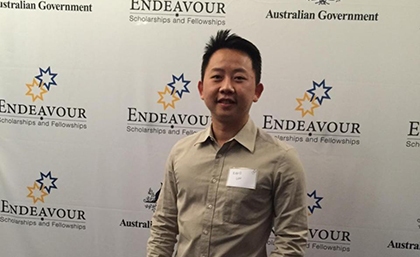
Dr Rand Low is an Associate Professor of Quantitative Finance at Bond Business School , with an Honorary Associate Professor role at the University of Queensland. He works at the Centre for Data Analytics and holds a Chartered Professional Engineer designation from Engineers Australia. PhD in Finance, University of Queensland (2009-2013) Bachelor's degrees in Engineering and Computer Science, University of Melbourne (2001-2005) Graduate Diploma in Project Management, University of New England His research focuses on portfolio optimization , risk management , and machine learning applications in finance, particularly for corporate bonds , digital assets , and commodities . He has published in top journals including Journal of Banking & Finance and Energy Economics . Dr Low's work has been recognized through awards like the Australia Awards - Endeavour fellowship and Dean's Award for Research Higher Degree Excellence . He actively supervises HDR students and serves on editorial boards for journals with Q1 rankings. Industry experience includes leadership roles at Bank of America Merrill Lynch and BlackRock in New York, where he developed quantitative models for market risk , structured products , and model governance . He currently works on the RBA's CBDC Pilot for blockchain-based corporate bond settlement.
Andrés Chomczyk Penedo is a researcher specializing in data protection, cryptocurrency regulation, and digital policy. He is affiliated with Metajuridica and holds a postdoctoral position at the Institute of Law and Technology (Institut de Dret i Tecnologia). His work bridges legal frameworks with technological challenges, focusing on GDPR compliance, financial privacy, and sustainability in digital systems. Key Research Areas: Data Protection, Cryptocurrency, Cybersecurity, EU Policy, Biometrics, Disinformation Recent Article Trends: Andrés explores intersections of EU Green Objectives with GDPR, evaluates consent mechanisms in Latin American open finance, and analyzes cybersecurity-privacy trade-offs in financial systems. His work also addresses AI Act compliance and educational data governance. Scientific Awards: EDPS support to independent research projects (2024) Advisory & Public Engagement: Regularly presents at international conferences on topics like digital euros, financial privacy, and AI regulation. Provides expert commentary on cryptocurrency bans, NFTs, and blockchain impacts on traditional banking.
Iuliana Militaru is an Associate Professor at the Department of Finance, Credit, Accounting within the Faculty of Commercial Relations and Domestic and International Financial-Banking at Romanian-American University (URA). She holds a PhD in Economics from Babeș-Bolyai University and has served as Vice-Rector for Academic Strategy, Institutional Development, and Quality Management since 2020. Education: PhD in Economics (2005), Babeș-Bolyai University Graduate, Faculty of Economic Sciences, Finance-Banking specialization, Babeș-Bolyai University Her research focuses on financial decision-making , banking , and analysis of financial statements . She has contributed to studies on sustainable finance, digitalization in education, energy policy, and fiscal strategies for EU competitiveness. Scientific Contributions: With over 50 publications in specialized journals, her recent work spans academic integrity, green finance, blockchain in financial stability, and EU energy systems. She employs quantitative models (e.g., Grey GM(1,1), TAM) and explores intersections of AI, education, and economic policy. Professional Engagement: A member of the Body of Certified Public Accountants of Romania and ARACIS Commission 7, she has participated in international teaching programs and led quality assurance projects in higher education.
María García de Blanes Sebastián is a researcher at the Faculty of Economics and Business, Universidad Nebrija, specializing in Audiovisual Communication and Advertising. She earned her PhD in 2023 from Universidad Rey Juan Carlos with a thesis on technology acceptance models applied to mobile payment platforms and virtual assistants. Research Focus: Technology Acceptance (UTAUT2), Digital Transformation, Augmented Reality, Metaverse, and Neuromarketing. Key Projects: Electric vehicle adoption factors, Hybrid AI banking applications, SaaS service quality, and AR/VR impacts on education and marketing. Her recent publications (2020-2025) demonstrate expertise in integrating AI, sustainability, and behavioral analysis across finance, education, and digital marketing. She collaborates with SEDGE research group and can be contacted at mgarcise@nebrija.es.
Andrea Vincenzo Natale serves as Associate Professor of Private Law Institutions in the Department of Law, Political and International Studies at the University of Parma, where he has progressed from Research Grant Holder to permanent faculty since the early 2000s. He additionally participates in the PhD in Legal Sciences consortium between Parma and Modena-Reggio Emilia universities and maintains professional affiliations with the Italian Society of Civil Law Scholars and the Association of Italian Civil Lawyers. His academic foundation includes a Law degree from the University of Milan and PhD in Private Law from the University of Modena and Reggio Emilia, complemented by legal practice qualifications at Milan's Court of Appeal. He maintains intermediate English proficiency (B- level) for scholarly engagement. Professor Natale's research bridges traditional civil law doctrines with emerging technological challenges , specializing in bankruptcy proceedings, inheritance frameworks, and the regulatory implications of AI-driven financial systems. His monographs like The Circulation of Credit in Bankruptcy Proceedings (2018) and edited volumes including Fintech: The Boundaries of Innovation in Finance (2022) demonstrate this interdisciplinary approach. Analysis of his 2022-2023 publications reveals three dominant research vectors: liability frameworks for autonomous AI systems , consumer protection in digital finance , and modern applications of civil liability principles to novel contexts like marital duty violations and non-pecuniary damages. No scientific awards or honors were documented in the source materials. He actively supervises doctoral candidates through the Parma-Modena PhD consortium while teaching core courses including Civil Liability (3rd-year Law), Internet & AI Law (5th-year Law), and Private Law Institutions (Political Science undergraduates). His office hours follow a structured Monday schedule with appointment flexibility, reflecting standard academic advising practices without mention of specific grants or funded projects.
Klenio BARBOSA is an Associate Professor at SKEMA Business School in France, specializing in Finance & Accounting with expertise in Banking, Corporate Finance, Regulation, and Public Economics. He is based at the Sophia Antipolis campus and has built a distinguished career spanning multiple academic institutions including SKEMA Business School (since 2019), Insper Institute of Education and Research in Brazil (2017-2019), and Sao Paulo School of Economics - Fundação Getulio Vargas (2010-2016). His research focuses on the intersection of financial regulation, banking competition, public procurement, and political economy. BARBOSA's work examines how regulatory frameworks impact financial stability, market competition, and public sector efficiency. His research methodology combines theoretical modeling with empirical analysis of large datasets from various countries, particularly focusing on Brazilian financial and public sectors. BARBOSA's publication record demonstrates consistent output in top finance and economics journals, with recent work focusing on Basel III implementation effects, payment systems regulation, climate finance through green bonds, and healthcare procurement mechanisms. His research shows a clear trajectory from studying Brazilian financial markets to broader international comparisons and theoretical contributions to auction theory and procurement design. IPEA/Roberto Campos Research Award (2019 Runner-up) UNITED HEALTH GROUP Brazil Quality Award (2018) FEBRABAN Award for Best Master Thesis in Banking (2018 Runner-up) As an academic leader, BARBOSA serves on scientific committees for the Brazilian Econometric Society and Lancaster University, acts as co-editor for the Quarterly Review of Economics and Finance, and has served on numerous doctoral thesis committees. His extensive peer review activities across top economics journals demonstrate his standing in the academic community.
Stefan Janßen is a Professor at Jade University of Applied Sciences since March 2014, affiliated with the School of Business and Department of Business . He holds additional roles as a part-time lecturer at Carl von Ossietzky University Oldenburg and Virtuelle Hochschule OnCampus, and serves on academic committees including the Studienkommission and Fachbereichsrat . Doctorate in Economics (2011) from Carl von Ossietzky University Oldenburg Degree in Economics and Business Administration (1997), University of Oldenburg Summer courses at UCLA (1993) and Middlesex University (1998) His research focuses on risk management , banking supervision , cooperative banking , and financial regulation . Recent projects include analyzing AI in credit processes, green bond frameworks, and risk culture under MaRisk 8.0. His work bridges regulatory compliance with practical banking challenges. Publications since 2016 cover topics like shadow banking , digital transformation , Basel II/III , and social media in finance , with a strong emphasis on empirical studies in the Weser-Ems region. He co-edited the Praktikerhandbuch Risikoinventur (2015, 2019) and Risikokultur in Kreditinstituten (2018). He participates in international conferences including the Financial Stability Conference and Hamburg Banking Supervision Days , and consults on regulatory compliance and risk management. He leads the dual study program Insurance, Banking, and Finance and chairs sessions on risk culture at conferences.
Hsing Kenneth Cheng is the John B. Higdon Eminent Scholar Chair and Professor of Information Systems and Operations Management at the University of Florida’s Warrington College of Business, where he also serves as department chair. He previously served on the faculty at the College of William and Mary from 1992 to 1998. Education PhD – Computers and Information Systems, University of Rochester, 1992 MS – Business Administration, University of Rochester, 1988 MBA – Institute of Management Science, National Chiao-Tung University, 1983 BS – Electrical Engineering, National Chiao-Tung University, 1981 Research Interests Professor Cheng investigates the intersection of Internet technologies with software development and marketing, the economics of information systems, electronic commerce, supply-chain management, and high-profile information-systems policy debates such as network neutrality. Recent Research Directions His recent publications reveal a strong focus on digital platforms, blockchain-enabled financing mechanisms, the financial sustainability of IoT ecosystems, and the influence of AI and augmented reality on online shopping behavior. Collectively, these works advance understanding of platform governance, user behavior, and policy implications in the digital economy. Scientific Recognition & Service While no specific medals or fellowships are explicitly listed, Professor Cheng holds or has held senior-editorship roles at Decision Support Systems , Information Systems Research , Pacific Asia Journal of the Association for Information Systems , and the Journal of the Association for Information Systems , among others. He has been a recurring faculty mentor for doctoral consortia and research workshops in Asia and the U.S., and has chaired best-paper award committees for the Workshop on e-Business. Doctoral Advising & Industry Engagement Recent PhD graduates and current advisees include Qili Wang, Maxim A Terekhov, Xinyu Zang, Youhyun Lee, Jeongwoo (Jay) Lee, Mariia Petryk, Xiang Wan, and Yuan Zhang. He has collaborated with The World Bank and organized industry-oriented tracks at premier conferences such as the International Conference on Information Systems. Labs & Teams As department chair, Professor Cheng leads the Information Systems and Operations Management Department, fostering interdisciplinary research in digital platforms, supply-chain analytics, and policy studies. His mentorship and editorial roles further extend the collaborative network of doctoral students and international scholars working on emerging technology and market-design questions.
Dr. Evan Gibson is an Assistant Professor at the Faculty of Law, The Chinese University of Hong Kong. He specializes in financial law, banking law, financial technology, corporate law, and comparative law. Prior to joining CUHK, he served as a Research Assistant Professor at the University of Hong Kong's HKU-Standard Chartered Foundation FinTech Academy. PhD, University of Hong Kong LLM, University of Sydney LLB and BCom (Finance & Accounting), University of Queensland Professor Gibson's research focuses on financial stability frameworks, transnational regulatory fragmentation, FinTech innovation, and systemic risk mitigation. He has collaborated with international institutions like the European Central Bank and Asian Development Bank. His recent publications include studies on bank resolution mechanisms, digital finance for gender equality, and regulatory designs for FinTech ecosystems. He received the Mr. and Mrs. Joseph W N Cheung Prize for Research Excellence (2023-24) for his work on transnational regulatory fragmentation. Recipient of Mr. and Mrs. Joseph W N Cheung Prize for Research Excellence (2023-24) He serves on the Senate Committee on General Education (2024-25), the Board of the Faculty of Law (2024-2025), and the Undergraduate Assessment Panel (2024-25). His work bridges academic research with practical policy development in financial regulation.
Christof Weinhardt is a Full Professor (W3) at the Karlsruhe Institute of Technology (KIT), where he leads research and teaching in the Institute of Information Economics and Marketing (IISM). He also serves as Director of the Department 'Information Process Engineering (IPE)' at the FZI Research Center for Information Technology and as Founder and Director of the Karlsruhe Service Research Institute (KSRI). His academic career spans over three decades, with significant contributions to information systems research at both national and international levels. Professor Weinhardt's research interests are broad and interdisciplinary, focusing on the engineering of online platforms and markets across various sectors including renewable energies, data marketplaces, and financial markets/FinTech. Recent work examines the influence of emotions on economic decision-making and societal phenomena such as polarization through hate speech, fake news, and social media algorithms. His approach integrates economic, technical, and social perspectives to address complex digitization challenges. The publication record shows a strong focus on energy markets, AI applications, disinformation detection, and digital democracy. Recent articles demonstrate increasing attention to societal impacts of technology, particularly how algorithms affect democratic processes and social cohesion. His work bridges theoretical foundations with practical applications across energy, finance, and social domains. Paul Julius Reuter Award (2000 and 2001) IBM Shared University Research (SUR) Grant (2002 and 2007) Best Teaching Award (2008) IBM Faculty Award (2008) Professor Weinhardt has supervised over 25 PhD students who have gone on to hold professorial positions at universities worldwide. His research has been supported by numerous grants including DFG Research Training Groups and IBM funding. He serves on multiple editorial boards and has held leadership positions in professional organizations including the German Informatics Society (GI). He leads the Karlsruhe Service Research Institute (KSRI) which focuses on interdisciplinary service research, and is involved with the FZI Research Center for Information Technology where his team works on information process engineering projects. His current research agenda emphasizes the societal implications of digital technologies, particularly how to design trustworthy platforms and mitigate negative social impacts of algorithmic systems.
Ahmad Ghazawneh is a Senior Lecturer at the School of Information Technology , Halmstad University. His research explores the intersection of digital innovation platforms, blockchain technology, and fintech, emphasizing transformative impacts on financial systems and digital economies. Email: ahmad.ghazawneh@hh.se Research Focus: Dr. Ghazawneh investigates blockchain-based financial ecosystems, knowledge graph integration in healthcare, and platform dynamics across multiple domains including mobility systems and social media affordances. Scientific Trends: Recent publications demonstrate expertise in federated health data systems, token-based blockchain ecosystems, conversational AI for healthcare, and sustainable mobility platforms. His work bridges theoretical platform economics with practical implementations.
JYH-SHEN CHIOU is a Professor at the Department of International Business, College of Commerce, National Chengchi University (NCCU). He obtained his Ph.D. in Marketing from Michigan State University in 1996 and has been with NCCU since 1996, serving as Associate Dean of Commerce (2013-2017), Department Chair (multiple terms), and Convener of Management Division II at Taiwan's National Science and Technology Council. His leadership extends to editorial roles in journals like Journal of Business Research and Management Review . His research focuses on strategic marketing, consumer behavior in digital contexts (e-commerce reviews, social media), international B2B relationships, and brand management. Recent work explores fintech adoption, luxury retail strategies, and cross-cultural buyer-seller dynamics. He has published extensively in top-tier journals including Journal of World Business and Industrial Marketing Management . He has led over 30 research projects funded by Taiwan's National Science Council, including multi-year grants on brand crisis management (2019-2022), consumer asset perception (2016-2019), and financial technology innovation (2017-2021). His work consistently examines technology's impact on marketing practices. Honors include : Fulbright Scholar 4 EMBA Teaching Excellence Awards (104th–107th academic years) 3 College of Commerce Teaching Excellence Awards Distinguished Professor title from NCCU
Ana Cristina Marques Daniel serves as an active Associate Professor at the Higher School of Technology and Management (Escola Superior de Tecnologia e Gestão - ESTG) within Portugal's Instituto Politécnico da Guarda (IPG), where she bridges engineering principles with healthcare innovation through teaching and research activities. Her research program demonstrates exceptional interdisciplinary breadth: Biomechanics : Advanced studies on human balance control, gait dynamics, and plantar pressure distribution inform orthotic design and rehabilitation protocols for mobility impairments. Visual System Engineering : Pioneering work on eye movement simulation, visual stress diagnostics, and orthokeratology contact lenses enhances vision correction methodologies and low-vision assistance. Rehabilitation Technology : Development of mechatronic systems for motor recovery and smart-city-integrated assistive devices represents significant translational impact in assistive technology. Biomedical Modeling : Computational frameworks for human vibration response and corneal mechanics enable predictive healthcare solutions for occupational health and refractive therapy. Examination of her 15 most recent publications reveals an evolutionary trajectory from foundational biomechanical modeling toward integrated smart-city applications, with 2023-2024 works emphasizing predictive analytics for motor dysfunction and innovative visual aid systems. This progression demonstrates movement from laboratory research to real-world implementation, highlighting growing emphasis on user-centered design in healthcare technology development. No scientific awards or major professional honors were documented in the source materials. While specific doctoral advisees aren't listed, her frequent co-authorship on student-involved projects (e.g., 3D printing applications, ocular training apps) suggests active mentorship in engineering education. The absence of dedicated laboratory descriptions indicates collaborative research within institutional frameworks rather than standalone facilities.
Adrian Lee is an Associate Professor in Property and Real Estate at Deakin University, Australia. He previously served as a Senior Lecturer at University of Technology Sydney (2015–2019) and held a Postdoctoral Research Fellowship there after completing his Ph.D. in Finance from University of New South Wales (2009). His research focuses on fintech, real estate economics, blockchain technology, and housing affordability, with a strong emphasis on policy implications and market behavior. Education Ph.D. (Finance), University of New South Wales (2009) Bachelor of Commerce (Honours), University of New South Wales (2005) Lee leads the HOME Strategic Research and Innovation Centre, addressing housing affordability, homelessness, and social inclusion. He also conducts workshops on SAS programming for researchers. Research Trends: His publications span blockchain applications in financial systems, housing market dynamics, cryptocurrency regulation, and behavioral finance. Key themes include financial technology, market efficiency, tax policy impacts, and urban housing economics. Advising & Collaborations: While no formal advisees are listed, he engages in research supervision and collaboration through Deakin University. Grants and funding are implied through his SWIFT Institute and National Research Foundation of Korea affiliations. Labs & Teams: Directs Deakin's HOME Strategic Research and Innovation Centre, a transdisciplinary hub for housing studies.