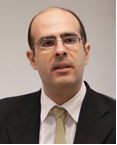
Nurul Alam is a Lecturer in Accounting at the University of Sydney Business School. His research focuses on machine learning applications in finance and accounting, corporate distress prediction, and financial reporting. He holds a PhD from the University of Sydney, where he investigated machine learning models for US corporate bankruptcies. His teaching excellence has earned over 15 awards, including multiple Dean’s Citations and nominations for the Wayne Lonergan Award for Teaching Excellence. Education Master of Commerce (Finance & Accounting), University of Sydney Bachelor of Business Administration (Finance & Banking), University of Rajshahi, Bangladesh Research Interests Machine Learning and Deep Learning in accounting and finance Big Data analytics for corporate financial decision-making Accounting fraud detection mechanisms Financial reporting standards and regulations Current Projects Corporate bankruptcy prediction using survival models and AI Deep Learning applications in panel data analysis for firm distress Machine learning variable selection in corporate finance Accounting fraud patterns among lower/mid-level employees Teaching Contributions Financial Accounting B (ACCT3011) Quantitative Methods for Accounting (QBUS5002) Quantitative Business Analysis (BUSS1020)
Stergios Leventis is a Professor of Accounting at the International Hellenic University (IHU) and holds key leadership roles including membership on the IHU Governing Committee. He previously served as Chairman of the University Center for International Programmes of Studies, Dean of the School of Humanities, Social Sciences, and Economics, Dean of the School of Design, and member of the Senate and Governing Board. Before joining IHU, he worked as an accounting consultant. He holds an MSc from Heriot-Watt University and a PhD from the University of Strathclyde. His research focuses on: Market-based accounting and auditing practices Corporate governance mechanisms and board effectiveness Corporate social responsibility (CSR) reporting Regulatory enforcement and financial compliance Impact of sociocultural factors (e.g., religiosity, unionization) on financial behavior Analysis of his 15 most recent publications (2023-2025) reveals dominant themes in corporate governance (particularly board diversity), regulatory enforcement (SEC interventions), sustainability accounting, and methodological scholarship in accounting research. His editorial work for the Journal of International Accounting, Auditing and Taxation frequently addresses research design and academic publishing standards. Professor Leventis maintains significant editorial influence as Editor-in-Chief of the Journal of International Accounting, Auditing and Taxation and Associate Editor of the British Accounting Review , while serving on multiple international journal boards.
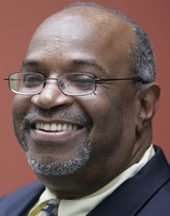
Jeffrey C. Diebold is an Associate Professor of Public Policy in the Department of Public Administration at North Carolina State University's School of Public and International Affairs. His research focuses on retirement and income security, public pension finance, and the intersection of health outcomes with retirement policies. He holds a Ph.D. in Public Policy from the University of North Carolina at Chapel Hill. Key research projects include analyzing subjective expectations of Social Security benefit cuts and their impact on claiming decisions, as well as exploring retirement and pension systems in law enforcement. His work has been supported by grants such as the Sandell Grant Program through the Center for Retirement Research at Boston College. Diebold’s research spans topics like Medicare Part D’s effects on health outcomes, strategic pension policy choices, and the relationship between survivor benefits and poverty incidence among widows. His publications often emphasize experimental methodologies to evaluate policy interventions. He has advised on multiple funded projects, including an experiment linking claim ages to survivor benefits in Social Security statements. His work bridges public administration, health economics, and retirement finance, contributing to both academic discourse and policy formulation.
Peter Robinson is an Assistant Professor at the UWA Business School, Faculty of Arts, Business, Law and Education, The University of Western Australia. His primary role involves coordinating academic aspects of Work Integrated Learning (WIL) programs and supporting internship placements across diverse disciplines. Education: Masters of Education (Innovation in Higher Education), The University of Western Australia Research Interests: Accounting regulation and standard-setting dynamics Public sector performance measurement and accrual accounting adoption Innovation in accounting education and blended learning frameworks Impact of prior learning on student performance and transferable skill development through WIL Research Trends: Over his career, Peter has focused on intersections between accounting practices, public sector reforms, and educational innovation. His recent work emphasizes virtual WIL environments and strategic management accounting, while earlier publications address regulatory conflicts and corporate finance mechanisms. Teaching & Awards: Recipient of multiple teaching awards Advocates for engaging, student-centered learning environments Supervision & Grants: Peter has supervised honours and masters' research students, and currently leads a CPA Australia-funded study ($30,000) examining prior learning's impact on student performance.
Prof. Goce Menkinoski is a Full Professor specializing in international marketing, strategic management, and financial auditing. His research focuses on global market strategies, business ethics, and the challenges faced by small and medium enterprises in transition economies. He explores topics such as brand management, public-private partnerships, and audit risk assessment. His work integrates theoretical frameworks with practical applications, emphasizing the impact of globalization on financial operations and corporate governance. Key themes include cross-border marketing strategies, innovation through strategic alliances, and the role of auditing in preventing financial fraud. Menkinoski has contributed extensively to academic discourse through publications on topics like municipal financial reporting in Macedonia, accounts receivable management in globalized contexts, and the application of benchmarking in management practices. His research bridges economic policy and business practices, offering insights into sustainable growth models and ethical decision-making.
Professor George Gamble holds the KPMG Professorship of Accountancy and Taxation at the C. T. Bauer College of Business, University of Houston. His expertise spans governmental accounting, accounting theory, and managerial accounting. Research focuses on financial accounting theory and citation analysis, with notable contributions to auditing and financial statement formulation. Prior to academia, he worked as an internal auditor at the Tennessee Valley Authority and with firms like Arthur Andersen and Coopers and Lybrand. He earned his Ph.D. in Accounting from The Pennsylvania State University in 1980. Publications appear in journals such as the Journal of Accounting, Auditing and Finance, and the Accounting Historians Journal. His work explores regulatory impacts, financial innovation, and sustainability metrics in corporate performance. Education: Ph.D., Accounting, The Pennsylvania State University, 1980 Additional studies at the University of Houston Research & Publications: Gamble’s research bridges theoretical accounting frameworks with practical auditing challenges. His articles analyze auditor tenure effects, hybrid securities innovation, and environmental disclosures. Recent work emphasizes sustainability’s role in firm performance and algorithmic modeling of throughput systems. Earlier studies explored investor decision-making frameworks and extraordinary item usage in financial reporting. Teaching & Professional Experience: Teaches governmental accounting, accounting theory, and managerial accounting. His industry experience with major auditing firms informs his academic contributions, emphasizing real-world applicability of accounting standards.
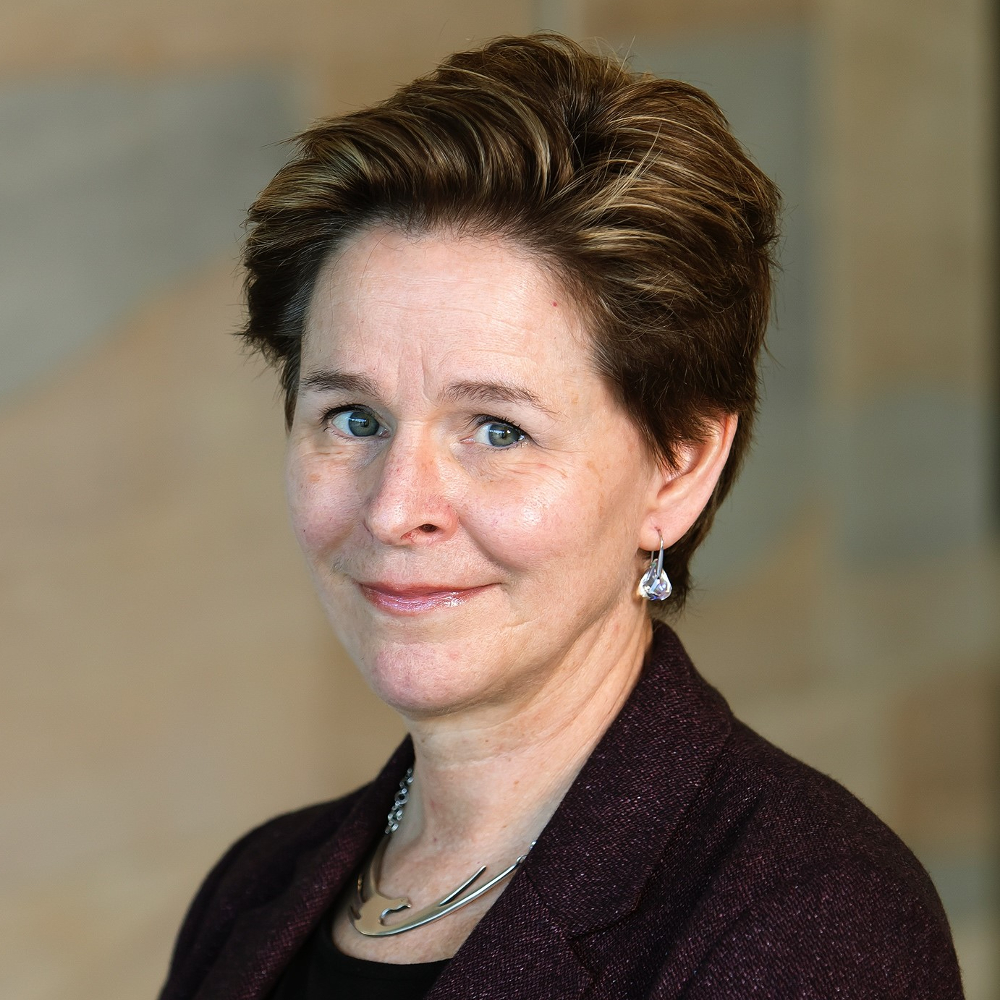
Allyson Benton is a Reader in the Department of Government at the University of Essex and serves as Faculty Dean for Postgraduate Studies in Social Sciences. She holds a PhD from UCLA and has held academic appointments at institutions such as City, University of London and the Center for Research and Teaching in Economics (CIDE) in Mexico. Her research focuses on political economy, particularly subnational fiscal policy, political impacts on financial markets, and Latin American political dynamics. She has been a visiting professor at the University of São Paulo and a scholar at the German Institute of Global and Area Studies. Education PhD in Political Science, University of California, Los Angeles (UCLA) MA in Political Science, University of California, Los Angeles BA in Political Science, University of California, Berkeley Research Interests Dr. Benton’s work examines how political factors influence financial markets (e.g., social media’s impact on asset prices) and fiscal policy decisions at subnational levels. Her research integrates Latin American political risk analysis with comparative political economy frameworks. Key themes include electoral authoritarianism, partisan fiscal behavior, and the interplay between violence and governance. Publications Her recent work includes analyses of subnational fiscal policy in Mexico, the role of social media in financial markets, and electoral dynamics in authoritarian regimes. Her publications reflect a blend of quantitative methods and regional expertise, often addressing how political institutions shape economic outcomes. Awards Senior Fellow, Higher Education Academy (2021–present) Teaching & Grants She oversees postgraduate academic support and has held roles as Research Ethics Officer at Essex. Her teaching focuses on advanced political economy topics, while her grants likely support interdisciplinary research in comparative politics and fiscal policy. Labs/Teams Her work aligns with the University of Essex’s Department of Government research clusters, particularly those addressing global political economy and democratization processes.
Lecturer Dr. Onur ŞİMŞEK serves at Kastamonu University's Cide Rıfat Ilgaz Vocational School within the Accounting and Tax Department. With a PhD in Economics from Istanbul University (expected completion 2025), he holds multiple administrative positions including Vocational School Manager since 2020 and previously served as Department Head and Secretary General. PhD in Economics, Istanbul University (2018-2025) MSc in Economic Policy, Marmara University (2008-2011) Bachelor's in Economics, Bulent Ecevit University (2004-2008) Associate Degree in Foreign Trade, Anadolu University (2007-2009) Associate Degree in Finance, Banking and Insurance, Anadolu University (2009-2011) Bachelor's in Sociology, Istanbul University (2022) His research concentrates on international economic systems with particular focus on Development Economics, International Trade, and Financial Institutions. His work bridges theoretical economic frameworks with practical applications in Turkish and OECD contexts, especially examining green finance mechanisms and sustainable development policy implementation. Recent publications demonstrate increasing specialization in environmental economics and sustainable financial practices. His 15 most recent publications reveal strong thematic continuity in international economic analysis while progressively incorporating sustainability frameworks. The research trajectory shows evolution from traditional trade analysis toward integrated sustainability approaches, with growing emphasis on green taxation, ESG reporting, and sustainable finance mechanisms within emerging market contexts. Başarı Bursu, İstanbul Ticaret Odası (2008) As Erasmus and Bologna Coordinator since 2014, he has facilitated numerous international academic collaborations. His current TÜBİTAK projects focus on financial literacy among university students and accountant-taxpayer conflict resolution. He has supervised multiple institutional development projects while maintaining active research output with 22 publications including 7 journal articles, 8 book chapters, and 7 conference papers. He leads research teams examining Turkey's economic integration within global frameworks while directing institutional development initiatives at Kastamonu University's vocational school. His current work integrates teaching responsibilities across 26 courses with research on sustainable economic development and financial systems.
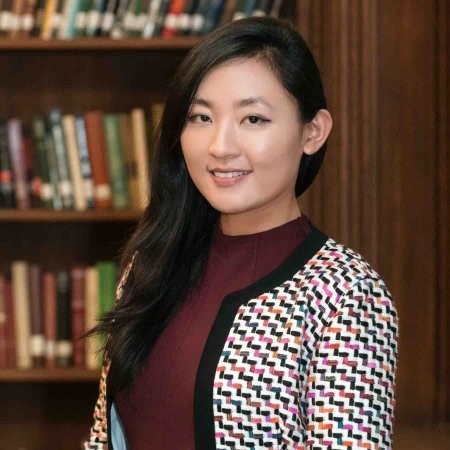
Mengyao Cheng is an Assistant Professor in the Department of Accounting & Business Law at Suffolk University. She previously served as an Assistant Professor at Boston College. Her research focuses on corporate decisions influenced by regulatory, political, and governmental forces, including taxation policies, accounting disclosures, and legislative activities. She teaches tax courses at both undergraduate and graduate levels. Her work bridges corporate finance, political economy, and regulatory compliance to understand how external forces shape corporate behavior. Education: PhD in Accounting, Emory University BBA & BA, University of Michigan Research Interests: Professor Cheng examines how regulatory frameworks, political dynamics, and governmental policies affect corporate financial reporting, executive compensation, and IPO strategies. Her work highlights the interplay between tax policies and corporate governance, as well as the impact of legislative actions on market volatility and corporate performance. Teaching: She instructs courses such as Federal Taxation (ACCT 202, ACCT 320), Taxation of Corporations (TAX 802), and International Taxation (TAX 883), emphasizing practical applications of tax law and policy. Recent Research Trends: Her articles analyze topics ranging from the JOBS Act’s impact on IPOs to the role of legislative gridlock in stock market dispersion. She consistently explores how governmental actions influence corporate financial decisions and transparency. Professional Links: Google Scholar
Dr. LOH Wei Ting is a Full-time Assistant Professor of Accounting at the School of Accountancy, Singapore Management University (SMU). She holds a PhD in Accounting from the University of Washington (2022), an MSc in Business Administration (2019), and a BAcc from SMU (2012). Her research focuses on information intermediaries, earnings quality, and managerial influences on corporate policies, with publications in the Review of Accounting Studies . She teaches financial statement analysis and has been recognized with awards including the Teaching Excellence Award and SMU-MOE Overseas PhD Scholarship. Education: PhD in Accounting, University of Washington, 2022 MSc in Business Administration, University of Washington, 2019 BAcc, Singapore Management University, 2012 Research Interests: Dr. Loh explores how information intermediaries shape market efficiency, evaluates earnings quality through novel frameworks, and studies how CEO characteristics influence corporate policies and firm valuation. Her work bridges accounting theory with practical implications for financial reporting practices and institutional investor behavior. Awards: Best Reviewer Award (Hawaii Accounting Research Conference, 2021) Teaching Excellence Award (SMU, 2017) SMU-MOE Overseas PhD Scholarship (2017–2022) CPA Australia Top Grad Award (2012) Advising & Grants: Dr. Loh has collaborated on research grants evaluating prosocial CEO behavior and institutional investor coordination. She currently serves as an ad hoc reviewer for leading journals including Journal of Accounting and Economics . Key Contributions: Her recent work examines prosocial leadership’s impact on firm value and the role of non-GAAP reporting practices in enhancing transparency. She actively participates in academic conferences and public policy discussions on financial disclosure standards.
Dr. Prakash Deo serves as Professor in the Department of Finance, Information Systems, Economics, and Risk Management at the University of Houston-Downtown (UHD), where he has taught since August 2005. His extensive teaching portfolio includes undergraduate and graduate courses in Corporate Finance, Investments, Small Business Finance, and Financial Accounting across multiple semesters through Summer 2025. His academic credentials include a Ph.D. in Business Administration with Economics emphasis from The Ohio State University (dissertation: 'Determinants of Yield Spreads on Corporate Bonds') and an MBA in Business Administration from Utah State University (dissertation: 'Study of Risk-Return Relationships for Single-Family Dwellings'). Ph.D., Business Administration, The Ohio State University MBA, Business Administration, Utah State University Dr. Deo's research focuses on Corporate Finance, Investments, and International Finance with specialized expertise in cash flow dynamics, financial performance metrics, and capital allocation strategies. His work consistently bridges theoretical finance with practical corporate applications, examining dividend policy formulation, financial distress prediction, and asset management frameworks through empirical and case-based methodologies. Analysis of his 15 most recent publications (2013-2025) reveals evolving research trajectories toward microeconomic applications in corporate settings and sophisticated cash flow analytics, particularly in detecting financial statement irregularities and optimizing capital distribution within firms. His scholarly output demonstrates sustained contribution to financial decision-making literature with increasing emphasis on EVA-based performance evaluation. His distinguished recognition includes the Alex Schoenbaum Ph.D. Dissertation Scholarship, Beta Gamma Sigma honors for MBA and Ph.D. programs, and inclusion in Who's Who listings for academic excellence. These accolades reflect his dual impact on finance education and professional practice. Alex Schoenbaum Ph.D. Dissertation Scholarship Beta Gamma Sigma (M.B.A., and Ph.D.) Invitation, Texas Education Program Phi Alpha Kappa (Ph.D.) Recognized in Who's Who, Who's Who in Collegiate Faculty and North American Education Dr. Deo mentors undergraduate honors students including Juan Chavez and Karla Martinez through directed research contracts. His externally funded research includes a $10,000 University of New Orleans grant studying FORTUNE 1000 firms' EVA implementation and a $2,500 National Association of Certified Valuation Analysts workshop grant, demonstrating sustained research productivity beyond traditional academic boundaries. Though not leading a formal research lab, Dr. Deo actively shapes academic discourse through editorial service for the Journal of Global Business Insights and leadership in curriculum development committees focused on AACSB accreditation standards, particularly in integrating societal impact and innovation metrics into business education.