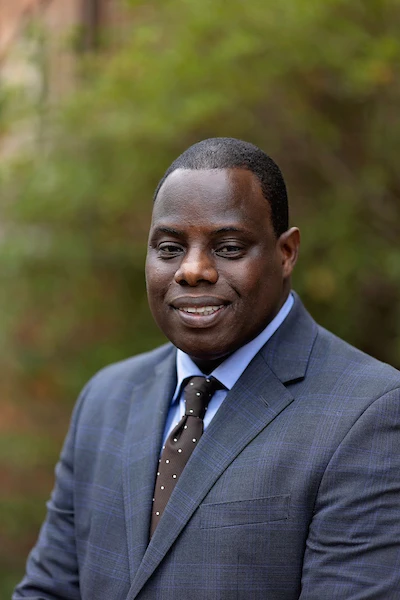
Paulo M.M. Rodrigues is a Full Professor at Nova School of Business and Economics, Universidade Nova de Lisboa, and a permanent Researcher at Banco de Portugal's Economics and Research Department since September 2008. His work bridges academic research with central banking policy. Educated with a PhD in Econometrics (1998) and MA in Economics and Econometrics (1995) from University of Manchester Received Agregação (2005) in Business Management from Universidade do Algarve Research spans time series econometrics, financial risk modeling, tourism economics, and decision analysis, focusing on: Nonlinear threshold effects in credit risk Structural breaks and unit root testing Banking crisis forecasting models Regional tourism development dynamics Fractional integration in economic time series Publications show consistent contributions to: Central banking and financial stability Econometric methodology Tourism demand analysis Operational research applications Policy impact assessment
Kyle Frederic Herkenhoff is an Associate Professor of Economics at the University of Minnesota and a Visiting Scholar at the Federal Reserve Bank of Minneapolis. His research focuses on labor economics, market power, credit markets, and public policy. His work explores monopsony in labor markets, credit constraints affecting entrepreneurship, and the role of informal bankruptcy mechanisms. He has published in top journals including American Economic Review , Econometrica , and Journal of Political Economy . Research Highlights : Labor Market Power, Credit Access, Economic Policy Key Topics : Monopsony, Default as Insurance, Merger Guidelines, Patent Publication Effects Herkenhoff has received the UCLA Welton Prize for macroeconomic research. His recent papers examine private equity impacts on workers, welfare costs of credit card oligopoly, and optimal unemployment insurance design under informality.
Kazuhiko Shinki is an Associate Professor in the Department of Mathematics at Wayne State University's College of Liberal Arts and Sciences. His expertise spans mathematical statistics, time series analysis, financial econometrics , and statistics in sports , with a focus on modeling financial volatility and extreme market behaviors. Education : Ph.D. in Statistics, University of Wisconsin-Madison Relevant Qualifications : SOA Actuarial Exams P/1 and FM/2 Courses Taught : Probability and Statistics for Teachers (MAT6150), Applied Time Series (STA5830), Statistical Computing (STA5030), and The Theory of Interest (MAT5740) His recent research trends (2007–2024) include statistical modeling in finance, cross-disciplinary applications in civil engineering (e.g., bridge load calibration), and exploratory biomedical collaborations (e.g., knee cartilage imaging, sarcoidosis diagnostics). Articles co-authored with Z. Zhang on high-frequency financial data and asymmetric ARCH models highlight his core expertise, while engineering and medical publications suggest interdisciplinary outreach. His scientific contributions include: 2012: Asymptotic theory for GARCH models 2007: Extreme co-movements in financial markets 2016: Bridge design load factor calibration
Harry Howe is a Professor of Accounting at the School of Business, State University of New York at Geneseo. He serves as Director of the Geneseo MS Accounting Program and Accounting Coordinator. Additionally, he holds roles such as faculty advisor to the Accounting Society and oversees numerous school- and campus-wide committees and programs. His professional affiliations include the American Accounting Association (past president of Northeast Region), Rochester Chapter FEI, and NYSSCPA World of Accounting. Education: B.A., Brown University M.B.A., Graduate Management Institute, Union College Ph.D., Union College Research interests focus on business valuations and developing applied instructional materials. Notably, he collaborates with Professor Rick Gifford and past students on case studies and active learning resources. His work bridges theoretical accounting practices with real-world applications, emphasizing experiential learning and professional skill development. Publications reflect his expertise in auditing, valuation, and educational methodologies. Recent articles explore operational auditing, IT controls for SMEs, and fair value accounting standards. Earlier works address spreadsheet error detection, capitalization rate estimation, and regulatory impacts of Sarbanes-Oxley. He received the SUNY Chancellor’s Award for Excellence in Teaching (2017) and multiple School of Business awards for Research, Service, and Teaching. His recognition includes Best Manuscript awards from AAA Mideast Region, SECRA, and ABSEL. Advising and grants: Supervises Directed Studies and Edgar Fellows theses. Prior to academia, he worked as a general manager in NYC construction and a commercial real estate broker. His service includes board roles in Rochester FEI, NYSSCPA, and IMA chapters. Collaborations include Geneseo faculty and students in curriculum development projects. His work on case studies aims to enhance student engagement and practical skill mastery in accounting.
Georges Adunlin is an Associate Professor at the McWhorter School of Pharmacy, Samford University, within the Department of Pharmaceutical, Social and Administrative Sciences. His expertise spans pharmacoeconomics, health economics, and health policy, with a focus on health technology assessment and disparities in healthcare access. He holds a PhD in Pharmacoeconomics and Health Outcomes Research from Florida A&M University, along with advanced degrees in economics and education. Education Background: Postdoctoral Fellowship: Cancer Prevention and Control, Virginia Commonwealth University School of Medicine PhD: Pharmacoeconomics and Health Outcomes Research, Florida A&M University MA: Economics, Brooklyn College MSEd: Samford University BS: Economics, Staten Island College Research Interests: Dr. Adunlin examines the economic evaluation of health technologies, prescription drug policies, and the impact of public policies on underserved populations. His work bridges pharmacy, economics, and public health to address systemic inequities in healthcare access and outcomes. Publications: Over 39 peer-reviewed articles, focusing on topics like pharmacoeconomic education, immuno-oncology drug policy, and barriers to cancer screening among immigrant populations. Recent work emphasizes curriculum development for pharmacy students and cost-effectiveness analysis in oncology. Professional Engagement: Active member of organizations such as the International Society for Pharmacoeconomics and Outcomes Research (ISPOR) and the American Association for Cancer Research (AACR). His teaching focuses on economic and administrative aspects of pharmacy practice. Grants & Mentorship: Committed to empowering students through mentorship, with research supported by analyses of healthcare policies and interventions targeting health disparities.
Todd Kuffner is an Associate Professor in the Department of Mathematics and Statistics at Washington University in St. Louis , holding a Ph.D. in Mathematics from Imperial College London . His research bridges statistical theory , Bayesian asymptotics , and machine learning , focusing on rigorous inference after model selection. Education: Ph.D., Mathematics, Imperial College London M.Sc., Econometrics and Mathematical Economics, London School of Economics M.Sc., Economics, London School of Economics B.A., Economics, University of Michigan Kuffner's work investigates the validity, accuracy, and power of statistical procedures, with a focus on reconciling Bayesian, frequentist, and neo-Fisherian paradigms. His publications address higher-order asymptotics , post-selection inference , and resampling techniques for small-sample and high-dimensional settings. Key trends in his recent articles include: Bootstrap methods for high-dimensional and dependent data Bayesian approaches to volatility estimation in financial models Connections between machine learning and frequentist post-selection inference Formal Edgeworth and von Mises expansions for robust regression Empirical likelihood and model selection uncertainty Scientific contributions : Organizer of the Workshop on Higher-Order Asymptotics and Post-Selection Inference (WHOA-PSI) (2016-2020) Editorial roles at Harvard Data Science Review , Sankhya Series A , and Journal of the American Statistical Association Recipient of NSF grants for collaborative research His advising and organizational efforts emphasize collaborative research and innovative conference design , including interactive forums and workshops.
Dr. Agnes Kovacs is a Lecturer in Economics at the University of Manchester, affiliated with the Department of Economics. She also serves as a Research Associate at the Institute for Fiscal Studies since October 2018. Her research focuses on applied microeconomics, behavioral economics, and macroeconomics, particularly analyzing household consumption and savings behavior through economic models and micro-level data. Key interests include non-standard preferences explaining household anomalies and the impact of income risks on decision-making. Her work contributes to UN Sustainable Development Goals, though specific goal mappings are not detailed. Notable research explores topics like temptation-commitment frameworks, income shocks, and the role of leverage in consumption dynamics. Recent publications address credit limits, financial innovation effects, and wealth accumulation incentives. Kovacs collaborates internationally, evidenced by her network spanning multiple countries. Though no awards are explicitly mentioned, her work has garnered significant citations and reader engagement on platforms like Mendeley and X. Her research emphasizes bridging theoretical models with real-world economic behaviors, offering insights into policy-relevant areas like fiscal policy and household welfare.
Professor Peter Duck holds the position of Professor of Applied Mathematics at the University of Manchester's Applied Mathematics Department. His research focuses on fluid mechanics, mathematical finance, and continuum mechanics, with contributions to boundary layer dynamics, renewable energy systems, and stochastic modeling. He has authored over 60 peer-reviewed articles and co-organized the IUTAM Symposium on Nonlinear Instability and Transition in Three-Dimensional Boundary Layers (2012). Duck leads the Continuum Mechanics and Industrial and Applied Mathematics research groups, and is affiliated with the UMARI research institute. His work aligns with UN Sustainable Development Goals, particularly in advancing sustainable energy solutions. Research interests span fluid dynamics (boundary layer instabilities, ciliary flow modeling), financial engineering (hedge fund strategies, regime switching models), and energy systems (wind/solar power valuation, storage optimization). Notable contributions include developing PDE-based frameworks for stochastic storage systems and advancing eigensolution techniques for compressible boundary layers. Duck has supervised 17 research students and received the 2012 Best Student Paper Award for collaborative work on methodologies and technologies. His publications demonstrate interdisciplinary innovation, blending mathematical rigor with practical applications in energy, finance, and fluid dynamics. Current projects include optimal trading strategies for electricity markets and modeling mass transport in biological fluid systems. Duck is a member of the Digital Futures research beacon, emphasizing computational advancements in applied sciences. Awards: Best Student Paper Award: Methodologies and Technologies (2012) Research Infrastructure: Active in UMARI (University of Manchester Advanced Research Institute) and collaborates internationally on fluid dynamics and energy systems. His work integrates theoretical models with computational tools, addressing real-world challenges in energy storage, turbulence control, and financial risk management.
Professor Harry Zheng is a Professor of Mathematics at Imperial College London's Faculty of Natural Sciences, Department of Mathematics. He is affiliated with the CFM-Imperial Institute of Quantitative Finance and Mathematical Finance. His research focuses on stochastic control, optimization, and financial mathematics with applications in banking, numerical methods, and statistics. Key research areas include stochastic control theory, mean field games, financial derivative pricing, and machine learning integration in financial systems. His work addresses optimal investment strategies, risk management, and systemic risk modeling in dynamic markets. Notable contributions include applying deep learning to solve high-dimensional stochastic control problems and analyzing governance dynamics using mean field frameworks. Recent publications span innovations in neural network-based solvers for Hamilton-Jacobi-Bellman equations, robust optimization under uncertainty, and behavioral finance models incorporating transaction costs and prospect theory. Professor Zheng collaborates with institutions like the CFM-Imperial Institute to advance quantitative finance methodologies. His research bridges theoretical advancements with practical applications in portfolio management, risk assessment, and computational finance.
Amanda Coston is an Assistant Professor in the Department of Statistics at the University of California, Berkeley. Her research focuses on addressing challenges in algorithmic decision support systems and data-driven policy-making, emphasizing equity, validity, and reliability. She earned her PhD in Machine Learning and Public Policy from Carnegie Mellon University, advised by Alexandra Chouldechova and Edward H. Kennedy, and completed a postdoc at Microsoft Research's Machine Learning and Statistics Team. Her work spans causal inference, machine learning, and nonparametric statistics, with applications in criminal justice, healthcare, and public policy. Education: PhD in Machine Learning and Public Policy, Carnegie Mellon University (2019-2022) MS in Machine Learning, Carnegie Mellon University (2019) Bachelor of Science in Computer Science, Princeton University (2013) Research Interests: Her research investigates how algorithms and data systems can perpetuate or mitigate disparities in high-stakes domains. Key areas include counterfactual audits of racial bias in policing, fairness in predictive models, and validity in algorithmic decision-making. She develops methodologies to ensure equitable outcomes in applications like healthcare resource allocation and criminal justice risk assessments. Awards & Honors: 2024 Schmidt Sciences AI 2050 Early Career Fellowship 2023 FAccT Best Paper Award (Counterfactual Prediction Under Outcome Measurement Error) 2023 SaTML Best Paper Award (A Validity Perspective on Evaluating the Justified Use of Algorithms) 2022 Meta Research PhD Fellowship Teaching & Mentorship: She teaches Causal Inference (STAT 156/256) at Berkeley and has mentored students through programs like AI4ALL. Her teaching emphasizes ethics, fairness, and societal impacts of AI. Service: Referee for journals including Nature Human Behaviour, JASA, and Transactions on Machine Learning Research Steering Committee Member for ML4D Workshop (NeurIPS) Program Committee Member for FAccT and AAAI Labs & Collaborations: Amanda collaborates with interdisciplinary teams on projects involving policy design, algorithmic fairness, and healthcare equity. She co-organized the ML4D workshops at NeurIPS 2018-2019 and leads the FEAT reading group at CMU.
Professor Serhiy Stepanchuk is a faculty member in the Department of Economics at the University of Southampton. He specializes in macroeconomics, taxation policy, and international economics. His research focuses on household behavior, fiscal policy design, and financial integration effects. Currently supervising four PhD students in Economics, he is actively accepting new PhD applications. His work appears in top journals such as the Journal of Monetary Economics and Quantitative Economics . Research interests include optimal taxation frameworks, dynamic economic modeling, and global imbalances analysis. Recent studies explore topics like time-averaging effects in taxation, financial market integration impacts, and portfolio choice dynamics. Collaborative projects with institutions like the University of Oslo highlight his international academic engagement. Publications consistently address policy-relevant questions in macroeconomic theory, using advanced quantitative methods. His contributions bridge theoretical models with empirical applications, particularly in understanding household responses to tax systems and financial market structures.
Dr. Hisayuki Yoshimoto is a Lecturer in Economics at the Adam Smith Business School, University of Glasgow. He holds a BA from the University of Rochester (2005) and a PhD from UCLA (2012). His research focuses on productivity analysis across industrial, agricultural, and aquacultural sectors, industrial organization, auctions, and micro-econometrics. He investigates government roles in industry regulation and policy design to enhance productivity. Notable projects include studies on Chinese industrial sectors and auction mechanisms affecting treasury revenue. Dr. Yoshimoto has conducted extensive research on auction dynamics, including post-resale market impacts, structural model accuracy, and Chinese fiscal experiments. His work also examines consumer behavior, such as food quality-hygiene anticorrelation in restaurants. He has secured grants like the ESRC-funded project on persuasion mechanisms (2017–2020) and collaborations with Nankai University. Teaching expertise spans microeconometrics, game theory, and industrial organization at undergraduate and postgraduate levels. His publications reflect a focus on empirical market design, regulatory frameworks, and behavioral economics. Ongoing interests include government incentives for productivity growth and multi-use asset platforms. Dr. Yoshimoto actively engages in interdisciplinary research, blending econometrics with policy analysis to address real-world market challenges.
Taylor Brown is an Assistant Professor in the Department of Statistics at the University of Virginia. Their research focuses on Bayesian methods, computational statistics, and econometrics, with a particular emphasis on developing novel algorithms for statistical inference and particle filtering techniques. Education : Ph.D. in Statistics, University of Virginia M.S. in Statistics, University of Connecticut B.A. in Mathematics and Economics, University of Connecticut Key research interests include statistical modeling, algorithmic development for Bayesian forecasting, and the application of particle filtering in complex systems. Their work often bridges theoretical statistics with practical computational tools, as evidenced by contributions to open-source libraries like PF (a C++ framework for particle filtering). Publications span topics such as null hypothesis testing frameworks, posterior predictive distributions, and stochastic volatility models, reflecting a strong engagement with both methodological innovation and applied problems in data analysis. No scientific awards or grants are explicitly mentioned in the provided text. Taylor Brown has not listed advisees or lab affiliations in the given materials.
Michael Wolf is a Professor of Econometrics and Applied Statistics at the University of Zurich's Department of Economics, where he has been since 2005. He holds a Vordiplom in Mathematics from the University of Augsburg (1991), an MSc in Statistics from Stanford University (1995), and a PhD in Statistics from Stanford (1996). His research focuses on nonparametric inference methods, multiple testing procedures, financial econometrics, and large-dimensional covariance matrices. He has contributed to influential work on covariance matrix estimation, portfolio optimization, and statistical methodology. Wolf has served as an Associate Editor for journals including the Annals of Statistics (2004–2007), Statistics and Probability Letters (2014–2016), and the Journal of Financial Econometrics (2019–2022). His academic career includes roles at institutions like UCLA, Universidad Carlos III, and Universitat Pompeu Fabra, where he advanced from Assistant to Associate Professor before joining UZH. His research explores resampling techniques, financial markets analysis, and statistical methods for handling high-dimensional data. Notable contributions include the development of shrinkage-based covariance matrix estimators and their applications in portfolio management. He collaborates with researchers like Olivier Ledoit on nonlinear shrinkage methods and maintains software packages like covShrinkage for covariance matrix estimation. Wolf advises students on thesis topics in econometrics and maintains active roles in professional associations such as the American Statistical Association and the Institute of Mathematical Statistics. His work bridges theoretical statistics and applied finance, addressing challenges in modern portfolio theory, risk management, and statistical inference.
Felix Holzmeister is a Professor at the University of Innsbruck’s Department of Economics , Austria, whose research agenda spans experimental and behavioral finance, meta-science, risk perception, and the reproducibility of empirical research. His work is characterised by large-scale collaborative projects—often involving dozens of co-authors—that combine laboratory experiments, field interventions, and meta-analytical methods to understand how individuals, particularly finance professionals, form expectations, perceive risk, and make decisions under uncertainty. Research Interests: Experimental and behavioural finance, with special attention to replicability of asset-market findings Risk preferences and risk perception among finance professionals and retail investors Meta-science topics such as non-standard errors, reviewer reliability, and computational reproducibility Policy-oriented behavioural interventions (nudging) in household finance and debt collection Across more than fifteen recent papers, Holzmeister’s research exhibits a clear focus on methodological rigour and transparency . His 2024 Journal of Finance article on non-standard errors—co-authored with over 150 colleagues—has already garnered thousands of downloads and citations, illustrating the broad interest in improving statistical inference in finance. A parallel strand of work uses preregistered experiments to test the robustness of classic asset-market findings, while additional studies explore how cognitive skills and personality traits shape fund-manager performance and how choice architecture influences portfolio allocation. Scientific Impact & Recognition: Top-3 000 SSRN author by total downloads (>24 000) Top-10 500 SSRN author by total citations (>100) Lead or co-author on large multi-institutional studies featured in top finance journals Collaboration & Funding: Holzmeister routinely leads interdisciplinary teams involving institutions such as the Stockholm School of Economics, VU Amsterdam, HEC Paris, the University of Gothenburg, and Copenhagen Business School. Funding acknowledgements in his papers imply support from national science foundations and European research councils, although specific grant numbers are not detailed in the present text. Laboratory & Research Environment: He conducts experiments within the University of Innsbruck’s experimental-economics laboratory infrastructure and is affiliated with cross-university consortia such as the “Non-Standard Errors Project” and the “Researcher Variation in Economics” consortium, which bring together dozens of scholars to tackle methodological challenges in economics and finance.