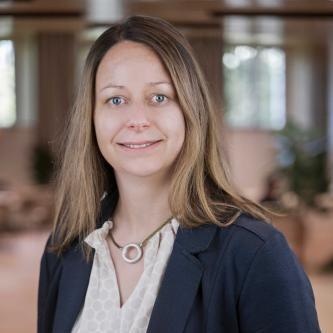
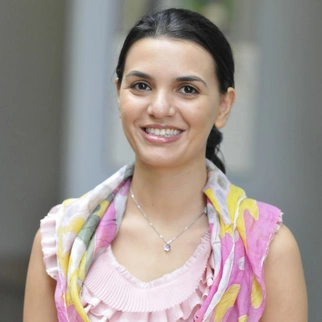
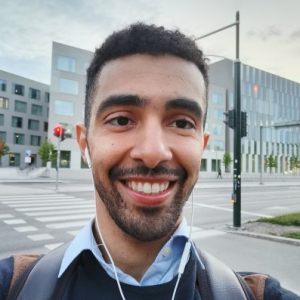
Leona Wiegmann is an Associate Professor of Management Control at ESCP Business School in Paris. Her research examines how digitalization reshapes accounting practices, focusing on tensions between technology and human actors, evolving roles of management accountants, and external stakeholder engagement. She employs qualitative methods like field studies, vignettes, and netnography to explore forecasting, performance management, and accountability. Previously, she held faculty positions at WHU – Otto Beisheim School of Management (Germany) and Monash University (Australia). Open to supervising PhD students, her work appears in journals such as Contemporary Accounting Research and Accounting, Auditing & Accountability Journal . Education: PhD from WHU – Otto Beisheim School of Management Key Research Themes: Digitalization in Accounting, Organizational Dynamics, Qualitative Methodologies Her articles analyze topics ranging from proxy advisor accountability to information search during crises, reflecting her focus on real-world organizational challenges. While no scientific awards are listed, her contributions to accounting and organizational studies literature highlight her scholarly impact.
Pierre Six is a Professor of Finance at NEOMA Business School. He holds a PhD from the University of Paris 1 Panthéon-Sorbonne (2009) and an accreditation to supervise research from the University of Paris-Dauphine (2017). His expertise focuses on commodities, risk management, derivatives, and dynamic asset allocation. He has taught risk management and commodity markets extensively. Research Interests His work spans: Commodity market dynamics and hedging strategies Asset allocation under varying risk aversion Derivative pricing with stochastic convenience yields Financial statement analysis for bankruptcy prediction Key Contributions Recent studies include: Oil producer hedging behavior (European Journal of Operational Research, 2025) Bankruptcy prediction models (European Accounting Association, 2025) Dynamic consumption-asset models (Finance Research Letters, 2024) Awards Received the Best Paper Award in Derivatives (Eastern Finance Association, 2010). Roles & Activities Holds administrative positions at NEOMA and actively participates in academic conferences globally, including presentations at the European Finance Association and Energy Finance conferences.
Higher School of Economic and Commercial SciencesFrance
Anastasios Elemes is an Associate Professor of Accounting in the Department of Accounting and Management Control at ESSEC Business School, France. Holding a PhD and MSc from Rotterdam School of Management, his research has been published in top-tier journals including Accounting, Organizations and Society , European Accounting Review , and Journal of Accounting, Auditing, and Finance . He is also a CFA Charterholder actively involved with CFA France. Education PhD in Financial Accounting, Rotterdam School of Management, Erasmus University (2015) MSc in Finance & Investments, Rotterdam School of Management, Erasmus University (2011) Research Focus Elemes specializes in auditing, taxation, and international financial reporting with emphasis on Big 4 accounting firms' behavior. His work investigates political connections, cross-border tax planning, audit quality determinants, and regulatory implications. He examines how audit firm networks influence client reporting and how political ties affect auditor independence, contributing critical insights to corporate governance frameworks. Research Trends His recent publications (2021-2024) reveal three dominant themes: (1) Audit firm profitability drivers and consequences for audit outcomes, (2) Tax-motivated income shifting within global audit networks, and (3) Political connections' impact on audit quality. Using large-scale datasets and econometric methods, his research consistently demonstrates how structural factors within Big 4 firms affect financial reporting integrity across jurisdictions. Scientific Recognition European Accounting Review Best Reviewer Award (2024) CFA France Volunteer of the Year Award (2017) Best Academic Essay Award, Rotterdam School of Management (2011) CFA Scholarship (2014, 2012) Visiting Scholar at Rotman School of Management (2011) Academic Service & Advisory Elemes has supervised Bachelor and Master theses at Rotterdam School of Management (2011-2015). His research is supported by CFA Institute scholarships and he serves on the Editorial Board of Accounting Forum . As a permanent member of the CFA France Advocacy Team since 2015, he actively shapes policy discussions on financial reporting standards and ethical practices in the accounting profession. Professional Integration His dual expertise in academic research and professional practice (evidenced by CFA charterholder status) enables unique contributions to both scholarly discourse and industry standards. Current work examines evolving international tax landscapes and their implications for audit firm structures, with particular focus on European regulatory developments.
Florencio LOPEZ DE SILANES MOLINA is a Professor at SKEMA Business School since 2017, where he also serves as Associate Dean for Academic Strategy. His academic career spans prestigious institutions including Harvard University where he earned his PhD in 2005. His research focuses on corporate finance, corporate governance, family firms, law and finance, and regulation of financial markets and banks. His educational background includes: HDR in Investor Protection: Origins - Impact - and Reforms, Université Côte d'Azur, France (2018) PhD, Harvard University, United States of America (2005) Master of Arts, Economics, Harvard University, United States of America (2002) Professor LOPEZ DE SILANES MOLINA's research interests center on the intersection of finance, law, and governance. He has made significant contributions to understanding investor protection mechanisms, privatization effects, and corporate governance structures globally. His work often examines how legal institutions affect financial markets and corporate behavior, with particular focus on emerging markets and Latin America. His extensive publication record shows a consistent focus on corporate governance, investor protection, and financial market regulation. Recent work has expanded into ESG considerations, green finance, and the impact of digital technologies on private equity. His research demonstrates how legal frameworks shape financial outcomes across different institutional settings. His notable scientific awards include: 2023 Top 5 Most Cited Authors in Business in the World, SSRN rankings 2014 Second or Third Most Cited Researcher in the World in Business and Economics 2009 Chevalier de La Legion d'Honneur (Knight of the Legion of Honor) 2007 All Star Paper for 'Investor Protection and Corporate Governance' 2000 Jensen Prize for Best Papers of the Journal of Financial Economics 1999 Brattle Prize of the Journal of Finance for Distinguished Paper Professor LOPEZ DE SILANES MOLINA advises doctoral students at SKEMA Business School and has received multiple research grants including a 2023 International Research Grant of 100,000 euros from the European Commission. He has served as a consultant to the International Monetary Fund and various governments on financial markets reform, bankruptcy law, corporate law, and privatization. He is actively involved in research centers including the Globalization Research Center and Finance & Accounting Insights on Risk and Regulation at SKEMA Business School.
Peter Tankov is a Professor of Quantitative Finance at ENSAE (the French national school for statistics and economic administration), part of the Institute Polytechnique de Paris. He is also a researcher at CREST and member of the FIME Laboratory. His academic career includes previous positions at Paris-Cité University and Ecole Polytechnique. Dr. Tankov specializes in applied probability and stochastic processes, with current research interests spanning quantitative finance, energy finance, green finance, sustainable finance, and mean field games applications to economics. His work bridges mathematical rigor with practical financial applications, particularly in the context of climate change and environmental transition. His research output shows a clear trend toward climate-related finance, with recent publications focusing on carbon pricing, transition risk modeling, energy market dynamics, and sustainable investment strategies. The articles demonstrate a strong interdisciplinary approach combining mathematical finance, game theory, and climate science to address pressing environmental finance challenges. 2016 Best Young Researcher in Finance award of the Europlace Institute of Finance 2024 Louis Bachelier award of London Mathematical Society, Natixis Foundation and SMAI Professor Tankov serves as scientific director of the Green and Sustainable Finance program at Louis Bachelier Institute and is a member of editorial boards for top quantitative finance journals including Mathematical Finance and Finance and Stochastics. He is currently guest editing a Special Issue on Climate and Nature Risk in Mathematical Finance. His teaching includes courses on green finance, energy risk management, and financial derivatives.
Higher School of Economic and Commercial SciencesFrance
Ping-Sheng KOH is a Professor at ESSEC Business School's Singapore Campus in the Department of Accounting and Management Control. Previously, he held positions at Hong Kong University of Science and Technology (2006-2016). His research spans accounting, corporate governance, finance, and strategic management, with focus areas including R&D reporting, corporate social responsibility, and innovation valuation. Research Interests: Dr. KOH's work examines financial disclosure practices, innovation measurement, and corporate strategy impacts. Key themes include the interplay between institutional investors and financial reporting, litigation risk mitigation through CSR, and strategic alliance effects on market analysis. Awards: Best Paper Awards in Corporate Social Responsibility (2025) and Financial Accounting (2017) Multiple teaching excellence recognitions including the Michael G. Gale Medal (2014) Research grants like the CY Initiative of Excellence (2019)
Stefano Palminteri is a researcher at the École Normale Supérieure in Paris, leading the Human Reinforcement Learning team at the Cognitive Neuroscience Laboratory (LNC2) since 2017. He holds a PhD in Cognitive Neuroscience from Université Pierre et Marie Curie (2012) and completed postdoctoral work at LNC2, University of Trento, and University College London. Education: Master in Pharmaceutical Biotechnology (University of Bologna, 2006); Master in Cognitive and Behavioral Neuroscience (Université Pierre et Marie Curie, 2007); PhD in Cognitive Neuroscience (UPMC, 2012). His research focuses on computational and neurobiological mechanisms of reinforcement learning, decision-making under uncertainty, and behavioral biases. He investigates how contextual factors (e.g., social influence, neurochemical states) shape learning processes in healthy and clinical populations (e.g., addiction, depression, Tourette syndrome). Recent work explores value normalization, metacognitive biases, and cross-cultural comparisons of reinforcement learning. Key trends in his publications include (1) computational modeling of reward/punishment sensitivity in psychiatric conditions, (2) neuroeconomic frameworks for decision-making under risk and ambiguity, (3) multi-agent reinforcement learning in financial market simulations, and (4) cross-domain comparisons of description vs. experience-based learning. He employs functional neuroimaging, pharmacological interventions, and behavioral experiments to uncover how brain circuits (e.g., striatum, prefrontal cortex) encode value signals. His lab offers internships in epistemic biases and reinforcement learning.
Emma Avetisyan is a Professor and Head of the Department of Organizational Studies & Ethics at Audencia Business School since 2022. She is also the Program Manager for MS Actor for Ecological Transition (since 2024) and MS Actor for Energy Transition (APTE) Manager (since 2022), alongside her role as PRME Manager (since 2021). Her academic career includes prior roles as Associate Professor (2017-2020) and Assistant Professor (2013-2017) at Audencia. PhD in Management, SKEMA Business School (2013) Doctorate in Management Sciences, University of Geneva (2013) MSc in Research, SKEMA Business School (2009) Master's in Strategic Management of Sustainable Development, SKEMA Business School (2008) Her research focuses on Corporate Social Responsibility (CSR) , Sustainability Reporting , and Stakeholder Collaboration , with specific attention to CSR rating agencies , PRME network dynamics , and institutionalization of CSR frameworks . Recent articles explore Mandatory Non-Financial Disclosure , ESG Rating Industry Consolidation , and Stakeholder Engagement in CSR. Her publications highlight trends in regulatory compliance , responsible management education , and cross-border acquisition strategies . These works span subfields like Stakeholder Collaboration , Regional Sustainability Initiatives , and Institutional Retrogression . Best Student Paper Award of CMS division, AOM Boston 2012 She has coordinated academic programs, co-edited the 'KTO Research Group' Newsletter, and participated in the PRME France-Benelux Chapter Steering Committee (2018-2024). Her teaching areas include Corporate Social Responsibility , Sustainability Reporting , and Doughnut Economics .
Antonio Vezzani is an Assistant Professor at Rennes School of Business , specializing in the economics of innovation, technology management, intellectual property rights, and science policy. He holds a PhD in Economics from the University of Rome Tor Vergata (2011) and has academic training from the University of Rome Tor Vergata and La Sapienza. Academic Roles : Assistant Professor in Economics, Roma Tre University (2019–2022); Economic and Policy Analyst, Joint Research Centre of the European Commission (2012–2019); Post-doctoral research, University of Rome Tor Vergata (2011–2012). Research Focus : Economics of innovation, technology diffusion, intellectual property strategies, and regional innovation systems. His recent publications explore digital technologies, eco-innovation, global value chains, and R&D financing. He has participated in international conferences like DRUID and the Schumpeter Society Congress. Vezzani serves on the editorial board of Small Business Economics and contributed to EU policy reports.
Sylvester Adasi Manu is an Assistant Professor of Finance at NEOMA Business School. He holds a PhD in Finance from the City University of Hong Kong. His teaching focuses on budgeting, capital finance, corporate finance, and risk management. His research explores banking, corporate finance, sustainable finance, and social networks, particularly examining financial decision-making under uncertainty. Education: PhD in Finance, City University of Hong Kong Research Interests: Dr. Manu's work investigates the interplay between auditor liability, capital structure dynamics, and corporate financial policies. He also analyzes systemic risk in banking through social network effects and evaluates energy policy impacts on sustainable development. Recent studies include the influence of Brazilian labor strikes on banking strategies and gender disparities in renewable energy access. Recent Research Trends: His publications (2017-2025) consistently address auditor-related risks, corporate financing strategies, and systemic risk mitigation. Emerging market contexts dominate his empirical work, with a shift toward integrating social network analysis into financial decision-making frameworks. Advising & Grants: No formal advisee records or grant details provided in source texts.
WU Jian is a Professor of Finance at NEOMA Business School, serving ten years as Head of the Economics and Finance Department. She teaches investment, financial risk management, and sustainable finance across undergraduate and executive programs. Her research focuses on financial engineering, banking regulation, corporate governance, and ESG integration. Notable contributions include studies on green bonds' impact on manufacturing, carbon pricing mechanisms in EU countries, and the diffusion of corporate social responsibility through board interlocks. Education: Holds a Doctorate in Management Sciences with specialization in Finance. Professional activities include organizing seminars on banking capital structure and presenting at global conferences such as EFMA, AFFI, and ATINER. Recent work emphasizes sustainability topics like smart agriculture evaluation and carbon subsidy effectiveness in Chinese cities. Her publications span journals like Renewable Energy , Economics Letters , and Bankers, Markets & Investors , reflecting expertise in both theoretical finance (e.g., exotic options) and applied sustainability research. Active in international academic networks, she contributes to bridging financial innovation with real-economy applications.
Jean Tirole is a renowned economist and Honorary President of the Toulouse School of Economics (TSE) and Institute for Advanced Study in Toulouse (IAST). He holds a visiting professorship at MIT and is a member of the Institut de France. His research focuses on industrial organization, regulation, game theory, finance, and macroeconomics. Tirole has authored over 200 articles and 12 books, including the influential Economics for the Common Good . Affiliations: TSE, IAST, MIT (visiting), Institut de France Educations: PhD in Economics (MIT, 1981), Engineer from École Polytechnique and École des Ponts ParisTech His research interests span regulation theory , financial markets , and the intersection of psychology and economics . Recent work addresses competition policy, digital markets, and climate change economics. Over 40 awards include the Nobel Prize in Economics (2014) , CNRS Gold Medal (2007), and numerous honorary doctorates. He advises global institutions on economic policy and regulation. Tirole’s grants include ERC funding and collaboration with think tanks. He mentors through TSE and contributes to policy research on labor markets, healthcare, and digital governance. He co-leads initiatives at TSE-Partnership and the Jean-Jacques Laffont Foundation, fostering interdisciplinary research in economics.
Marlon F. R. Alves is an Assistant Professor of Strategy at SKEMA Business School, specializing in organizational adaptation, dynamic capabilities, and cognitive processing in extreme situations. His research explores the interplay between intuition and reflection in managerial decision-making, particularly during discontinuous change. Current affiliation: SKEMA Business School Academic rank: Assistant Professor Key research areas include: Strategic adaptation in ambiguous environments Intuition vs reflection in crisis management Sustainable dynamic capabilities Internationalization strategies Knowledge management systems Green innovation performance His recent work focuses on organizational resilience, environmental strategy implementation, and the cognitive foundations of competitive advantage. Studies employ experimental methodologies (e.g., virtual games) and quantitative analyses across multiple industries including biotechnology, banking, and bioenergy.
Higher School of Economic and Commercial SciencesFrance
Sam GARG serves as Associate Professor of Management at ESSEC Business School Singapore campus, where he has held this position since 2023. He earned his PhD in Management Sciences from Stanford University in 2011. His research focuses on corporate governance in entrepreneurial contexts, particularly examining board dynamics in new ventures, CEO-board relationships, and governance structures during organizational transitions. GARG's work reveals nuanced insights about how board composition affects venture performance, innovation, and strategic decision-making, with particular attention to the role of founder-directors versus investor-directors. His recent publications in top-tier journals demonstrate consistent scholarly impact, with several 2025 papers exploring board synchronization skills, director power dynamics, and empirical investigations of technology venture boards. His work frequently employs longitudinal and qualitative methods to uncover behavioral processes in boardrooms and CEO-board interactions. Best Paper Award at the India Strategy Conference, sponsored by the Academy of Management Strategy Division (2024) Runner-up for Best Paper Award at the Strategic Management Society Annual Conference (2024) GARG actively contributes to the academic community as Editor of Strategic Entrepreneurship Journal (2021-2027) and serves on editorial boards including Organization Science and Academy of Management Journal. He also participates in Singapore's Stewardship Asia Centre as a member of the academic advisory board, sponsored by Temasek, Singapore's sovereign wealth fund. His doctoral student TRÖBINGER M. is currently completing thesis research under his supervision at ESSEC Business School.
Yuri Biondi is a Senior Research Fellow at CNRS (French National Centre for Scientific Research) affiliated with IRISSO at Université Paris Dauphine PSL. He serves as head of the research group on Analysis of Dynamic Systems for Economic Theory and Society (DYNAMETS). His academic credentials include degrees from Bocconi University of Milan (DES), University of Lyon (DEA, PhD), University of Brescia (PhD), and University of Paris I Sorbonne (HDR). Biondi holds significant editorial and leadership positions: founding editor of 'Comptabilité, économie et droit: A Convivium', facilitator of the SASE research network on accounting economics and law, coordinator of the SIG on business and financial law, and former board member (2017-2021) of the European Law Institute. He previously chaired the Financial Accounting Standards Committee of the American Accounting Association (2011-2013). His research focuses on: Dynamic systems analysis in economic contexts Corporate governance frameworks and social responsibility Financial and accounting regulatory mechanisms Public finance management and fiscal policy Non-financial disclosure frameworks Economic theory development Analysis of Biondi's recent publications (2018-2024) reveals consistent focus on systemic economic analysis, with thematic clusters in financial regulation (34%), corporate governance (26%), economic inequality (20%), and accounting theory (20%). His work frequently employs computational modeling to examine banking stability, wealth distribution, and market dynamics. Biondi leads the DYNAMETS research group that explores dynamic systems applications in economic theory and societal challenges, fostering interdisciplinary collaboration across economics, law, and accounting disciplines.