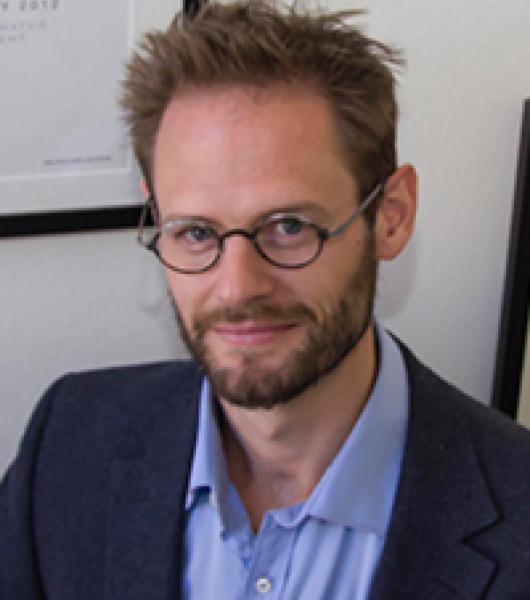
Professor Hendrik Vollmer is a faculty member in the Accounting Group at Warwick Business School , University of Warwick, since 2020. He previously served as Head of the Accounting Division at the University of Leicester (2015–2020) and worked at Bielefeld University in Germany for 16 years. His research bridges accounting, sociology, and environmental studies, focusing on accounting as a social practice and its role in addressing ecological challenges. Senior Fellow of the Higher Education Academy Associate Editor of European Accounting Review Member of editorial boards for Zeitschrift für Soziologie, Accounting, Organizations and Society, and Social and Environmental Accountability Journal Active in sustainability accounting research and education Contributor to interdisciplinary accounting literature Recent publications explore accounting's role in climate change mitigation, public value creation, and the spatialization of worth. His teaching modules include Accounting for Sustainability, People, Planet and Financial Accounting: Theory and Context .
Associate Professor Mark Humphery-Jenner is a distinguished faculty member at the University of New South Wales (UNSW) Business School, specifically within the School of Banking and Finance. With an exceptional academic pedigree including multiple PhDs from prestigious institutions worldwide, he has established himself as a leading researcher at the intersection of finance, law, and corporate governance. Dr. Humphery-Jenner's educational background demonstrates remarkable breadth and depth, featuring PhDs from UNSW, Tilburg University, and Leiden University, along with master's degrees from Columbia University and the University of Washington. His undergraduate achievements include a BCom with First Class Honours and University Medal, and an LLB with First Class Honours, both from UNSW. This multidisciplinary foundation spanning business, law, and finance informs his comprehensive research approach. His research spans corporate finance, venture capital, and law, with particular focus on how legal frameworks shape financial decision-making and corporate behavior. Humphery-Jenner has published extensively in top-tier finance journals including the Journal of Financial Economics, Journal of Financial and Quantitative Analysis, Review of Finance, and Journal of Corporate Finance, as well as leading management journals such as Strategic Management Journal and Journal of International Business Studies. His scholarly contributions address critical issues in executive compensation, securities litigation, corporate governance, and private equity markets. Analysis of his recent publications reveals a sophisticated research trajectory increasingly focused on the relationship between litigation risk and financial reporting practices, corporate governance mechanisms, and investor protection frameworks. His work demonstrates particular attention to Australian regulatory contexts while maintaining a strong international comparative perspective, especially regarding Asian capital markets and cross-border investment. With substantial industry experience including work in investment banking and consulting for hedge funds, Humphery-Jenner brings practical insights to his academic work. He has been teaching in various capacities since 2006 and has served as an assistant professor in finance since 2012, contributing significantly to business education at UNSW. His professional background enhances his ability to bridge theoretical research with real-world financial practice.
Dr. Ly Fie Sugianto is an Associate Professor in the Department of Accounting at Monash Business School, Monash University. Her research focuses on the integration of data analytics, artificial intelligence, and machine learning in accounting and business systems, with applications in the energy sector and organizational behavior. Monash Business School, Monash University Department of Accounting Specialization: Accounting Information Systems, Data Analytics, AI Her research interests span Accounting Information Systems , Agent-Based Simulation , Decision Support Systems , and Technology Adoption . She applies computational methods to study competitive dynamics in deregulated electricity markets and the impact of digital tools on employee well-being and organizational resilience. The recent publications reflect a strong trend in using AI and simulation to analyze complex socio-technical systems, particularly in energy markets and leadership dynamics. Keywords across her work include agent-based modeling , data analytics , servant leadership , and enterprise social media , indicating interdisciplinary research at the intersection of information systems, management, and public policy. Her scientific awards include competitive grants from the ARC (SPIRT/Linkage) , the Australia Indonesia Governance Research Partnership (AIGRP) , and the Sumitomo Foundation . ARC Grant: Dispatch Optimisation in the Australian National Electricity Market Sumitomo Foundation: Technology Use and Employee Well-Being AIGRP: Governance and MSME Resilience during Pandemic Dr. Sugianto has advised research projects and collaborated with industry partners such as Western Power , Ecogen Energy , and AEMO . She is currently accepting PhD students and leads externally funded research initiatives. Her work contributes to UN Sustainable Development Goals related to industry innovation and responsible consumption. She is affiliated with research teams focusing on intelligent decision support systems and digital transformation in business , with active collaborations in Australia and Indonesia.
Marcus Smith is an Associate Professor in Law at the Charles Sturt University , where he teaches LAW222 Technology Law and directs the Bachelor of Laws program. He holds advanced degrees from the Australian National University (PhD, LLM) and the University of Cambridge (MPhil). His research spans technology law and regulation , focusing on genomic data governance biometric identification AI ethics blockchain policy cybersecurity surveillance law He leads the Contemporary Threats to Australian Security research group and serves as Chief Investigator on an NHMRC-funded project (MRF2015531) addressing genomic dataset governance. His recent work analyzes algorithmic bias in facial recognition AI in healthcare blockchain's regulatory challenges post-pandemic cybercrime surveillance ethics data security frameworks He actively supervises PhD and honours students in technology law and contributes to law reform through submissions to international bodies like the UN Human Rights Council .
Demetris Christodoulou is an Associate Professor in Accounting, Governance and Regulation at the University of Sydney. He holds a BEcon from Piraeus University, an MSc(Fin) from the University of York (UK), and a PhD from Athens University of Economics and Business (AUEB). His research focuses on applying data analytics, econometrics, and visualization techniques to financial analysis, equity valuation, life insurance, and financial advice. He co-directs the PEMA research group, specializing in productivity and performance measurement analytics, and previously led the MEAFA research group (2007–2022). He has collaborated extensively with industry partners including Deloitte and Australian insurers, and developed training programs for over 1,000 executives. His work includes open-source contributions to Stata software and the Graph Workflow platform, alongside $662k in workshop-generated funds supporting academic programs. He has advised multiple PhD students and taught at leading universities globally. Education: BEcon in Economics (Econometrics), Piraeus University MSc in Finance, University of York (UK) PhD in Accounting and Financial Analysis, Athens University of Economics and Business His research interests span financial reporting models, life insurance underwriting strategies, and behavioral finance. Recent projects address dishonesty mitigation in insurance disclosures and the adviser effect on customer disclosures. He has published widely in top journals like the Review of Accounting Studies and Stata Journal , and his work was featured in The Australian for insights on insurance fraud reduction. He maintains international collaborations, including visiting roles at Columbia Business School and the University of Cyprus, and serves on advisory boards for organizations like Behaviour.ai. Publications highlight methodological innovations in econometrics and visualization, with 2025's upcoming Stata Journal paper advancing time-series analysis techniques. His grants include partnerships with industry on longitudinal studies of insured lives, aiming to improve risk modeling and public policy insights.
Professor Will Bateman is a distinguished academic at the Australian National University (ANU) College of Law, where he serves as a Professor and recently completed his term as Associate Dean (Research) from 2021 to 2024. He is also a Chief Investigator for the ANU Grand Challenge project "Humanising Machine Intelligence" and a Fellow at the Gradient Institute, a leading ethical AI research organization based in Sydney. Professor Bateman's educational background is impressive, having earned a PhD and LLM (Hons) from the University of Cambridge and a BA/LLB (Hons) from the Australian National University. Prior to his academic career, he worked in appellate litigation, commercial disputes, and banking as a solicitor at Herbert Smith Freehills, and served as an associate to Justice Stephen Gageler AC of the High Court of Australia and Justice Steven Rares of the Federal Court of Australia. Professor Bateman's research spans two major interdisciplinary domains that sit at the intersection of law with finance and technology. His work on financial regulation focuses on the legal aspects of central banking, sovereign debt markets, digital currencies, and sustainable investing. He has provided expert evidence to the UK Parliament's House of Lords Inquiry into Quantitative Easing, and has collaborated with major financial institutions including the Federal Reserve Bank of New York and the Bank of England. His research on artificial intelligence examines regulatory frameworks for AI in the public sector, with collaborations including the Minderoo Foundation and the Gradient Institute. His recent publications demonstrate a remarkable breadth across legal theory, financial regulation, and AI governance. The articles reveal a consistent theme of examining how traditional legal frameworks adapt to new financial technologies and monetary policy challenges. His work bridges theoretical legal scholarship with practical policy implications, as evidenced by his numerous government consultations and collaborations with central banks worldwide. 2020 Yorke Prize by the University of Cambridge for his work on public finance and constitutionalism Top 10 all-time most downloaded SSRN paper on central banking ("Central Bank Money: Liability, Asset, or Equity of the Nation?") Professor Bateman actively supervises research students, currently mentoring Benjamin Ettinger who is pursuing a PhD on "Legal Method, Cartels and Public Monopolies: A View From the High Court 1908 - 1948." He has secured significant research funding, including projects funded by the Economic and Social Research Council (UK), the German Research Foundation (Deutsche Forschungsgemeinschaft), and The Minderoo Foundation. His "Rebuilding Macroeconomics Initiative: Legal and Economic Conceptions of Money" received £245,000, while the "FA Mann" project was funded with €620,000 (approximately A$1,012,500). He leads the "Humanising Machine Intelligence" project, an ambitious interdisciplinary initiative involving computer scientists, mathematicians, philosophers, sociologists, psychologists, and lawyers aimed at developing democratically legitimate machine intelligence. He also co-led a major project with the University of Western Australia to formulate model legal frameworks for AI regulation in the public sector, funded by The Minderoo Foundation.
Professor Begona Dominguez is a faculty member in the School of Economics at The University of Queensland (UQ), within the Faculty of Business, Economics and Law. She holds a Doctor of Philosophy in Economics from Universitat Autònoma de Barcelona. Her research focuses on Macroeconomics, Public Finance, and Monetary Economics, with emphasis on fiscal policy design, central bank balance sheets, and optimal taxation frameworks. Her key projects include Supporting Entry and Growth of Australian Businesses via Tax and Transfers (2022–2024) and The role of a central bank's balance sheet in shaping the economy (2021–2024) . She is available for PhD supervision and actively contributes to applied macroeconomic analysis, particularly in urban economic advantages and policy evaluation. Publications span topics like fiscal sustainability, inflation dynamics under central bank policies, and the implications of constitutional constraints on taxation. Her work bridges theoretical models (e.g., Ramsey frameworks) with empirical applications in tax policy and public debt management. Professor Dominguez maintains affiliations with the Centre for Applied Macroeconomic Analysis (ANU) and has reviewed prominent texts such as John Taylor's Reform of the International Monetary System . She is based in Room 507, Colin Clark Building at UQ.
Lily Chen is an Associate Professor at the Research School of Accounting within the ANU College of Business and Economics. She previously held positions at the University of Auckland Business School where she earned her PhD in Accounting (2013). Her research focuses on financial reporting, corporate governance, CSR, machine learning applications in accounting, and integrated reporting frameworks. Her work has been published in top journals like The Accounting Review and widely cited by regulatory bodies. Education: PhD in Accounting from the University of Auckland (2013). Professional Affiliations: Board member of Accounting and Finance Association of Australia and New Zealand, editor for Pacific Accounting Review, and editorial board member for Accounting and Finance and Meditari Accountancy Research. Research Interests: Combines traditional accounting topics with emerging technologies, particularly exploring machine learning applications in financial disclosure analysis. Her studies on institutional investor behavior and CSR governance have received significant industry attention. Awards: Multiple accolades including Research Excellence Awards from University of Auckland (2013), Teaching Excellence Awards, and Best Paper recognitions. Supervised 5 PhD, 8 Masters, and 8 Honours students. Teaching: Leads financial accounting courses for both undergraduate and postgraduate students. Active in curriculum development and postgraduate program administration.
Dr. Farzana Aman Tanima is a Senior Lecturer at the University of Sydney Business School’s Accounting, Governance, and Regulation department. She previously held roles at the University of Wollongong (2017–2023). Her research focuses on critical and dialogic accounting, social justice, and challenging neoliberal frameworks through participatory approaches. Born in Bangladesh, she earned her PhD in 2015 from Victoria University of Wellington, New Zealand, with a thesis on dialogic accounting practices for marginalized women. Education: PhD in Accounting, Victoria University of Wellington, 2015 Undergraduate Honours Degree, Victoria University of Wellington Research Interests: Dr. Tanima’s work centers on dialogic accounting to democratize accounting practices, with focus on NGOs, microfinance, Indigenous education, and race. She employs participatory action research and autoethnography to address systemic inequalities. Key areas include: Accounting’s role in empowerment and development Decolonizing accounting education through Jindaola Critical race theory and counter-accounting Awards: 2024 Mary Parker Follet Award (AAAJ Journal) 2020 VC OCTAL Teaching Award 2015 AFAANZ Best PhD Award Teaching & Mentorship: She leads pedagogical initiatives embedding Indigenous perspectives into curricula and fosters dialogic learning. Supervised two completed PhDs, with co-authored publications. Active in mentoring early-career researchers through invited talks and workshops. Labs/Teams: Part of the Alternative Accounting Research Network and editorial boards for CPA Journal and Financial Accountability & Management . Co-leads special issues on critical dialogics and publicness in accounting.
Nurul Alam is a Lecturer in Accounting at the University of Sydney Business School. His research focuses on machine learning applications in finance and accounting, corporate distress prediction, and financial reporting. He holds a PhD from the University of Sydney, where he investigated machine learning models for US corporate bankruptcies. His teaching excellence has earned over 15 awards, including multiple Dean’s Citations and nominations for the Wayne Lonergan Award for Teaching Excellence. Education Master of Commerce (Finance & Accounting), University of Sydney Bachelor of Business Administration (Finance & Banking), University of Rajshahi, Bangladesh Research Interests Machine Learning and Deep Learning in accounting and finance Big Data analytics for corporate financial decision-making Accounting fraud detection mechanisms Financial reporting standards and regulations Current Projects Corporate bankruptcy prediction using survival models and AI Deep Learning applications in panel data analysis for firm distress Machine learning variable selection in corporate finance Accounting fraud patterns among lower/mid-level employees Teaching Contributions Financial Accounting B (ACCT3011) Quantitative Methods for Accounting (QBUS5002) Quantitative Business Analysis (BUSS1020)
Kingsley Fong is an Associate Professor of Finance at the UNSW Business School , specifically within the School of Banking and Finance . He holds a PhD from the University of Sydney and a BCom (Hons) from UNSW. His research focuses on market microstructure , investment , household finance , and sustainable finance , and he co-founded the RISE Finance Lab to explore finance's role in societal well-being. He also developed the DATKIS framework for systemic coherence in financial practices. Research Interests : Market microstructure, household finance, sustainable finance, and empirical finance. Teaching : Courses such as WEALTH MANAGEMENT AND CLIENT ENGAGEMENT , SUSTAINABLE INVESTING , and SUSTAINABLE FINANCE . Key Trends in Research : His work spans liquidity proxies, algorithmic trading impacts, broker-client dynamics, and sustainable finance innovations. Notable collaborations include studies on market quality, tax-driven trading, and household investment behavior. Scientific Awards : 2017 Review of Finance Spängler IQAM Prize 2021 Aspen Institute Ideas Worth Teaching Award 2022 S&P Global Decarbonisation Hackathon Engagement : Co-Founder of UNSW RISE Finance Lab (2025) Australian Sustainable Finance Institute Reference Group (2024) Deputy Head of School Banking and Finance (2011–2019) Contact : k.fong@unsw.edu.au | Location : UNSW Business School, Ref E12, Level 3, Room 344B.
Associate Professor Sam Kirshner is a faculty member at the University of New South Wales within the School of Information Systems and Technology Management . His research focuses on behavioral decision making , algorithmic impact on operations , and artificial intelligence applications in business contexts. PhD in Management Science from Queen’s University, Canada Teaching expertise in data visualization, predictive analytics, and AI ethics Co-author of Business Analytics: A Management Approach Member of the Ethical AI Advisory His research explores how psychological distance and construal level theory influence decisions in supply chains, technology management, and consumer behavior. Recent work examines ChatGPT's decision biases , algorithm aversion , and sustainable operations under financial constraints. Key publication trends show focus areas: AI ethics and human-AI collaboration Behavioral supply chain analysis Temporal/spatial psychological distance effects CO2 forecasting with sparse data Consumer behavior in digital platforms Virtual reality and cognitive processing Supervision roles include mentoring 2 PhD students and 6 honors students, contributing to the next generation of scholars in business analytics and technology management.
Dr. Kerstin Steiner is an Associate Professor at the Law School, La Trobe University. She holds adjunct roles at the University of Melbourne's Asian Law Centre and Centre for Indonesian Law, Islam and Society. Her leadership roles include Director of Research (2021), Acting Head of Law School (2019), and mentorship in promotions programs. Education: PhD, Melbourne University LLM, Melbourne University LLB, University of Bielefeld, Germany Graduate Certificate in Higher Education, Monash University Research Interests: Dr. Steiner specializes in comparative legal studies focusing on Southeast Asia, particularly intersections of law with politics, economics, and society, with a strong emphasis on Islam's role in judicial systems. She has conducted groundbreaking work on legal pluralism, religious governance, and anti-corruption frameworks in Malaysia and the Philippines. Key Research Trends: Her recent work (2023-2025) highlights evolving legal challenges in Southeast Asia, including digital hate speech mitigation, Islamic financial systems, and constitutional reforms in pluralistic societies. Earlier research (2017-2020) centered on corruption dynamics (e.g., 1MDB scandal), Shariah court systems, and gender equity in legal frameworks. Awards: VC Cultural Quality Award (2024), Distinguished Scholar Award (PHISO, 2018), Multiple Research Excellence Awards (2017) Grants: $100k+ for international study tours; ARC Discovery Project (2016-2020) on Islam, Law, and the Philippine State Labs/Teams: La Trobe Asia Steering Committee, International Legal Studies Research Group (ILSRG), Working Group on Islamophobia
Lisa Magnani is a Professor in the Department of Economics at Macquarie University, with active research in labor economics, finance, and development studies. She is affiliated with both the Innovation, Strategy and Entrepreneurship Research Centre and the Health at Work Research Centre at Macquarie University. Professor Magnani's research focuses on critical areas including labor markets, financial systems, and their intersection with social issues. Her work examines: Unionization and workers' rights across different economic contexts The relationship between finance and labor in capitalist societies Small and Medium-sized Enterprises (SMEs) and their financing challenges Worker mobility and technological diffusion HIV/AIDS and economic deprivation in Southeast Asia Social finance and inequality Her recent publications demonstrate a consistent focus on the interplay between financial systems and labor dynamics, with increasing attention to social issues like HIV/AIDS and women's agency. Magnani's work spans both developed and developing economies, with particular emphasis on post-socialist contexts and Southeast Asia. Professor Magnani has been actively involved in research projects including: "The Impact of Capital Account on Small and Medium Enterprises" (ongoing) "Understanding deprivation and HIV/AIDS in Southeast Asia: A new multidimensional model for research and economic planning" (2018-2022) "Small firms' finances: effects on employment, wages and growth" (2016-2021) She regularly presents her research at international conferences and has organized academic events such as "Sino-Australia Economies Towards a New Globalization: A Mutual Learning Curve" in 2018.
Clinton Free is a Professor in the Discipline of Accounting, Governance and Regulation at the University of Sydney Business School. He holds leadership roles such as former Deputy Dean and Head of School, Academic Director of the Australian Graduate School of Management (AGSM), and Deputy Director of the Centre for Law, Markets and Regulation. His research focuses on white-collar crime, corporate governance, management accounting, and auditing. He has received an ARC Future Fellowship and multiple grants, including an ARC Linkage Grant and a major SSHRC grant in Canada. His work spans academic leadership, editorial board roles (e.g., Accounting, Organizations & Society ), and executive education across institutions like Oxford and Queen’s School of Business. Research interests include fraud dynamics, corporate governance reforms, sustainability assurance, and algorithmic management. He has advised private and public sector organizations and won teaching awards for undergraduate and postgraduate courses. Clinton’s educational background includes Commerce and Law degrees from UNSW and a doctorate from Oxford as a Rhodes Scholar. Recent publications explore fraud offender narratives, algorithmic labor control (e.g., Uber), climate-related disclosures, and critiques of corporate law reforms. He frequently engages with media, discussing topics like Bunnings’ market dominance, illegal phoenixing, and white-collar crime psychology. Grants: ARC Future Fellowship, ARC Linkage Grant, SSHRC Canada Grant Teaching: EMBA courses on leadership and governance Media Contributions: ABC Four Corners, Sydney Morning Herald, Australian Financial Review