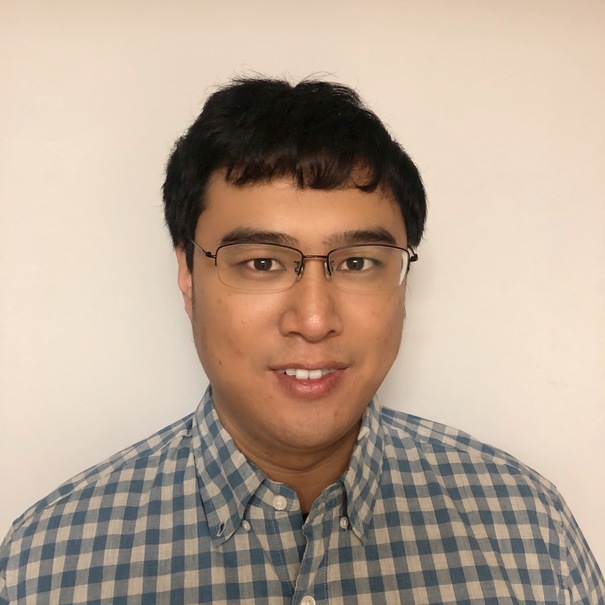
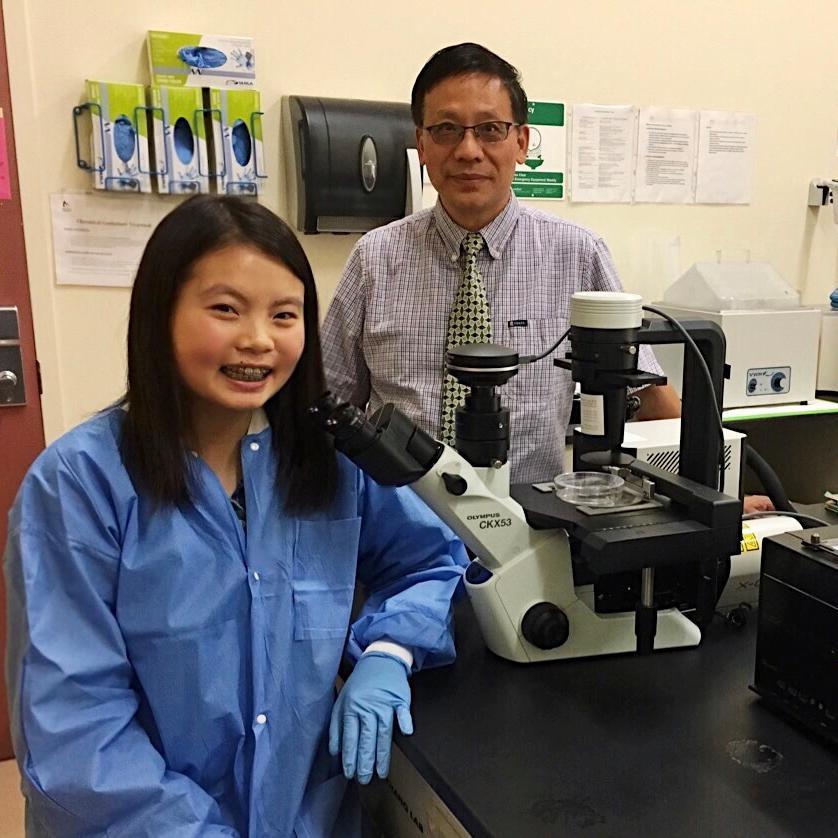
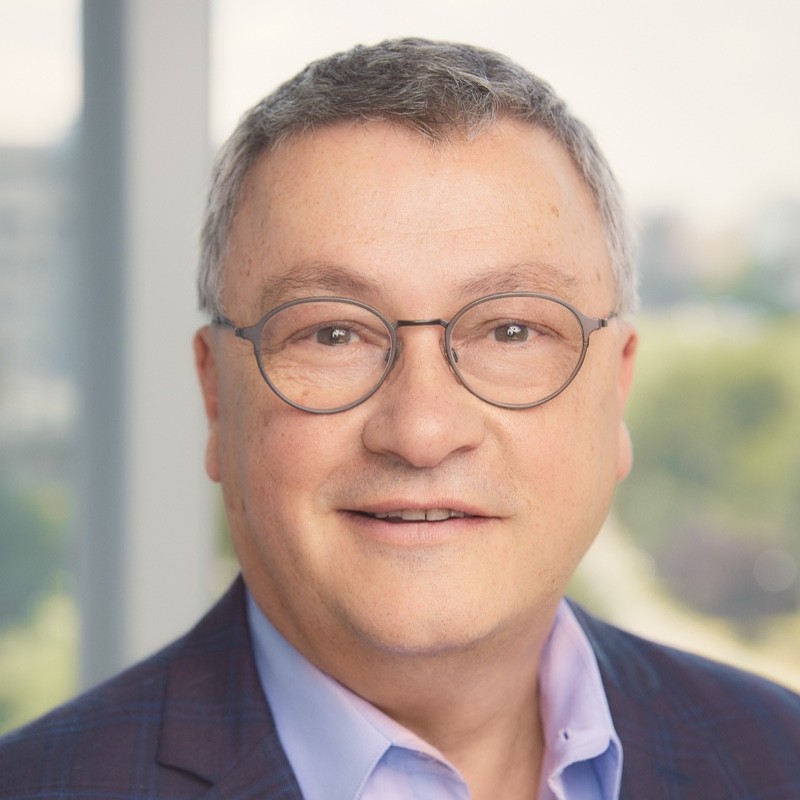
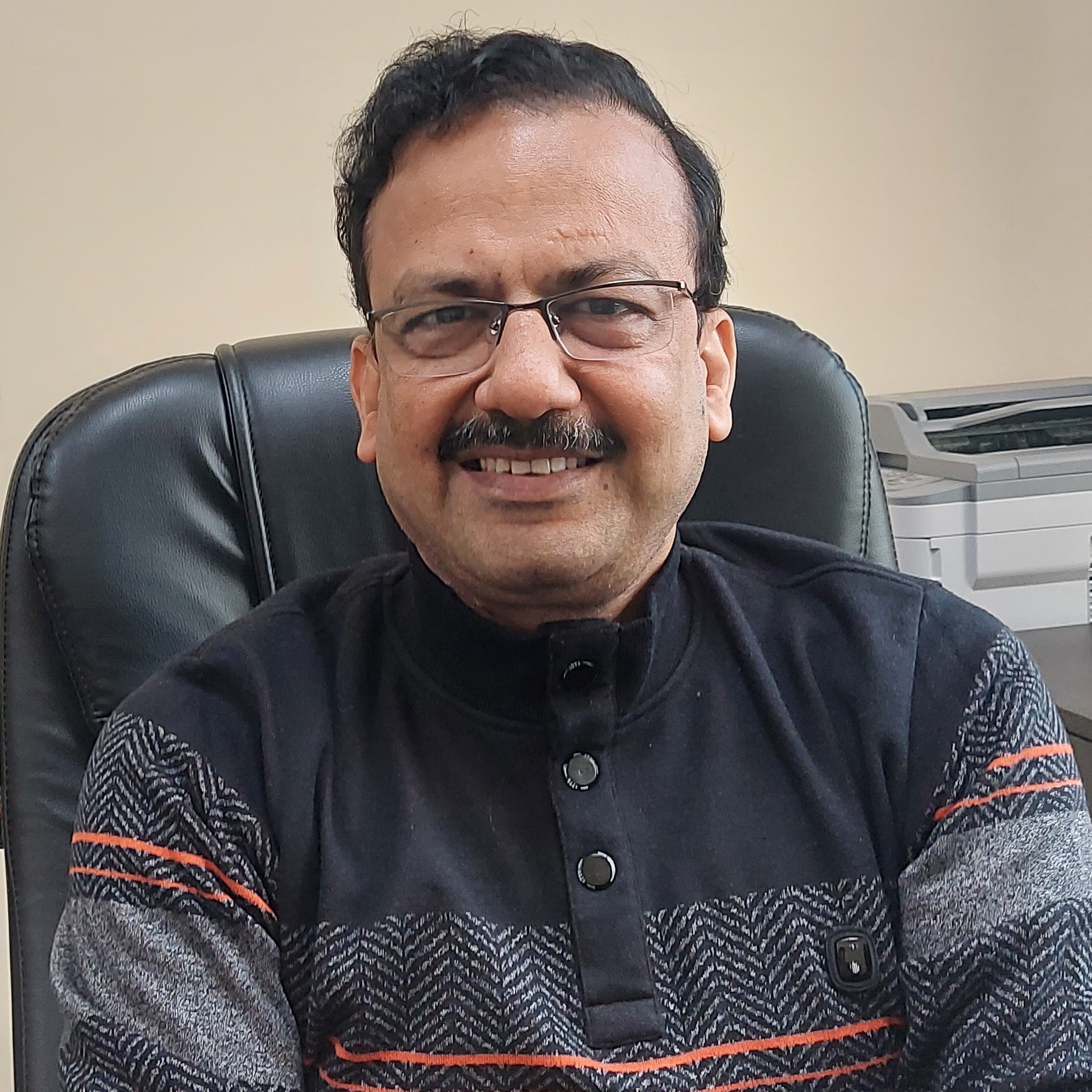
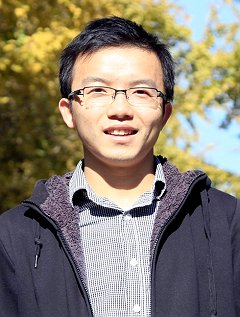
Jaechun No is a Professor at the Department of Computer Science and Engineering, College of Engineering, Sejong University. With a Ph.D. from Syracuse University (1999), he previously served as a Researcher at Argonne National Laboratory (1999-2001) and Hewlett Packard HPDC Laboratory (2001-2003) before joining Sejong University in 2003. Education: B.S., Ewha Womans University (1985) M.S., Western Illinois University (1993) Ph.D., Syracuse University (1999) His research focuses on Cloud/Edge computing , NVMe SSD technologies , and large-scale distributed/parallel storage systems . Key achievements include optimizing KVM/QEMU and Docker I/O virtualization, developing machine learning-based server failure prediction systems, and advancing NVMe/NAND flash memory I/O caching mechanisms for hybrid file systems. Recent publications highlight his work on virtualized I/O performance control (L-DTC, 2025), GPU Direct I/O classification (e-CLAS, 2024), Kubernetes resource provisioning (2024), and virtual storage resource redistribution (vThrot, 2024). These reflect trends in virtualization optimization, machine learning integration, and distributed resource management. Jaechun No's research has been cited extensively, with 148 Scopus h-index and over 8,000 citations. His collaborations span multiple countries and institutions, focusing on I/O virtualization, storage technologies, and distributed computing environments. Professional Affiliations: Current Professor at Sejong University (2003-present) Researcher at Argonne National Laboratory (1999-2001) Researcher at Hewlett Packard HPDC Laboratory (2001-2003)
Pabitra Sahoo is an Assistant Professor in the Department of Biological Sciences at Rutgers University, leading a research group focused on axonal mRNA dynamics and stress granule biology. His work bridges molecular neuroscience and regenerative medicine with direct implications for neural repair mechanisms. His educational background includes: B.S. from Utkal University, India (2005) M.S. from University of Hyderabad, India (2007) Ph.D. from National Centre for Cell Science, University of Pune (2013) Postdoctoral fellowship at Twiss Lab, University of South Carolina (2023) Dr. Sahoo's research centers on stress granules in axons and their dual role in physiological mRNA storage and pathological inhibition of nerve regeneration. His lab investigates how localized protein synthesis mechanisms govern neural repair, neurodevelopment, and neurodegenerative processes through cutting-edge approaches in spatial transcriptomics and axonal biology. Key discoveries include the identification of G3BP1 as a critical regulator of axonal mRNA translation and the demonstration that stress granules exist under normal physiological conditions in neurons. Analysis of his 2021-2025 publications reveals a dominant focus on stress granule disassembly mechanisms (particularly involving G3BP1), RNA-binding protein functions in axonal mRNA stability, and therapeutic targeting of these pathways for nerve regeneration. His work consistently connects fundamental molecular mechanisms to applications in spinal cord injury, peripheral nerve repair, and neurodegenerative conditions like ALS. The Sahoo Lab operates as a collaborative team of "curiosity driven, fun, and coffee loving scientists" investigating how mRNA storage granules respond to neuronal signals. Current projects specifically examine stress granule dynamics in neuronal development models and their dysfunction in neurodevelopmental disorders (e.g., Down syndrome) and neurodegenerative diseases, with therapeutic strategies emerging from multiple patent filings.
Hans-Joachim Hof is a Professor and Vice President for Teaching and Students at Technische Hochschule Ingolstadt (THI), where he has been employed since 2016. He serves as Head of Bachelor Cybersecurity (since 2022), Project Manager for THIsuccessAI (since 2021), and Head of the Research Group 'Security in Mobility' at the CARISSMA Institute of Electric, Connected and Secure Mobility. Additionally, he chairs the Scientific Board of the Center of Entrepreneurship and serves on the Supervisory Board of AININ. Professor, Head of INSecurity - Ingolstadt Applied IT Security Research Group (since WS 2016) Professor of Secure Software Systems, Head of MuSe - Munich IT Security Research Group at HAW Munich (2011-2016) Research Scientist at University of Karlsruhe (2008-2011) Research Assistant at Institute for Telematics, University of Karlsruhe (TH) (2003-2007) Professor Hof holds a doctorate in engineering and completed studies in computer science with a specialization in telematics and reliability architectures of systems, with a minor in law. His research spans automotive security, network security, and IT security, with recent focus on security in the Internet of Things, development processes for Secure Automotive Software, Automotive Blockchains, and Future Automotive Security Architectures. His work bridges theoretical security frameworks with practical automotive applications, particularly in electric vehicle security and battery management systems. Hof's recent publications reveal a strong trend toward automotive cybersecurity, with particular emphasis on electric vehicle infrastructure security, battery management systems, and vehicle security operations centers. His research increasingly addresses the security challenges of connected and autonomous vehicles, with growing attention to trust management systems and the security implications of AI in automotive contexts. The interdisciplinary nature of his work connects computer security with automotive engineering, energy systems, and digital forensics. Professor Hof has received numerous prestigious awards for his research contributions: Multiple Best Paper Awards at SECURWARE (2015, 2016, 2017) Best Paper Awards at CENTRIC (2010, 2012) Best Speaker Award at ESE Congress 2015 IARIA Fellow recognition Best Paper Award at ICIW 2010 As Editor-in-Chief of the International Journal on Advances in Security and Chairman of the German Chapter of the ACM, Hof plays a significant role in shaping security research discourse. His leadership extends to the German Informatics Society where he serves on the Executive Board. His research group INSicherheit (http://insi.science) actively collaborates with industry partners on real-world security challenges. Professor Hof leads the INSecurity research group at THI, which focuses on applied IT security with particular expertise in automotive contexts. The group maintains strong industry connections and operates within the CARISSMA research institute, which specializes in electric, connected, and secure mobility. Their work includes practical security testing, development of security architectures, and analysis of emerging threats in automotive systems, with notable contributions to EV charging security, battery management systems, and vehicle forensics.
Meng Xu is an Assistant Professor in the Cheriton School of Computer Science at the University of Waterloo, Canada. He is affiliated with the Cryptography, Security, and Privacy (CrySP) group and the Cybersecurity and Privacy Institute (CPI). His research focuses on system and software security, emphasizing secure-by-design languages (e.g., Rust, Move), automated program analysis, and runtime defense techniques. Education : Ph.D., Computer Science (2020), Georgia Institute of Technology B.Eng. and B.Business (First Class Honors), Nanyang Technological University (2014) Research Interests : Secure-by-design languages Automated security analysis (fuzzing, symbolic execution) Runtime defense mechanisms (moving target defense, secure hardware) Key Awards : EAPLS Best Paper Award (2022) USENIX Security Distinguished Paper Award (2018) Grants & Funding : BlackBerry Research Grant (CAD $200,000) Amazon Research Award (USD $60,000) NSERC Discovery Grant (CAD $170,000) Labs & Collaborations : CrySP (Cryptography, Security, and Privacy Group) Cybersecurity and Privacy Institute (CPI)
Prof. Dr. Thomas Ludwig is the Director of the German Climate Computing Center (DKRZ) and a Professor at the Universität Hamburg. He holds a doctoral degree and habilitation from the Technische Universität München, with expertise in High-Performance Computing (HPC), energy efficiency, and data storage systems. His research focuses on optimizing parallel systems, storage technologies, and computational efficiency for climate science applications. He leads projects like AIMES and PeCoH, advancing HPC storage and energy-aware computing. Education: Doctoral degree and habilitation from TU München (1988–2001). Chair in Parallel Computing at Universität Heidelberg (2001–2009). Research Interests: HPC, data reduction techniques, energy-efficient systems, parallel I/O optimization, and climate modeling infrastructure. Recent Research Trends: His work emphasizes storage system efficiency, machine learning in HPC, and convergence between HPC and Big Data. Key contributions include frameworks for portability (Vecpar), automated performance tools, and energy-aware storage solutions. Awards: Some publications received recognition, e.g., a Best Paper award in 2014 for work on energy efficiency. However, no personal awards are explicitly listed. Advising & Grants: Supervised numerous theses in HPC, I/O optimization, and energy efficiency. Leads major projects funded by national and international initiatives. Labs/Teams: Heads the DKRZ team providing supercomputing and data management for climate research, collaborating with global institutions like the University of Hamburg and European research networks.
Dr. Md Arifuzzaman is an Assistant Professor in the Department of Computer Science at Missouri University of Science and Technology (Missouri S&T). He specializes in High-Performance Systems, Quantum Networking, and Distributed Systems, focusing on optimizing large-scale system performance and scalability. His work addresses challenges in next-generation networks and storage systems, with publications in top venues like IEEE TPDS and ACM Supercomputing. Education: Ph.D. in Computer Science and Engineering, University of Nevada, Reno (2023) B.S. in Computer Science and Engineering, Bangladesh University of Engineering and Technology (2016) Research Interests: Dr. Arifuzzaman's work spans cutting-edge topics including quantum entanglement routing, reinforcement learning for network optimization, and high-speed file transfer protocols. His research emphasizes practical solutions for emerging technologies like terabit networks and quantum communication systems. Publications: Recent work focuses on quantum network protocols, machine learning-driven network probing, and storage reliability. His articles highlight advancements in both theoretical frameworks and real-world system implementations. Awards: No specific awards mentioned in the provided information. Advising/Grants: Details regarding student advising and grant activities are not explicitly stated in the text.
Kostas Magoutis is Professor and Chair of the Computer Science Department at the University of Crete , and a collaborating researcher at FORTH-ICS . His research focuses on scalable distributed systems, cloud computing, IoT, and quantum-enhanced control. Education and Career: Ph.D. in Computer Science, Harvard University (2003) Research Staff Member, IBM T. J. Watson Research Center (2003-2009) Assistant Professor (2014-2019, tenured 2017) and Associate Professor (2020-2024), University of Crete Professor and Chair, University of Crete (2024-present) Research Interests: His work spans distributed computer systems , cloud computing , scalable data stores and stream-processing engines , Internet of Things , and the emerging area of quantum-enhanced control . Representative projects include the H.F.R.I.-funded QUADS (2025-2028) on quantum-enhanced adaptive systems, STREAMSTORE (2020-2023) on elastic stream processing, SmartCityBus on IoT-driven public transport, and the EU FP7 PaaSage project on model-based cloud lifecycle management. Awards and Honors: Best Paper Awards: USENIX ATC 2002, USENIX BSDCon 2002, IEEE SRDS 2014 (Best Student Paper), IoT 2024 (Runner-up) Grand Challenge Audience Award, ACM DEBS 2022 Best Poster Award, ACM EuroSys 2022 EU Marie Curie IEF Fellow (2009-2011) Alexander S. Onassis Fellow (1994-1995) and J. William Fulbright Scholar (1993-1994) Students and Mentoring: He has supervised or co-supervised more than 30 Ph.D., M.Sc. and undergraduate students, including Antonis Papaioannou (Ph.D. 2021), Efthimios Papageorgiou (current Ph.D.), and numerous M.Sc. graduates now in industry and academia. Labs and Teams: At FORTH-ICS he leads activities within the Distributed Systems and Storage Laboratory, coordinating research on scalable storage, stream processing, and IoT data management. The lab collaborates closely with European and national initiatives, hosting visiting researchers and industry partners.
Professor Noh Jae-chun serves in the Department of Computer Engineering at Sejong University, South Korea, leading research in systems engineering with a focus on modern computing infrastructure. His research program centers on four critical domains of computer systems: Cloud Computing and Virtualization techniques for resource optimization Distributed and Parallel File Systems architecture for scalable storage solutions Big Data Platform Construction methodologies for data-intensive applications SSD (Solid State Drive) technologies and performance optimization He directs the Systems Engineering Lab where active development occurs in these areas, maintaining regular laboratory interview hours on Tuesdays and Thursdays from 2:00 PM to 4:00 PM for student collaboration and research discussions.
Bill Lu is an Assistant Professor at Santa Clara University's School of Engineering, Department of Bioengineering. With dual expertise in medicine (MD from Shanghai Medical University) and Biochemistry and Human Genetics (PhD from University of Manitoba), he focuses on developing genetic tools for treating complex diseases. MD: Shanghai Medical University, Clinical Medicine PhD: University of Manitoba, Biochemistry and Medical Genetics BS: University of Manitoba, Computer Sciences His research spans Nanomedicine (genetic disease, Alzheimer's, cancer), Targeted Drug Delivery (exosome-based systems), Gene Therapy (viral/non-viral delivery), and Molecular Imaging (fluorescence/bioluminescence probes). Recent publications highlight trends in exosome engineering, genome editing, and therapeutic vesicle design. 2023 Teaching Excellence Award 2021 Research Excellence Award 2013 Technology Innovation Award 2004 Distinguished PhD Dissertation Award He has filed 4 patents, served on editorial boards, and advised students through courses like Molecular and Cell Biology and Genome Engineering. His work bridges academic research and industry applications in biotechnology.
Garth Gibson is a Professor in the Computer Science Department and Department of Electrical and Computer Engineering at Carnegie Mellon University's School of Computer Science. He serves as Co-Director of the Master of Computational Data Science program and as Associate Dean for Master's Programs. Gibson has been a faculty member at CMU since 1991, after receiving his Ph.D. and M.Sc. in Computer Science from the University of California at Berkeley and a Bachelor of Mathematics in Computer Science and Applied Mathematics from the University of Waterloo. Gibson's research focuses on large-scale parallelism in computer systems, secondary memory system technologies and optimization, scalable file and key-value storage systems, scalable machine learning, and systematic testing for large scale systems. His work bridges theoretical concepts with practical implementations, with a strong emphasis on shepherding technological advances from academic research to commercial reality. He has made significant contributions to RAID technology, network-attached secure disks (NASD), and parallel file systems that have shaped industry standards and products. Gibson's recent publications reveal a strong trend toward data-intensive scalable computing, with increasing focus on machine learning systems, distributed storage solutions, and high-performance computing infrastructure. His research has evolved from foundational storage technologies to address the challenges of petascale and exascale computing environments, with particular attention to the intersection of storage systems and machine learning workloads. The papers demonstrate a consistent theme of addressing system scalability challenges through innovative architectural approaches. Scientific Awards: 2014 Fellow of the IEEE for contributions to the performance and reliability of transformative storage systems 2012 Fellow of the ACM for contributions to the performance and reliability of storage systems 2012 Jean-Claude Laprie Award in Dependable Computing Industrial/Commercial Product Impact Category 2011 SIGOPS Hall of Fame for the SIGMOD88 RAID paper 1999 Reynold B. Johnson Information Storage Award 1999 Allan Newell Award for Research Excellence 1998 Test of Time Award 1991 A.C.M. Doctoral Dissertation Award (tied for second) Gibson has advised numerous graduate students who have gone on to influential positions in both academia and industry, including Swapnil Patil who won first place in the 2010 ACM Graduate Student Research Competition. He has secured significant research funding through initiatives like the DOE Petascale Data Storage Institute and the Intel Science and Technology Center for Cloud Computing. His research has been supported by collaborations with national laboratories including Los Alamos, Sandia, Oak Ridge, Pacific Northwest, and Lawrence Berkeley. Gibson founded CMU's Parallel Data Laboratory (PDL) in 1993, which has grown into a vibrant research community comprising 6-9 faculty members, 2-3 dozen students, and 4-10 staff. The PDL operates with guidance from the Parallel Data Consortium, which includes 15-25 companies interested in parallel data systems. He also founded Panasas Inc. in 1999, a scalable storage cluster company that has deployed technology in national laboratories, energy sectors, and other high-performance computing environments. More recently, Gibson established the Big Learning research group and created the Systems Major curriculum within CMU's Master of Computational Data Science program.
Dr. Ramon Antonio Rodriguez Zalepinos is an Associate Professor at the Department of Software Engineering, Faculty of Computer Science, National Research University Higher School of Economics (HSE). With 16+ years of scientific and teaching experience, he specializes in geospatial data systems, distributed databases, and high-performance computing. Doctor of Science in Computer Science (2024) Candidate of Technical Sciences (2013) Master's in Computer Science (2008, Donetsk National Technical University) His research focuses on geospatial array databases , distributed systems , and Big Earth Data engineering , particularly through his ChronosDB and Quantum Tensor DBMS projects. He has pioneered cloud-native solutions for multi-terabyte environmental datasets and developed novel approaches for in-database road traffic simulations. Key publication trends show 7+ years of contributions to VLDB and SIGMOD conferences, with special emphasis on: Quantum-enhanced geospatial processing Web-based array database systems Cellular automata integration High-speed raster data aggregation Scientific recognition includes: Best Teacher award (2017-2021, 2023) HSE Personnel Reserve member Additional post-doctoral funding (2024-2027) Multiple publication bonuses (2019-2023) He supervises student research in geospatial data science and leads projects on satellite data processing systems, with implementations at major institutions including Amazon and Planet Labs.
Dr. Rajeev Jindal is a Professor of Practice in the Department of Sustainable Energy Engineering at IIT Kanpur. With over 20 years of experience in the technology industry, he has held leadership roles at C&S Electric Ltd., NTL Electronics, and Moser Baer India Ltd. He earned his PhD in Physics from IIT Delhi and completed post-doctoral research at Université de Nice (France) and Michigan State University. PhD in Physics, IIT Delhi (1998) MSc in Physics (Gold Medalist), IIT Roorkee (1993) BSc (Gold Medalist), Rohilkhand University (1991) His research spans renewable energy systems , flexible electronics , and optical engineering . Recent work focuses on solar power economics, carbon footprint accounting in institutions, and electric vehicle charging infrastructure. Prior publications include sol-gel fiber sensors, organic solar cells, and photonic devices. Recent publications (2023-2025) emphasize solar energy deployment , policy analysis , and sustainable mobility , while earlier works (2002-2015) highlight optical sensor development , sol-gel processing , and photonic device modeling . Scientific Honors: Gold Medalist, IIT Roorkee (MSc Physics) Gold Medalist, Rohilkhand University (BSc) Dr. Jindal led the establishment of IIT Kanpur's Flexible Electronics Center (2014), secured >$20M in government funding, and managed R&D teams that filed 20 patents across solar, LED lighting, and optical fiber technologies.
Yu Jiang is an Associate Professor at the School of Software, Tsinghua University, China. His research focuses on software security with emphasis on fuzz testing, embedded systems, and database security. He leads the Software System Security Assurance Group which has discovered over 1,000 bugs in major system software with 300+ CVEs registered. Dr. Jiang's research interests include Software Engineering , Embedded Systems Security , and Cross-Layer Fuzzing . His work addresses vulnerabilities in operating systems, databases, communication protocols, and IoT firmware through innovative fuzzing frameworks. Key contributions include semantic-aware fuzzing for heterogeneous software stacks and learning-based vulnerability detection for embedded systems. His recent publications demonstrate strong trends in database security (Hulk, PUPPY, THANOS), ransomware defense (Fawkes, Preventing Disruption), and web security (JANUS). Research spans both theoretical advances in fuzzing techniques and practical industrial applications, with significant impact evidenced by numerous distinguished paper awards. Career Award, NSFC: 2026 Distinguished Paper Award, ISSTA: 2025 First Prize for Technical Invention, CCF: 2024 Distinguished Paper Award, USENIX Security: 2024 SIGSOFT Distinguished Paper Award, FSE: 2022 Dr. Jiang has advised over 50 graduate students including 20 PhD candidates. His research is supported by major grants including NSFC projects ($600,000 for Software Trustworthiness Construction and $350,000 for Distributed Database Reliability), Huawei ($80,000 for LLM-Powered Fuzzing), and Tencent ($120,000 for LLM-Powered Unit Testing). The Software System Security Assurance Group maintains strong industry partnerships with Huawei, Alibaba, Tencent, and Webank. The group operates cutting-edge infrastructure for fuzz testing across multiple domains including database systems, operating kernels, blockchain platforms, and industrial control systems. Current projects integrate LLM technologies with traditional fuzzing techniques to enhance vulnerability detection in complex software stacks.
Nikil Dutt is a Chancellor’s Professor at the University of California, Irvine (UCI), with academic appointments in Computer Science, Electrical Engineering and Computer Science (EECS), and Cognitive Sciences. He is affiliated with UCI's Center for Embedded Computer Systems (CECS), Center for Cognitive Neuroscience and Engineering (CENCE), Calit2, CPCC, and LUCI. His research focuses on embedded systems, electronic design automation, computer architecture, and healthcare IoT. Dutt has authored/co-authored seven books and holds IEEE Fellow and ACM Distinguished Scientist titles. Education: B.E. (Mechanical Engineering) from Birla Institute of Technology and Science (Pilani, India), 1980; M.S. (Computer Science) from Pennsylvania State University, 1983; Ph.D. (Computer Science) from University of Illinois at Urbana-Champaign, 1989. Research Interests: Embedded systems, brain-inspired architectures, neuromorphic computing, and healthcare IoT. Current projects include the Information Processing Factory (IPF) for autonomous systems and CareDex for disaster resilience in aging communities. Awards: Multiple Best Paper Awards, NSF grants, and fellowships. Serves as editor for ACM TECS, IEEE TVLSI, and former Editor-in-Chief of ACM TODAES. Active in academic service, including ESWEEK Steering Committee roles. Grants: NSF IPF, UNITE, CareDex, and industry partnerships (e.g., Facebook). Research addresses energy-efficient data centers, autonomous driving systems, and wearable health technologies. Labs/Teams: Leads the Dutt Research Group (DRG), focusing on self-aware systems, edge computing, and neuromorphic architectures.
Ram Alagappan is an Assistant Professor at the University of Illinois Urbana-Champaign's Siebel School of Computing and Data Science, Department of Computer Science. He co-leads the Distributed And Storage Systems Laboratory (DASSL) and focuses on improving reliability and performance in computer systems. PhD from University of Wisconsin-Madison (2019) Postdoctoral researcher at VMware Research (2020-2022) Research interests span storage systems, distributed systems, and operating systems, with emphasis on: Crash consistency and reliability Consensus protocols and fault tolerance Non-volatile memory optimization Datacenter storage abstractions Recent publications highlight advancements in shared log abstractions (LazyLog, SOSP 2024), replication for KV stores (IONIA, FAST 2024), and fault tolerance in disaggregated datacenters (SplitFT, EuroSys 2024). His work also includes foundational studies on crash vulnerabilities and consistency models. Scientific recognitions include: Best Paper Awards at SOSP 2024, FAST 2020, FAST 2018, FAST 2017 NSF CAREER Award (2023) NetApp Faculty Fellowship (2024) Teaching honors: Listed as Excellent/Outstanding Teacher at UIUC (CS598 Storage Systems, 2022-2023) Ranked 1st in student evaluations for CS739 Distributed Systems at UW-Madison (2020) Grants and service: NSF CAREER Award, IBM-IL Discovery Grant Program Committee roles at OSDI, SOSP, EuroSys, HotStorage Labs & Teams: Co-leader of DASSL research group at UIUC.