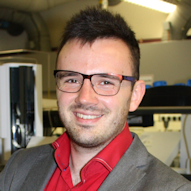
Benedikt GüntherView profile
Researcher
Benedikt Günther is a research scientist at the Technical University of Munich (TUM) working within the Chair of Biomedical Physics led by Prof. Dr. Franz Pfeiffer. His research focuses on the Munich Compact Light Source (MuCLS), a laboratory-scale inverse Compton X-ray source that provides synchrotron-like radiation for biomedical applications. Günther plays a key role in developing, optimizing, and characterizing this innovative technology, contributing to both its fundamental physics and practical medical applications. His primary research interests center around X-ray physics and imaging techniques, particularly laser enhancement cavities for inverse Compton X-ray sources, X-ray microscopy, dynamic phase-contrast imaging, and X-ray spectroscopy. Günther's work bridges fundamental physics with practical medical applications, developing instrumentation that brings synchrotron-quality imaging to conventional laboratory settings. His research has significant implications for improving medical diagnostics while making advanced imaging techniques more accessible. Analysis of Günther's publication record reveals a consistent focus on advancing compact X-ray source technology and its applications. His work demonstrates expertise in both theoretical modeling and experimental implementation, with publications spanning instrument development, imaging techniques, and specific medical applications. The research shows progression from fundamental source characterization to increasingly sophisticated biomedical applications, particularly in breast imaging, dental diagnostics, and materials science. 2019 Best Poster Award at the combined meeting of the 68th Denver X-ray Conference (DXC) & 25th International Congress on X-ray Optics and Microanalysis (ICXOM) for 'Full-Field Structured Illumination Super-Resolution X-ray Transmission Microscopy' Günther regularly presents his work at major international conferences including the International Particle Accelerator Conference, High-Brightness Sources and Light-driven Interactions Congress, and specialized X-ray imaging meetings. His research is conducted within the Munich Compact Light Source facility, a collaborative project involving physicists, engineers, and medical researchers working to develop laboratory-scale synchrotron technology for widespread biomedical use.