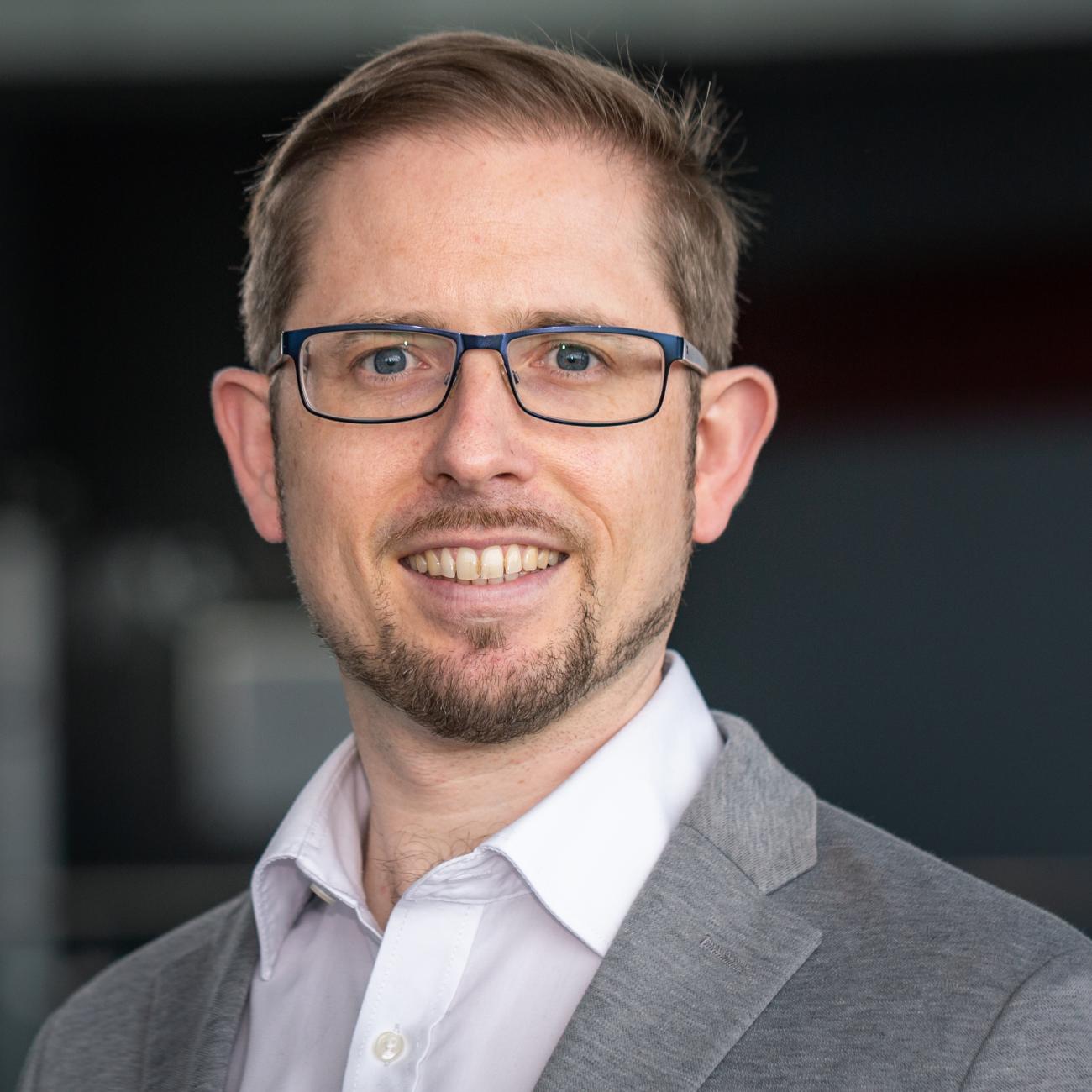
Matthew Watkinson is Associate Professor in Energy Geoscience and Earth Sciences Programmes Lead at the University of Plymouth's School of Geography, Earth and Environmental Sciences. He serves as Geology Fieldwork Coordinator and Safety Representative. His expertise spans sedimentology, energy resource geology, and stratigraphy with applications to geological hazards. Research focuses on: Tectonic controls on landscape evolution Active faulting and seismic hazard assessment River system responses to tectonic forcing Tsunami generation mechanisms Basin analysis for energy resources Dr. Watkinson teaches undergraduate courses in sedimentology, field geology, sequence stratigraphy, petroleum geology, and basin analysis. He coordinates geology fieldwork programs and promotes geoscience education in schools. His administrative roles include Faculty of Science Approval Scrutiny Panel membership and former chairmanship of the Faculty External Liaison Committee. He currently supervises multiple research students investigating seismic events, coastal hazards, and landscape evolution. Dr. Watkinson maintains active community engagement through school outreach programs and professional service activities.
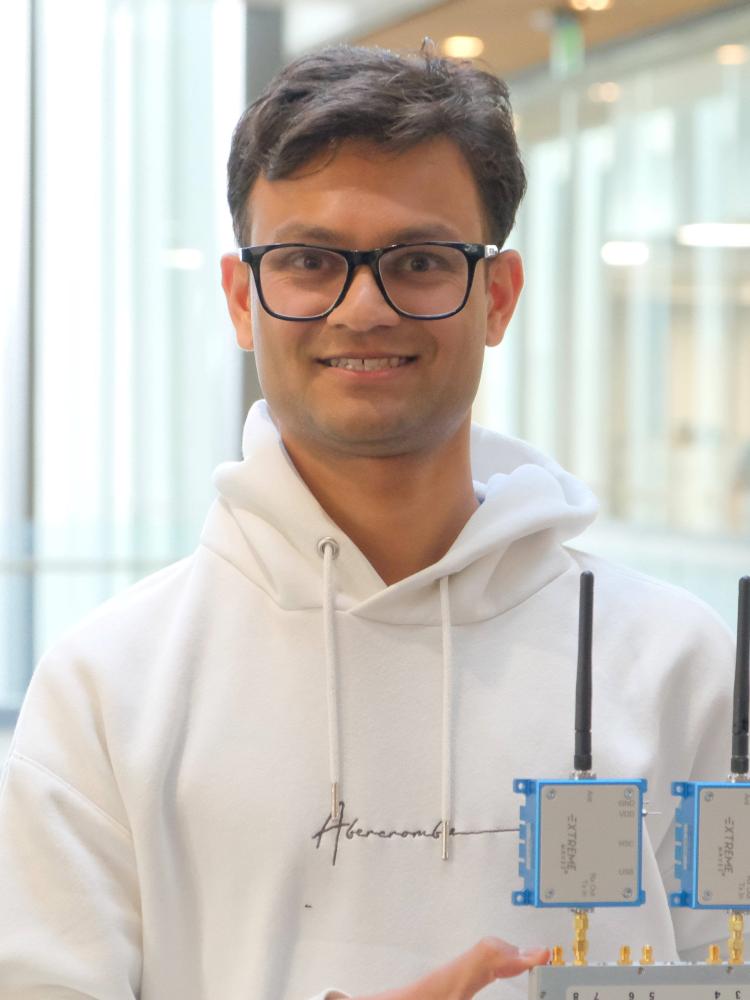
Ish Jain is an Assistant Professor in the Department of Electrical, Computer, and Systems Engineering at Rensselaer Polytechnic Institute (RPI), effective Fall 2024. He holds a PhD in Electrical and Computer Engineering from UC San Diego (2024), an MS from NYU (2018), and a BTech from IIT Kanpur (2016). His research focuses on next-generation wireless networks, combining communication, sensing, and security through experimental frameworks like mmWave testbeds. Key contributions include frequency-dependent multi-beam systems, mmWave localization for autonomous vehicles, and security against jamming/sensing spoofing. Education: PhD, UC San Diego (2018–2024) MS, NYU (2016–2018) BTech, IIT Kanpur (2012–2016) Research Interests: His work spans 6G Architecture (multi-beam frameworks, flexible frequency multiplexing), Wireless Sensing (localization, radar integration), and Security (jamming mitigation, spoofing defenses). He emphasizes practical deployments using open-RAN and programmable radios, with a focus on energy efficiency and scalability. Recognition: Qualcomm Innovation Fellowship VMware Research Grant Marconi Society Scholar Best Poster Award (Hotmobile 2023) 3-minute Thesis Winner (MobiSys/MobiCom) Current Courses: ECSE 4660/6660 Internetworking of Things (Spring 2025) ECSE 4560/6560 Modern Communication Systems (Fall 2025) Lab: Wireless Intelligent Systems Lab at RPI. Active in research centers like CMDIS. Collaborates widely via grants and industry partnerships.
Jamie Pringle is a Senior Lecturer and Programme Director in Ecology & Conservation at Keele University's School of Life Sciences. With a background in geology and applied sedimentology, he has developed expertise in forensic geophysics, military geoscience, and environmental geophysical techniques. Geological Society of London - William Smith Fund (2012) Committee member - Near-Surface Geophysics and Forensic Geoscience Specialist Sub-Groups Collaborations - National Crime Agency, UK Police Forces, Environment Agency, Staffs University His research focuses on geophysical methods for forensic applications, including clandestine grave detection, military complex identification, and environmental contamination analysis. He also develops educational e-gaming tools for geoscience training. Recent publications demonstrate applications of GPR, ERT, and UAVs in forensic contexts across tropical to temperate environments. His work supports law enforcement in grave location, human rights investigations, and infrastructure safety assessments. 2024: Three articles in Geology Today on land/water forensic geoscience 2024: Forensic Science International paper on clandestine complex detection 2024: Colombian tropical grave monitoring study 2023: HS2 route geophysical assessments 2022: XR virtual forensic learning environments 2022: pXRF forensic contamination analysis As a committee member with the Geological Society and educator in forensic geoscience, he bridges academic research with practical policing applications while maintaining active teaching commitments across multiple academic levels.
Michael Booty is a Professor in the Department of Mathematical Sciences at New Jersey Institute of Technology (NJIT). His research focuses on fluid dynamics, interfacial flows, electrokinetic phenomena, and surfactant behavior, with applications in microfluidics and computational mathematics. Booty is a co-principal investigator on multiple federal grants, including projects on numerical methods for interfacial flows with ionic fluids and surfactants, and has contributed to conferences on applied and computational mathematics. His work bridges theoretical analysis and numerical simulation, addressing challenges in fluid-structure interaction, electrokinetic flow, and surfactant-mediated processes. Grants & Collaborations: Booty has secured 8 federal grants, including a long-term project (2017–2024) on numerical methods for interfacial flows. Collaborations span topics like magnetic field-assisted assembly and computational mechanics. His research also includes experimental validation in microfluidic systems, such as tipstreaming dynamics. Research Interests: Booty’s expertise spans computational fluid dynamics, surfactant solubility effects, and electrostatic-driven phenomena. His recent work emphasizes hybrid numerical methods for complex interfacial problems, with applications to vesicle deformation, drop breakup, and electrokinetic systems. He has contributed to both theoretical frameworks (e.g., long-wave equations) and practical methodologies (e.g., boundary integral techniques). Awards & Recognition: While specific awards are not listed, his sustained contributions to fluid dynamics and computational methods reflect high scholarly impact, as evidenced by 452 citations and an h-index of 13.
Dr. Horacio Rostro González is an Assistant Professor in the Department of Industrial Engineering at IQS School of Engineering, Ramon Llull University. His research focuses on neural network implementations using field-programmable gate arrays (FPGAs), with applications in robotics, motor imagery systems, and industrial automation. Research Focus: Development of hardware-accelerated AI systems for pattern recognition, robot locomotion control, and human-machine interfaces. Key projects include neuromorphic computing for spatio-temporal classification and AI-driven photonics parameter optimization. Projects: Member of the Industrial Engineering Research Group (GEPI), working on offshore wind farm data analysis using machine learning and renewable energy prediction systems.
Dr. Reginald Perry is a Professor of Electrical and Computer Engineering at the Florida A&M University-Florida State University (FAMU-FSU) College of Engineering. He currently serves as Associate Dean for Student Affairs and Curriculum, overseeing recruitment, retention, and academic adherence. Previously, he chaired the Department of Electrical and Computer Engineering (1999-2004), during which the department launched the first ABET-accredited computer engineering program at a historically Black university. His educational background includes a B.E.E., M.S., and Ph.D. from Georgia Institute of Technology. Before academia, he worked at IBM as an associate engineer in CMOS SRAM development. Dr. Perry’s research focuses on field-programmable logic devices, CMOS-based optoelectronics, and engineering education. He led the NSF-funded Florida A&M University-Undergraduate Program project (1999-2010), which enhanced STEM student preparedness. Phase one supported 250+ students, while phase two developed a STEM Learning Community. His work emphasizes improving retention and academic performance, particularly for underrepresented engineering students. Professional affiliations include ASEE (Member) and IEEE (Senior Member). His pedagogical contributions span laboratory design, curriculum development, and pre-engineering program analysis. Current initiatives focus on first-year engineering labs and learning community models to boost student readiness and success.
Dr James Brunton is Assistant Professor and Programme Chair of the DCU Connected Psychology Major programme at Dublin City University's School of Psychology, Faculty of Science and Health. He leads an online, open education programme accredited by the Psychological Society of Ireland (PSI) and serves as Principal Investigator for multiple research projects including Opengame (Promoting Open Education through Gamification) and BUKA (Advancing Equity and Access to Higher Education through Open and Distance Learning). Dr Brunton graduated with a BA (Hons) in Applied Psychology from University College Cork and earned his PhD in Psychology from Dublin City University's Business School. He holds multiple professional distinctions including being a Chartered member of the Psychological Society of Ireland (C. Psychol., Ps.S.I.; C. Work & Org. Psychol. Ps.S.I.), a Chartered member and Associate Fellow with the British Psychological Society (CPsychol BPS, AFBPsS), an EDEN (European Distance Education Network) Fellow, and an Advance HE Senior Fellow (SFHEA). His research focuses on the psychology of identity, identity formation and identity management processes, particularly among 'off-campus' higher education students. He investigates socialisation/orientation processes for online learners, online learning design, open pedagogy, and digital assessment. His work bridges educational psychology with practical applications in open and distance education, with particular attention to vulnerable populations including refugees and students with disabilities. Analysis of Dr Brunton's recent publications reveals a strong focus on open educational practices, learner identity formation, and accessibility in digital learning environments. His research spans educational psychology, technology-enhanced learning, and inclusive education, with consistent themes of equity, access, and innovative pedagogical approaches in online contexts. He has published in journals such as Open Learning: The Journal of Open, Distance and e-Learning, Open Praxis, Educational Media International, Frontiers in Psychology, and Studies in Higher Education. EDEN (European Distance Education Network) Fellow Advance HE Senior Fellow (SFHEA) Chartered member of the Psychological Society of Ireland Chartered member and Associate Fellow with the British Psychological Society Professor Extraordinarius at University of South Africa (UNISA) Dr Brunton currently supervises PhD student Sinead Lynch and serves as Principal Investigator for multiple research projects including ENGAGED: Co-Creating Ireland's Public Engagement and Open Research Road Map (2024-2026), BUKA project (2019-2022), and the Opengame project (2019-2021). His research has received funding from both local and EU sources, supporting his work in open educational practices and equitable access to higher education. As Editor for Research in Learning Technology, Editor for ASEAN Journal of Open and Distance Learning, and Senior Editor for Europe's Journal of Psychology, Dr Brunton plays a significant role in academic publishing within his field. His work with the DCU Connected Psychology programme demonstrates his commitment to innovative, accessible educational models that serve diverse learner populations through open and distance education approaches.
Saurav Kumar is a researcher at Aalborg University, affiliated with the International Business Research Group and the Theory Building Research Programme (TBRP). His work focuses on institutional logics, legitimacy dynamics, and organizational transformation, particularly in financial services and emerging technologies like blockchain. He holds a Post Graduate Diploma in Industrial Management from IIM Mumbai (2014) and a Bachelor's in Electrical & Electronics Engineering from Cochin University (2010). Education: Post Graduate Diploma in Industrial Management, Indian Institute of Management Mumbai (2014) Bachelor of Technology in Electrical & Electronics Engineering, Cochin University of Science and Technology (2010) His research explores new venture legitimacy, institutional change in traditional industries, and the societal impact of disruptive technologies. Recent studies include Bitcoin's institutional logic emergence and strategies for innovative survival in legacy sectors. He leads projects like LNETN: Legitimation of Newness and Its Impact on EU Agenda for Change and Disrupting The Disrupters , focusing on transformative field initiatives and new business models. Publications highlight interdisciplinary approaches combining critical discourse analysis with structured topic modeling. His work bridges organizational theory, financial innovation, and technological adoption challenges.
Patrik Norqvist is an Associate Professor in the Department of Physics at Umeå University , Sweden, and a recognised university teacher. He is a member of the Solar-terrestrial physics and space weather research group, conducting research and teaching across a wide spectrum of physics courses from foundation year to technical physics and teacher-training programmes. Education: Recognised university teacher qualification (exact degree titles not specified in text). Research Focus: Dr Norqvist’s work centres on space physics , with particular emphasis on the Earth’s magnetotail dynamics , auroral processes , and solar-terrestrial interactions . Using data from missions such as Cluster , THEMIS , and Freja , he investigates how energy and momentum are transported and converted within the magnetosphere and how these processes manifest as space-weather phenomena. Publication Trends: His recent articles (2002-2017) reveal a sustained focus on multi-spacecraft observations of plasma flows, magnetic reconnection, energy conversion regions, and the coupling between the solar wind and the ionosphere. Studies often combine statistical analyses with case studies to quantify the scale sizes, lifetimes, and IMF dependencies of dynamic structures in the plasma sheet and auroral regions. Scientific Awards: No specific awards or honours are listed in the provided text. Teaching & Advising: Dr Norqvist teaches at all undergraduate levels—from preparatory courses bridging upper-secondary school to advanced technical physics and teacher-programme courses. While individual PhD or Master’s students are not named in the text, his extensive publication record and research-group membership indicate active mentoring within the Solar-terrestrial physics team. Laboratory & Teams: He is affiliated with the Solar-terrestrial physics and space weather research group at Umeå University, located at Fysikhuset, Linnaeusväg 24.
Zvonimir Dogic is a Professor of Physics at the University of California, Santa Barbara (UCSB), and serves as the Faculty Graduate Advisor. Previously, he held positions at Brandeis University, including Associate and Assistant Professor, and conducted postdoctoral research at institutions such as the Rowland Institute at Harvard. His research focuses on active matter, soft condensed matter, and self-assembly, aiming to replicate dynamic biological phenomena using simplified systems. Key areas include colloidal membranes, microtubule-based active fluids, and bacterial flagella. His work bridges experimental and theoretical physics, with collaborations extending to materials science and biophysics. Education: BA and PhD in Physics from Brandeis University (1997–2003). Postdoctoral roles at Research Center Julich, University of Pennsylvania, and Rowland Institute. Joined UCSB in 2017. Research interests include non-equilibrium systems, active nematics, and the interplay between structure and dynamics in soft materials. Recent studies explore self-folding active interfaces, light-activated microtubules, and chiral colloidal assembly. The Dogic Lab collaborates with theorists and experimentalists, leveraging advanced imaging and computational tools like deep-learning optical flow analysis. Students and alumni include over 50 researchers, many now in academic and industry roles. The lab is supported by grants from NIH, NSF, and private foundations. Ongoing projects investigate programmable materials, energy dissipation in active systems, and scalable active matter architectures.
Frank van der Meulen is a Professor of Mathematical Statistics at the Vrije Universiteit Amsterdam (VU), where he leads the Department of Mathematics. He holds leadership roles including Director of the VU Bachelor Programme in Business Analytics, Chair of the Mathematical Statistics section at the Netherlands Society for Statistics and Operations Research (VVSOR), and Organizer of the nationwide Van Dantzig seminar. His research focuses on statistical inference for stochastic processes, Bayesian computation, and applications in fields like sports engineering, climate science, and maritime engineering. He has developed influential methods such as 'backward filtering forward guiding' for simulating conditioned Markov processes. Frank obtained his PhD in 2005 from VU Amsterdam and has held academic positions at TU Delft (2007–2022) before returning to VU as a Full Professor in 2022. He teaches courses in statistics, probability, and data science, and has authored packages like BridgeLandmarks and BayesianDecreasingDensity. His work bridges theoretical advancements with practical applications, emphasizing collaboration across disciplines. Research interests include Bayesian computational methods (MCMC, SMC), stochastic differential equations, and inference for diffusions on manifolds. Recent work explores stochastic phylogenetic models and fatigue calculations for maritime structures. He consults on statistical and machine learning projects, offering expertise through his GitHub repositories and published software tools.
Dr. Lixuan Lu is a Professor in the Department of Energy and Nuclear Engineering at Ontario Tech University, affiliated with the Energy Systems and Nuclear Science Research Centre (ERC). Their research focuses on nuclear power plant instrumentation, control systems reliability, and risk-informed maintenance strategies. Dr. Lu holds a PhD in Electrical and Computer Engineering from the University of Western Ontario (2005), and prior degrees from Beijing Institute of Technology (MES 2001, BES 1998). Education: PhD (2005), MES (2001), BES (1998) in Automatic Control/Electrical Engineering Research Interests Dr. Lu investigates advanced control methodologies for nuclear facilities, including networked control systems reliability, safety-critical instrumentation, and risk assessment for non-coherent systems. Key applications include CANDU reactor control, hydrogen production via thermochemical cycles, and FPGA-based instrumentation. Their work bridges theoretical reliability analysis with practical implementation in nuclear energy systems. Publications Recent work emphasizes risk-informed maintenance strategies, FPGA systems for nuclear instrumentation, and hydrogen production plant modeling. Key contributions address safety-critical control systems, probabilistic safety assessment using Petri nets, and reliability evaluation of standby systems. Dr. Lu collaborates on projects integrating supercritical water-cooled reactors (SCWR) with copper-chlorine thermochemical cycles for hydrogen co-generation. Awards & Grants No specific awards or grants listed in the provided materials. Dr. Lu’s research is supported through institutional and collaborative initiatives. Labs & Teams Affiliated with the Energy Systems and Nuclear Science Research Centre (ERC), focusing on interdisciplinary energy solutions.
Dr Nicky Nielsen is a Senior Lecturer in Egyptology at the University of Manchester's School of Arts, Languages and Cultures, part of the Faculty of Humanities. He serves as Programme Director for the Minor in Egyptology and co-Director of the MA Egyptology programme. Originally from Denmark, he holds a PhD from the University of Liverpool (2016), focusing on Ramesside fortress archaeology. His research integrates fieldwork in Egypt’s Nile Delta (Tell Nabasha Survey Project) with pedagogical innovation in distance learning. Key excavations include Zawiyet Umm el-Rakham and Tell Nabasha, with publications analyzing ceramics, craft production, and Late Period settlements. A recipient of multiple teaching awards, he specializes in effective online education models. His work contributes to UN SDG 4 (Quality Education) through digital pedagogy and SDG 11 (Sustainable Cities) via archaeological heritage preservation. Education: PhD in Egyptology, University of Liverpool, 2016 Research funded by AHRC Block Grant Research Interests: Egyptian archaeology with emphasis on New Kingdom and Late Period material culture Ceramics, craft production, and settlement patterns in the Nile Delta Digitization and online education methodologies Archival studies of Flinders Petrie’s expeditions Teaching Contributions: Unit Convenor for courses including Introduction to Pharaonic Egypt and Egyptian Art Technology Co-author of From Mummies to Microchips (Routledge, 2020) – a seminal work on online teaching Awards: 2020-2023: Multiple Outstanding Teaching Awards from the University of Manchester 2023: Student Union Excellence in Online Education Award Field Projects: Director of Tell Nabasha Survey Project (ancient Imet excavations) Co-leader of Zawiyet Umm el-Rakham fortress studies Analyses of Petrie's 1886 excavations at Tell Nabasha
Dr. Kemal Ozbek is an Associate Professor in the Department of Economics at the University of Southampton. He serves as the Economics Doctoral Programme Director, overseeing graduate research training. His research focuses on decision theory, behavioral economics, and mechanism design, exploring topics like costly learning under ambiguity, adaptive risk assessments, and the foundations of expected utility theory. Dr. Ozbek’s work bridges theoretical economics with behavioral insights, addressing how individuals process information and make choices under uncertainty. His recent publications (2021–2025) emphasize dynamic decision models, preference consistency, and the role of mood in economic choices. He actively supervises PhD students in microeconomic theory and related fields. Key contributions include studies on Bayesian learning costs in decision-making (2021), adaptive risk assessment frameworks (2023), and axiomatic foundations of utility theory (2024). His research is published in top journals such as Journal of Mathematical Economics and Theory and Decision .
Tameem Albash is an Adjunct Assistant Professor (Research) in the Department of Physics and Astronomy at the University of Southern California. He holds a Ph.D. in Physics (USC, 2010) and a B.S. in Electrical and Computer Engineering from Cornell University (2005). His postdoctoral research includes roles at the Information Sciences Institute (USC) and the University of Southern California. His research focuses on quantum computing, specifically quantum annealing, adiabatic quantum computation, and error correction mechanisms. He also explores theoretical physics topics like holography and condensed matter systems involving magnetic fields and superconductivity. His work bridges quantum information theory with practical implementations in quantum hardware. Key contributions include studies on quantum annealing correction protocols, tunneling phenomena in optimization problems, and decoherence effects in adiabatic systems. His publications span high-impact journals like Phys. Rev. A, Nature Communications, and Journal of High Energy Physics. No specific grants, awards, or student advisement are explicitly listed in the provided information. His affiliations emphasize active research in quantum technologies and theoretical physics collaborations.