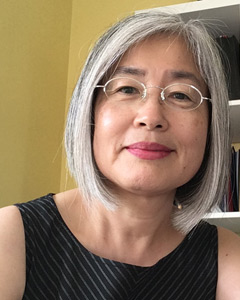
Jaime Goffin, LCSW, serves as Clinical Associate Professor and Field Coordinator at Boise State University's School of Social Work, located in the Education Building (Suite 717) in Boise, Idaho. Her dual role combines academic instruction with operational leadership of the field education program, which is central to the school's accreditation and student training. Dr. Goffin's professional focus centers on clinical social work practice and field education methodology. Her expertise spans mental health assessment, behavioral health interventions, and clinical supervision within community-based settings. She emphasizes evidence-based practice and ethical decision-making, preparing students for direct clinical work through structured field experiences that bridge theoretical knowledge with practical application in diverse service environments. As Field Coordinator, Dr. Goffin maintains extensive community partnerships with mental health agencies and clinical service providers across Idaho. She personally oversees student placement matching, provides ongoing supervision support, and ensures compliance with Council on Social Work Education standards. Her LCSW credential validates advanced clinical expertise that directly informs her supervision of student practitioners in behavioral health settings.
Dr. Jayne Downey serves as Professor and Director of the Center for Research on Rural Education within the Department of Education, College of Education, Health & Human Development at Montana State University. Her work bridges academic research and practical solutions for rural educational challenges across North America and internationally. Her academic credentials include: Ph.D. in Educational Psychology, University of Northern Colorado (2002) M.A. in Counseling Psychology, Trinity International University (1996) B.A. in Honours Psychology, University of Waterloo (1994) Professor Downey's research examines systemic solutions for rural education through three interconnected lenses: teacher preparation pipelines addressing workforce shortages, resilience frameworks for at-risk students, and integrated mental health systems. She develops place-based methodologies like the rural community walk to ground research in local contexts while building transferable models for isolated communities globally. Her work emphasizes community-partnered approaches that center rural voices in educational design. Recent publications (2021-2023) demonstrate expanding international influence, with 60% of her output involving cross-border collaborations. Key themes include innovative teacher retention models, culturally responsive mental health frameworks for reservation communities, and comparative analyses of rural education policies across 12 nations. This output fuels practical toolkits adopted by school districts and policy bodies. Her recognition includes: Career Achievement Award (2022) from AERA's Rural Education SIG President’s Award for Excellence (2019) from Australian Society for Rural Education Outstanding Faculty Award (2019) from MSU Department of Education Professor Downey actively mentors through grant-funded research opportunities and specialized coursework like EDCI 514 (Mentoring New Teachers). Her $3.2M active grant portfolio addresses critical rural education challenges through partnerships with federal agencies, tribal governments, and international networks. Current projects focus on sustainable solutions for teacher recruitment and school-based mental health infrastructure. As Director of the Center for Research on Rural Education, she leads a 15-member interdisciplinary team conducting field research across Montana's 56 counties while developing nationally implemented frameworks for rural educational excellence.
Valentina Camomilla is an Associate Professor in the Department of Human Motor Sciences and Health at the University of Rome 'Foro Italico'. She serves as the Vice-Director of the Interuniversity Center for Bioengineering of the Human Neuromusculoskeletal System (BOHNES) and acts as the Technology Transfer Representative for the Departmental Commission for the Third Mission/Social Impact. Professor Camomilla is also a member of the Re-Examination Group for the Master's Degree in Science and Technology of Sport and leads research at the Bioengineering and Neuromechanics of Movement Laboratory. Her research interests focus on biomechanical analysis of sports movements, characterization of injury risk using wearable sensors, and protocols for movement analysis. Professor Camomilla specializes in developing algorithms and measurement protocols that bridge theoretical biomechanics with practical applications in sports, clinical settings, and ergonomics. Her work emphasizes creating accessible measurement systems using low-cost sensors and machine learning techniques. Professor Camomilla's recent publication trends show a strong focus on wearable sensor technology for sports injury prevention and performance assessment, with particular attention to soft tissue artifact standardization in motion capture systems. Her research has evolved from foundational work on hip joint center determination to current applications involving inertial measurement units for field-based assessments. Member of the International Field Study Team on Running Injury Mechanisms coordinated by the University of Bath Coordinator of the 'Wearable Assistant for Veterans in sport (WAVE)' project (2019-2025) Lead researcher on 'SPORTHEALTH' project (2023-2025) Principal investigator for multiple industrial collaborations including Diadora S.p.A. and GoSport S.r.L. Professor Camomilla actively supervises doctoral students through industrial PhD programs and maintains strong connections with industry partners for technology transfer. Her laboratory focuses on using inertial sensors for movement analysis in various sports contexts, with special attention to injury risk assessment for anterior cruciate ligament and ankle injuries in special populations.
Aurelia Di Santo serves as Associate Professor at Toronto Metropolitan University's School of Early Childhood Studies, where she has been a core faculty member since 2006 after six years as a contract lecturer. She concurrently directs the School's Laboratory Schools network, encompassing the Early Learning Centre, EarlyON Child and Family Centre, and Every Child Belongs consultation program. Her academic foundation includes an MA and PhD in Developmental Psychology and Education with Early Childhood specialization from the Ontario Institute for Studies in Education/University of Toronto. Professor Di Santo's research pioneers children's rights implementation in early education, with growing emphasis on emergency contexts. She develops practical frameworks for rights-respecting curricula while investigating transitions to school and quality environment design. Her methodology prioritizes authentic child participation, challenging traditional adult-centric research approaches in early childhood settings. Recent publication trends reveal increasing focus on humanitarian applications, particularly refugee education during crises as demonstrated in her 2020 pandemic-response research with iACT. This aligns with her international fieldwork history in Bolivia, Brazil, and Egypt. Her scholarly impact is recognized through significant awards: Canadian Coalition for the Rights of Children–Children’s Rights Champion Award (2015–2016) Sue Williams Excellence in Teaching Award, Faculty of Community Services (2011) Certificate of Academic Excellence, Canadian Psychological Association (2007) iACT Spirit Award (2021) She mentors graduate students through specialized courses in children's rights research while leading field placements across Laboratory Schools. Her active grant portfolio supports the Global Citizens Education Program and Rights Respecting Schools initiative, maintaining strong international partnerships with humanitarian organizations. Current projects address pandemic recovery in refugee education and cross-cultural rights implementation. The Laboratory Schools under her direction provide integrated research-practice environments where theoretical frameworks meet real-world early childhood challenges, particularly in emergency response contexts.
Professor Bronwyn Hemsley is Head of Speech Pathology at the University of Technology Sydney (UTS) and co-lead of the UTS Disability Research Network. As a Certified Practicing Speech Pathologist with over 15 years of postdoctoral experience, she has established herself as a leading expert in communication disability research, particularly focusing on Augmentative and Alternative Communication (AAC), dysphagia, and assistive technologies. Her educational background includes a Bachelor of Applied Science in Speech Pathology from the University of Sydney (1985-1988) and a PhD in Communication Sciences and Disorders from the University of Sydney (2008). She has held significant research positions including NHMRC PhD Scholarship (2005-2007) and NHMRC Postdoctoral Fellowship at the University of Queensland (2009-2012). Professor Hemsley's research program explores innovative applications of technology to enhance communication and quality of life for people with disabilities. Her current work spans virtual reality, augmented reality, social media, 3D food printing for dysphagia management, and telesupervision in speech pathology education. She leads the ARC Discovery project 'An Appetite for the Future: 3D Printed Food for People with Swallowing Disability' (2020-2024) and has secured over $4 million in research funding throughout her career. Her publication record shows a clear trajectory toward increasingly sophisticated applications of emerging technologies in disability support, with recent work focusing on AI, immersive technologies, and novel assessment methodologies. The research demonstrates strong interdisciplinary collaboration across health, technology, and design fields. Fellow of Speech Pathology Australia Fellow of the International Society for Augmentative and Alternative Communication Dean's Award for Research Excellence for a Mid Career Researcher at the University of Newcastle (2016) Faculty Dean's Award for Research Excellence at UTS (2021) NHMRC and ARC-funded research projects Professor Hemsley has successfully supervised multiple PhD students to completion, including Dr. Melissa Brunner (now lecturer at USYD) and Dr. Rebecca Smith (now lecturer at UTS). She currently supervises five PhD candidates across diverse topics including health literacy, 3D food printing, telesupervision, and hospital falls prevention. Her grant portfolio demonstrates sustained success in securing competitive funding from NHMRC, ARC, and industry partners, with a particular focus on translating research into practical applications that improve patient safety and quality of life. She serves as an active member of the UTS Ageing Research Collaborative and the Visualisation Institute, collaborating across disciplines to address complex challenges in disability support and healthcare communication.
Ewa Balicka-Witakowska serves as an Affiliated Researcher in Art History at Uppsala University's Department of Linguistics and Philology, maintaining active scholarly engagement through publications from 1974 to 2023. Her work bridges Ethiopian Christian art, Syriac manuscript studies, and Byzantine iconography, establishing her as a specialist in Eastern Christian visual traditions across Africa and the Near East. Her academic credentials include a PhD in Art History, though specific institutional details of her education remain unlisted in available materials. This foundation supports her extensive research output spanning five decades. Dr. Balicka-Witakowska's scholarship centers on Ethiopian Art (particularly rock-hewn church paintings and manuscript illumination), Syriac Manuscripts (with emphasis on codicological analysis), Byzantine Iconography (including spatial placement in liturgical contexts), and Liturgical Art (such as ceremonial fans and sun feathers). Her research reveals nuanced connections between textual traditions and visual representations across cultural boundaries, exemplified by studies of Saint Ephrem's influence in Ethiopia and the Holy Face of Edessa narrative. Publication analysis shows consistent thematic evolution: early work (1970s-1980s) focused on Ethiopian illuminated psalters and magic scrolls; the 1990s-2000s expanded into Syriac gospel books and Byzantine icon placement; recent scholarship (2015-2023) returns to Ethiopian contexts with detailed studies of specific painted panels and literary narratives, emphasizing patronage and regional variations in Tigray. While no scientific awards appear in the record, her co-editorship of the 2012 Rosenqvist Festschrift demonstrates academic recognition. Collaborative work with scholars like Witold Witakowski (on triptych analysis) and Michael Gervers (on silk curtains) indicates interdisciplinary engagement, though no formal advising or grant activities are documented. The absence of laboratory references suggests traditional humanities scholarship methods, with research conducted through archival study, field documentation of religious sites, and comparative analysis of artistic traditions within institutional frameworks.
Susan Campbell is an Associate Professor in the Department of Literacy Studies and Elementary Education at Sonoma State University’s School of Education. She has served as department chair (2013–2015) and as Director of the Multiple Subject Credential Program. Previously, she was an Assistant Professor at Sonoma State (2008–2014) and a Lecturer at UC Davis (2007–2008). Education Ph.D. in Education, 2006 – University of California, Davis M.A. in Education, 2003 – University of California, Davis M.S. in Counseling, 1988 – California State University, East Bay Research Interests Campbell’s scholarship centers on history and social studies education, teacher preparation, and qualitative research methodologies. She explores how elementary students can engage critically with historical narratives, emphasizing perspective-taking and social justice. Her work also examines service-learning in K-6 classrooms and the development of curricula that foster civic engagement and identity formation. She has designed project-based curricula on financial literacy (2019, funded by Redwood Credit Union) and restorative practices (2016, for Restorative Resources), both targeting upper-elementary grades. Scientific Contributions Peer-reviewed articles on social studies pedagogy and historical thinking in elementary classrooms. Numerous national and state conference presentations (NCSS, NCHE, AERA) sharing classroom-based research and curricular innovations. Advising & Program Leadership Supervised and taught seminars for credential candidates in field placements. Served on M.A. in Education thesis committees. Chaired the Department of Literacy Studies and Elementary Education (2013–2015). Directed the Multiple Subject Credential Program (from Fall 2012). Campbell’s leadership roles have focused on program development, accreditation support, and fostering partnerships between the university and local K-12 schools.
Russell Hall serves as Associate Professor of Counselor Education in the Department of Counseling and Pastoral Care at Asbury Theological Seminary, where he has held a faculty appointment since 2021. He concurrently serves as Director of Training—a role he assumed in 2011—and maintains licensure as a psychologist and Health Service Provider/Supervisor with the Kentucky Board of Psychology. His academic credentials include: Ph.D. in Psychology from University of Kentucky (2010) Ed.S. from University of Kentucky (2005) M.S. in Psychology from University of Kentucky (2003) B.A. from Anderson University (1989) Dr. Hall's clinical and research expertise centers on counseling psychology with specialized focus on child/adolescent developmental psychopathology, trauma treatment, and internalizing disorders. His work emphasizes the integration of professional counseling practices with Christian faith formation, particularly through training future counselors in evidence-based therapeutic approaches. As Director of Training, he administers the department's field placement program and significantly expanded student training in child pathology. His 2017 co-founding of the Van Tatenhove Center for Counseling established a critical training clinic serving the seminary community, where he shares oversight of clinical operations and supervisee development. Dr. Hall maintains active clinical engagement through a small private practice while fulfilling his academic responsibilities.
Rhonda Galloway serves as Professor of English within the Division of English Language and Literature at Bob Jones University's College of Arts and Science. With over 35 years of teaching experience, she specializes in American literature and composition while serving as program coordinator for the English major. Her research interests center on literary analysis through a biblical framework, exploring literature as both reflection of human thought and avenue for deeper understanding of scriptural truths. She emphasizes realistic Christian responses to literary works while developing students' writing and analytical skills. A member of both the National Council of Teachers of English and The Nathaniel Hawthorne Society, Dr. Galloway maintains active engagement with her field through professional organizations and six summers of service as Reader for the College Board's Advanced Placement English literature exam. Her administrative background includes contributions to BJU Press marketing materials and extensive experience in educational administration, holding multiple advanced degrees from Bob Jones University. Outside academia, she participates actively in her local church ministry and hosts social activities for the English Division.
Meg L. DeJong-Shier serves as Assistant Clinical Professor of Social Work and Field Director for the MSSW Program at West Texas A&M University within the Terry B. Rogers College of Education and Social Sciences and Department of Psychology, Sociology and Social Work, joining the faculty in January 2018. Her academic credentials include: B.S. in Political Science from Princeton University (1999) MSW specializing in Communities from Monmouth University (2004) Doctorate in Social Work with specialization in social work education from the University of St. Thomas (St. Paul, Minnesota) Dr. DeJong-Shier's research centers on Disability Studies and Social Work Education, with published work on the criminalization of homelessness and personal experiences as a deaf faculty member in higher education. Current investigations examine student attitudes toward disabled faculty and integration of disability studies into social work curricula. Her teaching emphasizes macro-level perspectives connecting social work to historical and political contexts. As Field Director for the MSSW program, she oversees all graduate student internship placements and administrative operations while teaching field practicum courses across the curriculum.
Dr. Myung-Sook Koh serves as Professor in the Department of Special Education and Communication Sciences and Disorders at Eastern Michigan University. Her professional focus centers on preparing educators with essential skills in classroom behavior management and diagnostic teaching to create inclusive learning environments for students with diverse needs and disabilities. Her research expertise spans classroom behavior management, clinical teaching strategies, inclusive education for developmental diversity, cognitive development frameworks for educators, and educator-driven diagnostics. She pioneered the Unified Diagnostic Continuum—a comprehensive approach addressing cognitive, language, social, and literacy development—and developed educator-friendly cognitive developmental theory for practical classroom application. Analysis of Dr. Koh's publication history reveals consistent emphasis on comparative U.S.-Korean educational studies, teacher preparation challenges, and culturally responsive practices for linguistically diverse families. Her work demonstrates evolving focus from cross-cultural behavior management (2007-2014) toward pandemic-era teacher retention (2024) and holistic inclusive frameworks (2025), with recurring themes in autism education and diagnostic teaching methodologies. Dr. Koh teaches extensive coursework including Classroom Management and Intervention Strategies, Positive Behavioral Support systems, Autism Spectrum Disorders curriculum development, Cognitive Impairment Theory, and specialized courses on cultural diversity in special education. Her instructional approach integrates clinical teaching strategies with real-world application through preclinical experiences.
Evi Zouganeli is an Associate Professor at the University of Oslo's Faculty of Mathematics and Natural Sciences, Department of Informatics. Her research spans from smart home technologies for elderly care to cognitive robotics and earlier work in optical networking. She leads interdisciplinary research in the "Assisted Living Project" funded by the Research Council of Norway under the SAMANSVAR programme (247620/O70), focusing on responsible innovations for dignified lives at home for people with mild cognitive impairment or dementia. Her research interests center around smart home technology, activity recognition, and sensor data analysis for elderly care applications. She develops advanced machine learning approaches including probabilistic models like SPEED and Active LeZi, as well as deep learning techniques like LSTM networks for predicting sensor events and activities of daily living. Her work involves collecting data from real homes with older adult residents using binary sensors and depth video cameras, with applications in healthcare monitoring and assistive living technologies. More recently, she has expanded into cognitive robotics, investigating how cognitive architectures can enhance AI-enabled robotic systems. Professor Zouganeli's publications show a clear research trajectory from optical networking in the early 2000s to her current focus on AI applications for healthcare. Her most recent work demonstrates strong interdisciplinary collaboration across computer science, healthcare, and gerontology fields. The research shows consistent improvement in prediction accuracy, with recent implementations achieving 77-87% accuracy for sensor event prediction and 61-90% for activity recognition depending on the apartment setup. As a supervisor, she has guided PhD students in the Faculty of Mathematics and Natural Sciences at the University of Oslo, with research funded by the Research Council of Norway. Her work involves collaboration with researchers from multiple disciplines, as indicated by the interdisciplinary nature of the "Assisted Living Project." She has also contributed to educational research, particularly in project-based learning approaches for programming education in electrical engineering.
James Higley is a Professor of Mechanical Engineering Technology (MET) in the College of Technology at Purdue University Northwest (PNW), where he has been teaching since 1988. In addition to his teaching responsibilities, he manages the MET Program and conducts applied research with companies. Professor Higley holds an M.S. in Mechanical Engineering from Purdue University, West Lafayette (1987) and a B.S. in Mechanical Engineering from Purdue University, Hammond (1985). He also maintains a Professional Engineer License (Number 9300387) from Indiana, though it is currently inactive. His research and teaching focus on practical applications of engineering principles, with emphasis on Manufacturing, CNC Machining, Mechanical Design and Analysis. Professor Higley's work extends into specialized areas including packaging machinery and firearms engineering, where he has secured five U.S. patents. His teaching philosophy centers on applied learning, believing that 'the hands-on approach where students gain a better understanding of concepts' is essential for engineering education. Professor Higley has published recent work on engineering education topics including capstone projects and ethics in the classroom, reflecting his commitment to improving how engineering concepts are taught and understood. Five U.S. patents (three in packaging machinery, two in firearms) Professional Engineer License, Indiana (inactive) Extensive industry connections resulting in numerous student internships and job placements Through his applied research and industry experience, Professor Higley has built strong relationships with local and national manufacturing companies. These connections have directly benefited his students through internship opportunities and job placements. His teaching approach emphasizes building student confidence through progressively challenging projects, with his ultimate goal being to develop students' problem-solving abilities that will serve them throughout their careers. Professor Higley leads research activities focused on practical applications in manufacturing and mechanical design, with particular expertise in packaging machinery and firearms engineering as evidenced by his five U.S. patents in these fields.
Kendra Miller is a Fixed-Term Faculty Lecturer in the Department of Communication Sciences & Disorders. Her primary responsibilities include teaching American Sign Language courses (ASL 101, ASL 201, ASL 595), coordinating community placements for students within the Deaf community, and leading the Jamaica Study Abroad Service-Learning program. She holds a Licensed Master Social Worker (LMSW) credential with extensive clinical experience serving Deaf and Hard of Hearing populations. Education: MSW, Social Work - Michigan State University (2000) BS, Therapeutic Recreation - Central Michigan University (1995) Professional Focus: Kendra specializes in bridging clinical social work with Deaf community engagement. Her work includes: Psychosocial rehabilitation for Deaf individuals with mental health needs Parent education in sign language and accessibility resources Mentoring programs for Deaf children International service-learning curriculum development Fields of Interest: American Sign Language pedagogy Community-based interventions for the Deaf Mental health accessibility Therapeutic recreation Clinical social work methodologies
André Archambault serves as a Lecturer at the School of Criminology within the Faculty of Arts and Sciences at the University of Montreal. His academic focus centers on practical applications of criminological theory through field education. His research interests emphasize Criminal Justice Intervention and Social Sciences Practice , particularly in bridging theoretical knowledge with real-world implementation. The School of Criminology at University of Montreal maintains a strong focus on evidence-based intervention strategies within judicial and correctional systems. Archambault specializes in supervising student internships through course CRI3360 (Rétroaction au stage), providing critical feedback on field placements within criminological practice. His teaching directly supports the university's Bachelor of Criminology program with concentrations in Social Sciences and Social Sciences: Intervention. As a current faculty member, he contributes to developing practitioners through experiential learning frameworks. The School of Criminology maintains active partnerships with Quebec's justice system for student placements, though specific grant details for individual lecturers aren't publicly documented.