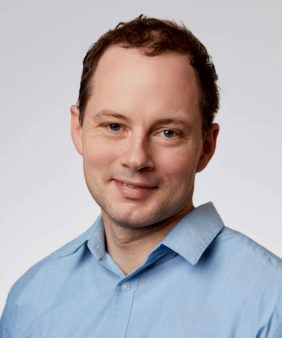
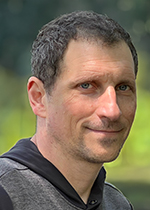
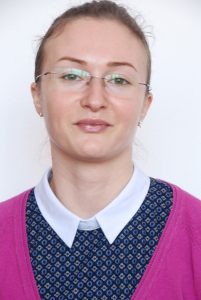
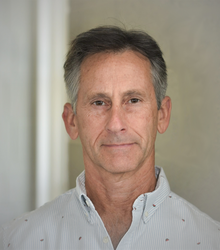
Floris J.F. van Riel is a Researcher at Eindhoven University of Technology , affiliated with the School of Applied Physics and Science Education and Physics of Nanostructures department. His work intersects Magnetoelectronics , Exchange Bias , and Thin Films , with a focus on laser-driven magnetic manipulation. Research Themes : Field-free magnetic switching, spintronic sensor design, antiferromagnetic domain imaging, and femtosecond laser pulse interactions with nanostructures. Publications in npj Spintronics (2024) and Communications Materials (2025) highlight his contributions to: Laser-induced reversal of exchange bias Device fabrication for enhanced magnetoresistance Material engineering in thin-film nanostructures His work aligns with Magnetoelectronics and Nanotechnology , advancing optical switching and magnetic sensor functionality. No scientific awards or student advisement details are mentioned in the provided texts. Research collaborations include B. Koopmans and D. Leitao as co-authors.
Dirk Englund is a Professor in the Department of Electrical Engineering and Computer Science (EECS) at MIT, leading the QP-Group focused on quantum technologies, nanophotonics, and optical systems. His research spans quantum computing, quantum sensing, and photonic integration, with emphasis on silicon photonics and 2D materials. Englund joined MIT in 2013 after roles at Columbia University and Harvard. He has pioneered advancements in quantum networks, photonic neural networks, and optical AI accelerators. Education: BS in Physics from Caltech (2002), MS in Electrical Engineering and PhD in Applied Physics from Stanford (2008). Postdoctoral research at Harvard (2008–2010). Research Interests: Quantum-enhanced sensing, solid-state quantum memories, spin-photon interfaces, and photonic integrated circuits. Key areas include silicon photonics for quantum information processing, 2D material-based optoelectronics, and optical quantum networks. Awards: 2011 PECASE, 2017 Adolph Lomb Medal, 2018 Bose Fellowship, 2020 Humboldt Fellowship. Active in developing MIT’s quantum engineering curriculum, including the 6-5 Electrical Engineering with Computing track. Labs/Teams: QP-Group collaborates with researchers like Dr. Ryan Hamerly and Dr. Matt Trusheim. Current projects include high-definition quantum-limited optical bolometry and photonic AI processors. Grants/Positions: Recipient of DARPA Young Faculty Award (2012), NSF grants, and industry partnerships with companies like Q Tools. Oversees research positions in quantum networks, photonics for machine learning, and 2D quantum devices.
Michael Lustig is an Associate Professor in the Department of Electrical Engineering and Computer Science at UC Berkeley. His research focuses on computational imaging methods in magnetic resonance imaging (MRI), with emphasis on compressed sensing, motion correction, and machine learning applications in medical imaging. He has contributed significantly to the development of open-source tools like SparseMRI and reconstruction algorithms such as ENLIVE and DSLR+. PhD in Electrical Engineering, Stanford University (2008) MSc in Electrical Engineering, Stanford University (2004) BSc in Electrical Engineering, Technion, Israel Institute of Technology (2002) Lustig’s work spans advanced MRI techniques including ultra-short echo time (UTE) imaging , low-rank reconstruction , and physics-informed neural networks . He has pioneered methods for integrating RF motion sensing via beat pilot tones during MRI scans and developed tools for memory-efficient large-scale image reconstruction. His recent publications focus on MRDust (wireless implantable interfaces), Twstr coils (discrete-component-free MRI hardware), and Resonet (noise-trained off-resonance correction). These works reflect trends in self-supervised learning, contact-free motion detection, and hardware-software co-design for diagnostic imaging. Scientific Awards & Fellowships International Society for MR in Medicine Gold Medal (2025) Pioneer Award (2023) ISMRM Fellow (2017) Electrical Engineering Outstanding Teaching Award (2016) Bakar Spark Award (2015) Okawa Research Grant (2014) Sloan Research Fellow (2013) Hellman Fellow (2012) Lustig advises PhD students like Frank Ong and leads research at the MikLab , contributing to open-source software platforms such as SigPy and DeepInPy . His work bridges computational methods, hardware innovation, and clinical translation in MRI.
Nicoleta Elena Dina is a Scientific Researcher II at the National Institute for Research and Development in Isotopic and Molecular Technologies (INCDTIM) , where she leads a research group in the field of Vibrational Spectroscopy and its applications in Biomedical and Analytical Chemistry . Her work focuses on SERS-based diagnostics , microfluidics , and chemometric data analysis , with a particular emphasis on rapid pathogen detection , neurodegenerative disease diagnosis , and green manufacturing of biodegradable materials. Education: Bachelor’s in Physics, Medical Physics specialization (2008, Babeș-Bolyai University, Romania) Master’s in Physics, Biophysics and Medical Physics program (2010, Babeș-Bolyai University, Romania) PhD in Physics (2013, Babeș-Bolyai University, Romania) Research Interests span Vibrational Spectroscopy , Chemometrics , Surface-Enhanced Raman Scattering (SERS) , and Analytical Chemistry . Her projects integrate Nanoimprint Lithography , Pulsed Laser Deposition , and Magnetron Sputtering to create 3D Hierarchical Nanoplatforms for ultrasensitive detection of Pathogens , Antibiotic Resistance , and Neurological Biomarkers . These efforts align with Green Technology and Circular Economy principles, particularly in Bio-inspired Interface Design . Project Leadership includes coordinating initiatives like InsBIOration (2022–2024), NanedisSERS (2022–2024), and AntibresisSERS (2020–2022), which leverage SERS and Microfluidics for Clinical Diagnostics . Her methodologies emphasize Label-free Detection , Real-time Monitoring , and Cost-effective Solutions for Sepsis and Food Safety .
Gianluca Lanza is a Lecturer at the Faculty of Economics and Business Administration of the Free University of Bozen-Bolzano, located at Piazza Università 1, 39100 Bolzano, Italy. His affiliation emphasizes his role in teaching and academic contributions within the fields of economics and business administration. Research interests and activities are inferred to align with the faculty's focus areas, though specific details on his research topics or educational background are not explicitly provided in the available text. The listed email address facilitates direct contact: Gianluca.Lanza@unibz.it . No academic awards, supervised students, or grant information is mentioned in the text. The publications section references his works but appears inaccessible due to technical errors. No details on affiliated labs or teams are provided.
Bob Jones is the Francis H. Smith Professor of Physics in the Department of Physics at the University of Virginia, within the College of Arts and Sciences. His research focuses on experimental atomic, molecular, and optical (AMO) physics, quantum information, and chemical physics using ultrafast and strong-field laser techniques. Research Interests: His work centers on coherent manipulation of atoms and molecules using precisely controlled electromagnetic fields. He employs lasers to cool and trap atoms, align molecules, and drive electron motion to probe ultrafast processes. Key areas include electron-electron interactions, Rydberg atom dynamics, attosecond electron wavepackets, high-harmonic generation, and interactions of intense THz pulses with nanostructures. The recent publications highlight a consistent focus on attosecond science , strong-field ionization , quantum control , and Rydberg systems . His team combines experimental innovation with theoretical collaboration to explore electron dynamics in atoms and molecules, often using ultrafast lasers and single-cycle THz pulses to initiate and probe quantum processes. Scientific Awards: APS Fellow (2000) David and Lucile Packard Fellow (1996) Office of Naval Research Young Investigator (1994) APS Outstanding Referee (2008) Advising and Grants: Bob Jones actively mentors graduate students and postdoctoral researchers, many of whom appear as co-authors on his publications. His research has been supported by major funding agencies, as evidenced by prestigious awards like the Packard Fellowship and ONR grant. He plays a leadership role in the AMO community, recently elected Vice Chair of the APS Division of Atomic, Molecular, and Optical Physics (DAMOP). Labs and Teams: He leads a research group at UVA focused on ultrafast laser spectroscopy and quantum control experiments. His team collaborates widely with theorists and experimentalists across institutions, as seen in multi-institutional publications involving Ohio State, Kansas State, and international partners.
Varun Grover is Distinguished Professor and the George & Boyce Billingsley Endowed Chair in the Department of Information Systems at the Walton College of Business, University of Arkansas. He previously served as the Lee (Duke Energy) Distinguished Professor at Clemson University and has held academic and leadership roles at the University of South Carolina. He is a globally recognized scholar in Information Systems, with extensive affiliations through workshops, keynotes, and collaborations in Taiwan, India, China, Korea, Denmark, and Australia. His educational background includes a B.Tech in Electrical Engineering from the Indian Institute of Technology (IIT), an MBA from Southern Illinois University, and a PhD in Management Information Systems from the University of Pittsburgh. Varun Grover’s research centers on the transformative role of digitalization and artificial intelligence in reshaping organizations, strategies, and individual behavior. His work spans digital strategy, IT-business alignment, platform ecosystems, digital identity, technostress, and the ethical dimensions of AI. He employs diverse methodologies including surveys, experiments, and secondary data analysis, and has made foundational contributions to introspective discourse on the IS field itself. His recent publications explore generative AI, mobile app innovation, digital hoarding, and IT governance. The 15 most recent articles reflect a strong trend toward understanding the societal, organizational, and individual implications of digital technologies—especially AI and mobile platforms. Topics include digital agility, data breach response, free-riding in app ecosystems, and the psychological impacts of IT on users. These works appear in premier journals such as MIS Quarterly , Information Systems Research , and Journal of AIS , underscoring his sustained influence in the field. AIS LEO Award (2020) Thompson Reuters Highly Cited Researcher Stanford Top 6 Scholar in IS (2023) AIS Fellow (2011) Distinguished Alumni Award (IIT and University of Pittsburgh) Multiple teaching excellence awards including MBA Professor of the Year (4x) Stafford Beer Medal for Best Paper in European Journal of Information Systems (2016) Varun Grover has chaired or co-chaired over 45 PhD dissertations and is deeply committed to doctoral education, having led PhD programs at USC, Clemson, and Arkansas. He has served as Senior Editor for MIS Quarterly (two terms), Journal of the AIS (five terms), and currently for MISQ Executive and JAIS . He has also been active in AIS leadership, including roles in ICIS and AMCIS. His research has been supported by extensive grants and recognition, and he has written over 20 advice columns for PhD student success. He leads the ISYS PhD Program at Walton College and continues to mentor the next generation of IS scholars. He is affiliated with research centers and editorial boards globally and has organized numerous workshops and special issues. His work bridges academic rigor with real-world impact, influencing both theory and practice in digital transformation.
Kawin Khachornsakkul is a Research Professor in the Department of Electrical and Computer Engineering at Tufts University’s School of Engineering. His research focuses on analytical and bioanalytical sensing technologies , including microfluidic devices, nanomaterials, and point-of-care diagnostics. He develops innovative platforms such as distance-based paper analytical devices (PADs) and ingestible sensors for rapid detection of biomarkers like glucose, bacteria, and heavy metals. His work emphasizes low-cost, portable solutions for clinical and environmental applications. Key areas of interest include: Integration of nanomaterials (e.g., gold nanoparticles, carbon dots) with biosensors Development of molecularly imprinted polymers for selective binding Optimization of photothermal and electrochemical sensing mechanisms Applications in biomedical diagnostics (e.g., diabetes monitoring, gastrointestinal health) Environmental monitoring of pollutants and pathogens Recent publications highlight advancements in multiplexed cytokine detection, enzyme-free assays, and NFC-enabled wireless diagnostics. His research aligns with broader goals of democratizing access to advanced diagnostic tools through scalable, user-friendly technologies.
Professor Jean-Pierre St. Maurice is a leading academic at the University of Saskatchewan specializing in atmospheric and space physics. His research focuses on ionospheric processes, plasma turbulence, and the interaction between plasma and neutral gases. He holds roles such as Scientific Program Chair for the 2008 COSPAR General Assembly and membership in the Canadian Space Agency’s Science Advisory Committee on Solar-Terrestrial Relations. His research integrates theoretical plasma physics with experimental radar and satellite data, particularly using the AMISR radar at Resolute Bay and the SuperDARN radar network. Key interests include ion velocity distributions, neutral wind circulation, Joule heating, and internal gravity wave generation. He explores how small-scale plasma processes influence large-scale atmospheric dynamics and magnetosphere-ionosphere coupling. Publications since 2001 highlight studies on ionospheric irregularities, Farley-Buneman instabilities, and equatorial electrojet dynamics. His work bridges kinetic theory with observational techniques, contributing to understanding plasma turbulence and energy redistribution in Earth’s upper atmosphere. Scientific contributions include advancements in radar data interpretation (e.g., HAIR echoes) and theoretical frameworks for ionospheric instabilities. His advisory roles reflect expertise in space science policy and international collaboration.
Sung-Hou Kim is a Professor of the Graduate School at the University of California, Berkeley . His research spans interdisciplinary fields at the intersection of biology, computer science, and data analysis. Research Focus: Structural biology, evolutionary phylogenetics, and computational genomics using machine learning and sequence alignment-free algorithms. Key Contributions: Development of text-comparison-based methods for mapping organismal demography and inferring evolutionary relationships through whole-genome analysis. Advising: Advises students like JaeJin Choi in computational genomics and related disciplines.
Niels Engholm Henriksen is an Associate Professor at the Department of Chemistry , Technical University of Denmark (DTU). His research focuses on the theoretical (quantum mechanical) description of molecular dynamics, particularly in predicting and controlling chemical reactions on atomic length and time scales. Research Areas: Molecular reaction dynamics Femtosecond and attosecond chemistry Quantum control via laser pulses Photofragmentation dynamics Molecule-surface collisions Key Achievements: Co-authored the book ' Theories of Molecular Reaction Dynamics ' (Oxford University Press, 2008) and co-organized the Copenhagen Conference on Femtochemistry (2013). His work involves developing methods to 'film' and 'instruct' chemical reactions using quantum mechanics. Scientific Awards: Carlsberg Foundation 'J.C. Jacobsen' Fellowship (1987) Gold medal, University of Copenhagen (1990) Statoil Prize (1996) Founding member, Center for Molecular Movies (2005) Teaching: Delivers courses in physical chemistry and quantum chemistry, including 'Physical Chemistry 1', 'Advanced Physical Chemistry', and 'Quantum Chemistry'. His teaching emphasizes atomic-level understanding of chemical kinetics. Research Lab Members: Current: Diptesh Dey, Jinfang Li, Alexandre Voute, David Bording, Esben F. Thomas Former: Klaus B. Møller, Asmus Dohn, Jacob S. Nielsen, among others
Jeffrey R Morgan is a tenured Professor at Brown University , holding dual appointments in the School of Engineering and Department of Pathology and Laboratory Medicine . He directs the Center for Alternatives to Animals in Testing and has pioneered the 3D PetriDish® technology for scaffold-free tissue engineering. Education : PhD (Harvard), BS (Syracuse) Key Collaborators : Kim Boekelheide, Eric Darling, Anubhav Tripathi Research Focus : 3D Tissue Engineering – Developing complex microtissue geometries (toroids, honeycombs) and studying tissue fusion for organ-scale fabrication. Cell-Cell Mechanics – Quantifying forces in multicellular aggregates to understand fibrosis and tissue remodeling. Drug Transport – Using spheroids to model drug uptake, efflux pumps, and multi-drug resistance in cancer. Article Trends : Recent work emphasizes 3D spheroid platforms for toxicity testing , collagen mechanics , and automated bio-manufacturing tools . Keywords span Biomedical Engineering , Tissue Morphogenesis , and Drug Discovery , with sub-fields including ECM alignment , microtissue hydrodynamics , and scaffold-free organoids . Scientific Recognition : 1996 La Roche-Posay Prize 2015 National Academy of Inventors Fellow 2016 American Institute of Medical and Biological Engineering Fellow 2014-2025 Editorial roles and collaborative grants Labs and Teams : Leads a multidisciplinary lab at Brown collaborating with engineers, pathologists, and biomedical researchers. His team focuses on self-assembling microtissues , drug transport quantification , and toxicity modeling , with partnerships in the Center for Alternatives to Animals in Testing and School of Engineering .
Prof. Shmuel Avidan serves as a Professor in the School of Electrical Engineering at Tel Aviv University's Iby and Aladar Fleischman Faculty of Engineering. Holding a Ph.D. from Hebrew University's School of Computer Science (1999), he brings extensive industry experience from Adobe, Mitsubishi Electric Research Labs, MobilEye, and Microsoft Research to his academic role. His educational trajectory features: Ph.D. in Computer Science, Hebrew University of Jerusalem (1999) Avidan's research centers on pixel-centric computational problems, with seminal contributions in video object tracking and 3D object modeling from 2D images. His work spans computer vision, image processing, and machine learning, emphasizing practical applications in industrial settings. Current investigations explore neural rendering, foundation models, and diffusion-based architectures for visual understanding. Recent publications (2023-2025) demonstrate concentrated innovation in neural radiance fields (NeRF), category-agnostic pose estimation, and texture-aware segmentation. These works increasingly integrate foundation models with domain-specific applications in medical imaging, autonomous systems, and materials science, reflecting a strategic shift toward scalable vision systems. Though specific awards aren't documented in source materials, his prolific publication record and sustained industry partnerships signify substantial field impact. His research group maintains active collaboration with leading technology firms, translating academic discoveries into real-world solutions. Professor Avidan mentors graduate students in computer vision while securing competitive grants for projects at the intersection of theoretical computer vision and industrial implementation. His lab focuses on developing robust algorithms for challenging visual environments, particularly in autonomous driving and medical imaging contexts. Leading an active research group within Tel Aviv University's Electrical Engineering department, he drives innovation in neural rendering and vision-language models. The team regularly contributes to premier conferences including CVPR, ICCV, and ECCV, maintaining strong industry ties through ongoing partnerships with automotive and imaging technology companies.
Prof. Gilad Yossifon is a faculty member at the School of Mechanical Engineering and the Department of Biomedical Engineering at Tel Aviv University . He leads the Micro and Nano-Fluidics and Robots Laboratory , focusing on electrokinetics in micro- and nano-fluidic devices, lab-on-a-chip applications, and autonomous particle systems. Education: Affiliated with Tel Aviv University and Technion – Israel Institute of Technology Research Interests span microfluidics, nanofluidics, and robotics. His work explores active particles as mobile microelectrodes, dielectrophoretic cargo manipulation, and electrically powered microrobotics for biomedical applications. Key areas include label-free transport systems, field-gradient optimization, and reconfigurable microfluidic components. Recent Articles demonstrate his group's expertise in frequency-dependent cargo selectivity, 3D electrokinetic trapping, and integration of active colloids with dielectrophoretic forces. These publications highlight applications in sample analysis , single-cell processing , and bottom-up fabrication techniques for microsystems. Scientific Recognition includes grants from the US-Israel Binational Science Foundation , Israel Science Foundation , and fellowships from Russell Berrie Nanotechnology Institute and Gutwirth Foundation . Technological Contributions involve developing microfluidic chambers with Indium Tin Oxide substrates, COMSOL simulations of field gradients, and hardware for electrically powered micromotors. Collaborative work extends to directed cargo transport systems and microscale biosensing platforms.
Dr. Arnout Imhof serves as an Associate Professor in the Soft Condensed Matter group within the Faculty of Science at Utrecht University. His research is conducted at the Debye Institute for Nanomaterials, where he focuses on complex colloidal systems and their behavior under various conditions. His primary research interests center around concentrated colloidal dispersions, particularly examining structural changes when subjected to shear flow or electric fields. Dr. Imhof investigates the three-dimensional structure of these concentrated dispersions primarily using confocal microscopy, supplemented with light and X-ray scattering techniques. A significant aspect of his work involves developing novel instruments that allow microscopic imaging of particles while they are in motion within a flow, applying these to study dispersions undergoing separation, crystallization, and melting processes. His research also includes the synthesis of innovative colloidal particles with non-spherical geometries such as rods, eccentrically layered structures, shell-shaped particles, and clusters. Analysis of Dr. Imhof's recent publications reveals a strong trend toward advanced colloidal engineering with applications spanning multiple disciplines. His work demonstrates expertise in manipulating particle morphology, controlling self-assembly processes through external fields, and developing novel characterization techniques. The research spans fundamental soft matter physics while finding practical applications in photonics, food science, and sustainable materials development. His publications show consistent collaboration with an international network of researchers, particularly with colleagues at Utrecht University including van Blaaderen, Velikov, and others. Dr. Imhof has been actively involved in numerous research projects, often leading investigations into the fundamental properties of colloidal systems while exploring practical applications. His work has implications for photonic crystals, food colorants, UV protection technologies, and advanced material synthesis. While specific grant information isn't detailed in the available materials, his extensive publication record spanning multiple years indicates sustained research funding and active supervision of research projects. Based at the Leonard S. Ornstein Laboratory at Utrecht University, Dr. Imhof leads a research team focused on soft condensed matter physics. The group maintains sophisticated experimental capabilities for colloidal synthesis and characterization, including specialized microscopy setups that allow real-time observation of particle dynamics under controlled conditions. Their work bridges fundamental physics with practical applications across multiple domains, from food science to photonics.