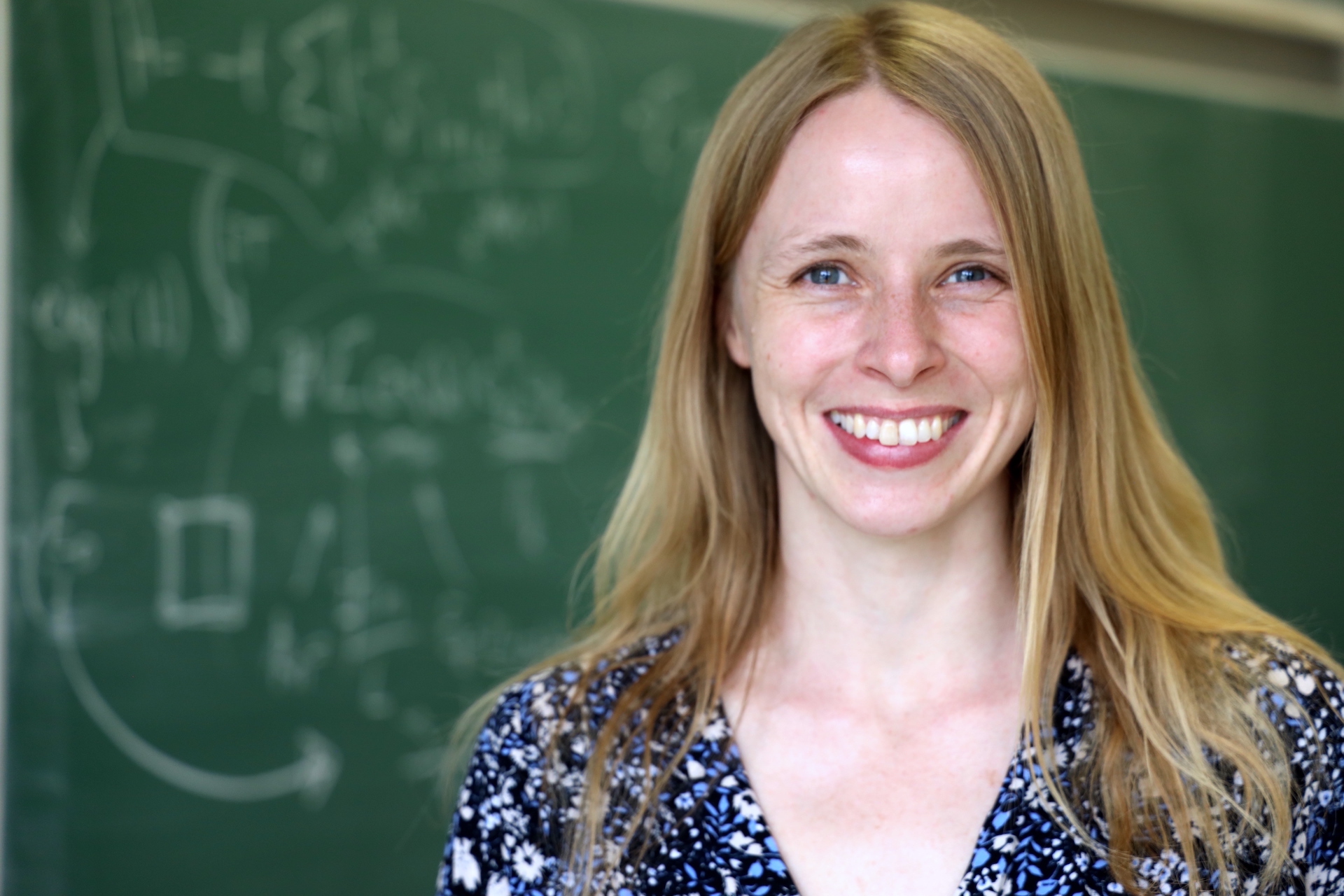
Annabelle Bohrdt is a Professor at the University of Regensburg's Faculty of Physics, affiliated with the Institute of Theoretical Physics. Her research focuses on strongly interacting quantum many-body systems, combining numerical methods, quantum simulation experiments, and machine learning techniques like neural networks. She explores topics such as the Fermi-Hubbard model, t-J model, and stripe formation in doped antiferromagnets. Her work bridges theoretical models and experiments, leveraging quantum gas microscopy and interpretable machine learning tools. Notable contributions include studies on pairing mechanisms in bilayer antiferromagnetic Mott insulators and the role of fluctuations in quantum many-body systems. Bohrdt actively collaborates with experimental groups to validate theoretical predictions. Teaching includes specialized courses on numerical methods for quantum many-body systems and machine learning applications in physics. She advises graduate and undergraduate students on projects in quantum matter and computational physics.
Rachel Brody is a Visiting Assistant Professor in the Department of History at Boston College. Her research focuses on the intersection of human and non-human relationships in early medieval Ireland and Britain, integrating textual sources like medical manuscripts and legal codes with archaeological and environmental evidence. She holds a Ph.D. and M.A. in Medieval History from Boston College and a B.A. in Classical and Near Eastern Archaeology from Bryn Mawr College. Education: Ph.D., Medieval History, Boston College M.A., Medieval History, Boston College A.B., Classical and Near Eastern Archaeology, Bryn Mawr College Research Interests: Early medieval Ireland and Britain; environmental history; landscape archaeology; paleoethnobotany. She explores how plants, animals, and ecosystems influenced health, sanitation, and disease understanding in medieval societies. Archaeological Experience: Field supervisor for the Castles and Communities project in Ireland since 2015; prior excavations in Europe, the Middle East, and the U.S., including sites in Italy, the UAE, and England.
Professor Owen Lewis is a Professor of Ecology and Tutorial Fellow at Brasenose College, University of Oxford. His research focuses on community ecology and conservation biology, particularly in tropical rainforests, emphasizing biodiversity maintenance, species interactions, and climate change impacts. He holds an MA (Oxford) and PhD (Leeds) and has led the Ecology and Conservation Section in the Department of Biology since 2007. His teaching includes ecology, entomology, and conservation biology across undergraduate years, alongside supervising fourth-year research projects. Lewis organizes annual tropical field courses in Sabah, Malaysian Borneo. His research explores insect-driven ecosystems, invasive species, and human-ecosystem interactions. Notable contributions include studies on parasitoid communities under climate change, ant invasion dynamics, and seed predation in tropical forests. He leads the Community Ecology Research Group, collaborating internationally on biodiversity conservation and ecosystem functioning. His work integrates field experiments, molecular analyses, and ecological modeling to address global environmental challenges. Education: MA in Biological Sciences, St. Hugh's College, Oxford PhD in Population Ecology of Butterflies, University of Leeds Research Interests: Tropical biodiversity, insect-plant interactions, climate change effects, and conservation strategies in modified ecosystems. He prioritizes functional and community-level approaches to understand ecosystem resilience. Publications: Over 100 peer-reviewed articles, with recent focus on experimental climate impacts, food web structures, and invasive species effects. His work bridges theoretical and applied ecology, influencing conservation policies. Awards & Grants: Not explicitly listed, but his leadership roles and extensive publications suggest recognition in ecological research. Advising & Grants: Supervises undergraduate and postgraduate students, coordinates field courses, and secures grants for tropical research. Collaborates with institutions like the Smithsonian Tropical Research Institute and the Natural History Museum (London). Labs & Teams: Heads the Community Ecology Research Group, focusing on tropical forest biodiversity, functional ecology, and conservation biology. The group’s website highlights ongoing projects and international collaborations.
Kathleen M. Youse, Ph.D., is an Associate Professor and Founding Program Director of the Speech-Language Pathology Program at Widener University’s College of Health & Human Services. Before joining Widener in 2019, she held leadership roles as Department Chair and Program Director at Salus University, and Director of the Edward D. Mysak Clinic for Communication Disorders at Teachers College, Columbia University. With over 20 years of experience, her expertise lies in neurologic communication disorders, particularly in traumatic brain injury, aphasia, and dementia. Dr. Youse earned her Ph.D. in Communication Sciences from the University of Connecticut (2005), an M.A. in Speech-Language Pathology from Oklahoma State University (1998), and a B.A. in English from Rutgers University (1995). Her research focuses on the impact of cognitive deficits, such as attention and memory, on communication in individuals with traumatic brain injury. She emphasizes bridging academic knowledge with clinical practice to enhance patient care. Dr. Youse has received notable professional recognition, including being Board Certified in Neurologic Clinical Specialty (ANCDS) since 2006. She has also held leadership roles within the Academy of Neurologic Communication Disorders and Sciences (ANCDS), contributing to its mission to improve communication for those with neurologic disorders. In her academic role, Dr. Youse mentors students, focusing on clinical application and bridging theory with practice. She actively participates in professional organizations, such as serving on ANCDS committees and its executive board, and has been a member since 2000. While specific grants are not detailed, her involvement in clinical and academic initiatives underscores her commitment to advancing the field. Dr. Youse has been instrumental in clinical programs, including directing the Edward D. Mysak Clinic for Communication Disorders and establishing Widener’s new Speech-Language Pathology Clinic, which enhances hands-on student training and community care.
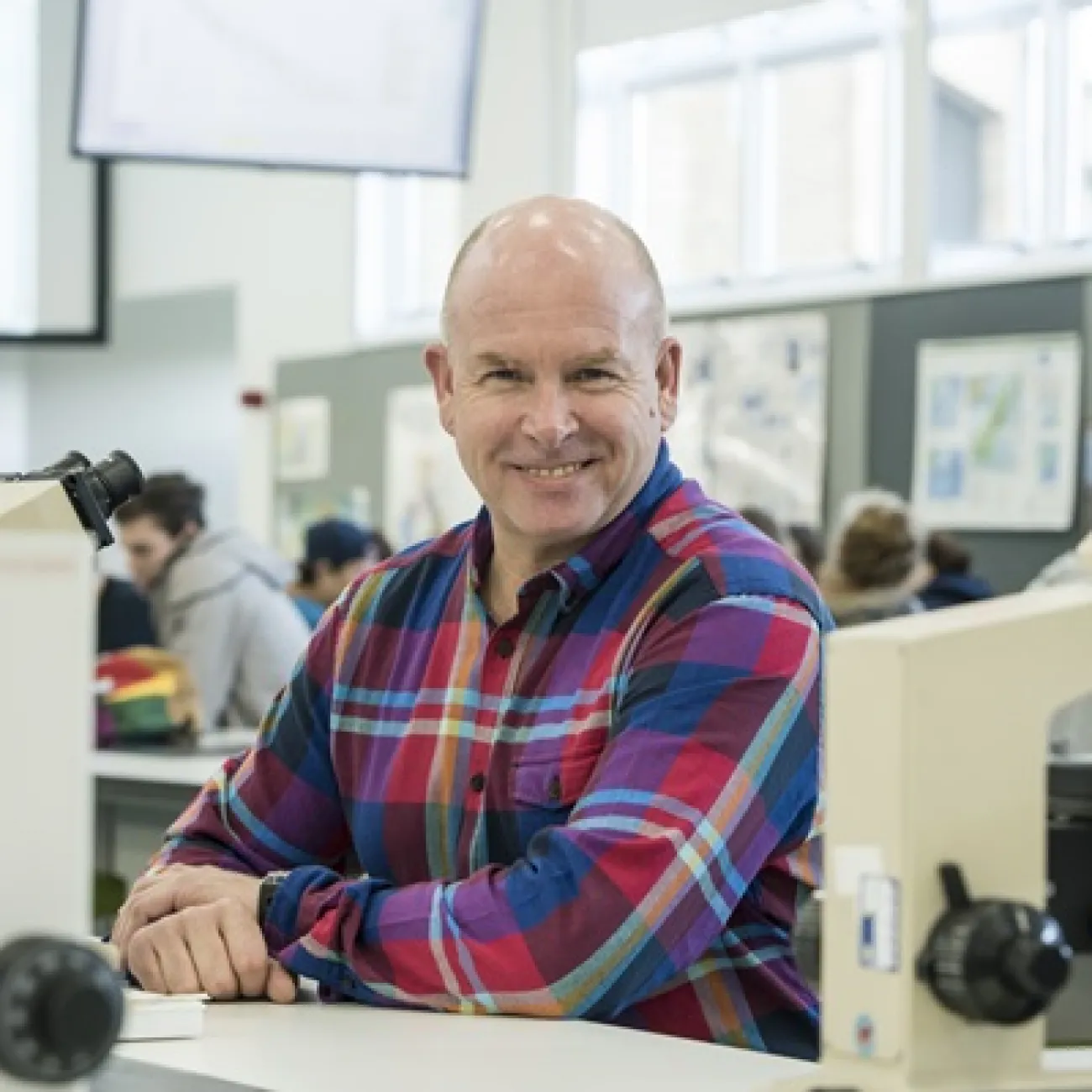
Rex N Taylor is a Professor in the School of Ocean and Earth Science at the University of Southampton. With over 20 years of academic experience, he has developed both undergraduate and postgraduate courses in geology and environmental geoscience, specializing in volcanology, igneous systems, and analytical geochemistry. His research takes him on fieldwork and research cruises across the globe, including a notable 2019 submersible dive to 5700m in the Philippine Sea to explore the earliest volcanoes of the Western Pacific. Taylor's research focuses on volcanic geochemistry, particularly using high-resolution Pb isotope studies to investigate magma evolution and catastrophic volcanic eruptions across diverse tectonic settings including mantle plumes, island arcs, and mid-ocean ridges. His work spans multiple continents and ocean basins, with significant contributions to understanding the geochemical processes in the Afar triple junction, Ethiopian Rift, Tenerife volcanic system, and Western Pacific subduction zones. Analysis of Taylor's recent publications (2022-2025) reveals a strong focus on mantle dynamics, magma evolution processes, and the geochemical signatures of different tectonic settings. His research combines field observations with advanced geochemical techniques, particularly isotope studies, to unravel complex volcanic systems. A recurring theme is the investigation of how deep Earth processes manifest in surface volcanic activity across various geological timescales. Taylor actively supervises PhD students including Morgan George Alun Bugler and Daniel Christopher Howcroft through the INSPIRE program. He has developed a Virtual Fieldwork portal that provides multi-scale visualization of geological field localities, from satellite imagery down to microscopic views, demonstrating his commitment to innovative teaching methods in earth sciences.
Martti Vasar is a Research Fellow in Ecoinformatics at the Institute of Ecology and Earth Sciences, University of Tartu. He holds a Doctor's Degree (2020) and Master's Degree (2012) from the University of Tartu, specializing in ecology and computer science. His research focuses on arbuscular mycorrhizal fungi, soil biodiversity, and bioinformatics, with a strong emphasis on understanding microbial interactions and their ecological implications in agricultural and natural systems. Education: PhD (2014–2020): Institute of Ecology and Earth Sciences, University of Tartu Master's (2010–2012): Infotechnology, Faculty of Mathematics and Computer Science, University of Tartu Bachelor's (2006–2010): Infotechnology, Faculty of Mathematics and Computer Science, University of Tartu Research interests include plant-microbe symbiosis, soil microbial communities, and the application of bioinformatics tools for analyzing fungal diversity. His work spans global soil microbiomes, agricultural land use impacts, and ecological restoration strategies. Vasar co-supervises students like Roland Lehemets in projects related to regenerative agriculture and soil biota. Key projects include Agroecology and new crops in future climates (2024–2030) and Plant-microbial mutualisms in dynamic ecosystems (2021–2025). Over 40 publications reflect his contributions to understanding mycorrhizal networks, soil health, and biodiversity.
Roles & Affiliations: Professor of Applied Economics and Head of the Economics Division at Stirling Business School, University of Stirling. Member of the Stirling Behavioural Science Centre. Former member of the UK Food Standards Agency’s Social Science Research Committee (6 years). Active in interdisciplinary research on consumer behavior, decision-making, and preference elicitation. PhD in Economics (University of Manchester) MSc in Resource Economics (University of Massachusetts Amherst) Research Focus: Intersection of applied microeconomics, public health, and behavioral science. Specializes in consumer choice, decision-making processes, and methodological innovations like discrete choice experiments and best-worst scaling. Key themes include food safety perceptions, risk communication, trust in institutions, and health intervention design. Methodological contributions address preference heterogeneity, attribute non-attendance, and survey design rigor. Grants & Awards: Secured NIHR CLAHRC grants (2013-14), SIRE Early Career Engagement Grant, and Stirling Management School Seed Fund. Nominated for 2025 Teacher of the Year RATE Awards. Recognized for Best PechaKucha Presentation. Advising & Engagement: Supervises PhD students and research assistants. Serves as External Examiner for PhD theses. Collaborates with policymakers via the UK Food Standards Agency and public health initiatives. Leads projects on healthcare innovation prioritization and sustainable food systems. Labs & Networks: Core member of the Stirling Behavioural Science Centre. Engaged with interdisciplinary teams in health economics and global food security research. Active in the Scottish Institute for Research in Economics (SIRE).
Forest Isbell is an Associate Professor in the Department of Ecology, Evolution and Behavior at the University of Minnesota. As a prominent ecologist, his work focuses on biodiversity, ecosystem stability, and environmental change across natural and urban systems. Key Research Areas: Biodiversity, Grassland Ecosystems, Ecosystem Stability, Plant Traits, Invasive Species, Climate Change, Carbon Sequestration, Urban Ecosystems Recent Publications highlight spatial scaling laws, invasive species impacts on productivity, and biodiversity's role in carbon storage. His research integrates field experiments, modeling, and remote sensing approaches. Major Grants: NSF-funded Long-Term Ecological Research (LTER) projects, Spencer Foundation collaborations on tribal college STEM initiatives He actively contributes to science communication, with media coverage on prairie restoration challenges.
Melanie J. Newton is a Professor of History at the University of Toronto, with cross-appointments to the Centre for Caribbean Studies. Her research focuses on Caribbean and Atlantic World histories, particularly slavery, emancipation, Indigenous and African diaspora experiences, gender dynamics, and colonial legal systems. She has held significant administrative roles, including Director of the Caribbean Studies Program and Chair of the Faculty of Arts and Science Academic Appeals Board. DPhil, Oxford University BA, McGill University Newton's work intersects with fields like colonialism, cultural studies, and decolonization, as well as social history and political law. Her publications analyze themes such as genocide in the Caribbean, diaspora identity, and gendered legal struggles. Scientific awards include the 2023 Milner Memorial Award, 2023 Lester J. Cappon Prize, and the 2016 Outstanding Teaching Award from the University of Toronto. She has contributed to public policy through roles like co-chairing Toronto's Dundas Street renaming advisory committee.
Philippe Moireau is a Full Professor in the Department of Applied Mathematics at École Polytechnique, where he is also affiliated with the Center for Applied Mathematics (CMAP). He serves as the head of the Inria Project-Team MΞDISIM (Mathematical and Mechanical Modeling with Data Interaction for Simulation in Medicine) and holds the distinguished position of Ingénieur Général of The Corps des Mines. His primary research focuses on inverse problems and data assimilation for partial differential equation models, with particular emphasis on: Observer-based methods from optimal control perspectives Stabilization approaches for evolution equations Numerical analysis of time-dependent control problems Digital twin applications in cardiovascular medicine Professor Moireau's publication portfolio demonstrates consistent focus on mathematical methods for physical systems, with recurring themes in: Data assimilation techniques for PDE-based models Numerical stabilization and discretization methods Cardiovascular biomechanics and hemodynamics Stochastic modeling of biological systems Epidemiological forecasting and control He leads the ANANKΞ project-team at Inria focused on Analysis And Numerics of physical-Knowledge-based Estimation. His educational contributions include lectures on data assimilation theory at CEMRACS and courses on mathematical modeling in cardiac biomechanics at Institut Polytechnique de Paris.
Damon Clark is an Associate Professor (with tenure) in the Department of Economics at the University of California, Irvine, within the School of Social Sciences. He is also affiliated with several prestigious research institutions, including the National Bureau of Economic Research (NBER), IZA Institute of Labor Economics, and the Institute for Fiscal Studies (IFS) in London. Research Interests: His primary research focuses on the economics of education, with additional expertise in labor economics and public economics. His work explores school choice, educational policy, the signaling value of credentials, and the long-term impacts of education on health and economic outcomes. He employs rigorous empirical methods, including field experiments and quasi-experimental designs, to evaluate educational reforms and policies. The most recent publications reflect a consistent focus on education policy evaluation, school effectiveness, peer effects, and human capital formation. His research often uses large-scale administrative datasets and natural experiments to identify causal effects, contributing significantly to debates on equity, accountability, and efficiency in education systems. Scientific Awards and Honors: UC Irvine Faculty Mentoring Award (2015–2016) Excellence in Refereeing Award, Journal of the European Economic Association (2003) Excellence in Refereeing Award, American Economic Review (2012) Excellence in Refereeing Award, Quarterly Journal of Economics (2011) National Academy of Education/Spencer Post-Doctoral Research Fellow (2007–2008) European Economic Association Young Economist Award (2005) Advising and Grants: While specific student names are not listed, his role as a tenured associate professor and principal investigator on multiple grants indicates active mentoring of graduate students. He has secured significant external funding from agencies such as the National Institutes of Health (NIH), the Institute of Education Sciences (IES), the WT Grant Foundation, and the Nuffield Foundation, supporting research on test-based retention, school access, and intergenerational education transmission. Labs and Research Teams: Clark collaborates extensively with researchers at institutions like NBER, IZA, IFS, and universities across the U.S. and Europe. His work is often conducted through collaborative research networks rather than a single lab, reflecting the interdisciplinary and policy-oriented nature of his scholarship.
Kelly Bjorklund serves as a Lecturer in the Department of Communication at the University of Colorado Boulder, where she leverages her dual expertise as an active journalist and PhD researcher at Staffordshire University. Her professional background includes extensive collaboration with international human rights NGOs and civil society organizations on communications strategy, policy development, and strategic planning initiatives. Her research critically examines how journalists are targeted during political conflicts, with topical expertise spanning press freedom, freedom of expression, disinformation/misinformation ecosystems, and the intersection of media with cultural identity. This work informs both her academic teaching and practical advocacy, emphasizing real-world applications in human rights contexts. As a former speech and debate coach, Bjorklund prioritizes student mentorship, guiding learners to develop communication skills and pursue professional passions. Her industry experience in journalism and human rights advocacy directly enriches classroom instruction, bridging theoretical frameworks with field-based challenges in media ethics and political communication.
Ulrich Pöschl is Director of the Multiphase Chemistry Department at the Max Planck Institute for Chemistry and Professor in the Department of Chemistry, Pharmacy and Geosciences at Johannes Gutenberg University (JGU) in Mainz, Germany. He has held leadership roles at MIT, the Max Planck Society, and the Technical University of Munich, and is a globally recognized expert in atmospheric and multiphase chemistry. Education: PhD (Doctor technicae) in Chemistry, Technical University of Graz (1995) Habilitation in Geochemistry, JGU Mainz (2007) Habilitation in Chemistry, Technical University of Munich (2006) Research Interests: His research centers on multiphase processes at the interface of atmosphere, biosphere, and hydrosphere. Key areas include aerosol chemistry, climate interactions, oxidative stress, protein modification, and the health impacts of air pollution. His work integrates field observations, laboratory experiments, and modeling. Publication Trends: His recent research spans atmospheric new particle formation in the Amazon, health effects of air pollution, open access science, and the role of bioaerosols in disease transmission. The work is highly interdisciplinary, bridging environmental science, chemistry, public health, and climate science. Scientific Awards: Highly Cited Researcher (Web of Science, 2014–2024) AGU Union Fellow (2023) Copernicus Medal (2015) Pius XI Gold Medal (2012) EGU Union Service Award (2005) Advising and Grants: Pöschl has mentored numerous PhD and postdoctoral researchers, many of whom now hold senior academic positions worldwide. He leads major international collaborations and has secured significant research funding. He is a strong advocate for open science, having founded the journal Atmospheric Chemistry and Physics and co-leading the OA2020 initiative. Labs and Teams: He leads the Multiphase Chemistry Department at MPIC, overseeing a large interdisciplinary team conducting cutting-edge research on aerosols, climate, and health. His group collaborates globally and uses advanced analytical, experimental, and computational methods.
Assoc. Prof. Dr. Ayhan Gün is an Associate Professor in the Department of Electrical and Electronics Engineering at Kütahya Dumlupınar University's Faculty of Engineering. With a career spanning over two decades, he has held various academic positions including Research Assistant, Assistant Professor, and currently Associate Professor since 2024. His extensive administrative experience includes serving as Head of the Control and Command Systems Department (2007-2021) and various leadership roles in university-industry collaboration initiatives. Dr. Gün completed his Bachelor's degree at Near East University (1991-1996), Master's at Dumlupınar University (1998-2001), and PhD at Eskişehir Osmangazi University (2001-2007). His research focuses on control systems, mathematical modeling, artificial neural networks, robotics, SCADA, PLC programming, electromechanical systems, nonlinear control, fuzzy logic, optimization techniques, automation, biomechanics, and mechatronics. His recent publications demonstrate a consistent research trajectory in control engineering, with particular emphasis on optimization algorithms applied to quadrotor control, inverted pendulum systems, and electrical motor design. His work bridges theoretical control concepts with practical implementations in robotics and power systems. A significant portion of his research involves applying swarm intelligence and evolutionary algorithms to solve complex control problems. Bilim, Sanayi ve Teknoloji Bakanlığı Kurumsal Kapasitenin Arttırılması (2016) BİLİM SANAYİ VE TEKNOLOJİ BAKANLIĞI Çift Beslemeli İndüksiyon Generatörü Tasarımı ve İmalatı (2016) Dr. Gün has supervised multiple graduate students and managed numerous research projects, including the current 'Robotic Arm Design and Implementation for Patients with Hemiparetic Arms' project. His external roles include serving as an expert witness for judicial institutions, project referee for TÜBİTAK, and publication reviewer for IEEE Transactions. He has also contributed to regional development through his work with Kütahya Governorship's Planning and Development Board.
Professor Anna Remington is the Director of UCL's Centre for Research in Autism and Education (CRAE) and holds the title of Professor of Autism Research within the Department of Psychology & Human Development at University College London's Faculty of Education and Society. She joined UCL in 2013 and became CRAE's Director in 2017, focusing on research addressing autism's perceptual and cognitive strengths while emphasizing participatory methods involving autistic communities. Her work bridges academic research with practical initiatives, such as the Deutsche Bank internship program for autistic graduates. Anna completed her BA in Natural Sciences at the University of Cambridge before pursuing an MSc in Human Communication Science and a PhD in Developmental Science at UCL. Her postdoctoral roles included positions at UCL's Institute of Cognitive Neuroscience and Oxford University. Her research explores superior perceptual and attentional abilities in autism, translating findings into strategies for improving employment opportunities and societal inclusion. Her awards reflect her commitment to impact, including the UCL Knowledge Exchange Champions Award (2016) and ESRC Impact Prize (2020 finalist). She teaches on UCL's MA programs in Special and Inclusive Education, Educational Neuroscience, and Psychology of Education, supervising students across these disciplines. Collaborations extend to institutions like Birkbeck and City University, with enterprise initiatives such as Mini Manuscript (co-founded with Jake Fairnie). She actively engages in public events like the Brain Detectives Science Club and advises organizations on supporting autistic employees. Current projects include studies on autistic experiences in the family justice system, perceptual capacities in autism/ADHD, and promoting autistic employment through policy and practice.