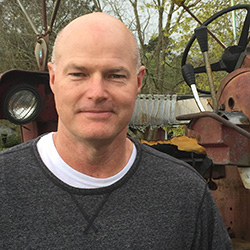
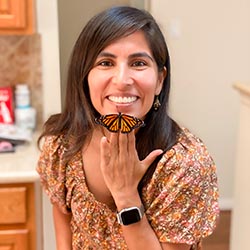
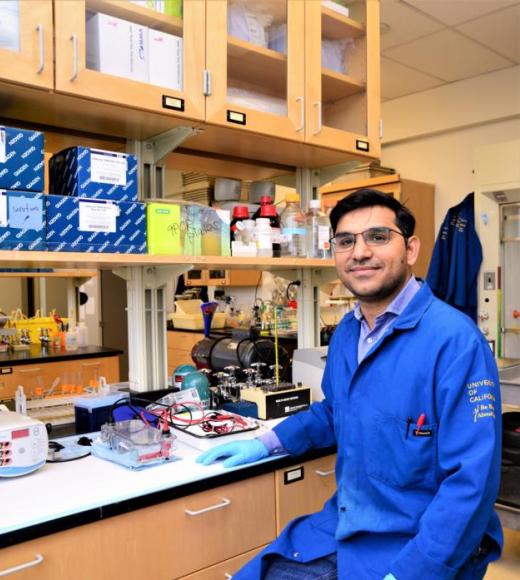
Ian Grettenberger is an Assistant Professor of Cooperative Extension in the Department of Entomology and Nematology at the University of California, Davis. He leads the Grettenberger Lab, focusing on applied entomology in agricultural ecosystems. His work emphasizes pest management strategies, biological control, and sustainable solutions for invasive species threatening California crops. Education: B.S. in Biology, Western Washington University Ph.D. in Entomology, Pennsylvania State University Research Interests: Grettenberger’s expertise spans pest management of field/vegetable crops, invasive species like the Bagrada bug and western striped cucumber beetle, and resistance management in pests such as the alfalfa weevil. He investigates biological control mechanisms, pesticide efficacy, and economic impacts of pest management policies. Key Contributions: Recent work includes studies on insecticide spray optimization, economic implications of pesticide regulations, and biological control of invasive species. His research bridges laboratory and field settings, addressing challenges in California’s agricultural landscapes. Labs/Teams: The Grettenberger Lab collaborates on applied entomology projects, advancing IPM practices and crop protection strategies.
David L Jordan is the William Neal Reynolds Distinguished Professor in the Department of Crop and Soil Sciences within the College of Agriculture and Life Sciences at North Carolina State University. His appointment consists of 50% Extension, 25% Research, and 25% Academic responsibilities. He serves as a Crop Science Extension Specialist with a focus on peanut production and weed management, working closely with the North Carolina Peanut Growers Association, private consultants, industry representatives, and farmers. Dr. Jordan received his educational background from North Carolina State University and the University of Arkansas: PhD in Agronomy, University of Arkansas, 1993 MS in Crop Science, North Carolina State University, 1988 BS in Agronomy, North Carolina State University, 1985 AS, Chowan College, 1983 Dr. Jordan's research focuses primarily on peanut-based cropping systems, integrated pest management in peanut production, and the applied biology and management of weeds. His work addresses critical challenges in sustainable agriculture, including herbicide resistance management, crop rotation strategies, and aflatoxin mitigation in peanut production. He has developed significant expertise in developing risk tools to assist peanut growers and their advisors manage pests. His international work extends to Africa, where he collaborates with colleagues to develop more effective and sustainable pest management strategies for peanut (groundnut) and to improve food safety through aflatoxin mitigation. His recent publications reveal a strong focus on optimizing agricultural practices for peanut, cotton, and soybean production. Key themes include crop rotation effects on weed populations, nematode management in peanut systems, herbicide resistance evolution in agricultural weeds, and international peanut production practices. His research integrates field studies with practical extension applications to address real-world agricultural challenges across multiple continents. Dr. Jordan has received numerous prestigious awards throughout his career: Fellow of multiple professional societies including the American Society of Agronomy, Crop Science Society of America, Weed Science Society of America, and Southern Weed Science Society William Neal Reynolds Distinguished Professor (2015) Academy of Outstanding Faculty in Extension and Engagement, North Carolina State University (2022) Outstanding Extension and Engagement Award, North Carolina State University (2022) Dow AgroSciences Award for Excellence in Education from the American Peanut Research and Education Society (2010) Dr. Jordan has mentored numerous graduate students, serving as advisor or co-advisor for 3 MCS, 13 MS, and 12 PhD students, and has served on 40 MS, 45 PhD, and 7 MA graduate committees. His grant funding totals over $11.9 million from Louisiana State University Agricultural Center (1993-1996) and North Carolina State University (1996-present). He has led multiple USAID-funded international projects focused on peanut production and aflatoxin mitigation in countries like Ghana, Haiti, and Malawi. Dr. Jordan leads a comprehensive research and extension program focused on peanut production systems. His work involves close collaboration with multiple departments at NC State including Entomology and Plant Pathology and Biological and Agricultural Engineering. Internationally, he works with colleagues across Africa to develop sustainable pest management strategies. His program emphasizes interdisciplinary collaboration among many individuals, disciplines, and institutions with the common goal of improving the quality of life of people through agricultural improvements, education, and science.
Massachusetts Institute of TechnologyUnited States
Elfatih Eltahir is the H. M. King Bhumibol Professor at MIT, affiliated with the Climate and Environment faculty and the Department of Civil and Environmental Engineering. He holds a B.Sc. in Civil Engineering (University of Khartoum, 1985), M.Sc. in Hydrology (National University of Ireland, 1988), and S.M. and Sc.D. in Meteorology/Hydroclimatology (MIT, 1993). His research focuses on climate change impacts on water availability, extreme weather, and vector-borne diseases, with a particular emphasis on developing numerical models like the MIT Regional Climate Model (MRCM) and the Hydrology-Entomology-Malaria Transmission Simulator (HYDREMATS). Key research areas include projecting climate change effects on regions such as the Mediterranean, South Asia, and West Africa, with a focus on adaptation strategies. He has pioneered the concept of 'outdoor days' to quantify climate impacts on human activity. Awards include membership in the National Academy of Engineering (2023), World Academy of Sciences (2023), and American Geophysical Union Fellowship (2008). Teaching: Global Change Science (1.071), Surface Hydrology (1.714), Environmental Data Analysis (1.073) Projects: UM6P-MIT Research Program, Jameel Observatory Climate Resilience Early Warning System Network (CREWSnet) His work has addressed societal challenges like Nile River water management, malaria transmission dynamics, and climate adaptation in vulnerable communities. Field campaigns and collaborations with institutions like the United Arab Emirates reinforce his applied research focus. Awards: 2023: National Academy of Engineering Member 2023: World Academy of Sciences Fellow 2008: AGU Fellow 2017: Hydrologic Science Award Research grants and funding support impactful projects such as climate modeling for the Middle East, Africa, and the U.S., with a focus on interdisciplinary solutions.
Dr. Gary Brewer is a Professor in the Department of Entomology at the University of Nebraska-Lincoln, with a 60% research and 40% teaching appointment. He has served as department head at NDSU (1997-2006) and UNL (2006-2018). His research focuses on field crops entomology, IPM of pasture cattle flies, salt creek tiger beetle conservation, and pollinator health. He has pioneered a push-pull strategy using coconut oil-derived repellents and led curriculum design for Rwanda’s Conservation Agriculture program. Education: B.S. in Zoology, University of Nebraska-Lincoln (1974) M.S. in Entomology, University of Nebraska-Lincoln (1978) Ph.D. in Entomology, Kansas State University (1984) Research Interests: Brewer’s work spans insect ecology, pest management, and conservation. Key areas include stable fly and horn fly control, pollinator protection, and endangered species recovery (e.g., Salt Creek tiger beetle). His lab develops natural product-based pest repellents and evaluates biopesticides for sustainable agriculture. Grants & Contributions: $362,150 USDA grant for undergraduate research in beneficial insect protection (2018) $325,000 USDA grant for multi-tactic stable fly control (2017) NE Game and Parks funded salt creek tiger beetle reintroduction programs Labs & Teams: Brewer’s team collaborates with industry (e.g., Vestergaard Frandsen) and international partners to advance IPM strategies. His work bridges field research with applied solutions for farmers and conservationists.
Jenny Kao-Kniffin is a Professor in the Horticulture Section of the School of Integrative Plant Science at Cornell University. Her research focuses on the belowground ecology of horticultural landscapes, particularly the ecology and management of invasive plants and weeds in horticultural landscapes, wetlands, and urban ecosystems. She applies concepts from microbial ecology to understand how soil microorganisms impact plant populations both beneficially (aiding in plant growth and fitness) and negatively (keeping populations in check). Dr. Kao-Kniffin's research interests include: Weed science and ecological management of weeds Urban ecology and urban agriculture Rhizosphere biology and plant-microbe interactions Soil microbiome selection and manipulation Ecological approaches to sustainable agriculture Her work centers on three main research areas: selection of rhizosphere microbiomes that modulate plant traits, identifying functional roles of microbiomes that mediate plant growth, and assembly of plant-microbial communities that enhance ecosystem services. She has demonstrated that microbiomes can be manipulated to alter flowering time in plants and has developed ecological approaches for weed management through soil carbon amendments. Her recent publications reveal a strong focus on urban soil microbiomes, nitrogen cycling in agroecosystems, and the application of microbial ecology to sustainable agriculture. The research spans from fundamental plant-microbe interaction studies to practical applications in urban agriculture and weed management, with particular emphasis on how soil amendments and microbial communities can be leveraged for ecological management of plant systems. Notable scientific achievements include: The White House Presidential Early Career Award for Scientists and Engineers (PECASE), 2019 Weihenstephan Science Award, International Collaboration for Early Career Scientists 2017 Cornell University CALS Award for Excellence in Mentoring Undergraduate Students in Independent Research 2013 Dr. Kao-Kniffin actively mentors graduate students and has developed extension programs focused on assisting public and private audiences with methods to manage weedy and invasive plants in horticultural landscapes. Her lab has developed a web-based software program that allows users to select weed management methods based on conventional or organic preferences. She teaches PLSCI 4900: Reflection on Plant Sciences Experiential Learning and maintains an active research program with several ongoing projects in urban agriculture, particularly working with New York City farmers to construct clean soil from local materials.
Ana Maria Velez is an Associate Professor at the Department of Entomology, University of Nebraska-Lincoln. Her research focuses on insect responses to chemical stressors, particularly RNA interference (RNAi) and Bt toxins for pest management. With a 80% research and 20% teaching appointment, she leads the Insect Toxicology Lab and teaches courses like 'Toxins in the Environment' and 'Insecticide Toxicology.' Education: Ph.D. in Entomology, University of Nebraska-Lincoln, 2013 M.S. in Entomology, Universidad Nacional de Colombia, 2009 B.S. in Biology, Pontificia Universidad Javeriana, Colombia, 2006 Her research spans molecular, organismal, and population levels to evaluate transgenic crops and RNAi technologies. Key areas include resistance mechanisms, non-target effects, and risk assessment frameworks. She has extensive publications on western corn rootworm and fall armyworm, emphasizing sustainable pest control. Her work also addresses sublethal impacts on non-target species like monarch butterflies and honeybees. Recent articles highlight RNAi delivery optimization, Bt resistance dynamics, and ecological impacts of insecticides. Her lab collaborates on patents for RNAi-based pest suppression methods targeting chromatin remodeling and developmental genes. Scientific Awards Distinguished Multicultural Alumni (2019) DuPont Young Professor Award (2016) International Congress of Entomology Travel Awards (2016) Widaman Trust Distinguished Graduate Assistant (2011) Milton E. Mohr Teaching Fellowship (2012) The Vélez Arango Lab investigates durability and safety of insect control technologies, with emphasis on RNAi and Bt crops. Their work informs integrated pest management (IPM) systems and regulatory frameworks.
Lina Bernaola is an Assistant Professor in the Department of Entomology at Texas A&M University AgriLife Research. She holds a Ph.D. in Entomology and an M.S. in Agronomy from Louisiana State University, alongside a B.S. in Biology from Universidad Nacional Mayor de San Marcos (Peru). Her research focuses on plant-insect interactions, particularly rice pests, and explores the role of arbuscular mycorrhizal fungi (AMF) in enhancing plant defense systems. She develops sustainable pest management strategies integrating agronomy, biochemistry, and ecology. Her expertise spans Host Plant Resistance, Plant-Microbe-Insect Interactions, and Integrated Pest Management. Recent work includes studies on rice delphacid control, biocontrol mechanisms, and the ecological impacts of mycorrhizal symbiosis. She is recognized for her leadership, becoming the first Latina president of the Entomological Society of America (ESA). Education: B.S. Biology, Universidad Nacional Mayor de San Marcos M.S. Agronomy, Louisiana State University Ph.D. Entomology, Louisiana State University Awards/Honors: Incoming President, Entomological Society of America (2023). Her research bridges fundamental and applied entomology, aiming to improve crop resilience through multidisciplinary approaches. Collaborations emphasize translational science for practical agricultural solutions.
Shahid Siddique is an Associate Professor in the Department of Entomology and Nematology at the University of California, Davis. His research focuses on understanding molecular and applied aspects of plant-parasitic nematode interactions with host plants. He aims to develop sustainable strategies to mitigate nematode-induced crop losses through genetic, biochemical, and biotechnological approaches. His lab is particularly interested in host resistance mechanisms, nematode effector proteins, and biocontrol solutions. Education: MSc, Bahauddin Zakariya University, Multan, Pakistan PhD, University of Natural Resources and Life Sciences, Vienna, Austria Habilitation, University of Bonn, Germany Research Interests: Siddique’s work bridges basic and applied research, including cell surface signaling in plant-parasitic nematode interactions, functional characterization of secretory proteins, molecular diagnostics for nematodes, and biocontrol strategies. Current projects explore recombination hotspots in nematode genomes, CRISPR-based resistance engineering, and redox signaling mechanisms. Teaching: General Plant Nematology (NEM100) in Spring 2020 Labs/Teams: The Siddique Lab focuses on translating molecular discoveries into practical pest management solutions. Collaborations involve genomic analysis, proteomics, and field trials to address global agricultural challenges.
Mark S. Hoddle is a Professor of Entomology and Biological Control Specialist at the University of California, Riverside (UCR), where he has headed research in his laboratory since 1997. He serves as the Director of the Center for Invasive Species Research and is a Principal Investigator focusing on biological control of invasive pests. His work bridges academic research with practical applications for California agriculture. Education: D.Sc. Zoology (2018), University of Auckland, New Zealand Ph.D. Entomology (1996), University of Massachusetts, Amherst M.S. Zoology (1991), University of Auckland, New Zealand B.S. Zoology (1988), University of Auckland, New Zealand Dr. Hoddle specializes in biological control, the intentional use of host-specific natural enemies to suppress pest populations. His research focuses on identifying pest problems amenable to biological control, locating and releasing natural enemies, and evaluating their impact on pest population growth. He works extensively with invasive species affecting California agriculture, particularly pests of citrus, avocado, palm trees, and other crops. His approach combines field evaluations with laboratory studies of pest and natural enemy biology and behavior. Analysis of Dr. Hoddle's recent publications reveals a strong focus on invasive species threatening California agriculture, particularly the Asian citrus psyllid, red palm weevil, and brown marmorated stink bug. His research integrates field and laboratory approaches, with emphasis on phenology modeling, natural enemy evaluation, and innovative control methods. Much of his work addresses the economic and ecological impacts of invasive pests on specialty crops. Scientific Awards: Entomological Society of America, Pacific Branch Entomology Team Leader Award (2023) UC-ANR Distinguished Service Award for Outstanding Research (2022) Fellow, Entomological Society of America (2018) California Department of Pesticide Regulations IPM Achievement Award for Asian Citrus Psyllid Biocontrol (2018) IOBC Distinguished Scientist of the Year (2015) Multiple awards from the Entomological Society of America (2007, 2012, 2013, 2014) Dr. Hoddle has mentored numerous students and researchers throughout his career, including postdoctoral scholars and specialists who contribute to his laboratory's work on invasive species. His research has been supported by various granting agencies, private institutions, and commodity boards, enabling extensive international projects focused on identifying and implementing biological control solutions for invasive pests. He has facilitated the Harry Scott Smith Scholarship Fund to support graduate students in biological control. Dr. Hoddle directs the Center for Invasive Species Research at UCR and leads a productive laboratory team that includes postdoctoral scholars, specialists, and students. The lab conducts research on multiple invasive species threatening California agriculture and natural ecosystems, with particular emphasis on citrus, avocado, and palm tree pests. Current projects include proactive biological control of the spotted lanternfly and research on invasive palm weevils, avocado pests, and other emerging threats.
Dr. Janie McClurkin Moore is an Assistant Professor in the Department of Biological and Agricultural Engineering at Texas A&M University, part of the College of Agriculture & Life Sciences. Her research focuses on post-harvest technologies, food safety, and innovative engineering education strategies. She holds a PhD in Agricultural and Biological Engineering from Purdue University and has extensive expertise in applying cold plasma technology to agricultural challenges. Education: B.S., Bio-Environmental Engineering, North Carolina A&T State University (2006) M.S.A.B.E., Agricultural and Biological Engineering, Purdue University (2009) Ph.D., Agricultural and Biological Engineering, Purdue University (2015) Research interests span post-harvest treatment innovations, biomass valorization, and educational methodologies. Her work emphasizes non-thermal plasma applications for food safety, mycotoxin mitigation, and sustainable agriculture practices. Publications reveal a strong focus on plasma technology for pest control, food preservation, and hydroponic systems. Her engineering education research explores inclusive pedagogy and curriculum development in diverse educational settings. Advising and grants include contributions to the NSF Convergence Accelerator project addressing food security in extreme environments. She is affiliated with Texas A&M AgriLife Research, advancing applied agricultural solutions through interdisciplinary collaboration.
Dr. Norman Q. Arancon is an Associate Professor of Horticulture and Director in the College of Agriculture, Forestry & Natural Resource Management (CAFNRM) at the University of Hawaiʻi at Hilo. He holds a B.S. from Xavier University (Philippines), and M.S. and Ph.D. degrees from The Ohio State University. His research focuses on vermicomposting, composting, soil ecology, and sustainable agricultural practices, particularly in tropical environments. Dr. Arancon has contributed extensively to understanding the role of vermicomposts in pest suppression, soil health, and crop productivity. His work emphasizes organic agriculture and tropical fruit crop production, with a strong emphasis on practical applications in field settings. Key areas of investigation include the biological control of nematodes, mites, and other pests using vermicompost-derived products, as well as the optimization of waste-to-resource systems for sustainable farming. Dr. Arancon’s academic contributions span peer-reviewed articles, book chapters, and conference proceedings, reflecting his expertise in integrating ecological principles with agricultural practices. He teaches courses such as Hydroponics and Vegetables (HORT 263), Plant Growth/Development (PPHY 310), and Orchard & Horticultural Crops (HORT 352). His research has been published in journals like Crop Protection , Biocycle , and European Journal of Soil Biology . Dr. Arancon collaborates on initiatives like the Global Agriculture Multidisciplinary International Conference (GAMIC) and contributes to programs within CAFNRM, emphasizing conservation biology and environmental science. His work bridges laboratory research and field applications, fostering sustainable agricultural solutions for tropical regions.
Dr. Kaushalya G. Amarasekare is an Associate Professor and Extension Specialist in Entomology at the Department of Agricultural Sciences and Engineering, College of Agriculture, Tennessee State University. Her research focuses on integrated pest management (IPM), biological control, and pesticide efficacy. She joined TSU in November 2015 and holds a Ph.D. in Entomology from the University of Florida, an M.S. from Oklahoma State University, and a B.S. (Honors) in Agriculture from the University of Peradeniya, Sri Lanka. Her research interests include pest-natural enemy interactions, effects of reduced-risk pesticides, and invasive pest management. She has authored numerous publications in journals like Journal of Economic Entomology and Biological Control , focusing on pesticide selectivity, insecticide residues, and biological control strategies in orchards. Her work often combines field and laboratory studies to assess ecological impacts of agricultural chemicals. Dr. Amarasekare has received grants totaling over $300,000 for projects like improving IPM practices for cucurbits and enhancing biological control in orchards. She is actively involved in professional societies such as the Entomological Society of America and the International Organization for Biological Control. Awards include the Outstanding Young Researcher Award (2019) and multiple ESA participation awards. Teaching responsibilities include AGSC 5900/7900 Applied Entomology (graduate) and AGSC 4900 Entomology (undergraduate). She leads Extension activities including farmer training, K-12 outreach, and stakeholder field visits. Her lab, the Fruit, Vegetable and Field Crop Entomology Lab, contributes to applied research and community education.
Virginia Moore is an Assistant Professor in the School of Integrative Plant Science , Plant Breeding and Genetics Section at Cornell University. She joined the faculty on February 1, 2021. Her research program focuses on plant breeding for sustainable cropping systems, including organic systems, intercropping, pest resistance, and ecosystem services. She works with diverse species such as cover crops, perennial forages, bioenergy crops, and hemp. Dr. Moore earned her PhD in Plant Breeding & Plant Genetics from the University of Wisconsin-Madison (2018), MS from the same institution (2015), and BS from McGill University (2010). Prior to Cornell, she was a post-doctoral researcher and project manager for the USDA Sustainable Agricultural Systems Lab. Research Focus: Her work bridges plant breeding and agroecology through: Developing cover crops and perennial systems for enhanced sustainability Breeding crops for organic and polyculture environments Improving pest resistance and ecosystem service provision Advancing cold tolerance in crops like winter pea Publications: Her 9 recent articles (2016-2020) demonstrate consistent focus on sustainable agriculture, cover crop breeding, and organic systems. Research spans field experiments, genetic studies, farmer surveys, and cultivar development, with strong emphasis on practical applications for sustainable farming. Awards: NIFA-AFRI Postdoctoral Fellowship Mentoring & Grants: Dr. Moore leads the Moore Lab and mentors graduate students including Turner Fellow Maia Payne. She directs projects funded by USDA and USAID, and manages the Legume Cover Crop Breeding network. The lab offers PhD fellowships and summer internships focused on plant breeding for sustainability. Lab & Team: The Moore Lab researches cover crops, forages, hemp, and dry beans. Current projects include cold tolerance studies in winter pea and Johnsongrass, rye breeding initiatives, and farmer surveys on cereal rye usage.
Terry A. Wheeler is a Professor at Texas A&M AgriLife Research in the Department of Plant Pathology and Microbiology , based in Lubbock. Her work focuses on managing soilborne pathogens affecting cotton, including nematodes and fungal diseases like Verticillium and Fusarium wilt. Research Interests : Identification and management of cotton plant pathogens Testing chemical/biological seed treatments for nematode control Systems-based projects analyzing tillage, irrigation, and crop rotation effects on pathogens Publication Trends : Recent articles emphasize cotton variety resistance to nematodes/fungal wilts, field trial methodologies, and integrated pest management strategies across Texas High Plains production systems. Scientific Contributions : Conducted multi-year variety screening trials for bacterial blight and wilt resistance Developed nematode management protocols for cotton producers Provided extension resources for regional pest/disease control Education : B.S. in Plant Science, Worcester Polytechnic Institute M.S. in Plant Pathology, Texas A&M University Ph.D. in Plant Pathology, North Carolina State University
John Reganold is a Regents Professor of Soil Science and Agroecology at Washington State University (WSU), affiliated with the Department of Crop and Soil Sciences within the College of Agricultural, Human, and Natural Resource Sciences (CAHNRS). He specializes in sustainable agriculture, soil health, and organic farming systems. Reganold holds a B.A. in German (1971), M.S. in Soil Science (1974), and Ph.D. in Soil Science (1980) from the University of California at Berkeley and Davis. He teaches courses including Organic Gardening/Farming, Advanced Soil Analysis, and oversees the 30-acre Eggert Family Organic Farm research initiative. His research focuses on measuring the sustainability of organic vs. conventional farming systems, with a focus on soil health, crop yields, environmental quality, and economic performance. Notable studies include the long-term impacts of farming systems on soil organic matter and the financial competitiveness of organic agriculture. Reganold has authored influential papers in Nature , PNAS , and Scientific American , emphasizing agroecology and perennial grain development. Reganold directs the Organic and Sustainable Agriculture undergraduate program (~25 students) and the Online Certificate in Organic Agriculture. His work integrates ecological principles with practical farming practices, advocating for policies that support sustainable agricultural transitions. Current projects explore climate change impacts on soil health and the role of perennial grains in future food systems. His teaching and research laboratories emphasize participatory learning and field-based experimentation. Recent collaborations include studies on biodegradable plastics in agriculture and the role of dung beetles in disrupting pest vectors. Reganold’s work bridges academia and practice, aiming to advance global food security while preserving environmental integrity.