Jörg Bohlmann is a Professor in the Department of Forest and Conservation Sciences at the University of British Columbia , affiliated with the Michael Smith Laboratories, Botany Department (Faculty of Science), and Wine Research Centre. His research spans genomics, biochemistry, and chemical ecology of plant specialized metabolism, focusing on terpenoids and phenolics for applications in forest health and bioproducts. Research Streams : Plant defense against insects/pathogens, metabolic engineering of bioproducts, forest genomics, and molecular evolution of terpenoid pathways. Collaborations : National and international partnerships with academia, government, and biotech industries. Recent Publications highlight genomic insights into Western Redcedar (2023), including its low genetic diversity and adaptation mechanisms despite self-fertilization. Earlier work (2001–2022) covers conifer defense systems, Arabidopsis terpenoid pathways, cannabis flavor genetics, and mass spectrometry infrastructure. Scientific Awards include: NSERC E.W.R. Steacie Fellow (2015), Fellow of the Royal Society of Canada (2015), Feodor Lynen Postdoctoral Fellowship (1995–1998), and Distinguished University Scholar (UBC). Funding Sources : NSERC (Discovery/Strategic grants), CFI, Genome Canada/BC, provincial/federal agencies. Labs & Facilities : Michael Smith Laboratories (UBC), National Centre of Excellence, Forest Sciences Centre, and a dedicated mass spectrometry lab for metabolite analysis.
Prof. Dr. Gonzalo Guillén Gosálbez is a Full Professor at the Department of Chemistry and Applied Biosciences , ETH Zürich. He holds a PhD in Process Systems Engineering (UPC, 2005) and has held academic positions at Imperial College London (Reader), University of Manchester (Senior Lecturer), and Universitat Rovira i Virgili (Assistant/Associate Professor). His research focuses on Sustainable Chemical Processes , integrating life cycle assessment, optimization techniques, and planetary boundary analysis to evaluate and design low-carbon technologies. Current position: Full Professor, ETH Zürich (2019–present) Prior roles: Imperial College London (2016–2019), University of Manchester (2014–2016), URV Spain (2008–2014) Education: PhD (UPC, 2005), MEng/BEng (University of Murcia) His research explores CO2 valorization , green methanol synthesis , circular marine fuels , and planetary boundary compliance in energy and chemical systems. Recent work emphasizes machine learning for process modeling, single-atom catalysis , and decentralized ammonia production . Scientific contributions include 15+ peer-reviewed articles (2023–2025) in journals like Nature Chemical Engineering , ACS Sustainable Chemistry & Engineering , and Energy & Environmental Science . Key themes: Optimization of hybrid fossil/renewable carbon systems Environmental impacts of energy transitions Catalyst design for sustainable chemistry Life cycle assessment of emerging technologies Awarded UPC Top Doctoral Student Award and Top National Student Award , he combines process systems engineering with sustainability metrics to address global challenges in chemical and energy systems.
Prof. Senthold Asseng is a Professor of Digital Agriculture at the Technical University of Munich (TUM), leading the Hans Eisenmann Forum for Agricultural Sciences since 2021. His research focuses on climate-plant-soil systems modeling, addressing global food security, sustainable agriculture, and digital technologies like vertical farming and autonomous robotics. He holds a PhD from Humboldt University Berlin and habilitation from TUM, with prior roles at CSIRO Australia and the University of Florida (as Full Professor and Director of the Florida Climate Institute). His honors include AAAS Fellow, Web of Science Highly Cited Researcher, and multiple teaching/mentorship awards. Education: BSc/MSc in Agronomy & Horticulture, Humboldt University Berlin (1989-1990) PhD in Agronomy, Humboldt University Berlin (1994) Habilitation in Agronomy, TUM (2004) Research Interests: Climate change impacts on crops, digital agriculture technologies, systems analysis for autonomous farming, and vertical farming sustainability. His work integrates modeling, robotics, and environmental control to enhance agricultural resilience and productivity. Awards: AAAS Fellow (2019) Highly Cited Researcher (2019) UF Research Foundation Professor (2016-2019) Grants & Leadership: Led interdisciplinary projects like AgMIP-Wheat, SECC, and FAO advisory roles. Active in editorial roles for journals like Global Change Biology and Environmental Research Letters . Labs/Teams: Chair of Digital Agriculture at TUM, collaborating on projects like Smartfield and Proteins4Singapore , focusing on automation, controlled environment agriculture, and climate-smart solutions.
Angela D. Kent is a Professor in the Department of Natural Resources and Environmental Sciences at the University of Illinois Urbana-Champaign, where she also serves as Director of the Program in Ecology, Evolution, and Conservation Biology within the School of Integrative Biology. She is affiliated with the Carl R. Woese Institute for Genomic Biology. Her research focuses on microbial communities in agroecosystems and natural environments, particularly their roles in nitrogen cycling, soil health, and sustainable bioenergy production. Key research interests include microbial interactions in plant-microbe systems, the impact of genetic variation in crops on microbial processes, and the ecological and biogeochemical implications of soil microbiomes. She has authored over 99 publications and supervised datasets on topics such as denitrification dynamics, rhizosphere microbiome assembly, and microbial contributions to nitrogen retention. Dr. Kent has received the NACTA Educator Award (2012) and has contributed to high-impact studies on topics like microbial community responses to environmental stressors and the application of stable isotopes in bioenergy research. Her work bridges microbial ecology, agronomy, and environmental science, emphasizing practical solutions for sustainable agriculture and ecosystem management.
Dr. Yunfei Jiang is an Assistant Professor in the Department of Plant, Food, and Environmental Sciences at Dalhousie University's Faculty of Agriculture. Her research focuses on improving crop resilience to climate change and sustainable agronomic practices in Atlantic Canada, with expertise in agronomy, crop physiology, and environmental stress responses. She holds a Ph.D. in Plant Science from the University of Saskatchewan (2017), an M.Sc. from Dalhousie University (2013), and a B.Sc. in Horticulture from Fujian Agriculture and Forestry University (2010). Her research includes evaluating enhanced efficiency fertilizers, biochar, and intercropping systems to enhance soil health and crop yields. She teaches courses such as AGRN2001 (Cereal-Based Cropping Systems) and PLSC2001 (Plant Propagation Techniques). Funding and awards details, along with her graduate students' projects, are available on her lab website at jiangdal.ca . Dr. Jiang is affiliated with professional organizations including the Nova Scotia Institute of Agrologists and the American Society of Agronomy. Her lab, the Agronomy and Crop Physiology (ACP) Lab, emphasizes sustainable agriculture and crop adaptation to environmental challenges. Contact her via email at yunfei.jiang@dal.ca or visit her lab's address: PO Box 550, Truro, NS B2N 5E3.
Konstantinos Anastassiadis is a Professor at the Center for Molecular and Cellular Bioengineering (CMCB) of Dresden University of Technology , leading the Stem Cell Engineering group at the Biotechnology Center (BIOTEC) . His research focuses on unraveling molecular pathways regulating stem cell self-renewal and lineage commitment, with a strong emphasis on genetic engineering tool development and epigenetic mechanisms during cellular reprogramming. The lab utilizes mouse and human embryonic stem cells, neural stem cells, mesenchymal stromal cells, and induced pluripotent stem cells (iPSCs) in their investigations. Core Research Areas: Molecular regulation of stem cell fate Epigenetic mechanisms (e.g., UTX/UTY histone demethylases) Genetic engineering tool development (Flp, Dre, Vika recombinases, CRISPR protocols) Conditional immortalization systems for rare cell expansion Publications highlight his contributions to understanding: Role of histone methyltransferases (MLL1, MLL2, Setd1b) in hematopoiesis and cancer Epigenetic regulation during mouse development and spermatogenesis Genetic tools for protein tagging, transposon-mediated BAC transgenesis Interactions between stem cells and niche microenvironments Transcriptional and mechanical markers during reprogramming Collaborations span immunology , developmental biology , and bioinformatics . The lab actively participates in teaching activities at CMCB and maintains a focus on translational applications of stem cell research.
Shinsuke Tanaka is an Assistant Professor and Director of Graduate Studies in the Department of Agricultural and Resource Economics at the University of Connecticut (2023–present). Previously, he held positions at Tufts University’s Fletcher School (2011–2023) and Department of Economics (2022–2023). He holds a Ph.D. in Economics from Boston University (2011), M.A. in International and Development Economics from Yale (2006), and B.A. in Liberal Arts from Soka University of America (2005). His research focuses on environmental economics, health economics, and development economics, with emphasis on interactions between environmental policies, public health, and economic activities in low-income countries. Key areas include pollution’s health impacts, environmental policy evaluations, and early childhood health policies. Recent publications analyze sunlight’s effect on suicide rates, long-term air pollution mortality links, daylight saving time’s cardiovascular impacts, and EV adoption challenges. His work combines econometric rigor with policy relevance, often covered in media like UConn Today, The Economist, and VoxEU. Teaching includes courses on environmental valuation, climate economics, and applied research methods for PhD students. He directs the Zwick Center for Food and Resource Policy and maintains active research collaborations through institutions like NBER and CEEPR.
Du Changwen is a Researcher (Professor) at the Nanjing Institute of Soil Science, Chinese Academy of Sciences, serving as Deputy Director of the National Engineering Laboratory for Soil Nutrient Management. He supervises doctoral and master's students in soil science and agricultural technology development. His academic journey includes: Bachelor's degree from Huazhong Agricultural University's College of Resources and Environmental Science (1997) Master's degree from Huazhong Agricultural University's Trace Element Laboratory (2000) PhD from Nanjing Institute of Soil Science, Chinese Academy of Sciences (joint program with Technion - Israel Institute of Technology) (2003) Dr. Du's pioneering research focuses on precision fertilization technologies, particularly polymer-coated controlled-release fertilizers developed through model membrane and water-based reaction film-forming techniques. His work integrates Fourier Transform Infrared spectroscopy (ATR and PAS modes) with engineering mathematics to monitor nutrient release dynamics, soil chemistry processes, and plant nutrition in real-time. This interdisciplinary approach bridges agricultural chemistry, materials science, and environmental engineering to optimize fertilizer efficiency while minimizing ecological impact. Analysis of his 2015-2017 publications reveals a consistent emphasis on spectroscopic methods for soil-plant system analysis, with dominant themes in controlled-release fertilizer development, soil organic matter characterization, and in-situ nutrient monitoring. His work demonstrates strong cross-disciplinary integration between agricultural technology, analytical chemistry, and environmental science. His scientific recognition includes: Special Award of the First China Agricultural Science and Technology Innovation and Entrepreneurship Competition First Prize of Jiangsu Science and Technology Award First Jiangsu Youth Entrepreneurship Award Second Prize of Chinese Academy of Sciences Science and Technology Contribution Award First Prize of China Agricultural Science and Technology Award Dr. Du has secured major research funding including National Natural Science Foundation projects (key, general, youth), National '973' Basic Research Program, '13th Five-Year' R&D Plan sub-projects, '863' High-tech Program sub-projects, and Jiangsu Provincial Science and Technology Support Plan initiatives. His leadership in the National Engineering Laboratory for Soil Nutrient Management drives innovation in fertilizer technology, with significant outputs including 198 academic papers (89 SCI, 35 EI), 6 monographs, 1 international patent, 8 national patents, and 2 software copyrights. His laboratory specializes in advanced spectral analysis of soil-plant systems, utilizing FTIR-ATR and FTIR-PAS technologies for real-time monitoring of nutrient dynamics and polymer membrane reactions. Current research focuses on next-generation controlled-release fertilizers, machine learning-enhanced spectral analysis, and precision nutrient management systems for sustainable agriculture.
Dr. Matthew Brookhouse is a Senior Lecturer at the Fenner School of Environment & Society, part of the Australian National University's Institute for Climate, Energy & Disaster Solutions. With a PhD in Dendroclimatology from ANU, he specializes in using forest structural complexity and tree-ring analysis to understand climate interactions and ecological responses in Australian subalpine environments. Research Focus: Sub-alpine ecology, Dendrochronology, CO2 responsiveness in eucalypt species Teaching: First-year research methods with emphasis on statistical application, advanced modeling and field botany Projects: Leading collaborative snow-gum dieback research and dendrochronological monitoring initiatives His publications span 2006-2025 with recent emphasis on machine learning applications for forest monitoring, tropical tree-ring chronologies for climate change, and climate sensitivity in Australian alpine ecosystems. Key collaborations include institutions like Australian Nuclear Science and Technology Organisation and University of Canberra researchers. Current projects focus on snow-gum woodland dieback mechanisms, high-resolution dendrometric monitoring, and integrating dendrochronology with environmental policy frameworks. He maintains active supervision of research students and contributes to both undergraduate and postgraduate curriculum development.
Laureate Professor Behdad Moghtaderi is a globally recognized chemical engineer at The University of Newcastle's School of Engineering. He leads research in clean energy technologies, including the GRANEX heat engine, greenhouse gas abatement, and chemical looping processes. His work addresses critical challenges in energy efficiency, renewable energy systems, and reducing fugitive methane emissions from coal mines. With over $48M in research funding and 220+ publications, he directs the Newcastle Institute for Energy and Resources (NIER) and holds leadership roles in national and international energy initiatives. Education: PhD (University of Sydney), MEng (University of Sydney), BSc (Shiraz University) Administrative Roles: Director of NIER, former Head of School of Engineering, and member of global energy advisory bodies Research interests span energy systems, combustion science, and sustainable technologies. Notable innovations include the VAMCO system for methane abatement and solar thermal GRANEX installations. Awards include the Carrick Teaching Citation and multiple engineering excellence recognitions. Scientific contributions include 14 PhD completions and over 20 funded projects. Current focus areas include hydrogen safety, carbon capture, and thermochemical energy storage. His labs (NIER) collaborate with industry partners like Siemens Energy and the Australian Hydrogen Council.
Dr. Laura L. Van Eerd is a Professor of Sustainable Soil Management at the University of Guelph Ridgetown Campus, affiliated with the School of Environmental Sciences. Her research focuses on biogeochemical cycling of nitrogen and carbon in agroecosystems, emphasizing cover crops, soil health, and sustainable agriculture. She holds a BSc (Env), MSc, and PhD from the University of Guelph. Her research addresses: (1) cover crop roles in soil health and productivity, (2) nitrogen use efficiency, and (3) mitigating environmental impacts of agricultural practices. Current projects include cover crop nitrogen losses, remote sensing for crop nitrogen deficiency, and pest control product environmental impacts. She has published over 50 peer-reviewed articles, including the 2018 Best Paper in the Canadian Journal of Plant Science. Education: BSc (Environmental Science), University of Guelph MSc, University of Guelph PhD, University of Guelph Her awards include recognition as one of Canada’s Influential Women in Agriculture (2020), the Dr. Ron Pitblado Teaching Excellence Award (2016), and the OAC Distinguished Extension Award (2011). Her work bridges research, teaching, and extension to support Ontario’s agricultural sector. Advising and grants: Laura leads research teams at Ridgetown Campus, focusing on vegetable production systems and sustainable soil management. Her grants include funding for cover crop nitrogen dynamics and soil health indicator studies. Labs/teams: Active in Ridgetown Campus’s agricultural research initiatives, collaborating with growers and government to develop practical solutions for soil health and environmental sustainability.
Mohammadreza Karamad is an Assistant Professor in the School of Sustainable Energy Engineering at Simon Fraser University (SFU), with a joint appointment in the Sustainable Energy Engineering department. His research focuses on computational materials discovery, leveraging quantum-mechanical methods (e.g., DFT) and machine learning (ML) to design advanced energy materials for clean technologies like hydrogen storage and catalysis. He holds a Ph.D. from the Technical University of Denmark (DTU) and completed postdoctoral research at Stanford University. His academic background includes leadership roles in the CMD Lab (Computational Materials Discovery), where he explores novel materials for electrochemical energy conversion processes. Key research areas include electrochemistry, heterogeneous catalysis, and material science, with a particular emphasis on CO2 reduction, ammonia synthesis, and sustainable energy storage solutions. Dr. Karamad collaborates with industry and academic partners to advance materials discovery through high-throughput computational screening and AI-driven approaches. He actively seeks motivated students (undergraduate and graduate) to join his research program, focusing on developing next-generation energy materials. His lab is located in room B8220, and he can be reached at mkaramad@sfu.ca. Notable technical contributions include pioneering work on transition metal nitrides for CO2 reduction, single-atom catalysts for ammonia synthesis, and machine learning frameworks for predicting material properties. His research bridges fundamental theory with practical applications, addressing global challenges in sustainable energy and environmental technology.
Dermot J Hayes is the Charles F. Curtiss Distinguished Professor in Agriculture and Life Sciences and holds the Pioneer Hi-Bred International Chair in Agribusiness at Iowa State University's Department of Economics and Ivy School of Business. His expertise spans agricultural economics, financial economics, and international trade policy with a focus on commodity markets, farm policy, and China's agricultural impacts. Education: Ph.D. and M.S. in Agricultural Economics from the University of California, Berkeley (1986 and 1982). Research Interests: Includes U.S. farm policy, international trade dynamics, agribusiness strategies, crop insurance, financial derivatives, and China's role in global commodity markets. His work emphasizes policy analysis, market resilience, and emerging challenges like disease outbreaks (e.g., African Swine Fever). Awards: AAEA Fellow (2007), AAEA Enduring Quality Award (2006), and J.H. Ellis Teaching Award (2005). His research on food safety auctions remains influential. Consulting: Since 1995, he has advised the National Pork Producers Association on trade economics. His work informs policy debates on tariffs, trade deals, and market disruptions. Labs & Collaborations: Engaged with Iowa State's interdisciplinary initiatives on agriculture-environmental nexus and bioenergy systems.
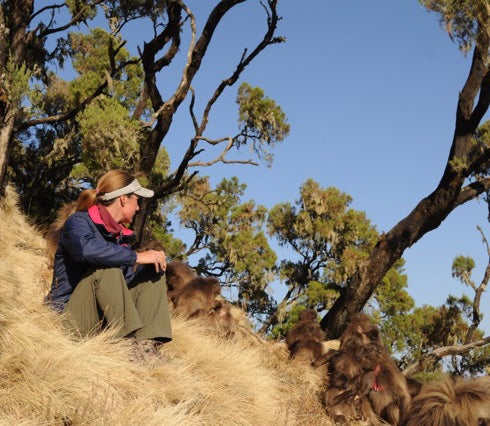
Dr. Jacinta C. Beehner is an Associate Professor in the Department of Anthropology & Psychology at the University of Michigan. Her research focuses on sexual conflict theory, reproductive strategies in primates, and the physiological and behavioral mechanisms underlying these dynamics. She directs the Core Assay Facility/Beehner Endocrine Laboratory and co-directs the Simien Mountains Gelada Research Project, Capuchins at Taboga, and the Evolution and Human Adaptations Program. Her work examines non-human primates like geladas, capuchins, and baboons in natural African and American habitats. Key themes include infanticide avoidance, hormonal responses to environmental stress, and the evolutionary implications of reproductive trade-offs. Recent studies highlight the impact of climate change on primate health, the role of social status in parasite resistance, and hormonal adaptations to high-altitude environments. Beehner has contributed to over 60 peer-reviewed articles since 2015, spanning topics from primate social networks to genomic adaptations. Her fieldwork emphasizes integrative methods combining endocrinology, genetics, and behavioral observation. She has presented at international forums like the National Geographic Explorer’s Festival and collaborates across disciplines to advance primate conservation and evolutionary biology.
Keith Edmisten is a Professor in the Department of Crop and Soil Sciences at NC State University, serving as Extension Cotton Specialist and Director of Undergraduate Programs. He holds a BS, MS from NC State University, and a PhD in Crop Physiology from Virginia Tech (1987). His career includes faculty roles at Mississippi State University and Auburn University before joining NCSU in 1992. His research focuses on cotton and industrial hemp agronomy, germplasm evaluation, and regulatory science in agriculture. Notable awards include Extension Cotton Specialist of the Year (1997) and Cotton Physiologist of the Year (2015). He teaches courses on biotechnology, seed science, and regulatory frameworks, and advises students in the Plant and Soil Science biotechnology concentration. Edmisten's program integrates applied research with extension efforts, emphasizing sustainable input management, variety trials, and on-farm experimentation. Collaborations span departments like Entomology, Plant Pathology, and Agricultural Economics. Publications highlight fertilizer management, weed science, and crop modeling in cotton and hemp systems.