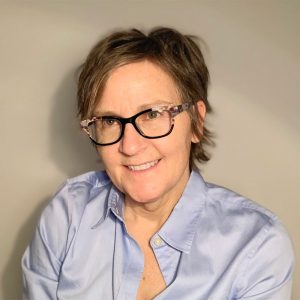
Dr. Sharon Kinsella is a Lecturer in Japanese Studies at the University of Manchester, specializing in Japanese subcultures, media, and gender dynamics. She holds a DPhil in Sociology from the University of Oxford and has previously held positions at Yale, MIT, Oxford, Cambridge, and Manchester. Current research focuses on 'otoko no ko' (boy daughters), male cross-dressing culture, and the political economy of cuteness in Japan. Her work bridges manga studies, subcultural analysis, and feminist sociology. Recent publications analyze male subcultures in low-fertility Japan, cross-dressing in 2D/3D contexts, and materialist youth styles. She contributes to UN SDGs related to gender equality and social inclusion through her cultural critiques.
Alice Kelly is an Assistant Professor of Literature and History at the University of Warwick . As the Co-Convenor of the English and History degree , she is actively involved in interdisciplinary teaching and research. Education: BA in English Literature, University of Sussex MSt in English and American Studies, University of Oxford PhD in English Literature, University of Cambridge Her research expertise lies in twentieth-century literary and cultural history , particularly Anglo-American modernism and literary and cultural memory, especially of war . She is the author of Commemorative Modernisms: Women Writers, Death and the First World War (2020) and has edited a special issue on American First World War Literature (2022). Her recent publications and public engagement explore the intersection of literature, memory, and cultural history , including commentary on The Great Gatsby and its centenary significance . She has also contributed to discussions on contemporary fiction , reviewing works such as Orbital and James . She has received multiple scientific awards , including the British Academy Rising Stars Engagement Award , the Women in the Humanities Fellowship at TORCH Oxford , and the Fox International Fellowship at Yale University .
Graduate Institute of International and Development StudiesSwitzerland
Raksha Gopal is a PhD Candidate in International Relations and Political Science at the Geneva Graduate Institute. She is a Research Assistant for the Swiss National Science Foundation (SNSF) project Gendering Survival from the Margins at the Gender Centre, with affiliations as a PhD Affiliate at the Global Migration Centre and a Student Member of Laboratoire interMIGRA (HETS Geneve). Education: Master’s in International Relations and Political Science from Geneva Graduate Institute, Bachelor of Arts (Honours) in Political Science from University of Delhi. Her research focuses on the gendered politics of forced displacement, particularly refugee mothers' narratives in South Asia. She integrates critical security studies, feminist IR, and migration research to examine power dynamics in post-displacement governance, challenging citizen/non-citizen binaries and redefining security through everyday practices. The two recent articles highlight her work on Rohingya mothers in India and theoretical contributions to refugee survival and social reproduction. Both publications emphasize intersectional analysis and feminist methodologies, reflecting her broader engagement with ethnographic research and global governance. Grants: Swiss National Science Foundation Grant Number 100017_212265.
Dr. Sarah Crook is a Senior Lecturer in the Department of History at Swansea University, Faculty of Humanities and Social Sciences. She specializes in modern British history with a focus on women's history, student mental health, and the history of medicine. PhD in History from Queen Mary University of London MSt in Women's Studies from Keble College, Oxford Bachelor's degree in History from University of Sussex Her research explores histories of feminism , LGBTQ+ activism , motherhood , university communities , and mental health from postwar Britain to the 1980s. She is the director of GENCAS (Centre for Research into Gender and Culture in Society), an interdisciplinary research center. Recent publications analyze: Gendered undercover policing in the 1970s Humor as feminist resistance Neoliberalism and academic compassion Student loneliness across decades She has secured grants from Wellcome Trust , Arts and Humanities Research Council , and Medical Research Council (U-Belong project). Her teaching includes modules on Radical Histories , History of Sex and Gender , and Making History .
Rachel Lara Cohen is a Professor in Sociology, Work and Employment at City, University of London , where she joined in 2013 after prior roles at the University of Surrey, University of Warwick, and St Petersburg State University. Her research focuses on the sociology of work, particularly non-standard employment forms like self-employment, mobile work, and homeworking, with a strong emphasis on work-life boundaries, body work, and gendered labor dynamics in occupations such as hairdressing, car mechanics, and accountancy. A mixed-methods researcher, she co-edited special issues on body work and everyday self-employment and led the City Q-Step Centre to enhance data literacy in social science students. Established : 2022-2025 ESRC-funded project ‘L-Earning: Rethinking young women's working lives’ Education : PhD in Sociology (UCLA), BA in Politics and Modern History (University of Manchester) Her research spans gender disparities in student employment, feminist methodologies, and quantitative literacy. She has served as Associate Editor of Work in the Global Economy and former Editor of Radical Statistics , with leadership roles including Head of Department of Sociology (2017-2020) and Elected Senator at City. Notable awards include the British Academy Postdoctoral Research Fellowship (2007-2010) and Senior Fellow of the Higher Education Academy (2021). Students supervised include topics on care sector workers, student employment in service work, ethnic identity negotiation, gender in higher education administration, and statistical studies of diversity. Her work has been published in journals such as The British Journal of Sociology , Sociology , and Gender, Work & Organization , covering themes like precarity, gendered labor patterns, and methodological innovation.
Frida Beckman is a Professor in the Department of Culture and Aesthetics at Stockholm University. Her academic career spans roles at Uppsala University, Linköping University, and Stockholm University's Department of English before her current appointment in 2018. She serves as director of literary research and sits on the Faculty of Humanities' scholarship committee, while also contributing to editorial boards for journals like Symploke and Modern Fiction Studies . Education: PhD in Literature from Uppsala University (2009) Beckman's research focuses on American literature and culture post-WWII, with deep engagement in critical theory and Gilles Deleuze's philosophy. Her work explores themes such as agency, subjectivity, spatiality, temporality, and the intersection of culture with political power structures. Her current project examines African American literature and critique after 11940, while her recent popular science book Postmodernismen (2023) provides accessible insights into postmodernist thought. Her publications reflect a synthesis of theoretical frameworks, including postcritique, Foucault-Deleuze analysis, and allegorical interpretations of contemporary narratives. She actively bridges academic discourse with public intellectual work through podcasts, interviews, and media contributions on topics like postmodernism, conspiracy theories, and critical philosophy.
Cherise Smith is the Joseph D. Jamail Chair in African American Studies and a Professor in the Department of African and African Diaspora Studies at the University of Texas at Austin, with affiliations in the Art History department. She serves as Executive Director of the Art Galleries at Black Studies and is a renowned scholar in African American art, performance studies, and critical race theory. Education: Ph.D. in Art History, Stanford University (advised by Drs. Wanda Corn and Pamela Lee). Her research examines African American art, the history of photography, and how performance art interrogates racial, gender, and class identities. At UT Austin, she leads the Art and Archive Initiative, expanding collections and exhibition spaces for art by Black creators. Recent publications include Michael Ray Charles: Studies in Blackness (2020), which won the Charles C. Eldredge Prize, and Enacting Others (2011), analyzing identity negotiation in performance art by Eleanor Antin, Nikki S. Lee, Adrian Piper, and Anna Deavere Smith. Smith’s work has been funded by the Getty Foundation, Ford Foundation, and Harvard’s W.E.B. Du Bois Institute. She has held curatorial roles at major institutions, including the Art Institute of Chicago and the Metropolitan Museum of Art. She serves on editorial boards for American Art and Art Journal , and the Archives of American Art Journal’s Advisory Board.
Çağrı ERGÜN serves as a full-time Lecturer in the Department of Foreign Languages at Kafkas University's School of Foreign Languages, Turkey, a position held since 2023. His academic qualifications include: Master of Science in English Language and Literature (Thesis) from Kafkas University Institute of Social Sciences (2020-2023) Bachelor of Arts in Translation and Interpreting from Kafkas University Faculty of Arts and Sciences (2015-2020) ERGÜN specializes in English Language and Literature with concentrated research on feminist literary criticism and gender power structures. His master's thesis examined representations of vulnerable groups across seminal English novels including Robinson Crusoe, Moll Flanders, Pamela, Tom Jones, and Great Expectations, establishing his methodological focus on social critique within literary analysis. Current scholarship continues this trajectory through intersectional examinations of hegemony. His sole scholarly output to date—a 2023 book chapter—demonstrates consistent thematic engagement with 19th-century literary gender dynamics, specifically analyzing Thomas Hardy's Tess of the D'Urbervilles through the lens of patriarchal dominance as perceived by the protagonist. No scientific awards, major research grants, or academic recognitions appear in his verified record. Available documentation indicates no graduate student supervision activities or laboratory/research team affiliations at this career stage.
Dr. Rhiannon Firth is a Lecturer in Sociology of Education in the Department of Education, Practice and Society at the Institute of Education, University College London (UCL). She also serves as the Programme Leader for the MA in Sociology of Education. Her academic career spans interdisciplinary research at the intersection of Sociology, Education, and Politics, with a focus on utopian ideals and pedagogical practices of social and ecological movements. Dr. Firth's educational background includes: First Class BA (Hons) in Combined Studies (Politics, English Literature and Economic and Social History) from the University of Leicester ESRC-funded MA in Political Science (Distinction) from the University of Nottingham PhD in Political Sociology from the University of Nottingham Her research focuses on how grassroots social movements create knowledge and mobilize social change around global "wicked" problems including inequality, climate change, technological developments, and pandemics. She has conducted funded research with self-managed sustainable communities in the UK and USA, grassroots disaster relief movements including Occupy Sandy New York and COVID-19 Mutual Aid London, and organizations using automation technology in experimental ways. Dr. Firth's recent publications reflect her ongoing exploration of utopian and dystopian themes across multiple domains. Her work spans analyses of pandemic responses, ecological breakdown, industrial technology, and community organizing. A strong thread throughout her scholarship examines how prefigurative politics and mutual aid practices offer alternatives to mainstream approaches to social organization, particularly in times of crisis. Her research increasingly focuses on the intersection of technology, labor, and utopian thinking, particularly examining how automation and cybernetics might be reimagined through radical social movements. Among her significant recognitions: Senior Fellow of the Higher Education Academy (SFHEA), earned in 2017 ESRC funding for her MA studies Dr. Firth has secured research funding from multiple sources including ESRC, ISRF, EPSRC, HEFCE, local councils, and UCL Grand Challenges. She supervises MA dissertations annually and currently mentors one PhD student. Her professional activities include media engagement (such as appearing on BBC Radio 4's The Moral Maze), conference presentations, and serving as ECR Representative for the Utopian Studies Society of Europe. She is actively involved with research groups and networks focused on utopian studies, social movements, and critical pedagogy, contributing to the vibrant intellectual community around alternative futures and radical educational practices.
Mallica Kumbera Landrus serves as Associate Professor of Indian Art at the University of Oxford while holding dual leadership roles as Keeper of Eastern Art and Senior Curator of Indian, Himalayan and Southeast Asian Art at the Ashmolean Museum of Art and Archaeology. Her career uniquely integrates academic scholarship with museum curation, focusing on South Asian visual and material culture across five millennia of Asian artistic development. Her research centers on intersections of Indian art, architecture, religion, politics, and socio-economics, with particular expertise in cultural translation phenomena. She examines colonial-era built environments created by Portuguese powers in Goa and hybrid transnational cultures emerging from diasporic communities, frequently utilizing the Ashmolean's extensive collections for empirical analysis. Publication trends reveal consistent thematic focus on Goan architectural history under Portuguese rule, modern Indian art movements (especially Bengal School modernism), and gender representation in visual culture. Her scholarly output bridges art historical methodology with postcolonial theory, emphasizing religious conversion dynamics, diasporic identity formation, and imperial material legacies across 12 peer-reviewed works from 2003-2015. Landrus teaches specialized courses including 'Trade and Exchange in Modern South Asia' (MPhil/MSc) and 'Encountering South Asian Sculpture' (BA), supervising graduate research that leverages Oxford's collections. Professional engagements include Fellowship at St Cross College, Trustee position with the Charles Wallace India Trust, and editorial board membership for Universität Bonn's Studies in Asian Art and Culture Series.
Masha Raskolnikov is an Associate Professor in the Department of Comparative Literature at Cornell University, with affiliations in Feminist, Gender and Sexuality Studies, LGBT Studies, and Medieval Studies programs within the College of Arts and Sciences. Education : BA from Wesleyan University's interdisciplinary College of Letters; MA and PhD from UC Berkeley’s Department of Rhetoric. Her research focuses on Middle English literature through the lens of allegory theory, medieval philosophy, and rhetorical analysis, while engaging with contemporary critical theory, feminist studies, and queer theory. She explores how medieval texts can disrupt modern 'common sense' about gender, identity, and epistemology. Recent publications examine topics like Chaucer’s Miller’s Tale as literary apology (2025), trans allegorical frameworks (2023), and the intersection of BDSM with medieval epistemologies (2022). Her book Trans Historical: Gender Plurality Before the Modern (2021) establishes medieval precedents for non-binary gender concepts. She contributes to critical trans methodologies (2021) and engages with medieval archives exploring law, medicine, and early trans lives (2021). Her work frequently analyzes therapeutic reading practices (2021) and pre-modern gender plurality. Awards : No specific scientific awards mentioned in available text. As an advisor, she works with graduate students in medieval studies, feminist theory, and critical methodologies. Her research has been supported through institutional affiliations at Cornell.
University of Illinois Urbana-ChampaignUnited States
Suzie Telep is an Assistant Professor in the Department of Anthropology and European Union Center at the University of Illinois at Urbana-Champaign. A linguistic and cultural anthropologist, she examines intersections of language, race, and artistic production within the African diaspora in postcolonial France. Educational background includes a PhD in Linguistics from Paris Cité University, a Marie Sklodowska-Curie Postdoctoral Fellowship at the University of Pennsylvania, and affiliations with institutions like Stanford University and University of Angers. Her research focuses on race, gender, and language ideologies in Black diasporic communities, particularly Cameroonian immigrants in Paris, analyzing practices like 'whitisation' (accent mimicry) and Afro-feminist aesthetics in digital media and fashion. Key methodologies blend ethnographic fieldwork with arts-based research , exploring how language and performance negotiate identity in contexts shaped by anti-Black racism and colonial legacies. Scientific awards include the Marie Sklodowska-Curie Fellowship (2021) and the Richard Mille - La Francophonie en Débat prize (2021) . Her creative work includes a multimedia performance-lecture, My Afropean Musical Journey , presented at conferences like the African Studies Association and Unsettling Images, Engaging Fictions.
Théodora PSYCHOYOU is Professor at the Department of Music and Musicology of Sorbonne University and a permanent member of the Institute for Research in Musicology (IReMus – UMR 8223), which she directed from 2022 to 2024. She currently serves as Director of the Collegium Musicæ institute of the Sorbonne University alliance and is responsible for two Master's programs: Interpretation of Early Music - Baroque Music track, and the Franco-Italian Master's in Musicology Research in partnership with the University of Palermo. Her research focuses on the history and mechanisms of discourse on music in 17th and early 18th century France, the economy and status of musical and theoretical sources, and religious music in the 17th century, particularly the works of Marc-Antoine Charpentier (1643-1704). Her specialty areas include early music (Baroque), historically informed practice, history of musical theory, music and science in the 17th and 18th centuries, religious music in the modern era, study of sources, musical ecdotics, reception of antiquity and Hellenism, and the Ancients and Moderns debate. She has organized numerous research seminars and conferences on these topics, including the Hellenism seminar and the ANR Agon project. Her recent publications demonstrate a strong focus on the intersection of music with science, philosophy, and cultural history from the 17th century to contemporary times. She has made significant contributions to understanding the reception of ancient musical thought in modern contexts, the relationship between music and scientific developments, and the cultural significance of musical practices across different historical periods and geographical contexts. Her work spans historical musicology, theoretical approaches, and contemporary applications. Mention spéciale du Prix des Muses 2010 Prix des Muses 2007 dans la catégorie ouvrage collectif As an academic leader, she has directed major research initiatives including the Hellenism seminar, ANR Agon project, and Baroque XXI Praxis. She serves as Vice President of the International Musicological Society (2022-2027) and has held significant administrative roles including Director of IReMus (2022-2024) and Director of Collegium Musicæ (2023-present). Her collaborative work extends to international partnerships, particularly with Greek institutions, reflecting her interest in Hellenism and Mediterranean musical cultures. Her laboratory work focuses on critical musical editions, performance practices, history of musical theories, historiography, gender studies in music, music and religion, iconography, organology, and aesthetics. She leads research teams investigating the intersection of music with other disciplines, particularly through the Collegium Musicæ which connects music with sciences.
Sandra Robinson is an Associate Professor and Graduate Supervisor at the School of Journalism and Communication, Carleton University. Her expertise lies in algorithms and platforms, data methodologies, privacy and surveillance, and social media. She is actively involved in research and graduate supervision, with a focus on communication, culture, regulation, gender and media, and AI. Education: PhD in Sociology – Queen’s University MA in Legal Studies – Carleton University MBA in Digital Technology Management – Royal Roads University BA in Anthropology – University of Alberta Research Interests: Dr. Robinson’s research spans communication, culture, and regulation, with a strong emphasis on gender and media, algorithm studies, artificial intelligence, and platform studies. She investigates how social media platforms shape public discourse, particularly in relation to misinformation, gendered narratives, and far-right populism. Her work also explores the intersections of big data and health surveillance, legal communication, and the pedagogical implications of platform-based learning. She is particularly interested in how digital infrastructures mediate power, identity, and control. Scientific Awards: Teaching Achievement Award (2017) Faculty of Public Affairs Teaching Fellowship (2017–2019) Grants and Supervision: Dr. Robinson is a co-investigator on a 5-year SSHRC Insight grant titled Populist Publics: Memory, Populism, and Misinformation in the Canadian Social Mediascape . She is available to supervise graduate students in areas related to her research interests.
Isabel García Velázquez is a researcher at Linköping University 's Department of Thematic Studies , affiliated with Theme Gender (TEMAG) . Her work intersects social robotics , autism studies , and AI ethics , informed by feminist and decolonial frameworks. Her research critically examines how autism is conceptualized in robotic therapy and AI systems , questioning the social capabilities of robots and the ethical implications of their use in healthcare. She actively participates in the WASP-HS program , contributing to interdisciplinary discussions on AI's societal impact. Her recent publications focus on gendered embodiment in robotics , maternal mental health applications , and decolonial critiques of AI . She can be contacted at isabel.garcia.velazquez@liu.se .