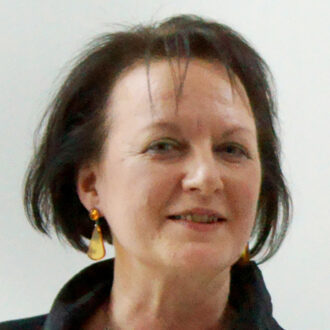
Patricia M. Thornton is an Associate Professor in the Department of Politics and International Relations (DPIR) at the University of Oxford and a Fellow and Tutor in Politics at Merton College. She specializes in Chinese politics, focusing on state-society interactions, authoritarian governance, and the legacies of the Cultural Revolution. Her research explores institutions, practices, and networks shaping governance in China, including works like *Disciplining the State* (2007) and *Red Shadows* (2017). She has held leadership roles at Oxford, including Chair of the Sub-Faculty of Politics and International Relations, and served on editorial boards such as *The China Quarterly*. Her work addresses contemporary challenges like authoritarian resilience, social control mechanisms, and political dissent. Research Interests: - State formation and governance in China - Authoritarian political systems - Memory and legacies of the Cultural Revolution - Party-state dynamics and social movements - Comparative political institutions Publications highlight themes like economic governance, social movements, and policy implementation. She has supervised numerous PhD students, many now leading academics in Asia-Pacific studies. Her contributions to understanding China’s political evolution are complemented by media commentary on current events, including analysis of Xi Jinping’s governance strategies and societal trends. Awards: Merton College Fellowship Key Projects: Edited *To Govern China* (2017) and *Red Shadows* (2017)
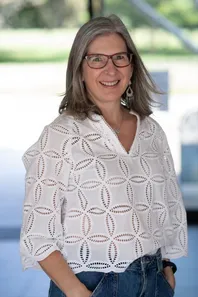
Joanne Lee is a Senior Lecturer in the Department of Italian Studies at the University of Warwick. She holds a PhD from the University of Bristol and has taught at Cardiff University and Bristol University prior to joining Warwick in 2008. Her administrative roles include Head of Italian Studies until September 2024 and Co-head of the School of Modern Languages and Cultures (SMLC) starting January 2025. BA in Italian and Language Studies (Cardiff University, 1999) MA in Literature in European Cultures (Cardiff University, 2003) PhD (University of Bristol, 2008) Her research spans travel writing , Italian emigration/immigration , post-war women writers , and Italy's colonial memory . Recent work examines decolonizing urban spaces through Igiaba Scego's works and sustainable travel in Paolo Rumiz's pedestrian journeys. She explores ethical dimensions of travel writing, including sustainability and cosmopolitan ethics, with a focus on globalization's impact on migration narratives. Selected publications include analyses of Laura Pariani's migration novels, Soviet-Italian Cold War travel discourses, and postcolonial memory in Italian literature. She has collaborated on interdisciplinary projects addressing slow travel , virtual tourism , and post-pandemic tourism patterns. Awards include Senior Fellowship of the Higher Education Academy and Fellowship of the Warwick International Higher Education Academy.
Carolina Alves is an Associate Professor in Economics at University College London's Institute for Innovation and Public Purpose (IIPP). She holds a distinguished position as a Fellow in Economics at Girton College, University of Cambridge, and serves on the Leadership Team of the UCL Centre for Capitalism Studies. Her academic journey spans prestigious institutions including SOAS, University of London for her PhD, and Unesp and Unicamp in Brazil for her undergraduate and master's degrees. BSc in Economic Science from Unesp (Brazil) MPhil in Sociology of Labour from Unicamp (Brazil) PhD in Economics from SOAS, University of London Joan Robinson Research Fellow in Heterodox Economics at Girton College, University of Cambridge Dr. Alves' research spans critical areas including Critical Macro-Finance, Structuralist Macroeconomics, and the Decolonisation of Economics, with influences rooted in Classical Political Economy, Latin American Structuralism, Dependency Theory, and Marxian economics. Her work critically examines the international monetary system, power relations in economic systems, and Eurocentric limitations in economic theory. Her recent publications demonstrate a strong focus on heterodox economic approaches, with particular attention to government bonds, international financial subordination, and the historical development of economic thought. Her eight most recent publications reveal a consistent research trajectory examining the intersections of political economy, financial systems, and economic theory development, with increasing attention to decolonial perspectives in economics. This work has garnered significant attention across academic and policy circles, with multiple citations and social media engagement. Joan Robinson Research Fellowship in Heterodox Economics at Girton College, University of Cambridge Co-founder of Diversifying and Decolonising Economics initiative Co-editor of The Developing Economics blog Trustee for Cambridge Trust for New Thinking in Economics As an educator, Dr. Alves serves as module leader for 'New Economic Thinking and Public Value' and co-leader for 'Rethinking Capitalism' at UCL. She is deeply engaged in initiatives aimed at transforming economics education, particularly through the Diversifying and Decolonising Economics movement which she co-founded. Her leadership extends to multiple advisory roles including the Rebuilding Macroeconomics Advisory Board, Progressive Economy Forum Council, and Positive Money Advisory Panel.
Shannon Mathieu serves as a Teaching Fellow in International Security at the School of Politics and International Studies (PAIS), University of Warwick. Her administrative roles include: Deputy Director of Undergraduate Studies Joint Undergraduate Courses Director for Economics, Politics and International Studies (EPAIS), History and Politics, Philosophy and Politics, and Politics, International Studies and Global Sustainable Development PAIS Undergraduate Study Skills lead (Term 1) She teaches PO207: Politics of the USA, PO382: Vigilant State: Understanding Secret Intelligence, and PO3A7: Gender, Race and Militarism for the 2025-26 academic year. Her research critically examines international security through feminist IR theory, focusing on United Nations policy frameworks. Key interests include the Responsibility to Protect (R2P), gendered constructions of vulnerability, non-military masculinities in institutional culture, and discursive power dynamics in humanitarian interventions. Her work exposes how protection narratives reinforce patriarchal structures within global security governance. Recent publications analyze evolving gender-security intersections in UN interventions, revealing persistent masculine norms in R2P frameworks while exploring pedagogical innovations using cultural texts. Her scholarship demonstrates consistent thematic progression toward deconstructing gendered power hierarchies in international security institutions, with emerging work examining burden-sharing dynamics in protection mandates.
Rachel Leow is an Associate Professor in Modern East Asian History and Fellow of Murray Edwards College at the University of Cambridge. She holds a PhD and MPhil from St Catharine’s College, Cambridge, and a BA from Warwick University. Her research critiques rigid nationalisms in East Asia, focusing on transregional cultural and intellectual histories. Her book Taming Babel: Language in the Making of Malaysia (2016) won the 2018 Harry J. Benda Prize for Southeast Asian studies. Current projects include an anti-diasporic history of Chinese migration and early 20th-century Asian thought-worlds. Leow emphasizes public engagement, contributing to blogs, literary reviews, and collaborative manifestos. She teaches World History courses, including Part IA’s Outline 11 and specialized modules on East/Southeast Asia. She supervises postgraduate students exploring transnational East Asian history from 1850 to the present. Professional affiliations include the Royal Historical Society, Center for History and Economics, and editorial roles at The Historical Journal and Global Intellectual History . Awards include the Harry J. Benda Prize and RHS Fellowship. Her digital work includes a visualization of Afro-Asian Cold War networks and a short film on diasporic identity.
Akanksha Mehta is a Lecturer in Gender, Race and Cultural Studies at Goldsmiths, University of London , where she co-directs the Centre for Feminist Research. She joined Goldsmiths in September 2018 after lecturing at the School of Global Studies, University of Sussex (2016-2018). Research Focus: Intersections of gender, sexuality, race, and everyday politics/violence; affective and material structures in nationalist movements; decolonial pedagogies. Key Projects: Co-founded the 'Mind the BAME Gap' initiative at Sussex; ongoing book project on right-wing women's mobilizations. Recognition: Recipient of the EISA Best Dissertation Award (2018) and Rachel Tanur Memorial Prize (2016). Publication Trends: Her work spans feminist critiques of Hindutva, queer rights in post-377 India, ethnographic analyses of right-wing women, and decolonial pedagogical frameworks. Recent outputs engage with racial justice in universities, affect theory, and visual sociology. Scientific Awards: Best Dissertation Award, EISA (2018) Rachel Tanur Memorial Prize, ISA (2016) Collaborative Work: Engages with decolonial visual practices, collective complaint mechanisms in academia, and intergenerational feminist dialogues through the podcast 'The F Less Travelled'.
Professor Stephen Chan is a faculty member at SOAS University of London in the Department of Politics and International Studies (POL) . With a focus on African political thought and international relations, his work critically examines postcolonialism, decoloniality, and global governance. Key research themes include: Decolonizing international relations theory Sino-African political dynamics Election observation and democratic processes Non-Western cosmopolitanism Comparative diplomatic practices His recent publications analyze the ideological ambiguity of decoloniality (2023), pluralist visions for global security (2017), and the legacy of African liberation movements (2021). He has advised multiple theses on topics ranging from parliamentary governance in Kenya/Zimbabwe to China-Africa media interactions. Notably: Critiqued the misuse of 'decoloniality' as ideological rhetoric (2023) Authored a poetic autobiography of political engagement (2022) Traced Africa's intellectual history of freedom (2021) Examined Zimbabwean elections (2017) Explored non-Western modernity (2018)
Dr. Galina Miazhevich is a Senior Lecturer at the School of Journalism, Media and Culture (JOMEC) at Cardiff University, UK. Previously, she served as a lecturer at the University of Leicester's School of Media, Communication and Sociology (2013-2017) and as the Gorbachev Media Research Fellow at the University of Oxford (2008-2012). Her academic career focuses on media representations in post-communist contexts, with particular expertise in Russian and Eastern European media landscapes. Dr. Miazhevich earned her PhD from the University of Manchester, where she subsequently worked for two years as a Research Associate on an AHRC-funded project examining representations of Islam as a security threat. Her educational background has informed her research trajectory, which bridges media studies, political communication, and cultural analysis of post-Soviet societies. Dr. Miazhevich's research spans several interconnected domains: media representations of Islam and multiculturalism in Europe; media and democracy in post-communist Europe; gender, media, and emergent forms of post-Soviet identity; feminism; Eurovision and popular culture; and diaspora, transnationalism, and media. Her work consistently examines how media shapes and is shaped by political transitions, identity formation, and social movements in post-Soviet contexts, with particular attention to marginalized voices and resistance practices. Analysis of Dr. Miazhevich's recent publications reveals a consistent focus on resistance, identity, and power dynamics in post-Soviet media environments. Her work increasingly examines gender and sexuality as political categories, particularly through the lens of feminist and LGBTQ+ resistance to authoritarian regimes. The Eurovision Song Contest serves as a recurring analytical framework for understanding cultural diplomacy and nation-branding strategies. More recently, her research has pivoted toward documenting anti-war resistance following Russia's invasion of Ukraine, examining how celebrities and media figures navigate political dissent under authoritarian conditions. Dr. Miazhevich has received several notable recognitions for her scholarly contributions: AHRC Leadership grant 'A Quiet Revolution: Discursive Representations of Non-heteronormative Sexuality in Russia' (2018-2020, £250,960) Visiting Fellowship at the Davis Centre for Russian and Eurasian Studies, Harvard University (Fall 2023) Fellow of the Higher Education Academy (FHEA) Associate Editor for the Oxford Encyclopedia of Race, Ethnicity, and Communication (2024) Dr. Miazhevich actively mentors the next generation of scholars, currently co-supervising PhD students Diyana Dobreva (with Professor Martin Innes) and John Tasker (with Professor Paul Bowman). She welcomes PhD proposals in areas including digital culture and resistance, media management and misinformation, media and democracy, representation of minority groups, post-communist identity politics, gender and feminism, Eurovision and popular culture, and geopolitics and nation-branding. Her grant portfolio demonstrates sustained success in securing competitive research funding, including leadership of an AHRC grant and participation in the Academy of Finland project FEMCORUS (2021-2025). Dr. Miazhevich is deeply engaged with academic communities, serving as co-convenor of the (Digital) Media and Culture group at the British Association for Slavic and East European Studies (BASEES) since 2016 and as a member of the Advisory Board of the European Communication Research and Education Association (ECREA) since 2021. Her work extends beyond academia through public engagement, including invited talks at prestigious institutions like Harvard University and participation in policy-relevant events at Chatham House addressing LGBTQ+ politics in Russia.
Carolina Matos is a Professor at City, University of London's School of Communication & Creativity, specializing in media studies, gender politics, and communications research with a particular focus on Brazil and Latin America. Her scholarly work bridges academic inquiry with practical advocacy, especially in the areas of sexual and reproductive health rights (SRHR), feminist media studies, and democratic processes in the Global South. Dr. Matos's research interests span several interconnected domains: Gender politics and feminist media studies, with particular attention to Brazilian and Latin American contexts Sexual and reproductive health and rights (SRHR) communications and advocacy across global contexts Media democratization and public service broadcasting in Brazil and Latin America Digital activism and online networks for social change and gender equality Health communication in the age of misinformation, particularly regarding women's health in politically polarized environments Journalism's role in democratic processes and political transitions Her recent publications (2021-2025) demonstrate a clear trajectory toward examining how marginalized communities, particularly women in the Global South, navigate complex media landscapes around reproductive health. Her methodology frequently employs focus group research designed to empower participants while gathering insights on media consumption and interpretation. She has conducted significant research in partnership with NGOs like Reprolatina in Brazil and Open Arms in Florida, examining how disadvantaged communities process health communications in contexts of political polarization and misinformation. Dr. Matos has made substantial theoretical contributions through both foundational and recent works: Her book "Globalization, gender politics and the media" (2016) examines changing media representations in relation to feminist movements globally Her seminal work "Journalism and Political Democracy in Brazil" (2009) analyzes media's critical role in Brazil's democratization process following the military dictatorship She has conducted extensive comparative research on how NGOs communicate about SRHR across the Global North and South Her research on "New Brazilian feminism and online networks" (2017) documents the emergence of digital feminist activism in Brazil Her methodological approach consistently combines rigorous academic frameworks with practical applications, often utilizing mixed methods including content analysis, discourse analysis, and participatory research techniques designed to center marginalized voices while advancing scholarly understanding of media, gender, and power dynamics.
Professor Amnon Aran is a leading academic in the School of Policy and Global Affairs at City St George's, University of London . His career spans roles at the London School of Economics and Political Science and extensive contributions to Middle East policy forums including the European Union's Middle East Peace Task Force and Oxford Analytica . He provides media commentary for BBC, Bloomberg, and CCTV . Research Focus: International relations of the Middle East, Arab-Israeli conflict, foreign policy analysis, feminist foreign policy, and regional power dynamics. Key Publications: Authored Israeli Foreign Policy since the End of the Cold War (Cambridge University Press, 2021) and co-authored works on foreign policy analysis with Oxford University Press. PhD Supervision: Guided 8 doctoral candidates in topics spanning Israeli peace activism, intercultural dialogue, and Middle Eastern foreign policy shifts. Professional Contributions: Participated in high-level policy discussions with institutions like the European Union and RUSI , and advised on Middle East peace processes. His 15 most recent articles (2011–2025) examine evolving Israeli foreign policy paradigms, including feminist approaches, energy diplomacy, and shifts from adverse asymmetry to equivalence in Turkey relations. He challenges conventional narratives about regional power dynamics and foreign policy frameworks.
Robin Dunford is a Principal Lecturer at the University of Brighton's School of Humanities and Social Science, affiliated with the Inclusive Digital Societies Research Excellence Group and Centre for Applied Philosophy, Politics and Ethics. His academic profile centers on critical global ethics and political philosophy with emphasis on structural justice. His research spans four interconnected domains: Civilian Protection and Responsibility to Protect, critiquing conventional frameworks through works like Just War and the Responsibility to Protect: A Critique ; Human Rights and Transnational Resistance, particularly peasant rights advocacy via the UN Declaration on the Rights of Peasants; Decolonial Ethics, advancing 'pluriversality' as an alternative to cosmopolitanism in global ethics; Law, Ethics and Democracy, co-coordinating action-research against anti-democratic governance through the Law, Ethics and Democracy Collective. Recent publications (2019-2025) reveal consistent engagement with decolonial theory, food sovereignty movements, and curriculum transformation, frequently intersecting transnational activism with critical race and peasant studies. Dunford supervises PhD candidates including Afxentis Afxentiou (drone ethics), Marina Espinoza (Obama drone program), and current students exploring nonviolence, disability movements, Marxist imperialism, and feminist cosmopolitanism. He co-edits the 'Off the Fence: Morality, Politics, Society' book series and co-convenes the British International Studies Association's Ethics and World Politics working group.
Mustafa B. Ozturk is a Professor of Human Resource Management at Queen Mary University of London's School of Business and Management, affiliated with the Department of People and Organisations. He holds roles as Programme Director for the MSc International Human Resource Management and coordinator for the International Foundation Programme and Pre-Masters. His academic journey includes a BA in Economics and Politics from New York University, followed by MA and PhD studies at the University of Chicago, focusing on the political economy of human capital. Dr. Ozturk's research emphasizes workplace equality, diversity, and inclusion, particularly addressing systemic disadvantages related to gender identity, sexual orientation, race, and ethnicity. He is a member of the Centre for Research in Equality and Diversity (CRED) and actively supervises doctoral students exploring themes like gender inequality in finance, ethnic minority entrepreneurship, and global diversity management. His teaching includes BUS269: Organisational Behaviour. Research interests span both developed and developing regions, including Turkey, China, and the UK. He has published widely on topics such as racialized incivility, LGBTQ+ workplace inclusion, and gender equality in global contexts. Supervision expertise includes doctoral projects on intersectionality in talent management, corporate socio-political activism, and gender disparities in finance.
Dr Ysabel Gerrard is a Senior Lecturer in Digital Media and Society at the School of Sociological Studies, Politics and International Relations, University of Sheffield. Her work bridges digital sociology, gender studies, and platform governance, with a focus on youth experiences, content moderation, and ethical research practices. Education: BA (Hons), MA, PhD (University of Leeds) Research interests include: Young people’s social media experiences and content policies Digital identities, particularly gendered representations Feminist interventions in content moderation and algorithmic governance Ethical challenges in social media research Recent research examines the societal impact of social media design, reflected in her forthcoming book The Platform Generation and collaborations on Instagram’s mental health moderation, anonymous apps, and feminist critiques of platform labor. She contributes to policy debates via roles like Facebook’s Suicide and Self-Injury Advisory Board and ECREA leadership. Grants include: £39,985.50 for 'Creator labour: screen production cultures and transmedia intersectionality in Yorkshire' (2021-2022) £2,627 for 'Risky-by-design: making the digital world safer for children' (2021) £6,998 for 'Secrets on social media: anonymous apps and youth perspectives' (2019-2022) Teaching modules: Digital Identities, Introduction to Digital Methods. She supervises BA, MA, and PhD students working on topics like online dating, gaming toxicity, and influencer culture. Contact: Email: y.gerrard@sheffield.ac.uk Office: The Wave, 2 Whitham Road, Sheffield S10 2AH
The Courtauld Institute of Art, University of LondonUnited Kingdom
Sarah Wilson is Professor of Modern and Contemporary Art at The Courtauld Institute of Art, University of London. She has been a faculty member since 1982 and has held leadership roles including Head of the Modern and Contemporary Section (2005-2008) and Head of Diploma programmes (2014-2015). She is internationally recognized as the English-language expert on Post-War European art and has held visiting positions at Paris-IV Sorbonne and the University of Versailles-Saint Quentin. Wilson was educated at the University of Oxford (BA English Literature) and at the Courtauld Institute of Art (MA and PhD). She was awarded the title Chevalier des Arts et des Lettres in 1997 for services to French art and culture, and received the International Association of Art Critics' Award for Distinguished Contribution to Art Criticism in 2015. She has held visiting professorships at Paris-IV Sorbonne (2002-2004), École Nationale Supérieure des Beaux-Arts (2006-2007), and University of Versailles-Saint Quentin (2012-2013). Sarah Wilson's research spans post-war and Cold War European art, contemporary global art practices, and the intersections between conceptual art, political theory, and visual culture. Her work extends from European avant-gardes to contemporary art across the former Soviet Union and Asia. She is particularly known for her expertise in French Stalinism, neo-Marxism and the arts, and conceptual art practices beyond the 'first world.' Wilson has initiated important academic programs such as the 'Global Conceptualism' MA course with Boris Groys, which connects Anglo-American conceptual art with practices from Moscow and beyond. She has also expanded her research to include modern and contemporary Asian art since 2013. Her extensive publication record shows a consistent focus on European art history with increasing engagement with global perspectives, particularly Asian contemporary art since 2013. Wilson's scholarship bridges art historical analysis with philosophical inquiry, especially regarding French theory and its visual manifestations. Her major publications include 'Paris, Capital of the Arts, 1900-1968' (2002) and 'The Visual World of French Theory: Figurations' (2010), with a second volume 'The Visual World of French Theory II: Interventions' in preparation. Chevalier des Arts et des Lettres (1997) International Association of Art Critics' Award for Distinguished Contribution to Art Criticism (2015) Marie Curie Actions – RBUCE-UP, Chaire d'excellence, Université de Versailles-Saint Quentin (2012-2013) Professor Wilson has supervised 36 PhD students to completion and over 230 MA dissertations, creating what she describes as 'a unique English-language archive in the field of post-1945 European and global art history.' Her former students now hold prominent positions in major institutions worldwide including Tate, the British Museum, Design Museum, Scottish National Gallery of Modern Art, British Council, Centre Georges Pompidou, Kunsthalle Bremen, and universities across Europe and North America. She has received significant research funding including a Marie Curie Actions grant for her project 'Globalisation before globalisation: avant-gardes, academies, revolutions.' Wilson is actively involved with the Courtauld alumni's former East Wing Collection (now VS1, Vernon Square) and has contributed to the Research Forum's programmes. She has curated numerous exhibitions including the 'Global Conceptualism'-related projects and served on the curatorial team of the 1st Asian Biennale (China-Guangzhou) in 2014. Her commitment to women artists has led to early exhibitions of artists like Zofia Kulik and Alina Szapocznikow before their international prominence. She is involved with CCRAC (Cambridge-Courtauld Russian Art Centre), Calvert 22, and Pushkin House in London, reaching out to Russia and Eastern Europe.
Nicola Pratt is a Professor of International Politics of the Middle East at the University of Warwick's School of Politics and International Studies (SPAIS). She previously served at the University of East Anglia and has extensive field experience in Egypt focused on human rights and democratization. Her work bridges feminist international relations theory with Middle Eastern politics, emphasizing grassroots activism, gender dynamics, and popular culture's role in political movements. Pratt's research explores democratization, gender politics, and peace/security in the Middle East, with notable projects like the digital archive documenting Egypt's 2011 uprising. She has held leadership roles, including President of the British Society for Middle Eastern Studies (2024-). Her 2020 book Embodying Geopolitics won the BISA Susan Strange Prize, analyzing women's activism across Egypt, Jordan, and Lebanon. Her recent articles address feminist responses to Israel's actions in Palestine, the political economy of tourism-related violence, and decolonial praxis in academia. Pratt also advises PhD students on Middle Eastern studies and critical approaches to international relations.