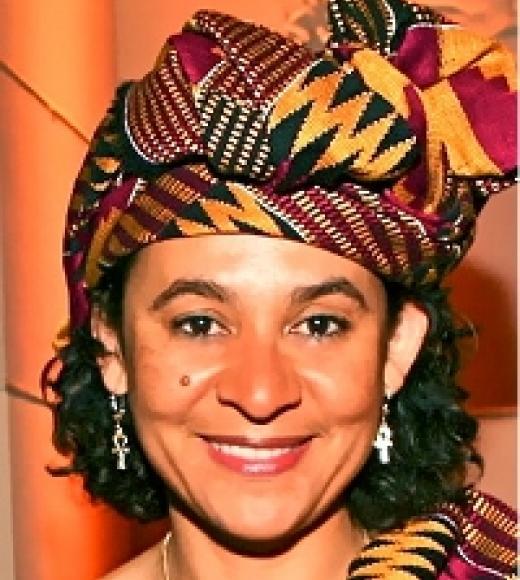
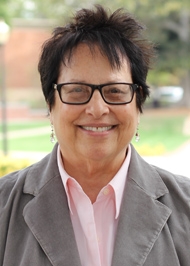
Amina Mama is a Professor in the Department of Gender, Sexuality and Women's Studies at the University of California, Davis, where she contributes to interdisciplinary scholarship and teaching. She is also affiliated with the Geography Graduate Group, reflecting her cross-disciplinary academic engagement. Her work is housed in 1209 Hart Hall on the UC Davis campus. Her research focuses on feminist theory, gender and sexuality, and the role of academic inquiry in advancing social justice and community advocacy. She is particularly known for her work in African and postcolonial feminisms, critical race studies, and the politics of knowledge production. Her academic interests bridge gender studies with geographic and socio-political analyses. The available information does not include recent publications, but her scholarly profile suggests a strong emphasis on decolonial feminist thought, gender equity, and activism-oriented research. Her interdisciplinary affiliations indicate collaborative and integrative approaches to scholarship. There are no listed scientific awards in the provided text. Amina Mama advises students through her roles in Gender, Sexuality and Women's Studies and the Geography Graduate Group. While specific grants are not mentioned, her research focus suggests involvement in projects related to gender justice, feminist activism, and global South scholarship. She likely participates in interdisciplinary research initiatives and community-engaged scholarship. She is associated with the Gender, Sexuality and Women's Studies program and the Geography Graduate Group, both of which support collaborative research, graduate training, and public scholarship focused on equity and social change.
Heidi R. Lewis is the David and Lucile Packard Professor of Feminist & Gender Studies at Colorado College. She serves as President of the National Women's Studies Association (2023-25) and Editor-in-Chief of the Oxford Bibliography in Women's & Gender Studies. Her research focuses on Black Feminisms, Hip Hop discourse, and Critical Media Studies, with a current project challenging narratives around Mumble Rap's authenticity. Lewis holds a Ph.D. in American Studies from Purdue University and has taught interdisciplinary courses including Hip Hop & Feminism and Critical Media Studies. Education: Ph.D., American Studies, Purdue University (2011) M.A., English Literature, Ohio University (2005) B.A., English Studies, Robert Morris University (2003) Research Interests: Lewis interrogates intersections of race, gender, and media through projects like her forthcoming book on Mumble Rap and a documentary on her experiences during the crack cocaine epidemic. She employs discourse analysis to challenge dominant narratives in Hip Hop and feminist theory, emphasizing marginalized voices and transnational collaborations. Service & Leadership: As Director of Feminist & Gender Studies, Lewis secured funding for new faculty lines, student programs, and community partnerships. Nationally, she co-created the #FemSTEMSymposium to bridge feminist inquiry and STEM fields. Her service prioritizes equity, including roles on promotion committees and external reviews for academic centers. Community Engagement: Lewis collaborates with organizations like the Kampagne für Opfer Rassistischer Polizeigewalt and the U.S. Olympic Committee. Her work extends beyond academia through public talks, media contributions, and initiatives like the Marsha P. Johnson Professorship.
Megan Sweeney is Arthur F. Thurnau Professor of English, Afroamerican and African Studies, and Women's and Gender Studies at the University of Michigan. Her research examines African American literature, reading practices in carceral settings, and autotheory through works like Reading Is My Window and the lyric essay collection Mendings . Her scholarship has been supported by the Radcliffe Institute for Advanced Study, Ford Foundation, and Woodrow Wilson Foundation. Sweeney received the university's highest teaching awards including the 2021 John D'Arms Award for graduate mentoring and 2014 Thurnau Professorship. She serves as Director of Graduate Studies in English and Interim Editorial Director for Feminist Studies .
Ann D. Braude is a Senior Lecturer on American Religious History and Director of the Women's Studies in Religion Program at Harvard Divinity School (HDS), affiliated with Harvard University. She joined HDS in 1998 after roles at Carleton College and Macalester College. Her work emphasizes inclusive religious narratives, particularly exploring intersections of gender, spirituality, and social movements. Key research areas include 19th-century Spiritualism, Indigenous religious perspectives, and modern abstract art's relationship to spirituality. Braude holds an AB from Vassar College, MA from the University of Chicago, and PhD from Yale University. Her research has produced influential works like Radical Spirits (2008) and Sisters and Saints (2007), which examine women's roles in shaping religious history. She organized pivotal conferences such as the 2005 celebration of women at HDS and curated the bicentennial exhibition Faces of Divinity (2016). Her current projects include studying gender dynamics in abstract painting and Native American religious frameworks through a biennial speakers series. Braude’s courses focus on American religious history, feminist theology, and Indigenous religious studies. Her articles and public engagement reflect a commitment to bridging academic research with broader societal conversations about religion, gender, and culture. She maintains active roles in both Harvard Divinity School and the broader academic community, contributing to interdisciplinary dialogues on pluralism and religious diversity.
Nadia E. Brown is a Professor of Government and Director of the Women's and Gender Studies Program at Georgetown University's College of Arts and Sciences. She holds a Ph.D. in Political Science from Rutgers University and specializes in intersectional analyses of Black women’s politics, legislative studies, and identity politics. Her work emphasizes holistic approaches to understanding race, gender, and their intersections in political systems. Dr. Brown leads the #MeTooPoliSci Collective, focusing on eradicating sexual harassment in political science, and co-PIs a million-dollar NSF grant addressing systemic issues in the discipline. She is editor of Politics, Groups and Identities and contributes to The Monkey Cage blog. Her research spans Black women’s legislative representation, digital activism, and feminist methodologies, with award-winning books including Sisters in the Statehouse and Sister Style . Education: Ph.D. in Political Science, Rutgers University Key Affiliations: African American Studies Program, #MeTooPoliSci Collective Research Methods: Case studies, ethnography, interviews Her advocacy extends beyond academia, influencing public discourse on racial justice and gender equity through media engagement and policy-focused scholarship.
Elizabeth Bernstein is a Professor of Women's, Gender & Sexuality Studies and Professor of Sociology at Barnard College, Columbia University, where she has been a faculty member since September 2002. Her work bridges sociological theory with feminist analysis, focusing on the intersections of gender, sexuality, and political economy. Bernstein directs significant research initiatives including the Gender Justice and Neoliberal Transformations Working Group, a transnational collaboration among thirteen scholars examining gender justice in contemporary global contexts. She is currently developing a new book project titled "Imagining Immunity: Precarious Bodies and the Governance of Gendered Dis-ease," which explores immunological metaphors in understanding bodily risk and suffering. B.A., University of California, Berkeley M.A., University of California, Berkeley Ph.D., University of California, Berkeley Professor Bernstein's research focuses on the political economy of the body, gender, and sexuality, with particular attention to sexual commerce, sex trafficking, and neoliberal governance. Her work employs ethnographic methods to examine how intimate relations become sites of economic exchange and political regulation. She investigates how concepts of authenticity, freedom, and rights are mobilized in debates about sexual commerce and trafficking. Bernstein's scholarship critically engages with feminist theory, carceral politics, and transnational governance frameworks, challenging conventional approaches to sex work and trafficking that often reinforce punitive systems rather than advancing gender justice. Analysis of Bernstein's scholarly output reveals a consistent trajectory examining the intersections of gender, sexuality, and political economy within neoliberal frameworks. Her work demonstrates increasing attention to transnational governance mechanisms and their impact on intimate relations and bodily autonomy. A notable trend is her critical examination of how anti-trafficking campaigns often employ carceral logic that undermines feminist goals of gender justice. Her scholarship consistently challenges binary frameworks that position sex work solely as exploitation or liberation, instead analyzing the complex economic, political, and social dynamics that shape sexual commerce globally. Bernstein's research has received significant recognition through prestigious awards including: Distinguished Book Award, American Sociological Association, Sociology of Sexualities Section (2020) for "Brokered Subjects" Honorable Mention, Society for the Study of Social Problems Global Division Book Award (2019) Norbert Elias Prize, Norbert Elias Foundation (2009) Distinguished Book Award, American Sociological Association, Sex and Gender Section (2009) Her work has also been supported by major funding organizations including the Institute for Advanced Study, National Science Foundation, Social Science Research Council, AAUW, and Mellon Foundation. As a principal investigator along with Janet Jakobsen for the Gender Justice and Neoliberal Transformations Working Group, Bernstein leads a significant collaborative research initiative sponsored by the Barnard Center for Research on Women. Her grant portfolio demonstrates sustained support from major research institutions, reflecting the significance of her work in gender studies and sociology. While specific student advisees aren't listed in the available materials, her role as a full professor at Barnard College indicates extensive mentorship of undergraduate and likely graduate students in Women's, Gender & Sexuality Studies and Sociology. Bernstein co-leads the Gender Justice and Neoliberal Transformations Working Group, a collaboration among thirteen scholars working transnationally on questions of gender justice. This initiative represents a significant research collective examining how neoliberal policies reshape gender relations globally. Her work with the Barnard Center for Research on Women provides institutional support for this transnational feminist research network, facilitating scholarly exchange and collaborative publication projects that advance critical perspectives on gender, sexuality, and political economy.
Tithi Bhattacharya is a Full Professor in the Department of History at Purdue University. She holds a PhD from the University of London and is renowned for her work in South Asian history, Transnational Gender, Colonialism, and Global History. Bhattacharya is the author of influential books including Ghostly Past, Capitalist Presence (Duke, 2024) and The Sentinels of Culture (Oxford, 2005), and co-author of the widely translated Feminism for the 99%: A Manifesto (Verso, 2019). Her educational background includes a PhD from the University of London. This foundational training has equipped her to critically engage with colonial and postcolonial histories, Marxist theory, and feminist praxis. Bhattacharya's research interests span Social Reproduction Theory, Marxist feminism, and the intersections of class, gender, and colonialism. She examines how capitalism relies on the social reproduction of labor, particularly through gendered and racialized exploitation. Her work also addresses Islamophobia and the politics of fear in colonial and contemporary contexts, as seen in her book Ghostly Past, Capitalist Presence . Analysis of her recent publications reveals a consistent focus on Social Reproduction Theory as a framework for understanding global capitalism and feminist resistance. Her articles frequently address the BRICS nations, anti-colonial movements, and the development of a feminism that centers the 99%. The multilingual nature of her work (appearing in over 30 languages) underscores its international impact. While specific scientific awards are not mentioned in the provided text, Bhattacharya's work has been published in prestigious journals such as the Journal of Asian Studies and South Asia Research , and she serves on the editorial boards of Studies on Asia and Spectre . Information regarding her advising of students and grant activities is not provided in the current text. Similarly, details about labs or research teams are absent.
Anupama Rao is Professor of History and MESAAS (Institute for Comparative Literature and Society) at Columbia University, with affiliations in Women's, Gender and Sexuality Studies and Human Rights. She is based at Barnard College, where she holds office hours and engages in interdisciplinary teaching and research. Her educational background includes a B.A. with honors from the University of Chicago and a Ph.D. from the Interdepartmental Program in Anthropology and History at the University of Michigan. Rao’s research spans South Asian history and anthropology , gender and sexuality studies , caste and race , social theory , comparative urbanism , and colonial genealogies of human rights . She is known for her groundbreaking work on anti-caste thought, particularly the political philosophy of B. R. Ambedkar, and for theorizing caste subalternity in modern India. Her scholarship critically examines the intersections of caste, gender, urban space, and political subjectivity. Her recent and ongoing publications reflect a deep engagement with global racisms, Cold War humanism, and justice futures. Key themes across her articles include Dalit aesthetics, subaltern urbanism, affirmative action, and the transnational dimensions of caste. Her work shows a consistent trend toward interdisciplinary, postcolonial, and decolonial frameworks that challenge Western-centric epistemologies. Fellow-in-Residence, National Humanities Center (2008–2009) Fellow, Center for Advanced Study in the Behavioral Sciences, Stanford (2010–2011) Fellow, REWORK, Humboldt University, Berlin (2014–2015) Global Humanities Institute Awardee, CHCI (2023) Rao has served as Senior Editor of Comparative Studies in South Asia, Africa, and the Middle East (2012–2021), President of the Society for the Advancement of the History of South Asia (SAHSA), and member of the South Asia Council of the Association for Asian Studies. She is Principal Investigator for the Mellon-funded Global Humanities Institute project Global Racisms, Cold War Humanism, and Just Futures (2022–2024) and co-directs Geographies of Injustice at Columbia’s Center for the Study of Social Difference. She has secured major research grants from the ACLS, NEH, SSRC, and Mellon Foundation. She advises and mentors graduate students, though specific names are not listed in the text. Rao directs the Institute for Comparative Literature and Society and convenes the Ambedkar Initiative, fostering interdisciplinary research and public engagement on caste, race, and justice. She leads and participates in multiple research collectives, including the Geographies of Injustice project and the Asian Spatialities initiative. She is deeply involved in institutional leadership through her roles at the Institute for Comparative Literature and Society and the Ambedkar Initiative, both of which serve as hubs for critical humanities research.
Rutgers, The State University of New JerseyUnited States
Nick Kapur is an Associate Professor in the Department of History at Rutgers University–Camden, within the School of Arts and Sciences. He specializes in modern Japan and East Asia, with a focus on transnational perspectives, US-Japan relations, environmental history, gender, and cultural studies including literature and film. His educational background includes a Ph.D. from Harvard University (2011), an M.A. from Stanford University (2003), and a B.A. from Stanford University (2002). Kapur's research examines the intersections of political economy, culture, and international relations in modern Japan, particularly in the postwar era. His acclaimed book, Japan at the Crossroads: Conflict and Compromise after Anpo (2018), analyzes the 1960 protests and their lasting impact on Japanese society and US-Japan relations. He has also published extensively on the Japanese student movement, environmental policy, and Meiji centennial celebrations. His recent and forthcoming articles reflect a sustained engagement with Cold War Japan, dissent, nationalism, and transnational history. Kapur is known for innovative teaching methods, including historical simulations on Pearl Harbor and samurai-era Japan. He is the founder of the Modern Japan History Association and has contributed significantly to digital humanities through projects like the Digital Archive of Japan’s 2011 Disasters and the development of educational apps. His publications from the past decade show a consistent focus on political protest, cultural memory, and international relations in 20th-century Japan. His scholarly contributions include numerous peer-reviewed articles, book chapters, translations, and book reviews in leading journals such as Diplomatic History , The Journal of Asian Studies , and The Asia-Pacific Journal . Kapur advises graduate students and teaches courses on Japanese, Chinese, and Korean history, World War II, and environmental history. He has played a leadership role in promoting Japanese studies globally and continues to be an active researcher with works forthcoming in 2025. His current projects include digital applications for historical education.
Professor Mary Catherine Hilkert holds a position in the Department of Theology at the University of Notre Dame’s College of Arts and Letters. Her research focuses on theological anthropology, fundamental theology, Christology, feminist theologies, and the interplay between theology, preaching, and spirituality. A member of the Dominican Sisters of Peace, she has received four honorary doctorates and prestigious awards recognizing her contributions to integrating academic and pastoral theology, particularly through feminist frameworks. Education: B.A., University of Dayton; M.A. and Ph.D., Catholic University of America. Her work centers on Edward Schillebeeckx’s theology, medieval mystics like Catherine of Siena, and sacramental imagination in preaching. She has lectured globally and served on international theological commissions for the Order of Preachers. Awards include the Sophia Award and Yves Congar Award for theological excellence. Her publications explore themes like the Reign of God, liturgical spirituality, and the role of women’s voices in theology. She has advised students through her academic leadership and has been a key figure in ecumenical theological dialogues across continents.
Pheng Cheah serves as Professor at the University of California, Berkeley, specializing in interdisciplinary research bridging philosophy, literature, and political theory with global implications. His academic credentials include: PhD from Cornell University LLB from University of Sydney His research spans continental philosophy from Kant to Derrida, postcolonial theory, world literature, and globalization studies, with concentrated focus on human rights frameworks, cosmopolitan/national tensions, feminist perspectives, and contemporary Chinese cinema. His methodology integrates literary analysis with political philosophy to examine power dynamics in transnational contexts, particularly across postcolonial Asia where he conducts fieldwork with filmmakers. Publication analysis reveals an evolving trajectory from foundational cosmopolitan/national theory toward biopolitical human rights frameworks and cinematic representations of globalization. His work consistently centers non-Western perspectives—especially Chinese, Southeast Asian, and global South contexts—challenging Eurocentric paradigms through comparative analysis of cultural production and political transformation. No scientific awards are documented in available sources. Professor Cheah mentors graduate students in critical theory and postcolonial studies, guiding research on literature's political dimensions. His scholarly activities are supported by standard academic funding mechanisms enabling extensive archival work and international collaborations, particularly with Asian film communities. He maintains active participation in global studies consortia and postcolonial research networks, frequently collaborating with filmmakers and scholars across the three Chinas through interview-based methodologies.
Mrinalini Sinha is the Alice Freeman Palmer Professor of History and Professor of English Language and Literature at the University of Michigan. Her research focuses on Colonial India, the British Empire, World History, and South Asian Studies with particular attention to Colonialism, Imperialism, Global Studies, and Women's Studies. She is affiliated with the Center for South Asian Studies and the International Institute. Dr. Sinha holds a Master's degree from Jawaharlal Nehru University, New Delhi, and a PhD from the State University of New York at Stony Brook. Her work bridges historiography, gender studies, and postcolonial theory, examining themes such as nationalism, colonial governance, and feminist movements in South Asia. Recent publications explore oral histories in Pakistan, gendered nationalism, and contested colonial reforms like the Ilbert Bill controversy. Her academic contributions include seminal works on colonial masculinity, the intersection of feminism and nationalism, and critiques of imperial social formations. She actively engages with global debates on empire, race, and the legacies of colonialism through her teaching and research.
Michaela D.E. Meyer is a Professor in the Department of Communication Studies at Christopher Newport University (CNU), specializing in critical media studies, LGBTQ+ issues, and television/film analysis. Her research bridges interpersonal communication, gender and sexuality studies, and emerging adulthood narratives. Ph.D. in Communication, Ohio University M.S. in Journalism, Ohio University Ph.B. in International Studies, Miami University Her research focuses on intersectional representation in media , LGBTQ+ narratives , and relational aggression in film . She employs narrative and autoethnographic methods to critique political ideologies in popular culture, such as neoliberalism in Fixer Upper and feminist critiques in Glee and Shondaland . Michaela’s recent articles explore themes like disability discourses in Korean television , feminist film auteur theory , and nostalgia in streaming reboots . These works highlight identity politics , gender representation , and media’s role in social discourse . Paul Boaze Prize, Ohio University (2025) Outstanding Panel Award in Sexuality and Gender Identity, Central States Communication Association (2025) Faculty Excellence Award in Undergraduate Research Mentorship, CNU (2025) James W. Chesebro Award for Scholarly Distinction, Sexual Orientation and Gender Identity Caucus of CSCA (2021) She has mentored undergraduate research and contributed to critical media pedagogy , with grants and service awards reflecting her commitment to diversity and inclusion in academia. Her full scholarship and honors are detailed in the scientific_awards section.
University of California, Los AngelesUnited States
Sherry B. Ortner is a Distinguished Research Professor of Anthropology at UCLA, specializing in cultural and social theory, feminist theory, and media studies. She holds degrees from Bryn Mawr College (A.B.), University of Chicago (M.A., Ph.D.). Her research spans Sherpa ethnography in Nepal, U.S. social class dynamics, and independent film critique. She has been awarded the J.I. Staley Prize, Retzius Medal, and MacArthur Fellowship. Ortner’s work interrogates late capitalism, neoliberalism, and cultural production, particularly through independent film movements. Her shift from Himalayan studies to U.S. cultural analysis reflects a focus on global and local power structures. She has held academic positions at Berkeley, Columbia, and the University of Michigan before joining UCLA in 2004. Key Research Themes : Feminist theory, media anthropology, class and capitalism, cultural critique. Awards : American Academy of Arts and Sciences membership, Guggenheim and NEH fellowships. Her publications include Not Hollywood (2013), New Jersey Dreaming (2003), and Life and Death on Mt. Everest (2000). Ortner’s recent work critiques patriarchal structures and neoliberalism’s cultural impacts. She is a foundational voice in contemporary anthropological theory.
Aisha Durham is a Professor of Communication at the University of South Florida's College of Arts and Sciences, with affiliations in Humanities & Cultural Studies and Women's & Gender Studies. She holds a Ph.D. from the University of Illinois at Urbana-Champaign (2007) and has held academic positions at Texas A&M University and the University of Georgia. Her research focuses on Black feminist thought, autoethnography, and media/cultural studies. She is the award-winning author of Home with Hip Hop Feminism: Performances in Communication and Culture and a co-editor of Home Girls Make Some Noise! Key research areas include Hip Hop Feminism, intersectionality, and qualitative methodologies. Durham has received prestigious awards such as the NCA Marsha Houston Award and the Ellis-Bochner Award for autoethnography. She contributes to public scholarship through podcasts, media analyses, and international talks for outlets like CNN and NPR. Her work emphasizes democratizing knowledge and addressing systemic inequities in academia and culture. Professional activities include editorial board roles, advisory positions (e.g., Smithsonian Anthology of Hip-Hop and Rap), and keynote speaking at institutions worldwide. Her recent publications explore pedagogical resistance, hiphop literacies, and Black feminist mentorship frameworks.