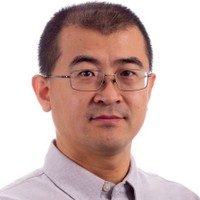
Zhibo Pang is an Adjunct Professor at KTH Royal Institute of Technology's Department of Intelligent Systems (EECS) and Senior Principal Scientist at ABB Corporate Research Sweden. His work focuses on digital transformation in industry and healthcare, spanning robotics, AI, control systems, and wireless communication. He leads projects in embodied intelligence, Industry 4.0, and Healthcare 4.0, with 23 granted patents and over 120 journal papers. Education: PhD in Electronic and Computer Systems (KTH, 2013), MBA in Innovation & Growth (University of Turku, 2012). Key Roles: IEEE Technical Committee Chair, Editor of 6 IEEE journals, ABB Inventor of the Year (2016, 2018, 2021). Research Interests: Robotics safety, wireless automation, federated learning, digital twins, and IoT security. Recent Projects: Cloud-fog automation frameworks, robot skin systems for healthcare, and latency-aware industrial control. His work bridges academia and industry through cross-functional collaborations.
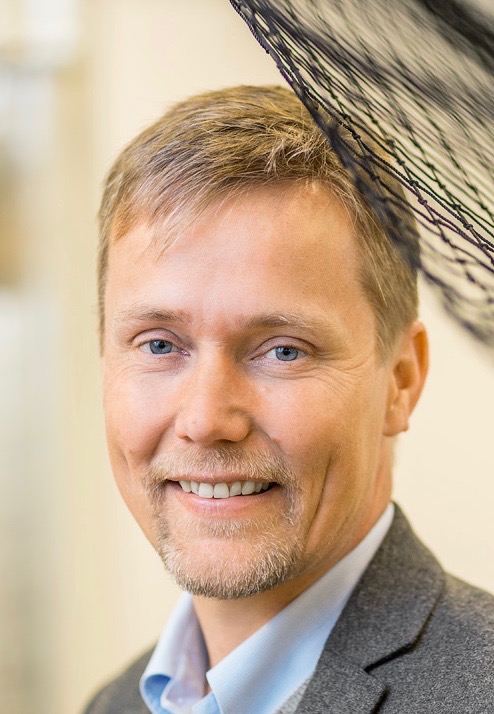
Karl Henrik Johansson is a Professor at the School of Electrical Engineering and Computer Science, KTH Royal Institute of Technology in Stockholm, Sweden, where he also serves as the Founding Director of Digital Futures. He is a Fellow of both IEEE and the Royal Swedish Academy of Engineering Sciences, and has held leadership positions including Immediate Past President of the European Control Association and IEEE Control Systems Society Vice President Diversity, Outreach & Development. Dr. Johansson earned his MSc in Electrical Engineering and PhD in Automatic Control from Lund University. His academic journey includes visiting positions at prestigious institutions such as UC Berkeley, Caltech, and NTU. His research focuses on networked control systems and cyber-physical systems with applications in transportation, energy, and automation networks. His work investigates fundamental challenges in connecting physical world systems through communication networks, exploring how wireless communication and sensor technology can enhance system robustness, reliability, energy efficiency, and safety. Current research directions include security of cyber-physical systems, distributed optimization, multi-agent systems, and applications to intelligent transportation and energy networks. Analysis of his recent publications reveals a strong focus on distributed optimization algorithms, secure networked control, multi-agent systems, and applications to transportation and energy networks. His work increasingly integrates machine learning techniques with traditional control theory, addressing challenges in privacy-preserving distributed computation, resilient state estimation, and resource allocation in complex networked systems. IEEE Control Systems Society Hendrik W. Bode Lecture Prize (2024) Swedish Research Council Distinguished Professor (2018-2027) Wallenberg Scholar (2009-2026) IFAC Young Author Prize IEEE CSS Distinguished Lecturer (2017-2019) IFAC Outstanding Service Award IEEE Fellow Dr. Johansson has supervised over 100 postdocs and PhD students, with many now holding prominent positions at institutions worldwide. His research has been supported by significant grants including the Swedish Research Council Distinguished Professor Grant (2018-2027), multiple Wallenberg Foundation grants, and numerous EU and national research projects. He has directed major research centers including ACCESS Linnaeus Centre (2009-2016) and Strategic Research Area ICT TNG (2013-2020). His research group operates within the Digital Futures initiative and maintains strong connections with industry partners through projects like the Integrated Transport Research Lab (supported by Scania and Ericsson) and Smart Mobility Lab. The group actively collaborates with international institutions and participates in major EU-funded projects addressing challenges in cyber-physical systems, transportation, and energy networks.
Erik G. Larsson is a Professor and Head of the Division for Communication Systems within the Department of Electrical Engineering (ISY) at Linköping University (LiU), Sweden. He joined LiU in September 2007 and has previously held academic and research positions at the Royal Institute of Technology (KTH), University of Florida, George Washington University, and Ericsson Research. Research Interests: Enabling technologies for 6G wireless communication Statistical inference and signal processing Network science and complex networks Decentralized and federated machine learning over networks Physical layer security and privacy Energy-efficient digital signal processing His research group, active in areas like RadioWeaves and massive MIMO, focuses on robust, efficient, and secure wireless connectivity. Recent publications highlight trends in decentralized learning, resource allocation in wireless networks, and the integration of AI into mobile networks, particularly through projects like 'Turning the Air into an AI Computer' funded by the Knut and Alice Wallenberg Foundation. Scientific Awards and Honors: IEEE Signal Processing Magazine Best Column Award (2012, 2014) IEEE ComSoc Stephen O. Rice Prize (2015) IEEE ComSoc Leonard G. Abraham Prize (2017) IEEE ComSoc Best Tutorial Paper Award (2018) IEEE ComSoc Fred W. Ellersick Prize (2019) IEEE SPS Donald G. Fink Overview Paper Award (2023) IEEE Fellow Member, Royal Swedish Academy of Sciences (KVA) Gyllene Moroten Best Teacher Award (2021) Advising and Grants: He has supervised numerous Ph.D. and Licentiate students, many of whom now hold positions at leading industry and academic institutions. His research is currently funded by major organizations including the Knut and Alice Wallenberg Foundation, Swedish Foundation for Strategic Research (SSF), ELLIIT, Security-Link, Swedish Research Council (VR), and EU Horizon 2020 (H2020-SNS-6GTandem). Previous sponsors include VR, KVA, NSF, ORAU, and multiple EU FP7 and H2020 projects (e.g., MAMMOET, REINDEER, 5G-Wireless). Leadership and Service: He has served as Associate Editor for IEEE Transactions on Communications and IEEE Transactions on Signal Processing, chaired technical committees and steering committees in IEEE Signal Processing Society, and held leadership roles in major conferences such as the Asilomar Conference on Signals, Systems and Computers. He was a Visiting Fellow at Princeton University in 2015.
Magnus Boman is a Professor of AI and Health at the Department of Medicine, Solna, Karolinska Institutet (KI), where he leads the AI@KI initiative to support researchers in AI integration. He is affiliated with the Chronic Inflammatory Disease Epidemiology research group under Johan Askling. His research focuses on AI applications in precision medicine, multimodal prediction, ethical norms in AI systems, energy-efficient computing, and quantum sensor data interpretation. Research Interests: Artificial Intelligence in healthcare and precision medicine Multimodal data analysis for disease prediction and treatment Machine learning for clinical decision support systems Ethical and societal implications of AI Grants: Swedish Research Council: Improving breast cancer histology image classification (2024-2026) Scalable Federated Learning (2022-2025) Ai in sustainable cities (VINNOVA, 2019) Advising & Students: Supervised over 50 PhD and Master's students across KI, KTH, and Stockholm University, focusing on AI applications in healthcare, machine learning, and computational epidemiology. Notable projects include predictive modeling for mental health outcomes and variant filtering in genetic data. Labs & Teams: Leads AI@KI, fostering AI adoption in medical research. Collaborates with the Johan Askling group on epidemiology and chronic disease studies.
Mikael Johansson is a Professor at Kungliga Tekniska Högskolan (KTH), specializing in Control Technology . He teaches and coordinates courses such as Distributed Optimization (FEL3311) and various advanced-level degree projects in computer science, electrical engineering, and systems engineering. His research spans Control Systems , Machine Learning , and Optimization , with a focus on asynchronous algorithms, federated learning, and applications in energy systems and construction. His work includes 15 recent publications on topics like neural networks, distributed optimization, and battery technology. Notable areas of contribution are in asynchronous learning, federated learning with privacy constraints, and quasi-Newton methods for optimization. His research bridges theoretical advancements with practical applications in urban design, healthcare, and autonomous systems.
Jorge Gil is an Associate Professor in Urban Analytics and Informatics at Chalmers University of Technology's Department of Architecture and Civil Engineering. His research focuses on integrated urban models, Smart Cities, City Information Modelling (CIM), and Urban Digital Twins, with applications in sustainable mobility, social inclusion, energy transition, and circular economy. He develops GIS solutions and open science methodologies. Teaching includes GIS, sustainable mobility, and spatial data science courses. He supervises Bachelor, Master's, and PhD students. Current projects include LogiNets (logistics network flows analysis), ComCy (cycling safety), and FlowSense (traffic flow data). Key research outputs span agent-based modeling of waste sorting behavior, mobility equity analysis, and multimodal urban network frameworks. He co-authored over 50 publications and actively contributes to interdisciplinary urban planning initiatives.
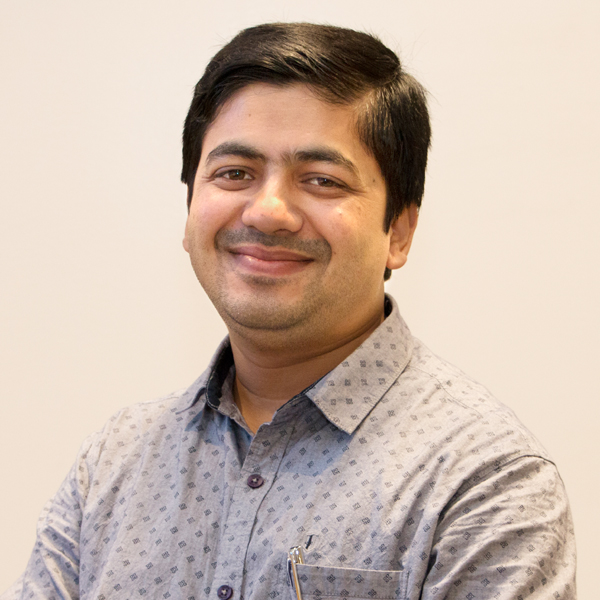
Monowar Bhuyan is an Associate Professor in the Department of Computing Science at Umeå University, Sweden, leading the Cyber Analytics and Learning Group within ADSLab. He holds a Ph.D. in Computer Science from Tezpur University and has held academic positions at Assam Kaziranga University and Umeå University. His research focuses on machine learning, anomaly detection, edge AI, and distributed systems security. He has secured over 35 MSEK in grants from WASP, STINT, and EU Horizon programs. Education Ph.D. in Computer Science and Engineering, Tezpur University (2014) M.Tech. in Information Technology, Tezpur University (2009) B.E. in Computer Science and Engineering, IETE (2007) Research Interests Distributed/Federated/Responsible Machine Learning Cybersecurity and Anomaly Detection in Edge Clouds AI for DDoS Defense and Cyber Resilience Edge AI and Serverless Computing Recent Contributions His recent work addresses secure federated learning, DDoS attack detection in cloud-edge systems, and responsible AI. Key publications include novel frameworks for VSI-DDoS detection and federated learning optimizations. Awards & Grants Best Paper Awards at ICONIP 2023 and ACM ICACCI 2012 WASP NEST Grant (AIR2 Project, 5 MSEK) EU Horizon Europe Grant (SovereignEdge.Cognit, 8.27 MSEK) Lab & Collaborations He leads the Cyber Analytics and Learning Group (ADSlab), collaborating with institutions like KTH, Linköping University, and Nara Institute of Science and Technology (NAIST). The lab focuses on AI-driven security solutions for distributed systems.
Morteza Haghir Chehreghani is a Professor of Artificial Intelligence and Machine Learning at the Data Science and AI Division of Chalmers University of Technology , Sweden. He leads the Machine Learning and Decision Making Lab and is affiliated with WASP , CHAIR , and ELLIS . Education : PhD in Computer Science (2014) from ETH Zurich under Prof. Dr. Joachim M. Buhmann Prior Roles : Staff Research Scientist at Naver Labs Europe (2014-2018) Research spans Interactive Machine Learning , Sequential Decision Making , Federated Learning , Efficient Deep Learning , and Graph-Based Learning . Key application areas include Transport , Autonomous Systems , Energy , Drug Discovery , and Computational Biology . Selected Publications (2020-2025) demonstrate expertise in Reinforcement Learning for drug design, Minimax Distance Measures for clustering, and Graph Neural Networks for trajectory analysis. Current work focuses on Combinatorial Bandits and Human-in-the-loop AI . Teaching includes graduate courses like Advanced Topics in Machine Learning (DAT441/DIT41), Algorithms for Machine Learning (TDA233/DIT382), and PhD-level Advanced Reinforcement Learning . He has also taught Statistical Methods for Data Science and Theoretical Foundations of ML . Patents include systems for Autonomous Vehicle Motion Control , K-NN Search via Minimax Distances , and Trip Prediction Algorithms . Collaborative projects involve Nature Communications (2022) and multiple ICML / CVPR publications.
Panagiotis Papapetrou is a Professor of Data Science and Deputy Head of Department at the Department of Computer and Systems Science , Stockholm University (since 2017). He also serves as Head of the Data Science Research Group and holds an Adjunct Professor position at Aalto University (Finland). As a Board Member of the Swedish Association for Artificial Intelligence (SAIS) , he contributes to shaping AI research directions in Sweden. Research Pillars: Algorithmic data mining, interpretable machine learning, time series classification, and health informatics Key Projects: AI for societal fairness, digital twins for smart buildings, EXTREMUM for explainable medical AI, and e-learning personalization Teaching Legacy: Developed courses in Data Mining (HT2013-2022), Machine Learning (VT2022-2024), and Health Informatics (VT2018-2021) His work focuses on interpretable AI for healthcare applications, particularly through counterfactual explanations for time series classification and forecasting. This includes developing methods like Glacier for constrained counterfactuals and Ijuice for k-justified explanations. His research also explores multimodal clustering of sepsis patient records and federated learning approaches for ICU mortality prediction. Recent scientific contributions include: CounterFair (2024): Group fairness analysis via counterfactual burden metrics M-ClustEHR (2024): Multimodal clustering for electronic health records COMET (2024): Constraint-based glucose forecasting explanations Temporal pattern mining (2024-2025): Enhanced forecasting models through decomposition Z-Time (2024): Interpretable multivariate time series classification His editorial leadership includes: Action Editor at Machine Learning Journal (since 2024) Action Editor at Data Mining and Knowledge Discovery (since 2018) Guest Editorial Board for ECML/PKDD Journal Track (2014-2019)
Jelena Zdravkovic is a Professor and Head of the Department of Computer and Systems Sciences (DSV) at Stockholm University. She leads the PRECIS research group which focuses on Process, Requirements, Enterprise, Capability, and Information Systems modelling. Her work spans theoretical and practical aspects of enterprise and IT solutions with a particular emphasis on digital transformation. Professor Zdravkovic's research interests center around Digital Business Ecosystems , Digital Twins , and Data-driven Requirements Engineering . Her work in Enterprise Modeling explores capability-oriented and consumer-oriented approaches to requirements engineering. She investigates how digital transformation and big data can be leveraged to improve requirements elicitation processes, and how organizations can model and manage complex digital business ecosystems. Her research has significant implications for how businesses can adapt to rapidly changing technological environments while maintaining resilience and competitiveness. Her recent publications reveal a clear trajectory toward integrating artificial intelligence with digital modeling techniques, particularly in the context of smart buildings and business ecosystems. There's a consistent focus on how data-driven approaches can transform traditional requirements engineering practices, making them more responsive to the velocity and variety of digital data sources. Her work bridges theoretical modeling with practical applications across various industries including healthcare, energy, and transportation. Professor Zdravkovic has been actively involved in mentoring PhD students, including supervising research on the Management Framework of Resilient Digital Business Ecosystems. She has participated in numerous national and international projects focused on interoperability and model-driven engineering, securing research funding for innovative work at the intersection of business and technology. She leads the PRECIS research group which deals with theories, methods and tools for analysis and design of organizational and IT solutions in congruence. The group's research covers three key topics – Enterprise Modelling, Business Process Management, and Conceptual Modelling. Their work brings together academic rigor with practical applications to solve real-world business challenges through innovative information systems approaches.
Mahdi Fazeli is an Associate Professor at the School of Information Technology, Halmstad University, Sweden, specializing in hardware security and trust, energy-efficient computing, and embedded and cyber-physical systems. His academic journey began with a Ph.D. in Computer Engineering from Sharif University of Technology, Iran, in 2011. His career progression includes positions as Associate Professor at Bogazici University (2019-2021) and Iran University of Science and Technology (2016-2019), and Assistant Professor at the same institution (2011-2016). His research interests focus on hardware security and trust, reliable VLSI circuits and systems, energy-efficient computing, and dependable embedded systems. His work bridges the gap between theoretical security concepts and practical implementations in real-world systems, particularly in IoT and embedded environments. He has established himself as a leading researcher in Physical Unclonable Functions (PUFs), hardware trojans detection, and energy-efficient security solutions for resource-constrained devices. His publication record shows a clear progression and deepening expertise in hardware security, with recent work focusing on cutting-edge applications in edge computing, vehicular networks, and IoT security. His 2023-2025 publications demonstrate significant contributions to magnetic memory-based security primitives, anomaly detection systems, and energy-efficient security mechanisms. Throughout his career, Fazeli has led multiple research initiatives including the Dependable Systems and Architecture Lab (DSA) and the Networked and Embedded Systems Lab at Iran University of Science and Technology. His leadership extends to heading the Hardware Group and serving as Vice Chair for Educational Affairs, demonstrating his commitment to both research excellence and academic administration.
Feras M. Awaysheh is an Associate Professor at the Department of Computing Science , Umeå University , Sweden. He leads the Autonomous Distributed Systems Lab (ADSLab) and focuses on research areas including Edge AI , Federated Learning , Distributed Data Privacy , Cloud Computing , and Big Data (BD). Affiliation : Department of Computing Science, Umeå University Research Leadership : ADSLab His research explores: Edge AI for decentralized intelligence Federated Learning architectures Distributed Data Privacy mechanisms Cloud Computing scalability Big Data resource allocation Recent publications focus on: Metaheuristic optimization for cloud systems Secure client selection in federated learning Multi-objective scheduling in IoT environments Elastic resource allocation frameworks He works in the MIT House (room MIT.B.225), Umeå, Sweden (901 87).
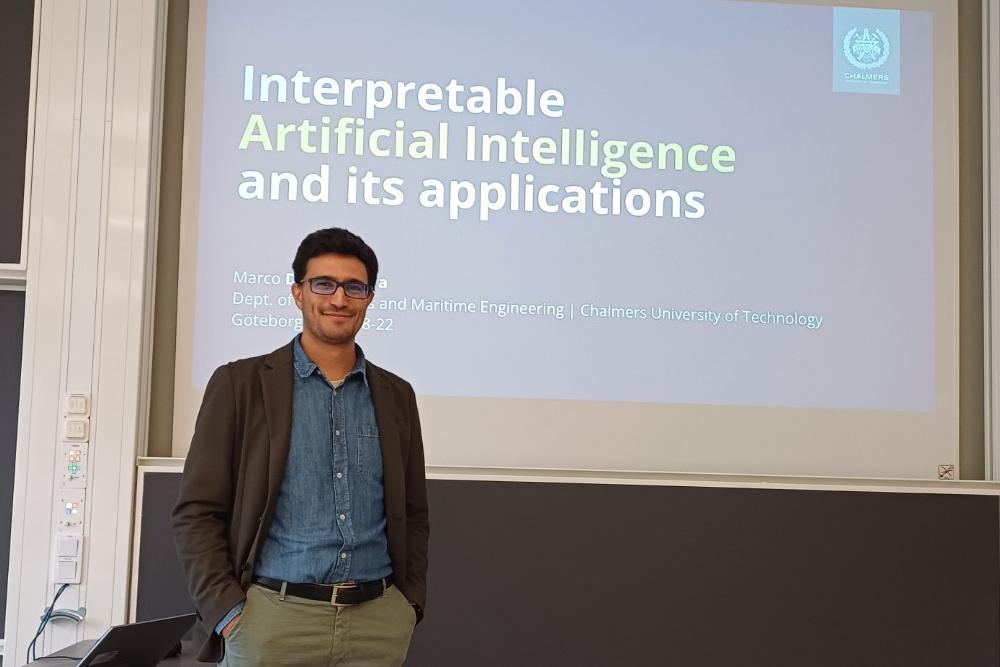
Marco L. Della Vedova is a Senior Lecturer in Applied Artificial Intelligence at Chalmers University of Technology, Sweden. He works in the Vehicle Engineering and Autonomous Systems division within the Department of Mechanics and Maritime Sciences, as part of Prof. Mattias Wahde's research group. Since 2025, he has served as Director of the Data Science and AI master's programme (MPDSC) at Chalmers, where he teaches courses including Introduction to Artificial Intelligence and Digitalization in Sports. Dr. Della Vedova earned his academic foundation at the University of Pavia, Italy, where he completed his BSc (2006), MSc (2009), and PhD (2013) in Computer Engineering. His doctoral research focused on "Real-Time Physical Systems and Electric Load Scheduling" under Prof. Tullio Facchinetti. During his PhD studies, he spent a year at U.C. Berkeley hosted by Prof. Francesco Borrelli at the Model Based Predictive and Distributed Control Lab. His research spans multiple AI domains with a strong emphasis on interpretability. Dr. Della Vedova develops interpretable methods for conversational AI, naturalness evaluation of forests using canopy height models, and geospatial applications. His work bridges theoretical AI with practical societal benefits, particularly in environmental monitoring, transportation systems, and orienteering. He has previously contributed to cloud computing, hate speech detection, and cyber-physical energy systems, demonstrating his interdisciplinary approach to AI research. Dr. Della Vedova's publication record reveals a consistent trajectory of impactful research across multiple domains of artificial intelligence. His recent work shows a strong focus on interpretability in AI systems, with significant contributions to natural language processing, geospatial analysis, and causal inference. The research demonstrates both theoretical depth and practical applications, particularly in environmental monitoring and social media analysis. His methodology often combines traditional machine learning approaches with novel interpretability techniques, creating bridges between complex AI systems and human understanding. Dr. Della Vedova has received several prestigious recognitions for his work: Best PhD thesis award from the Order of the Engineers of Bergamo (2013) Italian champion of Il Cervellone (2012) Top Italian performer in IEEEXtreme 6.0 programming competition (148th overall globally, 2012) Premio Arturo Schena award from Fondazione Credito Valtellinese (2010) With over 50 students supervised through bachelor's and master's theses, Dr. Della Vedova has established himself as a dedicated mentor in the AI community. His current PhD students include Minerva Suvanto working on interpretable NLP and Vivien Lacorre developing AI for railway infrastructure inspection. His supervision spans diverse topics from forest naturalness evaluation to hate speech detection and transportation optimization. Beyond formal supervision, he actively contributes to educational initiatives including serving as Director of Chalmers' Data Science and AI master's program and developing innovative teaching methods that connect theoretical concepts with real-world applications. Dr. Della Vedova is deeply embedded in both academic and professional communities. He leads the Applied Artificial Intelligence research group at Chalmers while maintaining strong connections with European research networks through projects like the ERASMUS+ EUrienteering initiative. His interdisciplinary approach is reflected in collaborations across computer science, environmental science, and social sciences. Notably, he applies his AI expertise to orienteering both as a researcher developing localization methods and as a licensed Event Advisor for the International Orienteering Federation, demonstrating how his professional and personal interests converge in innovative ways.
Andreas Johnsson is an Adjunct Senior Lecturer at the Department of Information Technology , Uppsala University, Sweden. His research spans Machine Learning , Network Performance , and IoT Security in the context of 5G/6G Networks and Edge Computing . Research interests include federated learning, transfer learning, and network optimization techniques. His recent work (2024-2021) focuses on self-regulated learning models for 6G, multi-objective neural architecture search, IoT intrusion detection generalizability, and delay prediction in heterogeneous networks. He has co-authored over 15 publications in high-impact venues like IEEE Transactions on Machine Learning in Communications and Networking and IEEE NOMS . Andreas actively collaborates with researchers such as Jalil Taghia, Farnaz Moradi, and Hannes Larsson. His contributions extend to change detection algorithms, policy adaptation frameworks, and feature selection methodologies in dynamic network environments. No formal scientific awards or student advisement details are currently documented.
Emil Björnson is a Professor of Wireless Communications and Head of the Communication Systems Department at KTH Royal Institute of Technology since 2024. He received his Master of Science in Engineering Mathematics from Lund University (2007) and PhD in Telecommunications from KTH (2011). After postdoctoral work at SUPELEC, France (2012-2014), he held faculty positions at Linköping University (2014-2021) before returning to KTH in 2020. Research Focus: MIMO communications, reconfigurable intelligent surfaces, radio resource allocation, machine learning for communications, and energy efficiency Editorial Roles: Editor for multiple IEEE transactions and magazines His research has significantly advanced wireless communication technologies, particularly in Massive MIMO and cell-free systems. He has authored four textbooks, including Massive MIMO Networks (2017) and Introduction to Multiple Antenna Communications and Reconfigurable Surfaces (2024). Scientific awards include: IEEE Fellow Clarivate Highly Cited Researcher Wallenberg Academy Fellow Digital Futures Fellow Multiple IEEE and EURASIP awards (2014-2024)