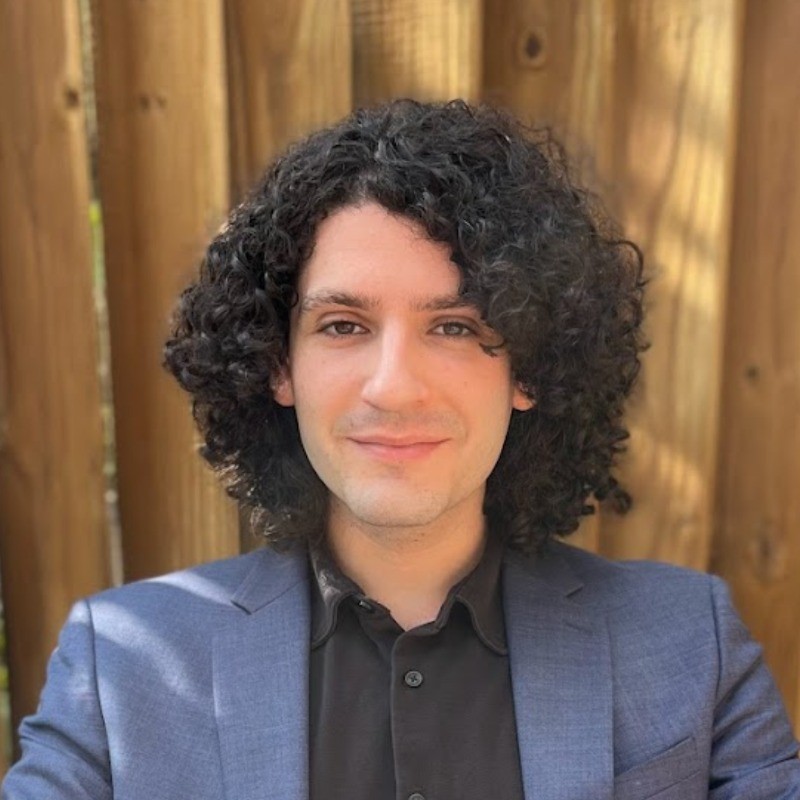
Jason Smith is a Postdoctoral Scholar at Northwestern University , affiliated with the Interactive Audio Lab . He earned his PhD in Music Technology from the Georgia Institute of Technology . Research Focus Human-AI collaboration in creative domains Interactive music systems AI-driven accessibility solutions Creative autonomy and neural audio generation Recommender systems for music libraries Publication Trends His work spans 2019–2025, emphasizing AI applications in music education, accessibility (especially for blind/visually impaired users), and immersive environments like AI holodecks. Key methodologies include co-design, hybrid recommendation algorithms, and automated creativity assessment. Lab Affiliation He contributes to the Interactive Audio Lab, exploring intersections of sound, code, and AI.
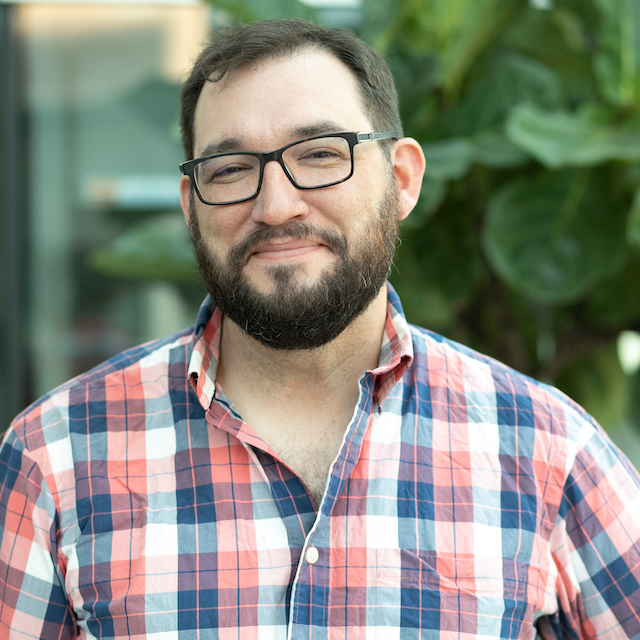
Justin English serves as Assistant Professor of Biochemistry at the University of Utah School of Medicine, where he develops molecular tools to investigate human health and disease mechanisms through directed evolution and protein engineering approaches. Education: B.A. from Cornell University Ph.D. from University of North Carolina at Chapel Hill Research Focus: Dr. English's laboratory specializes in Directed Evolution and Protein Engineering to create molecular tools for studying G-protein Coupled Receptors (GPCRs) , cell signaling pathways , and neuroscience applications . His work integrates synthetic biology with classical pharmacology to develop innovative platforms like VEGAS for mammalian cell evolution and TRUPATH for GPCR transducerome analysis, with significant implications for drug discovery and therapeutic development. Publication Trends: Analysis of his 2019-2025 publications reveals consistent focus on GPCR biology, featuring breakthroughs in biosensor development (nanobody-based receptor monitoring), chemogenetic tools (BioTAC system), and high-throughput screening platforms. His research demonstrates strong translational potential in neuroscience, particularly through engineered mouse models for psychedelic drug studies and molecular tools for mapping small-molecule interactomes. Research Environment: Dr. English leads an active laboratory within the University of Utah's Department of Biochemistry, leveraging institutional core facilities for biochemical and molecular studies. His research program maintains strong collaborative ties with neuroscience and pharmacology groups, with ongoing projects focused on advancing molecular engineering techniques for biomedical applications as detailed on his lab website.
Nikolaus (Nik) Fortelny is a Group Leader in Computational Biology at the University of Salzburg, Austria, where he leads the Computational Systems Biology research group within the Department of Biological Sciences & Medical Biology. His research focuses on understanding biological systems at the molecular level through advanced computational approaches. Dr. Fortelny's research interests include: Computational Systems Biology Multi-omics data integration and analysis Single-cell and spatial biology Machine learning applications in biology Network science approaches to biological regulation Immune system modeling His recent publications demonstrate a strong focus on applying computational approaches to understand complex biological systems, particularly in immunology and cellular regulation. His work often involves collaboration with experimental biologists to generate and analyze large-scale datasets from multi-omics experiments collected at single-cell or spatial resolution. Dr. Fortelny is actively involved in research recruitment and is currently hiring for professor positions in Medical Systems Biology and Animal Physiology at the University of Salzburg, with an application deadline of April 19th, 2025. His group regularly seeks students, PhD candidates, postdocs, and staff scientists to join their team.
Christopher J. Stein is an Associate Professor of Theoretical Chemistry at the Technical University of Munich (TUM), part of the TUM School of Natural Sciences. His research focuses on theoretical (electro-)catalysis, developing electronic-structure models and solvation/embedding methods to understand and optimize catalytic processes. He leads the Stein Group, which integrates computational chemistry with high-throughput simulations to advance energy materials and battery technologies. His work emphasizes realistic modeling of catalyst behavior under operational conditions and has contributed to advancements in quantum embedding and automated reaction mechanism exploration. Education and Career: Earned his PhD in Theoretical Chemistry, with postdoctoral research at Caltech (2017-2020). Became an Associate Professor at TU Munich in 2023. He previously held roles at Karlsruhe Institute of Technology and contributed to projects like the BIG-MAP Materials Acceleration Platform. Research Interests: Theoretical chemistry, electrochemical interfaces, battery materials, high-throughput computational methods, and machine learning integration. His group explores topics like solid electrolyte interphases, charge transfer mechanisms, and automated workflows for materials discovery. Awards: While no explicit awards are listed, his contributions to materials acceleration platforms and theoretical catalysis have been widely recognized in the field. His work has been featured in journals like Journal of Chemical Physics , Chemical Science , and Angewandte Chemie . Labs/Teams: Leads the Stein Group at TUM, collaborating with institutions like the Munich Data Science Institute and MIRMI. His lab focuses on computational tools for accelerating energy material development, including quantum embedding and cloud-based simulations.
Pradeep Lall is the MacFarlane Endowed Distinguished Professor and Alumni Professor in the Department of Mechanical Engineering at Auburn University’s Samuel Ginn College of Engineering. He serves as Director of the Auburn University Electronics Packaging Research Institute (EPRI) and holds a joint courtesy appointment in the Department of Electrical and Computer Engineering. A leader in flexible hybrid electronics and harsh environment systems, Dr. Lall has built a world-renowned research program focused on additive manufacturing, electronics reliability, and sustainable materials. Ph.D. in Mechanical Engineering, University of Maryland M.B.A. in Finance and Strategy, Northwestern University M.S. in Mechanical Engineering, University of Maryland B.E. in Mechanical Engineering, Delhi College of Engineering Dr. Lall’s research centers on Flexible Hybrid Electronics (FHE) , Harsh Environment Electronics , Semiconductor Packaging , and Prognostics Health Management . His work leverages additive manufacturing techniques such as Aerosol-Jet, InkJet, and screen printing to develop conformal, robust, and sustainable electronic systems. His innovations include the Flexible Biometric Band for monitoring workers in hazardous environments and additively printed antennas for aerospace applications. His recent focus includes eliminating PFAS from electronics and developing water-based inks for eco-friendly manufacturing. The 15 most recent publications reflect a strong trend toward sustainability , additive manufacturing , and real-world applications in defense, aerospace, automotive, and healthcare. His work bridges fundamental research with industrial realization, particularly through partnerships with NextFlex and federal agencies. Themes include reliability under shock and vibration, sensor development for extreme environments, and workforce training in advanced manufacturing. Dr. Lall has received numerous scientific honors, including: SMTA Founder’s Award (2024) SEMI FlexTech R&D Achievements Award (2023) ASME Avram Bar-Cohen Memorial Medal (2022) IEEE Biedenbach Outstanding Engineering Educator Award (2020) IEEE Sustained Technical Contributions Award (2018) NSF Alex Schwarzkopf Prize (2016) Fellow of ASME, IEEE, NextFlex, and Alabama Academy of Science Dr. Lall has secured over $2 million in annual research funding from SRC, NSF, and NextFlex, leading large-scale projects on sustainable electronics and workforce development. He mentors numerous graduate and undergraduate students and leads the NSF-CAVE3 Center. As founding faculty advisor of the SMTA student chapter, he promotes student engagement in electronics manufacturing. His lab, EPRI, features a full prototyping line for additive electronics and collaborates with industry and government to advance domestic manufacturing capabilities. EPRI, under Dr. Lall’s leadership, partners with the Auburn University Research and Technology Park, the Office of Economic Development, and multiple colleges to drive technology commercialization and workforce education in electronic packaging. The institute is at the forefront of the national effort to reestablish U.S. leadership in semiconductor packaging and advanced electronics manufacturing.
Ram Samudrala is a Professor and Chief of the Division of Bioinformatics at the University at Buffalo Jacobs School of Medicine and Biomedical Sciences . His research focuses on multiscale computational biology , integrating protein structure prediction , drug discovery , and translational science to address medical challenges. He leads the development of the CANDO platform for therapeutic drug discovery and co-directs the Informatics Core at the Clinical and Translational Sciences Institute. PhD in Computational Biology (University of Maryland, 1997) BA in Computing Science and Genetics (Ohio Wesleyan University, 1993) Postdoctoral Fellowship in Protein Folding (Stanford University, 1997-2001) His work spans structural biology , genomics , and computational drug design , with applications in dentistry , infectious diseases , and cancer . He has received prestigious awards including the NIH Director's Pioneer Award (2010) and multiple Wiki Science Prizes . Samudrala's group collaborates globally, emphasizing in silico methods followed by in vitro and in vivo validation. Key grants include $1.22M NIH NCATS ASPIRE Reduction-to-Practice Award and $4.5M NIH/NLM BRIGHT Training Grant . 2023 Finalist, Clinical and Translational Sciences Institute Clinical Research Achievement Awards 2016 MacArthur Foundation 100&Change Top 50 2008 Alberta Heritage Foundation Visiting Scientist Award 2005 NSF CAREER Award He directs the BRIGHT Short-Term Training Program and serves on multiple editorial boards and review panels. Samudrala's group maintains a Protinfo web server for structural predictions and the Bioverse framework for systems-level analyses.
Dr. Anna Baldycheva is a Senior Lecturer in Electronic Engineering at the University of Exeter, within the College of Engineering, Mathematics and Physical Sciences. She leads the interdisciplinary STEMM Laboratory, focusing on applied R&D in smart materials, photonics, AI, and IoT. With prior research experience at MIT, Trinity College Dublin, and Tyndall National Institute, she has established herself as an internationally recognized innovator and entrepreneur in emerging technologies. PhD in Electronic and Electrical Engineering, Trinity College Dublin (2008–2012) BSc (Hons) in Physics, St. Petersburg State University (2003–2008) Postgraduate Certificate in Academic Practice, University of Exeter (2016–2017) Postgraduate Certificate in Technology Management, Smurfit Business School (2009–2010) Her research spans Nano-Engineering, Opto-Electronics, Photonics, AI, and IoT , with a strong emphasis on real-world applications. She pioneers work in fluid opto-electronics , graphene nanocoatings , and AI-driven emotion recognition and early cancer detection . Her lab develops smart composite materials for flexible electronics, e-textiles, and structural applications, integrating machine learning into healthcare, education, and communications systems. The recent publications highlight a strong trend toward applied interdisciplinary innovation , combining materials science with AI and photonics for healthcare diagnostics, energy-efficient computing, and educational technology. Her work frequently bridges fundamental physics with commercialization potential, as seen in spin-out technologies like GSurf and the Electronic-Nose for lung cancer detection. Fellow, Royal Microscopical Society (RMS) Fellow, Higher Education Academy (FHEA) Expert, Future and Emerging Technologies, European Commission Featured in Forbes and Forbes Tech Council Editor-in-Chief, InSTEMM Journal Associate Editor, Nature Scientific Reports and Discover Nano Trustee, Royal Microscopical Society Founder, STEMM Global Scientific Society Founder, It’s Her! Women in STEMM Initiative Dr. Baldycheva actively supervises PhD students and has secured industrial collaborations with organizations such as Qinetiq and Lumentum. She leads multiple outreach initiatives, including STEMM Junior for underprivileged children, and serves on the committee for the Jocelyn Bell Brunel PhD Scholarship. She has raised significant research funding through national and international grants, though specific grant names are not listed. She leads the STEMM Laboratory , a multidisciplinary research group with divisions in Smart Composite Materials, Machine Learning & AI, and Opto-Electronics & Photonics. The lab emphasizes industry collaboration and technology transfer, having produced a university spin-out (GSurf) and multiple media-highlighted innovations.
Fred Feinberg is the Joseph and Sally Handleman Professor of Marketing and Professor of Statistics (by courtesy) at the University of Michigan, where he is also an Affiliated Faculty member of the Center for the Study of Complex Systems. His work integrates advanced Bayesian methods with large-scale marketing data to illuminate how people make choices under uncertainty. Education Ph.D., Sloan School of Management, Massachusetts Institute of Technology (1989) Doctoral program in Mathematics, Cornell University (1983–84) S.B. Mathematics & S.B. Philosophy, Massachusetts Institute of Technology (1983) Research Focus Feinberg’s scholarship centers on discrete choice models that leverage real-world decisions to infer latent attributes such as demographics, product appeal, and socioeconomic status. Methodologically, he employs Hierarchical Bayes (HB) models and cutting-edge MCMC algorithms to handle massive data sets, while theoretically he advances dyadic utility theory and optimal search under uncertainty. Applications span click-through behavior, menu-based choice, online dating preferences, spatial marketing, and consumer reactions to intangible or aesthetic product features. Recent empirical studies explore the wearout versus weariness effects of online advertising, the impact of data breaches on consumer behavior, and dynamic pricing for digital media subscriptions. Across these projects, Feinberg couples rigorous statistical innovation with actionable managerial insights, bridging marketing science, operations, and engineering. Scientific Awards & Leadership Joseph and Sally Handleman Endowed Professorship Past President, INFORMS Society for Marketing Science Departmental Editor, Production and Operations Management Former Co-Editor, Marketing Science Co-author (with T. Kinnear & J. Taylor) of the textbook Modern Marketing Research: Concepts, Methods, and Cases Grants & Collaborations While explicit grant lists are not provided, Feinberg’s prolific publication record in top-tier journals (e.g., Journal of Marketing Research , Marketing Science , Management Science ) and editorial board service imply sustained external funding and interdisciplinary partnerships, particularly with operations, engineering, and computer-science groups. Laboratories & Teams Feinberg is formally affiliated with the Center for the Study of Complex Systems (CSCS) at the University of Michigan, where he collaborates on network-based choice frameworks and large-scale behavioral data analytics. He maintains active ties to the Ross Marketing faculty and the Department of Statistics, fostering joint workshops and doctoral training initiatives.
Professor Kourosh Kalantar Zadeh is the Head of School of Chemical and Biomolecular Engineering at the University of Sydney. He also holds adjunct professorships at UNSW and RMIT. His research focuses on sensors, nanotechnology, liquid metals, and medical devices. He has over 500 publications and is a member of prestigious editorial boards. **Awards**: Includes AAAS Fellowship (2021), Robert Boyle Prize (2020), Walter Burfitt Prize (2019), and multiple Clarivate Highly Cited recognitions. His work has been featured in over 350 media outlets, including BBC, Time Magazine, and Nature. **Research**: Innovations include ingestible gas-sensing capsules, smart paints, and liquid metal-based catalysis. Supervises 10 PhD students in areas like functional materials and medical devices. **Grants**: Leads ARC Laureate Fellowship projects on liquid metals and NHMRC grants for gut metabolite sensing. Part of the ARC Centre of Excellence in Future Low-Energy Electronics. **Engagement**: Media engagements highlight breakthroughs in sensors, liquid metals, and environmental technologies. Collaborates across disciplines to translate research into practical applications.
Daniela M Witten is a Professor of Statistics and Biostatistics at the University of Washington, holding the Dorothy Gilford Endowed Chair in Mathematical Statistics. Her research focuses on developing statistical machine learning methods for high-dimensional data, with a particular emphasis on unsupervised learning and theoretical foundations. Witten earned her BS in Math and Biology with Honors and Distinction from Stanford University in 2005 and her PhD in Statistics from Stanford University in 2010 under Robert Tibshirani. Her academic journey established her expertise in bridging mathematical theory with biological applications. Her research program centers on high-dimensional statistical learning , where she develops methods for unsupervised learning and graphical modeling when features outnumber observations. She pioneers statistical models for neural activity through collaborations with the Allen Institute for Brain Science and Princeton University, addressing functional connectivity and neuron sub-population identification. Her groundbreaking work on selective inference solves the "double-dipping" problem in hypothesis generation and testing, enabling valid inference after hierarchical clustering and regression trees. Additionally, she advances multi-view data analysis to integrate complementary data sources like clinical and genomic measurements. Applications span genomics, neuroscience, microbial ecology, and pathology, demonstrating her commitment to solving real-world biomedical challenges. Her 2025 publications reveal a cohesive trend toward developing theoretically rigorous inference frameworks for high-dimensional settings, with emphasis on linear regression validity, semi-supervised efficiency, Gaussian decomposition, and PCA variance quantification—showcasing her signature blend of methodological innovation and practical applicability. Witten's exceptional contributions are recognized through extensive honors: Presidents’ Award, Committee of Presidents of Statistical Societies (COPSS) (2022) Mortimer Spiegelman Award, American Public Health Association (2019) Simons Investigator Award (2018-2023) Sloan Research Fellowship (2013-2015) NSF CAREER Award (2013-2018) NIH Director’s Early Independence Award (2011-2016) 23 major awards including named lectureships, fellowships, and editorial leadership As a dedicated mentor, she has guided students like Olivia McGough (NSF GRFP winner), Dwight (Zichun) Xu (ASA Nonparametrics Student Paper Award winner), Yiqun Chen (Hopkins Biostat faculty), and Anna Neufeld (Williams College faculty). Her research is sustained by major grants from NIH, NSF, and Simons Foundation. Witten co-authored the seminal textbook "Introduction to Statistical Learning" and currently serves as Joint Editor of the Journal of the Royal Statistical Society, Series B (2023-2025), shaping the field through both scholarship and community leadership.
Associate Professor Vic Ciesielski is affiliated with RMIT University's School of Computing Technologies. His research focuses on Artificial Intelligence, Evolutionary Computing, Computer Vision, and Genetic Programming, with applications in areas like robot soccer and aesthetic analysis of images. He has supervised projects including efficient neural architecture search and off-line handwritten text recognition. His work bridges computational techniques with creative fields such as art history and digital media. Key research interests include machine learning, data management, and graphics/augmented reality. He actively contributes to conferences like GECCO and IJCNN, publishing on topics ranging from neural architecture optimization to sensor-based activity recognition. His research often integrates evolutionary algorithms with deep learning methodologies. He can be contacted via vic.ciesielski@rmit.edu.au and has an ORCID identifier: 0000-0001-7273-9566 .
Dr. Ghazal Bargshady is a Lecturer at the University of Canberra , with expertise in Affective Computing , Artificial Intelligence , and Healthcare Technology . Her roles include teaching units such as Computer Vision, Data Analytics, and Soft Computing, as well as supervising PhD and Master by Research students in AI-driven projects for healthcare and road safety. Education: She earned her PhD in Artificial Intelligence and Computer Vision from the University of Southern Queensland in 2020. Research Interests: Dr. Bargshady specializes in Computer Vision Deep Learning Biosignal Processing Facial Expression Analysis Human Factors in AI Wearable Sensors Multimodal Data Fusion Brain–Computer Interfaces Her work addresses real-world challenges in pain assessment, depression recognition, and driver safety using cutting-edge AI models. Article Trends: Her recent publications focus on Transformer architectures , fNIRS signal analysis , multimodal pain detection , and depression severity estimation via facial video data. These studies highlight her contributions to AI in healthcare , transportation safety , and biomedical signal processing . Teaching Activities: Dr. Bargshady has lectured units including Programming for Data Science , Computer Vision , and Soft Computing , emphasizing practical AI applications.
Justin Milner, PhD, serves as Assistant Professor in the Department of Microbiology and Immunology at the University of North Carolina at Chapel Hill School of Medicine and is a member of the UNC Lineberger Comprehensive Cancer Center. His research develops novel approaches to enhance cancer immunotherapies through multi-omics and bioengineering techniques. Education: Postdoctoral Fellowship, UCSD PhD, UNC Chapel-Hill BS, UNC Chapel-Hill Dr. Milner's lab investigates molecular drivers of T cell differentiation and function within tumor microenvironments, utilizing cutting-edge genomics, bioengineering, and computational immunology. His work focuses on reprogramming T cell activity to overcome immunotherapy resistance in cancers, with particular emphasis on epigenetic regulation and metabolic adaptations of tumor-infiltrating lymphocytes. Recent projects explore hydrogel-based delivery systems for immunotherapeutics and transcriptional networks governing T cell exhaustion. Analysis of his 15 most recent publications reveals dominant themes in cancer immunotherapy enhancement, particularly through T cell engineering (7/15 articles), tumor microenvironment modulation (5/15), and computational approaches to T cell biology (3/15). Key methodologies include single-cell multi-omics, in vivo screening, and biomaterial-based drug delivery systems targeting solid tumors. Scientific Awards: NIH NCI K99/R00 Pathway to Independence Award V Foundation Scholar Award Lung Cancer Initiative Career Development Award UNC Lineberger Innovation Award Multiple institutional pilot awards including Hirschberg Foundation and Mary Kay Ash Awards Dr. Milner currently advises three graduate students and multiple postdoctoral researchers while leading an NIH-funded R01 project ($2.79 million) investigating epigenetic regulation of T cell exhaustion. His lab maintains active collaborations across computational medicine and pancreatic cancer research programs at UNC. The Milner Lab operates within the UNC Lineberger Comprehensive Cancer Center, utilizing core facilities for single-cell genomics, murine tumor modeling, and bioengineering. Current team includes seven researchers focused on T cell reprogramming strategies for solid tumor immunotherapy.
Dr. Chenang Liu is an Associate Professor in the Department of Industrial Engineering & Management at Oklahoma State University's College of Engineering, Architecture and Technology (CEAT). Their research focuses on smart manufacturing systems, real-time quality monitoring, and machine learning applications in manufacturing and healthcare. Ph.D., Industrial and Systems Engineering, Virginia Tech, 2019 M.S., Statistics, Virginia Tech, 2017 B.S., Mathematics (Statistics track), Zhejiang University, China, 2014 B.S., Environmental and Resource Sciences, Zhejiang University, China, 2014 Research Interests: Dr. Liu develops advanced sensing and data analytics methodologies for smart manufacturing, statistical frameworks for real-time quality control, and mathematical models integrating machine learning with healthcare applications. Their work bridges industrial engineering principles with cutting-edge data science techniques. Publication Trends: Recent articles demonstrate expertise in diabetic retinopathy prediction via interpretable AI, supply chain coordination mechanisms, EHR analytics for disease progression modeling, and combinatorial optimization algorithms. Key themes include healthcare data science, resilient manufacturing systems, and stochastic resource allocation. Scientific Recognition: Featured Article in ISE Magazine, IISE, 2019 Gilbreth Memorial Fellowship, IISE, 2018-2019 Best Poster Award, INFORMS Annual Meeting, 2018 Best Student Paper Finalist, IISE Annual Conference, 2018 Best Paper Awards at INFORMS (2017) and IISE (2017)
Jillian Holt is a Senior Lecturer at Swinburne University of Technology, affiliated with the School of Social Sciences, Media, Film and Education. She holds a PhD in Practice-led Research (2015), a Master of Design in Multimedia Design (2005), and brings over two decades of professional experience as a film editor across feature films, documentaries, and television. She has held leadership roles including Academic Leader and Course Director for the Bachelor of Film and Television (Honours), and has significantly contributed to the internationalization of Swinburne’s film programs through CILECT and ASPERA affiliations. Her research centers on the intersection of creative practice, phenomenology, and pedagogy in film editing. Key interests include intuition in editing, embodied cognition, rhythm, and the teaching of creativity in postproduction. She has developed influential educational resources such as The Art of Editing: Australian Screen Editors Discuss Creativity in Editing . The recent publications reflect a consistent focus on creative editing, documentary storytelling, and pedagogical innovation. Her works span academic articles, creative documentaries, and thesis-based practice research, highlighting a blend of scholarly and artistic contributions in screen and digital media. Scientific Awards: Vice-Chancellor's Teaching Award, Swinburne University of Technology (2007) Supervision and Grants: She is actively co-supervising multiple PhD candidates on topics involving cultural identity, Indigenous research, and community-based documentaries. She has secured competitive grants, including a 2022–2023 research contract with the Australian Vietnamese Women's Association for a documentary project celebrating multicultural communities. Professional Engagement: She has held leadership roles in the Australian Screen Editors Guild (ASE), and served on committees for ASPERA and CILECT, reinforcing her national and international impact in film education and practice.