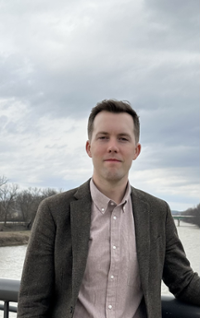
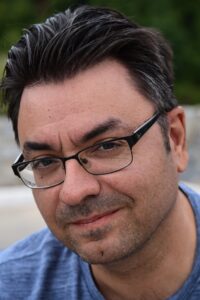
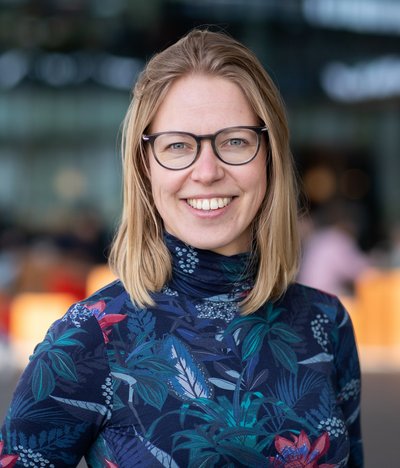
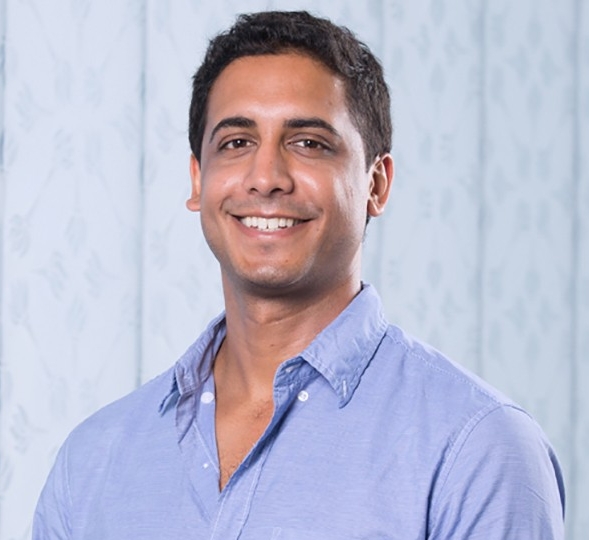
Patrick Wu is a Professor in the Department of Computer Science at American University, with additional affiliations as Faculty Fellow at the Center for Data Science and Faculty Affiliate at the Center for Security, Innovation, and New Technology. He holds a PhD in Political Science and Scientific Computing from the University of Michigan, an MA in Statistics from Michigan, and a BA in Political Science and Statistics from the University of Chicago. His research develops AI/ML and natural language processing approaches for computational social science, focusing on: Political elite and non-elite ideology measurement Affective polarization on social media platforms Detection of hateful/abusive speech and memes Application of large language models to political science research Recent work explores innovative methods for political attitude measurement using LLMs, in-context learning techniques for social media analysis, and frameworks for multimodal representation learning. His publications demonstrate consistent innovation in applying NLP and machine learning to political discourse analysis, with emerging focus on generative AI's impact on political science education and methodology. Wu teaches courses including Object-Oriented Programming and topics in Natural Language Processing/Text as Data.
Edyta Bojanowska serves as Professor of Slavic Languages and Literatures at Yale University with an affiliated appointment in the Department of History. Her academic career bridges literary scholarship and historical analysis, focusing on imperial and postcolonial frameworks within Russian and Central European contexts. Bojanowska earned her Ph.D. in Slavic Languages and Literature from Harvard University and completed her undergraduate studies at Barnard College with a dual major in English and Russian. Her educational trajectory established the foundation for her interdisciplinary approach to Slavic studies. Her research program critically examines 19th-century Russian literature through the lenses of empire, nationalism, and globalization. Key interests include settler colonial dynamics, spatial theory, travel writing, and the interplay between ideology and literary form. She has pioneered methodologies connecting Russian cultural production to global imperial histories, particularly through her award-winning work on Goncharov's The Frigate Pallada and Gogol's Ukrainian-Russian identity negotiations. Bojanowska's publication record reveals consistent engagement with colonial paradigms in Russian literature, evolving from early studies of Gogol and Pushkin toward broader imperial frameworks. Her recent scholarship demonstrates increasing focus on racial discourse, indigenous land rights, and the spatial dimensions of empire, culminating in the Ab Imperio Award-winning analysis of Tolstoy's Bashkir estate. The thematic continuity across her work establishes her as a leading voice in post-Soviet imperial historiography. National Humanities Center Fellowship (Spring 2025) Ab Imperio Award for Best Study in New Imperial History (2022) Guggenheim Fellowship (2020-2021) AATSEEL Best Book in Literary Scholarship (2019) MLA Scaglione Prize for Best Book in Slavic Studies (2007-2008) Bojanowska actively shapes her field through editorial leadership on Ab Imperio and the PMLA Advisory Committee. Her teaching portfolio reflects her research expertise, featuring undergraduate seminars on War and Peace and Russian short fiction alongside graduate courses on spatial theory and imperial culture. Current leave status for Spring and Fall 2025 accommodates her National Humanities Center residency while maintaining her position as a central figure in Slavic literary studies.
Marat I. Latypov serves as Assistant Professor in the Department of Materials Science and Engineering at the University of Arizona's College of Engineering. He is also a member of the Applied Mathematics Graduate Interdisciplinary Program and leads the Materials Informatics Lab. His research spans computational materials science, sustainable alloy design, and machine learning applications for materials development. Dr. Latypov holds a PhD in Materials Science and Engineering from Pohang University of Science and Technology (POSTECH, South Korea, 2014) and a Dipl.-Ing. in Engineering Physics from Ufa State Aviation Technical University (Russia, 2011). His postdoctoral training included appointments at Georgia Tech/CNRS in France and the University of California, Santa Barbara. His research focuses on materials informatics , physics-informed machine learning , and sustainable structural alloys . Key methodologies include graph neural networks for polycrystal mechanics, vision transformers for microstructure representation, and adaptive experimental design for materials optimization. Recent work emphasizes circular economy applications through construction waste recycling and copper mine tailings valorization. Analysis of his publication record reveals strong emphasis on computational microstructure-property linkages (35% of recent work), machine learning for materials design (30%), and sustainable materials processing (25%), with growing integration of large language models for materials knowledge extraction. NSF CAREER Award (2025) : For damage control in recycled aluminum alloys ISTI Distinguished Faculty Scholar (2024) : At Los Alamos National Laboratory Novelis Hackathon First Prize (2021) : Computer vision application Acta Materialia Outstanding Reviewer (2018) Young Researcher Award (2017) : NanoSPD7 Conference Dr. Latypov advises PhD students including Herbold Fellow Zhuocheng Huang and leads projects funded by NSF and the Grantham Foundation. Current initiatives include chalcopyrite leaching optimization for copper mining and graph neural network development for fatigue prediction. His Materials Informatics Lab maintains collaborations with Los Alamos National Laboratory, MIT, and industry partners including Novelis. The lab operates at the intersection of metallurgy , machine learning , and high-performance computing , with capabilities spanning deep learning, Bayesian inference, and cloud-based computational infrastructure. Recent news highlights participation in CODAS-HEP summer school and publication of vision transformer work in Acta Materialia.
Guido Sprenger is a full professor at the Institute of Anthropology, Heidelberg University since 2010, previously holding positions at Academia Sinica (Taipei) and the University of Münster. He specializes in Southeast Asian anthropology, focusing on rituals, animism, sociality, and human-environment relationships. His research includes over two and a half years of fieldwork with highlanders in Laos, particularly the Rmeet and Jru’ communities. Education: Studied Social Anthropology at the University of Münster (1988–1996), with an ERASMUS exchange in Leiden (Netherlands). Earned his M.A. (1996) and Ph.D. (2004) in anthropology, both from Münster. His doctoral thesis, Die Männer, die den Geldbaum fällten , received the 2004 Frobenius Institute Research Award. Research Interests: Southeast Asia, ritual practices, gift exchange, animism, cultural identity, gender, and environmental anthropology. He explores how local theories of sociality and cosmology intersect with broader academic and societal frameworks. Grants & Projects: Led multiple funded initiatives, including the German Research Council’s SFB 1671 'Heimat(en)', the 'Plural Ecologies in Conflict' network, and the DORISEA project on religious dynamics. He has also supervised numerous PhD students, focusing on topics like ritual dynamics, ecological ethics, and transnational identity. Awards: Recipient of the 2004 Frobenius Institute Research Award for his doctoral work. His publications include influential monographs, edited volumes on animism and Southeast Asian ecologies, and peer-reviewed articles in top journals like SOJOURN and Paideuma . Media & Outreach: Active in public discourse, with interviews on topics like gift exchange, ritual practices, and cultural relativism. Featured in radio programs and podcasts, including SWR Kultur and Weitblick Poducation.
Christopher Ewing is an Assistant Professor in the Department of History at Virginia Commonwealth University. He specializes in transnational histories of race, sexuality, and queerness in contemporary Germany, with a focus on post-1970 queer movements and their intersections with racial politics. Ph.D., History, The Graduate Center, CUNY (2018) M.Phil., History, The Graduate Center, CUNY (2016) M.A., History, The Graduate Center, CUNY (2014) B.A., History and German Studies, Vassar College (2012) His research bridges LGBTQ history, transnational social movements, and the role of racialized desire in modern European contexts. He is particularly interested in sex tourism, queer media, and the global dimensions of German history. Christopher's recent publications include analyses of gay rights' entanglement with racial dynamics, such as studies on the AIDS epidemic's racialized impact and the contradictions in West German homosexual magazines. His edited volume on queer media in the German-speaking world is under contract with Palgrave Macmillan. Schilling Fund Award (2023) National Endowment for the Humanities Nomination (2022) Dahlem Junior Host Program (2019) Fellow at German Historical Institute (2016-2017) He mentors graduate students in the history of sexuality and transnational social history. His work has been featured in major journals like Journal of the History of Sexuality and Sexualities , as well as museum exhibitions and public media such as The Washington Post .
Goran Oreški is an Associate Professor and Head of the Laboratory at the Faculty of Informatics in Pula (University Jurja Dobrile, Croatia), where he has been employed since 2019. He teaches courses on databases, object-oriented programming, data warehousing, and artificial intelligence at both undergraduate and graduate levels. Education: Ph.D. in Informatics (2016), Faculty of Organization and Informatics Industry Experience: 9 years as software architect and programmer in banking sector Research Focus: Artificial Intelligence systems, classical machine learning algorithms, and deep learning architectures. His work bridges theoretical advancements with practical applications in autonomous vehicles, traffic monitoring, and financial risk assessment. Recent Publication Trends: 2023-2025 works emphasize generative AI for synthetic credit data, traffic object segmentation with monocular cameras, and context-aware detection models (YOLO*C). Earlier works focus on genetic algorithms and ensemble learning for imbalanced datasets. Awards: Google RFP Award for autonomous vehicle research Highly Cited Paper (Web of Science, top 1%) Best Paper at CECIIS conference Leadership: Director of FIPU Laboratory since 2022, leading projects like ai.Shuttle (autonomous mini-bus) and CenAI (industry collaboration with Cenosco).
Christos Makris is an Associate Professor in the Department of Computer Engineering and Informatics at the University of Patras, Greece. His academic career spans over two decades with significant contributions to computer science, particularly in data structures, algorithms, and information systems. He maintains active research collaborations and supervises graduate students in his areas of expertise. Dr. Makris's research spans several key areas in computer science with a strong focus on efficient data organization and processing. His work encompasses Data Structures , Information Retrieval , Data Mining , String Management and Processing Algorithms , Computational Geometry , Internet Technologies , Bioinformatics , and Multimedia Databases . His interdisciplinary approach bridges theoretical computer science with practical applications across various domains including web technologies, bioinformatics, and emergency response systems. Analysis of Dr. Makris's publication record reveals a consistent research trajectory focused on efficient algorithms for information management. His work demonstrates evolution from foundational data structure research in the 1990s to more applied work in web technologies, social media analysis, and machine learning applications in recent years. A notable pattern is his ability to adapt core algorithmic techniques to emerging application domains while maintaining theoretical rigor. Dr. Makris maintains an impressive scholarly record with over 3,000 citations, an h-index of 29, and an i10-index of 71 according to Google Scholar metrics. These indicators reflect the significant impact of his research within the computer science community. As an active faculty member, Dr. Makris maintains regular office hours on Tuesdays from 18:00-20:00 and Thursdays from 12:00-14:00. He is accessible via email at makri@ceid.upatras.gr or makri@upatras.gr for academic inquiries and student supervision.
Athanasios Mailis serves as Assistant Professor of Byzantine Archaeology at the Department of History and Archaeology, Faculty of Philosophy, University of Crete. His scholarly work bridges archaeological fieldwork with theoretical analysis of cultural identity, focusing on religious architecture in the medieval Mediterranean. Dr. Mailis's educational background includes: Birth in Athens (1975) Graduation from University of Crete's Department of History and Archaeology (1998) Postgraduate studies at University of Crete Doctoral thesis at University of Göttingen (2005-2010) His research explores Byzantine architecture, medieval urban planning, iconography, and intercultural relations between Byzantium and Western Europe, with special emphasis on Crete during the Venetian period. Mailis examines how architectural elements like templon barriers evolved into iconostases, revealing how material culture expressed religious identity during cultural transitions. His work demonstrates how Orthodox communities used architectural features as 'material proof of cultural identity' during Venetian rule, showing both archaism and modernization in religious spaces. Dr. Mailis's publications reveal consistent methodological approaches combining archaeological evidence with art historical analysis. His research traces the evolution of religious spaces from the 11th to 16th centuries, documenting how physical transformations in church architecture reflected broader social and religious changes. He particularly focuses on transitional spaces like templon barriers, analyzing how their modification served as tangible expressions of religious identity during periods of political change. His scholarly recognition includes: Stanley J. Seeger Fellowship at Princeton University Wolfgang Fritz Volbach Fellowship at WissenschaftsCampus Mainz Dr. Mailis maintains a dual professional trajectory, having served in the Greek Archaeological Service from 2006 to 2022 while simultaneously pursuing academic work. During his tenure at the Archaeological Service, he conducted numerous excavations and restoration projects at Byzantine sites, working initially as an antiquities curator at the 24th Ephorate of Byzantine Antiquities in Lamia, and later as head of the Byzantine Monuments Department at the 28th Ephorate in Chania. Concurrently, he taught Byzantine Archaeology at the University of Crete during multiple academic years. His research connects with multiple international teams, particularly through his affiliation with the Leibniz-Zentrum für Archäologie in Mainz as an Associate Member. This position facilitates collaboration between Greek archaeological work and broader European research networks focused on early medieval and Byzantine archaeology. His fieldwork in Crete has involved close cooperation with local Ephorates of Antiquities, creating productive bridges between academic research and cultural heritage management.
Nicola Capodieci is an Associate Professor at the Department of Physical, Computer and Mathematical Sciences at the University of Modena and Reggio Emilia, specializing in Information Processing Systems (IINF-05/A). He actively teaches multiple courses including Object-Oriented Programming, Web Technologies, and General Computer Science across Computer Science and Mathematics degree programs. His research interests focus on GPU acceleration for embedded systems, autonomous vehicles, and real-time computing. Dr. Capodieci's work addresses critical challenges in heterogeneous computing platforms, particularly for automotive applications and smart city infrastructure. His research bridges theoretical computer science with practical applications in autonomous driving and urban mobility systems. Analysis of his recent publications reveals a strong focus on optimizing GPU performance for latency-sensitive applications, particularly in autonomous vehicles. His work spans path planning algorithms, memory interference management, and real-time scheduling on heterogeneous platforms. A significant portion of his research addresses practical implementation challenges in embedded systems where computational resources are constrained but timing predictability is critical. Dr. Capodieci's teaching portfolio demonstrates expertise in both foundational programming concepts and advanced topics in web technologies. His courses emphasize practical implementation skills while covering theoretical foundations of object-oriented programming, web development frameworks, and computational thinking.
Dr. Olga Oleinikova is an Associate Professor and Director of the Social Impact Technologies and Democracy Research Hub (SITADHub) within the School of Communication at the University of Technology Sydney (UTS), Australia. Internationally recognized for her contributions to research and social impact, she has been named among Forbes Top 40 Global Ukrainians and Forbes 30 Under 30 Asia. She was also a finalist for the Australian Council of Humanities, Arts and Social Sciences (CHASS) Future Leader Award. Her educational background includes a PhD in Sociology from the University of Sydney (2016), with prestigious research fellowships at Oxford University's European Studies Centre (2018-2019), Charles University in Prague (2023-2024), and the WZB Berlin Social Science Center (2015). Dr. Oleinikova's research focuses on migration studies (particularly Eastern European migration to Australia), democracy studies, diaspora politics, and social impact technologies. Her work examines life strategies of migrants navigating displacement, democratic performance in Ukraine and Europe, and the intersection of technology and democracy. She has developed a theoretical framework distinguishing between 'achievement life strategies' and 'survival life strategies' among migrants from crisis regimes. Her publication portfolio includes several acclaimed works, with her most recent book 'New Eastern European Migration to Australia: From Ukraine, Czech Republic and Hungary' (Palgrave, 2023) examining new migration patterns. Her research demonstrates consistent focus on Eastern European migration, diaspora politics, and democratic development, with increasing attention to technology's role in democratic processes. Forbes Top 40 Global Ukrainians Forbes 30 Under 30 Asia CHASS Future Leader Award Finalist Visa People's Choice Award Anthill 30 Under 30 Winner Dr. Oleinikova has secured over $3 million in funding for social and commercial initiatives. She serves on several nonprofit boards, acts as an advisor to the Australia-Ukraine Chamber of Commerce, and mentors through the 1991 Open Data Incubator and Future Schools Australia. She founded the SITAD Visiting Fellowship Program, supporting Ukrainian early-career researchers and postgraduate students. Her media reach is substantial, with expert commentary featured in BBC News, Bloomberg, ABC News, CNA, The Conversation, Politico, SBS, and KyivPost, reaching an estimated 9.1 million people. She has delivered more than 30 keynote and invited talks at leading institutions worldwide. SITADHub, which she founded and directs, is a dynamic networked research center with 170 associates across 16 countries actively researching democracy, human-computer interaction, and global mobility, with a focus on Ukraine and broader Eastern Europe. The hub conducts unique research and maintains university partnerships throughout Europe and the Asia Pacific, including with WZB Berlin Social Science Research Centre, University of Oxford, and University of Sydney.
Professor Trina Myers serves as the Head of School for the School of Information Technology at Deakin University's Faculty of Science Engineering and Built Environment. With extensive experience in academia and research leadership, she plays a pivotal role in shaping IT education and research directions at Deakin. She is also an active member of the Australian Council of Deans of ICT (ACDICT), having served as its immediate past President. Her educational background includes: Doctor of Philosophy in Computer Science from James Cook University Master of Business Administration from James Cook University Master of Information Technology from James Cook University Professor Myers' research focuses on semantic technologies, ontology engineering, Internet of Things, knowledge management, natural language processing, and human-computer interaction . Her work emphasizes interdisciplinary collaboration, bridging technology with fields such as healthcare, marine science, environmental conservation, and business. She has pioneered approaches in academagogy (academic gamification) to enhance online learning engagement, particularly for adult learners. Her IoT research has significant applications in healthcare space optimization, environmental monitoring, and resource management. Her recent publications demonstrate a strong trajectory in applying AI and IoT technologies to solve real-world problems, particularly in healthcare, education, and resource optimization. There's a clear pattern of interdisciplinary work connecting computer science with healthcare, education, and environmental science. Her research increasingly focuses on human-centered technology design, especially for vulnerable populations like adolescents with autism spectrum disorder. Her notable achievements include: Fellow of the Australian Computer Society (2023) Australian Awards for University Teaching (AAUT) Teaching Award (2020) Women in IT Professional Leadership Award Finalist (2020) Asia-Pacific International Triple E Entrepreneurial Educator of the Year Award (1st runner-up, 2020) Australian Computer Society, National Digital Disruptor ICT Educator of the Year (2019) Professor Myers actively supervises doctoral students across diverse research areas including gamification in language learning, brain tumor analysis using deep learning, AI in higher education, AI for refugee resilience, data integrity in edge environments, and quantum-driven satellite networking. She has secured significant research funding, including a recent grant for "Indiginizing ICT Curriculum: A Starter Framework for the Community of Practice" through the Australian Council of Deans of ICT. Her teaching philosophy emphasizes active learning methodologies, Process Oriented Guided Inquiry Learning (POGIL), blended learning, and collective intelligence approaches.
Dr. Husam Al-Najjar is a Lecturer at the School of Computer Science within the Faculty of Engineering and Information Technology at the University of Technology Sydney (UTS). He serves as the Course Director for the Bachelor of Information Systems (BIS) program. With expertise in geospatial technology and machine learning, Dr. Al-Najjar focuses on predicting and mitigating natural hazards and environmental issues to contribute to a sustainable digital earth. Dr. Al-Najjar earned his PhD from the University of Technology Sydney. Before joining academia, he worked in project management and has received numerous prestigious awards, scholarships, and grants throughout his career. Dr. Al-Najjar's research primarily centers on the application of machine learning techniques to address complex environmental challenges. His work spans geospatial AI, natural hazard prediction (particularly landslides and bushfires), and sustainable development. He has developed innovative approaches that integrate physical models with machine learning algorithms to improve prediction accuracy in data-scarce environments. His research also extends to remote sensing applications, urban planning, and smart city technologies, with a strong emphasis on practical solutions for real-world problems. Analysis of Dr. Al-Najjar's recent publications reveals a strong focus on applying explainable AI techniques to natural hazard prediction, particularly landslides. His work consistently bridges the gap between theoretical machine learning approaches and practical geospatial applications. He has made significant contributions to integrating physical models with AI, developing methods for handling imbalanced data through generative adversarial networks, and improving feature selection for remote sensing applications in environmental monitoring. Best Paper Award at the ISPRS Geospatial Week in Enschede, the Netherlands As an educator, Dr. Al-Najjar is actively involved in mentoring and teaching. He serves as Course Director for the Bachelor of Information Systems program and teaches courses in GIS, Information Systems, IS development methodologies, Design & Innovation, and Project Management. He welcomes prospective PhD candidates interested in his research areas and emphasizes the importance of detailed research proposals that demonstrate novelty and significance. His teaching philosophy focuses on fostering an engaging and inclusive learning environment that promotes student success and well-being. Dr. Al-Najjar is affiliated with 'The Trustworthy Digital Society' concentration at UTS and serves as a referee and holds editorial roles in respected journals. His work contributes to the development of geospatial AI frameworks that support decision-making in environmental management and disaster preparedness.
Ridha Khedri is a Professor in the Department of Computing and Software at McMaster University . His research spans formal methods in software engineering, cybersecurity, information security ontology, network segmentation, and covert channels analysis. Full Professor since 2000 Contact: khedri@mcmaster.ca Research Interests : Prof. Khedri develops algebraic frameworks for software security, with recent work on network segmentation , ontology engineering , and covert channel detection . His interdisciplinary efforts include hybrid machine learning-ontology models for environmental predictions (e.g., river ice breakup) and digital twin healthcare systems . Article Trends : His 15 most recent works (2016-2025) focus on network security , knowledge representation , and formal verification . Notable trends include automated security testing , ontology modularization , and multi-context reasoning systems . Teaching : He has taught courses like Software Design (CAS 703), Discrete Mathematics (SFWRENG 2DM3), and Algebraic Methods in Software Engineering (CAS 738) since 2017.
Rianne Conijn is an assistant professor in the Human-Technology Interaction group at Eindhoven University of Technology (TU/e), Netherlands. Her research bridges data-driven methodologies (machine learning, statistical modeling) with human-centered design to enhance learning analytics, explainable AI, and writing process analysis. She holds a joint PhD (cum laude) from Antwerp University and Tilburg University, and an MSc (cum laude) in Human-Technology Interaction from TU/e. Academic Background: MSc (2015, TU/e, cum laude), PhD (2020, Antwerp University & Tilburg University, cum laude). Research Focus: Learning analytics, keystroke logging, explainable AI for education, data dashboards, and self-regulated learning dynamics. Teaching: Courses in Advanced Research Methods, Human-AI Interaction, Behavioral Research Methods, and AI ethics in education. Her recent publications explore parallel language planning in writing, longitudinal self-regulated learning strategies, and generalizability of academic performance prediction models. She leads an NWO Veni project on Human-Centered AI in education, emphasizing tailored explanations for student-AI collaboration. Scientific awards include cum laude distinctions for her MSc and PhD, and the NWO Veni grant. Collaborative work spans institutions in the Netherlands, Norway, and the U.S., with applications in intelligent tutoring systems and ethical AI deployment in exams. Key trends across her work: integration of machine learning with educational theory, leveraging keystroke data for cognitive process insights, and prioritizing actionable, explainable AI systems for student support. Publications span journals like the Journal of Experimental Psychology: General , Computers and Education , and IEEE Transactions on Learning Technologies . Scientific Awards: NWO Veni grant for Human-Centered AI in education Cum laude for MSc and PhD Grants & Collaborations: National Science Foundation grants (2016868, 2302644) for biometric feedback in writing UK Research and Innovation grant (ES/W011832/1) for real-time AI scaffolding TU/e Boost! Program grant for self-regulated learning analysis Labs & Teams: EAISI Foundational (Eindhoven AI Systems Institute) Human Technology Interaction group at TU/e Collaboration with Norwegian Reading National Center (University of Stavanger) Project teams for Waterproof ITS and ProWrite grants
Kartik Sreenivasan is Associate Professor of Psychology and Associate Program Head for Undergraduate Studies in Psychology at New York University Abu Dhabi (NYUAD), with an affiliation in Biology. He is also a Global Network Associate Professor of Psychology, reflecting his role across NYU’s global campuses. His research is centered on the neurobiological basis of working memory and goal-directed cognition. His educational background includes a BA in Psychology from Yale University and a PhD in Neuroscience from the University of Pennsylvania under Dr. Amishi Jha. He completed postdoctoral training at UC Berkeley with Dr. Mark D’Esposito and joined NYUAD in 2014. Sreenivasan’s research focuses on how the brain maintains and manipulates information in working memory. Key interests include dynamic neural coding, feature binding, effective connectivity, and the transformation of memory into action. His lab employs fMRI, MEG, EEG, TMS, and behavioral paradigms to study both healthy and clinical populations. The most recent publications highlight trends in distributed neural systems, phase-coding mechanisms in working memory, and the role of subcortical structures. His work increasingly emphasizes network-level interactions, oscillatory dynamics, and the flexibility of memory representations under interference and attentional demands. Sreenivasan has received no explicitly mentioned scientific awards in the provided text. He actively mentors PhD students (Ying Zhou, Shanshan Li, Hannah Chu) and supervises undergraduate capstone projects. His lab has been supported by institutional funding, though specific grants are not listed. He teaches core courses such as Biopsychology, Cognitive Neuroscience, and Capstone Research in Psychology and Biology. The Sreenivasan Lab at NYUAD is a vibrant research group focused on understanding the neural underpinnings of cognition. It includes postdocs, research assistants, PhD students, and undergraduates, and has produced numerous publications in high-impact journals. The lab investigates topics such as working memory organization, neural connectivity, and the interplay between perception and memory.