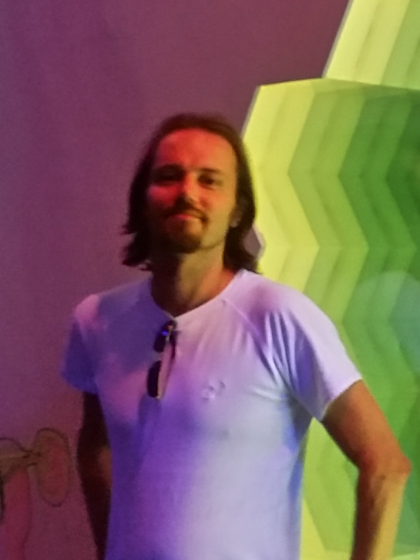
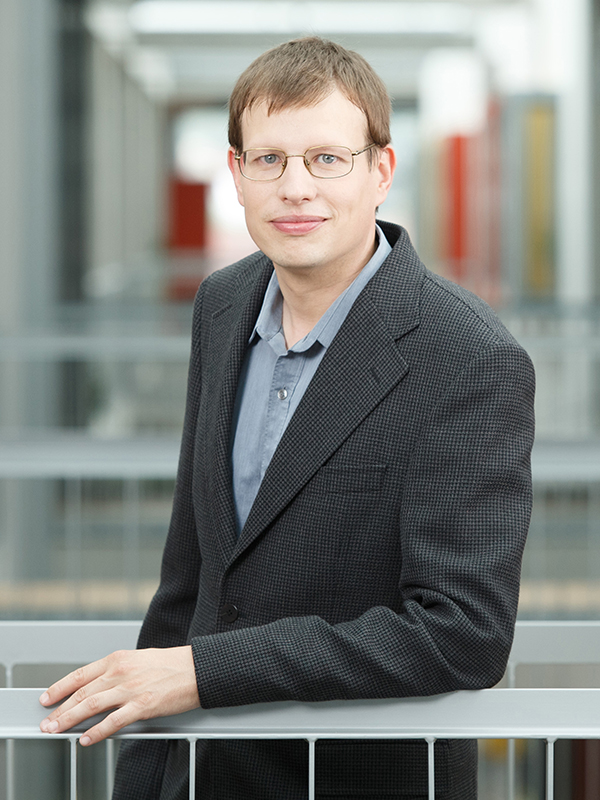
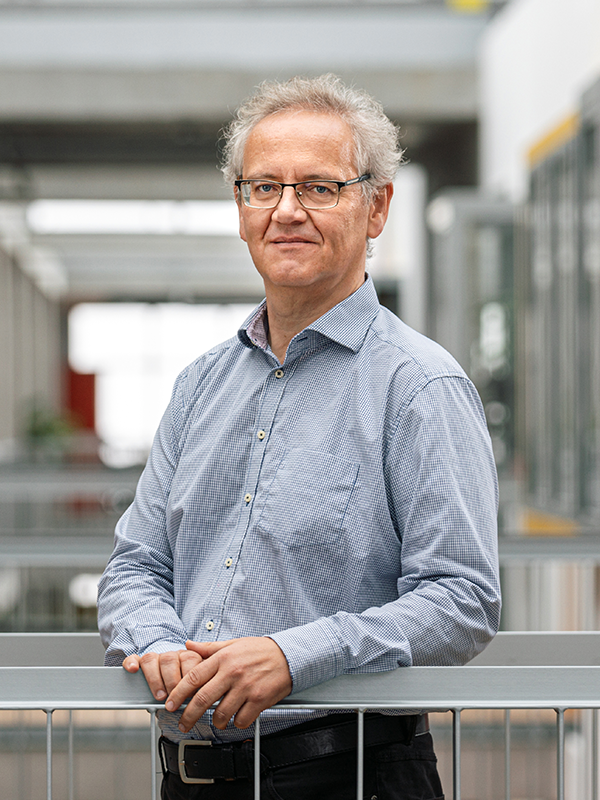
Alexey Ignatiev is an Associate Professor in the Optimisation research group at Monash University's Faculty of Information Technology. Previously, he was a postdoctoral researcher and researcher at the University of Lisbon's Faculty of Sciences, focusing on SAT/SMT-based decision procedures. He holds a Ph.D. from the Matrosov Institute for System Dynamics and Control Theory (Russian Academy of Sciences), where his thesis explored parallel CDCL-BDD integration. His research emphasizes formal methods in AI, including explainable AI (XAI), SAT-based reasoning, and optimization for applications like software upgradability, model-based diagnosis, and fault localization. His work spans over 100 publications, with notable contributions to MaxSAT solving (RC2 solver), neuro-symbolic frameworks (NEUSIS), and rigorous explanations for machine learning models. He has collaborated extensively with institutions like the University of Lisbon and Monash University, contributing to advancements in formal verification and interpretable machine learning.
Bin Yu is a Chancellor’s Professor at the University of California, Berkeley, affiliated with the Departments of Statistics and Electrical Engineering & Computer Sciences. Her research focuses on statistics, machine learning theory, and methodologies for high-dimensional data analysis, with interdisciplinary applications in genomics, neuroscience, and remote sensing. PhD in Statistics, UC Berkeley (1990) MA in Statistics, UC Berkeley (1987) BS in Mathematics, Peking University (1984) Her work includes pioneering the Predictability, Computability, and Stability (PCS) framework for veridical data science, emphasizing responsible AI development and reproducibility. Recent publications address transformer interpretability, domain adaptation, and medical AI ethics. Scientific awards include: U.S. National Academy of Sciences Member (2014) American Academy of Arts and Sciences Member (2013) Guggenheim Fellow (2006) IMS Rietz Lecturer (2016) COPSS Elizabeth L. Scott Award (2018) Research support includes collaboration with Eva Leach (eva.leach@berkeley.edu) and leadership roles at the Berkeley Artificial Intelligence Research Lab (BAIR) and the Microsoft Lab on Statistics and Information Technology in China.
Monika Seisenberger is an Associate Professor at the Department of Computer Science , Swansea University, within the Faculty of Science and Engineering . Her academic role is centered on Formal Methods , Interactive Theorem Proving , and Specification & Verification , with significant contributions to logic, proof theory, and well-quasiorders. Research Interests : Her work bridges Computer Science and Mathematics , focusing on Program extraction from proofs Formal verification of safety-critical systems Applications of AI in medical and railway domains Computational content of choice principles Development of concurrent algorithms and toolchains Article Trends : Her publications over the past decade highlight a consistent focus on formal methods applied to railway logistics , AI explainability in healthcare, and constructive mathematics . Notable themes include Counterfactual explanation generation Multi-agent optimization in transportation Temporal model analysis via gradients Railway system safety verification Verification of geographic data Computational logic foundations Supervision & Collaboration : She actively supervises postgraduate research in areas like formal software verification , AI-driven railway technologies , and SHAP refinement , often collaborating with experts in Markus Roggenbach , Anton Setzer , and Fabio Caraffini . Labs & Teams : Based at the Computational Foundry (Bay Campus), she contributes to Swansea University's Formal Methods research group, advancing tools for proof theory and program synthesis .
Dr. Rob Austin McKee serves as an Associate Professor of Management in the Department of Management at the Marilyn Davies College of Business, University of Houston-Downtown. His academic foundation includes a Ph.D. in Management from the University of Houston's C.T. Bauer College of Business, complemented by an MBA and BA in Statistics and Psychology respectively from the same institution. His educational credentials feature: Ph.D., University of Houston, C.T. Bauer College of Business - Management Master of Business Administration, University of Houston, C.T. Bauer College of Business - Statistics BA, University of Houston - Psychology with English emphasis McKee's research program centers on experimental organizational behavior, investigating how visceral states, personality traits, and group dynamics influence decision-making and leadership effectiveness. His methodological rigor extends to self-other rating agreement studies and social loafing phenomena, contributing foundational insights into behavioral patterns within organizational contexts. Recent work examines sound sensitivities in workplace environments and employee voice mechanisms. His publication trajectory since 2013 reveals evolving scholarly focus from leadership psychology and decision biases toward contemporary business education challenges and inclusive communication practices. The 2025-2023 corpus demonstrates particular emphasis on curriculum innovation, employee empowerment frameworks, and sensory-aware workplace design, while maintaining continuity in leadership assessment research. His scientific recognition includes: Marilyn Davies Outstanding Research Award (August 2020) Excellence in Teaching Award from Faculty Senate (April 2022) McKee actively mentors students through pitch competitions at University of Houston's Wolff Center and engages extensively with Houston's entrepreneurial ecosystem through RED Labs/Owl Spark accelerator and Prison Entrepreneurship Program. His institutional leadership spans Faculty Senate membership (2024-2026), chairing the Faculty Awards committee (2022-2023), and directing MDCOB's BBA/MBA Core Review Task Force. He contributes methodological expertise as a journal reviewer for Current Psychology and Journal of Business Strategy while advancing open educational resources through UHD's OpenStax partnership.
Dr. Chris Town is an Affiliated Lecturer and Research Fellow in the Department of Computer Science & Technology at the University of Cambridge. He serves as a Fellow and Director of Studies in Computer Science at Wolfson College, where he also acts as a Tutor and coordinates the postgraduate mentoring scheme. Additionally, he holds a position as Bye Fellow and Director of Studies in Computer Science at Jesus College. His academic journey includes completing a PhD at Cambridge Computer Laboratory under Professor John Daugman OBE, with prior undergraduate studies at Trinity College, Cambridge. PhD in Computer Science, University of Cambridge (Computer Laboratory) Undergraduate degree with first class honours in Computer Science from the University of Cambridge (Trinity College) Dr. Town's research spans the intersection of computer vision, information retrieval, machine learning, and language processing. He pioneered the ontology-based approach to automated visual information processing alongside Dr. David Sinclair. His work demonstrates how ontologies representing task-specific attributes can narrow the semantic gap between human and computer interpretations of visual content. His research extends to pattern matching algorithms for biological sciences, including developing tools used in ecology and zoology such as Manta Matcher and Nature Pattern Match. His work has significant applications in image retrieval, automated visual surveillance, and visually mediated human-computer interaction. His publications reveal a strong focus on applying computer vision techniques to biological pattern recognition, particularly in marine wildlife identification, egg pattern analysis, and medical imaging. The articles show consistent development of methods for species identification, pattern analysis, and image recognition across diverse domains from deep-sea corals to medical diagnostics. BCS Distinguished Dissertation Award (2005) Trinity College Rouse Ball Scholarship Industrial Fellowship from the Royal Commission for the Exhibition of 1851 JRF at Wolfson College Runner-up prize for best cognitive vision paper (2003) Best Student Paper Award at ICPRS 2022 Dr. Town has supervised over 50 final-year undergraduate, Masters, and Diploma students for their projects and dissertations, as well as co-supervising PhD students. His supervision spans diverse topics including deep learning features, shell recognition, marine wildlife identification, and fossil recognition. He has developed relationships with organizations such as Imense Ltd (where he serves as Chief Technology Officer), the Foundation for the Protection of Marine Megafauna, and ECOCEAN Whale Shark Photo-identification Library. His research has been supported by fellowships from AT&T Labs Research, the Royal Commission for the Exhibition of 1851, and various scholarships from Trinity College. Dr. Town leads the PhD Mentoring Scheme at Wolfson College and has developed tools like Manta Matcher that are used by the academic community for marine wildlife identification. His work bridges academic research with practical applications, particularly in biological pattern recognition and medical imaging.
Dr. Andreas van Cranenburgh is an Assistant Professor of Digital Humanities and Information Sciences at the University of Groningen, Faculty of Arts. His work focuses on computational linguistics, statistical parsing, and computational literary studies, with expertise in information science, language & linguistics, and artificial intelligence. He leads projects on historical text normalization, authorship attribution, and narrative analysis frameworks like the GOLEM Triple Store. His research integrates NLP techniques with literary analysis, addressing topics such as gender bias in literary prizes, coreference resolution in Dutch literature, and psycholinguistic applications in speech disorder detection. He collaborates on corpora like OpenBoek and Dutch Novels 1800-2000, advancing digital humanities infrastructure. Notable contributions include developing Dutchcoref systems for literary text processing, exploring machine learning approaches to literary quality, and advancing graph-based narrative representations. His work bridges computational methods with humanistic inquiry, impacting both academic research and cultural heritage preservation.
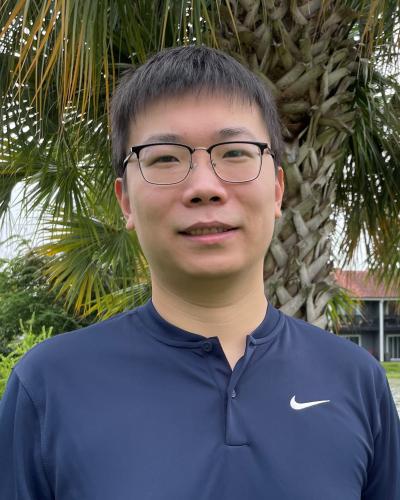
Yuheng Bu is an Assistant Professor in the Department of Computer Science at the University of California, Santa Barbara (UCSB). Previously, he held positions at the University of Florida and MIT. He earned his Ph.D. from the University of Illinois at Urbana-Champaign (2019) and B.S. from Tsinghua University (2014). His research focuses on foundational machine learning, integrating tools from information theory and signal processing to address challenges in fair learning, uncertainty quantification, and watermarking generative AI. Notable contributions include work on generalization error analysis, adaptive watermarking techniques, and fairness-aware algorithms. Affiliations: UCSB (current), University of Florida (2020-2023), MIT (Postdoc, 2019-2020) Education: Ph.D. Electrical & Computer Engineering, UIUC (2019); B.S. Electronic Engineering, Tsinghua University (2014) Research Interests: Machine Learning Theory, AI Ethics, Information-Theoretic Bounds, Signal Processing, and Applications in Generative AI Security. His work emphasizes rigorous theoretical foundations for trustworthy algorithms with guarantees on generalization, fairness, and robustness. Key Achievements: Developed adaptive watermarking schemes for LLMs, derived exact generalization error characterizations for Gibbs algorithms, and advanced understanding of fairness overfitting. His work has been recognized with awards including the Abraham Wald Prize (2023) and the MLSP Best Student Paper (2022). Grants & Collaborations: Collaborations with institutions like MIT, Turing Institute, and INRIA. Research supported by NSF and industry partnerships. Labs/Teams: Leads the Information-Theoretic Learning Group at UCSB, fostering interdisciplinary research on AI foundations.
Dr.-Ing. Anna Krause is a researcher at the Chair of Data Science (Informatik X) within the Faculty of Mathematics and Computer Science at the University of Würzburg. She leads the Deep Learning for Dynamical Systems Group and has been actively involved in teaching at the university since 2019, including courses on Machine Learning for Time Series Analysis and Data Mining. Doctoral degree in Electrical Engineering (2019), University of Hannover Diploma in Electrical Engineering (2009), Technical University Dresden Her research focuses on Environmental Sensing and Time Series Analysis , particularly on enhancing physics-based models using machine learning techniques for meteorological applications and sparse sensor networks. She has made significant contributions to explainable AI, climate modeling, and fraud detection systems. Anna's recent publications demonstrate expertise in climate modeling (ConvMOS, ICLR 2024-2025), physics-informed neural networks (TaylorPDENet, ECMLPKDD 2023), and fraud detection (MIDAS workshops, ECMLPKDD 2020-2023). She actively contributes to conferences as organizer and PC member, including ECMLPKDD and ICLR workshops. Scientific Awards Best ML Innovation Award (2020) for Deep Learning in Climate Modeling Best Student Paper Award (2020) for Multi-Task Land Use Regression Best Paper Award (2020) for Financial Fraud Detection with INALU The DynaBench dataset introduced in 2023 provides benchmark tools for learning dynamical systems from low-resolution data. Her work combines theoretical advancements with practical implementations, including edge computing applications for beekeeping monitoring systems.
Alison Jane Martingano is an Assistant Professor in the Department of Psychology at the University of Wisconsin-Green Bay, within the College of Arts, Humanities and Social Sciences. Her research explores empathy as a malleable skill that can be strengthened through practice, examining how activities like virtual reality, reading, and social interactions impact empathy development. With over 20 peer-reviewed publications and more than 600 citations, she is an emerging scholar in social psychology. Dr. Martingano earned her academic credentials through a rigorous educational path: Ph.D. in Cognitive, Social, and Developmental Psychology from the New School for Social Research (2020) M.Phil. and M.A. in Psychology from the New School for Social Research B.Sc. (Hons) from the University of York Postdoctoral training at the National Institutes for Health Her research program investigates empathy as a 'muscle' that strengthens with regular exercise through perspective-taking activities. She examines how various life experiences—such as virtual reality exposure, reading, socializing, emigrating, and higher education—impact empathy development across different demographic groups. Dr. Martingano is particularly interested in the cognitive and emotional components of empathy, their relationship to rational thinking, and how empathy manifests across diverse populations. Her work bridges theoretical psychological concepts with practical applications for enhancing social understanding. Analysis of Dr. Martingano's recent publications reveals a strong emphasis on virtual reality as a research tool for empathy studies, with significant attention to demographic differences in VR experiences, effectiveness of VR for empathy training, and racial disparities in cybersickness. She has conducted extensive research on empathy trends in youth populations, the relationship between social media use and empathy across different cultural contexts, and digital interventions to enhance empathy through smartphone applications. Her work consistently demonstrates methodological rigor while addressing socially relevant questions about human connection in the digital age. Winner of several early career research and teaching awards Featured on BBC Radio 4's The Digital Human Regular contributor to Psychology Today Host of the Psych & Stuff podcast Dr. Martingano actively mentors undergraduate students through the Social Research Lab at UW-Green Bay, where she guides research on empathy development using both traditional and innovative methodologies. She has secured research funding to support her investigations into empathy training interventions and virtual reality applications. Her commitment to education extends beyond the classroom through her public science communication efforts and dedication to making psychological research accessible to broader audiences. As head of the Social Research Lab, Dr. Martingano leads a team of undergraduate researchers conducting cutting-edge studies on empathy development, frequently utilizing virtual reality technology. Her lab serves as a comprehensive training ground for students interested in social psychology research methods, providing hands-on experience with experimental design, data collection, and analysis. Dr. Martingano's lab work directly supports her broader research agenda while preparing the next generation of psychological researchers.
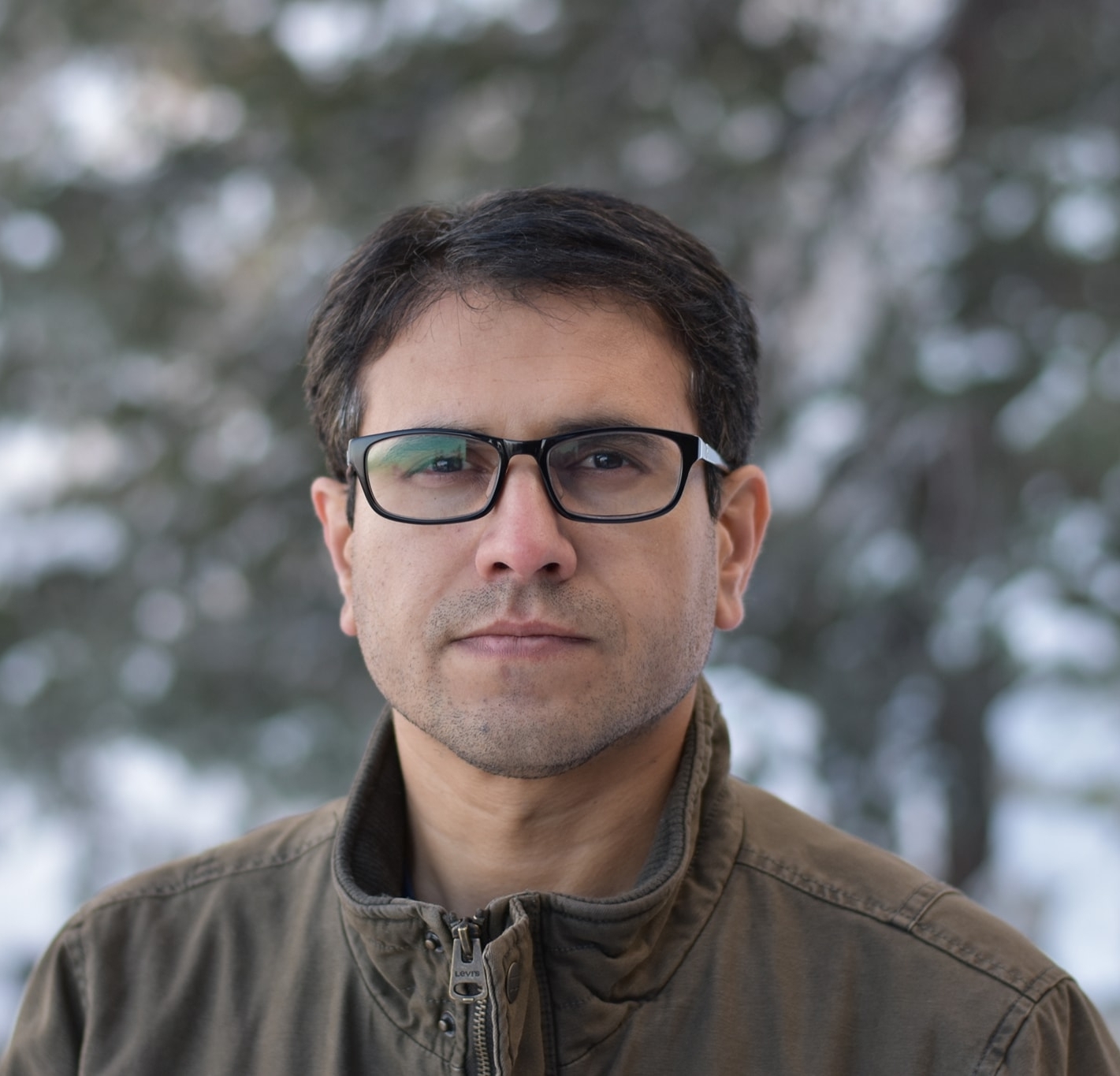
Muhammad Abu Bakar Siddique is an Assistant Professor in the Department of Computer Science at the University of Kentucky, part of the Stanley and Karen Pigman College of Engineering. His research focuses on natural language processing, large language models, and machine learning with particular emphasis on zero-shot learning and conversational AI systems that are safe, personalizable, and interpretable. Dr. Siddique earned his Ph.D. in Computer Science from the University of California, Riverside (2017-2021), his M.S. from Lahore University of Management Sciences, Pakistan (2008-2011), and his B.S. from International Islamic University, Pakistan (2003-2008). His research interests include: Natural Language Processing and Large Language Models Zero-shot and few-shot learning for conversational AI Safe, personalizable, and interpretable conversational systems Task-oriented dialog systems with domain generalization Mobile app recommendation systems Scalable machine learning methodologies Dr. Siddique's publications span top venues including WWW, SIGIR, KDD, and IEEE S&P, demonstrating his focus on developing practical AI solutions that can adapt to new domains without extensive retraining. His recent work shows increasing exploration of quantum software and the intersection of AI with mobile applications. His notable achievements include Best Paper Awards at the IEEE International Conference on Quantum Software (2025) and IEEE ICSC (2021). Dr. Siddique has secured significant funding from the National Science Foundation: CPS Medium: Calfhealth: Explainable AI for Pneumonia Detection in Dairy Calves ($941,359) SaTC CORE: Personalized and Trustworthy Mobile App Recommendations ($300,000) III Small: User-Centric Task-Oriented Dialog Systems ($599,898) DCL EPSCOR: Distributed Edge Intelligence ($100,000) He currently advises three PhD candidates (Adib Mosharrof, Moghis Fereidouni, and Muhammad Umair Haider) and has mentored several successful graduates. Dr. Siddique serves on program committees for major conferences including ACL, NeurIPS, ICML, and AAAI, and participates in outreach by hosting high school students through the University of Kentucky's Summer Youth Program.
Mary Stampone is an Associate Professor of Geography and the New Hampshire State Climatologist at the University of New Hampshire, where she also serves as Chair of the Geography department and holds an Affiliate Associate Professor appointment. Her work centers on providing climate data and analysis to New Hampshire citizens, educators, and agencies to support environmental decision-making and climate resilience planning across the state. Her academic credentials include a B.A. from Albion College, an M.S. in Geography from the University of Delaware, and a Ph.D. in Climate from the University of Delaware. This foundation supports her dual focus on climate science research and public service through the State Climate Office. Dr. Stampone's research spans climate system monitoring, applied climatology, and public understanding of climate change. She investigates regional climate variability, snow albedo dynamics using community networks like CoCoRaHS, Antarctic sea ice, and the connections between short-term weather experiences and long-term climate beliefs. Her work bridges atmospheric sciences, earth system science, and social dimensions of climate change. Analysis of her publication record reveals consistent emphasis on regional climate assessment for New England, particularly New Hampshire, with growing focus on practical applications for drought management, flood outlooks, and climate adaptation. Her research increasingly integrates public participation through networks like CoCoRaHS while contributing to national frameworks such as the Fourth National Climate Assessment. She has secured significant research funding as Principal Investigator for projects including Collaborating Towards Increase (University of Maine, 2022-2024) and multiple drought/flood modeling initiatives with the NH Department of Environmental Services. As Co-PI, she has led scholarly collaborations on New England climate change and state drought management planning. Her teaching portfolio includes foundational courses in weather, climate, natural hazards, and climate-society interactions. As head of the New Hampshire State Climate Office, Dr. Stampone leads a critical hub for climate services in the region. Her innovative work with the CoCoRaHS-Albedo network demonstrates her commitment to expanding climate monitoring through community science, while her role in state-level climate assessments directly informs environmental policy and resource management across New Hampshire.
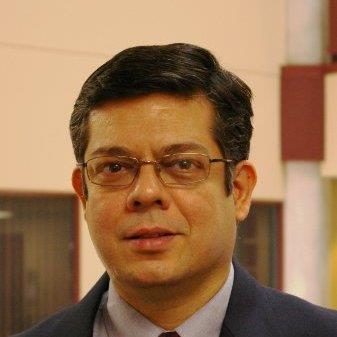
Dr. Manish Kacker is a tenured Associate Professor of Marketing at the DeGroote School of Business, McMaster University. He holds a PhD from Kellogg School of Management (Northwestern University), a PGDM from Indian Institute of Management (Bangalore), and a B.A. (Hons) from St. Stephen’s College (University of Delhi). His research focuses on marketing strategy, distribution channels, franchising, digital transformation, consumer adoption of new products, corporate social policy, and organizational transgressions. He investigates vertical interfirm exchange relationships, particularly in sales/distribution channels and franchising, using empirical methods to analyze governance structures and performance outcomes. Recent publications highlight brand equity impacts on franchise systems, channel governance, and network expansion strategies. His work appears in journals like Journal of Marketing Research and Journal of the Academy of Marketing Science. Dr. Kacker has secured grants from the Social Sciences and Humanities Research Council (Canada) and the Institute for the Study of Business Markets (ISBM). He mentors doctoral students and teaches courses ranging from Marketing Research to Special Topics in Marketing Strategy at undergraduate, graduate, and doctoral levels. His research has been featured in major media outlets including Globe and Mail, CBC, and Bloomberg Businessweek. He has previously taught at Kellogg School of Management, Smeal College of Business, and Freeman School of Business.
Luka Fürst is an Assistant Professor affiliated with an academic institution, specializing in Computer Science and Software Engineering . His work spans theoretical and applied domains, including Graph Theory , Programming Pedagogy , and Machine Learning . Teaches courses: Programming 2 , Programming 1 , Algorithms and Data Structures 2 , Computability and Computational Complexity Active in the Software Engineering Laboratory as a member Research Focus : Luka Fürst explores graph grammar induction , feature selection in object detection , and innovative programming education methods . His projects include KATARINA (promoting foundational computing knowledge) and legacy work on Computer Vision and Visual Assistant systems. Publications reveal a trajectory centered on formal language processing , machine learning techniques , and interactive educational tools , with recurring themes in software engineering and algorithm design .
Peter Peer is a Full Professor at the University of Ljubljana's Faculty of Computer and Information Science, where he leads the Computer Vision Laboratory. He serves as Executive Editor for ICT Express , Area Editor for IEEE Access and IET Biometrics , and coordinates dual-degree programs with Kyungpook National University. His administrative roles include membership in the Faculty Board of Directors (2018-present) and Senate (2021-present), and he previously served as Vice-Dean for Economic Affairs (2018-2022). His research spans computer vision and biometrics , with specialization in privacy-enhancing technologies, deep learning applications, and multimodal recognition systems. Key focus areas include: Face/sclera/ear biometric recognition and segmentation Deepfake detection and media forensics Generative models for data privacy Efficient model optimization techniques Publication analysis shows strong emphasis on biometric security (65% of recent works), privacy-preserving AI (25%), and generative modeling (10%), with applications spanning surveillance, forensics, and human-computer interaction. Awards highlight leadership in international biometric competitions and recognition for high-impact publications. Significant scientific honors include: NIST FATE evaluation winner (2025) Top 3 placements in ACM/IEEE biometric competitions (2023-2024) IEEE Transactions top-downloaded articles (2022-2024) European Association for Biometrics awards (2021-2024) He mentors 10+ PhD students working on biometric recognition, privacy preservation, and deep learning applications. Research is supported by national grants including DeepFake DAD (2023-2026) and MIXBAI (2023-2026), focusing on explainable AI and deepfake detection. Leads the Computer Vision Laboratory with international collaborations across Europe and Asia.
Prof. Marko Robnik Šikonja is a Full Professor at the Faculty of Computer and Information Science , University of Ljubljana . As head of the Machine Learning and Language Technologies Laboratory , he leads research in artificial intelligence, machine learning, data mining, natural language processing, and network analytics. He has authored over 150 publications with more than 5000 citations on Google Scholar. Research Focus: Deep neural networks, model explanation, embeddings, ensemble learning, and interdisciplinary applications in healthcare (e.g., STRATIFYHF for heart failure detection) and digital humanities (e.g., Language Resources for Slovene ). Scientific Awards: ECML/PKDD 2019 Journal Track Reviewer Award 2018 Outstanding Research Achievement at University of Ljubljana 2015 Golden Medal for contributions to the university Key Projects: STRATIFYHF (2023-2027): AI for heart failure risk stratification EMBEDDIA (2019-2021): Cross-lingual embeddings for European news KAUČ (2016-2022): Slovene textbook quality improvement