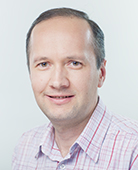
Dr. Branislav Hredzak is a researcher at the Faculty of Engineering , University of New South Wales . His work focuses on power electronics, renewable energy systems, and advanced control strategies for energy storage and smart grids.
Ning Xiong is a Professor at Mälardalen University, affiliated with the School of Innovation, Design and Engineering and the Division of Intelligent Future Technologies. His research focuses on advanced artificial intelligence, machine learning, optimization algorithms, and cyber-physical systems. He explores applications ranging from digital twin frameworks in distributed systems to predictive maintenance using explainable AI and anomaly detection in timeseries data. His work integrates techniques like federated learning, Bayesian classifiers, and bio-inspired computing (e.g., membrane clustering) to address challenges in smart systems and data science. Key research areas include: Machine Learning & Deep Learning Cyber-Physical Systems Optimization Algorithms Smart Systems & IoT Data Science & Big Data Recent publications highlight advancements in digital twin frameworks for resilient distributed systems, ensemble learning for imbalanced data, and lightweight object detection methods for UAV imagery. His contributions emphasize practical applications in energy grids, predictive maintenance, and industrial automation while addressing theoretical challenges in model explainability and scalability. His research is characterized by interdisciplinary collaboration, combining software engineering, systems architecture, and domain-specific expertise to develop innovative solutions for dynamic environments.
Stephane Vialle is a researcher at CentraleSupélec, leading the Interdisciplinary Laboratory of Digital Sciences. His research focuses on High-Performance Computing (HPC), GPU Computing, Quantum Computing, and Quantum Machine Learning. He has extensive experience in developing scalable fine-grained computing environments and optimizing parallel algorithms for distributed systems. His work spans financial engineering, energy management, and railway infrastructure through digital twin technology. Recent contributions include advancements in GPU cluster energy efficiency, stochastic control algorithms, and hybrid classical-quantum architectures for data clustering. Research interests emphasize optimizing parallel computing frameworks for diverse applications, including financial modeling, material science simulations, and transportation systems. His publications demonstrate expertise in distributed computing, fault-tolerant architectures, and algorithmic innovation across multiple computational paradigms. Current projects explore quantum computing integration with classical systems, GPU-based large-scale data processing, and real-world applications of parallel simulation techniques. Notable contributions include the parXXL development environment for coarse-grained platforms and the MINERVE digital twin for railway infrastructure management. His work bridges theoretical computing advancements with practical implementations in engineering and finance domains.
Associate Professor Graeme Smith is a faculty member at the School of Electrical Engineering and Computer Science, The University of Queensland. He leads research in formal methods, focusing on the design and analysis of software systems with applications in telecommunications, railways, and defense sectors. His work includes formal object-oriented modeling, real-time embedded systems, and concurrency. He has held academic positions at institutions in Australia, Germany, and France. Currently, he leads a research cell under the Defence Science and Technology Group, addressing formal security analysis of concurrent code. Education: Bachelor (Honours) of Engineering, The University of Queensland Doctor of Philosophy, The University of Queensland Research Interests: Formal methods for functional correctness and security of concurrent programs, including refinement techniques, information flow security, and distributed systems like multi-agent systems. His work emphasizes weak memory models, hardware-software interaction, and formal verification. Articles Trends: Recent publications emphasize formal verification of concurrent systems, weak memory models, and security protocols. Key areas include compositional reasoning, vulnerability detection, and applications in ARM/POWER architectures. Grants & Funding: ARC Discovery Grants on fault-tolerant systems, distributed autonomous systems, and lock-free algorithms Defence Science and Technology Group collaboration on formal security analysis Labs/Teams: Leads a Defence-funded research cell focusing on formal security analysis of concurrent code.
Dr. Pan Zhang is a Researcher at the Department of Mechanical Engineering, Imperial College London, specializing in materials modeling and micro-mechanics. His work focuses on crystal plasticity modeling, particularly the generation of microstructures for polycrystalline materials to support finite element analysis. He holds a BSc and MSc in Control Engineering and a PhD in Mechanical Engineering. Research interests include Voronoi tessellation applications, optimization using evolutionary algorithms, and material behavior under extreme conditions. His contributions span computational geometry, composite materials, and supply chain environmental impact analysis. Publications highlight advancements in grain structure simulation, cryptographic integration in embedded systems, and cloud-based privacy-preserving techniques. Collaborations include projects with Professors Liliang Wang and Daniel Balint, though he is not directly listed as a supervisor for the mentioned PhD studentships. No scientific awards are explicitly stated, but his work demonstrates expertise in interdisciplinary engineering and computational methods.
Sandro Luigi Fiore is an Associate Professor in the Department of Information Engineering and Computer Science at the University of Trento, Italy. He has held academic positions at the University of Salento and visiting scientist roles at the University of Chicago and Lawrence Livermore National Laboratory. His research integrates data science, big data, and high-performance computing with climate informatics and open science. Education: Ph.D. in Innovative Materials and Technologies, University of Lecce, 2004 Master of Science in Computer Engineering (with honors), University of Lecce, 2001 His research interests span Data Science, Big Data, Scientific Data Management, Artificial Intelligence, and Distributed/Cloud/Parallel Computing , with a strong application focus on Climate Change and Open Science . He develops FAIR-enabled data analytics solutions and contributes to large-scale data infrastructures such as ESGF, EOSC-hub, and INDIGO-DataCloud. His work emphasizes provenance, reproducibility, and interoperability in scientific computing. The articles reflect a consistent trajectory in large-scale scientific data systems , evolving from Grid-DBMS and parallel computing to modern applications in climate informatics, AI, and FAIR data. Key themes include distributed data management, middleware, exascale software, and reproducible workflows in HPC environments. Scientific Awards: Earth System Grid Federation Team Award (2017) UNIDATA Community Equipment Award (2011) Best Student Paper Award, ITCC2003 Fiore has advised on and led multiple national and European projects including EOSC-hub, IS-ENES, and BARRACUDA (RDA-Europe3). He actively supports the adoption of FAIR data principles in scientific repositories, advising on data policies, architecture, provenance, and interoperability. He is a member of the FAIR Champions group and serves on the Advisory Board of FAIRsFAIR. He is involved in key research teams and projects such as the Earth System Grid Federation (ESGF) , Globus Lab (University of Chicago) , and PCMDI/LLNL . His work contributes to climate model intercomparison (CMIP5/6) and the development of next-generation data infrastructure for open science.
Carlos Mateo Domingo is a Research Fellow at the Technological Research Institute (IIT) under the Comillas Pontifical University . He coordinates the Master's Degree in Smart Grids and leads the Sustainable Smart Grids area at IIT. With a PhD in Industrial and Computer Engineering (2007), he specializes in distribution network modeling and distributed energy resources integration. Key collaborations: MIT, NREL, World Bank, European Commission Accreditations: Three six-year research periods (2003-2020) with ANECA/ACAP certifications Research Focus: Electricity distribution network planning and optimization Distributed generation integration (PV, storage, EVs) Smart grid technologies and digitalization Energy system modeling for developing countries Meta-heuristic algorithms application in grid problems Publication Trends (2016-2025): Over 69 projects and 49 journal papers focusing on grid flexibility, synthetic network modeling, and renewable integration. Key journals include IEEE Access , Applied Energy , and IEEE Transactions on Smart Grid . Scientific Awards: 2024 - Directed award-winning Final Year Project on electric vehicle grid integration Multiple European Commission Horizon 2020 grants (ATTEST, ECEMF) Notable Projects: SMART-DS with NREL/MIT for U.S. Department of Energy, DSO Observatory for European Commission, and rural electrification initiatives with World Bank.
Dr. Eng. Wojciech Kmiecik is a researcher at the Department of Computer Systems and Networks, Faculty of Electronics, Photonics and Microsystems, Wrocław University of Science and Technology. He is actively involved in multiple research teams including Machine Learning, Computer Networks, Advanced Data Analysis Methods, and Metaheuristics. He also contributes to teaching and supervises diploma theses. His research focuses on optical networks , survivable multicasting , multi-criteria optimization , and metaheuristic algorithms . He has led and contributed to projects such as Dark-Box Optimization, evolutionary multi-criteria optimization, and advanced methods for multi-layer networks. His work bridges theoretical algorithm development with practical network design. The publication trends from 2010 to 2020 show a consistent focus on network survivability , elastic optical networks , and task allocation in parallel systems . His research integrates optimization techniques into networking solutions, particularly in dual homing architectures and deadline-sensitive provisioning. Key themes include resilience, efficiency, and scalability in both optical and computational systems. Scientific Awards: Medal for long-standing service to Wrocław University of Science and Technology Dr. Kmiecik has supervised diploma theses and is involved in teaching. He has not received externally reported grants, but his sustained project involvement suggests institutional or collaborative funding. He collaborates extensively with Prof. Krzysztof Walkowiak and other researchers in the department. Research Labs and Teams: Machine Learning Team Teaching Team Computer Networks Team Advanced Data Analysis Methods Team Metaheuristics Team
Sylvain Kubler is a Researcher at the Interdisciplinary Centre for Security, Reliability and Trust (SnT) within the University of Luxembourg's SerVal group. He holds a PhD from Université de Lorraine (2013) and previously served as an Associate Professor at the Research Center for Automatic Control of Nancy. His work focuses on IoT applications, decision support systems, and their integration into Industry 4.0, renewable energy, and smart cities. He has contributed to projects involving blockchain consensus mechanisms, maintenance scheduling, and energy system optimization. His research emphasizes sustainable technologies and distributed systems security. Research Interests: IoT and Blockchain Integration Decision Support Systems for Smart Cities and Industry Renewable Energy and Multi-Energy Networks AI-Driven Maintenance and Prognostics Privacy-Preserving Distributed Systems Recent Contributions: Sylvain’s recent work explores adaptive blockchain frameworks (e.g., DRAFTEE), reinforcement learning for maintenance scheduling, and explainable AI (XAI) in prognostics. His articles analyze trade-offs in federated learning architectures and multi-level energy system coordination. Affiliations and Labs: A core member of the SerVal group, he collaborates on initiatives like the IoT-based BIoTope ecosystem and the Sabine blockchain project. His work aligns with Luxembourg’s focus on secure, reliable, and sustainable technological solutions.
Peter Popov is a Reader at the Centre for Software Reliability (CSR) , City St George's, University of London , where he has been employed since 1997. He specializes in software dependability , fault tolerance , and stochastic modeling of critical infrastructures. Before his current position, he was an Associate Professor at the Bulgarian Academy of Sciences (1990-1997) and a Research Fellow at City St George's. Peter's academic journey began with a PhD in Computer Science from the Kiev National University of Technologies and Design (1989), following his BEng in Computer Engineering from the National Technical University of Ukraine (KPI, 1982). He has worked as a visiting scientist at renowned institutions including the Coordinated Science Laboratory at the University of Illinois at Urbana-Champaign , LAAS-CNRS in Toulouse, and Duke University . His research interests span Software reliability assessment System dependability Software fault-tolerance Performance evaluation Interdependencies of critical infrastructures He has contributed extensively to projects such as ReSIST , IRRIIS , DISPO , and AFTER , focusing on the dependability of composite systems and critical infrastructure resilience. Key publication trends reveal expertise in Stochastic modeling of autonomous vehicle safety Software diversity for fault tolerance Interdependency analysis in critical systems Bayesian reliability assessment Performance evaluation of distributed protocols Security implications in cyber-physical systems Peter has supervised several PhD students , including those researching autonomous vehicle resilience , safety assurance with ML components , and adaptable web services . His professional activities include serving on program committees for ISSRE , SAFECOMP , and EDCC conferences, as well as editorial contributions to CEUR Workshop Proceedings . He is proficient in Bulgarian , English , and Russian , with peer-review capabilities in all three languages.
Holger Pirk is a researcher at Imperial College London , UK, focusing on database systems and data science. His work bridges hardware-aware query optimization, in-memory processing, and machine learning integration. He collaborates with institutions like MIT, TU Delft, and VU Amsterdam. Affiliation: Imperial College London, UK Key Collaborators: Samuel Madden (MIT), Martin Kersten (CWI), Georgios Theodorakis (Imperial), Stefan Manegold (CWI) Research Interests include: Hardware-conscious database optimization Stream/window aggregation algorithms Portable execution models via homoiconicity Compiler-database system integration Efficient tree/index structures Recent Publications (2023-2025) address topics like database kernel composition (BOSS), LLM-generated text compression, hardware-efficient data imputation, and fault-tolerant stream processing. His work emphasizes CPU/cache efficiency, parallelism, and cross-domain system design.
Jaroslav Klapalek is a PreDoc Researcher in the Cyber-Physical Systems department at Vienna University of Technology (TU Wien). His work focuses on formal verification of distributed timed-automata, resilient control mechanisms, and timing anomalies in automotive architectures. He is affiliated with the Embedded Systems Group (E191-01) and has contributed to research on machine learning for industrial predictive maintenance, consensus algorithms, and energy-efficient scheduling. Research Trends: Recent publications highlight expertise in formal verification of real-time constraints, security analysis in industrial CPS, and timing predictability under clock drift and network delays. Key methods include model checking, hybrid system modeling, and safety-critical protocol validation. Scientific Awards:
Dr Aydin Abadi is a Research Fellow at Newcastle University specializing in cryptography and security systems. His research spans privacy-preserving technologies, blockchain architectures, and secure multi-party computation protocols, with active publication output from 2015 through 2025. His primary research domains include Cryptography, Secure Multi-Party Computation (particularly Private Set Intersection variants), Blockchain Applications, Privacy-Preserving Computation, Distributed Systems Security, and Federated Learning. He has pioneered protocols for verifiable delegated computation on outsourced datasets and developed novel approaches to Byzantine fault tolerance in distributed ledgers. Analysis of his 9 publications (2015-2025) reveals an evolutionary trajectory from foundational cryptographic protocols (2015-2019) toward applied blockchain systems and machine learning security (2023-2025). His recent work integrates cryptographic techniques with federated learning frameworks and develops commercial-grade blockchain alternatives, demonstrating consistent innovation in bridging theoretical cryptography with real-world system implementations.
Dr. Timenko Artur Valentynovych serves as Senior Lecturer at Zaporizhia National Technical University's Department of Computer Systems and Networks within the Faculty of Computer Science and Technologies. Holding a specialist degree in Computer Systems and Networks (2010), he maintains active roles in both teaching and research. His educational background includes graduation from Zaporizhia National Technical University in 2010 with specialization in Computer Systems and Networks. Professional development is evidenced through continuous research output and curriculum development activities. Research focuses on Internet of Things , computer networks , and neural networks , with particular emphasis on protocol verification, device interoperability, and embedded system optimization. Recent work explores semantic chatbots for IoT management, air quality monitoring systems, and MQTT protocol compatibility analysis. His methodology integrates formal verification techniques with practical hardware implementation. Publication trends from 2020-2024 reveal consistent contributions to IoT infrastructure (45%), network protocols (30%), and AI applications (25%). Key journals include Shipbuilding & Marine Infrastructure and Scientific Notes of Vernadsky University. Research demonstrates strong industry relevance with applications in smart homes, environmental monitoring, and critical systems. Teaching responsibilities encompass Python programming basics, computer network design, IoT fundamentals, and wireless technologies. His laboratory guidelines for Embedded Computer Systems and IoT disciplines reflect practical, hands-on pedagogy. Current projects involve developing automated temperature control systems and network anomaly detection using hybrid neural networks. Professional activities include active participation in Ukrainian academic conferences and international collaborations through ZNTU's research infrastructure. His work contributes to the university's strategic focus on digital innovation and sustainable technology development.
Ansuman Bhattacharya serves as an Assistant Professor in the Department of Computer Science at Southern Illinois University's College of Engineering, where he directs the Advanced Networking and Network Security (ANNS) Laboratory. His research spans multiple critical areas of modern networking and security with a focus on next-generation communication systems. Dr. Bhattacharya holds a Ph.D. in Radio Physics and Electronics from the University of Calcutta, establishing a strong foundation for his work in advanced networking technologies. His educational background bridges physics and computer science, providing unique insights into network communication challenges. His research interests center around Networks and Network Security with particular emphasis on Next Generation Networks, Internet-of-Things, Cognitive Radio Networks, Software Defined Networks, Green Communication, and Wireless Network Security. This diverse portfolio addresses critical challenges in modern communication systems, from energy efficiency to security protocols for emerging technologies. His work often combines theoretical frameworks with practical implementations, as evidenced by numerous publications in top-tier journals and conferences. Dr. Bhattacharya's research output demonstrates a clear progression toward increasingly sophisticated security protocols for IoT and wireless systems, with recent work focusing on zero-trust architectures, distributed authentication systems, and AI-enhanced security frameworks. His publications span prestigious venues including IEEE Transactions, Elsevier journals, and major international conferences. Best Paper Award at International Symposium on Intelligent Robotics and Industrial Automation (IRIA-2021) for 'Secure Communication System Implementation for Robot-Based Surveillance Applications' 3rd Best Paper Award at International Conference on Recent Trends in Information Technology (IEEE ICRTIT) for 'Image Stenography using Advanced Encryption Standard for implantation of Audio/Video Data' As Director of the ANNS Lab, Dr. Bhattacharya mentors numerous Ph.D., MS, and undergraduate students while securing research funding from agencies including Technology Innovation in Exploration & Mining Foundation (TEXMiN) and IMPRINT-II, Science & Engineering Research Board (SERB), DST, Govt. of India. His lab benefits from state-of-the-art computing resources including high-performance workstations with NVIDIA RTX A6000 and RTX 4090 graphics cards, providing students with cutting-edge tools for network simulation and security research. The lab actively pursues research projects in sensor-based dust suppression systems and robotic surveillance technologies, demonstrating practical applications of theoretical networking concepts.