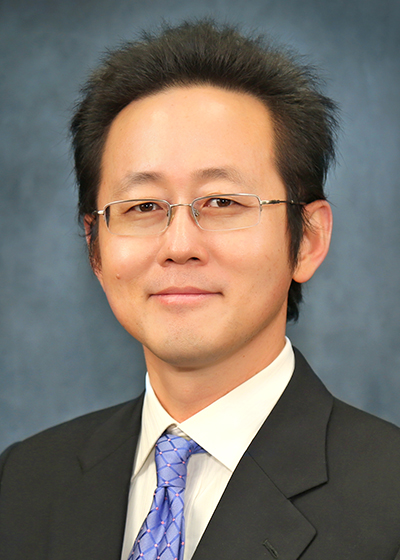
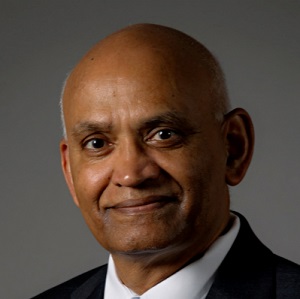
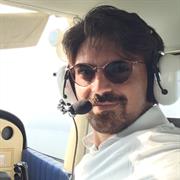
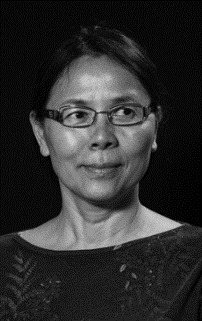
Seungdeog Choi is a Professor in Electrical and Computer Engineering at Mississippi State University's Bagley College of Engineering, directing the Power Electronics and Energy System Lab (PEESL). Research focuses on: High-reliability power electronics design Wide-bandgap semiconductor applications Electric drive systems for traction and antennas Real-time condition monitoring Recent publications emphasize electromagnetic interference mitigation, arc fault detection, and lifetime prediction of power modules. Emerging interests include cyber-physical security of electric drives and ultra-high-speed motors for portable antenna systems.
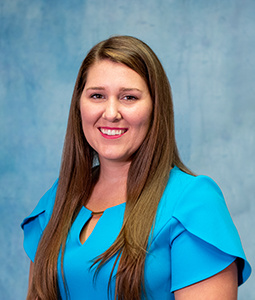
Behnaz Papari is an Assistant Professor at Clemson University with appointments in Automotive Engineering and Electrical and Computer Engineering. She directs the Secure Energy and Automation Laboratory (SEAL), focusing on secure controls for cyber-physical energy systems. Her research explores power systems control, cyber-physical security, electric vehicle technologies, hardware-in-the-loop methodologies, renewable energy integration, and stochastic optimization. She specializes in resilient infrastructure for transportation and energy networks. Recent publications (2024-2025) address co-simulation techniques, electric ship power systems, cyberattack detection in hybrid vehicles, battery degradation modeling, and microgrid optimization. Key innovations include adaptive delay compensation, neural network-based threat detection, and evolutionary optimization for renewable systems. She collaborates with industry partners including Hyundai, Kia Motors, and naval engineering consortia to validate research in real-world applications.
Kristen Booth serves as an Assistant Professor in the Department of Electrical Engineering at the University of South Carolina's Molinaroli College of Engineering and Computing, leveraging expertise in power electronics and digital twin technologies for modern power systems. Her academic foundation includes: Ph.D. in Electrical Engineering, North Carolina State University (2019) M.S. in Electrical Engineering, North Carolina State University (2017) B.S.E. in Engineering Physics, Murray State University (2015) Booth's research centers on advancing DC microgrids, transformer optimization, and electric vehicle infrastructure through AI-integrated power electronics. Her work addresses critical challenges in wide bandgap semiconductor reliability and high-frequency converter design, with applications spanning naval systems, electric aircraft, and solid-state transformers. Current projects emphasize digital twin frameworks for real-time power flow management and electro-thermal simulation. Analysis of her 2023-2025 publications reveals dominant trends in digital twin applications for naval DC microgrids, MHz-frequency power converter optimization, and battery longevity in electric aircraft. Key thematic clusters include real-time prognostics for powertrain systems, thermal management in water-cooled electronics, and pulsed load handling for military applications. No scientific awards are documented in available sources. Student advising activities and research grant details remain unspecified in current records. Booth previously contributed to The Ohio State University's Center for High Performance Power Electronics as a postdoctoral researcher, and now leads power electronics research within USC's Electrical Engineering department, focusing on next-generation semiconductor applications and grid resilience.
Francesc Pozo Montero is a Full Professor at the Universitat Politècnica de Catalunya (UPC) , affiliated with the Department of Mathematics at the Barcelona East School of Engineering (EEBE) . He leads research in Structural Health Monitoring (SHM) , Control Systems , and Wind Energy Technology through the CoDAlab (Control, Data & AI) and WinTurCoM (Wind Turbine Condition Monitoring) groups. His work focuses on data-driven modeling, fault diagnosis, and predictive maintenance for critical infrastructure, particularly in renewable energy systems. Educational Background : - Licenciado en Matemáticas (UPC) - Doctor en Matemática Aplicada (UPC) Research Highlights : - Developed advanced algorithms for structural damage detection in wind turbines. - Pioneered machine learning applications for condition monitoring in marine and civil structures. - Authored textbooks like Mathematics for Engineers and Probabilidad y Estadística Matemática . Awards & Recognition : - 2024 Top Scholar Award (Principal Component Analysis) - Highly Cited Papers Award in Applied Sciences - WeDoWind Structural Health Monitoring Challenge Winner Grants & Projects : - Co-led AGRUPS 2024-2023 CoDAlab grants focusing on AI-driven SHM. - PI for energy transition projects like Desarrollo y validación de sistemas de monitorización inteligente para aerogeneradores . Team & Labs : - Director of the WinTurCoM subgroup, collaborating with global institutions. - Active in Structural Control and Health Monitoring initiatives.
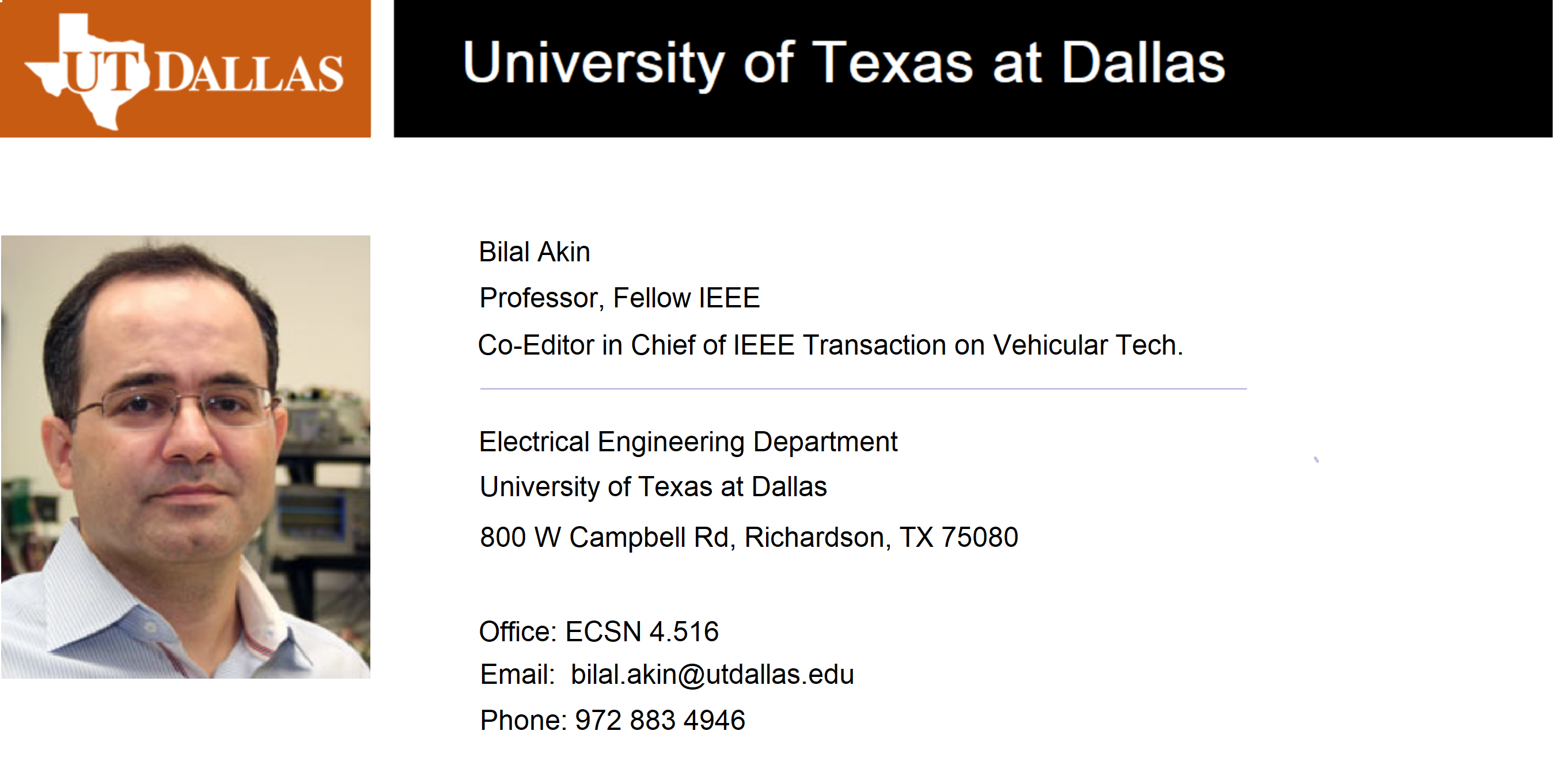
Bilal Akin is a Professor in the Electrical Engineering Department at the University of Texas at Dallas, working within the Erik Jonsson School of Engineering and Computer Science. With over 30 PhD students and postdocs mentored, his research group has successfully delivered more than 40 industry-sponsored projects that directly contributed to new products and features in the power electronics field. Dr. Akin's educational background includes a Ph.D. from Texas A&M University (2007), an MSc from Middle East Technical University (METU) in Ankara (2003), and a B.S. from METU (2000). Prior to joining UT Dallas in 2012, he worked as a Systems and Applications Engineer at Texas Instruments (2008-2012) and as an R&D Engineer at Toshiba International Corporation (2005-2008). His research focuses on power electronics, digital power control systems, electric motor drives, and fault diagnosis of industrial components. Specifically, his work spans power semiconductor reliability, condition monitoring of power electronics components, control of electric motors and drives, digital power control, and applications of machine learning to energy conversion systems. His research has significant applications in electric and hybrid vehicles, renewable energy systems, and industrial power conversion. Dr. Akin's extensive publication record demonstrates expertise across power electronics reliability, motor drive control, and fault diagnosis techniques. His recent work shows increasing integration of machine learning approaches with traditional power electronics and motor control techniques, particularly for condition monitoring and prognostics applications. The research spans from fundamental semiconductor device characterization to complete system-level implementations. NSF CAREER Award (2015) Multiple IEEE Prize Transaction Paper Awards (2018, 2020, 2023) IEEE PE Magazine cover story (2016) Engineering School Faculty Research Awards (2015, 2020) Excellence in Teaching Award (2019) Co-Editor in Chief of IEEE Transaction on Vehicular Technology IEEE VT Society Distinguished Lecturer (2016-2018) Dr. Akin has successfully advised numerous graduate students, with several receiving prestigious dissertation awards. His former PhD students have secured positions at leading companies including Texas Instruments, Onsemi, Nidec, and Wolfspeed/Cree. His research group collaborates extensively with industry partners on motor drives, power electronics systems, power semiconductors, and AI applications. Current research focuses on wide-bandgap semiconductors (SiC and GaN), advanced motor control techniques, and machine learning applications for condition monitoring. His research team consists of multiple PhD candidates working on various aspects of power electronics and motor drives, along with visiting scholars and research associates from around the world. The group maintains strong industry connections and actively seeks new collaborations for cutting-edge research in power electronics and energy conversion systems.
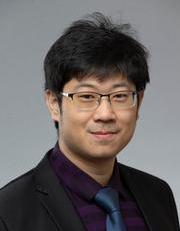
Xiaodong Jia is an Assistant Professor (ISE-Data Science Focus) at the University of Cincinnati's Department of Industrial & Systems Engineering, affiliated with the College of Engineering, Architecture and Art. He leads the Lab for Intelligent Metrology Systems and has held roles including Post-Doc Research Fellow at the Center for Intelligent Maintenance Systems and Research Assistant Professor at UC. His research focuses on smart manufacturing, advanced process control, and machine learning applications in industrial systems. Education includes a Ph.D. in Industrial Big Data and Prognostics from UC (2018), M.S. in Turbomachinery from Shanghai Jiaotong University (2014), and a B.S. in Mechanical Engineering from Central South University (2008). Research interests include data-driven modeling, prognostics and health management (PHM), and digital twin technologies. His work addresses challenges in semiconductor manufacturing, robotics, and predictive maintenance. Recent projects involve closed-loop defect identification in roll-to-part systems and AI-driven yield enhancement for semiconductors. Grants include $498K from the Department of Army for defect remediation in manufacturing, $325K from NIST for semiconductor yield optimization, and multiple industry partnerships with GM, Applied Materials, and Hitachi. Awards include top placements in global industrial AI and PHM competitions. His lab collaborates with industry leaders like General Motors, Mitsubishi, and TSMC, focusing on applied machine learning solutions for manufacturing systems. Ongoing projects emphasize transfer learning, data anonymization, and digital twin applications.
Kevin C. Leonard is Professor of Chemical and Petroleum Engineering at the University of Kansas, with joint appointment at the Center for Environmentally Beneficial Catalysis. He leads research on sustainable electrochemical technologies for fuel and chemical production, with focus areas in electrocatalysis, scanning electrochemical microscopy, CO₂ utilization, and machine learning for catalyst discovery. His research develops novel electrochemical systems for renewable hydrogen production, CO₂ conversion, and sustainable chemical synthesis. Current projects include federated learning approaches for catalyst discovery, CO₂-expanded electrolytes for chemical production, and scanning electrochemical microscopy for catalyst characterization. Professor Leonard has received significant research funding from NSF, Department of Energy, and Cisco Systems. Awards include the ACS Sustainable Chemistry & Engineering Lectureship Award and Army Research Office Young Investigator Award. He co-founded Avium, LLC to commercialize hydrogen production technology. He teaches undergraduate and graduate courses in chemical engineering fundamentals, kinetics, catalysis, and data science. Professor Leonard currently advises 7 graduate students working on electrocatalysis, machine learning applications, and electrochemical characterization techniques.
Krishna Pattipati is a Board of Trustees Distinguished Professor and UTC Professor of Systems Engineering in the Department of Electrical and Computer Engineering at the University of Connecticut. His research spans systems engineering, battery management, fault diagnostics, and machine learning applications in complex engineering systems. Professor Pattipati's research interests focus on developing advanced methodologies for system health management, including: Battery state estimation and management algorithms for energy storage systems Fault diagnosis and prognosis in power electronics and manufacturing systems Machine learning techniques for predictive maintenance Multi-objective optimization for decision-making under uncertainty Probabilistic inference methods for autonomous systems Analysis of his recent publications (2021-2025) reveals dominant research themes in battery management systems (state estimation, OCV modeling, internal resistance), tool health monitoring in manufacturing (wear classification, condition monitoring), and probabilistic path planning algorithms. His work consistently integrates theoretical frameworks with practical applications in energy, manufacturing, and robotics. Significant scientific recognitions include: Board of Trustees Distinguished Professor honor (University of Connecticut's highest faculty award) Endowed UTC Professorship in Systems Engineering
Professor Gregory Provan is a Full Professor and Programme Coordinator for BSc Data Science and Analytics at University College Cork's School of Computer Science and Information Technology. He directs the Complex Systems Laboratory and holds a PhD from the University of Oxford, with prior academic appointments at the University of Pennsylvania. His educational journey includes: BSE from Princeton University MSc from Stanford University DPhil from University of Oxford This foundation supports his interdisciplinary research approach. Professor Provan's research spans: complex systems design and analysis with applications in: Embedded diagnostics algorithms for large-scale systems Stochastic model-based diagnosis frameworks Automated benchmark model generation Sustainable energy system optimization Co-design of embedded systems His work bridges artificial intelligence, data analytics, and network architectures to solve real-world engineering challenges. Analysis of his extensive publication record reveals core themes: Advancements in model-based diagnosis and control Computational methods for complex systems Applications in sustainable energy and building automation Innovations in stochastic optimization and machine learning His recent work increasingly focuses on cybersecurity for cyber-physical systems and explainable AI. Professor Provan has secured significant research funding including: Science Foundation Ireland grants totaling over €1.2M Industry partnerships with Tyndall National Institute Enterprise Ireland support for competence centers His research group addresses fundamental challenges in complex systems engineering. He has supervised numerous doctoral candidates to completion, including: Jun Wang (Modeling real-world complex systems) Alie El-Din Mady (Networked control systems) Margarita Razgon (Constraint satisfaction problems) Ma Ji (Uncertainty visualization) Current doctoral researchers continue work on wireless sensor networks and analog system diagnosis. Honors include the 2008 Best Paper Award from the IEEE Prognostics and Health Management Conference for his work on approximation techniques in model-based diagnostics. Professor Provan leads the Complex Systems Laboratory which focuses on: Modeling and analysis of sustainable energy systems Diagnostics and control of large-scale networks Embedded system co-design The lab maintains collaborations with international research institutions and industry partners.
Dr. Vincenzo Muscarello is a Senior Lecturer in the Department of Aerospace Engineering and Aviation at RMIT University's School of Engineering. He has held academic positions including Assistant Professor at Politecnico di Milano (2018–2022) and a Postdoctoral Researcher there (2013–2018), as well as an Honorary Research Fellow at the University of Liverpool (2012). He obtained a Master's in Aeronautical Engineering (2009) and a PhD (2013) from the Polytechnic University of Milan. His research focuses on aero-servo-elasticity and rotorcraft dynamics, with particular emphasis on multidisciplinary modeling for aircraft and rotorcraft design, verification, and certification. Current research areas include advanced/urban air mobility, aeroservoelasticity of fixed- and rotary-wing aircraft, distributed electric propulsion systems, and development of digital twins for loads prediction and fatigue life assessments. He led the Clean Sky 2 'Formosa' project, which aimed to design innovative control surfaces for NextGen Civil Tiltrotors in collaboration with Leonardo Helicopters. Muscarello supervises research projects such as 'Exploring Aeroelastic Stability...' and 'SafeSky: Fusion...'. He is open to supervising Masters/PhD students and collaborating on industry projects. His work integrates computational fluid dynamics (CFD), multibody dynamics, and real-time simulations to address aeroelastic stability and vibration control challenges. Key collaborations and initiatives include the Formosa Clean Sky 2 project and partnerships with industry and academic institutions. His research contributes to the advancement of tiltrotor technology, urban air mobility, and rotorcraft safety and efficiency.
Ying Zheng is a Professor of Systems Engineering and Neuroscience at the University of Reading, affiliated with the School of Biological Sciences. Her research integrates mathematical modeling of biophysical systems with neuroscientific investigations, particularly focusing on neural excitation/inhibition dynamics and the effects of vitamin B supplementation on brain activity. She also explores plant stress biology, including drought and phosphate stress responses in species like Anoectochilus roxburghii . Her work bridges systems engineering with biological systems, addressing challenges in fault detection, predictive maintenance, and industrial process control. Dr. Zheng's educational background includes advanced training in systems engineering and neuroscience, though specific degree details are not provided. Her interdisciplinary research spans computational modeling, molecular biology, and control engineering, with notable contributions to polyamine metabolism's role in stress tolerance and fertility-related genetic studies in mice. Research Highlights: Local field potential modeling in neural systems Endophyte-mediated plant stress resilience Roll-to-roll manufacturing control systems Machine learning for industrial fault diagnosis Her publications reflect a dual focus on biological and engineering systems, with recent work emphasizing translational applications such as improving herbal medicine quality and advancing infertility treatment through genetic insights. Collaborations include contributions to language assessment frameworks and fertility policy analysis, showcasing her interdisciplinary reach.
Todd Michael is an Adjunct Professor at the University of California, San Diego, affiliated with the Scripps Institution of Oceanography and the Center for Marine Biotechnology and Biomedicine. His work bridges advanced computational methods with structural engineering challenges, particularly in infrastructure monitoring and material degradation analysis. Research interests include Structural Health Monitoring (SHM), Non-Destructive Evaluation (NDE), and the integration of Machine Learning and Bayesian Inference into engineering systems. He focuses on optimizing sensor networks, improving corrosion diagnostics for large structures like miter gates, and developing digital twin frameworks for predictive maintenance. Recent work emphasizes probabilistic modeling, anomaly detection under complex conditions, and the application of deep learning to civil and mechanical engineering problems. His articles highlight innovations in SHM strategies for bridges and aircraft components, sensor reliability under operational failures, and frameworks for cost-effective monitoring. He also explores automated crack detection in underwater environments and the use of physics-constrained neural networks to model structural dynamics accurately. Michael collaborates with interdisciplinary teams on projects involving smart infrastructure and AI-driven inspection technologies. While no formal awards are listed, his contributions reflect a strong focus on applied research with real-world engineering implications.
Robert Gao is a Professor and Chair of the Department of Mechanical and Aerospace Engineering at Case Western Reserve University's Case School of Engineering. He holds the Cady Staley Professorship. His research focuses on multi-physics sensing, stochastic modeling, and AI-driven advancements in manufacturing processes, including smart manufacturing, mechatronics, and predictive maintenance. Education: PhD in Mechanical Engineering (Technical University of Berlin, 1991), MS in Mechanical Engineering (Technical University of Berlin, 1985), BS from Central Academy of Arts and Design, Beijing (1982). Research Interests: Signal transduction mechanisms, AI-enhanced control in manufacturing, physics-informed machine learning, human-robot collaboration, and stochastic modeling for system performance prognosis. His work integrates analytical, numerical, and experimental methods to develop advanced sensors and data analytic methods for process monitoring and quality control. Awards: Over 20 prestigious awards, including the 2023 Milton C. Shaw Manufacturing Medal (ASME), 2020 Distinguished Fellow (IIAV), and Fellowships from IEEE, ASME, and SME. Recognized for contributions to smart manufacturing and machine health monitoring. Grants and Labs: Leads the NSF Engineering Research Center (NSF ERC HAMMER) on Hybrid Autonomous Manufacturing. Active in editorial roles for journals like IEEE/ASME Transactions on Mechatronics and serves on international advisory boards.
Associate Professor Nima Gorjian at UniSA STEM, University of South Australia, is a leading researcher in construction safety management, structural health monitoring, and AI applications in civil engineering. His work spans knowledge-driven approaches, ontology development, and renewable energy systems. Key research areas include: Construction safety management and hazard identification Ontology and knowledge graph modeling Self-sensing materials for infrastructure monitoring Energy optimization in wastewater networks AI-driven fault diagnostics for machinery Recent publications focus on automation of job hazard analysis, smart composite materials, and predictive maintenance strategies. His affiliations include collaborations with SA Water Corporation and Queensland University of Technology.
Antonio Carlo Bertolino is a Fixed-Term Researcher at the Department of Mechanical and Aerospace Engineering (DIMEAS) , Politecnico di Torino. He contributes to the Power Electronics Innovation Center (PEIC) and serves as a Course Collaborator in Mechatronics and Digital Twins for Mechanical Systems Prognostics across multiple academic years. Research Focus: Prognostics and Health Management (PHM) systems, high-fidelity modeling of aerospace actuators, ball screw mechanisms, and collaborative robotics. Collaborations: Engaged with institutions like INSA Toulouse and companies including Collins Aerospace, Leonardo, Elettronica Aster, and Lufthansa Technik. Publications: His work spans journals like Robotics and Actuators , addressing topics in aerospace actuation, fault detection, and mechanical degradation. Skills & Expertise: Applied Mechanics, Aerospace Engineering, Robotics, Simulation Modeling, and SDG 9 (Industry Innovation). He also holds an Open Badge in Teaching (Learning to Teach, 2024).