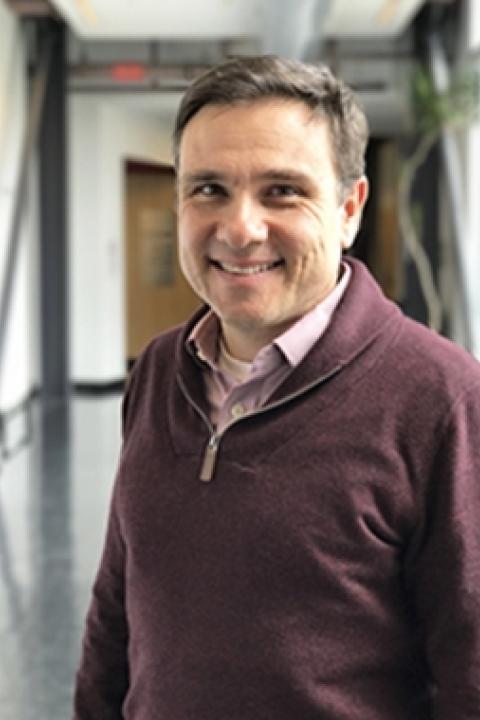
Anthony P. Austin is an Assistant Professor in the Department of Applied Mathematics at the Naval Postgraduate School . His research focuses on numerical linear algebra, high-performance computing, approximation theory, and GPU-accelerated algorithms. He has held prior positions at Virginia Tech and Argonne National Laboratory as a J. H. Wilkinson Fellow. His work includes contributions to Chebfun, a software system for numerical computation. Education: D.Phil. in Mathematics , University of Oxford Mathematical Institute (2016) Ph.D. studies with active development in the Chebfun project Research Interests : Numerical methods for large-scale problems, high-order methods for PDEs, and computational techniques leveraging GPUs. His work emphasizes algorithmic innovation and stability in numerical simulations. Recent Contributions : Publications include advancements in spectral factorization, adversarial signal perturbations, and parallel algorithms for partial spectral computations. His seminar co-organization highlights collaboration in early-career faculty research initiatives. Professional Activities : Co-organizer of the NPS Junior Faculty Research Seminar (AY2022/Q3), focusing on fostering interdisciplinary collaboration among early-career faculty.
David Nadlinger is a Junior Research Fellow in Physics at the University of Oxford and a quantum physicist specializing in trapped-ion quantum computing. His research integrates quantum physics, programming, and engineering to advance quantum network technologies. His work focuses on quantum computing architectures, optical addressing of trapped ions, quantum error correction, and distributed quantum systems. Recent publications explore photon-mediated entanglement, microwave-driven quantum logic, and open-source control systems for quantum experiments. He contributes to quantum networking projects including multi-node entanglement, quantum gate teleportation, and entanglement-enhanced optical clocks.
Dr. Daniel Wilkes is an Adjunct Research Fellow at Curtin University's School of Earth and Planetary Sciences within the Faculty of Science and Engineering. His research focuses on computational acoustics, fluid-structure interaction, and numerical modeling of underwater and environmental noise, particularly in marine engineering contexts. He collaborates with the External Collaborative Research Centre for Marine Science and Technology, contributing to advancements in boundary element method (BEM) techniques and their applications in acoustic simulations. Wilkes' work spans experimental and numerical investigations of sound radiation from marine structures, such as impact-driven piles and offshore wind turbine foundations, with a focus on mitigating environmental noise impacts. He has developed parallel FMBEM (Fast Multipole Boundary Element Method) models for large-scale acoustic problems and contributed to benchmarking studies like COMPILE for marine pile-driving noise prediction. His publications emphasize coupled fluid-structure interaction (FSI) analysis, low-frequency elastodynamic modeling, and the optimization of numerical methods for complex acoustic scenarios. While no formal awards are listed, his extensive publication record reflects significant contributions to acoustic engineering and environmental noise management.
Mahdi Esmaily Moghadam is an Assistant Professor in the Sibley School of Mechanical and Aerospace Engineering at Cornell University, where he joined in January 2018. His research bridges computational mechanics and cardiovascular medicine, focusing on developing high-fidelity tools for surgical design and disease modeling. Research Interests: His work centers on computational fluid dynamics (CFD), cardiovascular mechanics, and biological flows. He develops advanced numerical methods—such as finite-element and time-spectral solvers—for simulating complex fluid-solid interactions in the cardiovascular system. Key areas include multi-scale modeling of red blood cells, optimization of surgical procedures like the Norwood and Assisted Bidirectional Glenn, and investigating hemolysis and turbulence effects in pediatric heart patients. He also explores cerebrospinal fluid dynamics as a potential biomarker for Alzheimer’s disease. Publication Trends: His recent articles (2023–2025) emphasize accelerating cardiovascular simulations using frequency-domain solvers, cell-resolved modeling of red blood cells, and improved stabilization techniques for CFD. These works reflect a strong trend toward real-time, high-accuracy predictive tools with direct clinical applications. Scientific Awards: Postdoctoral fellowship, Center for Turbulence Research, Stanford University Outstanding Graduate Student award, UCSD MAE Department Kaplan Fellowship, UCSD Best B.Sc. Thesis Award, Iranian Society of Mechanical Engineering Advising and Grants: While specific students are not listed, his lab conducts extensive research in computational cardiovascular engineering, supported by academic fellowships and likely federal or institutional grants. His collaborations with clinical researchers indicate interdisciplinary funding sources. He has mentored work on surgical optimization, hemodynamics, and multi-scale modeling. Labs and Teams: He leads a research group focused on computational cardiovascular mechanics at Cornell. His prior work at the Center for Turbulence Research (Stanford/NASA) and collaborations with the Predictive Science Academic Alliance Program highlight involvement in large-scale, multi-institutional research teams.
Juan Antonio Acebrón Torres is an Assistant Professor in the Department of Information Science and Technology at ISCTE-Instituto Universitário de Lisboa (ISCTE-IUL), Portugal, and a researcher at INESC-ID. He is affiliated with the School of Technology and Architecture and actively contributes to research in computational mathematics and high-performance computing. PhD in Mathematical Engineering, Universidad Carlos III de Madrid, 2000 MS in Theoretical Physics, Universidad Autónoma de Madrid, 1994 His primary research interests include applied and computational mathematics, parallel scientific computing, Monte Carlo methods, probabilistic domain decomposition, and nonlinear physics. He develops scalable algorithms for solving partial differential equations and stochastic systems, with applications in computational physics and linear algebra. His work emphasizes efficiency and parallelization for petascale and distributed computing environments. The most recent publications demonstrate a consistent focus on Monte Carlo-based numerical solvers, particularly for matrix functions and PDEs. Key themes include probabilistic domain decomposition, multilevel Monte Carlo methods, random trees, and high-performance implementations. These works appear in top-tier journals like Journal of Computational Physics , SIAM Journal on Scientific Computing , and Future Generation Computer Systems , indicating strong interdisciplinary impact. Associate Editor, Axioms Acebrón has supervised multiple postdoctoral, PhD, and Master’s students, including Francisco Bernal Martinez and Angel Rodriguez-Rozas. His research has been supported through institutional affiliations and collaborative projects. He has not received any explicitly mentioned scientific awards in the provided text. He leads a research group focused on probabilistic numerical methods and high-performance computing, with ongoing projects involving Monte Carlo solvers for matrix functions and PDEs. A postdoctoral position is currently open in his team, indicating active research expansion.
Professor Venkat R. Subramanian holds the Ernest Dashiell Cockrell II Professorship in Engineering at the University of Texas at Austin, affiliated with the Cockrell School of Engineering. He specializes in advanced materials science, complex systems, and electrochemical engineering, with a focus on battery technology and model-based design. His research group develops next-generation energy storage systems, particularly in lithium-ion and lithium-metal batteries, emphasizing safety, longevity, and efficiency. He has pioneered fast-impedance simulation methods and robust solvers for battery models, improving battery life by 2x in 18Ah cells through model-based charging profiles. Education: B.Tech. in Chemical and Electrochemical Engineering from Central Electrochemical Research Institute (CECRI), India (1997); Ph.D. in Chemical Engineering from the University of South Carolina (2001). Research Interests: Advanced battery management systems (BMS), capacity fade mechanisms, phase-field modeling, electrochemical impedance spectroscopy, and model-based design for next-gen energy storage. His work bridges fundamental science and engineering applications, addressing challenges in battery degradation, thermal management, and multi-scale modeling. Key Awards: Elected ECS Fellow; Past Chair of IEEE Division (Electrochemical Society); Past Technical Editor of Electrochemical Society; Past Chair of Area 1e: Electrochemical Engineering (AIChE). Lab Affiliation: M.A.P.L.E. Lab (Modeling and Analysis of Processes in Lithium Electrochemistry), focused on high-energy batteries for clean energy grids and transportation. The lab’s innovations include the fastest battery simulators and IP-protected solvers, contributing to safer and more efficient energy storage systems.
Eric Sonnendrücker is a Professor at the Technical University of Munich (TUM), affiliated with the Department of Mathematics in the TUM School of Computation, Information and Technology. He is also a scientific member and director at the Max Planck Institute for Plasma Physics in Garching, reflecting his dual leadership in academia and fundamental research. His work bridges advanced numerical analysis with plasma physics, particularly for magnetic fusion applications. Born in 1967 PhD from École Normale Supérieure de Cachan, France Postdoctoral research at Karlsruhe Research Center and Lawrence Berkeley National Laboratory Professor at University of Strasbourg (2000–2012) Scientific Member and Director, Max Planck Institute for Plasma Physics (since 2012) Professor, TUM (since 2012) His research focuses on the development and analysis of numerical methods for plasma physics, especially kinetic and fluid models such as Vlasov and MHD systems. He specializes in semi-Lagrangian and Particle-in-Cell (PIC) methods, with a strong emphasis on structure-preserving algorithms, geometric integration, and high-performance computing for gyrokinetic simulations in fusion devices like tokamaks and stellarators. The recent publications highlight a consistent trend in advancing geometric and energy-conserving particle-in-cell methods, with applications to electromagnetic gyrokinetic simulations, curvilinear coordinate systems, and large-scale fusion modeling. His work integrates deep mathematical rigor with practical computational challenges in fusion energy research. While no specific awards are listed in the provided texts, his leadership roles and extensive publication record in top journals indicate high recognition in the field. He leads the 'Numerical Methods in Plasma Physics' research group at TUM, which collaborates closely with the Max Planck Institute. The group develops fast, scalable software for high-performance computers and visualization tools for large datasets, focusing on the implementation and analysis of numerical schemes for complex plasma behavior.
Alexei Poludnenko is an Associate Professor at the University of Connecticut, specializing in combustion physics, detonation dynamics, and turbulent flows. His research focuses on numerical simulations of high-speed reacting flows, including spray detonations, hydrogen/hydrocarbon combustion, and astrophysical phenomena like Type Ia supernovae. He employs advanced methods such as Large Eddy Simulations (LES), Direct Numerical Simulations (DNS), and BLASTNet frameworks to study turbulence-chemistry interactions and detonation initiation mechanisms. His work bridges terrestrial combustion systems and astrophysical scenarios, contributing to understanding flame acceleration, detonation cell structure, and turbulence-driven deflagration-to-detonation transitions. Key topics include shock-droplet interactions, multiphase detonations, and the role of compressibility in fast flames. Poludnenko’s research has implications for energy systems, propulsion, and fundamental combustion science. Recent studies emphasize high-Reynolds number turbulence, phase equilibrium effects under high pressure, and the validation of reduced chemical kinetic models. His computational approaches address challenges in capturing multi-scale phenomena and improving predictive accuracy in complex reactive flows.
Martin Miller is an Assistant Professor of the Practice in the Department of Architecture at Cornell University's College of Architecture, Art, and Planning (AAP). He is also the co-founder of AntiStatics Architecture, a design practice based in Beijing and New York City, where he explores the intersection of digital technologies, architecture, and social impact. His teaching focuses on computational design, artificial intelligence, simulation, and robotic fabrication in graduate studios. Miller holds a Master of Architecture from the University of Pennsylvania and a B.F.A. in Sculpture with a minor in Mathematics. His educational background deeply informs his interdisciplinary approach to design and technology. His research and design practice center on the manipulation of complexity across spatial, structural, social, and cultural dimensions. He employs digital and computational tools to manage design intricacies and develop innovative fabrication methods. Key interests include AI in architecture, big data urban analysis, responsive installations, and the development of new design languages through collaboration. His work often bridges academic research and real-world application, particularly in urban contexts facing systemic disparities. The recent design projects and studio work reflect a strong trend toward socially engaged architecture, data-driven urbanism, and experimental fabrication techniques. Themes of adaptability, responsiveness, and systemic thinking recur across his built works and pedagogical projects, from the Pussy Hut to the Ou-River Crystal Box Restaurant and the Defunding the Police studio initiative. Martin Miller has not been publicly recognized with formal scientific awards, but his work has been exhibited and discussed in major design forums, including Beijing Design Week and the Winter Stations competition. He actively mentors students through studio teaching at Cornell AAP, emphasizing adaptability, originality, and engagement with emerging technologies. His practice operates as a collaborative lab, integrating academic inquiry with fast-paced design development, particularly in China’s dynamic construction environment. AntiStatics Architecture functions as both a design office and a research platform, exploring the future of architectural practice in a digitally saturated world. Miller leads AntiStatics Architecture as a transnational collaborative studio, maintaining offices in Beijing and Ithaca. The team uses digital tools to sustain a 24-hour workflow across time zones, enabling rapid project development and innovation. The practice emphasizes experimental methods, material research, and social responsiveness, functioning as a living laboratory for architectural ideas.
Noureddine Atalla is a prominent researcher and professor in the Department of Mechanical Engineering at the University of Sherbrooke, Quebec, Canada. He leads the Groupe d'Acoustique de l'Université de Sherbrooke (GAUS), a research group focused on advanced acoustics and vibration studies. His work bridges theoretical modeling with practical applications in noise control and vibration reduction across multiple industries including automotive and aerospace. Dr. Atalla earned his Doctorate from Florida Atlantic University in 1991, following Master's and Bachelor's degrees from the Université de Technologie de Compiègne in France (1988). His educational background in mechanical engineering with a focus on acoustics and vibrations has formed the foundation for his extensive research career spanning over three decades. His research focuses on developing advanced numerical models in vibroacoustics, particularly for complex multi-layered and multi-material structures. He specializes in improving acoustic material performance through strategic implementation of heterogeneities. A key aspect of his work involves creating rapid and precise modeling methods for complex multi-layered structures. His research spans theoretical developments in wave propagation, sound absorption mechanisms, and practical applications in noise control engineering. Analysis of his recent publications reveals a strong trend toward advanced modeling techniques for acoustic metamaterials, structural acoustics of complex geometries (particularly curved structures), and innovative approaches to sound absorption and transmission. His work shows increasing integration of numerical methods with experimental validation, particularly in the automotive and aerospace sectors where noise control is critical. The research demonstrates evolution from fundamental wave propagation studies toward more applied engineering solutions with industrial relevance. Dr. Atalla has secured substantial research funding from multiple sources including the Natural Sciences and Engineering Research Council of Canada (NSERC), industry partners like Bombardier, Mecanum Inc., and FCA Canada. His grants portfolio includes numerous Collaborative Research and Development Grants totaling over CAD $1.8 million in the period 2016-2021 alone, demonstrating strong industry-academic partnerships. These projects address real-world challenges in automotive brake noise, acoustic insulation for aerospace, structure-borne noise in aircraft cabins, and recreational vehicle acoustic design. He leads the Groupe d'Acoustique de l'Université de Sherbrooke (GAUS), an active research team that has established international collaborations including a laboratory partnership with the University of Lyon. The group conducts both fundamental research on wave propagation phenomena and applied research addressing industrial noise control challenges. Their work combines advanced numerical modeling with sophisticated experimental techniques in acoustics and vibration measurement, maintaining state-of-the-art facilities for characterizing acoustic materials and structural responses.
Fabien Ferrage is an Associate Professor at École normale supérieure (ENS) – PSL University and a Senior Scientist (DR1) at CNRS (French National Center for Scientific Research). He completed his undergraduate studies at École normale supérieure and Université Pierre et Marie Curie in Chemistry and Molecular Biophysics, earned his PhD in 2002, and held postdoctoral and academic positions at institutions including New York Structural Biology Center and Mount Sinai School of Medicine. His research focuses on developing advanced NMR methodologies to study biomolecular dynamics through techniques like high-resolution relaxometry and two-field NMR spectroscopy . Affiliated with PSL University (ENS) and CNRS (UMR 7203 Laboratory of Biomolecules) Teaching: Scientific Communication in English , Nuclear Magnetic Resonance , and Molecular Spectroscopies at ENS and PSL University His work bridges experimental and computational approaches to analyze protein side-chain dynamics and intrinsically disordered proteins, funded by projects like HIRES-MULTIDYN (EU FET-Open), FC-RELAX (EU MSCA-DN), and CPER PSL-RESOLUTION . Recent publications highlight collaborations with Bruker Biospin and Sorbonne University researchers, emphasizing interdisciplinary advancements in NMR relaxometry and molecular dynamics simulations . Key article trends: 2024: Multivalent interactions in DNA repair and compartment dynamics 2023: High-field MAS-DNP for amyloid structure 2022: Protein side-chain dynamics and cation atmospheres Scientific Awards: 2003: PhD Prize (French Chemical Societies) 2003: Lavoisier Fellowship 2003: Nine Choucroun Prize 2004: Raymond Andrew Award 2011: ERC Starting Grant He has contributed to NMR instrumentation (e.g., fast sample shuttles) and methodological frameworks for analyzing spin relaxation in arbitrary systems. His teaching spans NMR fundamentals to advanced topics like magnetic resonance and molecular process dynamics .
Dr. Cornelius Stefan Rampf is a theoretical cosmologist currently serving as Permanent Staff (equivalent to Assistant Professor) at the Division of Theoretical Physics, Ruđer Bošković Institute in Zagreb, Croatia since February 2024. Previously, he held postdoctoral positions at the University of Vienna (2021-2024), Observatoire de la Côte d'Azur in Nice as a Marie Skłodowska-Curie Fellow (2018-2021), University of Heidelberg as a DFG Research Fellow (2016-2018), and several other prestigious institutions including the Technion, University of Portsmouth, Albert Einstein Institute, and University of New South Wales. Dr. Rampf earned his PhD in Theoretical Physics from RWTH Aachen University in Germany (2010-2013, magna cum laude) and completed his Diploma in Theoretical Physics at the University of Karlsruhe/KIT (2004-2009, magna cum laude). His research focuses on the fluid dynamical aspects of cosmic large-scale structure formation, with particular expertise in perturbation theory, asymptotic methods, numerical simulation techniques, and general relativity applications in cosmology. His research interests encompass cosmic structure formation, perturbation theory for cosmological fluids, shell-crossings and singularities in cosmic structure evolution, numerical simulation techniques for cosmological structure formation, and the application of general relativity to large-scale structure modeling. Dr. Rampf has made significant contributions to understanding gravitational collapse as a critical phenomenon, developing fast and accurate N-body simulation techniques, and modeling massive neutrinos with high accuracy in cosmological contexts. Dr. Rampf's publication record shows a consistent focus on theoretical cosmology with recent work emphasizing the intersection of fluid dynamics, numerical methods, and cosmological structure formation. His most recent papers demonstrate increasing sophistication in handling non-linear effects, singularities, and relativistic aspects of cosmic structure formation. The publications reveal a trajectory from foundational work on perturbation theory toward more complex modeling of cosmic evolution, with growing emphasis on computational efficiency and accuracy. Marie Skłodowska-Curie fellowship (grant no. 795707), 2 years, evaluation score 96%, top 2% of physics applications Individual research fellowships from the German Research Foundation (DFG) Postdoctoral research fellowship from the Technion Postdoctoral research fellowship from the Albert Einstein Institute Dr. Rampf actively supervises multiple graduate students across institutions in Zagreb and Vienna, including master's and PhD candidates. He has secured significant third-party funding including a highly competitive Marie Curie Fellowship and multiple DFG research grants. As Scientific Coordinator of the TRR33 "The Dark Universe" collaborative research center, he managed a substantial budget of 12.5 million euros and implemented effective gender equality initiatives that significantly improved resource utilization for female researchers. Dr. Rampf is also a prolific reviewer for numerous prestigious journals and research organizations, and regularly organizes international conferences and winter schools on cosmology. Dr. Rampf is a co-organizer of the annual Winter School on Cosmology in Passo del Tonale (Italy) and has organized multiple international workshops including the upcoming "Putting the Cosmic Large-scale Structure on the Map" conference in Vienna (2025) and the "Cosmology in the Adriatic" workshop in Split, Croatia (2024). He maintains active research collaborations across Europe and internationally, with frequent seminar presentations at leading institutions worldwide.
Gregory Chini is a Professor in the Department of Mechanical Engineering at the University of New Hampshire (UNH), where he has been a faculty member since 1999. He also serves as the Director of the Integrated Applied Mathematics (IAM) Ph.D. program and holds affiliations with the College of Engineering and Physical Sciences. He has been a visiting researcher at the California Institute of Technology and the University of Nottingham, and is a regular participant in the Woods Hole Summer Program in Geophysical Fluid Dynamics. Ph.D., Aerospace and Aeronautical Engineering, Cornell University M.S., Aerospace and Aeronautical Engineering, Cornell University B.S., Aerospace and Aeronautical Engineering, University of Virginia Prof. Chini's research lies at the intersection of fluid dynamics and applied mathematics, with a focus on modeling geophysical, environmental, biological, and industrial flows. He investigates the stability and dynamics of coherent structures such as vortices, waves, and boundary layers using asymptotic, variational, and spectral methods. His work emphasizes reduced-order modeling to understand complex systems like turbulent convection and porous media flows. The recent publications highlight a strong trend in multiscale modeling, turbulent transport, and mathematical analysis of fluid systems. His articles frequently address Rayleigh-Bénard convection, stratified turbulence, boundary layer dynamics, and optimal transport, often employing quasilinear and asymptotic frameworks to extract physical insights. The research spans from theoretical analysis to computational modeling, with applications in oceanography, geophysics, and soft matter. He has been awarded multiple research grants from the National Science Foundation (NSF) and the U.S. Department of Defense (Navy), supporting projects on high Reynolds number turbulence, wall-bounded flows, and multiscale oceanic modeling. These grants reflect sustained funding and leadership in fundamental fluid mechanics research. National Science Foundation (NSF): Development of Asymptotically-Reduced Multi-Scale Models (2014–2019) National Science Foundation (NSF): Multiscale Modeling of Oceanic Mixed Layer (2009–2015) U.S. DOD, Navy: Predicting Non-Equilibrium Wall-Flow Phenomena (2017–2023) Mentis Sciences Inc: Cooling System for Laser Enclosure (2018) Prof. Chini teaches core courses such as Fluid Dynamics (ME 608), Thermodynamics (ME 503), Viscous Flow (ME 909), and Asymptotic Methods (IAM 940), and supervises doctoral research in applied mathematics and mechanical engineering. He advises Ph.D. students and collaborates widely, particularly with researchers like Christopher White. His lab and research group focus on theoretical and computational fluid dynamics, with an emphasis on model reduction and predictive simulation of complex flows.
Victorita Dolean Maini is a Visiting Professor in the Department of Mathematics and Statistics at the University of Strathclyde, Faculty of Science. She is actively engaged in research and supervision, with a focus on computational science and numerical methods for partial differential equations. Her work bridges applied mathematics, high-performance computing, and interdisciplinary applications in geophysics, biomedical engineering, and pharmaceutical modeling. University: University of Strathclyde School: Faculty of Science Department: Mathematics and Statistics Academic Rank: Visiting Professor Her research interests center on computational science, particularly in developing mathematical models and algorithms for complex physical systems governed by partial differential equations. She specializes in domain decomposition methods, iterative solvers, and high-performance computing, with recent extensions into scientific machine learning and physics-informed neural networks. Her work emphasizes rigorous analysis and validation of numerical results. The most recent publications highlight a strong trend in robust and scalable numerical methods for multiscale and multiphysics problems. Topics include domain decomposition with GenEO coarse spaces, optimized transmission conditions for diffusion, wave propagation in anisotropic media, and computational epidemiology. These works span disciplines such as applied mathematics, computational physics, geophysics, and biomedical modeling, reflecting a highly interdisciplinary approach. There is a clear emphasis on industrial and real-world applications, including seismic imaging, crystallization processes, and hemodynamic simulations. Scientific awards include: Fellow (awarded 7 September 2020) Prix Bull-Joseph Fourier 2015 (awarded 12 April 2016) She has been a co-investigator and principal investigator on multiple research grants, including projects like PharmaCrystNet, Fast solvers for frequency domain wave-scattering, and Blood flow dynamics in pulmonary hypertension. She actively supervises PhD students and collaborates internationally. She has organized key seminars and workshops, particularly in scientific machine learning and physics-informed learning, contributing significantly to academic community building. She leads and participates in research teams focused on computational modeling, numerical linear algebra, and interdisciplinary applications. Her group collaborates with institutions in physics, engineering, and life sciences, leveraging high-performance computing for large-scale simulations. She is also involved in promoting diversity through initiatives like the Women in Data Science and Mathematics Seminar Series.
Prof. Johannes Zimmer is Chair of Analysis and Modelling at the Department of Mathematics, School of Computation, Information and Technology at the Technical University of Munich (TUM). His research focuses on mathematical modeling and analysis of complex systems, with particular expertise in differential equations, variational problems, stochastic models, and nonequilibrium dynamics. His primary research interests include: Mathematical Modelling of physical systems Applied Analysis of differential equations and variational problems Stochastic models and scale-bridging techniques Nonequilibrium problems in statistical mechanics Hydrodynamic limits and fluctuations in particle systems Prof. Zimmer's recent work demonstrates a strong focus on connecting microscopic particle systems to macroscopic evolution equations, with applications in statistical physics, thermodynamics, and multiscale modeling. His research often combines rigorous mathematical analysis with physical insights from nonequilibrium statistical mechanics. A notable trend in his recent publications is the development of frameworks that bridge Hamiltonian dynamics with dissipative structures, as well as the application of machine learning techniques to coarse-graining problems in statistical physics. Among his scientific contributions are advancements in understanding: GENERIC formalism for non-equilibrium thermodynamics Dean-Kawasaki models for density fluctuations Fast-slow Hamiltonian systems and their thermodynamic interpretation Statistical-physics-informed neural networks Prof. Zimmer actively supervises students and collaborates with researchers across disciplines, including physicists, applied mathematicians, and computational scientists. His work often involves international collaborations with institutions in Europe and beyond. He teaches advanced mathematics courses at TUM, including Higher Mathematics for Mechanical and Chemical Engineering students, and leads seminars on mathematical modeling and nonequilibrium systems.