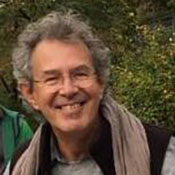
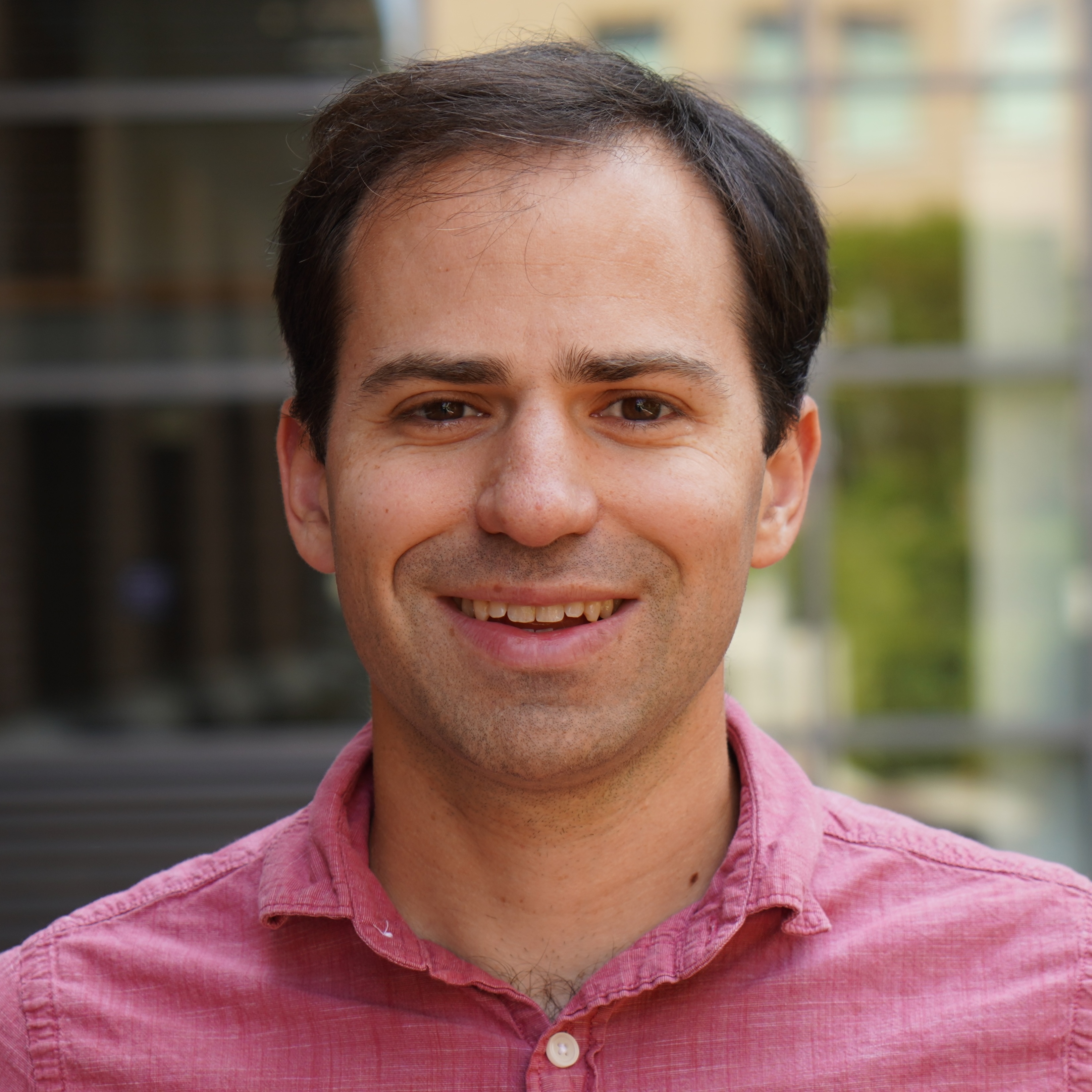
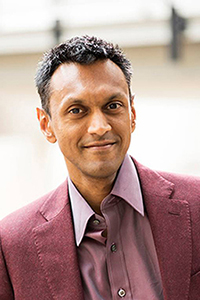
Nicholas Evans is Distinguished Professor of Linguistics and Director of the ARC Centre of Excellence for the Dynamics of Language (CoEDL) at the Australian National University’s School of Culture, History & Language. His work bridges fieldwork-based language documentation with theoretical questions in typology, cultural evolution, and social cognition. Focus on endangered Australian and Papuan languages Director of ARC Laureate Project on 'The Wellsprings of Linguistic Diversity' Co-leader of SCOPIC (Social Cognition Parallax Corpus) study Collaborator in global linguistic diversity initiatives His research explores how micro-level community multilingualism shapes macro-level linguistic diversity, with fieldwork spanning seven years in remote Indigenous communities. Recent projects include PARABANK (paradigm syncretism analysis) and Southern New Guinea language studies, particularly Nen and Yam family languages. Scientific recognition includes the Ken Hale Award (Linguistic Society of America), Anneliese Maier Forschungspreis, and fellowships in the Australian Academy of Humanities, Australian Social Sciences Academy, and the British Academy.
Mark Schmidt is a Professor in the Department of Computer Science at the University of British Columbia, Faculty of Science. He holds the Canada Research Chair in Large-Scale Machine Learning and is a Canada CIFAR AI Chair at the Alberta Machine Intelligence Institute. His research spans multiple centers including CAIDA (Centre for Artificial Intelligence Decision-making and Action), the Data Science Institute, and the Machine Intelligence Learning Discovery (MILD) group. Dr. Schmidt's educational background includes a Ph.D. from UBC (2005-2010), an M.Sc. from the University of Alberta (2003-2005), and a B.Sc. from the University of Alberta (2000-2003). His academic career progressed from Postdoc positions at Simon Fraser University, Ecole Normale Superieure, and UBC to Assistant Professor (2014-2019), Associate Professor (2019-2024), and current Professor (2024-present) at UBC. His research focuses on machine learning optimization, with particular emphasis on improving numerical algorithms for large-scale machine learning applications. His work bridges theoretical optimization and practical applications across computer vision, natural language processing, and reinforcement learning. He has developed numerous optimization techniques including variants of stochastic gradient methods, coordinate descent algorithms, and natural gradient approaches. Analysis of his recent publications reveals a strong focus on optimization for over-parameterized models, particularly transformers and large language models. His work addresses critical challenges in step-size selection, convergence guarantees, and efficient implementation of optimization algorithms. His research has significant implications for training deep neural networks more effectively and understanding why certain optimization methods outperform others in practice. Among his notable awards are the Dorothy Killam Fellowship (2025), Arthur B. McDonald Fellowship (2024), Sloan Research Fellowship (2017), and multiple UBC teaching awards. He has also received the Lagrange Prize in Continuous Optimization and Best Paper Award at AISTATS 2021. Dr. Schmidt actively supervises numerous graduate students, with over 40 PhD and Master's students listed as current or alumni members of his research group. His laboratory maintains strong connections with industry partners, with many alumni securing positions at leading AI companies including Google, Amazon, Meta, and Microsoft.
Daniel Epstein is an Associate Professor in the Department of Informatics at the University of California, Irvine (UCI), where he leads the Personal Informatics Everyday (PIE) Lab. He holds a courtesy appointment in the Department of Computer Science and is affiliated with the Connected Learning Lab, Institute for Future Health, and Accessibility Research Collective. Epstein earned his Ph.D. in Computer Science & Engineering from the University of Washington and a B.S. in Computer Science from the University of Virginia. His research focuses on how personal tracking technology can better serve diverse users' needs, emphasizing ethical design, health equity, and long-term user engagement. Notable areas include pregnancy tracking, wearable technology for children and ADHD management, and AI-driven health chatbots. Epstein has received grants from NSF, Snap Inc., and UCI programs, totaling over $650k in funding. Epstein's work bridges HCI and health informatics, with over 60 peer-reviewed publications. He advises six Ph.D. students and has mentored numerous undergraduates. Awards include the ACM Senior Member distinction (2025), CHI Best Paper (2023), and NSF CAREER Award (2023). Professional service includes program committees for CHI, CSCW, and UbiComp, plus leadership roles in workshops like the Workgroup on Interactive Systems in Healthcare (WISH). Beyond academia, Epstein enjoys hiking, collecting turtle figures, and advocating for accessible technology.
Sham Kakade is the Rampell Family Professor of Computer Science and Professor of Statistics at Harvard University, co-director of the Kempner Institute. His research focuses on advancing artificial general intelligence through foundational work in reinforcement learning, large-scale learning systems, and autonomous agent architectures. He earned his PhD in 2003 from the Gatsby Computational Neuroscience Unit at University College London. His work emphasizes scalable optimization algorithms, distributed systems for foundation models, and understanding emergent capabilities in neural architectures. Research interests include full-stack training pipelines for foundation models, mathematical principles of large-scale learning systems, and bridging language models with embodied intelligence. He advises prospective students with backgrounds in applied deep learning or theoretical computer science, offering access to the Kempner Institute's computational resources. He serves on committees for the ACM Prize in Computing and Sloan Research Fellowships, co-organizes the Simons Symposium on Theoretical Machine Learning, and chaired COLT 2011. His lab works at the intersection of theory and practice, addressing challenges in AI's societal impact and technical scalability. Labs/Teams: Co-directs the Kempner Institute, fostering collaborations between AI researchers and social scientists. Active in Harvard's SEAS community.
Joel Goh is Associate Professor at the Department of Analytics and Operations, NUS Business School, National University of Singapore. He serves as Director of the J.Y. Pillay Comparative Asia Research Centre (under NUS Global Asia Institute) and PhD Program Director at the Institute of Operations Research and Analytics (IORA). Previously, he was Assistant Professor at Harvard Business School (2014-2017) and Visiting Scholar (2017-2022). BSc, MSc, PhD in Operations, Information, and Technology from Stanford University His research focuses on healthcare analytics (preventing health conditions, hospital operations, frailty assessment), supply chain analytics (digital business models, platform leakage), and service platform operations (hospital-at-home programs, incentive design). He co-created the Robust Optimization Made Easy (ROME) software. Recent publications analyze workplace psychological safety (2024), hospital-at-home models (2024), and platform leakage dynamics (2023). His work spans 18+ journals with 740+ citations for burnout cost studies (2022) and 606+ citations for physician well-being research (2017). Teaching Honors : 2023: Best MBA Teaching & Skinner Innovation Award 2021: NUS Annual Teaching Excellence Award 2020: Early Career Research Excellence Award & 40 Under 40 Best MBA Professors Advising & Grants : Served as PhD Program Director. Received NUS Start-Up Grant R-314-000-110-133 (2021) and Humanities & Social Sciences Fellowship (2021). Editorial roles include Associate Editor at Management Science , Manufacturing & Service Operations Management , and Senior Editor at Production and Operations Management .
Linda Morrice is a Professor of Education and Migration at the School of Education and Social Work, University of Sussex. She specializes in the intersection of refugee/migration studies with education, focusing on informal learning, social integration, and exclusion. Her research spans both the Global North and South, emphasizing refugee access to higher education and policy implications. Current role: Co-Director, Centre for International Education (2021-2024) Education: BA(Hons) in Social Anthropology (University of Sussex), PgDip (Birkbeck, 2004), MA (University of Sussex, 2005), Doctorate in Education (University of Sussex, 2010) Her scientific work explores refugee education through participatory methodologies, creative/narrative methods, and life history approaches. Recent publications analyze racialized borders, digital technology’s role in refugee well-being, and sanctuary city frameworks. Supervision interests include refugee family dynamics, informal pedagogies, and gendered policy impacts. Key grants include UKRI funding for digital well-being of unaccompanied refugee children (2024-2027), ESRC projects on longitudinal qualitative studies (2023-2024), and AHRC research on refugee cultural values (2013-2014). She has led evaluations for the Home Office and Queen Rania Foundation. Professional roles: Co-Chair, Sussex University of Sanctuary group (2019-2024) Advisory member for Home Office integration frameworks and vulnerable persons resettlement schemes Labs/teams: Founding member of University of Sussex Sanctuary Group and Brighton & Hove Sanctuary on Sea. Her research emphasizes participatory practices with refugee communities and longitudinal tracking of social networks.
Rajeev Alur is the Zisman Family Professor in the Department of Computer and Information Science at the University of Pennsylvania, leading the School of Engineering and Applied Science. He is the Founding Director of the ASSET Center for Trustworthy AI and a member of the PRECISE Center. His research focuses on formal methods for system design, integrating AI, cyber-physical systems, and machine learning with logical reasoning to ensure safety in autonomous systems. Alur has held leadership roles in major NSF projects like ExCAPE and has directed the Embedded and Multi-Scale Systems (EMBS) program. His research interests span formal verification, temporal logics, programming abstractions, and synthesis techniques. Notable contributions include the development of Nested Words (visibly pushdown languages), streaming string transducers, and tools like AutomataTutor for education. He has advised over 60 PhD students and postdocs, many of whom now hold academic and industry leadership positions. Alur’s awards include the 2024 Knuth Prize and the 2016 Alonzo Church Award. His work on Verisig and compositional verification of neural networks has advanced safety-critical AI applications. He teaches foundational courses like CIS 2620 and develops educational tools, emphasizing both theoretical rigor and practical impact. Key projects include the ASSET Center’s focus on trustworthy AI, integration of logical specifications in reinforcement learning, and formal verification of closed-loop systems with neural components. His publications span over 350 papers, with recent work addressing neurosymbolic learning, security in large language models, and efficient neural network verification.
Sendhil Mullainathan is the Roman Family University Professor of Computation and Behavioral Science at the University of Chicago Booth School of Business and a Professor of Economics and the Peter de Florez Professor of EECS at the Massachusetts Institute of Technology . His work bridges machine learning , behavioral science , and computational medicine , focusing on social problems like discrimination , poverty , and health equity . Research Interests : Behavioral economics, algorithmic fairness, poverty, AI in healthcare, and policy evaluation. Teaching : Courses on Artificial Intelligence and Algorithmic Solutions to Human Problems. Publications : Over 150 papers in journals like Science , Quarterly Journal of Economics , and Nature Medicine , with recent work on AI-driven healthcare disparities and behavioral economics. Scientific Awards : MacArthur ‘Genius’ Grant, Infosys Prize, ‘Top 100 Thinker’ (Foreign Policy Magazine), ‘Young Global Leader’ (World Economic Forum). Organizations : Co-founder of ideas42 (behavioral science non-profit), J-PAL (randomized trials in development), and Dandelion Health (healthcare data for AI). Serves on the MacArthur Foundation board.
José Eduardo Villalobos Graillet is an Assistant Professor of Spanish at Idaho State University , specializing in Modern Peninsular Literature and Culture with a focus on visual culture (film and television) . He previously held a position as Spanish Instructor at Wilfrid Laurier University in the Department of Languages and Literatures. Research Areas : Spanish Film Studies, Spanish Medieval Literature, Latin American and Caribbean Studies, Teaching Spanish as a Foreign Language, Visual Culture, and Critical Pedagogy. His scholarly work examines film and television adaptations of 'La Celestina' , analyzing censorship dynamics across Francoist Spain, the Democratic Transition, and contemporary Spain. He also contributes to Spanish pedagogy , developing technological tools like Lang-8 for written expression and culturally immersive teaching units on topics such as winter festivals and Caribbean music. His publications span both critical academic analysis and methodological innovations for language instruction. Key Themes in Publications : Adaptation fidelity, political censorship, intercultural pedagogy, and the role of digital platforms in language learning.
Stephen Marglin is the Walter S. Barker Professor of Economics at Harvard University, Department of Economics. His research critically examines foundational assumptions of economics, particularly how economic theories marginalize community and cultural values. He explores labor-surplus economies, cost-benefit analysis, and macroeconomic adjustment processes. His work challenges mainstream economics through publications like The Dismal Science: How Thinking Like an Economist Undermines Community (2008). Marglin also advises governments and international agencies on economic policy, including recent tax reform work in Puerto Rico. His teaching integrates standard economics with critical perspectives, focusing on modernity's cultural impact and globalization. Research interests include development economics, economic theory, and the interplay between economic systems and cultural values. His articles span Keynesian theory reinterpretation, labor dynamics, and critiques of neoclassical economics. Marglin collaborates with his spouse, anthropologist Frédérique Apffel-Marglin, blending economic and cultural analyses. Personal interests include gardening, animal husbandry, and family life. He has held roles such as adviser to governments and institutions, emphasizing policy relevance. His academic contributions are translated into multiple languages, reflecting global influence.
Marcia O’Malley is the Thomas Michael Panos Family Professor in Mechanical Engineering, Computer Science, Electrical and Computer Engineering, and Bioengineering at Rice University’s George R. Brown School of Engineering. She chairs the Department of Mechanical Engineering and directs the Mechatronics and Haptic Interfaces (MAHI) Lab. Her research focuses on haptics and robotic rehabilitation, particularly wearable robotic systems for training and rehabilitation in virtual environments. She holds adjunct roles at Baylor College of Medicine and the University of Texas Medical School. Educated at Purdue University (B.S., 1996) and Vanderbilt University (M.S./Ph.D., 1999/2001), Dr. O’Malley has been recognized with prestigious awards, including the ONR Young Investigator Award, NSF CAREER Award, and multiple fellowships. She has twice won Rice’s George R. Brown Award for Superior Teaching. Her work bridges engineering and medicine, addressing human-robot interaction challenges in surgical training, workforce safety, and neurorehabilitation. The MAHI Lab develops devices like the hBracelet and Rice Haptic Rocker to enhance human-robot collaboration. She co-founded Houston Medical Robotics, Inc., applying her innovations to real-world medical applications. Research Interests: Haptics, wearable robotics, neural interfaces, surgical training metrics, and rehabilitation robotics. Labs/Teams: MAHI Lab (Biosciences Research Collaborative), collaborations with medical institutions. Grants/Awards: Extensive funding from NSF, ONR, and industry partnerships; leadership in editorial roles for IEEE Transactions on Haptics.
Professor Sara Baker is a Professor of Developmental Psychology and Education at the University of Cambridge's Faculty of Education and a Fellow at Darwin College, where she served as Vice Master from 2021-2024. She is also a 2022 Senior Fellow in the Science of Learning with UNESCO-IBE/IBRO. Her work bridges cognitive science and educational practice, focusing on how children develop executive functions and self-regulation skills. Baker leads the Early Years Library project, co-founded the Research Centre for Play in Education, Development and Learning (PEDAL), and is a founding member of the Global Executive Functions Initiative. Sara Baker specializes in the science of learning, with research aimed at improving children's lives by identifying factors at home and school that support their agency over learning. Her work emphasizes developing executive functions and self-regulation through playful learning approaches. She uses lab-based experiments and collaborates with educators to translate cognitive science research into educational contexts. Her research spans multiple countries including the UK, USA, Mexico, Denmark, Slovakia, South Korea, Ghana, Rwanda, Nigeria, Kenya, South Africa, and more, reflecting a strong commitment to culturally relevant and globally applicable educational practices. Analysis of Professor Baker's recent publications reveals a strong focus on executive functions, self-regulation, and playful learning across diverse cultural contexts. Her work increasingly addresses cultural adaptation of assessment tools and educational practices, particularly for Global Majority countries. There's a clear trajectory from basic cognitive research toward practical applications in educational settings, with growing emphasis on teacher training, culturally relevant assessment, and the role of play in early childhood development. Her interdisciplinary approach connects developmental psychology, educational theory, and practical classroom applications. 2022 Senior Fellow in the Science of Learning with UNESCO-IBE/IBRO Professor Baker leads the doctoral program in the Faculty of Education and serves as an Academic Project Director in the School of Humanities and Social Sciences. She is the Cambridge academic lead on the Close the Gap partnership between Cambridge and Oxford, focused on postgraduate widening participation. Her research has been funded by prestigious organizations including the Newton Trust, Cambridge Humanities Research Grant, Economic and Social Research Council, LEGO Foundation, Nuffield Foundation, and Office for Students/Research England. She actively supervises doctoral students and seeks highly motivated candidates for October 2026 entry whose research aligns with her focus areas. Professor Baker co-founded and is actively involved with the Research Centre for Play in Education, Development and Learning (PEDAL), which investigates how children's play affects their development. She leads the Early Years Library project, a curated collection of evidence-based practices for early years educators, and is a founding member of the Global Executive Functions Initiative. Her work with the Connections international professional learning network focuses on self-regulation, while the Close the Gap project addresses widening participation in postgraduate education between Oxford and Cambridge.
Professor Emily So serves as Deputy Head of the School of Arts and Humanities at the University of Cambridge and directs the Cambridge University Centre for Risk in the Built Environment (CURBE). A chartered civil engineer with extensive field experience, she holds leadership roles in the Open-Oxford-Cambridge AHRC Doctoral Training Partnership and chairs the Faculty EDI Committee. Her research focuses on urban risk and resilience , particularly in earthquake-prone regions. Combining structural engineering with epidemiological approaches, she develops innovative casualty estimation models and engages directly with affected communities worldwide. Her work spans seismic safety, disaster epidemiology, and remote sensing applications for rapid damage assessment. Professor So's publication trends reveal strong emphasis on machine learning for disaster risk modeling , with recent work featuring graph neural networks, deep clustering for urban morphology, and LSTM-based population forecasting. Her research bridges engineering, social sciences, and data science to address resilience in developing nations. 2010 Shah Family Innovation Prize (Earthquake Engineering Research Institute) Fellow of the Institution of Civil Engineers (FICE) Scientific Advisory Group for Emergencies (SAGE) member advising UK government As Director of CURBE, she leads interdisciplinary collaborations with EEFIT, Global Earthquake Model (GEM), World Bank, and USGS. Her field investigations following major earthquakes inform practical solutions for vulnerable communities, notably contributing to the 2017 World Building of the Year design in China. Current work includes sabbatical research for 2025-2026 focused on decolonizing architectural approaches to disaster resilience. Professor So maintains active roles in professional organizations and international disaster response frameworks, with her CURBE team developing methodologies now implemented globally for seismic safety improvements.
Benjamin Arold is a University Assistant Professor at the Faculty of Economics, University of Cambridge. His academic career spans theoretical and applied research in labor economics, education economics, and AI-driven policy analysis. Previously, he held postdoctoral positions at ETH Zurich and visiting roles at Harvard University and Princeton University. Education: Ph.D. in Economics, LMU Munich His research bridges economic theory with empirical applications, focusing on: Long-term impacts of school curricula on student outcomes AI and NLP applications in labor economics Economics of religion and its societal implications Recent Article Trends: His work highlights intersections between education policy and technological innovation, including meta-analyses of private schooling effects, charter school performance evaluations, and computational methods for analyzing educational interventions. Scientific Awards: Prize for Best Dissertation (2021/2022) - German Economic Association Fürther Ludwig Erhard Prize (2023) Teaching: He teaches advanced courses on NLP in economics at Princeton University and Basel University, with a focus on computational methods for non-standard data.
Dr. Derek E. Daniels is an Associate Professor and Director of Graduate Studies in the Department of Communication Sciences and Disorders at Wayne State University’s College of Liberal Arts and Sciences. He is a licensed speech-language pathologist specializing in stuttering therapy and psychosocial aspects of stuttering. His research focuses on identity, stigma, intersectionality, and culturally responsive practices, with a particular emphasis on qualitative methods and social justice. He leads Camp Shout Out, a therapeutic camp for children and teens who stutter, and serves as a former President of the Michigan Speech-Language-Hearing Association. Dr. Daniels holds a Ph.D. from Bowling Green State University (2007), an M.A. from the University of Houston (2002), and a B.A. from Grinnell College (1998). His awards include the 2023 Professional of the Year Scholar and Service Award from the National Stuttering Association and the 2025 William T. Simpkins Service Award. He teaches courses such as 'Stuttering' and 'Normal Language Acquisition,' and his work emphasizes reducing stigma through education and advocacy. Dr. Daniels actively participates in professional organizations like the American Speech-Language-Hearing Association and has contributed to over 50 peer-reviewed publications and presentations globally.