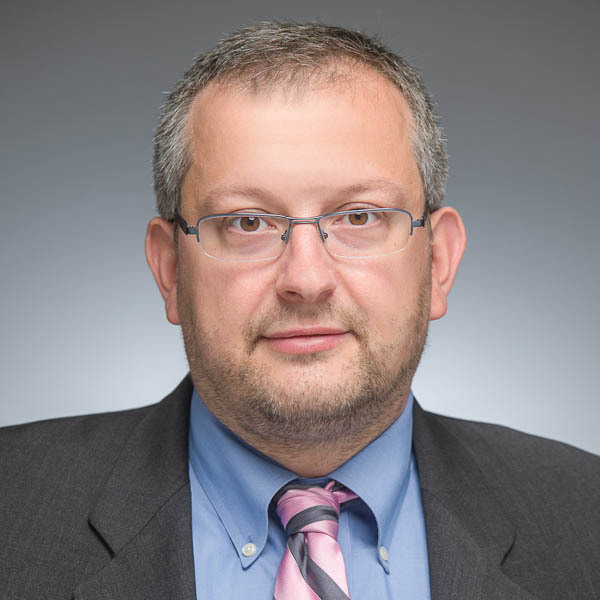
Ben Ost is an Associate Professor of Economics at the University of Illinois at Chicago (UIC), affiliated with the Department of Economics within the College of Liberal Arts and Sciences. He holds a PhD from Cornell University (2011) and a BA from Grinnell College (2006). His research focuses on labor economics and the economics of education, with specific interests in teacher quality, higher education outcomes, and applied econometric methodologies. Educationally, Ost has contributed to understanding how academic policies like probation systems and honors programs affect student performance and earnings. He has examined generational differences in teacher effectiveness, employer connections in college networks, and omitted variable bias in statistical models. His work frequently employs regression discontinuity designs and value-added modeling to assess educational interventions and labor market dynamics. Key Research Themes: Teacher development, college access policies, human capital formation, and peer effects. Grant Funding: Principal Investigator for $47,000 Spencer Foundation grant and $3,894 OSSR grant. Teaching: Award-winning instructor in graduate microeconometrics, labor economics, and education economics courses. Recognized with the UIC TRP Award (2011-2016), Ost has advised numerous graduate and undergraduate students, serving as committee chair or member for over 20 advisees. His professional service includes peer-review roles for top journals like the Quarterly Journal of Economics and American Economic Review, alongside NSF grant reviewing.
Nathalie Burlone is a Full Professor in the School of Political Studies at the University of Ottawa, specializing in the Public Administration program. Her office is located in FSS7006 with contact number 613-562-5800 extension 2242. She teaches core courses including PAP6511 (Public Policy Theory), PAP9711 (Public Policy), and doctoral seminars in policy analysis. Her educational credentials include: Ph.D. in Public Administration, École nationale d'administration publique (2001) M.A. in Public Policy Analysis, Université Laval (1991) B.A. in Psychology, Université McGill (1989) Professor Burlone's research centers on discourse analysis of policy construction in emotionally charged domains, particularly medical aid in dying, end-of-life care, family policy, and social policy. She examines how narratives frame value-laden decisions and policy evolution, employing qualitative and visual methodologies to dissect the interplay between morality, rationality, and governance structures in public issue formation. Her publication pattern (2007-2020) reveals consistent focus on policy framing mechanisms in contentious areas, especially Canada's medical assistance in dying legislation. She analyzes how competing narratives shape policy development through discourse analysis, bridging theoretical public policy concepts with practical governance applications. Her work increasingly connects community partnership models with policy implementation frameworks. Scientific Awards: No scientific awards documented in source materials She currently supervises six doctoral candidates including Sharma Aurelien (2026 completion), Sarah Borbolla Garcés (2025), and Véronique LeBlanc (2024), guiding research on policy framing in end-of-life and family policy contexts. Her academic leadership extends to co-directing Revue Gouvernance (2015-2025), where she shapes scholarly discourse on Canadian governance. As co-director of Revue Gouvernance since 2015, she leads Canada's premier French-language journal on public policy and governance, fostering academic exchange on policy framing and institutional analysis within Francophone scholarly networks.
Ella Marlenivna Libanova is a Ukrainian socio-economist and demographer, serving as Professor at the Department of Statistics and Demography of the Economic Faculty of Taras Shevchenko National University of Kyiv. She is also Director of the M. V. Ptukha Institute of Demography and Social Research of the National Academy of Sciences of Ukraine and Academician-Secretary of the Department of Economics of the National Academy of Sciences of Ukraine. As the first woman in the history of the NASU to be a member of its Presidium, she has made significant contributions to Ukrainian demography and labor economics. Her educational background includes: Graduated from the D. S. Korotchenko Kyiv Institute of National Economy (1971) PhD in Statistics (1977) Doctor of Economics (1992) Doctor of Economics (2021, on Poverty of the Population of Ukraine) Professor Libanova is a leading expert in labor economics and demography, with research focusing on population poverty, human development, demographic crisis in Ukraine, labor market transformations, and socio-economic assessment of life expectancy. Her work has been instrumental in developing methodologies for measuring human development at the regional level, which has been adopted as official methodology by the State Statistics Service of Ukraine for annual calculations. Her research output shows a consistent focus on demographic challenges facing Ukraine, with particular attention to mortality rates, birth rates, and the impact of socio-economic transformations on population dynamics. She has also made significant contributions to understanding poverty, social stratification, and the formation of the middle class in Ukraine. Her scientific awards include: Honored Economist of Ukraine (2002) Order of Princess Olga I, II, and III degrees Honorary Certificate of the Cabinet of Ministers of Ukraine (2003) Award of the National Academy of Sciences of Ukraine named after M.I. Tugan-Baranovsky (2011) All-Ukrainian Award Woman of the III Millennium (2012) Professor Libanova has supervised 2 doctoral students and 14 PhD students in economics. She has been involved in numerous research grants, particularly those related to demographic studies, human development, and socio-economic transformations in Ukraine. She has served as scientific consultant to President Leonid Kuchma (2000-2005) and is currently a member of the Council on Economic Development of Ukraine, a temporary consultative-advisory body of the Cabinet of Ministers of Ukraine since April 2020. She leads the M. V. Ptukha Institute of Demography and Social Research, which conducts comprehensive demographic research on Ukraine's population. She is also actively involved in international collaborations, serving as an expert for the European Commission and World Economic Forum since 2012, and is a member of several international organizations including the International Union for the Scientific Study of Population (IUSSP).
Mara Yue Du is an Associate Professor of History at Cornell University, affiliated with both the Department of History and the Feminist, Gender and Sexuality Studies Program within the College of Arts and Sciences. She holds a Ph.D. in History from New York University, an M.A. in History from Peking University, and a B.A. in Sociology from Peking University. Dr. Du's research centers on the history of modern China (17th century–present), with particular expertise in law, state-building, and China's global connections. Her scholarship examines how Chinese political power has historically been structured around filial piety and family relations, exploring the transition from imperial to modern Chinese state formation. She investigates how concepts of nation, state, and family have evolved in Chinese history and how these concepts intersect with global developments. Her scholarly output demonstrates consistent engagement with major historical questions in Chinese studies, with publications spanning legal history, gender studies, diplomatic history, and political thought. Her work reveals patterns connecting historical Chinese concepts of statehood with contemporary political developments, particularly regarding the relationship between family structures and state power. 2022 International Society for Chinese Law and History Biennial Book Prize for State and Family in China: Filial Piety and Its Modern Reform Dr. Du advises graduate students in the History department and has been awarded research funding including the Twenty Affinito-Stewart research grants for the 2022-2023 academic year. She has also been in residence at the Institute for Advanced Study. Her scholarly influence extends through her participation in academic networks and collaborations with researchers across institutions globally.
Carolyn Liebler is a Professor in the Department of Sociology at the University of Minnesota (Twin Cities campus). Her research focuses on race and ethnicity, mixed-heritage populations, and demographic data analysis, particularly emphasizing racial identity formation, census methodology, and the social implications of data collection practices in the USA. Key projects include Racial Identities and Life Choices among Mixed-Heritage People in the USA (Russell Sage Foundation, 2018-2021) Expanding and Updating Race-bridging Methods Using Alternative Data Sources (NIH National Cancer Institute, 2022-2024) Her recent publications span topics from U.S. census racial categories to mixed-heritage identity assertion. She has received multiple awards including the Arthur "Red" Motley Exemplary Teaching Award (2016) and the Career Readiness Teaching Award (2019). 2025: Data impacts of changes in U.S. Census Bureau procedures for race and ethnicity data 2024: Review of "We Are Meant to Rise" (University of Minnesota Press) 2022: What Motivates Mixed Heritage People to Assert Their Ancestries?
Professor Alastair Owens is a historical geographer and social/economic historian at Queen Mary University of London , specializing in modern Britain since 1800 with a focus on London . He received a Leverhulme Research Fellowship (2024) for his project on inheritance, families, and 'wealthfare' in England and Wales (1850–1930). Owens has held leadership roles including Chair of Trustees at the Geographical Association (UK’s leading geography teaching body) and Head of School of Geography (2018–2022). Research Themes : Anglicanism & inner city crisis (1970s–1990s), COVID-19 domestic geographies , inheritance & middle-class wealth (1850–1930), inclusive heritage in East London. Collaborations : Partnered with Museum of the Home , Museum of London , Spitalfields Music , and Tower Hamlets Archives for projects blending geography with history, archaeology, and heritage. Teaching : Led innovative modules like Boston Reworked (fieldwork in the US) and Victorian London , winning the Drapers’ Award for Excellence in Teaching (2003). Public Engagement : Created heritage trails (e.g., Bengali Heritage Trail ), co-produced museum exhibitions, and advised TV/film production companies. Scientific Awards : Leverhulme Research Fellowship (2024) Drapers’ Award for Excellence in Teaching (2003) Research Trends : His recent work examines pandemic-induced transformations of domestic space, inner-city religious responses to social crises, and the role of inheritance in shaping social inequality. He emphasizes interdisciplinary methodologies, combining archival research with oral histories and material culture analysis.
William (Bill) Clark (1953-2017) was a historian specializing in the history of science, modern Germany, and academic institutions. He served as a part-time lecturer in UCLA's Department of History during the 1990s and 2000s, contributing to scholarly works on research universities' origins and academic practices. His seminal work Academic Charisma and the Origins of the Research University (2006) remains influential. Clark also co-edited collections like The Sciences in Enlightened Europe (1999) and taught at institutions including Goettingen University and UCSD. His research interests spanned the history of universities, scientific disciplines, and socio-spatial dynamics. Recent publications (2023–2025) focus on urbanization's effects, housing policy, residential mobility, and wellbeing in transitional societies. Notable themes include housing tenure impacts, urban-rural fertility patterns, and segregation mechanisms. Though no formal awards are listed, his extensive bibliography reflects significant contributions to historical and sociological scholarship. Clark advised no recorded students, but his interdisciplinary work bridges historical analysis with contemporary urban studies.
Prof. Marian Surdacki serves as Head of the Department of the History of Education and Social Welfare at the Catholic University of Lublin 's Faculty of Social Sciences. A historian specializing in early modern social history, his work bridges Polish and Italian archival studies, with 200+ publications including 7 monographs. PhD: History (KUL, 1987) Habilitation: Modern Social History (1998) Full Professor: 2008 His research spans child welfare systems , charitable institutions , and urban development , exemplified by works on Rome's Hospital of the Holy Spirit and Urzędów's 400-year history. He has directed 18 Ministry of Science publishing grants and mentored 8 PhD graduates. Key article themes include: Foundling homes in Enlightenment Europe Polish-Lithuanian hospital networks Religious charity in Catholic/Protestant contexts Regional governance in pre-partition Poland Scientific Recognition : Recipient of Silver Cross of Merit (2006) Multiple Rectoral Awards for monographs International publications in Italian/French journals Active in regional revitalization, he co-founded cross-border collaborations with Hungarian/Ukrainian towns and led Urzędów's 600th anniversary celebrations that restored its city status (2015).
Chiara Monfardini is a Full Professor of Econometrics at the Department of Economics of the University of Bologna. Her academic discipline is ECON-05/A Econometrics. She holds a Degree in Statistics and Economics from the University of Padova (1992) and a PhD in Economics from the European University Institute (1997). Her career includes positions as an Assistant Professor (2001), Associate Professor (2005), and Full Professor (2017) at the University of Bologna. She is affiliated with the Institute for the Study of Labor (IZA) and CHILD-Collegio Carlo Alberto. As Co-Editor of the Review of Economics of the Household , she contributes to academic publishing. Her research focuses on microeconometrics, simulation-based inference, and applied studies in labor, household, and health economics. Key themes include parental time investments, gender gaps in time use, and the intergenerational transmission of educational choices. She leads projects like MINUTO (MindUsTogether), funded by PRIN2017, exploring mindful parenting interventions and parental engagement via digital tools. Teaching responsibilities include courses such as Econometrics , Microeconometrics , and Advanced Microeconometrics . Her work integrates quantitative methods with policy analysis, addressing issues like early childhood education impacts and voting behavior. Office hours are held on Mondays at 5 PM by appointment.
Ori Yehudai is the Saul and Sonia Schottenstein Chair in Israel Studies and Assistant Professor in the Department of History at The Ohio State University. His work bridges modern Jewish history, Zionism, migration, and transnational dynamics, with a focus on post-Holocaust Jewish communities and Israeli-Palestinian relations. He holds a BA from Tel Aviv University and a PhD from the University of Chicago. Education: BA, Tel Aviv University; PhD, University of Chicago Postdoctoral Positions: University of Toronto, NYU, McGill University, Center for Jewish History (New York) His research examines Jewish emigration from Palestine/Israel post-1945, intermarriage dynamics post-Holocaust, and reactions to Palestinian attacks in 1970s Israel. His book Leaving Zion (2020), a National Jewish Book Awards finalist, explores Jewish emigration’s challenges to Zionist narratives. He teaches courses on Zionism, modern Israel, and the Arab-Israeli conflict. Awards: ACLS fellowship, NEH grants, YIVO recognition, Israel Institute support, and Wiener Library acknowledgment. Research Projects: Current work investigates Israeli societal responses to 1970s Palestinian attacks. His interdisciplinary approach integrates archival research and transnational frameworks.
Rüdiger Bachmann is the Stepan Family College Professor of Economics at the University of Notre Dame, with affiliations at the Centre for Economic Policy Research, CESifo, and ifo Institute. His research focuses on macroeconomic effects of uncertainty and expectation formation. Research examines: Impacts of economic uncertainty on business investment and hiring Survey-based measurement of firm expectations Labor market dynamics and productivity gaps Distributional consequences of energy policy shifts Behavioral responses to fiscal interventions Recent publications analyze German energy independence scenarios, pandemic consumption patterns, and firms' decision-making under ambiguity. He has advised German government institutions on economic policy matters and contributed to public debates through influential policy briefs. Professional experience includes positions at Goethe University, RWTH Aachen University, University of Michigan, and visiting appointments at leading institutions including Harvard and Yale. Teaches advanced macroeconomics courses at both undergraduate and graduate levels.
Andrew Solomon is a Professor of Clinical Psychology at Columbia University Medical Center and a prominent writer, lecturer, and activist. His work spans psychology, politics, and the arts, with a focus on mental health, LGBT rights, and global health equity. He holds a PhD in Psychology from the University of Cambridge (2012) and has authored influential books such as *Far from the Tree* (2012), *The Noonday Demon* (2001), and *Far & Away* (2016), winning prestigious awards including the National Book Award and National Book Critics Circle Award. His research explores multiple sclerosis (MS) diagnosis, differential diagnosis protocols, and the intersection of travel with global health. He has collaborated extensively with institutions like Yale and contributed to groundbreaking studies on MS pregnancy registries, neuroimaging techniques, and cross-cultural diagnostic challenges. Solomon’s activism includes leadership roles in PEN American Center and advocacy for mental health and LGBTQ+ rights. His work bridges academia, literature, and public health, emphasizing interdisciplinary approaches to complex societal issues. Research Interests: Multiple Sclerosis diagnosis, neuroimaging biomarkers, mental health advocacy, cultural diversity in family structures, and the societal impact of travel. His recent focus on MS includes refining diagnostic criteria (e.g., Central Vein Sign integration) and addressing disparities in underdiagnosis across populations. Articles Overview: Solomon’s 2020s research emphasizes MS pathophysiology, leveraging neuroimaging and multicenter studies to advance diagnostic accuracy. Earlier works, like *The Noonday Demon*, critically examine depression’s societal and psychological dimensions. His recent book *New Family Values* explores contemporary identity dynamics, reflecting his dual expertise in psychology and cultural analysis. Awards & Recognition: National Book Critics Circle Award (2012), National Book Award (2001), Wellcome Prize, and PEN American Center Awards. His film adaptation of *Far from the Tree* (2025) highlights his cross-disciplinary influence.
Paul K. McClure is an Associate Professor of Sociology at Lynchburg University. He holds a PhD in Sociology from Baylor University, along with additional degrees in Theological Studies and Philosophy. Currently on sabbatical at the University of Leuven (Belgium) for 2024-2025, his research focuses on the intersections of technology, religion, and culture. He teaches courses such as Social Theory, Cultural Anthropology, and The Individual in Society. His research explores the effects of social media and AI on religious commitment, spirituality in Silicon Valley, and the cultural impact of digital technologies. Notable studies include analyses of Wired Magazine’s spiritual discourse and the role of social media in shaping emerging adults’ faith. Dr. McClure’s work has been featured in over 70 media outlets worldwide, including Forbes and USA Today. He actively engages in interdisciplinary research, bridging sociology, theology, and digital studies. His academic contributions span book reviews, empirical studies, and theoretical frameworks analyzing technology’s societal influence. He maintains affiliations with multiple Lynchburg University programs, including the Westover Honors Research Center and the School of Liberal Arts & Sciences. Beyond academia, he enjoys hiking the Blue Ridge Mountains with his family and dog Gryff.
Ewa Batyra is an Affiliate Researcher at the Laboratory of Fertility and Well-Being within the Max Planck Institute for Demographic Research (MPIDR). Her work focuses on global demographic patterns related to fertility, family formation, and socioeconomic disparities. Key Research Areas: Fertility dynamics, child marriage, union formation, and the impact of education on demographic transitions. Geographic Focus: Global South, particularly Sub-Saharan Africa and Latin America. Recent Trends: Batyra's publications analyze post-disaster fertility shifts, unintended pregnancy outcomes, and the role of income inequality in delaying parenthood. She employs cross-national datasets and advanced statistical methods like fixed-effects modeling. Collaborations: Works with institutions such as the University of Pennsylvania (Hans-Peter Kohler), University of Oxford (Tiziana Leone), and Brazilian research teams on fertility forecasting.
Tarun Ramadorai is Professor of Financial Economics at Imperial College London, with a distinguished career spanning household finance, financial economics, behavioral economics, real estate, and international finance. He serves as Executive Editor of the Review of Financial Studies and holds prestigious fellowships including Research Fellow of the Centre for Economic Policy Research (CEPR), Senior Academic Fellow of the Asian Bureau of Finance and Economics Research (ABFER), and Nonresident Senior Fellow at the National Council of Applied Economic Research (NCAER). Education BA in Mathematics and Economics from Williams College MPhil in Economics from the University of Cambridge PhD in Business Economics from Harvard University Research Interests Professor Ramadorai's research spans household finance, financial economics, behavioral economics, real estate, and international finance. His work examines how households make financial decisions across different markets and countries, with particular focus on housing markets, investment behavior, and financial inclusion. He has established himself as a leading expert in international comparative household finance, having previously served as Principal Investigator on a transformational initiative financed by the Sloan Foundation to establish this sub-field of finance and economics. His recent research explores the intersection of technology and personal finance, housing market dynamics, and optimal tax policy. He has demonstrated how housing costs impact fertility decisions, how machine learning affects credit markets, and how privacy policies influence consumer data extraction. His work combines rigorous theoretical frameworks with innovative empirical approaches using large-scale datasets from diverse markets. Publication Trends Professor Ramadorai's recent publications reveal a strong focus on household decision-making in financial markets, with increasing attention to the digital transformation of finance. His work bridges theoretical insights with practical policy implications, particularly in emerging economies. There is a clear trend toward interdisciplinary research that combines finance, economics, and data science to address pressing questions about financial inclusion, housing affordability, and the impact of technology on traditional financial services. Scientific Awards Brattle prize for best paper in the Journal of Finance Jensen prize for the best paper in the Journal of Financial Economics Wharton School-WRDS Best Paper Award in Empirical Finance James A Lebenthal Excellence in Municipal Finance Research Prize FMA Napa Conference Best Paper Prize INQUIRE Europe third prize Viz Risk Management Best paper prize Policy Engagement and Advisory Roles Professor Ramadorai has made significant contributions to policy discussions worldwide. He served as Chairman of the Inter-Regulatory Committee on Household Finance constituted by the Reserve Bank of India, which produced the influential "Indian Household Finance" report. He has advised numerous institutions including the Economic Advisory Council to the Prime Minister of India, the European Securities and Markets Authority, and the Norwegian Sovereign Wealth Fund. Currently, he co-chairs the Fintech workstream of the India-UK Financial Partnership, helping to shape the future of financial technology across borders. Research Initiatives Professor Ramadorai previously led the Initiative on International Comparative Household Finance, funded by the Sloan Foundation, which established household finance as a distinct sub-field of research. He is in the process of setting up a new initiative at Imperial College Business School to further advance this area of study. His work has influenced both academic research and practical policy interventions in financial markets around the world.