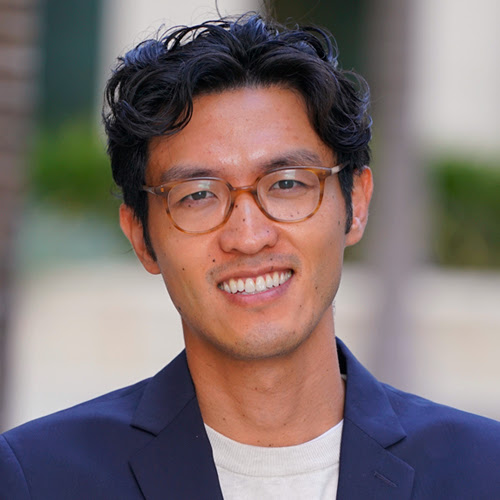
William Hobbs is the Lois and Mel Tukman Assistant Professor in the Department of Psychology at Cornell University , affiliated with the College of Human Ecology. His research intersects politics and health , focusing on social spillover effects of government actions and adaptation to life changes through computational social science methods. Teaches Data Science for Social Scientists I & II (HD/Psych 2930/2940) Co-teaches graduate course Text and Networks in Social Science Research (HD/Soc/Info 6610, Govt 6619) Research strengths include causal inference , representative sampling , and machine learning applications for small training sets. His work has been featured in The Atlantic , Science Magazine , and other major outlets. Current Data Science Lab projects analyze: Political polarization in social media Health behavior networks Government policy feedback Content moderation systems Lab hires Cornell undergraduates with R/Python experience for data management tasks through HD 4010 research credit.
Julian Fierrez is a Full Professor at the School of Engineering, Universidad Autonoma de Madrid. With an h-index of 74 and over 20,000 citations, his work spans biometrics, signal/image processing, artificial intelligence, and human-computer interaction. Key research areas include: Biometric anti-spoofing and DeepFakes detection Mobile and behavioral biometrics Bias/fairness in AI systems Biometric applications in e-health and education Security in multimodal biometric systems His recent publications show strong focus on deep learning applications for biometric security, with specific subfields including fake detection, keystroke authentication, facial analysis for Parkinson detection, and privacy-preserving AI. He serves as Associate Editor for multiple IEEE and Elsevier journals. Scientific distinctions include: IAPR Young Biometrics Investigator Award (2017) Miguel Catalan Award to Best Researcher under 40 (2017) EURASIP Best PhD Award (2012) EBF European Biometric Industry Award (2006) Prof. Fierrez leads the BiDA Lab and supervises students like Ruben Tolosana and Aythami Morales. Current projects include BBforTAI (Biometrics and Behavior for Unbiased & Trustworthy AI) and PRIMA (Privacy Matters). He also contributes to standardization efforts in biometric evaluation.
Zhe Zhang is an Assistant Professor of Innovation, Technology, and Operations at the Rady School of Management, University of California San Diego (UCSD). He holds a Ph.D. in Information Systems and Management from Carnegie Mellon University's Heinz College and dual bachelor's degrees in Economics and Statistics from Stanford University. His research focuses on the societal and spillover impacts of information technology, including fairness in algorithmic decision-making, sharing economy dynamics, and digital transformation effects. Ph.D., Carnegie Mellon University (Heinz College) B.S. in Mathematical and Computational Sciences, Stanford University B.A. in Economics (with honors), Stanford University His work spans disciplines like machine learning, applied microeconomics, and operations management. Current research includes analyzing cashierless retail technology's operational and behavioral impacts, algorithmic bias mitigation strategies, and the economic implications of Amazon Prime adoption. Key findings highlight how digital innovations reshape consumer demand, manufacturer strategies, and algorithmic fairness outcomes. Recent publications address: Bias amplification through data imputation in healthcare Strategic overfitting in data science contests Sharing economy's effect on durable goods markets He has presented at top conferences in information systems (CIST, WISE), economics (NBER), and computer science (KDD, FAccT). Awards include runner-up for the ACM SIGMIS Doctoral Dissertation Award (2019) and a POMS 2017 Supply Chain Management best paper finalist. Prior to his current role, Zhang worked as a part-time Data Creative staff member at DataKind (NYC) and was a 2016 fellow at the Data Science for Social Good Summer Fellowship (Chicago). He has also contributed to fairness methods in AI at Facebook and nonprofit research at NRDC and Union of Concerned Scientists.
Michel Gendreau is a Full Professor in the Department of Mathematics and Industrial Engineering at Polytechnique Montréal. He holds a B.Com. from McGill University, and both an M.Sc. and Ph.D. from the University of Montreal. His research focuses on operational research with applications in logistics, transportation, energy systems, and telecommunications. He is affiliated with several prestigious research centers including the Institute for Data Valorization (IVADO), the Trottier Energy Institute (IET), and the Interuniversity Research Center on Enterprise Networks, Logistics and Transport (CIRRELT). Professor Gendreau's research interests span operational research, with particular emphasis on stochastic optimization methods applied to transportation and logistics problems, energy systems management, and telecommunications. His work often addresses real-world challenges through mathematical modeling and algorithm development, with applications ranging from bike-sharing systems to emergency response planning and electricity grid management. The analysis of his recent publications reveals a strong focus on vehicle routing problems under uncertainty, maintenance optimization, and the integration of stochastic programming with machine learning techniques for improved decision making. Professor Gendreau has received numerous prestigious awards recognizing his contributions to the field of operations research. In 2022, he was named a Fellow of the International Federation of Operational Research Societies (IFORS). In 2010, he was awarded Fellow status by INFORMS (Institute for Operations Research and the Management Sciences). Most notably, in November 2015, he received the Robert M. Herman Lifetime Achievement Award from the Transportation Science and Logistics Society of INFORMS, which is considered the most prestigious distinction for operational researchers working in logistics and transportation. Throughout his career, Professor Gendreau has supervised 25 doctoral students and 18 master's students, contributing significantly to the development of the next generation of operations research experts. His research has been supported by numerous grants from organizations including NSERC (Natural Sciences and Engineering Research Council of Canada), with expertise recognized in Operational Research and Management Science (NSERC subject 1601) and Logistics (NSERC subject 1603). Professor Gendreau is actively involved in several research teams and laboratories, particularly those focused on data valorization, energy systems, and transportation logistics. His current work continues to push the boundaries of stochastic optimization and its applications to complex real-world problems, with recent publications addressing challenges in urban transportation, energy management, and emergency response systems.
Haipeng Luo is an Associate Professor at the Thomas Lord Department of Computer Science, University of Southern California, holding the IBM Early Career Chair. He previously worked as a Postdoctoral Researcher at Microsoft Research, NYC, and has held visiting roles at Google and Amazon. His research focuses on developing practical machine learning algorithms with strong theoretical guarantees, particularly in online learning, bandit problems, reinforcement learning, and game theory. PhD in Computer Science, Princeton University (2011–2016) BSc in Computer Science, Peking University (2007–2011) His work spans adversarial and stochastic environments, addressing challenges in reinforcement learning, game dynamics, calibration, and omniprediction. Recent publications highlight advancements in regret minimization, game equilibrium computation, and robust optimization frameworks. Key contributions include algorithms for zero-sum games, bandit problems with feedback graphs, and theoretical analyses of convergence properties in multi-agent systems. Scientific accolades include Best Paper Awards at COLT 2021, COLT 2018, NeurIPS 2015, and ICML 2015. He has received prestigious grants such as the NSF CAREER Award (2020), Google Faculty Research Award (2020), and NSF CRII Award (2018). His students have secured academic and industry positions, and he actively teaches graduate courses in machine learning and online optimization.
Timothy Menzies is a full Professor in the Department of Computer Science at North Carolina State University's College of Engineering. He serves as the director of the Irrational Research lab (mad scientists r'us) and holds editorial positions as editor-in-chief of the Automated Software Engineering journal and associate editor for IEEE Transactions on Software Engineering. With over 300 publications and more than 24,000 citations, Menzies is a globally recognized leader in software engineering research. Menzies' research focuses on developing computer systems that make optimal decisions with minimal data, specializing in artificial intelligence, intelligent agents, data sciences, analytics, and software engineering. His pioneering work in data-driven, explainable, and minimal AI for software systems has redefined defect prediction, effort estimation, and multi-objective optimization. He is particularly known for his contributions to empirical software engineering, emphasizing transparency and reproducibility. As the co-creator of the PROMISE repository, he helped establish modern empirical software engineering by demonstrating that small, interpretable AI models can outperform larger, more complex ones. Menzies' recent publications reveal several key trends in his research: a growing emphasis on ethical considerations in AI deployment, particularly in sensitive domains like legal systems; continued innovation in software analytics with a focus on hyperparameter optimization tailored specifically for software engineering tasks; exploration of causal relationships in software analytics; and development of techniques that work effectively with limited data, including landscape analysis, surrogate learning, and active learning approaches. Mining Software Repositories Foundational Contribution Award (2017) Carol Miller Graduate Lecturer Award (2016) IBM Faculty Award (2016, 2017) ACM Fellow (2025) ASE Fellow (2024) IEEE Fellow Professor Menzies has advised 24 Ph.D. students throughout his career, with recent completions including Andre Motta (April 2025) and Xueqi Yang (October 2024). His research has secured over $19 million in funding from prestigious agencies including NSF, DARPA, and NASA, as well as industry partners like Meta, Microsoft, and IBM. Current grants focus on improving machine learning model efficiency, adapting empirical software engineering methods to computational science, vulnerability detection, and software analytics at scale using transfer learning across 10,000+ GitHub projects. Menzies has developed innovative approaches to help developers navigate the challenges of AI implementation while maintaining ethical standards and practical effectiveness. As director of the Irrational Research lab, Menzies leads a team focused on creating AI tools that are not only intelligent but also fair, transparent, and trustworthy. The lab's work emphasizes practical applications of AI in software engineering while addressing the human factors involved in developer-AI collaboration. Current projects include developing methods for better fuzzing with L3harris, improving vulnerability detection through smart pruning techniques, and creating AI platforms for workforce empowerment through credential gap diagnostics.
Isaac Lage is an Assistant Professor of Computer Science at Colby College since July 2023, specializing in interactive optimization methods for sociotechnical machine learning applications. Their work bridges technical rigor with societal impact, emphasizing accessibility in educational settings and algorithmic accountability. Harvard University PhD in Computer Science (NSF GRFP Fellow) Microsoft Research Intern (Adaptive Systems and Interaction Group) Research Software Engineer at MIT/NYU with David Sontag Research focuses on interpretable machine learning , human-AI collaboration , and healthcare equity analysis . Current projects explore sociotechnical implications of computing systems through EHR data patterns , fairness in predictive models , and user-driven interpretability frameworks . Recent publications show trends in explainable AI (2020-2022), with subfields including clinical decision support , policy summarization , and uncertainty communication . Key themes: healthcare disparities , robust interpretability , and human-in-the-loop learning . Scientific Awards: NSF GRFP Fellowship NeurIPS Spotlight Presentation (2018) AAAI HCOMP Honorable Mention (2019) As a Pedagogy Fellow at Harvard SEAS (2022-23), they contributed to curriculum design for CS 152 and CS 231 at Colby. Also earned a Teaching Certificate from Harvard's Derek Bok Center (Spring 2023).
Sadegh Talebi is a Tenure Track Assistant Professor in the Machine Learning Section at the Department of Computer Science, University of Copenhagen . His research focuses on theoretical aspects of reinforcement learning, Markov decision processes, online learning, stochastic multi-armed bandit problems, and resource allocation in networks. Education BSc in Electrical Engineering (minor: Electronics) from Iran University of Science and Technology (IUST) (2004) MSc in Electrical Engineering (minor: Communication Systems) from Sharif University of Technology (2006) PhD in Electrical Engineering from the Department of Automatic Control at KTH Royal Institute of Technology (supervised by Alexandre Proutiere and Mikael Johansson) Research Specializes in theoretical foundations of reinforcement learning and online learning Key contributions in stochastic optimization, MDPs, and bandit algorithms Collaborates on applications in resource allocation and quantum computing Publications include high-impact work on offline RL, differentially private exploration, and scalable MDP solutions in journals like Neural Processing Letters and conferences such as NeurIPS and UAI.
Luka Radic is a Researcher in the Machine Learning Section at the Department of Computer Science, University of Copenhagen. His work bridges theoretical and applied research in machine learning, with a focus on quantum machine learning , large language models , and fairness in AI systems.
Tyler Cody is an Associate Professor of Data Science at the University of Virginia School of Data Science and a member of the National Security Data and Policy Institute. His research bridges systems engineering and artificial intelligence through abstract systems theory. Education: Ph.D. in Systems Engineering, University of Virginia B.S. in Systems Engineering, University of Virginia (minors: Computer Science, Applied Mathematics) Dr. Cody's research centers on systems theory as a meta-theory for learning, with applications in machine prognostics, telecommunications, computer networks, fraud detection, and computer vision. He investigates phenomena in learning processes, focusing on change and reuse, lifecycles, and iterated games. His recent publications (2024-2025) reveal a strong trend in applying systems theory to machine learning assurance and cyber security. Key areas include reinforcement learning for cyber operations, combinatorial methods for testing ML systems, and outcome-based engineering for AI. His work also addresses ethical implications and architectural design of learning systems. Scientific Awards: No awards listed in the provided information. No details were provided regarding student advising or research grants. Dr. Cody contributes to the National Security Data and Policy Institute, where his expertise supports data-driven approaches to national security challenges through systems-theoretic frameworks.
Ming Jin is an Assistant Professor in the Bradley Department of Electrical and Computer Engineering at Virginia Tech. He holds a PhD from UC Berkeley and a B.Eng. from Hong Kong University of Science and Technology. His research focuses on trustworthy AI, CPS security, and energy systems, with affiliations to the Power and Energy Center and Autonomy and Robotics @ VT. Education: PhD in Electrical Engineering and Computer Science (UC Berkeley, 2017), B.Eng. (Honors) in Electronic and Computer Engineering (HKUST, 2012). Postdoc in Industrial Engineering and Operations Research at UC Berkeley. Research interests include safe reinforcement learning, foundation models, cybersecurity, and power systems. Awards include the Siebel Scholarship (2018) and first place in the 2021 CityLearn Challenge. Active in conference organization (e.g., ICML, AAAI) and tutorial development on topics like Safe RL and CPS security. Grants include NSF support for embodied optimization (2025), Amazon-VT Initiative (2023), and Commonwealth Cyber Initiative projects. Involved in labs focused on AI, robotics, and energy systems. Publications span AI safety, RL frameworks, and CPS resilience, with over 50 peer-reviewed articles since 2015.
Tammy Cowart is a Professor of Business Law at the Soules College of Business , University of Texas at Tyler. She serves as Chair of the Accounting, Finance & Business Law department and holds the Bart Brooks Professor of Ethics and Leadership title. Her academic career spans over two decades, with teaching and research focusing on legal and ethical frameworks in business contexts. J.D., Texas Tech University B.S., Texas A&M University Dr. Cowart's research interests center on intellectual property , corporate governance , privacy law , and ethical leadership . Her recent publications address pressing issues in patent ethics, algorithmic pricing fairness, and tax compliance. She has pioneered business ethics curricula approved for CPA candidates. Scientific awards and recognitions include: Outstanding Faculty Award (Texas Alpha Xi Chapter of Alpha Chi) Provost’s Excellence in Teaching Award Outstanding Student Organization Advisor Dr. Cowart has held administrative roles as Director of Undergraduate and Graduate Programs at Soules College of Business. She actively contributes to community organizations and legal associations, maintaining memberships in the State Bar of Texas, Academy of Legal Studies in Business, and Association for Practical and Professional Ethics.
Alannah Oleson is an Assistant Professor in the Department of Computer Science at the University of Denver's Ritchie School of Engineering and Computer Science. Her work focuses on inclusive design, computing education, and addressing equity issues in technology. She is actively involved in the KIHA Innovation Labs, exploring human-centered approaches to computing education and HCI. Her research investigates how demographic factors influence learning outcomes in computing courses, develops pedagogical methods for teaching inclusive design (e.g., the CIDER framework), and examines the ethical implications of technology in K-12 and university settings. Notable areas include algorithmic fairness, gender bias in software systems, and culturally responsive computing education for underrepresented groups. Dr. Oleson's research emphasizes practical methods for integrating critical thinking into software design processes, with recent work exploring peer feedback systems for equity analysis in large courses and curriculum reforms to promote ethical awareness. Her contributions bridge theory and practice, aiming to make computing education more equitable and socially responsible.
Rosemarie Nagel is an ICREA Research Professor in the Department of Economics at Universitat Pompeu Fabra (UPF). She holds a PhD from the University of Bonn (1994) under Reinhard Selten. Her research bridges economic theory with behavioral insights, focusing on experimental economics, neuroeconomics, and game theory. She has pioneered the level-k reasoning model in Keynesian beauty-contest experiments and explored bounded rationality through lab and neuroscientific methods. Her work spans macroeconomic experiments, industrial organization, and strategic behavior analysis. She has been a full professor at UPF since 2006 and joined ICREA in 2007. Education: PhD in Economics, University of Bonn, 1994 (Advisor: Reinhard Selten) Postdoctoral work with Al Roth at University of Pittsburgh, 1994-1995 Research Interests: Experimental Economics (macro and micro), Neuro-Economics, Geno-Economics, Game Theory, Industrial Organization, Negotiation. Her methods integrate cognitive models, laboratory experiments, and neuroscience tools to study human decision-making. Key Contributions: Her work on strategic uncertainty in coordination games and neural correlates of strategic thinking has been published in top journals like American Economic Review , Econometrica , and Review of Economic Studies . She co-organizes macroeconomics and computational economics workshops. Professional Activities: Editor for Games and Economic Behavior , frequent speaker at international conferences, and advisor to policy institutions. Her lab focuses on experimental design and neuroeconomic applications.
Professor Adam Dunn is a leading academic in Biomedical Informatics and Digital Health at The University of Sydney , where he established the Discipline of Biomedical Informatics and Digital Health in 2020. With nearly 20 years of experience, his work integrates machine learning , natural language processing , and computational social science to address challenges in public health , clinical epidemiology , and evidence synthesis . His research programs focus on: (1) improving health information access and trust, (2) analyzing misinformation uptake via digital traces, and (3) developing AI tools for systematic review efficiency. Current projects include generative AI applications in patient discharge instructions , fairness in multimodal health AI , and infodemic burden measurement toolkits for WHO. Recent publications span clinical NLP , vaccine credibility , and social media surveillance . Awards include global recognition in medical informatics and editorial leadership roles at npj Digital Public Health and npj Digital Medicine. He has supervised over 15 PhD scholars and served on NHMRC and MRFF grant review panels. Key Projects: WHO Infodemic Toolkit, NLM R01 grant on ClinicalTrials.gov integration Expertise: AI in health, systematic review methodology, health information trust