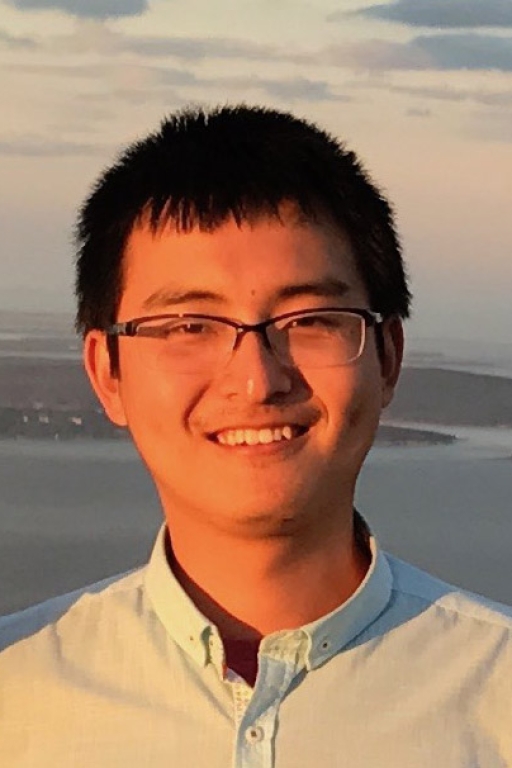
Prof. Liam Murphy is a Full Professor of Computer Science & Informatics at University College Dublin (UCD) and Director of the Performance Engineering Laboratory. He holds a B.E. from UCD, M.Sc. and Ph.D. from UC Berkeley. His research focuses on performance engineering of networks, software systems, and multimedia transmissions. He has published over 150 peer-reviewed papers and is an IEEE member and Fellow of the Irish Computer Society. Education: B.E. in Electrical Engineering, UCD (1985) M.Sc. & Ph.D. in Electrical Engineering & Computer Sciences, UC Berkeley (1988, 1992) Research Interests: Dynamic resource allocation in networks Cloud computing efficiency Software performance engineering Wireless multimedia systems Quality of Service (QoS) optimization Recent work emphasizes energy-efficient cloud workflows, multi-objective data center optimization, and decentralized traffic simulation. Grants & Awards: Fellow of the Irish Computer Society (2007) Conference Paper Awards (2004, 2002, 2001) Principal Investigator in multiple funded projects (e.g., EU-funded traffic simulation, cloud resource allocation) Advising & Labs: Directed 24 Ph.D. and 8 M.Sc. students. Leads the Performance Engineering Laboratory (PEL), focusing on distributed systems, cloud efficiency, and network performance. Collaborates on industry-relevant projects like crovan (UCD/DCU campus company). Teaching: Coordinates courses on computer science fundamentals, distributed systems performance, and software engineering at UCD.
Cristian Cadar is a Professor in the Department of Computing at Imperial College London, leading the Software Reliability Group . His research focuses on improving software reliability and security through practical techniques in software engineering, computer systems, and program analysis. Education: Ph.D. in Computer Science, Stanford University M.Eng. in Computer Science, MIT B.S. in Computer Science and Mathematics, MIT His research interests center on software engineering and software security , particularly symbolic execution , dynamic symbolic execution (DSE) , and multi-version execution . Current work explores techniques for scalability, constraint solving, and runtime security in software systems. Key trends in his recent articles include optimizing symbolic execution for testing, addressing path explosion in constraint-based test generation, and advancing multi-version execution for dynamic software updates. His publications also cover program analysis , automated testing , and formal methods for software reliability. Awarded prestigious honors such as the Humboldt Research Award (2024) , ERC Consolidator Grant (2018) , and IEEE New Directions Award (2022) . Other accolades include the BCS Roger Needham Award (2019) and SIGOPS Hall of Fame (2018) . Cadar supervises PhD and postdoctoral researchers in software reliability and security. His group has secured grants from the ERC and EPSRC , including a Consolidator Grant (2018) and Early-Career Fellowship (2013) . He actively contributes to conference organizing committees and editorial boards. The Software Reliability Group at Imperial College, led by Cadar, specializes in techniques like KLEE and EXE for automated testing. Their work has been adopted by industry partners such as Fujitsu, IBM, and Microsoft, particularly in runtime security tools like WIT .
Nicole Megow is a Professor holding the chair for Combinatorial Optimization in the Faculty of Mathematics and Computer Science at the University of Bremen since 2016. She is affiliated with several research clusters including Humans on Mars Initiative, Minds, Media, Machines, and Dynamics in Logistics. Her academic journey includes positions at TU Berlin, Max Planck Institute for Informatics, TU Darmstadt, and TU Munich. Professor Megow's research focuses on mathematical optimization, algorithm design and analysis, and operations research. Her specific interests span combinatorial and discrete optimization, efficient algorithms, scheduling theory, resource allocation, packing problems, network design, routing, and uncertainty models including online, stochastic, robust, and explorable approaches. Her work bridges theoretical foundations with practical applications in logistics and decision-making systems. Her recent publications demonstrate a strong trend toward integrating prediction models with traditional optimization frameworks, particularly in scheduling and matching problems. She has made significant contributions to understanding the role of uncertainty in optimization problems, developing algorithms that work effectively with incomplete or uncertain information. Her work spans multiple prestigious venues including Mathematical Programming, Algorithmica, SODA, STACS, and NeurIPS. Dissertation Award by the German Operations Research Society (2007) Berlin Science Award for Young Researchers (2013) Heinz Maier-Leibnitz Prize (2013) Listed among Germany's top 40 researchers below 40 (Capital, 2014, 2015) Professor Megow actively supervises PhD students and postdocs, including Max Stahlberg, Joes Biburger, Sarah Morell, Bart Zondervan, Zhenwei Liu, and Alexander Lindermayr. She serves on numerous program committees for major conferences including SODA, IPCO, and STOC, and holds editorial positions for several prestigious journals. Her current research projects include Optimization under Explorable Uncertainty (DFG funded), How robots learn how to use structure (seed grant from MMM research cluster), and Scheduling Invasive Multicore Programs Under Uncertainty (within TCRC 89).
Jung-Eun Kim is an Assistant Professor in the Department of Computer Science at North Carolina State University, where she conducts research at the intersection of artificial intelligence, machine learning, and cyber-physical systems. Her work focuses on creating trustworthy, interpretable, and efficient AI systems, particularly for safety-critical applications. Education: Ph.D. in Computer Science, University of Illinois at Urbana-Champaign (2017) M.S. in Computer Science and Engineering, Seoul National University (2009) B.S. in Computer Science and Engineering, Seoul National University (2007) Dr. Kim's research primarily investigates how to make AI systems more trustworthy, interpretable, and efficient, with particular emphasis on understanding failure modes, safety risks, vulnerabilities, and biases in deep learning models. Her work bridges theoretical understanding with practical applications in safety-critical systems. She explores how efficiency considerations interact with these issues, seeking to fundamentally anatomize neural networks to understand what causes failure modes and how to mitigate them. Her approach has been described as 'like a heart surgeon, we open the heart of a neural network architecture, look into it, interpret it, and cure it.' Her recent publications demonstrate a strong focus on safety alignment in large language models, mitigation of spurious correlations, privacy preservation against membership inference attacks, and sustainable AI development. Her work spans theoretical foundations of trustworthy AI while addressing practical challenges in model deployment, particularly for resource-constrained environments. She has made significant contributions to understanding how model compression techniques like pruning and quantization can inadvertently amplify biases and vulnerabilities. Scientific Awards: ICLR Spotlight, 2025 IBM Faculty award, 2023 CRA Early & Mid Career Mentoring Workshop, 2023 Cloud GPU provided by Lambda, worth $17,280, for course, Spring 2023 NeurIPS Spotlight and nomination for Best Paper Award, 2022 CRA Career Mentoring Workshop, 2022 GPU Grant by NVIDIA Corporation, 2018 The MIT EECS Rising Stars, 2015 The Richard T. Cheng Endowed Fellowship, 2015-2016 Dr. Kim actively mentors PhD students, currently advising Xingli Fang, Varun Mulchandani, Jianwei Li, Rishi Singhal, and Minseon Kim. She has secured significant research funding, including an NSF SaTC (Secure and Trustworthy Cyberspace) grant as Co-PI for 'Partition-Oblivious Real-Time Hierarchical Scheduling' ($281,629.00, 2022-2024). Her research has also been supported by an NVIDIA GPU Grant and cloud resources from Lambda. She serves on program committees for top AI conferences including ICLR, ICML, NeurIPS, AAAI, and IJCAI, and has held roles such as Publicity Chair for IJCAI 2024. Her research group focuses on developing methods to make AI systems more trustworthy, interpretable, and efficient, with particular attention to safety-critical applications. The group investigates how to identify and mitigate failure modes in neural networks while maintaining efficiency, exploring the fundamental relationship between model architecture, safety risks, and computational constraints.
Baris Kasikci is an Associate Professor in the Paul G. Allen School of Computer Science & Engineering at the University of Washington. Previously (2017-2023), he was a Morris Wellman Assistant Professor in the Electrical Engineering and Computer Science Department at the University of Michigan. His research focuses on building efficient and trustworthy computer systems through innovative combinations of approaches from systems, computer architecture, and programming languages. Dr. Kasikci received his PhD in Computer Science at EPFL and has held research positions at Microsoft Research Cambridge, Google, Intel, and VMware. His work addresses critical challenges in system reliability, security, and performance in increasingly complex software ecosystems. His research interests center on improving the efficiency of datacenter applications and machine learning systems, analyzing and fixing failures, and enhancing hardware security. His lab develops techniques for automated bug detection, formal verification of distributed systems, and building systems support for heterogeneous hardware architectures. Recent projects include Whisper (profile-guided branch misprediction elimination), Huron (taming false sharing), and Agamotto (automatic detection and repair of bugs in persistent memory applications). Analysis of his recent publications shows a strong trend toward optimizing large language model serving, hardware security, and performance optimization for modern heterogeneous architectures. His work bridges traditional systems research with emerging AI infrastructure needs, particularly in efficient LLM serving, security vulnerabilities in modern hardware, and performance optimization for heterogeneous computing environments. NSF CAREER award Microsoft Research Faculty Fellowship Intel Rising Star Award VMware Early Career Faculty Grant Google Faculty Award Roger Needham PhD Award (best PhD thesis in computer systems in Europe) Patrick Denantes Memorial Prize (best PhD thesis at EPFL) Best Paper Award at OSDI'18 Best Paper Award at MICRO'22 Dr. Kasikci has advised numerous PhD students who have gone on to prestigious positions in academia and industry, including Tanvir Ahmed Khan (Assistant Professor at Columbia University), Akshitha Sriraman (Assistant Professor at CMU), and Jiacheng Ma (AMD). His research has been supported by significant grants from NSF, DARPA, Intel, Google, Microsoft, VMware, and Amazon. His lab, the EfesLab, focuses on building tools and techniques that make computer systems more reliable, secure, and efficient. The EfesLab, led by Dr. Kasikci, brings together postdocs, PhD students, and undergraduate researchers to tackle fundamental challenges in systems reliability and performance. The lab has developed numerous influential tools including Whisper, Huron, and Agamotto that address critical performance and reliability issues in modern computing systems. Current research directions include efficient LLM serving, security of emerging hardware technologies, and automated debugging techniques.
Martin Albrecht is a Professor of Cybersecurity and Chair of Cryptography in the Department of Informatics at King's College London, Faculty of Natural, Mathematical & Engineering Sciences. He is also a Principal Research Scientist for SandboxAQ, demonstrating his strong industry-academia connections in the cybersecurity field. His research focuses on lattice-based cryptography, post-quantum cryptography, applied cryptography, social foundations of cryptography and information security, and computational mathematics. Albrecht's work bridges theoretical cryptography with practical security concerns, examining cryptographic implementations 'in the wild' and addressing vulnerabilities in widely used communication platforms like WhatsApp, Telegram, and Matrix. His Erdős–Bacon Number is 6, reflecting his interdisciplinary connections. Recent publications reveal a strong trend toward practical cryptographic analysis of real-world systems while advancing theoretical foundations of post-quantum cryptography. His work spans from breaking end-to-end encryption implementations to developing new lattice-based cryptographic primitives resistant to quantum computing threats. Much of his recent research addresses the urgent need for quantum-resistant cryptography as demonstrated by his European-funded project developing algorithms to protect data encryption against future quantum computers. IEEE Symposium on Security and Privacy distinguished paper award (2023) for work revealing security vulnerabilities in popular chat platforms Major European funding (2023) for advancing encryption technology against quantum computing threats Professor Albrecht leads the Cybersecurity research group at King's which studies design, modeling, analysis, verification and testing of networks and systems, and is part of the Security Hub that consolidates security-related research. His work has demonstrated critical vulnerabilities in widely used platforms including WhatsApp, Matrix, and Nextcloud, with findings reported as recently as July 2025 regarding WhatsApp's persistent vulnerabilities. He has supervised numerous PhD students and maintains active collaborations across the cryptographic research community. Through his open-source projects including FPLLL, FPyLLL, G6K, Lattice Estimator, M4RI, and M4RIE, Albrecht has made significant contributions to the cryptographic tools ecosystem, providing researchers and practitioners with essential resources for lattice-based cryptography and computational mathematics.
Travis Mayberry is an Assistant Professor in the Cyber Security department at the United States Naval Academy. His research focuses on cryptographic protocols, cloud security, privacy-preserving technologies, homomorphic encryption, and secure voting systems. He holds a PhD in Computer Science from Northeastern University, with a dissertation on practical Oblivious RAM (ORAM) protocols for private data outsourcing. He also contributed to the Scantegrity project at the University of Maryland, Baltimore County, developing end-to-end verifiable voting systems. Key areas of research include privacy in mobile devices, secure communication protocols, and cryptographic mechanisms for data protection. His work has been published in top venues like Privacy Enhancing Technologies Symposium (PETS), Network and Distributed Systems Security Symposium (NDSS), and ACM Computer and Communications Security (CCS). He received a Distinguished Paper Award in 2014 for his research on combining ORAM and PIR for efficient private file retrieval. Mayberry’s publications analyze vulnerabilities in Bluetooth Low Energy protocols, TLS client authentication tracking, and MAC address randomization in mobile devices. He has collaborated extensively on secure voting systems (e.g., Scantegrity) and practical ORAM implementations like ObliviSync and rORAM. His contributions bridge theoretical cryptography with real-world applications in privacy and security.
Toby Murray is a Professor in the School of Computing and Information Systems at the University of Melbourne, where he serves as Director of the Defence Science Institute and Co-Lead of the Computer Science Research Group. His work bridges formal methods, cybersecurity, and practical system security, with significant contributions to verified security and vulnerability detection. Murray's research focuses on building highly secure computing systems cost-effectively, with expertise in formal verification, information flow security, and vulnerability detection. His current research projects include Verisimilar (Verified, Secure Machine Learning), EDEFuzz (Detecting excessive data exposure in web applications), COVERN (Proving information flow security of concurrent programs), and Time Protection (Proving timing channel freedom for seL4). His work combines theoretical rigor with practical implementation, resulting in multiple open-source tools including SecC, Legion, and Underflow. Murray's recent publications demonstrate a consistent focus on verified security properties across diverse domains, from neural networks to concurrent systems. His work often bridges the gap between formal methods and practical security concerns, with increasing attention to machine learning security and policy implications of technical security measures. His publications span top venues in security, formal methods, and software engineering. Distinguished Paper Award at ICSE 2024 for EDEFuzz work on detecting excessive data exposure in web applications Extensive media commentary on cybersecurity issues including CrowdStrike outage analysis and social media regulation Regular contributions to The Conversation and Pursuit on cybersecurity policy matters Murray has advised numerous PhD students to completion, including Lianglu Pan (EDEFuzz), Zhiyuan Zhang, Mo Zhang, and Renlord Yang. He currently supervises multiple PhD students working on security verification, machine learning security, and web application security. His service includes being Program Chair for CSF'25, Associate Editor for IEEE Security & Privacy and ACM TOPS, and membership in IFIP's WG 1.7 and WG 2.3. His research group has developed multiple significant software tools including SecC (Verified Security for Concurrent C Programs), Legion (Principled Automatic Test Case Generation), and Underflow (Compositional Vulnerability Detection for C Programs), all available under open source licenses. Murray's work often involves discovering and reporting bugs in security analysis tools during his research, demonstrating the practical impact of his verification approaches.
Bernhard Haeupler is a Professor at Sofia University 'St. Kliment Ohridski' and Institute for Computer Science, Artificial Intelligence and Technology (INSAIT) , focusing on Algorithms & Theory . He is also a Researcher at ETH Zurich (since 2020) and an Adjunct Professor at Carnegie Mellon University (since 2022). His research spans Theoretical Computer Science with emphasis on Algorithms for Distributed and Parallel Computing , Coding Theory , Graph Algorithms , and Network Information Theory . Recent work includes Universal Optimality in Shortest Paths , Hop-Constrained Expanders , and Dynamic Clustering . Scientific Awards : ERC Starting Grant (2020) Sloan Research Fellow (2019) NSF CAREER (2018) ACM-EATCS Doctoral Dissertation Award (2014) George Sprowls Award (MIT) (2014) PhD Students : Richard Hladik (ETH Zurich/INSAIT) Antti Roeyskoe (ETH Zurich/INSAIT) D. Ellis Hershkowitz (Brown University) Jason Li (Carnegie Mellon University) Amirbehshad Shahrasbi (Microsoft) David Wajc (Technion - Israel Institute of Technology) Goran Zuzic (Google Research Zurich) Nicolas Resch (University of Amsterdam) He advocates for Neurodiversity and Diversity in academia.
S.S. Iyengar is a Distinguished University Professor and Ryder Professor at Florida International University's Knight Foundation School of Computing and Information Sciences, where he founded the Discovery Lab. He holds a Ph.D. in Engineering from Mississippi State University (1974), an M.S. from the Indian Institute of Science (1970), and a B.S. from Bangalore University (1968). Research spans high-performance computing, sensor networks, biomedical computing, and AI, with applications in cancer genomics and digital forensics. His innovations include the Brooks-Iyengar algorithm for distributed sensor fusion and cognitive information processing systems. Honors include fellowship in ACM, IEEE, AAAS, and NAI, plus the IEEE Test of Time Research Award for fundamental contributions to distributed computing. He has supervised over 55 PhD students and authored 500+ publications. Current work focuses on DNA mutation prediction, glaucoma monitoring devices, and cybersecurity. Funded by NSF, DARPA, NASA, and others, totaling $65M+ in research funding.
Yaoqing Yang is an Assistant Professor in the Department of Computer Science at Dartmouth College. His research focuses on machine learning, 3D computer vision, distributed computing, and information theory. He holds a B.A. from Tsinghua University and a Ph.D. from Carnegie Mellon University. Education: B.A., Tsinghua University, Beijing, China Ph.D., Carnegie Mellon University Research interests include diagnosing and mitigating failures in machine learning models, analyzing high-dimensional spaces such as loss landscapes, and applying techniques to 3D point clouds and graphs. His work draws on statistical learning and information theory. Recent publications explore topics like temperature balancing in neural networks, ensemble effectiveness, and generalization metrics in NLP models. He has received grants from DOE and DARPA, and his work has been recognized with awards including the Burke Research Initiation Award. Professional service includes roles as an Area Chair at NeurIPS and ICLR, and Session Chair at ICLR 2025. He has organized workshops on AI for Science and contributed to conferences worldwide.
Cristian Cadar is a Professor in the Department of Computing at Imperial College London, leading the Software Reliability Group. He holds an ERC Consolidator Grant and is an EPSRC Early-Career Fellow. His research focuses on enhancing software reliability and security through techniques like symbolic execution and dynamic analysis. Education: PhD in Computer Science (Stanford University), M.Eng. and B.S. in Computer Science and Mathematics (MIT). Research interests include software engineering, computer systems, and security, with a focus on practical tools for testing and verification. His work has led to advancements in symbolic execution, compiler testing, and dynamic software updates. Key publications span topics like KLEE, symbolic execution optimization, and compiler fuzzing. Awards include the BCS Roger Needham Award, Humboldt Research Award, and SIGOPS Hall of Fame recognition. He advises PhD students and postdocs, focusing on systems programming and compilers. His lab develops tools like KLEE and explores multi-version execution and greybox fuzzing.