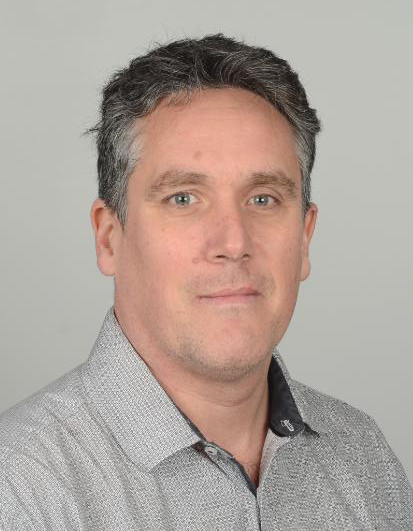
Jonas Kantic is a Ph.D. student and Researcher at the Chair of Integrated Systems within the Faculty of Electrical Engineering and Information Technology at Technical University of Munich . Holding a Master of Science in Technical Informatics from Leibniz University Hannover, his work focuses on AI acceleration architectures and embedded systems design. Education Master's in Technical Informatics (2017-2020), Leibniz University Hannover Chinese Language Studies (2018-2019), Beijing Foreign Studies University Bachelor's in Technical Informatics (2013-2017), Leibniz University Hannover Research Focus Specializes in reservoir computing architectures Expertise in FPGA-based AI acceleration Investigates temporal/spatial compression techniques Develops efficient edge AI inference systems Applies machine learning to motorcycle control systems Works on hyperdimensional computing models Supervision Mentored 5+ students in RNN accelerators, CNN optimization, and stochastic computing Collaborates with industry partners (BMW Motorrad, NXP Semiconductors) Publications 2024 - Complex & Intelligent Systems: Cellular Automata for Reservoir Computing 2024 - IEEE NorCAS: FPGA Implementation for High-Speed Reservoir Models 2021 - Current Directions in Biomedical Engineering: Hearing Aid CNN Optimization
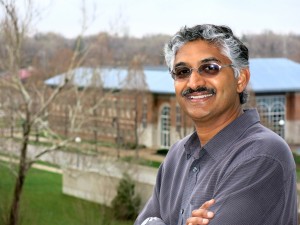
Jason Eshraghian is an Assistant Professor at the Department of Electrical and Computer Engineering, University of California, Santa Cruz. He leads the UCSC Neuromorphic Computing Group, focusing on brain-inspired circuits for AI acceleration and spiking neural networks. His work bridges biological principles with hardware implementation to solve computational challenges in AI efficiency. Assistant Professor, Electrical and Computer Engineering UCSC Neuromorphic Computing Group leader Research intersections: Neuromorphic engineering, AI hardware, spiking networks Research Interests: Dr. Eshraghian's work centers on neuromorphic computing and spiking neural networks for AI acceleration. His lab explores Hardware-software co-design for ultra-low-power systems Memristor-based neural architectures Event-driven medical diagnostics Spiking language models (e.g., SpikeGPT) Closed-loop neurostimulation Article Trends: Recent publications emphasize Scalable neuromorphic architectures for AI (2025: Ising machines, FPGA implementation) Medical applications including cytometry and brain-computer interfaces Energy-efficient designs for language models and tracking systems Hybrid attention mechanisms and temporal learning frameworks
Mohammed Benaissa is a Professor of Information Engineering at the University of Sheffield within the School of Electrical and Electronic Engineering . As Director of Learning and Teaching (Student Experience) , he leads initiatives for academic quality and student engagement. His research bridges hardware cryptography , error-control coding , and healthcare technology , particularly in data-driven diabetes management via the WithCare+/Glucollector platform deployed in NHS trusts. Education : PhD, Dip.Ing in Electrical and Electronic Engineering Technical Leadership : Patent holder for WithCare+ (GB 2467079) His research interests span cryptosystems , residue number systems , and reconfigurable hardware , with a focus on scalable security architectures and low-power medical devices . Recent publications highlight lattice-based cryptography and AI-driven glucose prediction using NIR/MIR spectroscopy and machine learning . Scientific accolades include a best paper award for RFID security and an innovation prize for diabetes technology. He has supervised over 25 PhD students, including graduates like Abdelaal A , Al-Mbaideen A , and Khan Z U A , and serves on research funding panels and conference Technical Program Committees.
Loïc Lagadec is a Professor in Computer Science at ENSTA-Bretagne, an engineering school in Brest, France, where he serves as Assistant Head of Research Delegate for Cybersecurity Activities and is a member of LabSticc. His career spans academic leadership, research in reconfigurable architectures, cybersecurity, and hardware-software co-design. Affiliation: ENSTA-Bretagne, LabSticc Research Focus: FPGA CAD tools, Homomorphic Encryption, RISC-V security His research explores CAD tools for unconventional architectures (e.g., NASICs), homomorphic encryption evaluation, and hardware acceleration. He employs Smalltalk-based object-oriented languages for domain modeling and software quality. Current projects include on-chip monitoring for zero-day attack detection and secure RISC-V extensions. Recent publications highlight trends in machine learning hardware acceleration , JIT compiler security , and deep-sea IoT environmental constraints . Grants include DGA-funded "Overlays for long time maintenances" (2014-2016) and "Secure Overlays" (2017-2020), and Région Bretagne CPER Cyber-SSI (2015-2020). He has supervised PhD students including Xuan Sang Le , Théotime Bollengier , and Cyrielle Feron , and collaborates with institutions like Lab-STICC and European MORPHEUS IP FP6 projects. His work bridges theoretical innovation with practical embedded systems implementation.
Dr. Sebastian Oberst is an Adjunct Associate Professor at the School of Engineering and Information Technology at the University of New South Wales (UNSW) Canberra. His research focuses on vibration and acoustics, mechanical characterization, and vibration/noise control, with particular expertise in microvibrations related to insect communication. He has made significant contributions to the understanding of nonlinear time series analysis, chaotic dynamics, and statistical uncertainty analysis in mechanical systems. Dr. Oberst's primary research interests include: Stability behavior of deployable, flexible structures of nano-satellites Friction-induced vibrations & sound (e.g., automotive disc brake squeal) Vibrational communication in insects (e.g., ants, termites) Mechanical characterization and vibration/noise control Nonlinear time series analysis and chaotic dynamics Statistical and uncertainty analysis in vibration systems His recent publications demonstrate a strong focus on applying advanced signal processing techniques to vibration analysis, particularly in biological systems and engineered structures. Dr. Oberst has pioneered methods for analyzing microvibrations in insect communication and has made significant contributions to understanding brake squeal phenomena through nonlinear dynamics approaches. His work bridges the gap between theoretical vibration analysis and practical engineering applications. Dr. Oberst has secured significant research funding through multiple Australian Research Council grants and industry partnerships: Lead Chief Investigator for "Discovering how termites use vibrations to thrive in a predators' world" (ARC Discovery Project DP200100358, 2020-2022) Chief Investigator for "Metamaterials for control of acoustic radiation forces" (ARC Discovery Project DP200101708, 2020-2022) Chief Investigator for "National Laser-Based Non-Destructive Evaluation System" (ARC LIEF LE180100041, 2018) Lead Chief Investigator for "Bio-inspired vibration-reduction for sensing and detection" (NSW Department of Industry, 2020) Chief Investigator for "Enhanced detection, localisation and identification of sand-covered naval mines" (NSW Department of Industry, 2021) Dr. Oberst teaches across several engineering disciplines including Statics, Dynamics, Thermofluids, Introduction to vibration, Acoustics, Instrumentation, and Statistics. His research lab focuses on experimental and numerical vibration analysis, with particular emphasis on biological vibration systems and engineered mechanical structures. Current projects include developing micro-exciter devices to mimic insect vibration signals, analyzing termite nest morphology, and investigating acoustic radiation forces for contactless manipulation of objects.
Frank Mueller is a Professor in the Department of Computer Science at North Carolina State University, actively contributing to high-performance computing, embedded systems, and quantum computing research. His technical focus spans operating systems, parallel and distributed systems, and software engineering. Current affiliations: NSF Quantum Leap Challenge Institute , International Workshop on Integrating High-Performance and Quantum Computing , and ACM SIGPLAN Symposium on Principles and Practice of Parallel Programming program committee. Recent research explores real-time scheduling ( WHPQC ), quantum error correction ( QCE 2024 ), and OpenMP extensions for real-time systems. His publications emphasize cross-layer optimization in heterogeneous systems, with notable work on GPUDirect performance analysis and quantum co-design. Awards include ACM Fellow , IEEE Fellow , and multiple NSF Career Grants . Teaching: Parallel Systems , Real-Time Systems , and Quantum Computing Tutorials . Professional service: Participating in IEEE HPCA and EMSOFT program committees.
Vikram Adve is the Donald B. Gillies Professor of Computer Science at the University of Illinois at Urbana-Champaign, with appointments in both the Computer Science Department and the Center for Digital Agriculture. He co-founded and co-leads the Center for Digital Agriculture and serves as the director of AIFARMS, a $20M National Artificial Intelligence Research Institute funded by USDA NIFA and NSF. Adve has been a professor at UIUC since August 2011 and previously served as Interim Head of the Computer Science Department from 2017 to 2019. Adve received his Ph.D. in Computer Science from the University of Wisconsin-Madison in 1993. His academic journey has been marked by significant contributions to compiler infrastructure and computer systems research, culminating in his current distinguished professorship at one of the world's leading computer science departments. Adve's research spans multiple cutting-edge domains in computer systems. His work on the LLVM Compiler Infrastructure has revolutionized how software is compiled and optimized across diverse hardware platforms. Currently, his research focuses on three primary thrusts: Digital Agriculture and AI : Through the Center for Digital Agriculture and AIFARMS Institute, he's developing AI solutions for agricultural challenges, including the CropWizard system for generative AI in farming Edge Computing : His HPVM, ApproxHPVM, and ApproxTuner projects address the programming challenges of heterogeneous computing at the network edge Compiler Innovation : His Hydride and MISAAL projects use program synthesis to automatically build compilers for complex hardware architectures His work bridges theoretical compiler research with practical applications in agriculture, autonomous systems, and distributed computing. Adve's publication record demonstrates a consistent trajectory from foundational compiler research to applied AI systems. Early work focused on memory safety (SAFECode), deterministic parallel programming (DPJ), and the LLVM infrastructure. More recently, his publications reflect a strategic pivot toward agricultural AI and edge computing, with significant contributions to generative AI applications, compiler techniques for heterogeneous systems, and multimodal data processing for precision agriculture. His work maintains strong theoretical foundations while addressing real-world challenges in resource-constrained environments. Adve's scientific recognition includes numerous prestigious awards: ACM Software System Award (2012) for LLVM ACM Fellowship (2014) NSF CAREER Award (2001) Multiple best paper awards at top conferences including PLDI 2005, SOSP 2007, and CGO 2004 (retrospective) University Scholar designation at UIUC (2015) Donald B. Gillies Professorship (2018) Distinguished Alumnus Award from IIT Bombay (2023) As an advisor, Adve has mentored numerous successful students, including Chris Lattner (co-creator of LLVM), Robert Bocchino (ACM SIGPLAN Outstanding Dissertation Award winner), and John Criswell (ACM Doctoral Dissertation Award Honorable Mention). His research group has secured significant funding from diverse sources including USDA NIFA, NSF, Intel Corporation, Amazon-Illinois AICE Center, and the state of Illinois through the Discovery Partners Institute. Current projects include the $20M AIFARMS institute and multiple edge computing initiatives focused on agricultural robotics and distributed AR/VR systems. Adve leads the Programming Languages, Systems, and Networking research group at UIUC, which maintains strong connections with industry partners. His group's work on LLVM has had widespread industry impact, with applications in Apple's iOS ecosystem, Android, NVIDIA GPUs, and numerous other commercial products. The group's current focus on agricultural AI through the Center for Digital Agriculture represents a strategic expansion into domain-specific applications of systems research.
Reza Sameni is an Associate Professor at Emory University's Department of Biomedical Informatics and Adjunct Associate Professor at Georgia Institute of Technology's Wallace H. Coulter Department of Biomedical Engineering. He serves as Scientific Director of Emory's Medical Imaging, Informatics, and AI (MIIAI) Core. PhD in Biomedical Engineering (Sharif University of Technology) PhD in Signal Processing & Telecommunications (INPG) MSc in Biomedical Engineering (Sharif University) BSc in Electronics Engineering (Shiraz University) His research spans biomedical signal processing and model-based machine learning, with applications in cardiovascular diagnostics, maternal-fetal health, psychiatry, and global health equity. The Alphanumerics Lab develops explainable AI tools for multimodal physiological monitoring and open-access platforms like OSET. Current article trends focus on AI-driven diagnostics, cross-modal ECG/PCG analysis, edge computing for rural healthcare, and algorithmic reproducibility in biomedical applications. The lab actively recruits graduate students and postdocs. Georgia Institute of Technology (adjunct appointment) Emory University (tenured associate professor) Former Chair at Shiraz University Former Senior Researcher at GIPSA-lab Lab initiatives include: open-source toolboxes (OSET), crowdsourced AI frameworks for arrhythmia detection, and bias mitigation in clinical AI systems. Research integrates FPGA/ embedded systems for biomedical hardware development.
Laurent Sauvage is a Lecturer at Télécom Paris and a member of the Secure and Safe Hardware (SSH) research team within the Information Processing and Communication Laboratory (LTCI) and Communications and Electronics (Comelec) department. His work focuses on hardware security, fault injection attacks, and side-channel analysis in cryptographic systems. Research Interests: Hardware security, fault injection attacks, side-channel analysis, and embedded systems. Laboratory: LTCI (Information Processing and Communication Laboratory), Télécom Paris. Publications: Recent works include advancements in masked implementations, EM fault injection models, and countermeasures against cryptographic vulnerabilities.
Prof. Dr.-Ing. Jörg Wollert serves as Professor and Director of the Institute for Applied Automation and Mechatronics within the Department of Mechanical Engineering and Mechatronics at Aachen University of Applied Sciences. He actively teaches Mechatronics and Embedded Systems while participating in university governance through the Rectorate Commission for Research and Development. His research spans embedded systems implementation across industrial automation and automotive domains, with particular emphasis on wireless building technologies (Thread, AllJoyn, IEEE802.15.4), industrial communication protocols (OPC-UA, IO-Link, CAN-FD, BroadR-Reach), and safety-critical architectures. Current projects involve FPGA-based safety stacks, autonomous vehicle networking, and secure embedded communication solutions using Arduino platforms. As Director of the Institute for Applied Automation and Mechatronics and affiliate of the Institute for Mobile Autonomous Systems and Cognitive Robotics (MASKOR), he supervises numerous final theses in embedded system design. His laboratory work focuses on practical implementations including delta kinematics robots, vehicle control systems, and building automation demonstrations for lighting, HVAC, and wireless HART protocols.
Assoc. Prof. Dr. Salih Barış Öztürk is an Associate Professor at the Department of Electrical Engineering, Istanbul Technical University. His research focuses on renewable energy systems, power electronics, and control of electrical machines, with applications in electric vehicles and smart grids. Education : PhD in Electrical Engineering from Texas A&M University (2006), B.S. from Istanbul Technical University (2000). Research Interests include: Fault diagnosis and condition monitoring of electrical machines Modern control theory for motor drives Integration of machine learning in energy conversion Power electronics for renewable energy systems Recent Publications address topics like SiC MOSFET converter design, PV system performance optimization, and neural network-based fault detection in motors. Scientific Awards : IEEE Senior Member (2019) UTRC Outstanding Achievement Award (2009) IEEE-IECON 2008 Best Paper Award - Second Prize Academic Excellence Scholarship (2004) Second Place in ITU Electrical Engineering Department (2000) Professional Memberships : IEEE (2002-present), TMMOB Chamber of Electrical Engineers (2009-present).
Prof. Dr. Sıddıka Berna Örs Yalçın is a Professor at Istanbul Technical University , Faculty of Electrical and Electronics Engineering, Department of Electronics and Communication Engineering since 2020. She holds a PhD from Katholieke Universiteit Leuven (1999) and has maintained continuous academic engagement in cryptology, embedded systems, and hardware security. Education: PhD in Electrical Engineering, Katholieke Universiteit Leuven (1999) Master's in Electronics and Communications Engineering, Istanbul Technical University (1995) Licence in Electronics and Communication Engineering, Istanbul Technical University (1995) Her research focuses on post-quantum cryptography , side-channel attack mitigation , and hardware implementation for security systems. Recent work includes FPGA-based AI accelerators, IoT power consumption modeling, and quantum-resistant cryptographic algorithms. Current projects center on RISC-V processor optimization, embedded security, and hardware implementations for 5G communications. Her Scopus h-index is 17 with over 1353 citations, reflecting her impact in computer hardware and cryptographic engineering domains. Notable Research Outputs: Quantum tent map-based S-box designs for image encryption (2024) Post-quantum modular multiplication algorithms (2024) RISC-V implementation of CRYSTALS-Kyber (2023) IOT power consumption estimation frameworks (2024)
Zhiru Zhang is a Professor at Cornell University in the School of Electrical and Computer Engineering , leading research at the Computer Systems Laboratory . His work focuses on algorithms, methodologies, and design automation tools for heterogeneous computing systems. Recent publications emphasize high-level synthesis (HLS), hardware specialization for machine learning, and programming models for software-defined FPGAs. Education: Ph.D. in Computer Science, UCLA B.S. in Computer Science, Peking University M.S. in Computer Science, UCLA Research Interests: Heterogeneous computing systems High-level synthesis (HLS) optimization FPGA-based hardware acceleration Sparse data format compilers Machine learning for electronic design automation Scientific Awards: IEEE Fellow Intel Outstanding Researcher Award NSF CAREER Award DARPA Young Faculty Award Multiple Best Paper Awards at ASPLOS, ISPD, FPGA, AutoML, FCCM Research Group: Mentors 12 current students including Jordan Dotzel, Jie Liu, and Grace Dinh, with 14 alumni now at institutions like AWS AI, NVIDIA, Google DeepMind, and Microsoft. His lab develops tools like UniSparse for sparse format customization, presented at OOPSLA'24 and IEEE CAL.
Dr. Ir. Anh Vu Doan is a Lecturer at the Technical University of Munich (TUM) under the Chair of Integrated Systems and a Senior Project Leader at Infineon in Neubiberg, Germany. With a Belgian-Vietnamese background and prior residence in Japan, he has held academic roles including postdoctoral fellowships at Keio University and TUM, as well as teaching assistant and stand-in lecturer positions at Université libre de Bruxelles (ULB) and IÉSEG School of Management. Research Interests: Embedded systems design Combinatorial optimization Problem modeling and decision aiding Approximate computing and 3D-stacking memory Machine learning reliability and safety Network-on-Chip (NoC) optimization Recent Publications focus on neuromorphic systems, power optimization for multicore processors, adversarial attacks in ML, and multi-objective design strategies using genetic algorithms. His work bridges hardware-software co-design and sustainable mobility decision frameworks. Scientific Awards: Erasmus-Mundus Grant (EASED program) JST/CREST Research Program Education: MSc in Electrical Engineering (ULB, 2009) PhD in Engineering Sciences (ULB, 2015)
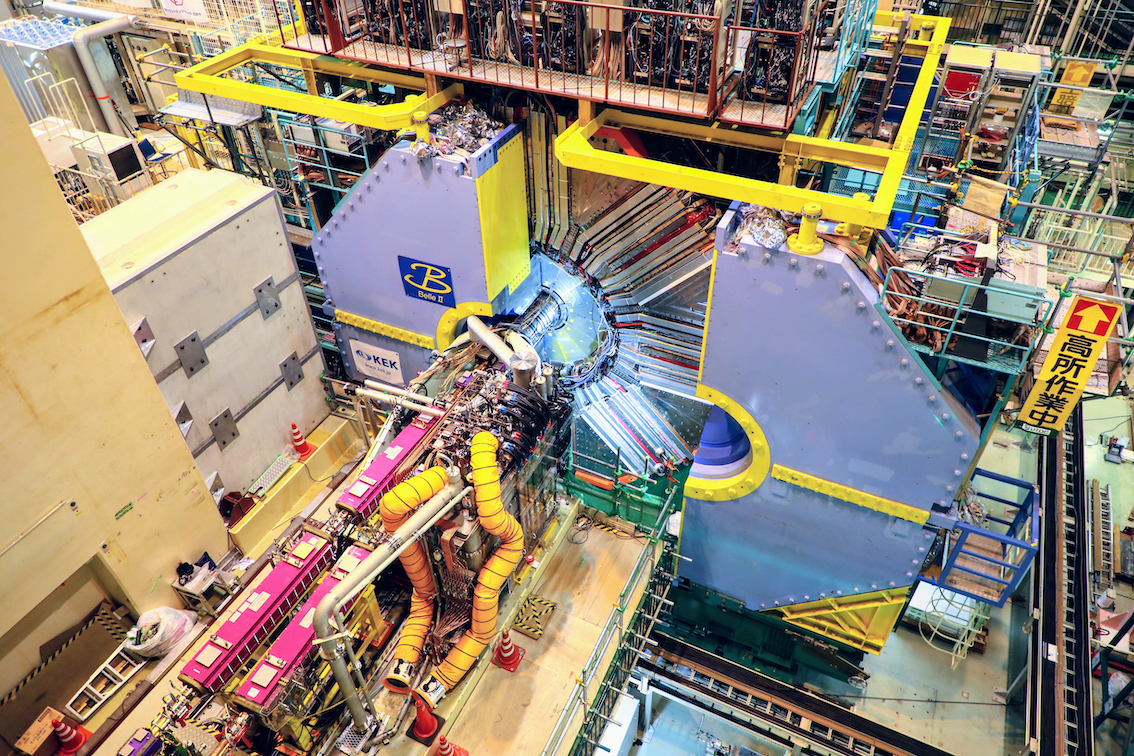
Prof. Dr. Torben Ferber is a Professor at the Karlsruhe Institute of Technology (KIT), leading the Institute of Experimental Particle Physics (ETP). His research focuses on flavor physics in B-meson decays, searches for dark photons, axion-like particles, and long-lived particles at the Belle II experiment, and future projects like LUXE and DELIGHT. He contributes to detector software development and real-time machine learning algorithms for tracking systems. Teaching responsibilities include undergraduate courses on programming, statistics, and particle physics, as well as advanced graduate courses on flavor physics and modern data analysis methods. His group actively collaborates on Belle II's electromagnetic calorimeter reconstruction and explores cutting-edge technologies like GPU acceleration and FPGA-based tracking. Research trends in recent articles emphasize machine learning applications in track reconstruction, CP-violation studies in B-meson decays, and searches for dark matter signatures. His work addresses unresolved questions in the Standard Model, such as discrepancies in CKM matrix element measurements and the origin of matter-antimatter asymmetry. Outreach activities include VR particle detector demonstrations, LEGO models, and masterclasses for students. Supervision of theses spans topics like GPU-accelerated algorithms, FPGA hardware design, and Belle II data analysis. The group adheres to a Code of Conduct promoting inclusivity and respect in academic collaboration.