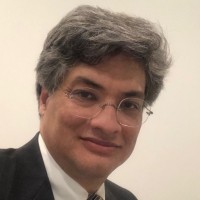
Patricia Evans is a Professor and Associate Dean at the Faculty of Computer Science , University of New Brunswick. She holds a B.Sc. from the University of Alberta and M.Sc./Ph.D. from the University of Victoria. Research Focus : Computational Biology, Bioinformatics, Algorithm Design and Analysis, Graph Theory, Parameterized Complexity Current Projects : RNA structure comparison, haplotype inference, biological network analysis, parallelization of dynamic programming Collaborations : Eric Aubanel (UNB), Todd Wareham (Memorial University), Ken Kent (UNB), Jackie Rice (University of Lethbridge) Grants : NSERC, Genome Atlantic, AIF, NBIF Her research applies computer science theory to molecular biology problems, including RNA structure analysis and phylogenetic network modeling. Past work includes FPGA implementations for bioinformatics algorithms and parameterized complexity analysis for motif finding. Publications span 1999-2008, with key topics in RNA pseudoknot detection, haplotyping, and computational complexity. Her lab has mentored 13 graduate students, including 2 Ph.D. graduates.
Francisco J. Andújar Muñoz is an Associate Professor at the University of Valladolid in the Department of Computer Science since January 2024. His career spans multiple institutions including Universidad de Castilla-La Mancha (2008-2015) and Universitat Politècnica de València (2017-2018), with academic roles ranging from Research Assistant to Juan de la Cierva Formación Researcher. PhD in Advanced Computer Science Technologies (2011-2015) MsC in Advanced Computer Science Technologies (2010-2011) Computer Science Engineering (2008-2010) Computer Science Technical Engineering (2004-2008) His research focuses on high-performance interconnection networks , with significant contributions to quality-of-service mechanisms, energy-efficient network topologies, and heterogeneous programming optimization. He maintains the open-source VEF Traces framework for network workload modeling. Recent publications (2023-2025) demonstrate expertise in FPGA high-level synthesis portability, SYCL-based GPU optimization, and machine learning applications for Twitch streaming analysis. His work combines theoretical network design with practical implementations in the Journal of Supercomputing and IEEE Transactions on Computers .
Piotr Szymczyk is a Professor at the Department of Biocybernetics and Biomedical Engineering , AGH University of Science and Technology in Kraków. His research focuses on artificial intelligence , embedded systems , and real-time data processing , with applications in biomedical engineering, georadar analysis, and energy systems. Key research areas: Neural networks (Laplace/Z-transform), real-time systems , parallel computing , and georadar data classification Projects: NCN grants for 'Intelligent embedded systems' and 'Digital georadar data processing' His work spans embedded Linux , microcontroller programming (ARM, STM32), and wireless technologies (LoRa, Bluetooth LE). He has supervised doctoral and master's theses in these fields. Scientific awards: NCN Agreement No. 6693/B/T02/2011/40 Ministry of Science and Higher Education grant 0128/R/t00/2010/12
Resit Sendag is a Professor and Director of Graduate Studies in the Department of Electrical, Computer and Biomedical Engineering at the University of Rhode Island. He serves as Director of both the URI Computer Architecture Laboratory and the URI Generative AI Development Group, leading cutting-edge research in computer architecture and high-performance computing. His academic credentials include: Ph.D. in Computer Engineering from the University of Minnesota (2003) B.Sc. in Electrical Engineering from Hacettepe University, Ankara (1994) Professor Sendag specializes in computer architecture with research interests spanning processor design, memory systems, parallel computing, and hardware acceleration. His work focuses on improving computational performance through innovative techniques in cache management, prefetching, branch prediction, and specialized hardware implementations using FPGAs and GPUs. Recent research has expanded into applying these architectural principles to solve complex optimization problems like vehicle routing. His publication record demonstrates a consistent evolution from fundamental computer architecture research toward practical applications of architectural techniques. The most recent work shows strong emphasis on implementing genetic algorithms for vehicle routing problems using specialized hardware platforms (FPGAs and GPUs), while maintaining his foundational research on memory access optimization through sophisticated prefetching techniques. Professor Sendag has secured research funding from the Office of Naval Research through collaborative projects with the University of Connecticut focused on advanced manufacturing, shipbuilding processes, and material tracking systems. He actively mentors graduate students, with current advisees working on challenging computer architecture projects. His former students have achieved notable success at leading technology institutions including ETH-Zurich, Intel, NVIDIA, AMD, and various research laboratories. Professor Sendag leads key research initiatives including the URI Computer Architecture Laboratory, the Generative AI Development Group, and the PatternFinder project (an NSF-funded open-source tool for program behavior analysis).
H. Fatih Uğurdağ serves as Full Professor in Özyeğin University's Faculty of Engineering, Department of Electrical and Electronics Engineering, while holding dual leadership roles as Dean of the Faculty of Engineering and Director of the Graduate School of Science since March 2022. He concurrently chairs IEEE Türkiye Section, representing 400,000 global members including 2,000 in Turkey. His academic foundation includes dual Bachelor's degrees in Electrical & Electronics Engineering and Physics from Boğaziçi University (1986), followed by Master's (1989) and Ph.D. (1995) in Electrical Engineering & Applied Physics from Case Western Reserve University (CWRU), where his thesis work focused on machine vision and computer architecture. Research spans integrated circuit design and real-time systems, with core expertise in ASIC/SoC/FPGA automation, embedded systems, and machine vision. Applied domains include electric vehicles, high-frequency trading infrastructure, intelligent transportation, and educational software tools. His industry background at NVIDIA, Juniper, and GM informs practical hardware-software integration approaches. No scientific awards or fellowships are documented in the source materials. As academic administrator, he oversees faculty development and graduate programs while advising doctoral candidates. His nEMESysLab (Emerging Memory and Embedded Systems Laboratory) drives research in memory architectures and real-time embedded applications, though specific student names and grant details remain unlisted in provided texts.
Alessandro Savino is an Associate Professor at the Department of Control and Computer Engineering (DAUIN) of Politecnico di TORINO. He serves as an academic advisor for Bachelor’s and Master’s degree programs in Computer Engineering (Ingegneria Informatica) and contributes to PhD programs in Artificial Intelligence and Computer Engineering. Research Interests: Approximate computing, Cybersecurity (including automotive systems), Dependability, Parallel computing, Reliability analysis, and Neuromorphic architectures. Key Projects: Leads RESCHIP4EU (2024-2028), NEUROPULS (2023-2027), and commercial contracts focused on real-time OS validation and avionics design. Publications: Recent work spans hardware security (e.g., VeriSide for leakage assessment), spiking neural networks (SpikeExplorer, SpikingJET), and automotive cybersecurity (CARACAS, CAN-MM). Teaching: Instructs courses on Parallel and Distributed Computing, Hardware & Wireless Security, and System Programming across Politecnico di TORINO and Scuola IMT Alti Studi - LUCCA. Research Group: Leads the SMILIES group, focusing on resilient computer architectures and life sciences.
Wang Wei is an Associate Professor and Doctoral Supervisor at the Institute of Building Technology and Science, School of Architecture, Southeast University. He obtained his bachelor's degree in Architectural Environment and Energy Engineering from Huazhong University of Science and Technology in 2014 and completed his Ph.D. in Architecture and Civil Engineering at City University of Hong Kong in 2018. From 2017 to 2018, he served as a visiting scholar at the Department of Building Technology, Lawrence Berkeley National Laboratory, USA. Education Bachelor's: Architectural Environment and Energy Engineering, Huazhong University of Science and Technology (2014) Ph.D.: Architecture and Civil Engineering, City University of Hong Kong (2018) His research focuses on urban-block-building energy modeling , urban energy system planning , and low-carbon cities . Additional technical interests include machine learning applications in environmental modeling, stereo matching algorithms, and remote sensing image analysis. He has published 34 SCI/SSCI papers, with 23 as first or corresponding author. Wang Wei serves as a youth editorial board member for the SCI journal Building Simulation , Review Editor for Frontier of Built Environment , and Founding Editor of the Urban Studies section in Current Social Sciences . He has secured multiple national and provincial research grants including the National Natural Science Foundation of China and National Key R&D Program sub-projects. Scientific Awards & Roles National Natural Science Foundation of China - Principal Investigator National Key R&D Program - Sub-Project PI Jiangsu Province Natural Science Foundation Nanjing Science and Technology Innovation Project Building Simulation Journal - Youth Editorial Board Frontier of Built Environment - Review Editor Current Social Sciences - Urban Studies Founding Editor
Andrew Lumsdaine is the Chief Scientist at the Northwest Institute for Advanced Computing , a dual appointee between the University of Washington and the Pacific Northwest National Laboratory (PNNL). He holds the title of Affiliate Professor in the Paul G. Allen School of Computer Science and Engineering at UW and serves as a Laboratory Fellow in PNNL's Applied Mathematics, Computing, and Data Division. His research spans foundational and applied aspects of High Performance Computing , focusing on scalable graph algorithms, computational photography, and runtime systems for distributed-memory architectures. Education : Not explicitly stated in the provided text. Lumsdaine's work addresses critical challenges in parallel and distributed computing , including synchronization avoidance, communication optimization, and domain-specific language design for graph analytics. He has led projects like GraphPack (NSF-sponsored) and contributed to DARPA's HIVE program through the HAGGLE software development kit. His publications highlight innovations in light field imaging , GPU programming models , and graph algorithm abstractions . Notable collaborations include the GraphBLAS standardization effort and development of tools for checkpoint/restart fault tolerance. His research has been presented at leading conferences like SC , IPDPS , and Eurographics . Lumsdaine actively seeks collaborators and advises students/postdocs through projects listed on his research page.
Vincent Bode is a researcher and teaching assistant at the Chair of Computer Architecture and Parallel Systems at the Technical University of Munich (TUM) . His work focuses on benchmarking and optimizing Data Distribution Service (DDS) middleware for Industrial IoT applications, particularly through the DDS-Perf project in collaboration with Siemens .
Prof. Dr. Michael Gerndt is a Full Professor at the Chair of Computer Architecture and Parallel Systems , School of Informatics, Technische Universität München (TUM). His research focuses on cloud and IoT systems, high-performance computing (HPC), and performance analysis tools for parallel/distributed systems. Current projects: SEANERGYS , PlasmaPEPS , OpenCUBE , and MUNIQC-ATOMS Past projects: AutoTune , READEX , InvasIC , and CrossGrid Research Highlights: Developed the Periscope Tuning Framework and iOMP (OpenMP extension for invasive computing) Pioneering work in performance analysis, energy efficiency, and resource management in HPC and cloud systems Focus on AI-driven cloud operations, quantum-HPC integration, and hardware accelerators for machine learning Scientific Awards: Outstanding Paper Award, IEEE SC2 Symposium (2017) Teaching Contributions: Lectures: Parallel Programming Systems , Advanced Computer Architecture , Cloud Computing Lab courses: Efficient Programming of Multicore Processors , IoT Sensor Nodes Seminars: Hardware Accelerators for AI , Quantum Computing Integration Education & Career: PhD in Computer Science (1989, University of Bonn), postdoc at University of Vienna (1990-1991), habilitation at TUM (1998), Professor at TUM since 2000.
Dr. Marc van der Sluys van der Sluijs is a researcher at Utrecht University's Department of Gravitational and Subatomic Physics (GRASP) and the Dutch National Institute for Nuclear and High Energy Physics (Nikhef) in Amsterdam. His academic focus spans gravitational-wave detection, binary evolution, and computational astrophysics, with active roles in the Virgo, LIGO, and Einstein Telescope collaborations. Research Interests: His work centers on gravitational-wave data analysis, neutron star and black hole coalescences, common-envelope evolution, and multi-messenger astronomy. He employs heavy computing and Bayesian statistics for empirical modeling of astrophysical phenomena. Teaching: He teaches Introduction to Astrophysics and Stellar Evolution in Utrecht University's physics bachelor program. Publications: His recent articles (2019–2025) predominantly explore gravitational-wave detection methodologies, dark matter searches, and solar position algorithms. Key themes include machine learning applications in astrophysics, multi-instrument data analysis, and open-source software development for scientific computation. Ancillary Activities: He founded hemel.waarnemen.com , a popular Dutch astronomy website with 1–2 million annual visits, providing observational guides for celestial phenomena in Belgium and the Netherlands.
Nataša Erceg is an Associate Professor of Physics Education at the Faculty of Physics, University of Rijeka, Croatia. She has been with the institution since 2009, progressing from Assistant to her current position as Associate Professor since 2022. Her academic career includes significant administrative roles such as Pro-dean of the Faculty (2022-2023) and Deputy Head of the Department (2018-2022). She earned her PhD in Methodological Sciences in Physics from the University of Sarajevo (2011-2013), following a Master's degree in Natural Sciences Education from the University of Split (2003-2006), and her initial teacher education at the University of Rijeka (1992-1998). Before joining academia, Dr. Erceg taught physics and mathematics at primary and secondary schools in Rijeka from 1999 to 2009, providing her with practical classroom experience that informs her educational research. Dr. Erceg's research focuses on physics education, particularly on conceptual understanding in physics, development of concept inventories, and physics teacher training. Her work examines how students understand microscopic models of electrical and thermal conductivity, gravitational acceleration measurements, and wave optics. She investigates the causes of physics teacher shortages in Croatia and develops pedagogical approaches to improve physics instruction at various educational levels. Her research has resulted in numerous publications in high-impact journals including Physical Review Physics Education Research, European Journal of Physics, and Education Sciences. Her work often involves collaboration with international researchers and addresses both theoretical and practical aspects of physics education. 2019: Award for teaching excellence at the University of Rijeka 2009: Award from the City of Rijeka for exceptional work with a student who won 3rd place in the National Physics Competition She actively mentors students, having guided numerous master's and diploma theses on topics related to physics education methodology. Her administrative service includes committee memberships focused on curriculum development, quality assurance, and academic recognition processes at both institutional and national levels. She organizes professional development workshops for physics teachers across multiple Croatian counties and leads popular science initiatives such as the 'Saturday Morning Physics' program for high school students.
Тетяна Сергіївна Дьячук є старшим викладачем кафедри комп'ютерних систем та мереж Факультету комп'ютерних наук і технологій Запорізької національної технічної політехніки, де працює з 2006 року після закінчення університету з відзнакою. Вона є активним членом академічної спільноти, зосереджуючись на сучасних напрямках комп'ютерних наук та технологій. Освіта: Запорізька національна технічна політехніка, 2006 рік, спеціальність "Комп'ютерні системи та мережі", кваліфікація "Магістр комп'ютерних систем та мереж" (з відзнакою) Запорізька національна технічна політехніка, 2006 рік, кваліфікація "Менеджер-економіст" Наукові інтереси Тетяни Сергіївни охоплюють ключові напрями сучасних комп'ютерних технологій, зокрема розподілені та паралельні обчислення, блокчейн-технології, децентралізовані платформи та оптимізацію обчислень. Вона також активно займається дослідженнями в галузі Android-програмування та розробки мобільних додатків. Її наукова робота характеризується практичною спрямованістю, що знаходить відображення в численних публікаціях та конференціях. Аналіз наукових публікацій Тетяни Сергіївни показує чітку еволюцію її наукових інтересів від фундаментальних досліджень розподілених систем та алгоритмів планування ресурсів до сучасних технологій блокчейну, штучного інтелекту та автоматизації процесів програмування. Особливо вражає її здатність поєднувати теоретичні дослідження з практичними застосуваннями в різних галузях, від медичної діагностики до розробки мов високого рівня. Наукові досягнення: Понад 15 наукових публікацій в провідних наукових виданнях Активна участь у міжнародних наукових конференціях Реєстрація в наукометричних базах: Scopus, Web of Science, Google Scholar, ORCID Тетяна Сергіївна активно бере участь у науково-педагогічній діяльності, викладаючи курси, що відповідають сучасним тенденціям в комп'ютерних науках. Вона також займається науковою роботою зі студентами, сприяючи їх інтеграції в наукову спільноту через участь у наукових конференціях та проєктах. Незважаючи на те, що конкретні науково-дослідні гранти не зазначені в доступних джерелах, її публікаційна активність та участь у конференціях свідчать про продуктивну наукову діяльність. Хоча конкретні лабораторії або наукові групи, якими керує Тетяна Сергіївна, не зазначені в доступних джерелах, її наукова робота тісно пов'язана з розвитком сучасних технологій розподілених систем та обчислень, що ймовірно відбувається в рамках кафедри комп'ютерних систем та мереж Запорізької політехніки.
Dr. Irina Zeleneva is an Associate Professor at the Department of Computer Systems and Networks, Faculty of Computer Science and Technologies, Zaporizhzhia Polytechnic National University. With a Ph.D. in Computers, Systems, and Networks, she has 15+ years of academic experience since joining the university in 2003. Specializes in FPGA-based digital system design Focuses on hardware acceleration and reliability optimization Teaches advanced topics in microprocessor architecture Her research includes: Development of energy-efficient FPGA systems Hardware-software co-design Neural network text classification accelerators Reliable embedded control architectures Recent publications analyze FPGA implementation of floating-point multipliers, finite state machines with elementary state chains, and AI-enhanced educational frameworks . Her work frequently appears in international conferences like IDAACS and PIC S&T, with multiple Scopus/WoS indexed articles. Dr. Zeleneva's contributions: Co-author of two monographs on FPGA acceleration PI in multiple university research projects Active participant in annual "Week of Science" conferences
George Papadimitriou is an Assistant Professor in the Computer Engineering & Informatics Department at the University of Patras , Greece, hosted within the School of Engineering . His primary affiliation lies with the Computer Hardware and Architecture division, where he leads research and teaching activities focused on dependable, energy-efficient computer architectures. Education: PhD in Computer Science, Department of Informatics & Telecommunications, National and Kapodistrian University of Athens (2019) Post-doctoral researcher, Computer Architecture Lab, National and Kapodistrian University of Athens Research Interests: Dr Papadimitriou’s research lies at the intersection of computer architecture , energy efficiency , and microprocessor reliability . His work specifically targets: Robust and energy-efficient CPU/GPU/accelerator architectures Post-silicon validation techniques for catching elusive hardware bugs Silent data corruption detection and mitigation across the compute stack Characterization of voltage margins and power consumption in modern microprocessors Modeling and simulation of domain-specific accelerators for low-power, dependable operation More recently, his team has been extending these methodologies to RISC-V and neuromorphic photonic accelerators within large European consortia. Scientific Awards & Recognition: Eight HiPEAC Paper Awards for top-tier conference publications (MICRO, HPCA, ISCA) between 2017–2024 IEEE Transactions on Computers 2022 Best Paper Award for the article “Anatomy of On-Chip Memory Hardware Fault Effects Across the Layers” TTTC/ITC Gerald W. Gordon Student Award 2023 Research Funding & Projects: Dr Papadimitriou is principal investigator or key technical contributor in multiple Horizon Europe and industry-backed projects that collectively exceed €50 M in funding. Current leadership roles include: DARE (Digital Autonomy for RISC-V in Europe) NEUROPULS (Neuromorphic Energy-Efficient Secure Accelerators) REBECCA (Reconfigurable Heterogeneous Highly Parallel Processing Platform) Vitamin-V (Virtual Environment & Tool-boxing for Trustworthy RISC-V Cloud Services) Intel, IBM, and Thales bilateral research contracts on energy-efficient and resilient microarchitectures Laboratory & Team: He leads the Energy-Efficient and Dependable Architectures (EEDA) research group at University of Patras, operating laboratory facilities for silicon measurement, FPGA emulation, and full-system simulation (gem5, MARSS, custom tools). The team currently comprises 3 PhD candidates, 2 post-docs, and several MSc thesis students collaborating with European and US partners.