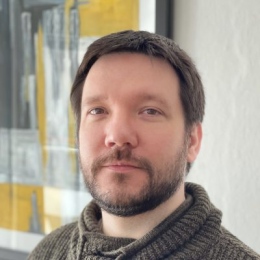
David O'Carroll is a Professor in Sensory Biology at the Department of Biology, Lund University, Faculty of Science. His research centers on visual processing in insect brains, using electrophysiological methods and computational modeling to understand motion detection and attention mechanisms. He is particularly known for his work on dragonflies and hoverflies, revealing complex neural functions once thought unique to mammals. University: Lund University School: Faculty of Science Department: Department of Biology Position: Professor Email: david.ocarroll@biol.lu.se His research explores how insect brains efficiently process visual information despite their small size. Using nanoelectrodes, he investigates neural circuits in the optic lobe, focusing on target detection, motion tracking, and sensory adaptation. His interdisciplinary work bridges neuroscience and engineering, contributing to bio-inspired technologies such as collision avoidance systems and artificial vision chips. Collaborations extend to neural stem cell research for developing bionic interfaces. The most recent articles show a strong focus on temperature-dependent neural tuning, long-term adaptation in visual neurons, photoreceptor sensitivity in wasps, and the neurotoxic effects of pesticides like imidacloprid on pollinators. These studies reflect a dual interest in fundamental neurobiology and ecological implications. David O'Carroll actively supervises graduate students and leads multiple research projects, including dissertations on electrophysiology, optical mapping, and pesticide effects. He has recently participated in the International Conference on Invertebrate Vision and hosted visiting researchers such as Andrew D. Straw. His work contributes to UN Sustainable Development Goals related to life on land and responsible innovation. Modulation of motion-detecting neurons by odors and pesticide exposure (supervision of master’s student) Hosting and collaboration with international researchers Active supervision of PhD candidates on visual physiology and neurotoxicology He is involved in interdisciplinary research teams focusing on sensory biology, neural computation, and pollinator health, with ongoing projects exploring electrophysiological responses, optical mapping across species, and the impact of sublethal pesticide exposure on insect behavior and ecosystem function.