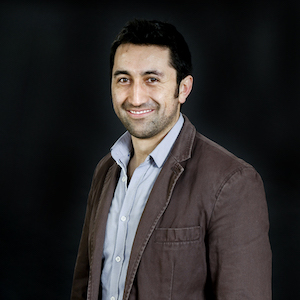
Prof. Dr. Karl Duderstadt is a Professor of Experimental Biophysics at the Technical University of Munich (TUM) and a group leader at the Max Planck Institute of Biochemistry. His research focuses on understanding the dynamic processes of chromosome duplication using single-molecule imaging techniques. He holds a B.A. in Physics from Oberlin College and a Ph.D. in Biophysics from UC Berkeley. Prior to his current roles, he conducted postdoctoral research at the University of Groningen under the Human Frontier Science Program. His academic career includes leadership of the Max Planck Research Group "Structure and Dynamics of Molecular Machines" since 2016. Key research areas include replisome dynamics, DNA replication stress, and the interplay between replication and transcription. He has received prestigious awards, including an ERC Starting Grant (2019) and an HFSP fellowship (2012–2015). Publications highlight advancements in single-molecule technologies, such as the Mars data analysis suite, and discoveries about replication fork protection mechanisms. His work bridges biophysics, structural biology, and molecular genetics, with applications to cellular and epigenetic stability.
Верица Ђорђевић is an Associate Professor at the Department of Chemical Engineering, Technical Metallurgical Faculty (TMF) of the University of Belgrade. She specializes in Pharmaceutical Engineering and Bioprocess Engineering, focusing on encapsulation technologies for bioactive compounds, food processing, and chemical engineering applications. Her teaching responsibilities include courses on process design in biopharmaceutical engineering, pharmaceutical basics, and bioreactor systems. Her research emphasizes the development of innovative encapsulation systems using biopolymers like alginate, chitosan, and soy protein for applications in food science, pharmaceuticals, and biomedical materials. Key areas include polyphenol diffusion, controlled release mechanisms, and the utilization of agricultural and industrial byproducts (e.g., blood waste) for value-added biomaterials. She has contributed to over 15 peer-reviewed articles and conference proceedings since 2010, exploring topics such as lipid nanocarriers, hemoglobin isolation via membrane bioreactors, and electrostatic extrusion techniques. Her work bridges fundamental chemical engineering principles with practical applications in nutraceuticals, drug delivery, and sustainable bioprocessing. Scientific Contributions: 15+ publications in journals like Carbohydrate Polymers and Food & Feed Research . Teaching: Leads courses in bioprocess engineering, pharmaceutical design, and water treatment in pharmaceutical industries. Student Mentorship: Supervised 8+ students on topics ranging from nanofilm encapsulation of vitamins to ultrasonic extraction of glucosinolates. Her research highlights include optimizing encapsulation efficiency for resveratrol, thyme extracts, and green tea polyphenols, as well as advancing sustainable methods for blood-derived biomaterials.
Dr. Saša Ćuković is a Researcher and Group Leader (Functional Spinal Biomechanics) at ETH Zürich's Institute for Biomechanics. He holds a Marie Skłodowska-Curie Individual Fellowship and leads the ScolioSIM project, aiming to develop non-invasive 3D digital diagnosis for spinal disorders. His expertise spans spinal biomechanics, CAD/CAM, VR/AR, and digitalization technologies. Ćuković has received prestigious recognitions, including the Mimics Innovation Award and CATIA Champion status, and is an IEEE Senior Member. Education: Advanced degrees and scholarships at institutions including ETH Zurich, TU Munich, TU Graz, and MedUni Vienna. His work focuses on non-invasive spinal diagnostics and CAD/CAM applications. Research Projects: Current MSCA-funded ScolioSIM project addresses adolescent idiopathic scoliosis through markerless 3D spine modeling, avoiding radiographic exposure. Past grants include Austrian Federal Ministry support and DAAD/OeAD fellowships. Awards: Multiple scholarships and awards, including Materialise's Mimics Innovation Award (1st place), Ernst Mach Grant, and Dassault System's CATIA Champion recognition for promoting CATIA PLM systems.
Dr. Anita Fung is a Researcher at the Institute for Biomechanics, part of the Department of Health Sciences and Technology at ETH Zürich. Her work spans interdisciplinary research in biomechanical engineering and food biotechnology. She is affiliated with the Laboratory for Orthopaedic Technology and contributes to the Professorship for Biomechanics. Her primary research focuses on hip fracture prevention through biomechanical simulations and experimental methods, as well as innovative applications of microalgal proteins in food technology. Key areas include prophylactic implant design, finite element modeling of bone-implant interactions, and structural analysis of sustainable meat analogues. Dr. Fung’s research employs advanced techniques such as high-speed x-ray imaging, ex vivo testing, and computational modeling to evaluate fracture risks and improve medical devices. Her food science work explores protein properties of microalgae for high-moisture extrusion processes, addressing challenges in sustainable food systems. She has collaborated on studies analyzing footwear effects on running injuries and long-term prosthetic bone remodeling. Her publications span topics from ceramic-based femoral augmentation to biomechanical modeling of sideways fall impacts. She actively contributes to interdisciplinary projects, blending clinical biomechanics with food biotechnology to advance medical and sustainable food technologies.
Dr. Sikiru Ismail is a Senior Lecturer in Manufacturing Engineering and Materials at the University of Hertfordshire's School of Physics, Engineering and Computer Science. He holds a PhD from the University of Portsmouth and has extensive academic and industrial experience, including roles as a Postdoctoral Research Fellow and Research Group member. His research focuses on manufacturing processes, sustainable biocomposites, additive manufacturing, and Industry 4.0 applications. He is an active reviewer for journals like Composites Part B and Advances in Mechanical Engineering , and serves as Guest Editor for Applied Sciences . He has authored over 150 publications and secured research grants in areas like composite materials and smart manufacturing. Dr. Ismail's teaching spans undergraduate and postgraduate levels, including modules on manufacturing technology, product design, and project management. He holds prestigious awards such as the Best Student Paper Award and First Place Award during his PhD, and is a Fellow of the Higher Education Academy and Royal Society for the Arts. He is also a Chartered Engineer and member of professional bodies like the Institution of Mechanical Engineers and American Society for Composites. Education: PhD (University of Portsmouth), MSc (University of Lagos), BEng (Federal University of Technology, Akure) Grants/Projects: Includes research on additive manufacturing tooth profiles, 3D-printed cement structures, and magnesium alloy biomedical applications Labs/Teams: Member of Centre for Engineering Research and Outreach Coordinator for Climate Change Research at UoH His research emphasizes experimental and numerical modeling techniques for materials characterization. Recent work includes studies on composite sandwich structures, solar energy systems, and corrosion-resistant nanocomposites.
Hannah Batchelor is a Professor in Pharmaceutics at the Strathclyde Institute of Pharmacy and Biomedical Sciences, University of Strathclyde, Glasgow, Scotland. She is an internationally recognized expert in paediatric drug delivery, with a focus on biopharmaceutics and age-appropriate medicine development. She currently serves as Chair of the Academy of Pharmaceutical Sciences (APS), a role she held from 2022 to 2024, and is actively involved in the National Institute for Health Research (NIHR) clinical research network involving children and young people. Her educational background includes a PhD in Drug Delivery from the University of London (The School of Pharmacy), an MSc in Statistics with Medical Applications from the University of Sheffield, a Postgraduate Certificate in Learning and Teaching from Aston University, and a BSc in Pharmacology and Chemistry from the University of Sheffield. Hannah Batchelor's research centers on improving paediatric medicines through innovative formulation strategies and predictive modeling. Her key interests include paediatric biopharmaceutics, in vitro testing methods to predict in vivo performance, in silico modeling for pharmacokinetic optimization, and assessing drug-food interactions in children. She also focuses on minimizing clinical trial burdens in specialist populations and enhancing medicine acceptability for children. Her work bridges experimental and computational approaches to understand drug absorption mechanics. The recent publications highlight a strong trend in developing advanced paediatric formulations, utilizing biorelevant dissolution testing, and integrating PBPK modeling for bioequivalence assessment. There is a clear emphasis on multiparticulate systems, lipid-based delivery, and simulated intestinal environments to improve solubility and predictability of drug performance in children. Chair of the Academy of Pharmaceutical Sciences (2022–2024) Batchelor leads and collaborates on multiple funded research projects, including those supported by the FDA, Janssen, and Certara. She is Principal Investigator on projects such as 'Revolutionising relative bioavailability testing: Using AI-PAT to Eliminate Animal Models' and 'GiBio Gastrointestinal bioreactor to evaluate ingestible medicines'. She supervises research students and is accepting PhD candidates. Her work involves cross-institute collaborations and active engagement with children and young people in research design and outreach. She is associated with advanced research infrastructure, including the GiBio gastrointestinal bioreactor and Blaze Metrics Probe systems, supporting her work in evaluating ingestible medicines and formulation development.
Fabio A Cruz Sanchez serves as an Assistant Professor at the University of Lorraine, France, where he teaches at the National School in Industrial Systems Engineering and Innovation (ENSGSI) in Nancy. His research is centered at the Lorraine Fab Living Lab Platform, focusing on distributed recycling systems for circular economy implementation through open source tools, social innovation spaces, and holistic sustainability indicators in post-growth scenarios. His research spans circular economy frameworks and sustainable manufacturing practices with emphasis on plastic waste valorization. He pioneers distributed recycling models using open-source hardware for multi-material extrusion and melt flow index systems, while investigating social innovation labs as catalysts for sustainable transitions. His work bridges engineering solutions with community-driven approaches to develop practical recycling infrastructure. Recent publications (2023-2025) reveal consistent focus on European plastic waste management systems, right-to-repair engineering solutions, and additive manufacturing innovations. Key patterns include development of macro-environmental barrier indicators, optimization of recycled polymer blends for 3D printing, and competence-based role assessment in social innovation ecosystems. His research consistently integrates technical recycling processes with social innovation frameworks. He supervises thesis students including Catalina and leads research through projects Climatelabs, INEDIT, and EVEREST-BIO. These initiatives develop open manufacturing demonstrators and local recycling solutions through partnerships with social innovation spaces and open-source communities across European contexts. The Lorraine Fab Living Lab Platform serves as his primary research hub, functioning as an interdisciplinary nexus where academic researchers collaborate with social innovators, makerspaces, and industry partners to prototype circular economy solutions. This living lab environment enables real-world testing of distributed recycling systems and open-source manufacturing technologies for community-scale implementation.
Roland Logé is an Associate Professor at École Polytechnique Fédérale de Lausanne (EPFL), affiliated with the School of Engineering (STI) and the Materials Institute (IMX) . He leads the Laboratory of Thermomechanical Metallurgy (LMTM) and contributes to doctoral programs in Advanced Manufacturing . Education: B.S. in Materials Engineering (1994), Université Catholique de Louvain (Belgium) M.S. in Mechanics (1995), University of California, Santa Barbara (USA) Ph.D. in Metal Forming (1999), Mines Paristech-CEMEF (France) Research Interests focus on microstructure design in metallic alloys , thermo-mechanical processing , and additive manufacturing . His work bridges experimental characterization and numerical modeling to optimize properties in stainless steels , magnesium alloys , nickel superalloys , and bulk metallic glasses . Scientific Awards 2022: Albert Portevin Medal , French Metallurgy and Materials Society (SF2M) 2021: THERMEC Distinguished Award 2008: Alcan Prize , French Academy of Sciences Advising includes mentoring 20+ PhD students in areas like selective laser melting , grain refinement , and phase transformations . His grants involve collaborations with CERN and industrial partners in nuclear and aerospace sectors.
Oana Ghita is a Professor of Materials Science and Manufacturing at the University of Exeter, Faculty of Environment, Science and Economy. She holds the Victrex/Royal Academy of Engineering Research Chair in Large-Scale Process Development of PAEK-based Materials for Sustainable, Durable Renewable Energy Applications. She serves as Research Lead for Exeter Engineering 2030 and Co-director of the Exeter Technology Group (ETG), which includes Exeter Advanced Technologies (X-AT), Centre for Additive Layer Manufacturing (CALM), and Centre for Alternative Materials and Remanufacturing (CALMARE). She is the academic lead for CALM, focusing on advanced manufacturing and sustainable materials. Her research is centered on high-performance polymers and composites, particularly polyaryletherketones (PAEK) such as PEEK and PEI, and their processing via conventional and emerging techniques like Additive Manufacturing (AM). Her expertise spans Large Format AM, Powder Bed Fusion (PBF), and Material Extrusion (MEX), with a strong emphasis on understanding the relationship between molecular structure, processing, and final material properties. She leads a portfolio of major industrial and publicly funded projects. Oana Ghita’s research projects reflect a strong integration of materials science, manufacturing innovation, and sustainability. Her work involves developing novel polymeric materials and composites for aerospace, biomedical, and energy applications, often in collaboration with industrial partners like Victrex, Sartorius-Stedim, and the Manufacturing Technology Centre. She also pioneers in-line monitoring technologies using near-IR and Raman spectroscopy to reduce waste and improve process efficiency. Scientific Awards: Fellow of the Institute of Materials, Minerals and Mining (FIMMM) EPSRC Early Career Forum in Manufacturing Research (2012) She has secured over £10 million in research funding from EPSRC, Innovate UK, EU, and industrial partnerships. Her grants include major projects such as the Victrex industrial partnerships, Innovate UK’s OVERHIPP and F4 PAEK, KTPs with Sartorius-Stedim and Finisterre, and EPSRC’s Novel High Performance Polymeric Composites for AM. She acts as a reviewer and technical expert for EPSRC and the European Commission, demonstrating national and international recognition. Oana leads the Centre for Additive Layer Manufacturing (CALM) and leverages Exeter’s unique capabilities in high-temperature AM systems, including the RapidFusion LFAM, EOS P800/P810, 3DGENCE F340, MiniFactory Ultra, Intamsys, and in-house developed high-temperature MEX systems. The DEMEX-integrated LFAM system is the only one of its kind in the UK, enabling large-scale printing with high-performance polymers.
Eleonora Ferraris serves as a Senior Lecturer and Department Head of Manufacturing Processes and Systems (MaPS) at KU Leuven's Faculty of Industrial Engineering Sciences. She is affiliated with the Department of Mechanical Engineering at Campus De Nayer in Sint-Katelijne-Waver and holds leadership positions as subdivision head of Subdivision 4. Ferraris is an active member of Leuven.AM – KU Leuven Institute for Additive Manufacturing and participates in institutional governance through the Faculty Council of Industrial Engineering Sciences and Departmental Council of Mechanical Engineering. Her research focuses on cutting-edge applications of additive manufacturing, particularly in bioelectronics and tissue engineering. Ferraris specializes in Aerosol Jet Printing technology, exploring its potential for creating bioelectrical interfaces, neural devices, and in vitro platforms. Her work spans multi-material printing, 3D bioprinting of soft tissues, and development of advanced manufacturing techniques for medical applications including nerve regeneration and personalized treatments. She investigates thermal properties of printed materials, optimization of printing processes, and development of novel biomaterials and conductive inks. Analysis of her recent publications reveals a strong emphasis on the intersection of additive manufacturing with biomedical applications. Her work demonstrates increasing sophistication in multi-material printing techniques, particularly for creating functional biological interfaces. A significant portion of her research focuses on Aerosol Jet Printing applications in bioelectronics, neural engineering, and tissue scaffolds. She also investigates fundamental aspects of material behavior during printing processes, including thermal history, multi-scale analyses, and post-processing techniques to enhance printed part performance. FWO Sabbatical Grant (Reference K801525N) Ferraris leads numerous research projects including 'Experimental validation of bond quality in extrusion 3D printing and multi-scale modeling' (2025-2029), '3DNeuroBips: New 3D neural biomimetic interfaces using printing technology' (2024-2029), and 'Development and study of 3D-printed bio-electrical conductors for nerve regeneration' (2023-2028). Her current sabbatical focuses on '3D Printing for Bioelectronics Interfaces and In Vitro Devices' (March-August 2025) at Nanyang Technological University's 3D printing hub in Singapore. She also serves as co-promoter on projects related to electrospinning, multi-phase flow mechanisms in Aerosol Jet printing, and data-driven adaptive 3D printing techniques. As head of Manufacturing Processes and Systems (MaPS) at Campus De Nayer, Ferraris leads a research group focused on advanced manufacturing technologies. Her team works extensively with Aerosol Jet Printing technology, exploring applications from printed electronics to bioelectrical scaffolds for neural tissue engineering. The group collaborates with Leuven.AM – KU Leuven Institute for Additive Manufacturing, providing expertise in multi-material printing, bioprinting, and development of novel manufacturing processes for medical applications. Their facilities include equipment for material extrusion, Aerosol Jet printing, and characterization of printed structures at multiple scales.
Benay Gürsoy Toykoç is an Assistant Professor in the Department of Architecture at the Stuckeman School, Pennsylvania State University. Her work bridges computational design, digital fabrication, and sustainable material innovation, particularly through the use of mycelium-based bio-composites. She is actively involved in interdisciplinary research addressing climate-responsive and equitable built environments. Research Interests: Her research spans computational making, digital fabrication, craft theory, shape studies, and cognitive aspects of the design process. A key focus is on developing sustainable architectural materials using fungal mycelium, including 3D printing, structural performance, acoustic properties, and environmental impact. She also explores generative design systems such as Truchet tile grammars and formal descriptions of material manipulations. Recent Research Trends: Her recent publications show a strong trajectory in sustainable and robotic fabrication of fungal biomaterials, with increasing emphasis on structural integrity, acoustic performance, and scalable manufacturing. The integration of robotics, material science, and architectural design is central to her work, as seen in projects like MycoCreate 2.0 and robotic EAM processes. Scientific Awards and Recognition: SOM Foundation Research Prize (Interdisciplinary Team) Materials Research Institute Seed Grant Funding from Manufacturing PA Innovation Program Promotion to tenure-line (effective July 1, 2025) Advising and Grants: She mentors graduate students in architecture and materials research, guiding them in advanced topics such as biocomposite development, robotic fabrication, and generative design. Her work is supported by institutional and external grants focused on sustainable construction and interdisciplinary innovation. Labs and Teams: She is affiliated with the Stuckeman School’s design research labs and contributes to the IEE Research Themes on Climate and Natural Systems and Equitable Communities. Her collaborative projects involve researchers across engineering, materials science, and architecture.
Giovanna Colucci is a Fixed-term Assistant Professor at the Department of Applied Science and Technology (DISAT) of Politecnico di Torino. She is a member of the Interdepartmental Center IAM@PoliTo - Integrated Additive Manufacturing and focuses on materials science and technology, particularly in additive manufacturing and polymer composites. Her research aligns with SDG Goal 12 (Responsible consumption and production). Research Interests : Additive manufacturing, Biopolymers, Polymer composites, Polymers and plastics, Green materials, Materials characterization Her work emphasizes sustainable material development, including bio-based photopolymers, lignin-based composites, and eco-friendly manufacturing techniques. Publications highlight interdisciplinary applications in automotive, environmental engineering, and energy storage. Scientific Awards : Effective member of Associazione Italiana Macromolecole (2007-2013) Colucci supervises PhD students Federica Di Stefano and Francesca Sacchi in projects related to innovative photopolymerizable formulations. She participates in teaching roles across mechanical engineering, chemical engineering, and sustainable design programs.
Tim Kowalewski is an Associate Professor in the Department of Mechanical Engineering at the University of Minnesota. His research focuses on integrating robotics, biomedical engineering, and surgical training technologies. Academic Affiliation: University of Minnesota Primary Appointment: Mechanical Engineering Research Interests: Dr. Kowalewski leads research in four major areas: Smart Surgical Tools: Development of instrumented tools for quantitative surgical techniques. Surgical Robotics: Creation of custom robots for procedural automation and sensor stream analysis. Surgical Simulation: Collaboration with CREST to advance VR and tissue-based surgical training. Surgical Genome Project: Partnership with University of Washington to build an open database of surgical procedures. Publication Trends: His recent work emphasizes soft robotics fabrication, surgical skill quantification, and medical simulation innovations. Key themes include dynamic manufacturing, tissue mechanics, and crowd-sourced evaluation systems. Scientific Awards: NSF CAREER Award (2019) NSF EFRI C3 SoRo Grant (2018)
Boris Eisenbart is a Professor of Product Design Engineering at Swinburne University of Technology, jointly appointed between the School of Design and Architecture and the School of Engineering. He serves as the Course Coordinator for the Product Design Engineering Program and is actively engaged in research, teaching, and academic service. His research focuses on engineering design , innovation management , and composite manufacturing , with emphasis on digital modeling, process optimization, and interdisciplinary collaboration. His work spans fields such as Resin Transfer Moulding, finite element simulation, AI in manufacturing, and sustainable product development. Recent publications highlight a strong trend in data-driven modeling , Industry 4.0 , and composite process optimization , often integrating machine learning and simulation techniques to improve manufacturing efficiency and quality. His research also extends to futuristic domains like lunar metallurgy and smart product prototyping. Boris has served on the Programme Committee of the International Conference on Engineering Design (ICED) and is a member of the Editorial Board of the Journal of Engineering Design . Supervision: He is actively supervising numerous PhD students in areas including AI in engineering change, composite automation, digital twins, and sustainable design. Grants: He has led multiple research projects funded by government bodies (e.g., Department of Education Victoria, CSIRO) and industry partners (e.g., Ford, FIA, FALCON UAV), covering topics such as hydrogen storage, lightweight composites, and drone-based bird scarers. Labs and Teams: He leads research through the Swin Composite Sync 4.0 (SCS4) data acquisition system, enabling Industry 4.0 advancements in composite manufacturing. His work integrates digital twins, simulation, and real-time monitoring for process optimization.
Per Erik Vullum is an Associate Professor at the Norwegian University of Science and Technology (NTNU), based at Realfagbygget, D4-106, Gløshaugen campus (Høgskoleringen 5). His research spans materials science with emphasis on lithium-ion battery systems, electron microscopy characterization, and welding of dissimilar metals. Contact details: per.vullum@ntnu.no, +4773593486, +4793016522. Primary research interests include: Battery materials (silicon anodes, layered oxide cathodes, solid electrolytes) Intermetallic phase formation in aluminum-copper/steel welds Advanced microscopy techniques (TEM, STEM, in situ characterization) Industrial catalysis for energy and chemical processes Additive manufacturing of high-strength alloys Analysis of his 15 most recent publications reveals dominant focus on battery technology (8 articles, 53%), particularly silicon anode degradation and cathode cracking mechanisms. Secondary themes include dissimilar metal joining (4 articles, 27%) and electron microscopy (2 articles, 13%), with one catalysis study. Collaborative work with SINTEF and industry partners is evident through co-authors on welding and subsea cable projects. Scientific awards: No awards mentioned in the source text Advising and grants: The provided text does not reference any PhD/Master's students, grants, or funding sources. His collaborative publications suggest team-based research but omit specific grant details. Labs and teams: Vullum operates within NTNU's materials research ecosystem, likely connected to electron microscopy facilities given his TEM-focused publications. His SINTEF blog contribution indicates active collaboration with Norway's applied research sector, particularly in subsea cable and battery projects.