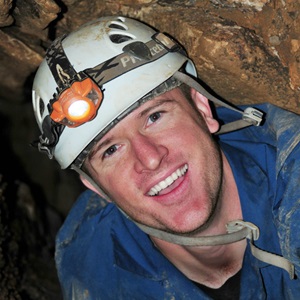
Grant Harley is an Associate Professor in the Department of Earth and Spatial Sciences at the University of Idaho, College of Science. His research focuses on dendrochronology, paleoclimatology, and climate change impacts on ecosystems. He leads the Idaho Tree-Ring Lab, which uses tree rings to reconstruct historical climate patterns and study ecological processes. Education: Ph.D., Geography, University of Tennessee (2012); M.A., Geography, University of South Florida (2007); B.A., Geography, University of South Florida (2005). Research interests include paleoclimatology, wildfire dynamics, drought impacts, and karst environments. He advises graduate students exploring topics like climate reconstruction, dendroglaciology, and critical dendrochronology. The lab emphasizes ethical research practices and inclusivity, hosting initiatives like Tree-Ring Spring to engage marginalized groups in geosciences. Lab activities include fieldwork, sample preparation (band saws, microtomes), and advanced analysis tools like WinDENDRO. Collaborations focus on reconstructing historical climate and ecological changes, such as tropical cyclone activity and streamflow variability.
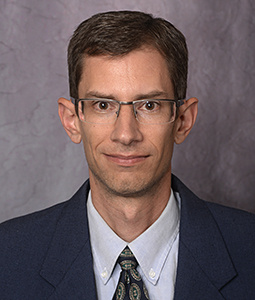
Gregory S. Bohr is an Associate Professor in the Department of Geography at California Polytechnic State University. His research focuses on synoptic climatology, global change, and extreme weather events, particularly analyzing trends in extreme temperatures and relationships between U.S. extreme weather and large-scale patterns like the Pacific Decadal Oscillation (PDO) and El-Niño/Southern Oscillation (ENSO). Education: B.A., Geography, University of California, Berkeley (1993) M.A., Geography, San Diego State University (1998) Ph.D., Geography, Louisiana State University (2005) His research interests emphasize understanding climate variability and its societal impacts. He teaches courses such as Global Climatology and GIS applications, reflecting his expertise in both theoretical and applied geography.
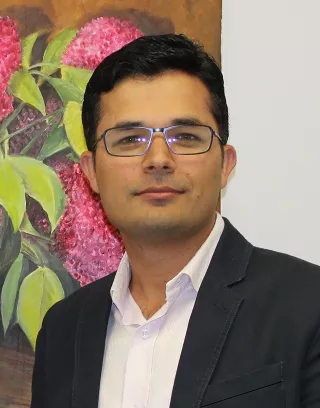
Associate Professor at the Technical University of Crete in the Division of Environmental Hydraulics & Coastal and Geoenvironmental Engineering. Holds a Ph.D. and M.Sc. in Environmental Engineering from the Technical University of Crete. Research focuses on hydrological processes and climate interactions. Education: PhD in Environmental Engineering (2010) MSc in Environmental Engineering (2005) Diploma in Mineral Resources Engineering (2002) Research interests include water cycle dynamics, hydroclimatic extremes, and integrated water resources management. Specializes in developing predictive models for climate impact assessment and water resource sustainability under changing environmental conditions. Recent publications demonstrate consistent focus on climate-hydrology interactions, drought assessment, and global water modeling. Research primarily advances understanding of hydrological extremes and climate change impacts on water systems. Participates in multiple international research programs including REACT4MED (agro-ecosystem restoration), STREAM (reservoir management), and climate impact attribution projects. Teaches undergraduate courses in Hydraulics and Hydraulic Structures Design.
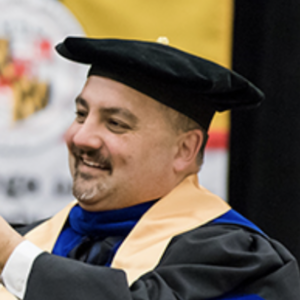
Cameron C. Lee is an Associate Professor in the Department of Geography at Kent State University. His research focuses on climate science, applied climatology, and synoptic climatology, with a particular emphasis on understanding climate change impacts through synoptic methods. He has led projects funded by NOAA and NASA, including studies on extreme temperature events, atmospheric circulation, and coastal sea-level variability. Lee is also the Managing Editor of the International Journal of Biometeorology . Education: Ph.D. (2014), M.A. (2010), and B.S. (2003) in Geography (Climate Science) and Radio & Television, all from Kent State University. Research interests include synoptic climatology, extreme weather analysis, and the application of machine learning in climate modeling. He has published extensively on topics such as air mass dynamics, temperature-related mortality, and water clarity in the Great Lakes. Recent presentations include discussions on weather whiplash trends and global precipitation patterns at conferences like the American Geophysical Union and American Association of Geographers. Teaching focuses on Physical Geography, Global Climate Change, and Applied Climatology courses. Lee directs the ClimRISE Laboratory, which investigates climate-related environmental challenges.
Gretta Pecl is a Professor of Marine Ecology at the Institute for Marine and Antarctic Studies (IMAS) and Director of the Centre for Marine Socioecology at the University of Tasmania. She serves as Deputy Associate Dean Research and is Editor in Chief for Reviews in Fish Biology & Fisheries. Her work focuses on climate change impacts on marine ecosystems and developing adaptation strategies for conservation, fisheries, and aquaculture across Australia and internationally. Dr. Pecl earned her PhD from James Cook University in 2001. Her educational background in marine ecology has provided the foundation for her extensive research on climate-driven species redistribution and marine socioecology, leading to her recognition as an international expert in these fields. Gretta Pecl's research centers on understanding how climate change affects marine ecosystems, particularly through species redistribution. She investigates the ecological and social implications of these changes, developing adaptation strategies for fisheries and conservation. Her work spans marine ecology, climate science, social science, and policy, with a strong emphasis on interdisciplinary approaches. She has pioneered research on 'species on the move' due to climate change, examining how shifting distributions impact ecosystems and human communities that depend on them. Her research integrates citizen science, policy development, and community engagement to create practical solutions for climate adaptation. Analysis of Pecl's recent publications reveals a strong focus on climate-driven species redistribution, marine governance in changing oceans, and community engagement with climate change. Her work increasingly integrates social and ecological perspectives, examining how human communities perceive and adapt to changing marine environments. There's a notable emphasis on practical applications of research, with many publications addressing policy implications and adaptation strategies for fisheries and coastal communities. Her research demonstrates how citizen science data can be leveraged to understand large-scale ecological changes, and how governance systems must evolve to keep pace with rapidly changing marine environments. Fulbright Fellow Member of the Order of Australia (AM) Australian Research Council Future Fellow Eureka Prize for Innovation in Citizen Science Lead Author for the IPCC AR6 report Professor Pecl has supervised numerous doctoral students focusing on climate adaptation, marine governance, and socioecological systems. Her research is supported by significant funding from organizations including the Australian Research Council, Fisheries Research & Development Corporation, and the Ian Potter Foundation. Current major projects include Sea Change Australia, Future Seas 2030, and the Centre for Marine Socioecology, which collectively represent millions of dollars in research funding aimed at addressing climate impacts on marine systems. Pecl leads several major initiatives including the Centre for Marine Socioecology, Redmap Australia (a national citizen science project), Future Seas 2030, and Sea Change Australia. These programs bring together researchers, industry partners, government agencies, and community members to address climate change impacts on marine systems through interdisciplinary collaboration. She also co-leads international efforts through the UN Decade of Ocean Science, demonstrating her global leadership in marine climate adaptation research.
David Hitchcock is a Professor of Statistics at the University of South Carolina, serving as Director of the Graduate Program in the Department of Statistics within the McCausland College of Arts and Sciences. He earned his B.S. from the University of Georgia, M.S. from Clemson University, and Ph.D. from the University of Florida. His research focuses on functional data analysis, cluster analysis, and environmental applications, including spatio-temporal modeling of precipitation, medical skill assessment, and wildfire data analysis. Education: Bachelor’s Degree: University of Georgia Master’s Degree: Clemson University (Mathematical Sciences) Ph.D.: University of Florida (Statistics) Research Interests: Hitchcock’s work spans functional data analysis, cluster analysis, and environmental statistics. Recent projects include: Simultaneous registration and clustering of functional data in medical skill evaluation. Spatio-temporal models for flood dynamics and precipitation patterns. Applications in loggerhead turtle population estimation and mass spectrometry. Collaborations: He collaborates with researchers like John Grego (flooding data), Ian Dryden (proteomics), and S.Z. Samadi (environmental engineering). His team has developed influential methods in functional regression and influential curve detection. Teaching: Hitchcock teaches advanced statistics courses such as Bayesian Data Analysis, Multivariate Statistics, and Time Series Forecasting. Recent courses include STAT 542 (Computing for Data Science) and STAT 530 (Applied Multivariate Analysis). Student Advising: Guided PhD students in topics like functional clustering, stock price prediction, and music genre analysis. Notable advisees include Zizhen Wu (functional registration), Shan Zhong (deep learning ensembles), and Aimée Petitbon (multinomial time series).
Dr. Nieves Valiente is a Lecturer in Marine Science (Coastal Processes) at the University of Plymouth's School of Biological and Marine Sciences. Her research focuses on coastal dynamics, hazards, and sediment transport, with a current project (SPLASH) developing AI-based forecasting for wave overtopping using Earth Observation data. Previously, she worked at the UK Met Office on air-sea boundary layer dynamics and contributed to WAVEWATCH III model development. Education: B.Sc. in Physical Oceanography (University of Vigo, Spain), M.Sc. in Integrated Coastal Zone Management (University of Cantabria, Spain), Ph.D. in Coastal Processes (University of Plymouth, UK). Her doctoral work studied storm impacts on beach recovery using numerical modeling and field measurements. Teaching: Module leader for MAR515 (Managing Coastal Environments), OS105 (Mapping the Marine Environment), and OS312 (Marine Science Field Course). She also teaches OS202 (Monitoring the Marine Environment). Research Interests: Coastal processes, AI applications in coastal science, climate change impacts on coastlines, sediment transport modeling, and operational wave forecasting systems. Her work integrates field data, numerical simulations, and machine learning to address coastal hazards and resilience. Advising: Supervised Mariona Casamayor (PhD, 2022, University of Las Palmas). Labs/Teams: Active member of the Coastal Processes Research Group, contributing to monitoring programs, field deployments, and numerical modeling initiatives.
Dr. Laura Kelly is a Lecturer in Microbiology at Manchester Metropolitan University, specializing in geomicrobiology and microbial ecology. Her research explores microbial communities in extreme environments, including volcanic systems and acid mine drainage sites. She has extensive experience as a journal editor for Pedobiologia and serves as a peer reviewer for multiple microbiology journals. Research Interests: Dr. Kelly investigates mineral-microbe interactions, extremophile adaptations, and microbial responses to environmental stressors. Her fieldwork includes volcanic sites in Iceland and subterranean mines in Wales, employing molecular and culture-based methods to study microbial diversity and function. Publications: Her recent articles focus on microbial community dynamics in geologically distinct habitats, with recurring themes in mineral weathering, extremophile ecology, and astrobiological applications. Research demonstrates consistent interdisciplinary approaches combining microbiology, geochemistry, and molecular biology. Awards & Honors: Marie Curie Intra-European Fellow (2015-2017) Marie Skłodowska-Curie Intra European Fellow (2015-2017) Professional Engagement: Dr. Kelly serves on editorial boards, conducts consultancy for educational institutions, and volunteers for science outreach programs like Lab in a Lorry to promote microbiology education in schools.
Nirmalya Kumar is a Full-time Professor of Marketing at the Lee Kong Chian School of Business, Singapore Management University (SMU), holding the Lee Kong Chian Chair. He has held academic roles at leading institutions including London Business School, IMD, and Harvard Business School. His research focuses on marketing strategy, emerging markets, corporate governance, and branding. He has advised global firms on business strategies and authored influential books like Brand Breakout and India Inside . Education: PhD in Marketing (Northwestern University, 1991), MBA (University of Illinois, 1986), and degrees from Indian universities. His awards include Thinkers50 Hall of Fame induction (2017), Mahajan Award for lifetime contributions (2021), and top rankings in case authorship and management thinking. Research emphasizes global business dynamics, with articles on countercyclical marketing, diaspora marketing, and brand strategy. He has published over 100 cases and articles, focusing on corporate governance, luxury brands, and emerging market multinationals. Notable works include studies on Amazon-Walmart competition, Zara’s fast-fashion model, and Red Bull’s unconventional branding. He has received grants exceeding $250,000 for research and has been recognized for teaching excellence at multiple institutions. His work bridges academic rigor and real-world business challenges, influencing global management practices.
Dr. Kazi Rahman is an Associate Professor at Bond University's Faculty of Health Sciences & Medicine, specializing in epidemiology and population health. He holds an MBBS from the University of Dhaka (1998), a Master in Epidemiology from Harvard University (2004), and a PhD in Epidemiology and Population Health from the Australian National University (2015). His research focuses on applied epidemiology, with emphasis on vector-borne diseases (e.g., dengue), environmental health challenges (natural disasters, climate change), and One Health interdisciplinary approaches. He actively explores social determinants of health through mixed methods and implementation science to translate research into practice. Education: MBBS, Medicine and Surgery, University of Dhaka (1998) Master in Epidemiology, Harvard University (2004) PhD in Epidemiology and Population Health, Australian National University (2015) Research interests include: Infectious diseases (COVID-19, vector-borne diseases) Environmental health impacts of disasters (flooding, bushfires) Climate change and health system resilience One Health framework for cross-sectoral health solutions His recent publications analyze climate change impacts in NSW, dengue outbreak patterns in Bangladesh, and biomarker evaluation for COVID-19 outcomes. He chairs the North Coast NSW Human Research Ethics Committee and supervises postgraduate research projects. No scientific awards are explicitly listed in the provided texts. Advising: Accepting PhD students in his research areas. Grants and collaborations involve applied health interventions in both developed and developing countries. Active in research ethics governance and interdisciplinary health initiatives.
Jeffrey B. Halverson is a Professor in the Department of Geography & Environmental Systems at the University of Maryland, Baltimore County (UMBC), within the College of Arts, Humanities, and Social Sciences. He holds a Ph.D. from the University of Virginia (1995). His research focuses on severe storms, Mid-Atlantic meteorology and climatology, hurricane intensity change, and tropical cyclones. He has conducted NASA-funded research on hurricanes and severe storms, including the Hurricanes and Severe Storms Sentinel project and the Genesis and Rapid Intensification Processes (GRIP) experiment. Halverson has authored numerous publications on topics such as hurricane Sandy, Derecho events, and tropical cyclone rainfall patterns. He is preparing a textbook titled *Severe Storms And Their Environmental Impacts*. His outreach efforts include roles as a severe storms expert for The Washington Post’s Capital Weather Gang and as an associate editor for Weatherwise Magazine. He teaches courses on physical geography, natural hazards, climate change, and earth system science. Key Research Projects: NASA GRIP experiment, Saharan Air Layer studies, Mid-Atlantic winter storm analysis Education: Ph.D., University of Virginia (1995) Labs/Teams: Involved with NASA field experiments and UMBC's Geography & Environmental Systems research groups.
Dr. Siraj Ul Islam is an Assistant Professor in the Department of Geography, Earth, and Environmental Sciences at the University of Northern British Columbia. His research focuses on hydroclimatology, examining climate dynamics, snow hydrology, and environmental modeling across northern British Columbia. Dr. Islam utilizes numerical models and field data collection to analyze climate impacts on hydrological systems. His primary research interests include: Climate change variability and forecasting Hydrological modeling in complex terrains Data analysis techniques for environmental systems Machine learning applications in hydroclimatology Regional climate impacts on indigenous territories Dr. Islam's publications demonstrate consistent focus on climate-hydrology interactions, with recent work emphasizing machine learning integration and regional climate impacts. His research employs advanced modeling techniques including hybrid coupled models and IoT-based field monitoring. He currently advises graduate students in the MSc NRES program, specializing in Environmental Science and Geography research projects.
Liming Zhou is a Professor in the Department of Atmospheric & Environmental Sciences at the University at Albany, State University of New York. His expertise spans physical geography and meteorology, with a focus on interdisciplinary research in land-human-climate interactions. He utilizes remote sensing, weather, and climate data to investigate how land surface changes affect climate and hydrology across diurnal, seasonal, and decadal time scales. His educational background includes: PhD in Geography from Boston University (2002) MSc in Meteorology from Nanjing Institute of Meteorology, China (1994) BSc in Meteorology from Nanjing Institute of Meteorology, China (1991) Professor Zhou's research centers on land-atmosphere interface processes, combining satellite observations, GIS data, and Earth system modeling. Key contributions include discoveries of warming-enhanced greening in northern latitudes, drought-induced vegetation browning in the Congo rainforests, turbine-induced nighttime warming over U.S. wind farms, and urbanization-driven climate effects in China. His methodologies integrate time series analysis, statistical techniques, and regional climate models like WRF to examine desert amplification, diurnal temperature asymmetries, and vegetation-climate feedbacks. Analysis of his recent publications (2022-2025) reveals concentrated research on regional climate dynamics in Africa (Congo Basin, Sahara), Asia (China, India), and the Americas. His work demonstrates consistent emphasis on land use impacts—urbanization, deforestation, wind farms—on temperature, precipitation, and vegetation patterns, while leveraging satellite data and climate models to address model deficiencies and improve predictive capabilities. Scientific awards: No specific awards were documented in the provided materials. Advising and grants: While his profile indicates active research leadership, no student names or grant details were explicitly referenced in the source text. Labs and teams: No specific laboratory facilities or research teams were identified in the available documentation.
Angela Candela is an Associate Professor of Engineering at the University of Palermo, specializing in Hydraulic Engineering within the Department of Civil, Environmental and Materials Engineering (DICAM). She holds regular office hours on Mondays and Thursdays from 11:00 to 13:00 at the DICAM Hydraulic Section on the 2nd floor. Her academic journey began with honors in Civil Engineering with a focus on Hydraulics from the University of Palermo in 1998, followed by a PhD in Hydraulic Engineering from a consortium program involving the Universities of Naples, Palermo, and Rome "La Sapienza" in 2002, where she was a visiting scientist at the University of Lancaster in 2000-2001 collaborating with Professor Keith Beven's research group. Dr. Candela's research primarily focuses on hydrological modeling and flood risk management , with specific interests in: Assessment and mitigation of hydraulic risk Mapping of hydraulic risk Analysis of model uncertainty Study of hydrological response in natural basins Frequency analysis of flood discharges Surface water quality assessment Her work combines theoretical modeling with practical applications to address water management challenges, particularly in Mediterranean environments, resulting in approximately 60 national and international scientific publications. Analysis of Dr. Candela's recent publication trends reveals a strong evolution from theoretical hydrological modeling toward practical urban flood management solutions. Her research increasingly incorporates advanced statistical methods like copula-based bivariate analysis, with growing emphasis on sustainable urban drainage solutions, microplastic pollution detection, cost-benefit analysis of flood mitigation measures, and integration of climate change considerations into hydrological modeling - particularly relevant to the Sicilian context. Dr. Candela has directed and participated in numerous significant research initiatives: Scientific Director of Research Project funded by Research Fund (FFR) 2012/13 "Definition of flood scenarios through innovative methodologies for hydrometric monitoring" Participant in COST Action ES0901 - EUROPEAN PROCEDURES FOR FLOOD FREQUENCY ESTIMATION (FLOODFREQ) – 2009-2013 Participant in regional projects "HYDROENERGY" and "SESAMO Integrated information system" – 2011-2013 Participant in MIUR-funded project "MITO - Multimedia Information for Territorial Objects" – 2013-2015 She has supervised numerous undergraduate, graduate, and doctoral theses while teaching the Land Hydraulic Protection course, serving as a reviewer for several ISI journals in hydrology and land management fields. Dr. Candela maintains an active research profile with continued publication output through 2024, demonstrating sustained engagement with evolving challenges in water resources management and flood risk assessment in Mediterranean environments.
Dr. Nadarajah Ramesh is an Associate Professor of Statistics at the University of Greenwich's School of Computing and Mathematical Sciences. With a background including Imperial College London and University of Oxford, his research focuses on stochastic modelling for environmental applications. His primary research develops stochastic point process models for rainfall prediction and analysis, with additional applications in health informatics. He collaborates with Imperial College London researchers on climate modelling and extreme weather analysis. Recent publications demonstrate innovations in rainfall modelling techniques and healthcare system analysis. He teaches statistics, probability, actuarial mathematics, and programming courses.