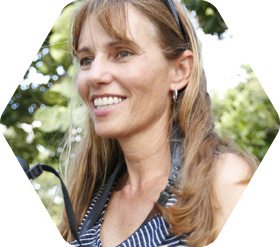
Martin-Hugues St-Laurent is a Professor in the Department of Biology, Chemistry and Geography at the University of Quebec in Rimouski (UQAR), where he directs a research program in animal ecology focused on terrestrial wildlife management and conservation. He is also a regular member of the Centre d'études Nordiques (CEN). His research primarily investigates the impacts of habitat alteration on large mammals including woodland caribou, Gaspésie caribou, gray wolf, moose, and black bear. Using spatial ecology, behavior studies, population dynamics, and landscape ecology as his main tools, Dr. St-Laurent examines how both natural disturbances (forest fires, climate change) and anthropogenic activities (logging, road development, industrial projects) affect wildlife-habitat relationships and predator-prey interactions. His recent publications reveal a strong focus on caribou conservation, particularly examining how climate change interacts with human disturbances to shape caribou behavior across climate gradients. His work also extends to understanding temporal variations in moose responses to logging and roads, seasonal habitat selection by American martens, and the cumulative impacts of land conversion on wolf habitat connectivity. Cercle d'excellence de l'Université du Québec (2024) Prix d'excellence de la relève de l'Université du Québec in Natural Sciences category (2018) Dr. St-Laurent actively supervises numerous graduate students at both master's and doctoral levels, with recent graduates focusing on topics such as caribou responses to predation risk, moose browsing pressure, and functional connectivity for wildlife conservation. His laboratory, the Terrestrial Wildlife Management Laboratory, serves as a hub for research on boreal wildlife conservation, with particular emphasis on mitigating the cumulative impacts of anthropogenic development on endangered species.
Claus Beier is a Professor at the Department of Geosciences and Natural Resource Management within the Faculty of Science at the University of Copenhagen. His research concentrates on ecosystem responses to air pollution and climate change, with particular focus on impacts on ecosystem functioning and feedback to the atmosphere. He has extensive experience using ecosystem manipulation approaches to understand these complex interactions. His primary research interests include biogeochemical cycling in terrestrial ecosystems, ecosystem functioning, climate change impacts on ecosystems, extreme events, and experimental design. Beier has made significant contributions to understanding how terrestrial ecosystems respond to multiple stressors including elevated CO 2 , drought, and warming through long-term experimental studies. Beier's research has evolved to focus increasingly on extreme climate events and their impacts on ecosystem functioning. His work often involves large-scale collaborative efforts, most notably through the VILLUM foundation Centre of Excellence CLIMAITE, where the University of Copenhagen, DTU, and AU collaborated to investigate multifactor climate change impacts on shrubland ecosystems. VILLUM foundation Centre of Excellence CLIMAITE Center for Skov og LAndskab (Chair since 2015) Geocenter Danmark (Member 2015-2020) COST action - ClimMani (Chair 2014-2018) His publication record demonstrates a strong focus on climate change impacts across multiple ecosystem types, with recent work examining tree mortality in California forests using advanced remote sensing and deep learning techniques, drought impacts on grasslands and shrublands, and nutrient cycling responses to multifactor climate change.
Professor Bingunath Ingirige holds a Chair in Urban Resilience and Adaptation at the Centre for Disaster Resilience (CDR), School of Science, Engineering and Environment (SSEE), University of Salford. With extensive experience in climate change research and disaster risk management, his work spans multiple international projects focusing on flood adaptation, urban resilience, and community-based climate strategies. He collaborates with stakeholders across public and private sectors to develop practical solutions for climate vulnerability challenges, particularly in Sri Lanka, Bangladesh, and the UK. Professor Ingirige's educational background includes: BSc (Hons) in Civil Engineering from University of Moratuwa (1991-1994) MBA (Management of Technology) from Asian Institute of Technology, Thailand (1997-1999) PhD from University of Salford (2000-2004) PG Cert in Higher Education Practice and Research from University of Salford (2004-2005) His research focuses on climate change adaptation with particular emphasis on urban resilience and economic models of climate change. He investigates how future climate change projections impact economic sectors and livelihoods, especially in vulnerable communities. His work examines resilience measures within community settings involving small businesses, public and private sectors, and NGOs. He studies collaborative engagement processes to develop effective flood adaptation strategies and business continuity plans in the face of climate variability and change. Professor Ingirige's approach integrates technical, social, and economic dimensions to create holistic resilience frameworks. An analysis of his recent publications reveals a strong focus on climate change adaptation, flood management, and resilience building across multiple geographical contexts. His work spans theoretical economic modeling of climate impacts, practical flood risk management strategies, and community-based approaches to disaster resilience. There's a clear pattern of international collaboration, particularly with institutions in Sri Lanka, Bangladesh, and Malaysia. His research often employs mixed-method approaches, combining quantitative analysis with participatory techniques to understand the socio-economic dimensions of climate change impacts and develop context-specific adaptation strategies. Professor Ingirige's professional recognition includes: Member of the Royal Institution of Chartered Surveyors (MRICS) Fellow of the Higher Education Academy (FHEA) Editorial Board Member of Buildings (MDPI) Editorial Board Member of Real Estate Journal Professor Ingirige has led and contributed to numerous significant research projects including UKRI/GCRF funded TRANSCEND project (2019-2023), EU Horizon 2020 funded EU-CIRCLE project (2015-2018), and EPSRC funded Community Resilience to Extreme Weather (CREW) project (2008-2011). He has served as external examiner for universities including Birmingham City University, Western Sydney University, and UCLAN, and provided consultancy for organizations like the British Council. His work has secured funding from diverse sources including UKRI, EU, RICS Research Trust, and Royal Academy of Engineering. He has also co-organized workshops and established international collaborations, including Memorandums of Understanding between University of Salford and Sabaragamuwa University of Sri Lanka. Professor Ingirige works within the Centre for Disaster Resilience (CDR) at the University of Salford, which operates under the Built and Human Environments research center. His collaborative network extends internationally with strong partnerships at University of Moratuwa in Sri Lanka and Bangladesh Agricultural University. His interdisciplinary teams span engineering, environmental science, social sciences, and policy analysis to address complex climate resilience challenges through integrated approaches that consider both technical and social dimensions of adaptation.
Mariyana Zapryanova is an Assistant Professor of Economics at Smith College, specializing in law and economics with a focus on criminal justice system analysis. She holds affiliations with the Stone Center for Research on Wealth Inequality and Mobility and the Human Capital and Economic Opportunity Working Group, while also participating in the Inequality: Measurement, Interpretation, and Policy (MIP) network. Her educational background includes a B.A. in economics and mathematics from Lake Forest College, followed by M.A. and Ph.D. degrees in Economics from the University of Wisconsin-Madison (2015). Zapryanova's research centers on prisoner reentry dynamics and disparities within the criminal justice system. Her scholarly work examines how factors like prison composition, parole conditions, ambient light, temperature variations, and racial demographics of parole boards influence recidivism rates and judicial decisions. Notable studies investigate the impact of 9/11 on Muslim inmates' parole outcomes, Medicaid enrollment effects on recidivism, and temperature's influence on judicial rulings in India. Analysis of her recent publications reveals consistent focus on empirical analysis of criminal justice policies, with particular attention to racial disparities, environmental factors affecting legal outcomes, and healthcare access for formerly incarcerated individuals. Her work bridges economics, criminology, and public policy through rigorous quantitative methods. At Smith College, Professor Zapryanova teaches introductory microeconomics, statistics and econometrics, public economics, and a specialized seminar on the economics of crime, directly connecting her teaching to her research expertise.
Miguel Bastos Araújo is a Professor at the Department of Environmental Sciences and Policy, School of Science and Technology, University of Évora, Portugal. His research investigates how biotic and abiotic mechanisms influence biodiversity under past, current, and future climate changes, with a focus on developing conservation strategies through international collaboration in biogeography, conservation biology, and macroecology. His work spans biodiversity forecasting under global change, integrating species distribution modeling, macroecological analyses, and policy frameworks. Key interests include thermal niche dynamics, ecological network structures, and climate-driven reorganization of trophic systems, with emphasis on translating research into actionable conservation planning for terrestrial and marine ecosystems. Recent publications reveal strong thematic cohesion around climate-biodiversity linkages, featuring advanced modeling of protected area expansion through rewilding, species interaction networks, thermal constraints on distributions, extreme weather impacts, and subsurface marine heatwaves. These studies employ large-scale data synthesis to forecast biodiversity responses across multiple spatial and temporal scales. No scientific awards were mentioned in the provided text. Dr. Araújo actively mentors graduate researchers through ongoing PhD positions in species abundances modeling and biodiversity risk assessments, plus postdoctoral roles in marine protected area planning. His work receives funding from initiatives like the GLOBE project, which pioneers integrative biodiversity assessment frameworks and supports international collaborative networks. He leads a research laboratory focused on forecasting biodiversity under climate change, operating within an international consortium of scientists. The lab engages in science-policy interfaces through media contributions (e.g., Expresso, PROTeste) addressing Portugal's biodiversity strategy implementation and European conservation targets.
Dr. Dan Fu is an Assistant Professor at Texas A&M University, specializing in atmospheric dynamics and numerical modeling at the weather-climate interface. His research focuses on extreme weather events such as tropical cyclones, heatwaves, and droughts, with an emphasis on improving seasonal-to-decadal predictions using high-resolution climate models (e.g., CESM, WRF) and machine learning approaches. He holds a Ph.D. in Physical Oceanography from Texas A&M University (2018) and a B.S. in Atmospheric Sciences from Ocean University of China (2013). Research Interests: Dr. Fu investigates how climate variability and anthropogenic change influence extreme events. His work employs advanced modeling techniques to uncover causal mechanisms, bridging short-term weather forecasts with long-term climate projections. Key areas include tropical cyclone dynamics, hydrological extremes, and AI-driven climate analysis. His lab actively develops convection-permitting simulations (~4km resolution) and machine learning workflows to enhance predictive accuracy. Scientific Contributions: His articles highlight advancements in high-resolution climate modeling, tropical cyclone projections, and the role of ocean-atmosphere interactions in extreme events. Recent projects address the impacts of climate change on wind/solar energy systems and coastal flooding risks. Advising & Recruitment: Prof. Fu seeks graduate students (start 2025) to explore extreme event dynamics, climate model applications, and AI integration. Students collaborate on projects involving global (~25km) and regional (~4km) simulations, machine learning frameworks, and climate change adaptation strategies.
Robert P. Guralnick is a Professor and Curator of Biodiversity Informatics at the Florida Museum of Natural History, University of Florida. He holds affiliations with the museum’s Department of Natural History and UF Biology. His roles include advancing ecological and evolutionary research through digital tools and data integration. He has been awarded the AAAS Fellow distinction in 2023 and two University of Florida Research Foundation (UFRF) Professorships (2020-2023 and 2021-2024 terms). He earned his Ph.D. in Integrative Biology from the University of California, Berkeley in 1999. His research focuses on spatiotemporal diversity patterns, climate change impacts, ecological modeling, and biodiversity conservation. He develops tools like the Map of Life app and Notes from Nature , enabling global biodiversity tracking and citizen science participation. His work spans molecular phylogenetics, landscape genetics, and phenological studies, often leveraging natural history collections and AI. Guralnick’s research interests include understanding how urbanization and climate change disrupt species distributions and ecological processes. He emphasizes interdisciplinary collaboration, having contributed to projects such as ButterflyNet and ZooArchNet , and led a $2.25 million grant to study dragonfly evolution. His lab prioritizes open data and accessibility, aiming to bridge gaps between scientific monitoring and conservation action. Scientific Awards: AAAS Fellow (2023), UFRF Professorships (2020-2023, 2021-2024). Grants & Leadership: Over $7 million in grants, including NSF and UFRF projects. Collaborates across museum divisions and international teams. As an advisor, he mentors students in applied biodiversity informatics and ecological modeling, though specific student names are not listed. His lab’s ethos promotes inclusivity, with projects addressing data quality, trait analysis, and global biodiversity challenges. He also collaborates with artists, such as Naziha Mestaoui, to visualize scientific concepts like the Tree of Life. Labs/Teams: Guralnick Lab, Florida Museum Informatics Team, contributors to international platforms like Map of Life and ZooArchNet .
John Nicol is a researcher at the University of Reading , affiliated with the meteorological community through extensive collaborative publications. Key projects include FRANC (forecasting rainfall), WIVERN (satellite meteorology), DIAMET (cyclone dynamics), and hydrometeorological studies in France. His research spans convective storm dynamics , precipitation modeling , and radar-based atmospheric analysis . Recent work focuses on data assimilation, triple-wavelength radar techniques, and fractal geometry in snowflakes. He has contributed to improving rainfall forecasts and understanding storm morphology via high-resolution NWP simulations. Publications highlight expertise in meteorological radar , cloud physics , and flash-flood mechanisms . No specific awards or student advisements are mentioned in the provided text. Affiliation with the University of Reading is inferred from repository entries and collaborative projects like CSIP and DYMECS.
Dr. Robert Lee is a Research Fellow in the Department of Meteorology at the University of Reading, affiliated with the National Centre for Atmospheric Science. His primary role is as a Post-Doctoral Research Associate (PDRA) in Stratospheric Dynamics and Predictability. He holds a PhD in Meteorology from the University of Reading (2015), focusing on storm track biases and climate change. Lee’s research interests include teleconnections, synoptic meteorology, climate dynamics, and subseasonal prediction systems, with a focus on stratospheric-tropospheric coupling and model biases. His work spans weather regime analysis, MJO teleconnections, and the impact of climate models on forecasting accuracy. Lee has contributed to high-impact studies, including evaluating AI vs. physics-based models for weather prediction (2024) and analyzing temperature-related mortality linked to weather regimes in the UK (2020). He is an IPCC AR5 Chapter 12 Contributing Author and collaborates with the Dynamical Processes Research Group. Lee’s recent publications emphasize subseasonal predictability, stratospheric dynamics, and renewable energy-climate interactions. His research bridges theoretical meteorology and practical forecasting, addressing biases in climate models and their implications for public health and energy systems.
Dr. Annette Rinke is a Senior Scientist at the Alfred Wegener Institute, Helmholtz Centre for Polar and Marine Research (AWI). Her research focuses on regional climate modeling over the Arctic, Antarctic, and Tibetan Plateau, with particular emphasis on atmosphere-cryosphere interactions and Arctic atmospheric processes . She is actively involved in the MOSAiC Expedition , a year-long drift with Arctic sea ice to study climate dynamics. Her work integrates observational data and computational models to understand feedback mechanisms in polar regions. Key Research Contributions: Climate modeling of polar regions Impact of atmospheric rivers and cyclones on Arctic precipitation and sea ice Thermal regimes of snow and sea ice Interactions between clouds, radiation, and surface conditions Recent Projects: Analysis of MOSAiC expedition data on sea ice and atmospheric processes Development of high-resolution regional climate models (e.g., PolarRES, Arctic CORDEX) Assessment of climate change impacts on reindeer herding communities Labs/Teams: Dr. Rinke collaborates with the Atmospheric Physics group at AWI and contributes to international initiatives like ACLOUD/PASCAL and SynopSys . Her work bridges climate science, cryosphere dynamics, and societal adaptation strategies.
Phoebe Edwards is an Assistant Professor at Iowa State University's Department of Ecology and Evolutionary Biology. Her research focuses on understanding how environmental and social conditions shape animal life-history traits, particularly in small mammals like voles, mice, and eusocial naked mole-rats. She integrates population ecology, animal behavior, endocrinology, and epigenetics to study phenotypic plasticity and its population-level consequences. Edwards holds a B.A. in Evolutionary Biology from Case Western Reserve University (2013) and a Ph.D. in Ecology and Evolutionary Biology from the University of Toronto (2019). Her work emphasizes interdisciplinary approaches, combining field studies with lab-based molecular techniques. The Population Ecophysiology Lab she leads at Iowa State University investigates stress physiology, social behavior, and population dynamics in wild mammal populations. Her research trends span stress-axis modulation in response to environmental challenges, hormonal mechanisms driving social behavior in eusocial species, and conservation physiology of endangered mammals. Articles highlight innovative methods like viral vectors in mole-rats and non-invasive stress assessments in primates. She has contributed to special issues on hormones and social hierarchies, emphasizing evolutionary and ecological applications. Edwards’ lab collaborates with conservation groups and wildlife agencies, focusing on species like black-footed ferrets and little brown bats. While no formal awards are listed, her work reflects impactful contributions to understanding ecological and evolutionary processes in mammalian systems.
Dr. Pengfei Xue is a Professor in the Department of Civil, Environmental, and Geospatial Engineering at Michigan Technological University (MTU), and serves as Associate Director of the Great Lakes Research Center (GLRC). He directs the Numerical Geophysical Fluid Dynamics Laboratory at GLRC and holds a joint appointment as a Geophysical Scientist at Argonne National Laboratory. His research focuses on developing integrated regional Earth system models (IRESMs) to study Great Lakes and coastal ocean dynamics, including atmospheric, hydrological, and biological processes. He has expertise in data assimilation, machine learning, and coupled atmosphere-ocean-wave modeling, with applications to offshore wind energy and climate resilience. Education: PhD, Intercampus Marine Science Graduate Program, University of Massachusetts BS in Mathematics and Applied Mathematics, East China Normal University Research Interests: Hydrodynamic modeling of Great Lakes and coastal systems Regional climate modeling and land-atmosphere interactions Coupled ocean-atmosphere dynamics and extreme event analysis Machine learning applications in environmental forecasting Lake ice, sediment transport, and water quality modeling His work is supported by NOAA, DOE, NASA, and other agencies. Recent projects include advancing coupled models for offshore wind assessments and simulating future climate impacts on Great Lakes ecosystems. Teaching interests include geophysical fluid dynamics and hydrodynamic modeling.
Elizabeth Forys is a Professor of Environmental Science & Biology at Eckerd College, located in St. Petersburg, Florida. Her research focuses on spatial ecology and endangered species conservation, particularly seabirds and shorebirds. She collaborates with students and citizen scientists to advance biodiversity preservation. Key projects include the Black Skimmer Banding Program and studies on Least Terns, Ospreys, and Brown Pelicans. Forys teaches courses in Conservation Biology, GIS, Field Ornithology, and Environmental Biology. Education: Ph.D. in Wildlife Ecology and Conservation (University of Florida), M.S. in Environmental Science/Ecology (University of Virginia), B.A. in Environmental Science (University of Virginia). Research Interests: Applied conservation strategies, spatial ecology methodologies, urban wildlife adaptation, and citizen science integration. Current projects explore Black Skimmer migration patterns, Fish Crow predation mitigation, and osprey nest success in urban areas. Advising and Mentorship: Supervises students like Tyler Cribbs ('16), emphasizing hands-on fieldwork and collaborative research. Her lab engages in multidisciplinary approaches to ecological challenges. Labs/Teams: Coordinates Forys’ Lab (Eckerd College), focusing on coastal bird conservation and environmental monitoring. Active in regional conservation networks and educational outreach programs.
Dr. Alexandre Koberle is an Honorary Senior Research Fellow at Imperial College Business School, specializing in climate finance and sustainable development. He leads the Natural Capital research workstream at the Centre for Climate Finance (CCFI) and has contributed to major global climate assessments, including the IPCC's 6th Assessment Report and UNEP's Global Environment Outlook. His research focuses on long-term socio-environmental scenarios, nexus approaches, and transformative systems analysis to address climate change, biodiversity loss, and sustainable development. Education: DSc in Energy Planning (Federal University of Rio de Janeiro), MSc in Environment and Resource Management (Vrije Universiteit Amsterdam), BSc in Plant Biology and Ecology (UC Davis). Key Projects: Principal Investigator of the FiNaClim-SD project (NERC/Finance for Biodiversity), Brazil Study for the Food Systems Economics Commission (FSEC), and the FlowCCA initiative examining low-carbon investment barriers. He leads the implementation of agricultural and land-use sectors in the TIAM-Grantham model. Risk and Transition Analysis: Authored CCFI reports on transition risks for Indian coal firms, extreme weather impacts on agriculture, and nature-based solutions for climate-resilient agriculture. His work bridges climate science, policy, and finance to identify opportunities and risks in global sustainability transitions. Awards and Roles: Lead Author (GEO6/AR6), Co-Investigator in Horizon 2020 projects (PARIS REINFORCE, NAVIGATE), and visiting scholar at the Potsdam Institute for Climate Impact Research (PIK). Active in international collaborations like CD-LINKS and COMMIT. Labs/Teams: Affiliated with the Grantham Institute, Earth Observation Network, and the Marine and Coastal Environments group at Imperial College. Engaged with international networks such as IIASA and PBL Netherlands Environmental Assessment Agency.
Yonas Dibike is an Adjunct Professor in the Department of Civil Engineering at McMaster University . His research focuses on climate change impacts on hydrology, river ice dynamics, and water quality modeling in cold regions. University: McMaster University Department: Civil Engineering Rank: Adjunct Professor Research Interests : Climate change hydrology River ice breakup prediction Statistical downscaling of climate models Sediment and chemical transport Cold-region hydrological modeling Water resource vulnerability Recent Article Trends show: 15 most recent publications focus on climate change impacts on streamflow, ice dynamics, and water quality in Canadian rivers Applications of machine learning in ice breakup prediction Development of national river water quality modeling systems Analysis of permafrost thaw effects on hydrology Hydrological response to global warming scenarios Comparative studies on climate and land cover change impacts Scholarly Activity : Over 4000 Mendeley readers Referenced in multiple policy documents Featured in news and academic discussions