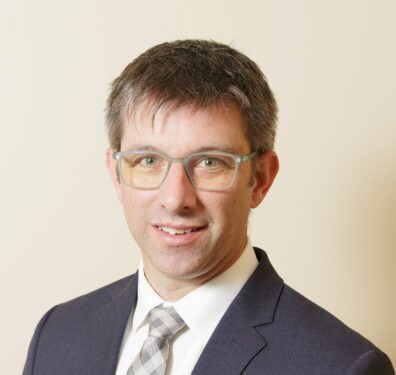
Matti Isakov is a Staff Scientist at the Faculty of Engineering and Natural Sciences, Tampere University. He holds a Doctor of Science (Technology) in Materials Technology (Rock Engineering) from Tampere (2012) and a Master of Science in the same field (2008). His research focuses on material behavior under extreme conditions, including strain rate effects on phase transformations in steels, composite delamination, and dynamic material testing using advanced techniques like X-ray diffraction and Hopkinson bar testing. He has collaborated on projects such as the PerforMat initiative and contributed to datasets on material characterization. Isakov has reviewed for journals including Journal of Dynamic Behavior of Materials and presented work on material testing methodologies. His work bridges fundamental material science with practical applications in manufacturing and geomechanics.
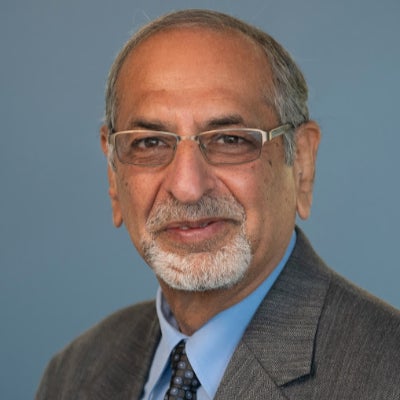
Veli-Tapani Kuokkala is a Professor in Materials Science and Environmental Engineering with a Doctor of Science (Technology) in Mechanical Engineering (1984). His research focuses on dynamic material behavior, strain rate effects, wear-resistant materials, and fracture mechanics. Key areas include high-strain-rate plasticity of metals, dynamic strain aging in steels, and mechanical behavior of granitic rocks under extreme conditions. Over 369 research outputs since 1981, with notable contributions to DYMAT conferences and journals like Materials Science and Engineering A . Recipient of the 2017 Rakenteiden Mekaniikka Annual Article Award. Active in organizing conferences (e.g., 2nd International Conference on Impact Loading of Structures and Materials) and peer-review roles (e.g., Reviewer for Wear Journal). Research emphasizes practical applications of material science in engineering contexts, bridging academic and industrial challenges through advanced testing methodologies.
Gian Paolo Cimellaro is a Full Professor in the Department of Structural, Building and Geotechnical Engineering (DISEG) at the Polytechnic University of Turin, Italy. He is a leading researcher in disaster resilience, structural health monitoring, and seismic engineering, with extensive contributions to infrastructure interdependencies and urban resilience. He is affiliated with the SISCON Interdepartmental Center for Safety of Infrastructures and Constructions and leads the Disaster Resilience Simulation Laboratory. Research Interests: Disaster and Seismic Resilience Structural Health Monitoring (SHM) Earthquake Engineering and Structural Control Infrastructure and Network Interdependencies Smart Cities and Resilience Technologies Machine Learning Applications in Civil Engineering His recent publications focus on probabilistic resilience frameworks, Bayesian network modeling, infrastructure interdependencies, and post-disaster recovery, with applications to hospitals, transportation networks, and urban water systems. He has pioneered tools like the PEOPLES resilience framework and software such as ParkAdvisor and OpenSignal for urban resilience and damage assessment. Scientific Awards: Seed Grant Award, Siebel Energy Institute (2015) for work on power network vulnerability He has supervised numerous PhD students and secured significant research funding from EU programs including ERC (IDEal reSCUE, IDEAL SENSOR, IDEAL DRONE) and MSCA projects (FOURIER, ReCharged). His research integrates experimental work, computational modeling, and real-world applications to improve the safety and sustainability of civil infrastructure. Laboratories and Research Groups: Disaster Resilience Simulation Laboratory (DISEG) Research on structural control, SHM, and smart sensor networks Development of software platforms: EDAM, OpenSignal, ParkAdvisor
Sebastiano Foti is a Full Professor of Geotechnical Engineering at the Polytechnic University of Turin, where he also serves as Vice-Rector for Teaching and Head of the Department of Structural, Building and Geotechnical Engineering (DISEG). He is a member of the Academic Senate and the University Committee for Research, Technology Transfer, and Services to the Territory, and contributes to the SISCON Interdepartmental Center for Infrastructure Safety. His academic and administrative leadership underscores his central role in Italian civil engineering education and research. Research Interests: Geotechnical earthquake engineering and seismic risk assessment Soil-structure interaction and dynamic behavior of bridges Surface wave methods for seismic site characterization Hydrogen and energy storage in geological formations Soil liquefaction and foundation scour His recent publications emphasize advancements in non-invasive geophysical methods, particularly surface wave analysis, with strong applications in seismic hazard mitigation and infrastructure resilience. The research spans theoretical modeling, experimental validation, and practical implementation in urban and environmental planning. Scientific Awards: Bishop Medal 2003, British Institution of Civil Engineers Honorable Mention, Best Paper in GEOPHYSICS, SEG (2011) 2018 Outstanding Paper Award, Earthquake Spectra (EERI) Foti actively supervises PhD students and leads major research initiatives, including PNRR-funded projects such as DREAM and RETURN, focusing on resilient infrastructure and multi-risk science. He has also led commercial and public-sector collaborations with entities like ANDRA, Unicredit, and the Italian Civil Protection Department, demonstrating strong industry and policy engagement. His advisory role extends to national and international institutions, including service as a Visiting Professor at Nagoya University. Laboratories and Research Teams: He leads research within DISEG, particularly in geotechnical earthquake engineering, and collaborates with interdisciplinary teams on projects involving seismic safety, energy storage, and sustainable urban development.
Kwek-Tze Tan is an Associate Professor in the Mechanical Engineering Department at the University of Akron , specializing in composite materials and metamaterials. He joined the university in 2014 after working at the Institute of Materials Research and Engineering in Singapore. Education : B.Eng. (2004), M.Eng. (2006) from National University of Singapore; Ph.D. (2011) from Tokyo Metropolitan University; Post-Doc (2013) at Purdue University. Research Focus : Impact and fracture mechanics of composites, acoustic/elastic metamaterials, bioinspired materials, 3D printing, and Arctic temperature effects. Grants : Recipient of 2 multi-year U.S. Office of Naval Research (ONR) grants for Arctic condition composite studies. Labs : Leads research at the Metacomposites Lab (website: metacomposites.uakron.edu ). Scientific Awards include UA Faculty Research Committee Fellowship (2019), Firestone Fellowship (2018), LaunchTown Entrepreneurship Award (2016), JSPS Fellowship (2016), ICA-ASA Young Scientist Grant (2013), and Metamaterials Congress Travel Grant (2012).
Jason Halloran is a Research Associate Professor at the Institute for Shock Physics, Washington State University, where he is affiliated with the Applied Sciences Laboratory (ASL) and the Dynamic Compression Sector (DCS). He holds a Ph.D. in Engineering from the University of Denver and has extensive experience in computational biomechanics, particularly in orthopedic applications and multiscale tissue mechanics. His research focuses on computational modeling of knee mechanics—natural, diseased, and implanted—with applications in preclinical device testing and patient-specific analysis. He has also contributed significantly to the integration of musculoskeletal dynamics with finite element analysis for understanding joint and tissue behavior. The trends in his publications indicate a strong emphasis on multiscale biomechanical modeling, particularly in cartilage and ligament mechanics, using advanced computational tools. His work bridges engineering and clinical applications, aiming to improve orthopedic device design and personalized treatment strategies. Scientific Awards: No scientific awards mentioned in the text. Dr. Halloran has advised research teams and led biomechanics projects, including federally funded work and industry consulting at the Cleveland Clinic. He transitioned from an Assistant Professor role at Cleveland State University to his current position in 2019, demonstrating a continued trajectory in research leadership. While no specific grants are listed, his work has involved federal funding and collaborative industry partnerships. He is part of the research team at the Applied Sciences Laboratory, contributing to high-pressure and dynamic compression research initiatives at Washington State University, particularly in areas intersecting with biological response under extreme conditions.
Ibuki Kusano is an Associate Professor in the Department of Industrial Engineering at IQS School of Engineering, Universitat Ramon Llull. His research is centered on structural and aerodynamic optimization of civil infrastructure, particularly long-span bridges, with a strong emphasis on probabilistic and reliability-based design methodologies. His research interests include: Probabilistic Optimisation of Structures Aerodynamics of Suspension Bridges Optimisation Based on Surrogate Models Co-Kriging Computational Fluid Dynamics (CFD) Reliability-Based Design Optimization His recent publications demonstrate a consistent focus on integrating advanced computational techniques—such as machine learning, surrogate modeling, and CFD—with structural engineering to improve the safety, efficiency, and performance of bridge systems. The research trends highlight a shift toward data-driven and probabilistic frameworks for predicting wind-induced responses, flutter stability, and energy generation in offshore wind farms. His scientific contributions have been supported by research grants from AGAUR (Agència de Gestió d'Ajuts Universitaris i de Recerca) through the GEPI research group. He is actively involved in interdisciplinary projects such as offshore wind farm data analysis using machine learning for energy prediction. While no formal awards are listed, his h-index of 7 and 325 citations reflect a solid research impact. Kusano contributes to academic training through the Master’s and Bachelor’s programs in Industrial Engineering at IQS, and his work is conducted within the GEPI – Industrial Products Engineering Group, which focuses on additive manufacturing, reverse engineering, and material characterization.
Dr. Salvatore Filippone is a Lecturer in Software Engineering for Technical Computing at Cranfield University, specializing in high-performance computing, sparse matrix algorithms, and GPU acceleration. He holds an MSc in Computer Engineering and a PhD in Mathematics from the University of Rome "Tor Vergata" and previously worked as a lead developer at IBM for the ESSL scientific software suite. Education: MSc in Computer Engineering (University of Rome "Tor Vergata"), PhD in Mathematics (University of Rome "Tor Vergata") His research focuses on scalable numerical algorithms, parallel computing environments, and applications in fluid dynamics, electromagnetism, and optimization. Dr. Filippone leads the "Software Engineering for Technical Computing" option in Cranfield's MSc in Computational Software Techniques for Engineering. He contributes to software frameworks like PSCToolkit and BootCMatch for exascale and extreme-scale computing. Recent publications emphasize adaptive Algebraic Multigrid (AMG) methods, GPU-accelerated sparse matrix operations, and parallel preconditioners. Key collaborations include researchers at Stanford University, University of Rome "Tor Vergata", and various EU-funded projects. Dr. Filippone serves as an associate editor for ACM Transactions on Mathematical Software and actively reviews EU-funded project proposals. His work bridges theoretical advancements in numerical algorithms with practical engineering applications, particularly in computational fluid dynamics and GPU-based scientific computing.
Arun Shukla is the Simon Ostrach Professor in the Department of Mechanical, Industrial and Systems Engineering at the University of Rhode Island. He leads the Dynamic Photomechanics Laboratory (DPML), conducting cutting-edge research in experimental mechanics, underwater structural response, and blast mitigation. Dr. Shukla received his B.S. from the Indian Institute of Technology, Kanpur in 1976, followed by an M.S. in 1978 and Ph.D. in 1981 from the University of Maryland. His research focuses on experimental and theoretical mechanics, particularly in underwater structural response, blast mitigation, fracture mechanics, and composite materials. Dr. Shukla's work spans optical methods, nano materials, impact mechanics, and elasticity. His laboratory investigates shock tube loading under extreme temperatures, underwater implosion and explosion phenomena, wave propagation, and electro-mechanical characterization of materials. This research has significant applications in naval architecture, defense technology, and underwater vehicle design. Analysis of Dr. Shukla's recent publications reveals a strong focus on underwater implosion phenomena, composite material response to extreme loading conditions, and energy dissipation mechanisms. His work increasingly integrates computational modeling and machine learning approaches with experimental validation, particularly in characterizing material behavior under dynamic loading conditions. The research shows progression from fundamental material characterization to complex system-level investigations of underwater structures. Dr. Shukla has secured numerous research grants, primarily from the Office of Naval Research and the Naval Undersea Warfare Center, focusing on underwater vehicle technology, composite material response, and implosion mitigation strategies. Dr. Shukla has mentored numerous graduate students, with recent master's theses focusing on implosion mitigation, underwater blast response, and composite material behavior. His laboratory collaborates extensively with researchers at the University of Connecticut and industry partners through the National Institute for Undersea Vehicle Technology. The Dynamic Photomechanics Laboratory maintains specialized facilities including an Optics and Laser Research Laboratory and a Dynamic Material Testing Laboratory for investigating various dynamic phenomena associated with materials. The lab is part of the National Institute for Undersea Vehicle Technology, a collaborative initiative between URI, UConn, and General Dynamics Electric Boat.
Dr. Ravindar Rajendran is a Post Doctoral Research Fellow Level I at the School of Civil Engineering, University College Dublin. He holds a PhD and MTech from the Indian Institute of Technology Madras and a BTech from the University of Pondicherry, India. His work focuses on coastal engineering, particularly the interaction between breaking waves and vertical seawalls with recurved parapets. BTech, University of Pondicherry, India MTech, Indian Institute of Technology Madras PhD, Indian Institute of Technology Madras His research interests lie in coastal structures , hydrodynamics , numerical modeling (OpenFOAM) , fluid-structure interaction , and scale effects in wave experiments . He investigates the mechanics of wave impact, pressure distribution, and force reduction through recurved parapets, combining large-scale physical experiments with high-fidelity numerical simulations. His work contributes to improving the design and retrofitting of coastal defenses against overtopping and structural loading. The recent publications (2019–2023) show a consistent focus on breaking wave impacts , scaling methods (Froude vs. Cuomo) , air entrapment effects , and geometric optimization of parapets . The studies often involve validation against large-scale experimental data from facilities like ForschungsZentrum Küste (FZK), Germany, and utilize advanced tools such as tactile pressure sensors and CFD solvers. The research spans both physical and numerical modeling, highlighting a multidisciplinary approach to coastal protection engineering. No scientific awards or honors are mentioned in the provided text. There is no information available about Dr. Rajendran’s advisory roles or grant funding. However, his extensive collaboration with researchers such as Sriram V, Schimmels S, Christou A, and Stagonas D indicates active participation in international research projects. His publications in journals like Coastal Engineering Proceedings , International Journal of Offshore and Polar Engineering , and Journal of Waterway, Port, Coastal and Ocean Engineering reflect strong engagement with the coastal engineering community. While no specific lab or research group name is mentioned, Dr. Rajendran is affiliated with the School of Civil Engineering at University College Dublin, where he conducts research on wave-structure interactions. His work appears to be part of a larger effort in coastal resilience and infrastructure protection, likely involving partnerships with European research centers such as FZK. The use of OpenFOAM and waves2Foam suggests involvement in computational fluid dynamics (CFD)-based research groups or collaborations focused on high-performance simulation of environmental flows.
Dr. Samar Raffoul is a Research Fellow at the School of Architecture, Planning and Environmental Policy at University College Dublin (UCD), where she holds a prestigious Marie Skłodowska-Curie Postdoctoral Fellowship. She is actively involved in the Modern Methods of Construction Research Group (MMCRG) and the Centre for Critical Infrastructure Research (CCIR), focusing on innovative and sustainable structural solutions. Her educational background includes a BSc in Civil Engineering from the University of Balamand (2011), an MSc in Structural Engineering from the University of Manchester (2012), and a PhD from the University of Sheffield (2018), where her research explored the use of waste tyre components in FRP-confined concrete. Dr. Raffoul's research interests span modern methods of construction, structural robustness, composite design, constitutive modelling, and sustainable material development. She is particularly passionate about reducing environmental impact through the reuse of recycled materials such as rubber from end-of-life tyres, and optimizing structural systems for greater sustainability and resilience. Her recent publications reveal a strong focus on material behavior under extreme conditions, including fire and accidental loading, as well as computational modeling for industrial processes. Key themes include embodied carbon in construction, cyclic behavior of rubberized concrete, post-fire performance of metal structures, and composite cold-formed steel-timber systems. She employs both experimental and numerical methods to advance structural design practices. Her scientific recognition includes the Marie Skłodowska-Curie Fellowship. Funded projects include the Horizon 2020 'Concatenation' project on modular construction robustness, the FP7 'Anagennisi' project on tyre reuse in concrete, and a UK KTP project on cold-formed steel systems. Dr. Raffoul has advised on industrial design solutions through roles at Fusion Building Systems and Evolusion Innovation. She is a member of the Associate Fellowship of the Higher Education Academy, reflecting her engagement in academic development. While no formal students are listed, her work supports knowledge transfer to industry and broader engineering communities. She is affiliated with key research groups: the Modern Methods of Construction Research Group (MMCRG) and the Centre for Critical Infrastructure Research (CCIR) at UCD, contributing to interdisciplinary efforts in resilient and sustainable infrastructure.
Janusz Torzewski is an Adjunct Professor at the Military University of Technology's Department of Mechanical Engineering. His research focuses on materials science, mechanical engineering, fatigue analysis, and additive manufacturing. He has supervised 11 promoted theses and contributed to over 75 publications, including studies on advanced welding techniques, composite materials, and structural integrity assessment. Key areas of expertise include Friction Stir Welding (FSW), material microstructure analysis, and the mechanical properties of aluminum alloys and stainless steels. His work emphasizes eco-friendly materials and innovative manufacturing processes, such as cement-glass composites with recycled polymers. Dr. Torzewski's research integrates experimental methods with computational analysis to evaluate material behavior under cyclic loading, corrosion environments, and extreme conditions. He has conducted extensive studies on fatigue crack growth, surface treatments like shot peening, and the effects of post-weld treatments. His contributions to additive manufacturing include analyses of 3D-printed polymers and metal components for aerospace and structural applications. With an h-index of 15 (Scopus/WoS), his work has been widely cited in the fields of materials engineering and mechanical systems. Research Highlights: Development of Al 2 O 3 -Ni composites via centrifugal slip casting Underwater friction stir welding of high-strength aluminum alloys Low-cycle fatigue analysis of 316L steel components Environmental applications of cement-glass composites Recent Projects: 1 completed project on structural integrity assessment of welded joints. His work bridges theoretical analysis and practical engineering solutions, addressing challenges in material durability, energy efficiency, and sustainable manufacturing.
Michael Meindlhumer holds the Chair of Materials Physics. His research focuses on advanced materials characterization techniques, particularly X-ray diffraction and micromechanical testing, to study thin films, nanocomposites, and structural materials. He investigates thermomechanical fatigue, crack arrest mechanisms in ceramics, and the mechanical behavior of nanocrystalline alloys. Collaborations with institutions like the ESRF synchrotron highlight his work in high-resolution material analysis. Key areas include fracture mechanics at micro/nano scales, phase transformations in coatings, and additive manufacturing of high-performance materials. His contributions address challenges in material durability, interface engineering, and stress/strain analysis under extreme conditions.
Dr. Xiaojun Chen serves as a Researcher at the University of New South Wales within the School of Civil and Environmental Engineering. Holding a PhD from UNSW (2015), Master of Information Technology (UNSW, 2016), and Bachelor of Engineering from Tongji University (2008), his academic foundation spans computational engineering and applied mathematics. Education: PhD, University of New South Wales, 2015 Master of Information Technology, University of New South Wales, 2016 Bachelor of Engineering, Tongji University, 2008 His research focuses on computational mechanics with emphasis on structural safety, fracture analysis, and uncertainty quantification. Key areas include virtual modeling techniques for dynamic structural response, machine learning applications in material behavior prediction, and sparse optimization methods. His work bridges civil engineering with advanced computational mathematics, particularly addressing nonlinear dynamics in composite materials and infrastructure systems. Analysis of his recent publications reveals strong trends in virtual modeling integration with phase-field methods for fracture mechanics and machine learning-aided uncertainty quantification. His work increasingly combines stochastic analysis with material-geometric randomness, demonstrating interdisciplinary innovation at the intersection of civil engineering and computational science. While no scientific awards are publicly documented in the provided materials, his extensive publication record in high-impact journals like Computer Methods in Applied Mechanics and Engineering and Mathematical Programming reflects significant scholarly contributions. Dr. Chen maintains active research collaborations within UNSW's Civil Engineering Building (H20, Level 6, Room CE616), focusing on computational frameworks for structural safety assessment under extreme loading conditions including fire, impact, and fatigue scenarios.
Samuel Draycott is a Senior Lecturer in Civil Engineering and Management at the University of Edinburgh. His research focuses on ocean engineering, wave energy systems, hydrodynamics, and numerical modeling. He leads projects on wave-energy converter (WEC) mooring systems, tidal turbine dynamics, and extreme wave phenomena. Draycott has contributed to the Supergen ORE Impact Hub and TIGER projects, exploring renewable energy integration and tidal stream technologies. His work aligns with UN SDG goals related to clean energy and climate action. Research interests include mooring system design for WECs, fluid-structure interactions in tidal environments, and the impact of bathymetry on wave behavior. He has conducted experimental studies on wave breaking mechanisms, mooring forces, and turbine performance under varying conditions. Draycott has published extensively in journals like Physics of Fluids and Coastal Engineering, with over 60 peer-reviewed articles and 5 datasets. His recent work explores data-driven approaches for condition monitoring of mooring systems and machine learning applications in turbulence analysis. Collaborations span institutions like the University of Manchester and involve experimental facilities such as FloWave.