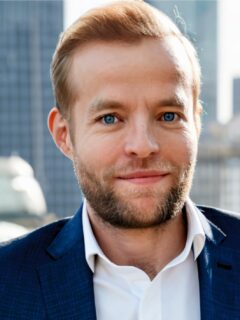
Wouter Mol is an External Employee in the Department of Meteorology and Air Quality at Wageningen University. He completed his PhD in 2024 under the supervision of Prof. Vilà-Guerau de Arellano and Prof. van Heerwaarden, focusing on mechanisms of solar irradiance variability under broken clouds. His research integrates atmospheric physics, remote sensing, and climate dynamics, with a focus on cloud-surface interactions and radiative processes. Key research interests include solar irradiance variability, cloud physics, and boundary layer meteorology. He has contributed to major datasets on solar irradiance climatology and participated in field experiments like CloudRoots-Amazon22, linking cloud dynamics to photosynthesis in tropical ecosystems. His work has been published in journals such as Atmospheric Chemistry and Physics and Quarterly Journal of the Royal Meteorological Society , with datasets archived on Zenodo. Mol has provided expert commentary on weather phenomena such as extreme hailstones and volcanic eruptions, demonstrating engagement with public outreach and interdisciplinary collaboration.
Thijs Ettema is a Full Professor of Microbiology at Wageningen University & Research, leading research on archaea and the evolutionary origins of eukaryotes. His work integrates genomics, phylogenetics, and cell biology to explore microbial diversity and ancient microbial lineages. Education and Affiliations: PhD in Microbiology (Wageningen University) Principal Investigator at the Microbiology Laboratory Co-founder of the SeqCode initiative for archaeal taxonomy Research Interests: Archaeal evolution and metabolism Eukaryotic origins via symbiosis Genomic adaptations in uncultured microbes Microbial diversity in extreme environments His studies reveal how archaeal lineages (e.g., Asgard archaea) bridge prokaryotes and eukaryotes, with implications for understanding cellular complexity and early life. Articles Overview: Recent work focuses on archaeal cell biology, novel microbial lineages, and evolutionary genomics. Key themes include Asgard archaeal morphology, methanogen metabolism, and phylogenetic reconstructions of microbial relationships. Awards: NWO Vici Grant 2019 (€1.5M) for microbial ancestry research Advising & Grants: Supervises 5+ PhD students in archaeal genomics and evolution Leads projects on culturing archaea and synthetic biology applications Secured €5M in grants for microbial evolution studies Labs/Teams: Evolutionary Microbiology Group at Wageningen Collaborations with Uppsala University (single-cell genomics) International networks in archaeal taxonomy
Dr. Michael Stelzig serves as a Researcher at the Institute of Microwaves and Photonics (LHFT) within the Department of Electrical-Electronic-Communication Engineering at Friedrich-Alexander University Erlangen-Nuremberg. His work focuses on advanced radar systems for environmental and extraterrestrial exploration. His research spans multiple high-impact domains: Development of ice-penetrating radar systems for glacial exploration UAV-based synthetic aperture radar (SAR) for subsurface imaging Radar signal processing for extraterrestrial applications Novel transponder technologies for radar calibration His recent publications demonstrate leadership in radar technology for both terrestrial glaciology and planetary science applications, particularly in Saturn's moon Enceladus exploration. His scientific contributions include: Design of hybrid radar-sonar systems for melting probes Lightweight radar platforms for glacial subsurface imaging Joint radar-communication waveform innovations Drone-based UHF-VHF radar systems for snow stratification analysis Stelzig's technical expertise bridges microwave engineering, signal processing, and field applications in extreme environments. His collaborative work with institutions like DLR (German Aerospace Center) highlights interdisciplinary approaches to complex exploration challenges.
Pablo Millan Arias is a Research Fellow at the University of Waterloo, affiliated with the Visitors and Sessional Lecturers groups. His work focuses on the intersection of machine learning and genomics, particularly in analyzing microbial organisms in extreme environments and developing innovative methods for biodiversity analysis. His research interests include bioinformatics, genomics, and the application of machine learning techniques to biodiversity analysis. He explores topics such as alignment-free genomic analysis, environmental impacts on microbial genomic signatures, and the development of deep learning tools for clustering DNA sequences. His work bridges computational methods with ecological and evolutionary biology to understand microbial adaptations in extreme environments. Recent publications highlight advancements in deep learning methodologies for genomic sequence analysis, including the development of tools like iDeLUCS and DeLUCS for unsupervised clustering of DNA sequences. He also contributes to biodiversity research through datasets like Bioscan-5m and explores how environmental factors influence genomic signatures of extremophiles. Earlier work includes applications of machine learning in computer vision, such as action classification using deep learning and information geometry. No scientific awards mentioned. No advising roles or grants mentioned. No labs or teams explicitly mentioned in the provided information.
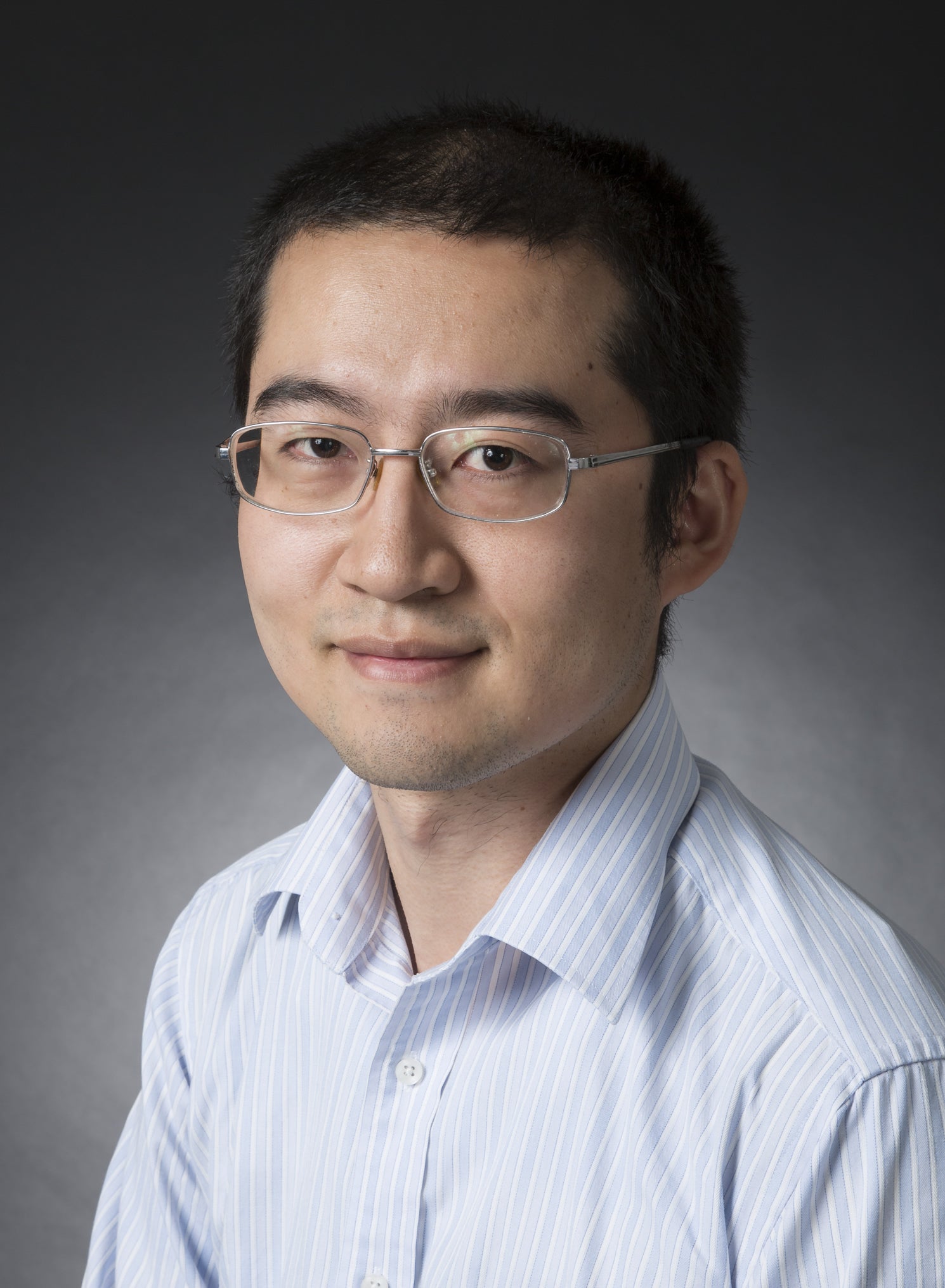
Yi Shen is an Associate Professor in the Department of Statistics and Actuarial Science at the University of Waterloo, Canada. He holds affiliations with the Institute of Quantum Computing. His research focuses on applied probability, stochastic processes, and their symmetries, including stationarity, self-similarity, and exchangeability. He explores applications in extreme value theory, financial mathematics, quantum information, and statistical physics. Education: PhD in Operations Research (Cornell University, 2013) under Gennady Samorodnitsky; Ingenieur in Quantitative Economics and Finance (École Polytechnique, 2008); BS in Mathematics and Physics (Tsinghua University, 2005). Research emphasizes random locations of stochastic processes (e.g., supremum locations) and their connections to probabilistic symmetries. Recent work bridges probability with quantum mechanics, econometrics, and machine learning. His publications address topics like regression discontinuity designs, operator-scaling Gaussian fields, and quantum system Hamiltonian inference. Key contributions include analyzing self-similar processes, ergodic theory applications, and separability-entanglement classification in quantum systems. His work spans theoretical probability to applied domains like finance and quantum computing.
Dr. Cem Koray OLGUN is an Associate Professor in the Department of Sociology at Adiyaman University's Faculty of Arts and Sciences. His academic journey includes a Ph.D. (2015) and Master's (2009) in Sociology from Hacettepe University, and a Bachelor's from Selçuk University (2004). His research explores Sociology of Communication, Social Theory, Media Studies, and Digitalization, with a focus on digital culture's societal impacts. Research interests include digital identity formation, media transformation under neoliberalism, youth engagement with technology, and cultural production in digital spaces. His publications analyze digital inequalities, artistic representation in postmodern society, and ideological discourse in media. Key projects include leading research on social media's impact on university youth (2017-2020) and contributing to studies on urban culture in Adıyaman. He serves as Head of the Sociology Department since 2022.
Abdulhakim 'Hakim' Abdi is a Senior Researcher at Lund University's Centre for Environmental and Climate Science, where he leads projects on landscape dynamics using remote sensing and machine learning. His research examines human-environment interactions, biodiversity monitoring, and climate impacts across global ecosystems from boreal forests to African drylands. He has received the Torsten Hägerstrands Foundation Prize (2017) and supervises multiple MSc/PhD students. His work combines satellite data with ecological insights to support sustainable land management, with recent focus on Swedish forest biodiversity mapping and Mesopotamian agricultural impacts. He teaches geospatial technologies and contributes to public discourse through science communication on topics ranging from Arctic change to Sahelian food security.
Valeria Galimi is an Associate Professor of Contemporary History at the Department of History, Archaeology, Geography, Arts and Entertainment (SAGAS) at the University of Florence. She earned her PhD from Scuola Superiore Sant'Anna in Pisa and has held research and teaching positions at numerous prestigious institutions including Sciences Po Paris, the European University Institute, and various French universities. Her academic career includes positions as Research Fellow at the University of Modena and Siena, University of Tuscia, University of Milan, and various international research fellowships. Galimi's research focuses on political and cultural history of Contemporary France, the history of antisemitism in Europe, European fascisms, the history of intellectuals in the interwar period, the social and cultural history of the Second World War, and Holocaust studies. She is currently working on a volume about political violence and 'street antisemitism' in French urban spaces during the 1930s. Her scholarly work demonstrates deep engagement with the intersections of politics, culture, and violence in 20th century Europe, particularly examining how antisemitic ideas circulated across national borders and manifested in everyday life. Her recent publications reveal a consistent focus on Italian and French experiences during the Fascist era, with particular attention to local implementations of racial policies, Jewish experiences under persecution, and the memory of these historical events. Galimi's work spans monographs, edited volumes, journal articles, and exhibition curation, demonstrating both scholarly depth and public engagement with historical topics. Program Directeurs d'études associés (DEA), Fondation Maison des Sciences de l'Homme Chercheure associé, Ecole Normale Supérieure de Lyon Visiting Professor at multiple French institutions including Ecole Normale Supérieure Member of editorial boards for 'Società e storia' and 'Passato e presente' Coordinator of research projects on internment camps and racial stereotypes Galimi actively contributes to academic service as Delegata Erasmus for History programs, member of various university committees, and participant in the Erasmus Mundus Joint Master's Degree 'History in the Public Sphere.' She is also Vice President of the Istituto storico toscano per la storia della Resistenza e dell'età contemporanea and serves on the Board of Directors of Sissco (Italian Society for the Study of Contemporary History).
Pierre Borgnat is a CNRS Research Professor at École Normale Supérieure de Lyon, leading the Signals, Systems & Physics group. His research integrates signal processing, graph theory, and machine learning for complex data analysis. Key contributions include: Multiscale methods for graph signals and networks Time-frequency analysis of nonstationary data Applications in transportation, neuroscience, and climate science Graph-based learning with optimal transport He directs the 'Signals, Systems & Physics' group and serves as Area Editor for IEEE Transactions on Signal Processing. Recent projects include ACADEMICS (machine learning for complex models) and climate extremes forecasting.
Kevin Marc Blasiak is a Postdoctoral Researcher at Vienna University of Technology, affiliated with the Faculty of Informatics . His work explores the intersection of technology, society, and business, focusing on AI conversational agents as persuasive technologies for value-sensitive contexts like countering online extremism, ethical decision-making, and content moderation. Current project: Designing "Shadowbanning" and "ExtremismBot.com" systems for ethical AI deployment. Research interests include sociotechnical systems, digital ethics, and online extremism. His publications analyze: AI ethics and governance Content moderation mechanisms Counter-narrative strategies for extremism Risk mitigation in generative AI applications Scientific awards : Canadian Network on Terrorism, Security & Society (TSAS) PhD Gala Fellow (2022) Finalist, Meta PhD Research Fellowship (2022) Finalist, Human Computer Interaction - Social Media, People, and Society Category (2022) He supervises thesis students at TU Wien and contributes to regulatory discourse on digital platforms.
Jean-Dominique Gallezot is a Research Scientist in the Department of Radiology & Biomedical Imaging at Yale School of Medicine . His work spans brain imaging , molecular imaging , and positron emission tomography (PET) with a focus on data analysis and whole-body imaging . Doctor of Philosophy (PhD) in Neuroscience from Université Pierre et Marie Curie (2006) Master of Science (MS) in Neuroscience from Université Pierre et Marie Curie (2002) Master of Engineering (ME) in Digital Telecommunications from École Supérieure d'Électricité (2002) Bachelor of Science (BS) in Physics from École Polytechnique (2000) Jean-Dominique’s research centers on neuroimaging and radiotracer development , particularly for studying dopamine receptors , neurotransmitter activity , and brain metabolism . His work leverages PET and SPECT to explore conditions like alcohol use disorder , parkinson’s disease , and frontotemporal dementia . Recent publications highlight his contributions to dynamic PET denoising using deep learning , test-retest reproducibility of novel radioligands, and kinetic modeling for drug interactions. Collaborations include key figures like Richard Carson and Nabeel Nabulsi , with co-authors across neuroscience , radiology , and pharmacology . His research integrates biomedical data science and computational imaging to advance quantitative analysis in PET studies. No scientific awards are explicitly mentioned in the provided texts.
Balaji Rao, MBBCh, is an Associate Professor of Radiology and Biomedical Imaging at Yale University's Yale School of Medicine. He specializes in neuroradiology and medical imaging, with a focus on integrating artificial intelligence and machine learning into diagnostic workflows. His academic roles include clinical radiology and teaching, contributing to advancements in imaging accuracy and peer review methodologies. Education: Dr. Rao earned his MBBCh from The Tamil Nadu Dr. MGR Medical University in 2001. His clinical expertise spans emergency radiology, brain tumor imaging, and vascular anomalies, with affiliations in Clinical Radiology and Neuroradiology departments. Research Interests: His work emphasizes AI-driven tools for improving CT and MRI diagnostics, particularly in detecting intracranial hemorrhages and brain tumors. He also explores imaging limitations and diagnostic errors, advocating for standardized reporting systems like the Brain Tumor Reporting and Data System. Articles Overview: Dr. Rao’s recent publications highlight AI applications in radiology peer review, emergency amyloid imaging abnormalities, and MDCT advancements in abdominal and vascular imaging. His work addresses both technical and clinical challenges in imaging accuracy and workflow optimization. Awards: While recognized in the 2019 Honors & Achievements category, specific award details are not listed in available texts. Advising & Grants: No formal advisees are listed, though his research contributions likely involve collaborative grant-funded projects. His clinical roles at Yale Medicine further highlight his commitment to patient care and diagnostic innovation. Labs/Teams: His affiliations suggest involvement in institutional research teams focused on neuroradiology and AI integration, though specific lab names are not provided in the text.
Erik Schultheis is a Doctoral Student and Visitor (Faculty) in the Department of Computer Science at the School of Science. His research focuses on extreme multi-label classification, algorithm design, and optimization challenges in machine learning. He holds a Master of Science in Physics from Georg-August-Universität Göttingen (2019). Key research interests include scalable classification systems, label correlation learning, and addressing long-tail and missing label problems in large-scale datasets. His work emphasizes practical solutions for commodity hardware limitations and memory efficiency in training models with millions of labels. Notable contributions include the Dismec++ software tool for extreme classification, and he has presented at conferences such as NeurIPS, ICML, and KDD. His 2021 NeurIPS Outstanding Reviewer Award highlights his peer-review contributions to the field. Recent publications explore dynamic sparsity in large output spaces, online algorithm generalizations, and label calibration in extreme classification scenarios. His research bridges theoretical algorithm development with practical implementation challenges in real-world systems.
Dr. Haydar Demirhan is a Senior Lecturer of Analytics in the School of Science (Mathematical Sciences) at RMIT University. He previously held academic positions at Hacettepe University in Turkey, including Assistant Professor and Docent. His research focuses on Bayesian inference, fuzzy regression, artificial intelligence, categorical data analysis, and environmental informatics. Demirhan has led multiple industry projects, including collaborations with DSTG, Essendon Football Club, and Cabrini Health. He serves as an Area Editor for Scientific Reports (Springer Nature) and Information Processing in Agriculture . Notable awards include RMIT's 2023 HDR Supervision Award and 2022 Teaching Award. His teaching includes courses on Bayesian statistics, time series analysis, and biometrics. Research highlights include developing fuzzy regression models, analyzing vaccination effectiveness, and modeling climate change impacts on agriculture. He has supervised over 8 PhD/MSc students and authored 80+ peer-reviewed articles. Demirhan’s work spans statistical methodologies in health, ecology, and energy sectors.
Charlie Tye is an Associate Lecturer at York Law School, University of York, specializing in crime, tort, and family law with a strong focus on public law implications. Their teaching emphasizes practical application of legal principles in real-world contexts, informed by extensive regulatory and judicial experience. University: University of York School: York Law School Email: charlie.tye@york.ac.uk Research Interests: Charlie’s work bridges legal theory and practice, centering on: Online extremism, particularly extreme misogynistic groups ('Manosphere') and their liability for real-world harm Criminal liability of cult leaders and members for mass violence, using Jonestown as a case study Intersection of public law, administrative justice, and legal accountability Publications: Recent work explores Incel extremism and the legal classification of cult-related violence. Their research connects digital radicalization to tort liability and re-examines historical atrocities through modern criminal law frameworks. Professional Roles: Beyond academia, Charlie holds regulatory positions with the Institute of Chartered Accountants, Health Care Professions Council Tribunal Services, Nursing and Midwifery Council, and Railway Appeals Body. These roles emphasize public protection and professional accountability, enriching their practical teaching approach.