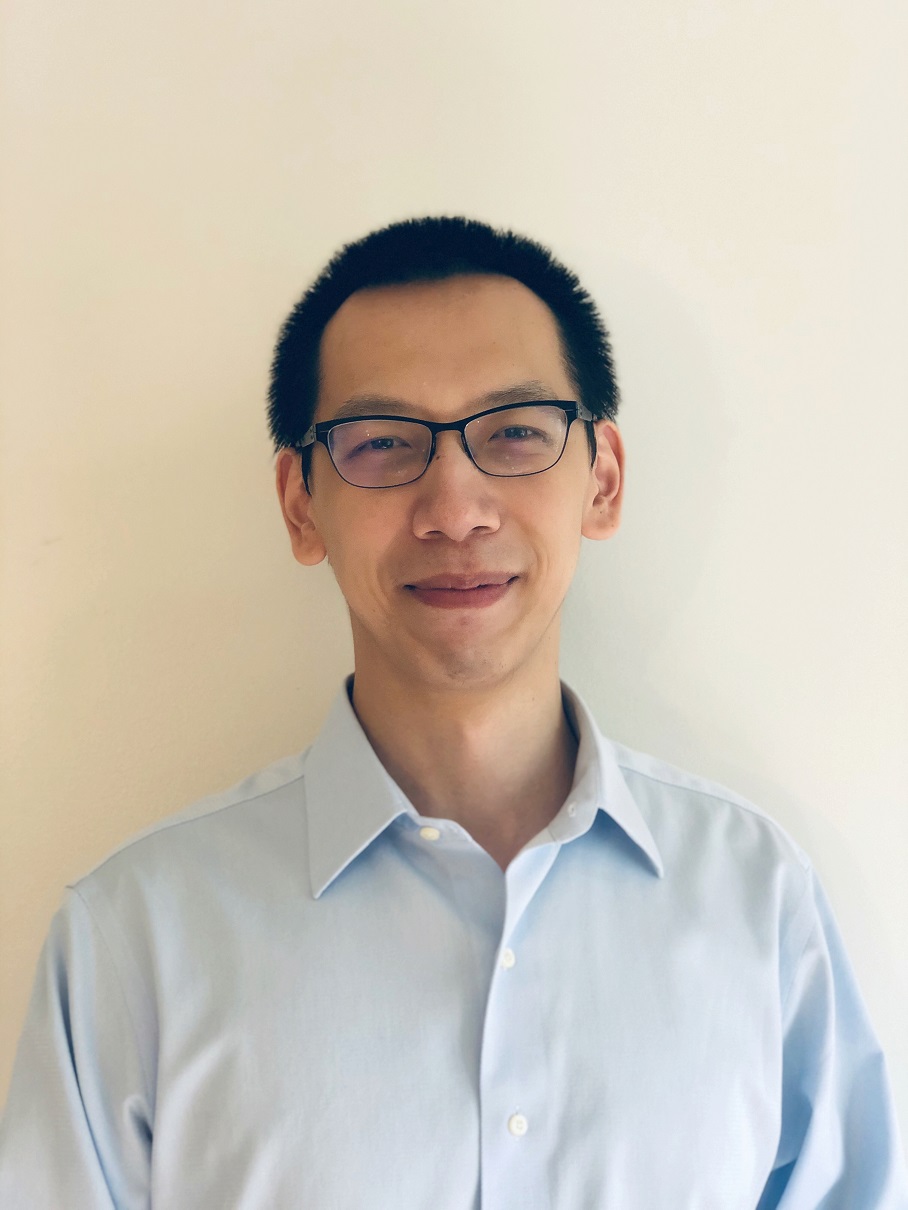
Xiaowei Jia is an Assistant Professor in the Department of Computer Science at the University of Pittsburgh. He holds a Ph.D. from the University of Minnesota (supervised by Prof. Vipin Kumar) and B.S./M.S. degrees from the University of Science and Technology of China (USTC) and SUNY Buffalo. His research focuses on integrating scientific theory with machine learning to address societal and environmental challenges, such as climate modeling, hydrology, and fairness in AI. Education: Ph.D., University of Minnesota (2020) M.S., State University of New York at Buffalo B.S., University of Science and Technology of China (USTC) Research Interests: Knowledge-Guided Machine Learning Spatiotemporal Data Mining Fairness in AI for Social Good Applications in Environmental Science and Healthcare Publications showcase his work on physics-integrated neural networks, spatiotemporal modeling (e.g., water temperature prediction), and fairness-aware algorithms. His work has been recognized with Best Paper awards at SIAM SDM (2022, 2023). Awards include the Best Applied Data Science Paper Award at SIAM SDM in 2022 and 2023. He teaches advanced machine learning courses, emphasizing theory integration with real-world applications.
Prof. Dr. Nina Gantert is a distinguished Professor of Probability Theory at the Technical University of Munich (TUM) , affiliated with the TUM School of Computation, Information and Technology . She has held faculty positions at Karlsruhe Institute of Technology and the University of Münster prior to joining TUM in 2011. Her research focuses on probability theory , particularly stochastic processes , large deviations , and random media . She investigates random walks in random environments as models for transport in disordered systems and explores applications in physics and biology . Recent publications highlight her work on branching random walks , mixing times , biased random walks , and large deviation principles for complex stochastic systems. She has co-authored studies on random walks in dynamical percolation , interacting edge-reinforced processes , and extremal point processes in branching models. Scientific Awards: Elected fellow of the IMS (2016) Her academic career spans institutions including ETH Zürich, University of Bonn, Technical University of Berlin, and TUM. She has supervised numerous Bachelor’s and Master’s theses on topics ranging from mixing time analysis to percolation theory , often collaborating with international co-authors.
Günter Rote is a Professor in the Department of Computer Science at Freie Universität Berlin, specifically within the Theoretical Computer Science group (Arbeitsgruppe Theoretische Informatik). He holds a formal academic title of Professor Dr. and is affiliated with the Faculty of Mathematics and Computer Science. His research focuses on theoretical computer science, computational geometry, algorithms, and discrete mathematics. Key research interests include geometric algorithms, optimization problems (e.g., shortest paths, traveling salesman problems), and algorithm design for parallel computing systems. His work spans topics such as systolic arrays, convex hulls, and combinatorial optimization. Rote’s contributions include foundational studies on computational geometry problems, algorithmic complexity, and practical applications in energy equity and infrastructure design. Publications highlight contributions to solving extremal equations, polygon transformations, and the quadratic assignment problem. He has been active in academic leadership, mentoring students, and contributing to computational science communities. His email is rote@inf.fu-berlin.de, and his office is located at Takustraße 9 in Berlin.
Professor Asaf Shapira is a faculty member in the Department of Theoretical Mathematics at Tel Aviv University's School of Mathematical Sciences. He has been actively contributing to combinatorics and graph theory research for over a decade, with numerous publications in top journals including Journal of the ACM, Advances in Mathematics, and Geometric and Functional Analysis. Professor Shapira's research focuses on extremal combinatorics, graph theory, and property testing. His work explores fundamental questions in Ramsey theory, hypergraph theory, and probabilistic methods in combinatorics. He has made significant contributions to the study of graph regularity, removal lemmas, and extremal problems in dense and sparse graphs. His recent publications demonstrate a consistent focus on theoretical aspects of combinatorics with connections to theoretical computer science. A notable trend is his work on developing polynomial bounds for various combinatorial theorems and exploring connections between combinatorial structures and computational complexity. His research often bridges pure mathematics with theoretical computer science applications. Professor Shapira teaches advanced courses at Tel Aviv University including Extremal Graph Theory, Basic Combinatorics, and seminars on specialized topics in combinatorics. His teaching spans undergraduate and graduate levels, reflecting his commitment to educating the next generation of mathematicians.
Tibor Szabó is a Professor in the Combinatorics and Graph Theory group at the Department of Mathematics, Freie Universität Berlin. He holds a PhD from The Ohio State University, advised by Ákos Seress. Prior to his current position, he held roles at McGill University, ETH Zürich, the Institute for Advanced Study (Princeton), and the University of Illinois (UIUC) as a J.L. Doob Research Assistant Professor. Research Interests: His work focuses on combinatorics and combinatorial optimization, including extremal problems, random structures and algorithms, pseudorandom graphs, positional games, and the combinatorics of linear programming. He explores tools from algebra, probability theory, and topology applied to combinatorics. Teaching: He teaches courses such as Algorithmic Combinatorics, Extremal Combinatorics, and runs the Combinatorics Seminar. His lecture notes include works on positional games and explicit constructions in extremal combinatorics. Students & Postdocs: Notable PhD advisees include Yamaan Attwa, Silas Rathke, Simona Boyadzhiyska, and Patrick Morris. Postdoctoral fellows include Olaf Parczyk and Anurag Bishnoi. His research has involved collaborations with over 50 co-authors. Funding & Grants: Supported by grants from the Swiss National Science Foundation (SNF) and German Research Foundation (DFG), focusing on topics like positional games and extremal graph theory.
Professor Stefan Glock is an Assistant Professor of Discrete Mathematics at the University of Passau's Faculty of Computer Science and Mathematics, a position he has held since September 2022. Prior to this appointment, he spent three years as a Junior Fellow at the Institute for Theoretical Studies at ETH Zurich, following the completion of his doctorate at the University of Birmingham. Stefan Glock received his mathematics education at Technische Universität Ilmenau from 2009 to 2014, then pursued his PhD at the University of Birmingham, which he completed in 2018. His doctoral dissertation, "Decompositions of Graphs and Hypergraphs," was the runner-up for the Richard-Rado-Preis 2018. Professor Glock's research focuses on discrete mathematical structures, with particular emphasis on their asymptotic properties. His work spans several interconnected fields of combinatorics: Extremal Combinatorics : Investigating the maximum or minimum possible size of mathematical structures satisfying certain properties Probabilistic Combinatorics : Applying probability theory to solve combinatorial problems Graph Theory : Studying properties of graphs and networks Ramsey Theory : Examining conditions under which order must appear in large structures Design Theory : Creating arrangements of elements satisfying specific balance properties Discrete Geometry : Analyzing geometric problems with discrete structures Analysis of Professor Glock's recent publications reveals a consistent focus on solving long-standing open problems in combinatorics using innovative methods that combine probabilistic techniques with structural insights. His work often bridges theoretical mathematics with applications in theoretical computer science, particularly in the analysis of algorithms and network structures. A significant portion of his research addresses fundamental questions about graph and hypergraph decompositions, which have implications for coding theory, cryptography, and network design. Professor Glock has received notable recognition for his contributions to mathematics: Runner-up for the Richard-Rado-Preis 2018 for his dissertation "Decompositions of Graphs and Hypergraphs" Awarded funding through the prestigious DFG Emmy Noether Programme in 2024 for his research group on "the interplay of structure and randomness in mathematics" As a faculty member at the University of Passau, Professor Glock leads the Discrete Mathematics research group and actively collaborates with mathematicians worldwide. He has established a strong research program that has attracted funding for academic visitors and supports multiple research projects. His approach to mathematical problems emphasizes developing new methods that have far-reaching implications beyond the specific problems being solved. Professor Glock's research group at the University of Passau focuses on the interplay between structure and randomness in discrete mathematics. The group maintains active collaborations with leading institutions including ETH Zurich, University of Birmingham, and various research centers across Europe. Through the DFG Emmy Noether Programme funding, his group is expanding its research on combinatorial structures and their applications.
Rhenish Friedrich Wilhelm University of BonnGermany
Riddhipratim Basu is an Associate Professor at the International Centre for Theoretical Sciences (ICTS-TIFR) in Bengaluru, India, since September 2017. Previously, he was a Szegö Assistant Professor of Mathematics at Stanford University (2015–2017) and a Ph.D. graduate in Statistics from UC Berkeley (2015), supervised by Allan Sly. Research focuses on Probability Theory, with emphasis on First/Last Passage Percolation, Interacting Particle Systems, Large Deviations, and Random Matrix Theory. Key collaborators include Allan Sly, Shirshendu Ganguly, Mahan Mj, and Manan Bhatia. Publications span journals like Communications on Pure and Applied Mathematics , Annals of Probability , and Comm. Math. Phys. His work explores geodesic structures in percolation models, scaling exponents in KPZ universality, and geometric properties of stochastic processes. Recent studies include Liouville Quantum Gravity and Airy process fluctuations.
Piotr Micek is a professor in the Theoretical Computer Science Department at the Faculty of Mathematics and Computer Science, Jagiellonian University , Kraków, Poland. He is an active researcher in combinatorics, particularly in structural graph theory and poset combinatorics, and maintains extensive international collaborations. University: Jagiellonian University School: Faculty of Mathematics and Computer Science Department: Theoretical Computer Science Department Email: firstname.lastname@gmail.com Office: Room 3151, Łojasiewicza Street 6, 30-348 Kraków Phone: +48 12 664 7594 Duty hours: Wednesdays 11:00–13:00 His main research interests include structural graph theory, combinatorics of partially ordered sets (posets), geometric intersection graphs, graph coloring and choosability, and the entropy compression method. He also works on approximation and on-line algorithms and combinatorial geometry. His work often bridges deep theoretical insights with algorithmic applications. The recent publications highlight a strong focus on graph structure and coloring problems. Key themes include product structure of planar graphs, poset dimension and its relation to height and planarity, weak coloring numbers, and adjacency labelling. His work frequently appears in top venues such as Journal of the ACM , Combinatorica , SIAM Journal on Discrete Mathematics , and SODA, indicating sustained high-impact contributions. Associate Editor, SIAM Journal on Discrete Mathematics (2025–) Former Associate Editor, Discrete Mathematics (2010–2022) Former Associate Editor, Discrete Mathematics & Theoretical Computer Science (2012–2020) He has supervised numerous students at all levels, including PhD candidates Jędrzej Hodor , Marcin Briański , and Michał T. Seweryn , and has led major research grants such as OPUS 24 and WEAVE-UNISONO funded by NCN. He has also been involved in significant trilateral projects with researchers from Belgium and Germany. His recent talks include tutorials on product structure theory and centered colorings, reflecting his leadership in these areas. He actively participates in the academic community, having served on program committees (e.g., SODA 2021, WG 2022) and organized workshops such as the Order & Geometry series. His research is supported by substantial funding, including over 900,000 PLN for current projects.
Maria Axenovich is a Professor at the Department of Mathematics , Karlsruhe Institute of Technology (KIT). Her research focuses on graph theory and combinatorics , emphasizing unavoidable structures in graphs, Ramsey-type problems, Turán densities, and extremal graph theory. Education : Undergraduate in Novosibirsk, Russia; Ph.D. at the University of Illinois at Urbana-Champaign under Zoltan Füredi. Positions : Previously at Iowa State University; since 2012 at KIT. Editorial Roles : Editor-in-Chief of the Electronic Journal of Combinatorics (2020–present); Associate Editor of Order (2016–present). Recent Research Trends : Her 2023–2025 publications address hypercubes , poset Ramsey numbers , interval colorings , extremal subgraphs , and canonical Ramsey theorems . Collaborations span institutions in the US, UK, Hungary, and Germany. Students and Collaborations : Supervises Ph.D., Master’s, and Bachelor students. Current advisees include Dingyuan Liu , Christian Winter , and Lea Weber . Former students like Jonathan Rollin and Torsten Ueckerdt have contributed to extremal graph theory and hypergraphs. Courses : Teaches Linear Algebra , Combinatorics , and Graph Theory at KIT. Leads seminars on Extremal Set Theory and Discrete Mathematics .
Claudia Klüppelberg is a Professor and Chair of Mathematical Statistics at the Center for Mathematical Sciences, Technische Universität München (TUM). Her academic journey includes positions at ETH Zurich, University of Mainz, and TUM since 1997. She holds a Carl von Linde Senior Fellowship at TUM-IAS, focusing on Risk Analysis and Stochastic Modeling. Her research bridges applied probability, statistics, and their applications in finance and insurance, emphasizing extreme value theory, risk processes, and stochastic networks. She has received prestigious awards such as the New Frontiers in Risk Management Award (2007) and Cross of Merit (2001). Her work addresses real-world challenges in financial risk management, including systemic risk in networks and operational risk modeling. Her recent publications explore causal analysis of extreme risks in networks, max-linear models, and Bayesian networks for extreme events. She contributes to academic leadership as an editorial board member and advisor, promoting interdisciplinary stochastic sciences.
Prof. Henning Bruhn-Fujimoto is a faculty member at the Institute for Optimization and Operations Research at Ulm University. His research focuses on graph theory, combinatorial optimization, and discrete mathematics , with notable contributions to Erdős-Pósa properties, cycle packing, and algorithmic graph theory. He teaches courses in mathematical foundations of machine learning and combinatorics. Academic Background: - Habilitationsschrift : Graphs and their Circuits (2009) - PhD Thesis: Infinite circuits in locally finite graphs (2005) - Diploma Thesis: Generating the cycle space by induced non-separating cycles (2001) Research Interests: - Structural graph theory and algorithm design - Optimization in discrete systems - Applications of combinatorial mathematics Thesis Supervision: He regularly oversees bachelor's and master's theses in optimization, graph theory, and related fields. Notable past thesis topics include elevator system optimization, Erdős-Posa properties in graphs, and container ship unloading algorithms. Labs/Teams: His work is centered within the Institute's optimization group, collaborating with researchers on projects involving graph algorithms and combinatorial optimization.
Vicky Fasen-Hartmann is a Professor at the Karlsruhe Institute of Technology (KIT) within the Department of Mathematics, specifically affiliated with the Institute of Stochastics. She has held her W3 Professor position since October 2012, with two periods of parental leave (August 2016-August 2017 and October 2018-October 2019). Prior to her current position, she held postdoctoral research positions at ETH Zurich (RiskLab), TU Munich, Université Pierre et Marie Curie, and Cornell University. Her educational background includes: Habilitation (2010) in Heavy Tails in Finance, Insurance and Telecommunication from TU Munich Ph.D. (2004) in Extremes of Lévy Driven Moving Average Processes with Applications in Finance from TU Munich Diploma in Mathematics (2002) from Karlsruhe Institute of Technology Professor Fasen-Hartmann's research spans multiple areas of theoretical and applied statistics with a focus on extreme value theory, heavy-tailed distributions, and their applications in finance and risk management. Her work bridges theoretical probability with practical financial applications, particularly in modeling rare events and systemic risks. She has made significant contributions to the understanding of Lévy processes, continuous-time ARMA models, and multivariate extremes. Her research combines rigorous mathematical theory with practical applications in financial mathematics, insurance, and telecommunications networks. The trends in her recent publications (2020-2025) show a clear evolution toward high-dimensional extreme value theory, financial network risk contagion, and advanced modeling of continuous-time processes. Her work increasingly addresses the challenges of modern financial systems, including systemic risk measurement, high-dimensional dependency structures, and the statistical properties of extreme events in complex systems. She has developed innovative methodologies for analyzing multivariate extremes, risk contagion, and continuous-time state space models. Professor Fasen-Hartmann has served in significant editorial roles including Associate Editor for the Scandinavian Journal of Statistics since 2014, Managing Editor of Lévy Matters (2008-2014), and Editor of Bernoulli News (2009-2011). She has also been active in academic service through committee work, including the Steering Committee of the Probability and Statistics Group in Germany (2014-2016) and the Examination Board of the Department of Mathematics at KIT (since 2017). She has supervised numerous doctoral and master's students, with current PhD candidates including Lucas Butsch (since 2021) and previously Lea Schenk, Celeste Mayer, Markus Scholz, and Sebastian Kimmig. Her teaching portfolio includes advanced courses in Time Series Analysis, Continuous Time Finance, Extreme Value Theory, and Asymptotic Stochastics. She regularly organizes workshops and conferences on specialized topics in probability and statistics, demonstrating her leadership in the academic community.
Markus Heydenreich is a Professor at the Institute of Mathematics, Faculty of Mathematics, Natural Sciences and Technology, University of Augsburg. His research focuses on probability theory, particularly discrete random objects in statistical mechanics, mean-field behavior, lace expansion, and spatial random graph models. 2025: Workshop Bayrischzell 2024: Workshop Frauenchiemsee His recent publications highlight critical phenomena in random connection models, percolation, and spatial networks. He contributes to editorial boards and DFG-funded projects, including Random Geometric Systems and Mathematics of Many-Body Quantum Systems . Teaching includes courses on stochastic processes and seminars on probability and forensics. Key research themes: phase transitions, high-dimensional random walks, and mathematical physics applications. Collaborators include Remco van der Hofstad, Christian Hirsch, and Kilian Matzke. The team at Augsburg comprises doctoral researchers and postdocs.
Cédric Costa is a Professor at the Conservatoire National des Arts et Métiers (CNAM), conducting research at the CEDRIC Laboratory. With a publication record spanning over 30 years from 1992 to 2023, he has established himself as a leading researcher in combinatorial optimization and operations research. His research interests focus on combinatorial optimization , graph theory , and operations research , with significant contributions to network design, discrete tomography, and robust optimization. His work bridges theoretical foundations with practical applications, particularly in renewable energy systems and telecommunications networks. Analysis of his publication trends shows a consistent focus on Steiner tree problems, matching theory, and robust network design, with increasing emphasis on renewable energy applications since 2015. His recent work (2020-2023) demonstrates expertise in wind farm optimization and robust network design under uncertainty. Prix Orange de l'Innovation 2012 (catégorie Réseau) for FTTH network deployment research Professor Costa has supervised numerous researchers including Poirion P-L, Bentz C, Ridremont T, Hertz A, Cotté G, and Picouleau C, as evidenced by their frequent co-authorship on publications. His research has been supported by projects related to wind farm optimization, optical network design, and robust energy systems. He has been actively involved in the ROADEF (French Operations Research Society) community, presenting regularly at their conferences.
Dennis Clemens is a researcher in the Institute of Mathematics at Hamburg University of Technology, where he leads and contributes to research in discrete mathematics, particularly in the Chair of Discrete Mathematics. His work centers on combinatorial game theory, extremal combinatorics, and probabilistic methods in graph theory. Research Interests: His research spans positional games (Maker-Breaker, Waiter-Client, Walker-Breaker), Ramsey theory , random graphs , and graph packing . He investigates structural properties of games on random and perturbed graphs, size-Ramsey numbers, and extremal problems in hypergraphs. Publications Trends: His recent publications (2021–2024) show a strong focus on game-theoretic models over random structures, with frequent collaborations. Key themes include fast winning strategies, universality, connectivity, and Ramsey-type problems. Scientific Awards: No specific awards mentioned in the provided texts. Advising and Grants: While no explicit list of advisees or grants is given, his role as a research leader suggests involvement in mentoring students and securing research funding, likely supported by institutions such as the Simons Foundation (acknowledged in arXiv). Labs and Teams: He is affiliated with the Discrete Mathematics group at TUHH, contributing to collaborative research in combinatorics. He participates in academic networks such as the SIAM & GAMM Chapter Hamburg and workshops on Operator Theory, indicating active engagement in the mathematical community.