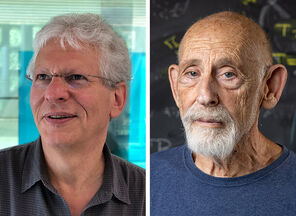
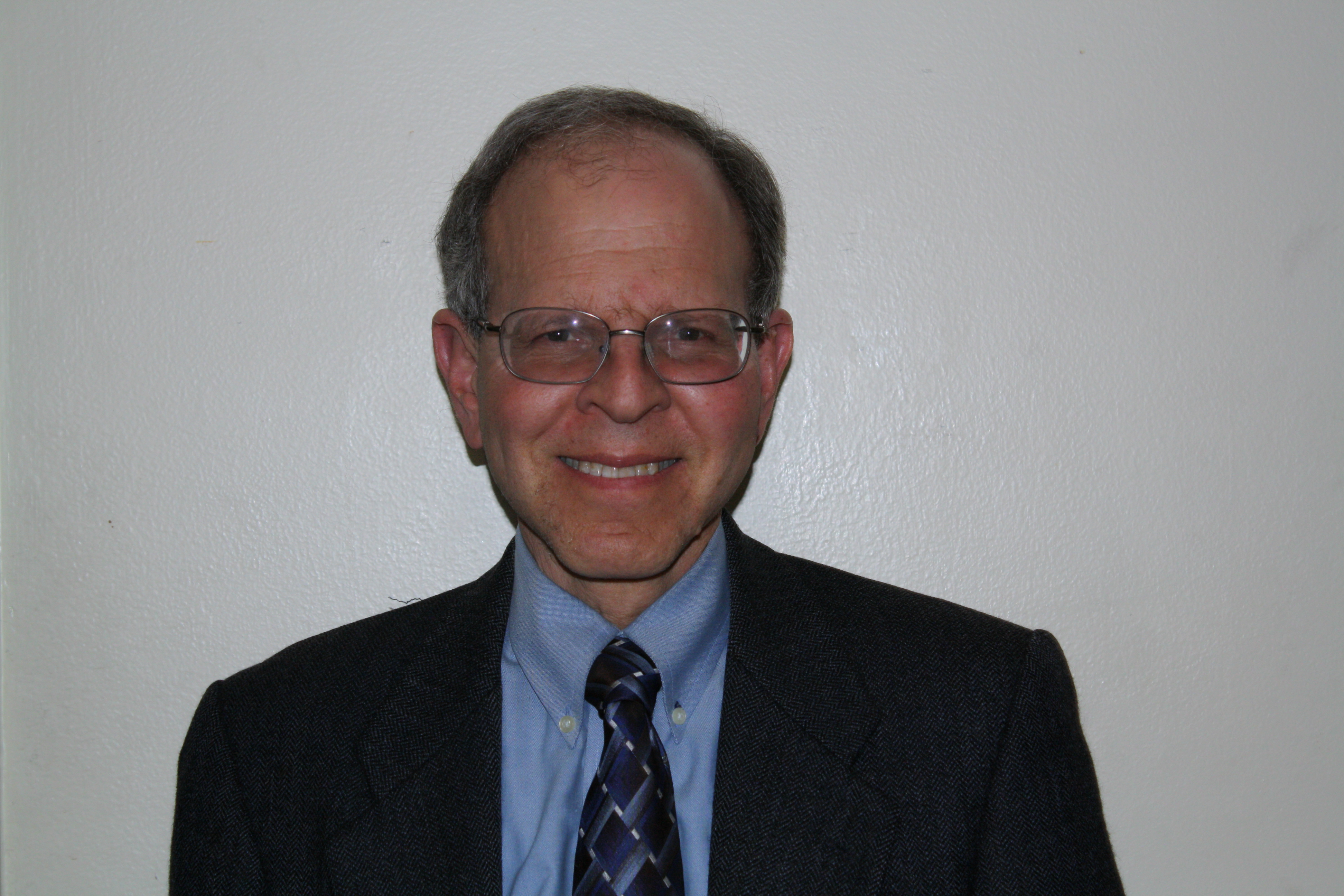
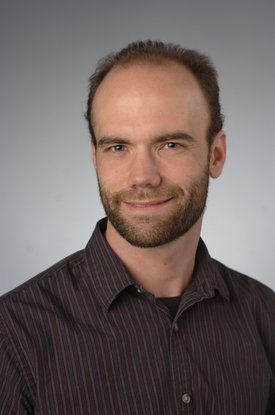
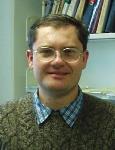
Kohsaku Tobioka is an Associate Professor in the Department of Physics at Florida State University. He joined the faculty in 2018 after postdoctoral appointments at Stony Brook University (2017-2018), High Energy Accelerator Research Organization (KEK) in Japan (2014), and a joint position at Tel Aviv University and Weizmann Institute of Science in Israel (2014-2017). Education: Ph.D. in Physics from the University of Tokyo (2014) His research focuses on theoretical particle physics, particularly exploring physics beyond the Standard Model through phenomena like supersymmetry, extra dimensions, dark matter, and axions. He integrates cosmology and astroparticle physics with experimental approaches at high-intensity facilities such as B/K meson factories. Scientific Recognition: JSPS Research Fellow for Young Scientists (2014-2016) Tobioka actively engages in outreach through programs like Saturday Morning Physics at Florida State University and is open to speaking engagements at local schools.
Professor Jorge Eduardo Pinto Santos holds the position of Professor of Theoretical Physics at the Department of Applied Mathematics and Theoretical Physics (DAMTP) at the University of Cambridge. His career includes roles as Reader (2018–2022), Lecturer (2013–2018), and a Junior Visiting Professorship at the Institute for Advanced Study in Princeton (2019–2020). He completed his Ph.D. at DAMTP between 2006 and 2010, followed by postdoctoral fellowships at Stanford University (2013–2014) and the University of California, Santa Barbara (2010–2013). His research focuses on general relativity, quantum gravity, and gravitational aspects of string theory. Key areas include numerical relativity and applications of general relativity to condensed matter physics via holography. Notable contributions involve studies on black hole binaries, extremal black holes, and the AdS/CFT correspondence. His recent work explores topics such as spinning black binaries in de Sitter space, gravitational instabilities in anti-de Sitter space, and entanglement islands in higher dimensions. He is affiliated with the High Energy Physics and Relativity and Gravitation research groups at DAMTP. His advising record includes seven doctoral students, with ongoing supervision of William Boyce (2024–present) and John Crump (2021–present). Publications highlight interdisciplinary advances, including investigations into black hole thermodynamics, cosmic censorship violations, and holographic models of condensed matter systems. His research bridges fundamental physics and numerical methods, addressing both theoretical and applied questions in gravitational physics.
Mark de Rond is Professor of Organisational Ethnography at Cambridge Judge Business School and Fellow of Darwin College, University of Cambridge. His work focuses on immersive ethnographic studies of human behavior in extreme contexts including war zones, high-stakes sports, and controversial social movements, revealing how individuals navigate challenging circumstances through compromise and sensemaking. His educational background includes a DPhil from the University of Oxford alongside advanced degrees in management and economics, photojournalism, documentary photography, biography, creative nonfiction, and prose fiction. This multidisciplinary training informs his unconventional methodological approach. De Rond's research centers on extreme context ethnography, examining how pressure-cooker environments expose fundamental organizational dynamics. His work spans military medicine (Camp Bastion fieldwork), elite sports (Cambridge Boat Race), Amazon river expeditions, and controversial practices like paedophile hunting. Key contributions explore negotiation, conflict resolution, serendipity, institutional persistence, and the emotional toll of fieldwork, often employing innovative methods like enactive ethnography and linguistic analysis of digital communities. His recent publications reveal a growing focus on digital vigilantism and the societal implications of extreme practices, with increasing interdisciplinary reach across organizational studies, criminology, medical anthropology, and sociology. The work demonstrates methodological creativity through linguistic analysis of Facebook groups, embodiment studies in extreme environments, and dream-based reflexive techniques. Scientific recognition includes: BEST ARTICLE AWARD FOR 2016 Favorite MBA Professor honors from Poets & Quants (2021, 2022) Guinness World Record for first unsupported Amazon row De Rond advises MBA students and delivers executive education to top law firms (Slaughter and May, Allen & Overy), professional services (McKinsey, KPMG), corporations (Sky, BT, Diageo), and NGOs (UNICEF, NHS). His negotiation training from Harvard Law School informs both academic work and university mediation practice. Current research involves collaborative teams studying paedophile hunting (featured in Sundance-nominated documentary Predators ) and high-performance sports organizations, with fieldwork requiring deep immersion in challenging environments. His research methodology involves embedded collaboration with diverse teams including medical personnel in conflict zones, elite rowers, and controversial activist groups, often pushing methodological boundaries through photojournalism and creative nonfiction approaches.
Mark Trodden is the Dean of the School of Arts & Sciences and Thomas S. Gates Jr. Professor of Physics and Astronomy at the University of Pennsylvania. He previously served as the Fay R. and Eugene L. Langberg Professor of Physics, Department Chair, and Co-Director of the Center for Particle Cosmology. His career includes faculty roles at Syracuse University (2000–2009) and visiting positions at Case Western Reserve University and Cornell University. Ph.D. and M.Sc. in Physics, Brown University (1992–1995) Advanced Study in Mathematics, University of Cambridge (1990–1991) M.A. in Mathematics, University of Cambridge (1987–1990) Trodden’s research focuses on the intersection of cosmology and particle physics, addressing fundamental questions such as the nature of dark energy, dark matter, the baryon asymmetry of the universe, inflation, and modified gravity theories. His work explores how cosmological data can constrain physics beyond the Standard Model and general relativity. His publications span topics like dark energy models , inflationary spacetimes , topological defects , and BPS states in supersymmetric theories , reflecting his expertise in connecting high-energy physics to cosmological observations. At Penn, Trodden has held editorial roles for journals like Physics Letters B and Journal of Cosmology and Astroparticle Physics , and has contributed to collaborative workshops advancing cosmology and particle physics.
Professor Kellogg Stelle is a distinguished academic in the Department of Physics at Imperial College London, affiliated with the Faculty of Natural Sciences. He holds the title of Professor of Physics and is part of research groups including the Physics of Universe and Theoretical Physics. His academic career includes a PhD from Brandeis University (1972–1977) and an AB in History and Science from Harvard University (1966–1970). His research focuses on Atomic, Molecular, Nuclear, Particle and Plasma Physics; Mathematical Physics; Quantum Physics; Astronomical and Space Sciences; Pure and Applied Mathematics. He has made significant contributions to supergravity, string theory, and cosmology, exploring topics like higher-order gravity, braneworld models, and quantum gravity phenomena. His work often bridges theoretical frameworks and cosmological implications, emphasizing unification theories and symmetry principles. Professor Stelle’s publications reflect a deep engagement with advanced topics such as compactification on Calabi-Yau manifolds, localized gravity in braneworld scenarios, and the ultraviolet problem in supergravity. His research often intersects with cutting-edge areas like quantum geometry and holography, contributing to foundational debates in theoretical physics. Affiliations include the Physics of Universe and Theoretical Physics groups at Imperial College, reflecting his interdisciplinary approach to fundamental physics. He is fluent in French, Russian, Italian, and German, enhancing his international collaborations.
Zackaria Chacko is a Professor in the Department of Physics at the University of Maryland and a founding member of the Maryland Center for Fundamental Physics (MCFP). His research focuses on theoretical particle physics, addressing unresolved questions in the Standard Model through novel frameworks like weak scale supersymmetry, extra dimensions, and composite Higgs models. His work intersects with experimental efforts at the Large Hadron Collider, dark matter detection, neutrino oscillation studies, and gravitational tests. Affiliations: Maryland Center for Fundamental Physics (MCFP) Teaching: Courses include Mathematical Methods for Physics I/II, Advanced Quantum Mechanics, and Advanced Quantum Field Theory. Research Interests: Chacko explores dark matter, baryogenesis, and neutrino physics, with connections to cosmological observations (e.g., cosmic microwave background) and precision measurements. His theories aim to resolve gaps in fundamental physics, such as the hierarchy problem and matter-antimatter asymmetry. Awards: Elected Fellow of the American Physical Society (APS). Labs/Teams: Active contributor to MCFP’s theoretical physics initiatives, collaborating on projects bridging particle physics and cosmology.
Herman L. Verlinde is the Class of 1909 Professor of Physics and current chair of the Department of Physics at Princeton University. He earned his Ph.D. in theoretical physics from the University of Utrecht and previously taught at the University of Amsterdam (1995–1998). His leadership role underscores his active engagement in academic governance. Verlinde's research bridges string theory , black hole physics , and quantum information . His recent work explores quantum aspects of black hole horizons, entanglement dynamics, and holographic principles. Core interests include: Quantum gravity and string theory formalisms Black hole information paradox Topological field theory applications Cosmological implications of quantum entanglement His publications consistently focus on high-energy theoretical physics, with recurring themes of holography (AdS/CFT), quantum gravity, and string-theoretic approaches to particle physics. Recent articles emphasize quantum error correction in black holes and gauge-gravity duality. Scientific Awards: IBM Einstein Fellow, Institute for Advanced Study PIONIER Fellowship (Netherlands Organization for Science) Fellow, Royal Dutch Academy of Sciences Alfred P. Sloan Research Fellowship He currently advises doctoral students including Dongyeob Kim, Tommaso Marini, and Damiano Tietto. His research group explores quantum gravity and string theory at Princeton's Jadwin Hall.
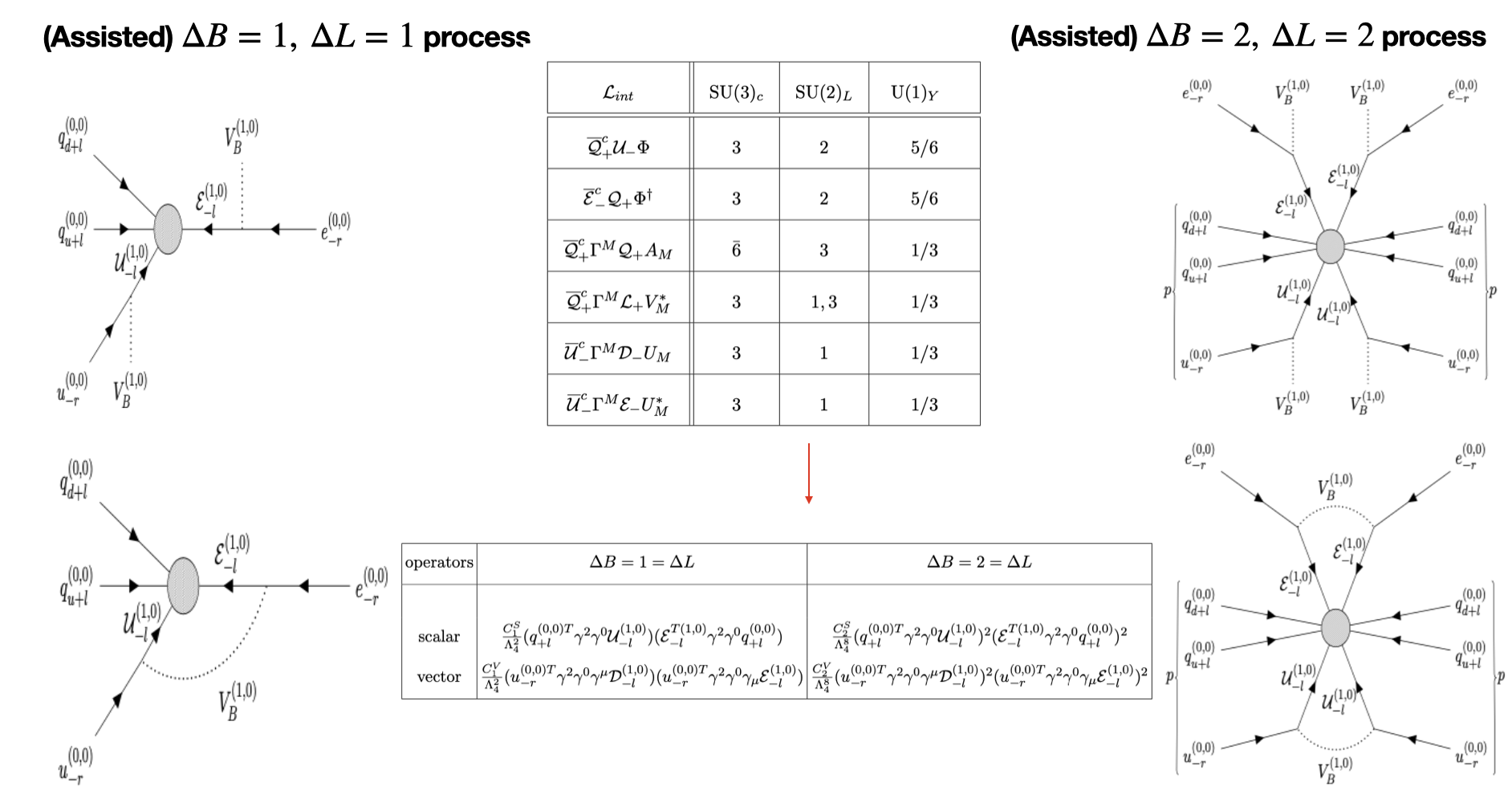
Dr. Mathew Arun Thomas is an Assistant Professor at the Indian Institute of Science Education and Research Thiruvananthapuram (IISER-TVM), specializing in Theoretical Particle Physics. His research focuses on phenomena beyond the Standard Model, including Baryon Number Violation, Extra Dimensions, Effective Field Theory, and Flavour Physics. Education: BSc (Hons) from St. Stephen's College, University of Delhi; MSc and PhD in Physics and Astrophysics from the University of Delhi (supervised by Prof. Debajyoti Choudhury). Postdoctoral work at the Indian Institute of Science (supervised by Prof. Sudhir K Vempati). His recent work explores Dark Matter-assisted Baryon Number Violation processes, such as Hydrogen-antihydrogen oscillation and Proton decay suppression, using six-dimensional orbifolded torus models. He also investigates constraints on Randall-Sundrum models from charge lepton flavour violations and phenomenology of low-energy Flavour Physics. The 15 most recent publications span neutrino oscillations, dark matter phenomenology, warped geometry models, and collider signatures, reflecting his expertise in connecting high-energy theory with experimental observables. Scientific Awards: INSPIRE Faculty Fellowship. He has mentored students like Akshay Anilkumar and Krishnanand N, contributing to projects on Flavour Violations and Cosmological Bounce models. He teaches courses including Quantum Field Theory and Scientific Computation, with a 2023 Mechanics course for 330 students.
Professor Jean Alexandre is a Professor of Physics at King's College London, affiliated with the Department of Physics within the Faculty of Natural, Mathematical & Engineering Sciences. His research focuses on non-perturbative quantum field theory, tunnelling phenomena, exact renormalization methods, and Lorentz symmetry violation. He has held positions including a Leverhulme Trust postdoc and temporary lectureship before his current role. Education: Doctor of Science in Theoretical Physics from University Louis Pasteur, Strasbourg (1998) Master of Physics in Theoretical Physics from École Normale Supérieure de Lyon (1994) Research Interests: Non-perturbative effects in QFT (dynamical mass generation, exact functional methods) Lorentz symmetry violation in particle physics and modified gravity Tunnelling mechanisms, cosmic bounce models, and null energy condition studies Non-Hermitian extensions of the Standard Model and PT-symmetric field theories Key contributions include work on magnetic monopole searches with the MoEDAL experiment at the LHC, finite volume effects in quantum field theory, and dynamical mass generation mechanisms. His recent articles explore topics like scalar high-electric-charge objects, vacuum decay rates, and cosmic bounce scenarios. He has supervised PhD theses on topics such as Lifshitz-type theories and gravitino condensation. Grants and Collaborations: Principal Investigator on Leverhulme Trust project 'Saving the Universe with finite volume effects in Quantum Field Theory' Co-Investigator on EPSRC and STFC-funded projects in particle physics and cosmology Labs/Teams: Active collaborator in the MoEDAL experiment and the Theoretical Particle Physics & Cosmology group at King's College London.
Professor Malcolm Fairbairn is a faculty member at King's College London's Department of Physics, part of the Faculty of Natural, Mathematical & Engineering Sciences. His research focuses on the intersection of cosmology, particle physics, and astrophysics, particularly dark matter, dark energy, and cosmological inflation. He leads projects like the ERC Consolidator Grant (2015–2020) investigating dark matter in the early Universe. He collaborates with initiatives such as the MoEDAL experiment at CERN (magnetic monopole searches) and the Cherenkov Telescope Array (CTA) for gamma-ray astronomy. His interests extend to gravitational waves, supermassive black hole formation, and particle astrophysics. Fairbairn has contributed to studies on axion dark matter, primordial black holes, and dark matter constraints from dwarf galaxies. He is affiliated with the Theoretical Particle Physics & Cosmology (TPPC) Group, exploring beyond-Standard-Model physics, including supersymmetry and extra dimensions. Publications span topics like dark matter relic abundance, JWST observations of black holes, and LHC searches for exotic particles. He has advised on outreach projects like the 'Dark Matter' exhibition at Science Gallery London and interviews with alumni (e.g., Royal Navy submariner Chris Tuckley).
Stephen Shenker is the Richard Herschel Weiland Professor of Physics at Stanford University, where he has been a faculty member since 1998. He previously served as a professor at Rutgers University (1989-1998) and as an Assistant to Full Professor at the University of Chicago (1981-1989). Shenker also directed the Stanford Institute for Theoretical Physics from 1998 to 2009. Shenker's research focuses on quantum gravity, particularly string theory and M theory, with emphasis on nonperturbative aspects. His work has significantly advanced our understanding of gauge theories, conformal field theory, matrix models of string theory, D-branes, and the connection between quantum gravity and quantum chaos. He has made foundational contributions to the field of string theory, including the discovery of Matrix Theory, which provides a nonperturbative definition of String/M theory. His recent publications demonstrate a consistent focus on eternal inflation, the string theory landscape, de Sitter space, and holographic principles, reflecting his ongoing investigation into the deepest questions of theoretical physics and cosmology. Shenker's work often intersects with that of Leonard Susskind, with whom he shares the 2023 Dirac Medal. Member, National Academy of Sciences (2015) Lars Onsager Prize, American Physical Society (2010) Dean's Award for Distinguished Achievements in Teaching, Stanford University (2007) Fellow, American Academy of Arts and Sciences (2006) Fellow, American Physical Society (2003) Fellow, MacArthur Foundation (1987) Shenker has advised numerous doctoral students and postdoctoral researchers at Stanford, contributing significantly to the education of the next generation of theoretical physicists. His teaching excellence has been recognized with multiple awards, including Stanford's Dean's Award for Distinguished Achievements in Teaching.
Michael Dine is a Professor of Physics at the University of California at Santa Cruz (UCSC) since at least 2004, with a B.A. from Johns Hopkins University (1974) and a Ph.D. from Yale University (1978) . He is renowned for his contributions to supersymmetry, string theory, and physics beyond the Standard Model , including co-developing the Invisible Axion model and pioneering work in dynamical supersymmetry breaking. His textbook Supersymmetry and String Theory: Beyond the Standard Model (Cambridge University Press) is a key resource in the field. Research Focus: Addressing unanswered Standard Model questions (hierarchy problem, strong CP problem, dark matter) via supersymmetry, string theory, and effective field theory. Teaching: Courses like Advanced Quantum Field Theory (Physics 222), General Relativity (Physics 171), and independent studies on quantum field theory. Scientific Awards: Inducted into the American Academy in 2010. Key Trends in Research: Dine's work bridges theoretical particle physics with cosmology, focusing on supersymmetry breaking mechanisms, axion cosmology, and the string theory landscape's implications for LHC experiments. His publications and lectures emphasize robust predictions of string theory and the interplay between high-energy physics and early universe phenomena.
Jay Hubisz is a Professor of Physics at Syracuse University's College of Arts and Sciences. He holds a Ph.D. in Theoretical Particle Physics from Cornell University (2006) and a B.S. in Physics from the California Institute of Technology (2001). His research focuses on Physics Beyond the Standard Model, Quantum Field Theory, Cosmology/Astrophysics, and Quantum Information Science. Recent work explores cosmological quasiparticles, holographic phase transitions, and quantum algorithms for lattice field theory. Hubisz has led major grants including a decade-long Department of Energy grant on Theoretical Particle Physics and Cosmology (2013-2025). He teaches advanced courses like Quantum Computing Demystified and serves as Director of Undergraduate Studies in Physics. Awards include the 2024 Undergraduate Majors Teaching Award. He chairs the Joint CAS|MAX Faculty Council and contributes to curriculum development, faculty mentoring, and physics outreach initiatives.
Professor Andy Parker is a leading figure in particle physics, serving as Professor of High Energy Physics and Head of the Cavendish Laboratory at the University of Cambridge. He is also an honorary Professor at the British-Kazakh University in Almaty and a Fellow of Peterhouse College, where he has been actively involved since 1989. His academic journey began in Bristol, continued at Queen Elizabeth’s Hospital and Pembroke College Oxford, and expanded through his early work at CERN and a PhD in Particle Physics at University College London. His career spans roles at CERN, the Cavendish Laboratory, and interdisciplinary collaborations in oncology, artificial photosynthesis, and muon tomography. Research interests include exploring physics beyond the Standard Model (supersymmetric particles, extra dimensions), applying particle physics software to radiation therapy, and leading large-scale scientific projects. He has been instrumental in the ATLAS Collaboration at the LHC, the Ray Dolby Centre construction, and the Future Circular Collider initiative. Scientific awards include the Pilkington Prize for teaching excellence (1997), Fellowship of the Institute of Physics (FInstP), and the Chartered Physicist (CPhys) designation. As a Tutor at Peterhouse (1990–1999), he mentored Natural Science and Engineering students and continues to supervise undergraduates. His leadership roles extend to national and international advisory bodies, including the CERN Science Policy Committee and the Hong Kong Research Grants Committee. He recently transitioned to focus on College activities while maintaining scientific advisory roles at CERN and other institutions.
Alex Buchel is a Professor in the Department of Physics and Astronomy at Western University, Canada, and an Associate Faculty member at the Perimeter Institute for Theoretical Physics. His research focuses on quantum gravity, superstring theory, black hole thermodynamics, and holographic approaches to strongly coupled systems. He holds a Ph.D. from Cornell University (1999) and has held postdoctoral positions at UCSB and the University of Michigan. His work bridges theoretical physics with cosmology, exploring topics like de Sitter vacua, gravitational reheating, and holographic quark-gluon plasma dynamics. Education: M.S. (Honors), Moscow Institute of Physics and Technology (1994) Ph.D., Cornell University (1999) Research Interests: Superstring theory and quantum gravity Black hole thermodynamics and instabilities Holographic dualities and strongly coupled plasmas Cosmological models and de Sitter vacua Key Contributions: Pioneered studies on holographic transport and plasma dynamics Explored gravitational instability in AdS/CFT Developed frameworks for dynamical fixed points in holography