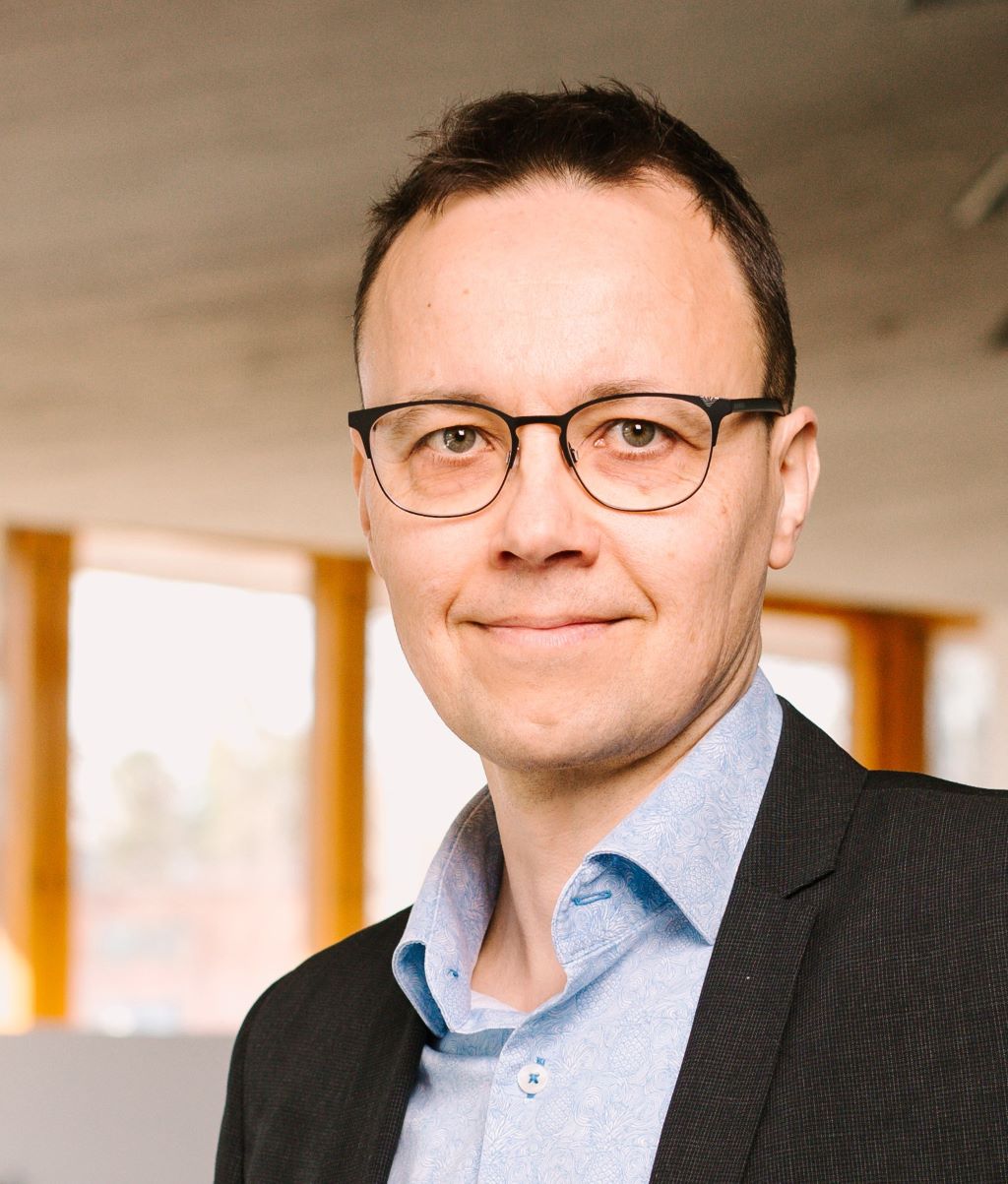
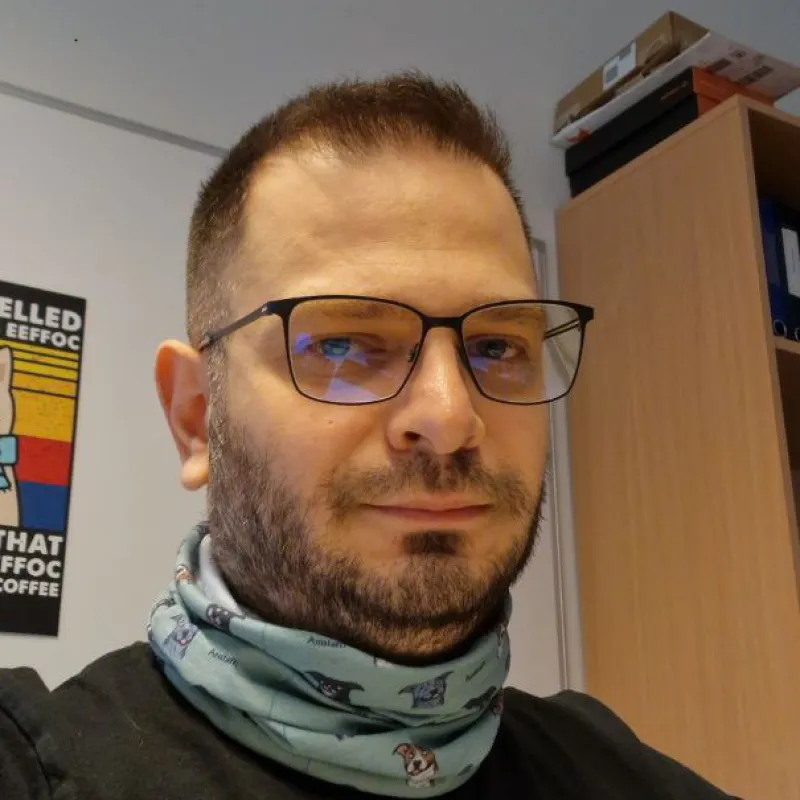
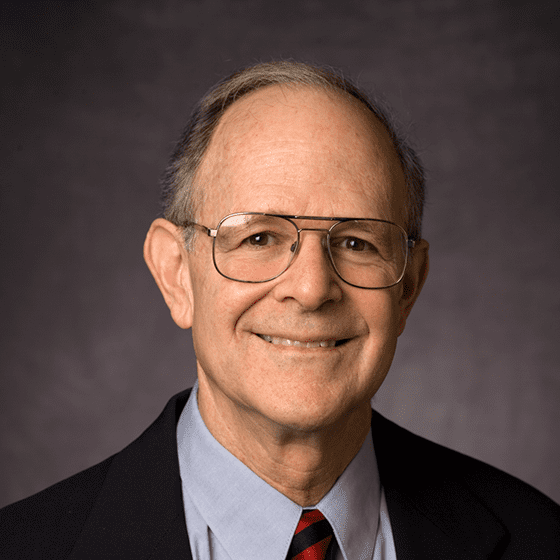
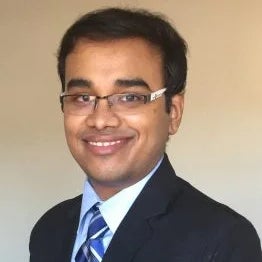
Simo Hostikka is a Professor in the Department of Civil Engineering at Aalto University's School of Engineering. His research focuses on fire safety engineering , utilizing numerical fire simulations to address critical challenges in building and infrastructure safety. Key Expertise: Fire Dynamics Simulator (FDS) development, thermal radiation heat transfer, pyrolysis modeling, fire toxicity calculations, and probabilistic risk analysis. Leadership: Supervises advanced fire safety research and contributes to international fire safety standards. Research Trends: Recent publications emphasize fire toxicity modeling , hydrogen fire safety , radiation heat transfer , and fire retardancy of polymeric materials . His work bridges computational methods with real-world fire safety applications. Scientific Awards: Philip Thomas Medal of Excellence (2008, 2005) Sjölin Award (2012) Interflam Trophy (2007) Harmathy Award (2020, 2019) Dean’s Award for Best MSc Thesis (2020) Best Paper in Rakenteiden Mekaniikka (2009) Advising: Supervised Topi Sikanen, who received the Young Talent Award from the International Water Mist Association.
Prof. Dr.-Ing. Elisabeth Clausen is a Professor and Director of the Chair and Institute for Advanced Mining Technologies at RWTH Aachen University. She holds key roles in the Specialist Group for Raw Materials and Disposal Technology, serves as a rectorate representative, and leads the Commission for EU Research Funding. Her research spans Underground mining automation Acoustic emission diagnostics Sustainable mining systems Space resource extraction Advanced sensor technologies Her recent publications focus on autonomous mining machinery, underground communication systems, and acoustic emission analysis across 15+ studies from 2013–2025, with particular emphasis on Ultra-wideband positioning Thermographic detection Crack monitoring in planetary gearboxes Explosive atmosphere safety Mineral processing diagnostics Digitalization trends Prof. Clausen contributes to mining education reform through initiatives like CDIO™ and has developed innovative learning spaces in underground mines. She coordinates international educational labs and integrates sustainability into mining engineering curricula, with publications on Adaptive ventilation systems Mining education frameworks Future-proof mineral extraction Entrepreneurial mindset in engineering
Keith D. Koper is a Professor in the Department of Geology & Geophysics at the University of Utah and serves as Director of the University of Utah Seismograph Stations (UUSS). He is also the editor-in-chief of The Seismic Record . His work integrates academic research with operational seismic monitoring and public safety initiatives across Utah and the Intermountain West. Education: PhD in Geophysics, Washington University, 1998 BA in Math, Geology, and ISP, Northwestern University, 1993 Dr. Koper's research focuses on array seismology, forensic seismology, deep Earth structure (especially the inner core), earthquake rupture imaging, ambient seismic noise, and seismic hazards in the Intermountain West, including mining-induced and urban earthquakes. His work combines observational seismology with advanced signal processing and machine learning techniques to improve detection, discrimination, and imaging capabilities. He has led or contributed to major projects involving the Wasatch Front, Yellowstone, and regional seismic networks. His recent research emphasizes machine learning for earthquake detection, high-resolution relocation of aftershock sequences (e.g., Magna 2020, Bluffdale 2019), microseism generation in lakes, and fine-scale imaging of the Earth's inner core using seismic reflections. His studies often involve interdisciplinary collaboration, particularly with mining engineering and geodesy. Dr. Koper's research has been consistently funded by federal and state agencies, including the National Science Foundation (NSF), U.S. Geological Survey (USGS), Department of Energy (DOE), Air Force Research Laboratory (AFRL), and the Utah Department of Public Safety. His publications reflect a strong trend toward integrating computational methods with traditional seismological analysis to tackle complex problems in both natural and induced seismicity. Scientific Service and Leadership: Editor-in-Chief, The Seismic Record Director, University of Utah Seismograph Stations Secretary, U.S. Air Force Seismic Review Panel Former Chair and Vice-Chair, Utah Seismic Safety Commission Dr. Koper mentors graduate students in seismology and geophysics, including recent advisees Sean Hutchings and Alysha Armstrong. His research group actively engages in both fundamental and applied seismological research, with strong ties to national labs such as Sandia. The group is involved in deploying portable seismic arrays, analyzing large datasets, and developing new algorithms for event detection and classification. The University of Utah Seismograph Stations, under his leadership, plays a critical role in monitoring seismicity in Utah and Yellowstone, producing real-time earthquake information, ShakeMaps, and public outreach materials. The station also contributes to national and international efforts in nuclear test monitoring and volcanic hazard assessment.
Joanna Austin is a Professor of Aerospace and serves as the Graduate Option Representative for Aeronautics and Space Engineering, as well as the Undergraduate Option Representative for Aerospace at the California Institute of Technology (Caltech). She leads the Caltech Hypersonics Group, which operates facilities like the T5 Reflected Shock Tunnel and the Hypervelocity Expansion Tube (HET). Her research focuses on reactive, compressible flows in applications such as hypervelocity flight, planetary entry, supersonic combustion, bubble dynamics, and explosive geological events. Key projects include studying shock-boundary layer interactions, Martian atmospheric entry aerothermodynamics, and high-speed fluid-structure interactions. She advises four Ph.D. students and collaborates with a team including staff members like Liza Bradulina and research assistants such as Noel Esparza-Duran. Her work bridges experimental fluid dynamics with geophysical phenomena, leveraging advanced diagnostics like Focused Laser Differential Interferometry (FLDI) and laser spectroscopy. The group’s facilities enable studies of high-enthalpy flows and hypersonic aerodynamics critical for aerospace and planetary exploration. Research highlights include investigations into CO₂ Martian entry conditions, boundary layer transition mechanisms, and fluid-structure coupling in high-speed flows. The Hypersonics Group’s experimental setups replicate extreme environments to advance predictive models for aerospace systems. Her contributions span both fundamental fluid mechanics and applied engineering challenges, with a focus on real-gas effects and shock dynamics. Collaborations with institutions like NASA and academic partners further her interdisciplinary impact.
Shahriar Afkhami is a Researcher in the Department of Mechanical Engineering at LUT School of Energy Systems, LUT University. His research focuses on advanced materials science, additive manufacturing processes, and mechanical properties of high-strength steels and dissimilar joints. He specializes in fatigue analysis, welding technologies, and the optimization of structural components for industrial applications. His work integrates experimental methods with computational modeling to address challenges in material behavior under extreme conditions. Key research areas include: Welding of ultra-high strength steels and dissimilar materials Mechanical performance of additively manufactured components Fatigue life assessment of welded joints and cut edges Thermomechanical behavior of heat-affected zones Material characterization of laser powder bed fusion (LPBF) steels Publications highlight trends in additive manufacturing for industrial applications, particularly in optimizing 3D-printed metal structures and analyzing their mechanical integrity. His work on notch-load interactions and fatigue strength has advanced methodologies for predicting component failure under complex loading conditions. Notable contributions include the VERKOTA project exploring 3D printing networks for enhanced industrial adoption. No scientific awards are listed in the provided information. Afkhami's research has been supported by collaborative projects such as the VERKOTA initiative, though specific grants are not detailed here. He maintains an active presence on professional networks including LinkedIn and Google Scholar.
David A. Hammer is the J. Carlton Ward, Jr., Professor of Nuclear Energy Engineering and Professor of Electrical and Computer Engineering at Cornell University's College of Engineering. He has been a faculty member since 1977 and has held visiting positions at Imperial College London, Applied Materials, Inc., and the Paris Observatory. His work bridges nuclear engineering, plasma physics, and electromagnetics. His research focuses on high energy density plasmas generated by pulsed power systems, particularly through wire explosions, X-pinches, and gas-puff Z-pinches. Key areas include inertial confinement fusion, magneto-Rayleigh-Taylor instabilities, and plasma diagnostics using visible and X-ray spectroscopy, laser-based methods, and electro-optical instruments. He also explores the application of X-pinch radiation for biomedical radiography. His recent publications reveal a strong emphasis on Z-pinch and hybrid X-pinch dynamics, plasma turbulence, magnetic field diagnostics using Faraday rotation and Zeeman splitting, and the development of advanced imaging and spectroscopic techniques. His work frequently involves the COBRA pulsed-power generator and addresses fundamental questions in plasma stability, implosion dynamics, and radiative collapse. Distinguished Career Award, Fusion Power Associates Board of Directors (2018) Cornell College of Engineering Teaching Award (2006, 1998) Cornell IEEE Professor of the Year Award (2006) McCormack Advising Award (2005) IEEE Plasma Science and Applications Committee Award (2004) Hammer has advised numerous graduate students and led experimental campaigns involving plasma diagnostics, liner implosions, and laboratory astrophysics. His work is supported by grants from agencies interested in fusion energy, plasma science, and advanced diagnostics. He has developed innovative platforms, including 3D-printed plasma loads, to study turbulent plasma jets and magnetization. His lab at Cornell is a key facility for high-energy-density plasma research. He leads a research group focused on plasma diagnostics and pulsed power experiments, operating the COBRA generator and developing novel measurement techniques. His team investigates plasma instabilities, magnetic field generation, and the transition from radial implosions to collimated jets, with implications for both fusion and astrophysics.
Christian Smith is an Associate Professor and Lecturer at the Department of Robotics, Perception and Learning at Kungliga Tekniska Högskolan (KTH Royal Institute of Technology). His research focuses on robotics and applications in human-centered environments like home environments, small workshops, and healthcare facilities, including the development of new robotic systems for research. Teaching Roles: Course Coordinator/Teacher/Examiner for courses such as Introduction to Robotics (DD2410), Research Project in Robotics (DD2411), and Java Programming for Python Programmers (DD1380) Research Themes: Human-Robot Interaction, Behavior Trees, Exoskeletons, Intent Recognition, and Multimodal Perception Awards: No specific scientific awards mentioned in the provided text His KTH profile highlights work on adaptive robotics systems and formalized control strategies. The research portfolio spans from theoretical studies on behavior tree programming to applied work in assistive technologies and teleoperation systems.
Youssef M A Hashash is the W. W. Grainger Chair and Professor in the Department of Civil and Environmental Engineering at the University of Illinois. His research focuses on geotechnical and earthquake engineering, with emphasis on seismic site response analysis, soil-structure interaction, and advanced computational methods like the Discrete Element Method (DEM). He has led projects on infrastructure resilience, including studies of buried water reservoirs, railway systems, and post-earthquake reconnaissance. Hashash has developed influential models for site amplification in Central and Eastern North America, contributing to seismic hazard assessments. His work integrates experimental centrifuge testing, numerical simulations, and field data. Notable contributions include guidelines for implementing NGA-East ground motion models and advancements in pore-water pressure generation models for liquefaction evaluation. Key Research Areas: Ground movement, seismic response, soil dynamics, and geotechnical data systems Major Projects: NGA-East Geotechnical Working Group, Beirut Explosion Analysis, and LA Metro Tunnel Projects Recipient of prestigious awards including the NAE Membership (2022), PECASE (2000), and Walter L. Huber Prize (2006), he collaborates internationally on earthquake engineering and geotechnical innovations. His lab develops tools like the DEEPSOIL software for nonlinear site response analysis and explores AI applications in geotechnical data interpretation.
Dr. Alan Lloyd is an Assistant Professor in Civil Engineering at the University of New Brunswick, specializing in structural response to extreme loads. He directs experimental research at the Drop Mass Impact Test Facility, focusing on blast-resistant design and retrofit techniques. Education: PhD Civil Engineering, University of Ottawa MASc Civil Engineering, University of Ottawa BEng Civil Engineering, Lakehead University Diploma Civil Engineering Technology, Camosun College Research: Investigates blast/impact effects on structures, structural retrofitting, material behavior under high strain rates, and experimental validation using shock tubes and impact testing. Current projects include developing blast-resistant building components and retrofit solutions for existing infrastructure. Publications: Focus on blast dynamics, FRP composites for structural strengthening, and experimental mechanics. Recurring themes include concrete/wood material performance under explosive loads and design methodologies for blast mitigation. Awards: NSERC Graduate Scholarships National Security Innovation Competition prizes (2010, 2011) ACI Blast Prediction Contest winner Advising: Supervises graduate students researching FRP materials, concrete properties, and structural modeling. Manages industry collaborations on blast-resistant technologies. Facilities: Leads development of the Drop Mass Impact Test Facility for structural component testing under controlled impact conditions.
Dr. Sumanta Das is an Associate Professor and Graduate Director in the Department of Civil and Environmental Engineering at the University of Rhode Island. His research focuses on sustainable infrastructure materials, with particular expertise in cementitious materials, composite structures, and advanced computational modeling techniques. He directs a vibrant research group that bridges experimental mechanics with computational modeling and machine learning approaches to address challenges in infrastructure durability and performance. Dr. Das received his educational training from prestigious institutions: Ph.D. in Materials and Structures from Arizona State University (2015) M.Tech. in Structural Engineering from Indian Institute of Technology, Kanpur (2012) B.E. in Civil Engineering from Jadavpur University (2010) His research interests center around developing sustainable and durable infrastructure materials through innovative design approaches. Dr. Das investigates microstructure-property relationships in cementitious systems, with special focus on materials containing microencapsulated phase change materials for freeze-thaw durability, fiber-reinforced composites, and smart cementitious materials with self-sensing capabilities. His work integrates advanced experimental techniques like nanoindentation with computational modeling approaches including finite element analysis, molecular dynamics simulations, and machine learning algorithms to predict material behavior and optimize performance. Dr. Das's recent publications demonstrate a clear trajectory toward integrating machine learning with traditional materials science approaches. His research group has made significant contributions to understanding the behavior of cementitious composites under extreme conditions, developing multifunctional composites with embedded sensing capabilities, and creating computational frameworks that bridge multiple scales from molecular to structural levels. The work shows increasing sophistication in combining experimental validation with predictive modeling. Dr. Das has successfully secured numerous research grants as PI or Co-PI from diverse funding sources including the Office of Naval Research, Department of Defense, US Department of Transportation, and industry partners like Goetz Composites. His research portfolio spans infrastructure durability, composite materials for marine applications, and smart sensing technologies for structural health monitoring. As an educator and mentor, Dr. Das has supervised multiple doctoral and master's students who have completed theses on topics including: Multiscale simulation and machine learning-assisted performance prediction for cementitious composites Performance-based multiscale tuning of inclusion-modified and 3D printed composites Enhancing freeze-thaw durability of cementitious composites through innovative materials design Underwater explosion response of composite structures Implosion pulse mitigation using additively manufactured filler profiles
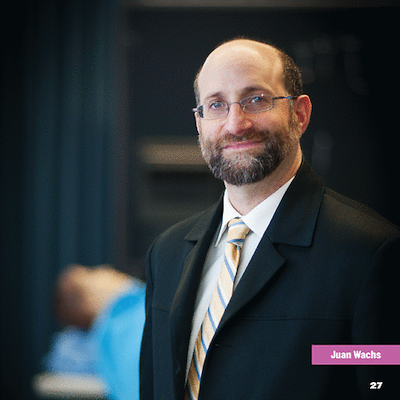
Juan Wachs is the James H. and Barbara H. Greene Professor at the Edwardson School of Industrial Engineering, Purdue University. He holds a courtesy appointment in Biomedical Engineering and is an Adjunct Professor of Surgery at the IU School of Medicine. His research focuses on the intersection of robotics, human-AI interaction, and healthcare systems, with a particular emphasis on surgical robotics, assistive technologies, and telemedicine. Education: PhD in Industrial Engineering (Intelligent Systems), Ben-Gurion University of the Negev MSc in Industrial Engineering (Information Systems), Ben-Gurion University of the Negev BEdTech in Electrical Education, ORT Academic College in Jerusalem Research interests include surgical telementoring via augmented reality, gesture-based interfaces for sterile environments, and semi-autonomous robotic systems for healthcare. His ISAT Lab develops solutions like the STAR telementoring system and robotic assistants like Gesturenurse and FIST-D for explosive ordnance disposal. Recent work emphasizes AI-driven medical decision support (Trauma THOMPSON), burn wound characterization, and robotic ultrasound automation. Key contributions include over 100 publications in robotics, medical AI, and human factors. Scientific Awards: James H. and Barbara H. Greene Professorship Purdue University Faculty Scholar Advising & Labs: Guides over 10 PhD/Master’s students in robotics and healthcare tech ISAT Lab fosters interdisciplinary projects in surgical robotics, human-robot interaction, and accessibility
Mohamed Ezzeldin is an Associate Professor in the Department of Civil Engineering at McMaster University. His work integrates structural engineering, seismic resilience, and machine learning for infrastructure risk management. Research Interests: Seismic behavior of reinforced concrete and masonry structures, blast mitigation systems, urban resilience modeling, and AI applications in construction risk prediction. Teaching: Instructor for courses including Structural Mechanics (CIVENG 2C04), Modern Methods of Structural Analysis (CIVENG 4K04), and Seismic Behavior and Design of Reinforced Concrete Systems (CIVENG 716). His publications focus on hybrid simulation testing, data-driven risk assessment, and bio-inspired structural designs. Recent work (2025) includes advancements in seismic analysis of nuclear facilities and urban resilience frameworks.
Caglar Oskay is an Associate Professor in the Department of Civil and Environmental Engineering at Vanderbilt University, where he has held academic positions since 2006. He specializes in multiscale computational mechanics, materials modeling, and failure analysis of heterogeneous materials. His research integrates advanced numerical methods such as the Extended Finite Element Method (XFEM), reduced-order homogenization, and variational multiscale enrichment to study composite materials, viscoelastic systems, and polycrystalline structures under extreme conditions. Dr. Oskay has been recognized with awards including the Chancellor Faculty Fellow (2016–2018) and ASCE ExCEEd Fellow (2011). Education: PhD (Civil Engineering, Rensselaer Polytechnic Institute, 2003), M.S. (Civil Engineering, Rensselaer Polytechnic Institute, 2000), M.S. (Applied Mathematics, Rensselaer Polytechnic Institute, 2000), B.S. (Civil Engineering, Middle East Technical University, 1998). Research focuses on predictive computational models for material behavior under mechanical, thermal, and chemical loading. Key areas include fatigue life prediction, damage accumulation in composites, and coupled transport-deformation phenomena. Recent work addresses multiscale modeling of nickel-based superalloys, polyurea-coated composites, and energetic materials under dynamic loading. His contributions span 100+ peer-reviewed publications, including seminal studies in International Journal for Multiscale Computational Engineering and Acta Materialia . His articles emphasize multiscale frameworks for heterogeneous materials, with trends in reduced-order methods, uncertainty quantification, and interdisciplinary applications (e.g., biology, energy systems). Awards highlight his educational and technical leadership. Advising and grants include collaborative projects on composite durability and energetic material simulation. Dr. Oskay leads the Multiscale Computational Mechanics Lab (MCML), advancing computational tools for engineering materials research.
Professor Ling Li is a faculty member at Curtin University's School of Electrical Engineering, Computing and Mathematical Sciences (EECMS), within the Faculty of Science and Engineering. Their research focuses on interdisciplinary applications of machine learning, computer vision, and deep learning in structural engineering and materials science. Notable contributions include advancements in structural health monitoring, blast loading prediction, and 3D displacement measurement using monocular vision. Professor Li has authored numerous peer-reviewed articles and collaborates on projects involving civil infrastructure resilience, smart materials, and AI-driven solutions for engineering challenges. They hold an office in the New Technologies Building at Curtin Perth and can be reached at L.Li@curtin.edu.au.
Steven Son is the Alfred J McAllister Professor of Mechanical Engineering at Purdue University with a courtesy appointment in Materials Engineering. His research focuses on energetic materials, combustion physics, and advanced propulsion systems through experimental and computational investigations. Primary Affiliation: Department of Mechanical Engineering, College of Engineering Laboratory: Zucrow Labs, Purdue University Dr. Son's research spans: Combustion and detonation physics Laser diagnostics and spectroscopy Smart energetic material design Additive manufacturing of propulsion components Flexoelectric and piezoelectric material applications Thermal decomposition mechanisms His recent work demonstrates advancements in: Aluminized composite propellant characterization Shock sensitivity of molecular crystals Throttleable solid propellant systems Machine learning for energetic material properties 3D-printed energetic compositions Current advisees include graduate student Ethan Binkley , while his laboratory group conducts research at Zucrow Labs, Purdue's premier propulsion research facility.